

To decide how to plan a small wedding, choose the guest circle first, then build the venue, budget, meal, ceremony, vendor support, and timeline around that exact number. A smaller celebration works best when every choice protects closeness, comfort, and a clear sense of why each person is there.
A small wedding can be beautifully freeing, but it asks for a different kind of honesty than a larger event. With fewer seats, every invitation feels more personal, every room choice matters more, and every vague plan becomes easier for guests to feel. The reward is a wedding day that can move with warmth instead of momentum: vows everyone can hear, a meal where people actually talk, and details chosen because they belong.
Use this small wedding planning guide as a calm order of decisions rather than a giant list of things to buy or book. The goal is not to shrink a traditional wedding until it fits. The goal is to design an intimate celebration with enough structure to feel cared for and enough breathing room to feel like yours.
Recommended Wedding Products


![The Knot Ultimate Wedding Planner [Revised Edition]: Worksheets, Checklists, Etiquette, Timelines, and...](https://meadowandaisle.com/wp-content/plugins/aawp/public/image.php?url=YUhSMGNITTZMeTl0TG0xbFpHbGhMV0Z0WVhwdmJpNWpiMjB2YVcxaFoyVnpMMGt2TlRGRmVVRnBablp0Tmt3dVgxTk1NVFl3WHk1cWNHYz18MTc5MTI3NTYwOQ=)

You Might Also Like These Blog Posts
- How To Plan A Non Traditional Wedding That Still Feels Thoughtful
- How To Plan A Wedding With 30 Guests Without Overbuilding The Day
- Small Wedding Guest Count Guide For Choosing A Number That Feels Close
- Small Wedding Checklist Under 50 Guests For A Day That Runs Smoothly
- How To Plan A Wedding That Feels Like Us Instead Of A Beautiful Stranger’s Pinterest Board
- How To Have A Small Wedding Without Offending People Or Overexplaining
How to plan a small wedding around the people who matter most
The first shift is mental: stop treating the day like a large wedding with pieces removed. That path often leaves couples with a smaller guest count but the same pressure, the same vendor expectations, and a room that does not quite know what it is trying to be. A better small wedding starts from the inside out.
Picture the people close enough to catch your face during the vows, the kind of meal that lets everyone settle, and the memory you want guests to carry home. That becomes your design brief. The guest list, setting, budget, timing, and traditions should all answer to that feeling. An intimate wedding planning guide only works when intimacy is treated as the point, not the discount version of something larger.
Define the size before the wedding starts expanding
Small weddings often fall somewhere under 50 guests, while micro weddings may be closer to 10 to 30. Those ranges are useful, but they are not the whole story. A 45-person dinner can feel deeply intimate if everyone is close to you. A 16-person ceremony can feel tense if half the list was invited from guilt.
Choose a guest-count ceiling you can stand behind
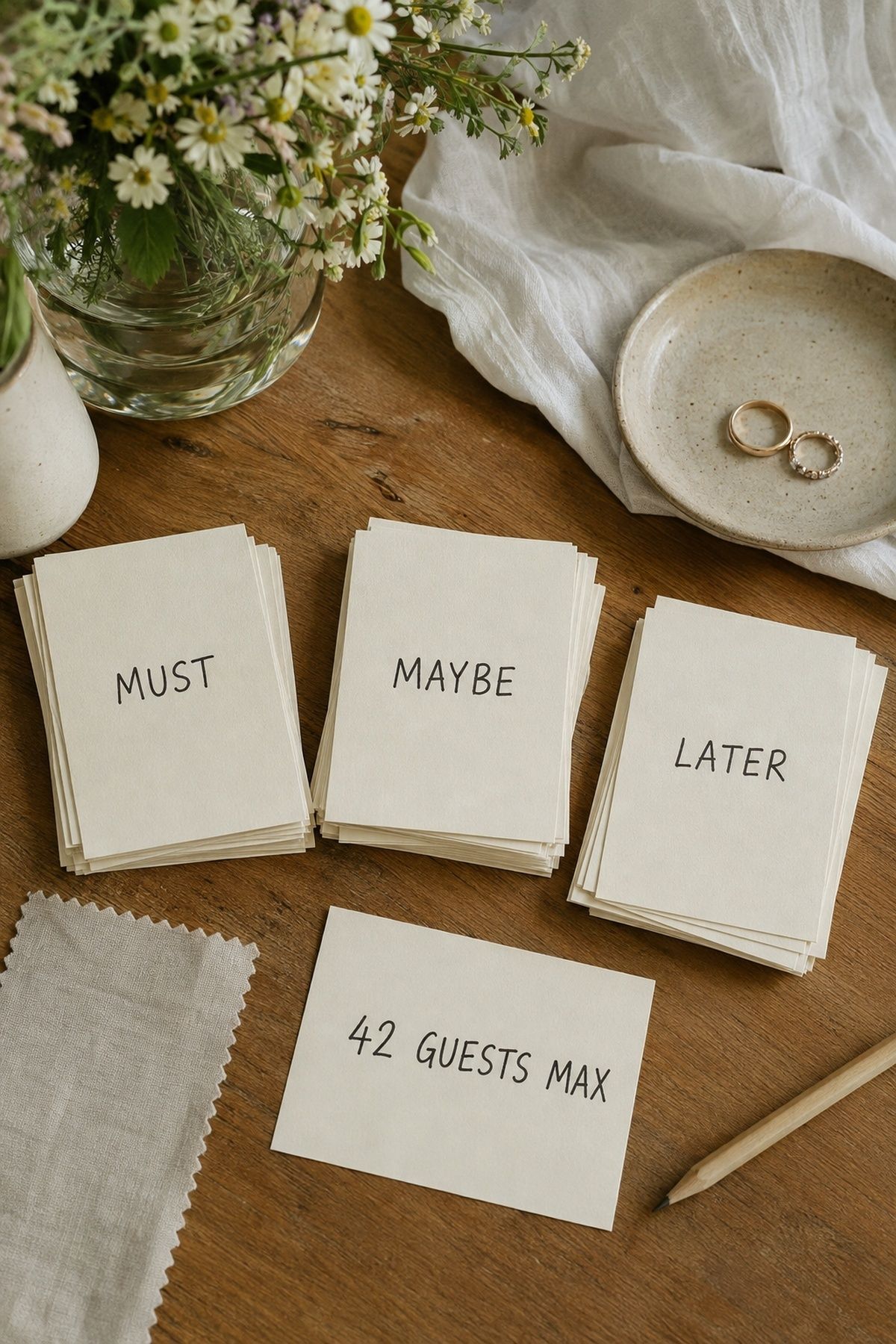
Pick the maximum number before you tour venues, request menus, or ask families for input. Your ceiling might be 18, 30, 42, or 50. What matters is that the number fits your budget, your emotional bandwidth, and the kind of room you want to create. This is the earliest piece of small wedding guest list planning because every additional seat changes food, drink, rentals, stationery, transportation, and privacy.
A written ceiling gives you language later. Instead of deciding guest by guest under pressure, you can say the wedding is built for a very specific number and format. That sounds calmer because it is calmer.
Write the emotional rule together
The most useful boundary is not only numerical. Decide what makes someone part of this circle. Maybe the list is immediate family only, people you both know personally, loved ones who support your relationship now, or guests you would invite to a private dinner in your home. A shared rule keeps the list consistent when suggestions start arriving.
Consistency does not make the guest list cold. It makes it kinder. People may still have feelings, but the decision is easier to explain when it is tied to the format of the wedding rather than a secret ranking of relationships.
Build from the must-have people outward
Start with the people whose absence would change the meaning of the day. Add outward only when the venue, budget, and emotional rule still hold. If you are learning how to plan a wedding with few guests while managing family pressure, this order protects the heart of the event before the list becomes negotiable.
When early choices begin to scatter, keep the guest circle, budget, format, and handoffs in the same place with a calm checklist for the first wave of decisions.
Choose a format that makes the small guest list feel natural
A small wedding can be a private dinner, a family-property ceremony, a restaurant celebration, a courthouse morning, a garden lunch, or a weekend with a handful of people. The format matters because it decides what the day needs. A dinner-party wedding depends on pacing, lighting, seating, and menu flow. A ceremony-forward wedding needs sound, transportation, and a gracious transition afterward.
Private dinner wedding
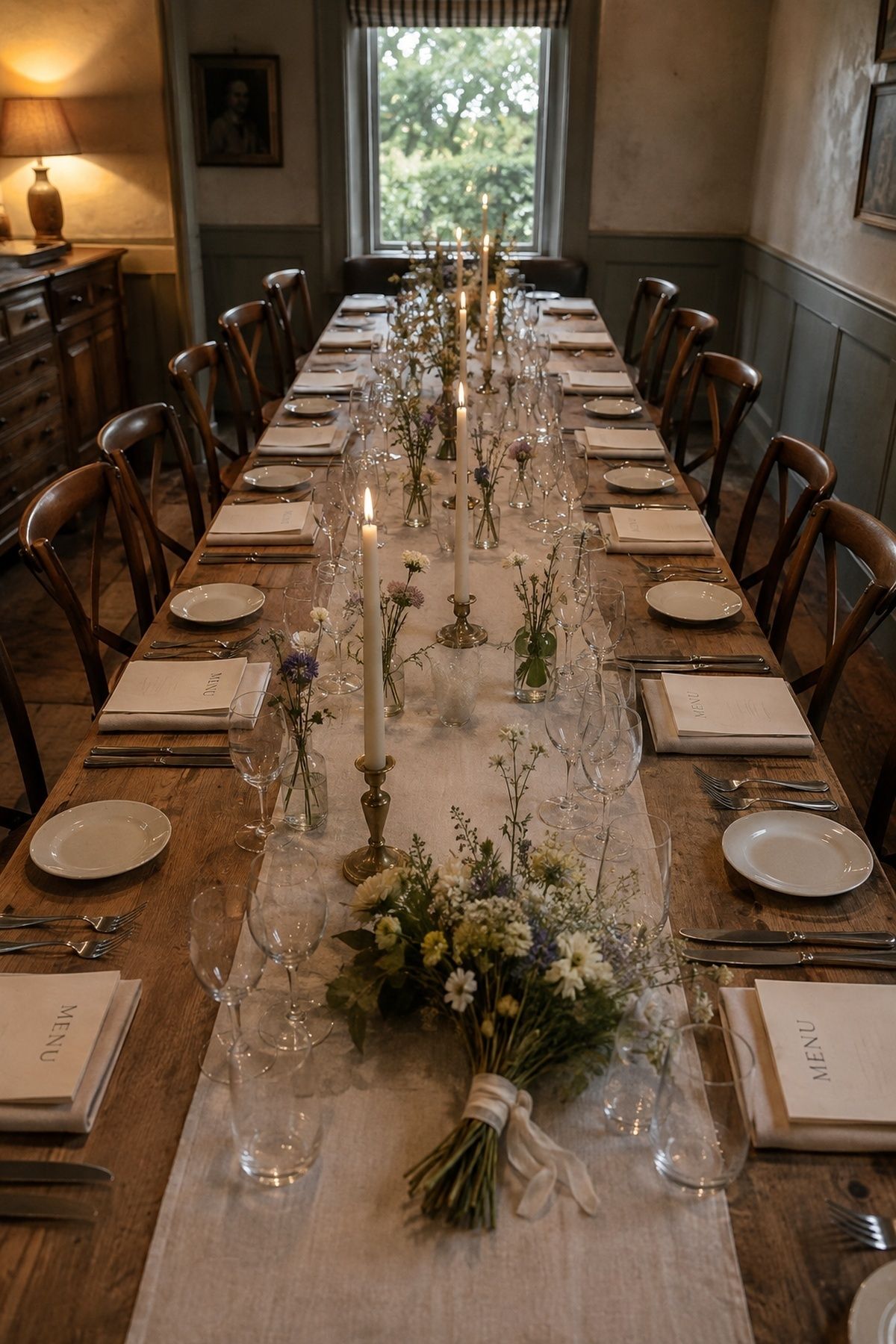
A private dinner wedding works when the meal is the emotional center. You might exchange vows in a garden, chapel, family home, or restaurant room, then gather everyone around one long table or a few small tables. Give thought to seating, course timing, candles, toasts, and the moment the evening begins so dinner feels celebratory rather than simply reserved.
Backyard or family-property wedding
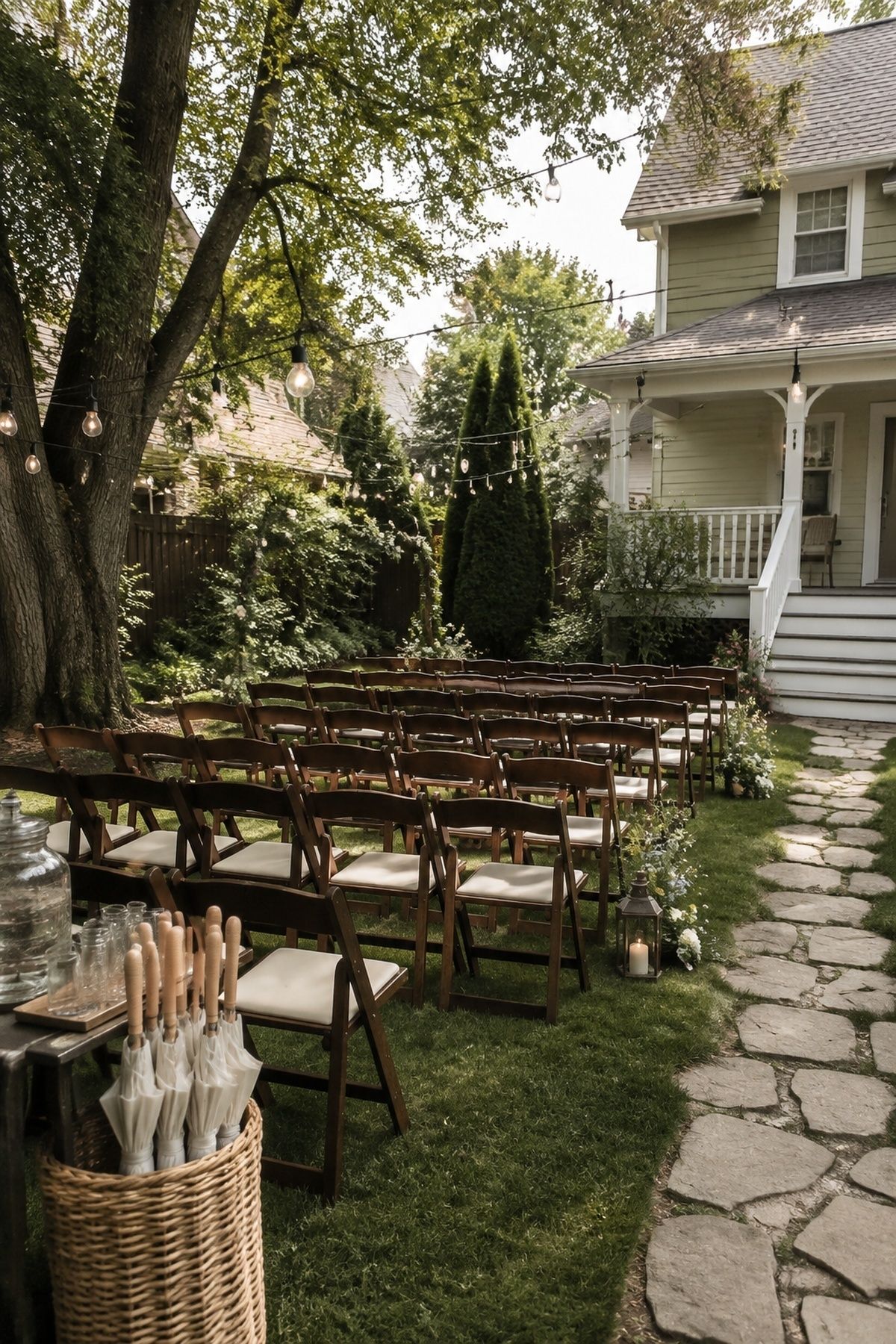
A home setting can feel intimate in a way no venue can imitate, but it usually needs more infrastructure than couples expect. Think through restrooms, weather cover, power, lighting, parking, trash, rentals, prep space, cleanup, and whether the property can shift from ceremony to meal without guests feeling in the way.
Restaurant or small venue wedding
Restaurants, inns, private dining rooms, galleries, conservatories, and boutique hotels can be excellent small-wedding settings because they already know how to host. Ask about privacy, sound, minimum spends, room turnover, menu timing, cake service, decor limits, and how full the space feels at your guest count.
Ceremony-first wedding with a meal afterward
If the ceremony is the center of the day, build the rest of the plan around it. You might marry at city hall, on a beach overlook, in a chapel, at a family property, or in a garden, then move to lunch or dinner nearby. The transition should feel hosted: guests know where to go, how long it takes, and what waits for them when they arrive.
Shape the budget around closeness, not assumptions
A smaller guest count can reduce food, drink, rentals, invitations, favors, transportation, and place settings. It does not automatically reduce photography, attire, officiant fees, venue fees, music, beauty, permits, or planning help. That is why a small wedding budget and timeline should begin with priorities instead of a vague hope that small will mean inexpensive.
Separate fixed costs from per-guest costs

Make two columns. Fixed or mostly fixed costs might include your photographer, officiant, attire, planner or coordinator, ceremony sound, venue fee, permits, and beauty appointments. Per-guest costs include meals, drinks, chairs, linens, plates, invitations, favors, welcome bags, and shuttle seats. That split shows where the guest count truly changes the budget.
Before you choose a venue proposal, map the numbers against a small-wedding budget broken into real categories so the savings and fixed costs are visible on the same page.
Spend first on what guests will feel
Protect the categories that make the day feel cared for: enough food and drink, comfortable seating, clear sound during the ceremony, shade or warmth, a smooth meal, and photographs that preserve the closeness of the room. With fewer guests, details are physically closer. People notice comfort quickly.
Keep a buffer for the unromantic pieces
Taxes, tips, service charges, delivery fees, setup labor, backup rentals, umbrellas, heaters, fans, permits, generators, and last-minute supplies still exist at small weddings. A 10 to 15 percent buffer may not be the prettiest line in the spreadsheet, but it gives the whole plan more grace.
Pick a venue that fits the headcount emotionally and practically
Small wedding venue planning is about more than maximum capacity. A room can technically hold your number and still feel too empty, too public, too loud, or too difficult for older guests. Look for a place where your guest count feels gathered without needing tricks to hide unused space.
Ask when the room feels full
Venues often know the guest count that makes a room feel warm. Ask what number feels best, how tables can be arranged, where the ceremony would sit, and whether there is a smaller room, garden corner, terrace, or private dining area that suits your group. A room for 80 may feel lovely with 42 if the layout brings everyone close.
Check privacy, access, bathrooms, parking, and weather

Intimacy disappears quickly when strangers pass behind the vows, guests cannot find the restroom, or everyone is anxious about rain. Ask about private access, restroom count, ADA considerations, parking, vendor load-in, noise rules, weather backup, and whether guests can remain comfortable while the space changes from ceremony to dinner.
Understand minimums before you fall in love
Some venues have food-and-beverage minimums, room rental minimums, required vendor lists, staffing fees, or peak-season pricing that may not flex for a smaller event. Others include tables, chairs, linens, dinnerware, staff, and setup. The strongest choice is not always the lowest venue fee. It is the place that supports your number without hidden friction.
Book the vendor team your day actually needs
A small wedding vendor checklist should be honest, not stripped bare. You may not need a large production team, but you do need enough professional support that you and your closest people are not arranging chairs, cueing music, finding lighters, handling deliveries, answering parking questions, and clearing plates in wedding clothes.
Start with the nonnegotiable support
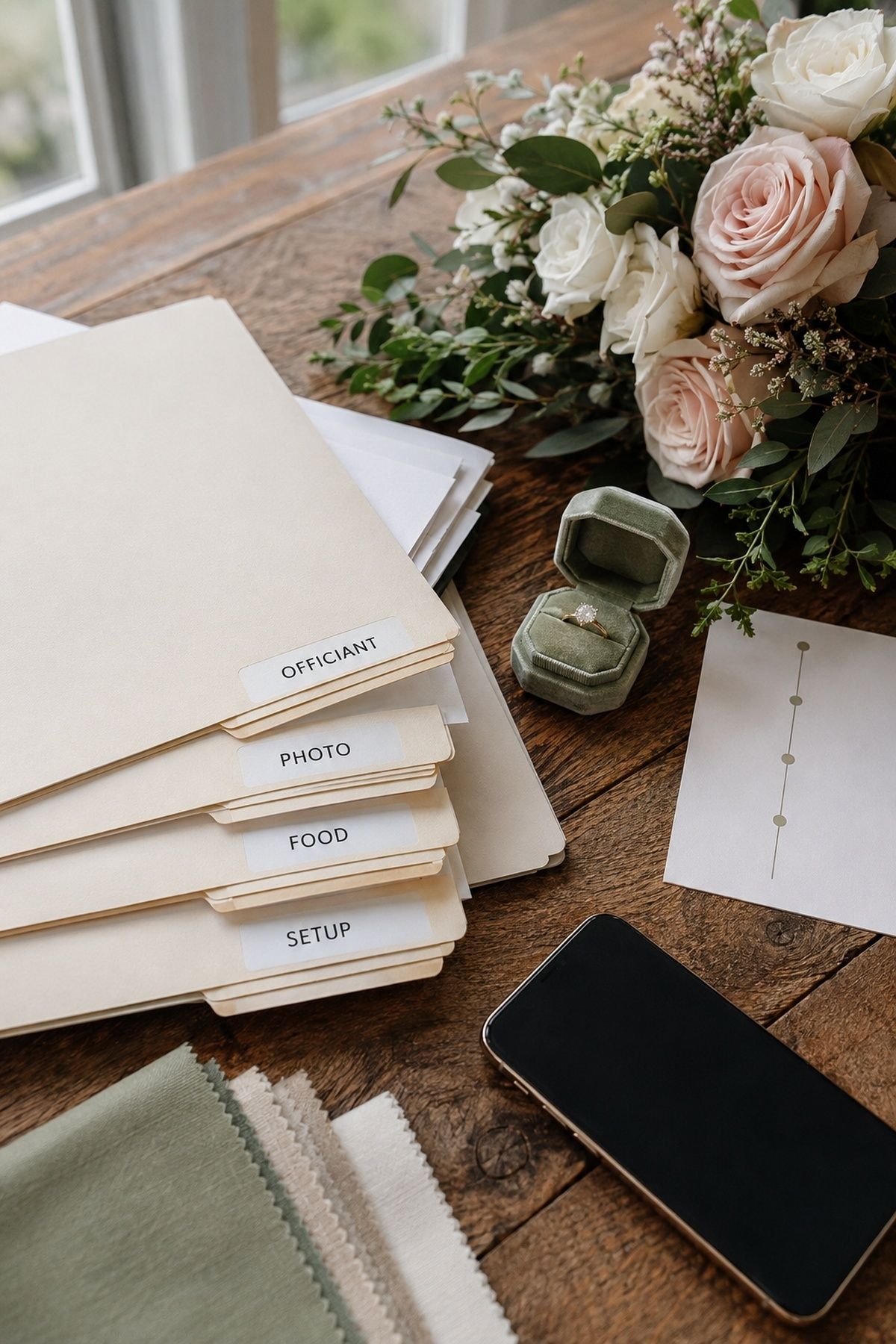
Most small weddings need an officiant, photographer, food and beverage support, and someone responsible for timing and setup. Depending on the space, you may also need rentals, flowers, music, sound, beauty, transportation, lodging coordination, or cleanup. The smallest wedding still deserves a person who is fully responsible for the day moving as planned.
Choose upgrades that deepen the experience
Videography, live music, a private chef, custom stationery, a ceremony musician, welcome drinks, or a next-day brunch can all make sense when they support your priorities. If conversation is the heart of the wedding, invest in the meal and seating. If ceremony is the heart, protect sound, vows, flowers, music, and photography.
Ask vendors how they handle smaller guest counts
Ask whether they offer intimate-wedding pricing, shorter coverage, smaller minimums, family-style service, ceremony-only options, or private dining experience. Also ask what they would still recommend for a small group. Good vendors simplify with care; they do not treat fewer guests as permission to leave the day under-supported.
Plan the ceremony, meal, and movement as one experience
Small weddings feel best when the day has a clear emotional shape. Guests should know when to gather, where to sit, what happens after the vows, when food arrives, when toasts happen, and when the celebration gently closes. Without that shape, a small wedding can become awkwardly loose.
Give the ceremony a real beginning and ending
Even a short ceremony needs presence. Let guests settle, choose music or a quiet processional moment, make sure everyone can hear, and plan a clear recessional or first embrace. A small ceremony is powerful because every face is close; it deserves a beginning and close that guests can feel.
Seat people for comfort and connection

Think about sight lines, shade, warmth, aisle width, and how guests will move from ceremony seats to dinner seats. For a tiny ceremony, curved or semicircle seating can feel more connected than straight rows. At dinner, one long table can be beautiful, but two shorter tables may make conversation easier in a narrow room.
Keep transitions short and clearly hosted
Transitions are where intimate weddings often wobble. If portraits happen between ceremony and dinner, give guests drinks, shade, appetizers, music, and someone who knows the plan. If locations change, provide exact directions and a realistic buffer. A small group should feel considered at every pause.
Once the shape of the day is clear, pace portraits, dinner, toasts, dessert, and cleanup with a timeline paced for a smaller wedding so they do not crowd the moments that matter.
Communicate the guest list with warmth and firmness
The guest list is often the most tender part of planning a small wedding. You can be gracious without making the event elastic. Clear language helps people understand the format before they build expectations around plus-ones, children, extended family, coworkers, or a larger reception later.
Explain the format early
Use wording that centers the wedding rather than the exclusion: “We are having a very small ceremony and dinner with immediate family and a few closest friends.” Or: “Because the room is tiny, we are keeping the guest list to our closest circle.” Short, steady language usually lands better than long apologies.
Set plus-one and child rules consistently
Choose the rule before invitations go out: named partners only, engaged or married partners, wedding-party partners, or no additional guests because of space. For children, be equally clear unless there are immediate-family exceptions you can explain privately. Clean rules keep the boundary tied to the event, not to a guest’s place in your life.
Include people another way only when it feels true
You can send announcements, share a gallery, stream the ceremony, host a casual gathering later, or write personal notes to people who matter but were not invited. Do those things because they feel generous and sincere, not because every small wedding needs a second event to apologize for itself.
Edit traditions without making the day feel unfinished
Small weddings invite editing. You can skip a large wedding party, elaborate favors, a formal bouquet toss, a long cocktail hour, transportation for dozens, a huge seating chart, or a packed dance floor if those pieces do not match the celebration. Editing is not the same as neglect. The day still needs hospitality, timing, ceremony clarity, photographs, and a person who owns the practical handoffs.
Before the plan grows out of habit, decide what belongs and what can go with a thoughtful look at what a small wedding can skip.
Keep the pieces that make guests feel held
Do not skip enough food, clear ceremony sound, seating, weather protection, signs or verbal direction, restrooms, water, warmth or shade, and a plan for older guests. These are the details that make a small wedding feel relaxed because no one is wondering what to do next.
Watch for simplicity that creates more work
A bare-bones plan can quietly hand work to parents, siblings, friends, and the couple. Someone has to receive flowers, place candles, move chairs, cue music, collect gifts, handle the marriage license, pack personal items, and close the space. If those jobs are real, name them and assign them before the wedding morning.
Many planning problems appear when couples assume smaller means easier; common mistakes couples make with intimate weddings are often about missing ownership, not missing decor.
Run one final plan check before deposits become decisions
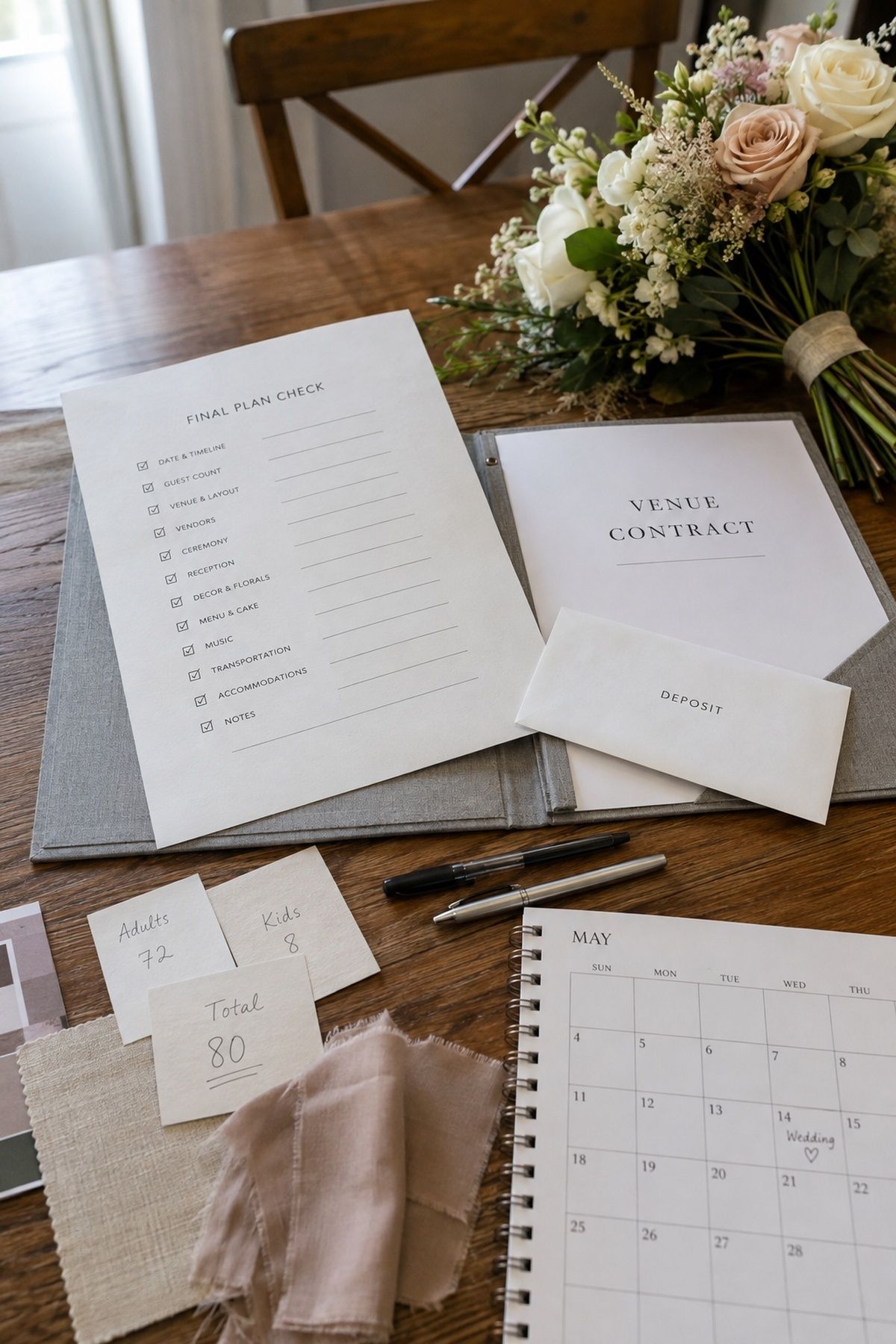
Before you book the major pieces, test the whole plan. Can you describe the guest circle in one sentence? Does the venue fit that number without feeling empty or cramped? Does the budget protect food, sound, comfort, photography, and weather backup? Do you have enough vendor support that guests are not quietly working?
Then check the emotional side. Are plus-one and child rules clear? Do you know how you will speak to people who are not invited? Has someone agreed to hold the day-of ownership list? Does the schedule give the ceremony, meal, and guest conversations room to breathe?
When the guest count still feels uncertain, draw the line between the people who must be present and the people you can honor another way with a guest-count framework for intimate celebrations.
FAQ
What is the first step in planning a small wedding?
The first step is choosing the guest-count ceiling and the emotional rule behind it. Once you know who must be in the room, you can choose a format, venue, budget, vendor team, and timeline that fit the actual celebration instead of letting a preset option or space decide the size for you.
How many guests count as a small wedding?
Many couples think of a small wedding as about 50 guests or fewer, with micro weddings often closer to 10 to 30 guests. The more useful measure is connection. A wedding feels small when the guest list is intentional, the space fits the number, and the couple can be meaningfully present with the people invited.
How do you plan a small wedding without offending people?
Use clear, consistent language early and tie the decision to the wedding format. Say whether it is immediate family only, closest circle only, or limited by venue size. Avoid ranking relationships or overexplaining. If it feels right, share photos, send announcements, stream the ceremony, or gather casually later, but keep the invitation boundary steady.
What vendors do you need for a small wedding?
Most small weddings need an officiant, photographer, food and beverage support, and someone responsible for setup, timing, and practical handoffs. Depending on the venue, you may also need rentals, flowers, beauty services, music, ceremony sound, transportation, lodging support, or cleanup. The right list depends on what the day asks people to do.
Is a small wedding cheaper than a traditional wedding?
A small wedding can be cheaper because fewer guests usually reduce food, drink, rentals, invitations, favors, and transportation. Some costs stay nearly the same, including photography, attire, officiant fees, venue fees, beauty, planning help, and music. The biggest benefit is often not automatic savings, but the ability to spend more intentionally.
How do you choose a venue for a small wedding?
Choose a venue that feels naturally full at your guest count and supports the whole flow of the day. Ask about privacy, bathrooms, parking, accessibility, weather backup, ceremony sound, food-and-beverage minimums, staffing, rentals, and room layout. The right venue should make your small group feel gathered, not scattered.
What should you not skip when planning a small wedding?
Do not skip guest comfort, ceremony sound, photography, enough food and drink, weather backup, clear communication, and a day-of owner. You can simplify traditions, decor, wedding-party structure, favors, or dancing, but the celebration still needs enough support to feel complete from arrival to goodbye.
Final Thoughts
A small wedding is not a lesser wedding. It is a more concentrated one. When the guest list is chosen with care, the budget protects real comfort, the venue fits the headcount, and the schedule gives people room to feel present, the day can hold more emotion than a much larger celebration.
Let the planning stay human. Make the choices that give your closest people a clear, warm, well-hosted experience, and leave behind the details that only made sense for a different kind of room. As you settle into the guest count, privacy, and rhythm that feel right for you, shape a celebration that feels generous from the first arrival to the last goodbye with intimate wedding planning considerations.
Last update on 2026-10-04 / Affiliate links / Images from Amazon Product Advertising API