

Start with a firm list of 30 names, then book a room that feels full at 30, like a restaurant private room or a small inn. Budget fixed vendor costs separately from per-person costs, seat everyone at assigned tables, and keep the day to ceremony, drinks, dinner and toasts, with one person running the timeline.
Thirty guests is too many for dinner at your place and too few for a ballroom, and that awkward middle is why figuring out how to plan a wedding with 30 guests trips people up. Couples either copy the big-wedding checklist and overbuild, or treat it like a casual dinner and forget the parts that still need a plan, like seating, sound and who answers the caterer’s questions.
This guide walks through it in the order the decisions happen: the guest list, the format, the budget, the vendors, the seating and the timeline. For context, The Knot’s survey of couples married in 2025 put the average guest count at 117, so at 30 you’re planning something very different from the typical wedding, and that’s a good thing.
Recommended 30-Guest Wedding Planning Essentials
Small weddings run on lists, so most of these are about keeping your numbers and names in one place.


Recommended blogs to read:
- Small Wedding Venues For 30 Guests That Feel Naturally Full
- How to Plan a Wedding With 50 Guests and Keep It Feeling Close
- How To Plan A Wedding With 20 Guests Without Losing The Wedding Feeling
- How To Plan A Small Wedding That Still Feels Big-Hearted
- Small Wedding Budget Breakdown Without The Guesswork
- Small Wedding Timeline: A Simple Flow That Lets The Day Breathe
How to plan a wedding with 30 guests while keeping the day unmistakably yours
At 30 guests, every person in the room is someone you’ll talk to, so the plan should serve conversation, food and a clear flow rather than big-wedding traditions. Decide the list first, because the number drives every other choice.
Set The 30-Guest Circle Before You Look At Venues
Write the list before you tour anything. A room that fits 30 doesn’t fit 38, and venues book by capacity.
1. Close Family And Friends
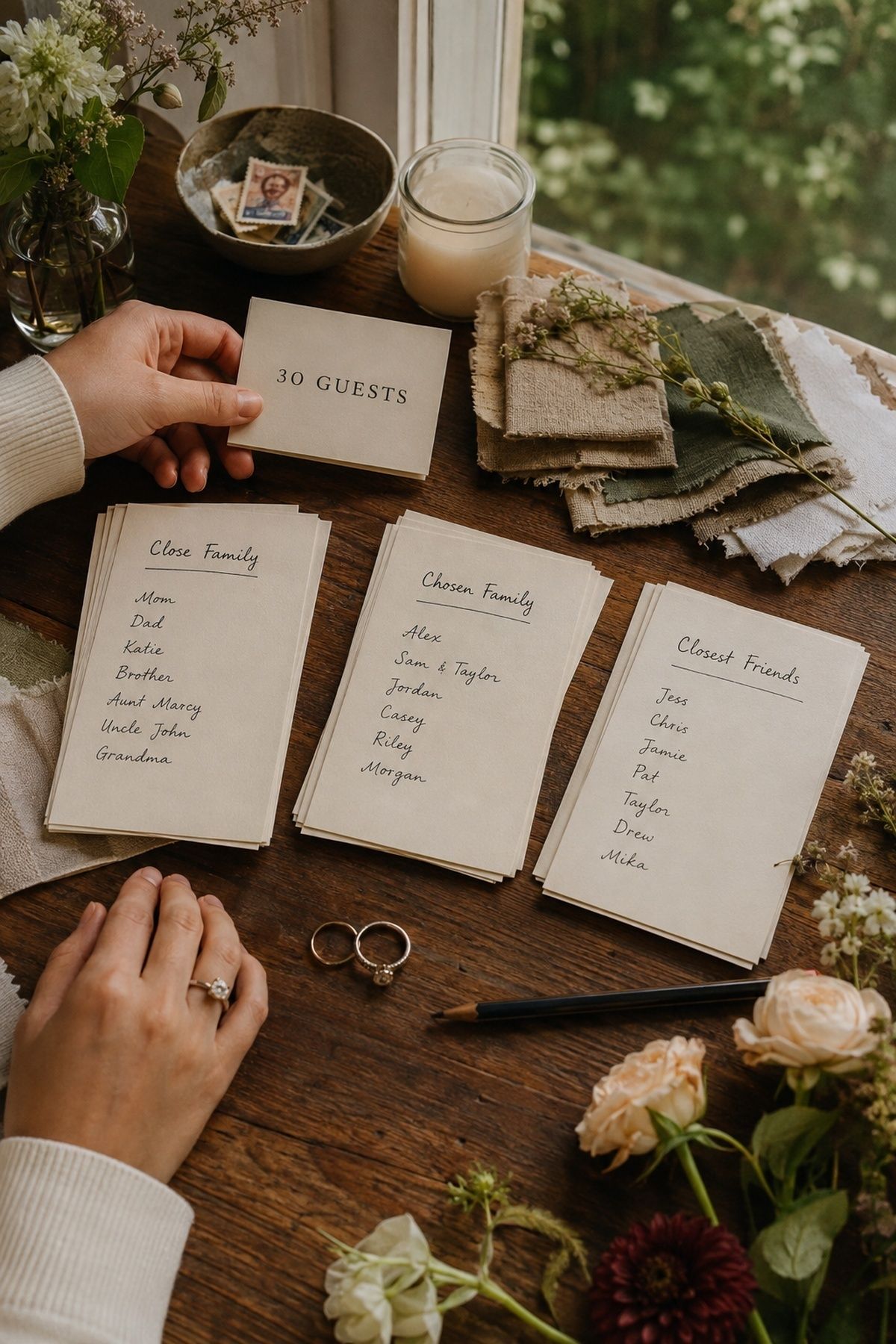
The easiest way to build a 30-person list is in circles, not one long scroll of names. Split it into close family, chosen family and close friends, the way the three handwritten cards on this table are laid out, and fill the circles in that order.
Each circle gets a rough number before anyone’s name goes on it, something like 14, 6 and 10, and when a circle is full, it’s full. This stops one side of the family from quietly taking over the list, and it makes the hard conversations easier because you’re talking about a category, not about a person. If two of you disagree on a name, ask one question: would we spend proper time with them during the wedding? If the answer is no, they probably belong at a bigger party later.
2. Invite Rules And Boundaries
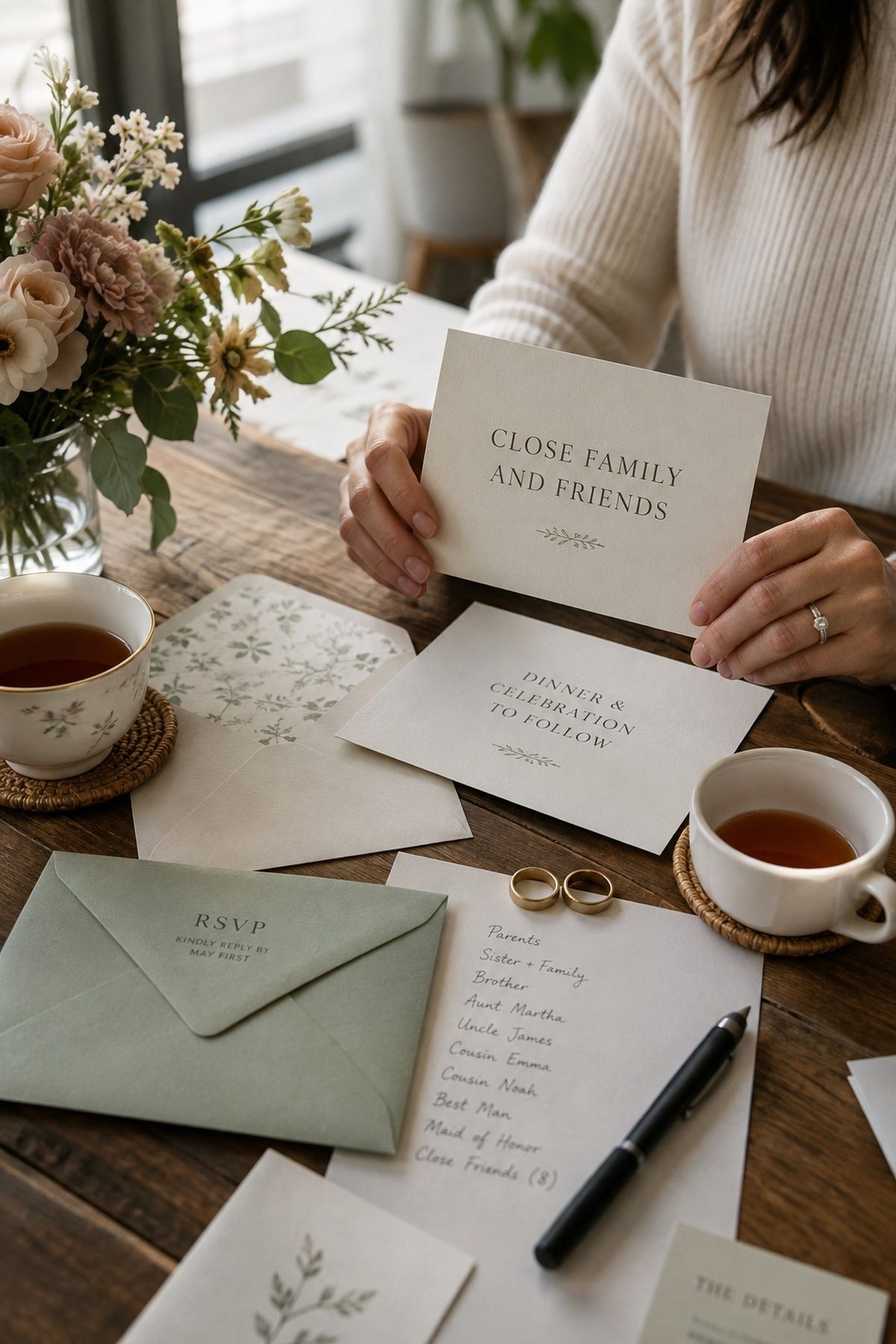
Decide your rules while the list is still private, and write them down. The ones that matter most at 30 guests:
- Partners: invite married and long-term partners by name, or not at all.
- Plus-ones: usually none, since five extra seats is a whole table.
- Kids: all, none or only immediate family.
- Coworkers: one simple rule, like none.
Then keep the wording short and kind. Something like “We’re keeping the day to immediate family and our closest friends” covers almost every situation and doesn’t blame the venue. A card held up next to a sage envelope and a draft of the wording is basically how this looks at home: two people, a cup of tea and a lot of small decisions. For more scripts, see how to say no to plus-ones politely.
3. When 30 Starts Becoming 40
The most common mistake with a 30-person wedding is letting it grow by threes. Three cousins here, a plus-one there, two coworkers who “have to” come, and suddenly you’re at 40 with a room booked for 32. Ten extra people at a small wedding can mean a bigger room, another table, a second server and a different bar package on top of ten more meals. Pick a hard ceiling now, maybe 32 to leave room for one surprise, and give every new name a swap: someone goes on, someone else comes off. That one rule keeps the whole plan intact.
Pick A Format That Makes 30 Guests Feel Natural
Choose a format where 30 people fill the space and the meal is the main event. These four work best.
4. Private Room Dinner

A restaurant private room is the format I’d pick for most 30-guest weddings. The tables, chairs, kitchen, staff and cleanup are already there, so you’re paying for a dinner instead of building a venue from scratch.
Look for a room that feels full at 28 to 34 people, like a long table under warm wall lights with garlands on the chairs, not a 100-seat banquet room with the back half empty. Ask about the food-and-beverage minimum, cake fees, privacy (doors, not curtains), a spot for a short ceremony and whether they have a microphone.
From my years in banquet kitchens, one more question saves a lot of stress: who times the courses around speeches? A good restaurant will hold the main course for a toast if you tell them in advance, and that turns a nice dinner into a wedding dinner.
5. Garden Or Backyard Ceremony
A backyard or family garden feels personal at 30 guests, but it’s the format with the most hidden work. Before you say yes to a beautiful lawn, check:
- bathrooms (one indoor toilet won’t do for 30 people over five hours)
- parking and how guests find the place
- shade, heat, rain cover and a backup tent
- power for lights, music and caterer equipment
- neighbors and local noise rules after dark
If dinner happens somewhere else, give guests one clear address and a reason to move, like drinks waiting at the restaurant.
6. Small Venue Reception
Galleries, boutique inns, wineries, libraries and small event spaces give a 30-person reception its own personality without the restaurant feeling. The catch is capacity, because a room built for 120 will feel empty and echoey with 30, and you’ll end up paying for decor just to fill it.
Ask every small venue for photos of an event at your guest count, not their biggest wedding. If they don’t have any, ask whether they can close off part of the room or set up a smaller layout. And check what’s included, since some venues give you the room and nothing else, which means renting every chair.
7. Weekend-House Or Inn Celebration
Renting a whole inn, lodge or big house turns a 30-person wedding into a weekend, with everyone sleeping under one roof, breakfast together and a ceremony in the garden. It’s lovely, but it’s also more hosting, because guests now expect a plan for meals, downtime and transport for two or three days. Book a caterer or a private chef for the main dinner, keep the other meals simple (a breakfast spread and a casual lunch), and share a short schedule so nobody wonders when to show up. Check the house’s rules on events, since many holiday rentals ban weddings outright or charge an event fee.
Budget Around 30 Guests Instead Of Guessing
Split the budget into two columns: costs that grow with every guest, and costs that stay the same no matter how many people come.
8. Per-Person Costs
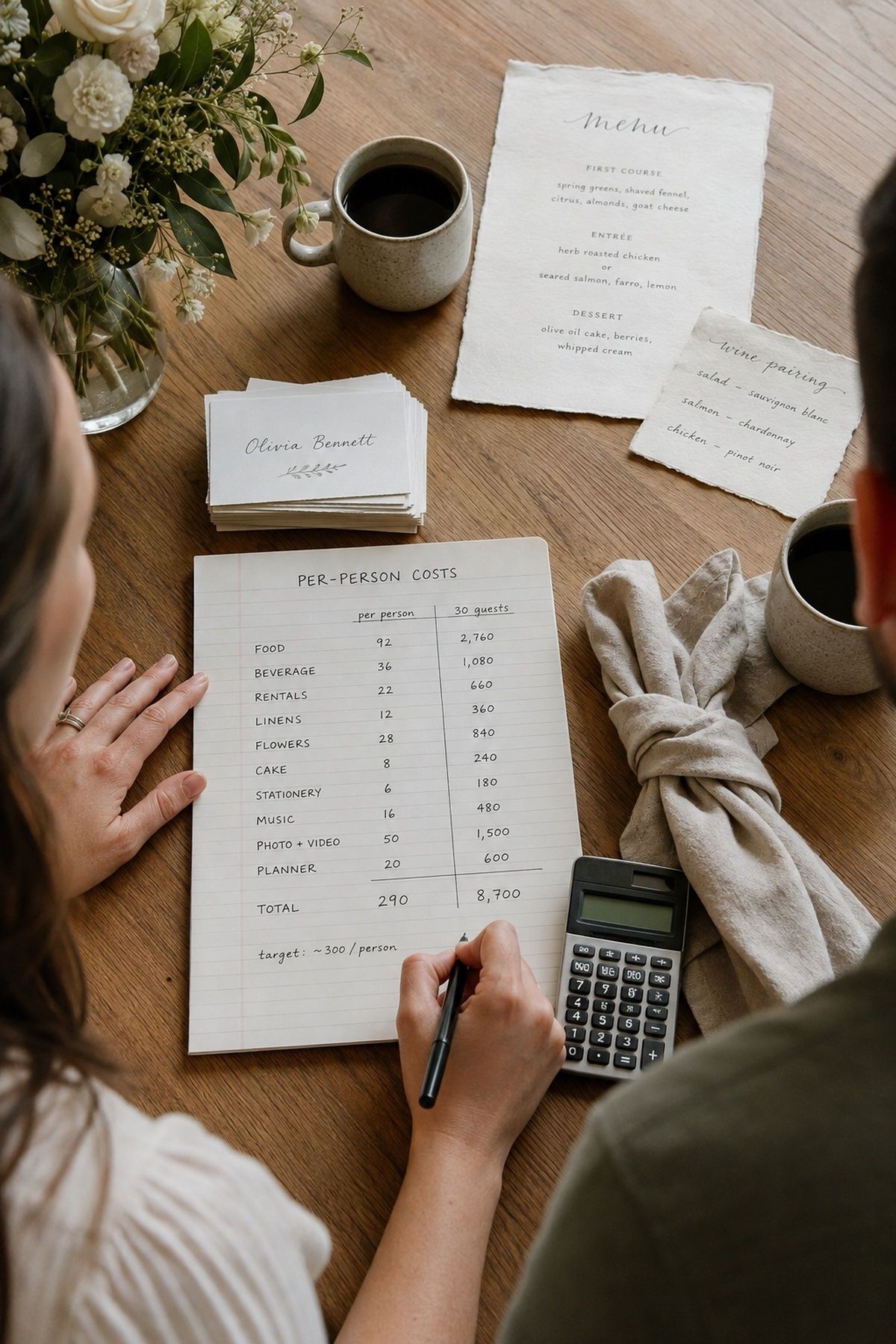
Food, drinks, cake, rentals, stationery and favors all go up with each guest, and at 30 people you can see the math, which is the nice part.
Write your per-person number on a sheet like this one, with a calculator and a coffee, and include everything: the meal, drinks, cake slice, chair and table rental, service charge and tax. A dinner that looks like a modest per-person price on the menu often ends up much higher once service and tax are added, so always ask for the total per guest.
Then use that number before adding anyone. If the all-in cost per guest is high, five extra names is a real line on the budget, and seeing it in dollars makes saying no much easier than arguing about feelings.
9. Fixed Vendors
Some costs barely change between 30 and 80 guests: photography, the officiant, attire, hair and makeup, planning help, music for the ceremony, permits and sometimes the venue fee. That’s why a small wedding isn’t automatically a cheap one, and why the cost per guest at 30 can look high compared with a big wedding.
The upside is that with fewer people, you can choose where to splurge. Better food, more photography hours or transport for older relatives all cost less when they only need to cover 30 people. A small wedding budget breakdown helps you lay the two columns side by side.
10. Minimums And Package Sizes
Is there a food-and-beverage minimum? Ask that before you fall in love with any room. Restaurants and hotels often set a minimum spend for a private space, and on a Saturday night it can be higher than 30 guests would ever eat and drink, while a Friday or Sunday might drop it a lot. The same goes for vendors with packages built for 150-person weddings, since many photographers, florists and caterers have a smaller “micro” or weekday package if you ask. Be polite and specific, something like “we have 30 guests, a four-hour dinner and one ceremony spot,” and they can tell you right away what fits.
Choose Vendors And Support For The Day You Are Actually Hosting
Book by job, not by tradition. Ask what this room and this group need.
11. Food And Service
Food is the main event at a 30-guest wedding, so this is where I’d spend. Plated dinners feel formal and keep everyone seated for toasts, while family-style platters get people passing dishes and talking, which suits a group this size.
Caterers usually want your final headcount around two weeks before the wedding, and a tasting a few months ahead, so put both dates in the calendar now. For a plated dinner, plan on roughly one server for every 15 guests, so two for a 30-person dinner, plus someone on drinks. And ask how the food will be kept warm if the speeches run long (they will).
12. Photographer And Officiant
You don’t need a 10-hour photography package for 30 guests, but you do need enough time to cover getting ready, the ceremony, family photos and the start of dinner, which usually fits in four to six hours. Small weddings are full of quiet moments, like a parent’s toast or a hug at the table, and those are the photos you’ll keep looking at, so pick a photographer who’s comfortable shooting close up without getting in everyone’s face. For the officiant, choose someone who can speak to a small room warmly, because at 30 guests everyone hears every word and a stiff script shows.
13. Rentals, Florals, Sound, And A Point Person
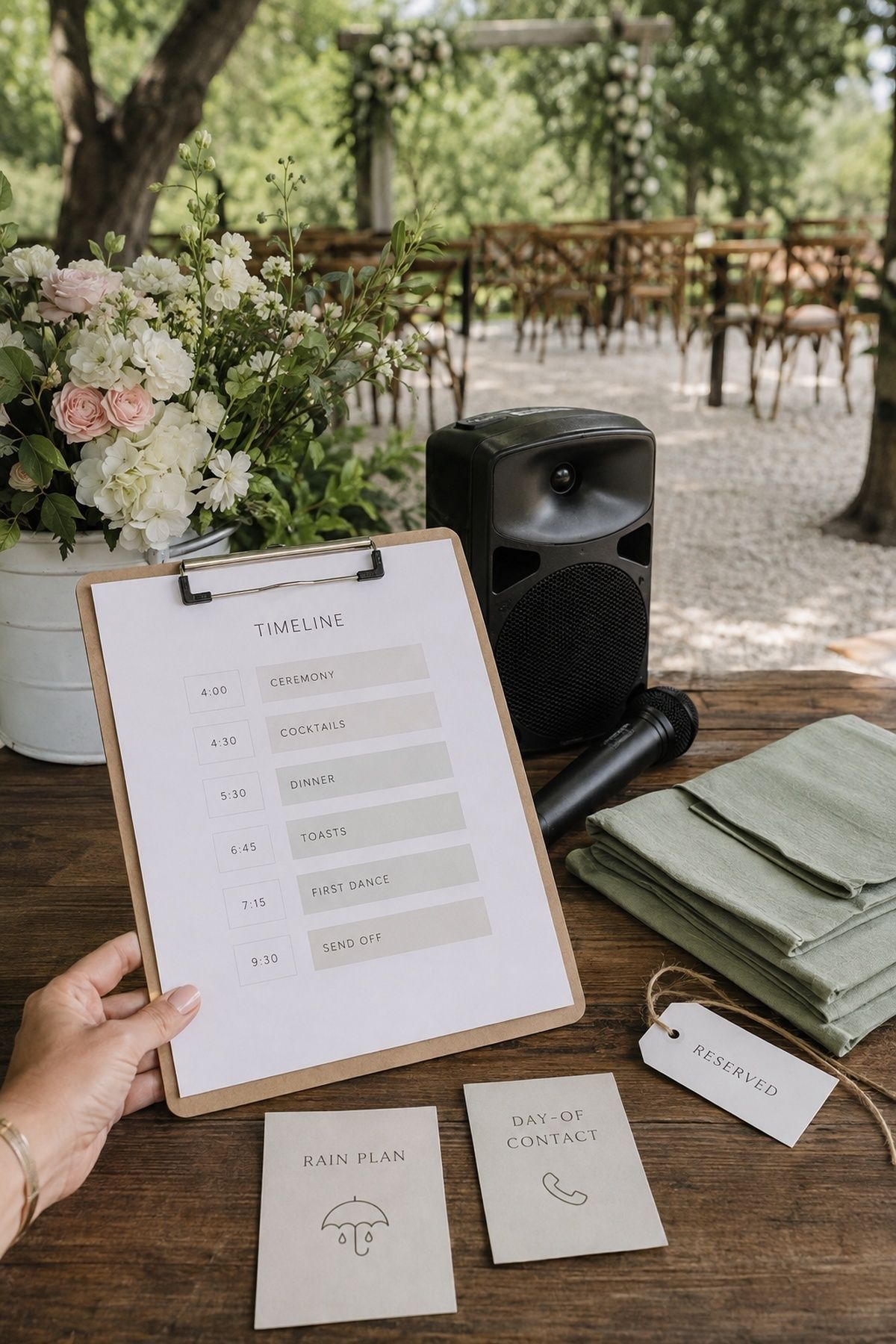
The most important vendor at a small wedding might not be a vendor at all. Name a day-of point person, a coordinator, the venue manager or a calm friend, and hand them a clipboard like this one with the checklist on it. Their jobs:
- meet vendors and point them to the right spot
- keep the timeline moving and cue the speeches
- hold the final payments and tip envelopes
- make the rain call
- answer guest questions so you don’t have to
Also rent a small speaker and microphone, even for a garden ceremony. Thirty people can’t hear vows outdoors without one.
Plan Seating And Conversation With Intention
Assign tables or seats, because 30 is big enough that people will wonder where to sit and small enough that a bad seat is noticed.
14. One Long Table
One long table is the dream for a lot of 30-guest weddings, and it does look amazing in photos. Everyone eats together, the two of you sit in the middle and toasts feel like a family dinner.
The downside is that people mostly talk to the three or four guests around them, so the seating matters more. Put chatty, easygoing people next to quieter guests, and leave enough space behind the chairs for servers to pass, about 1 meter, or the long table turns into a long squeeze every time someone stands up.
15. A Few Smaller Tables

Three tables of ten or five tables of six can work better than one long table, especially when families don’t know each other well or someone needs an easy route to their seat. Round tables like these on a covered terrace keep the conversation going in every direction, and a simple sign on an easel tells everyone where to go without a big seating display. Assign tables at least, and seats if you have family dynamics to manage, and put the two of you where every table can see you during the toasts. A small seating sign also saves the awkward moment when two guests reach for the same chair.
16. Family Dynamics And Accessibility
Good seating does half of the emotional work for you. A few rules that help at 30 guests:
- Divorced parents each get their own “host” spot, with their own people around them.
- Older guests sit close to the bathrooms and away from the speakers.
- Anyone with a wheelchair or walker gets the end of a table with a clear path.
- Kids sit with their parents, not at a separate kids’ table, at this size.
- Guests who don’t know anyone sit next to your friendliest friend.
Write the plan on paper first and read it out loud to each other, because problems are easier to hear than to see.
Build A Simple 30-Person Wedding Timeline
Keep the day to a few clear blocks: ceremony, drinks and photos, dinner and toasts, dessert and goodbye.
17. Ceremony
The ceremony at a 30-guest wedding can be short and still feel complete. Twenty to thirty minutes is plenty for a walk down the aisle, a welcome, a reading, vows and rings, and a kiss, and nobody’s legs fall asleep on a folding chair. Because guests sit so close, small details carry: a song you chose, a family member reading something, the officiant using your names instead of a script. Ask everyone to arrive 20 minutes before the start, and use a microphone even if the room feels small, because someone in the back row always misses the vows otherwise.
18. Photos And Drinks
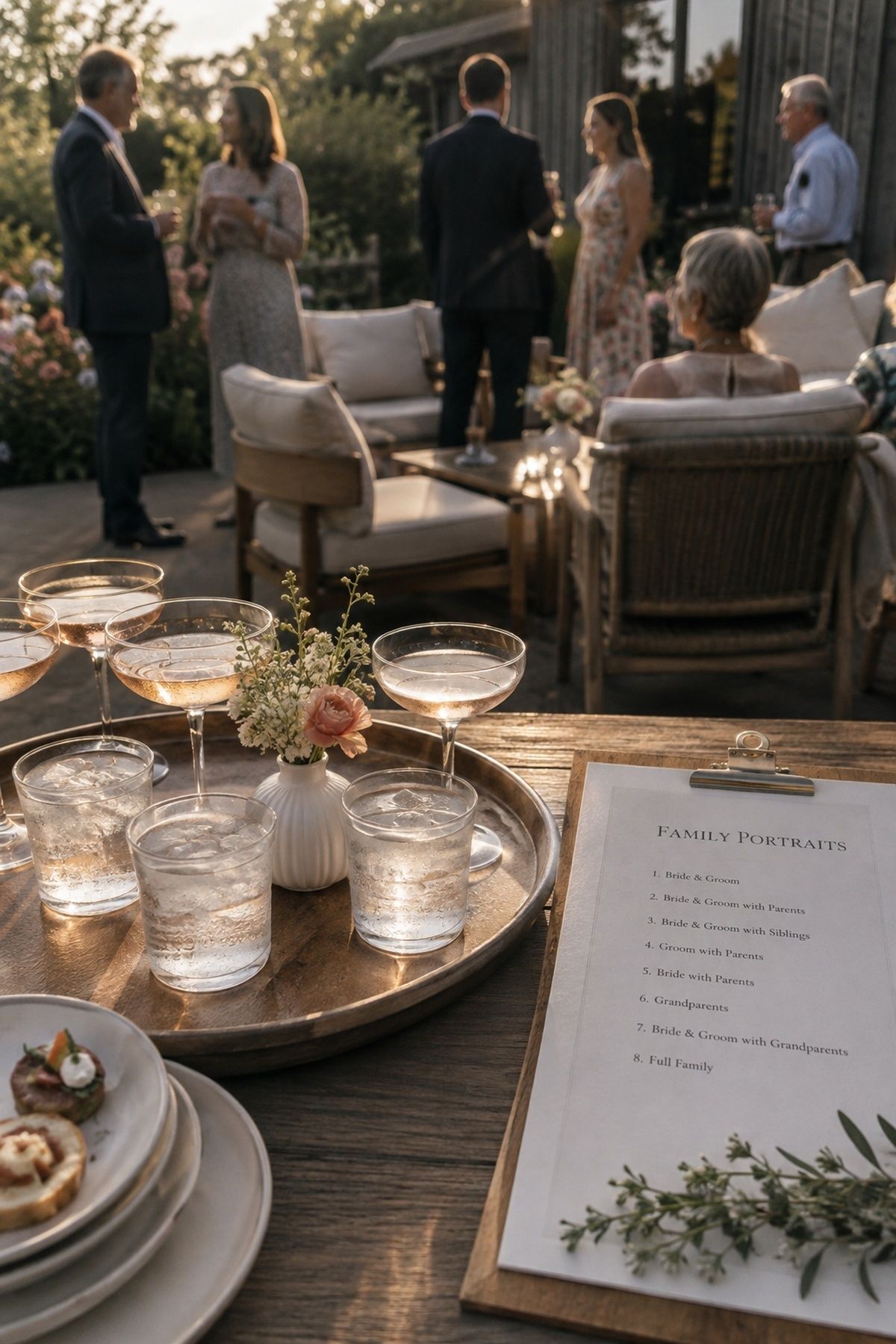
Plan the drinks hour around the photos, not the other way round. Keep family photos to a short shot list on a clipboard, like the one next to this tray of coupes, and give one relative the job of rounding people up, because they know who everyone is.
Thirty to forty-five minutes of drinks is enough at this size. Put out chairs and some lounge seating so older guests aren’t standing the whole time, and send out a small bite or two if dinner is more than an hour away.
19. Meal, Speeches, Dessert, And Close
A 30-guest reception usually runs three to five hours, and a simple flow keeps it feeling relaxed. Here’s a timeline that works for most small dinners:
- Welcome toast as everyone sits down.
- Starter, then one or two speeches before the main course.
- Main course with no interruptions, so the food arrives hot.
- Dessert or cake cutting, then the last speech.
- Coffee, a final drink and a slow goodbye.
Plug your own times into a small wedding timeline once the venue and meal are set. And plan the ending, because 30 people tend to leave all at once, so a last song or a final toast makes a much nicer goodbye than the lights coming on.
Simplify What Does Not Serve 30 Guests
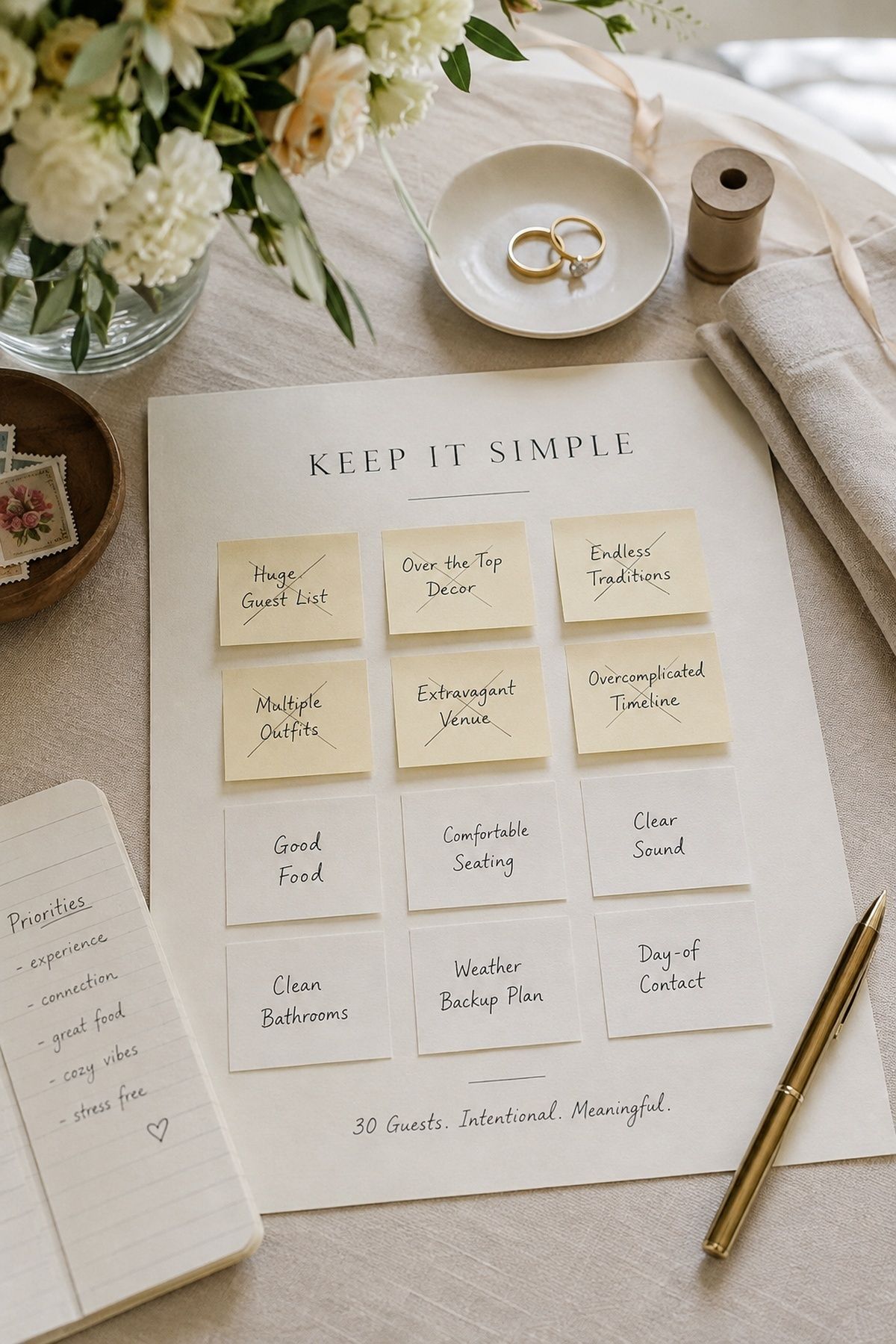
Skip the parts that only exist because big weddings need them: a long bridal party entrance, a giant seating display, favors at every place, a multi-hour dance set or a long list of formal portraits. Keep the parts guests will feel, like clear invitations, easy arrival, good food, comfortable seats, an audible ceremony and someone other than you answering questions.
If the number keeps wobbling, compare it with other sizes in the small wedding guest count guide before you add names.
How Far Ahead Should You Plan a 30-Guest Wedding?
Six to nine months is comfortable, and three is doable if you’re flexible on the date. Book the venue and photographer first, the caterer or restaurant next, and leave invitations for about eight weeks before the day. Caterers usually need the final headcount around two weeks out.
Frequently Asked Questions
Is 30 guests a small wedding?
Yes. Thirty guests is a small or intimate wedding, and some people call it a micro wedding. It’s about a quarter of the average US guest count, so it plans very differently from a typical wedding.
How do you seat 30 people at a wedding?
Use one long table if the room is narrow, or three tables of ten if it’s wide. Assign at least tables, keep about a meter behind the chairs for servers, and seat the couple where everyone can see the toasts.
How much food do you need for 30 wedding guests?
Order one full meal per guest plus a couple of spare portions for vendors.
What vendors do you need for a 30-guest wedding?
Most need a caterer or restaurant, an officiant, a photographer, flowers and basic sound. Add rentals, hair and makeup or a coordinator only if your venue doesn’t already cover them, and always name one day-of point person.
How long should a 30-guest wedding reception last?
Three to five hours. A dinner with toasts and dessert usually fills about four.
Key Takeaways
- Build the list in circles and set a hard ceiling before touring venues.
- Choose a room that feels full at 30, like a restaurant private room.
- Split the budget into per-person costs and fixed costs.
- Spend on food and service, since dinner is the main event.
- Assign tables and name one day-of point person.
- Keep the timeline to ceremony, drinks, dinner, toasts and dessert.
The Sweet Spot Between a Dinner Party and a Ballroom
Remember that awkward middle, too many people for your place and too few for a ballroom? Once you plan for it on purpose, it turns out to be the best size there is: big enough to feel like a wedding, small enough that you get to eat your dinner and talk to every single person who came. There’s more in our Wedding Planning Basics collection.
Last update on 2026-11-29 / Affiliate links / Images from Amazon Product Advertising API