

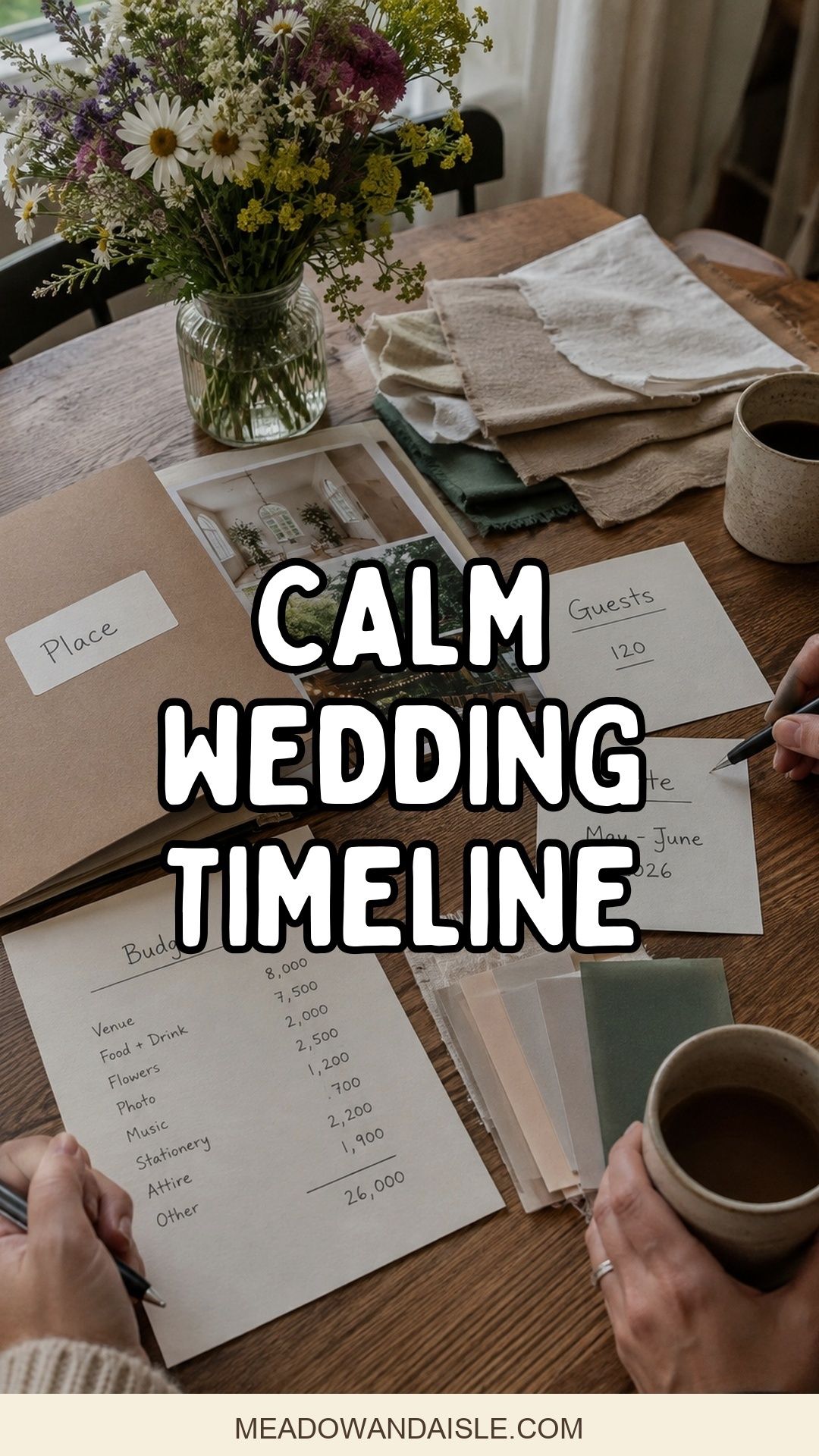
A wedding planning timeline for overwhelmed couples should begin with the decisions that unlock everything else: budget, guest ceiling, date window, venue or ceremony plan, food, photography, guest communication, legal requirements, final counts, and day-of handoff. Everything else can be sorted into now, next, later, or optional.
If your wedding plan currently feels like a room where every drawer has been opened at once, pause before you make another list. The problem may not be that you are behind. It may be that every task has been given the same emotional weight.
The most useful wedding planning timeline for overwhelmed couples is not a giant checklist with hundreds of tiny reminders. It is a calm order of decisions. It tells you what affects money, guests, legalities, food, photos, comfort, and the final handoff, then lets the softer details wait their turn.
This is especially true for small weddings. A smaller guest list can reduce planning pressure, but only if you protect the guest ceiling, choose a right-sized setting, communicate clearly, and stop trying to build a full ballroom wedding in miniature. You are allowed to plan a day that feels thoughtful without carrying every possible wedding detail in your head.
Recommended Wedding Products


You Might Also Like These Blog Posts
- Small Wedding Planning Timeline By Month For Couples Keeping It Simple
- Simple Wedding Planning Timeline For A Day That Feels Easy
- Small Wedding Timeline: A Simple Flow That Lets The Day Breathe
- 6-Month Small Wedding Planning Checklist For A Calm, Beautiful Countdown
- Wedding Planning Order Of Tasks That Keeps You From Backtracking
- How To Plan A Wedding In One Year Without Turning It Into A Full-Time Job
Wedding Planning Timeline For Overwhelmed Couples Who Need The Next Calm Step
The simplest way to start is to stop asking, “What are all the wedding tasks?” and ask, “What decision makes the next decision possible?” A budget helps you understand the venue. A guest ceiling helps you choose the room. A date window helps you ask vendors useful questions. A legal plan protects the ceremony. A final handoff keeps the wedding day from landing back in your lap.
For a small or intimate wedding, this order matters more than perfection. The point is not to become a different, hyper-organized version of yourself. The point is to create a low stress wedding planning path that protects your relationship, your guests, and the kind of celebration you actually want.
Why Most Wedding Timelines Feel So Stressful
Most wedding timelines feel stressful because they flatten the whole wedding into one long page. Book a venue, choose flowers, start skincare, order favors, build a playlist, collect addresses, research rentals, schedule tastings, create signage, buy shoes. When all of those items sit together, your brain reads them as equally urgent.
They are not equal. Some tasks protect the actual wedding: the ceremony can legally happen, guests know where to go, there is food, there are photos, and someone knows the plan. Other tasks create atmosphere. Atmosphere matters, but it should not be allowed to frighten you away from the core decisions.
If you are anxious, busy, navigating family pressure, or simply tired of opening planning apps at midnight, you need fewer simultaneous choices. Wedding planning for anxious couples works best when the list is smaller, the next step is visible, and optional details are named honestly as optional.
Use Dependencies Instead Of A Giant Checklist
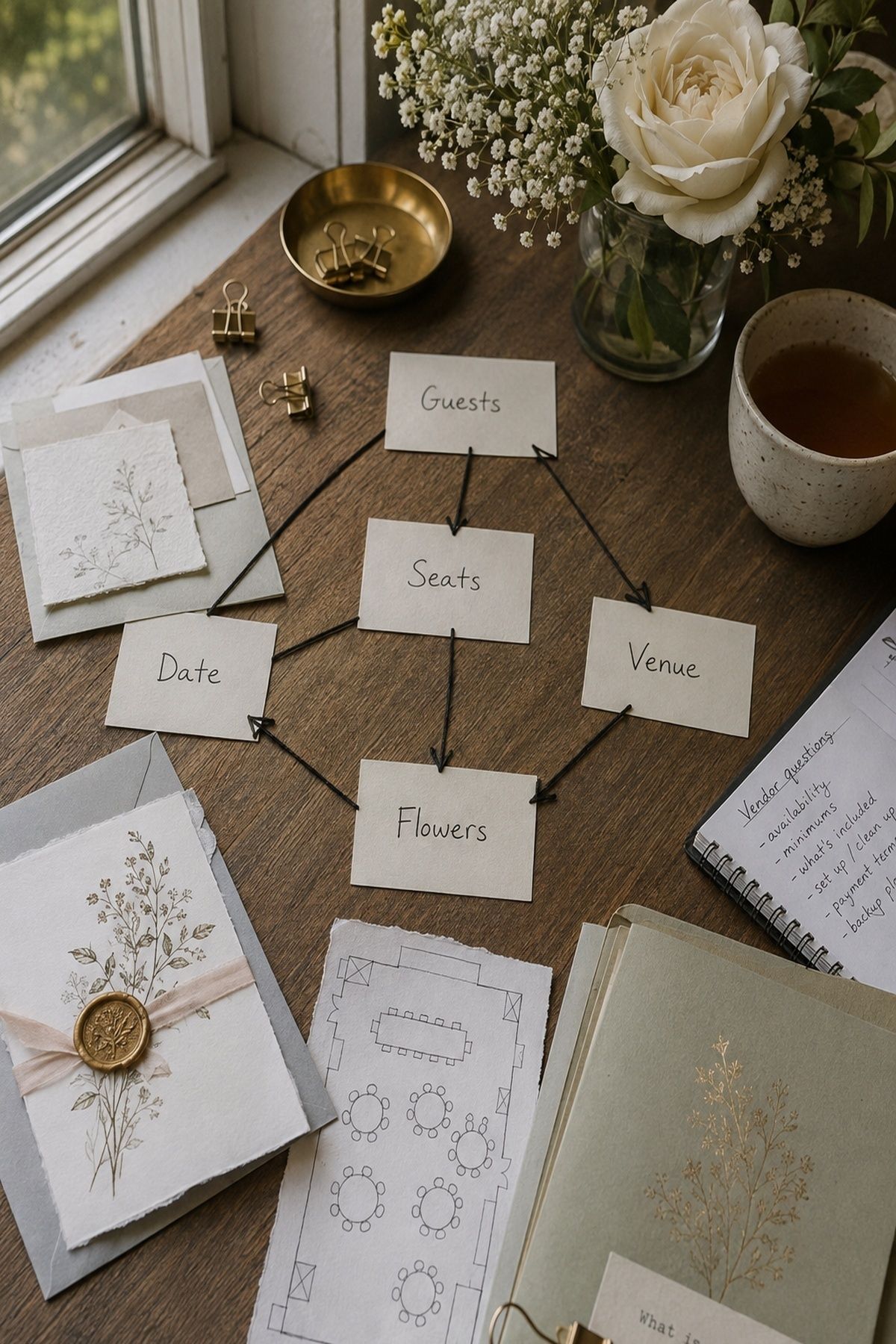
A dependency is a decision that another decision depends on. You cannot choose a final seating layout until you know the guest count. You cannot send clear invitations until you know the place, time, dress code, and RSVP deadline. You cannot know whether a florist's proposal is realistic until the table count and ceremony setting are clear.
Use this question when the plan starts to blur: does this task affect money, date, guests, legalities, food, photography, comfort, or the day-of handoff? If yes, it belongs earlier. If no, it probably belongs later or on the optional list.
This is where a clear wedding planning order of tasks gives the whole process a steadier sequence. When planning already feels crowded, keep the working rhythm even simpler: foundation first, date-controlling choices next, guest communication early, pretty details later, handoff before the final month.
Start With The Foundation Decisions
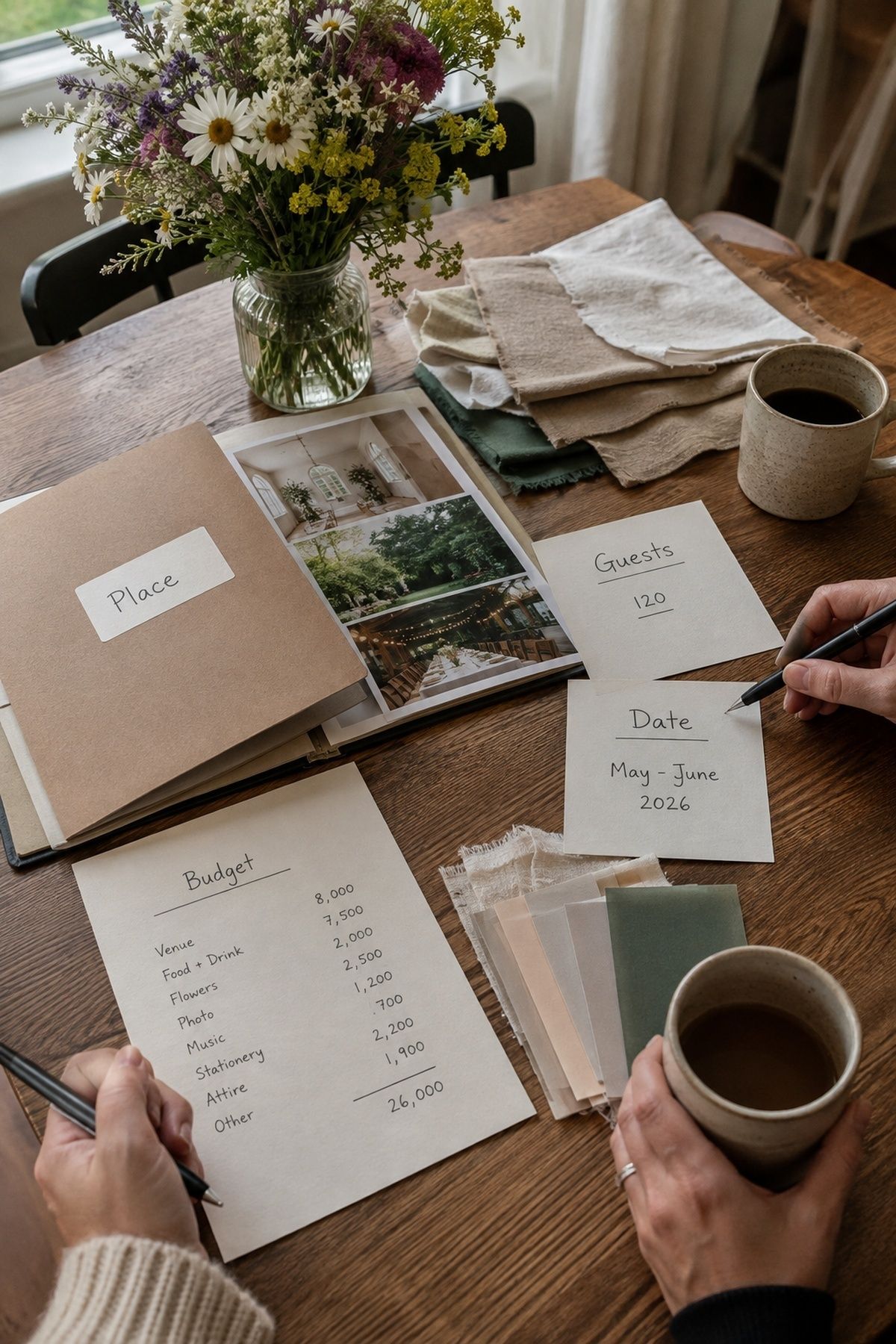
Your foundation decisions are budget, guest ceiling, date window, general location, and the must-have feeling of the day. These are not glamorous, but they are merciful. Once they are clear, you can stop considering every venue, every dress code, every menu style, and every family request as if it might still fit.
Start with a private conversation before you invite opinions. Choose a total budget range you can live with. Choose the highest guest count you are willing to host. Choose a season or two possible months instead of one perfect date. Choose whether the wedding should feel like a quiet dinner, a family garden party, a courthouse celebration with a meal after, a destination weekend, or a fuller reception.
At this stage, knowing what to do first when planning a wedding keeps the foundation from turning into another sprawling list. The goal is not to solve the whole wedding in one night. It is to make the next round of decisions smaller and kinder.
Book The Choices That Control The Date
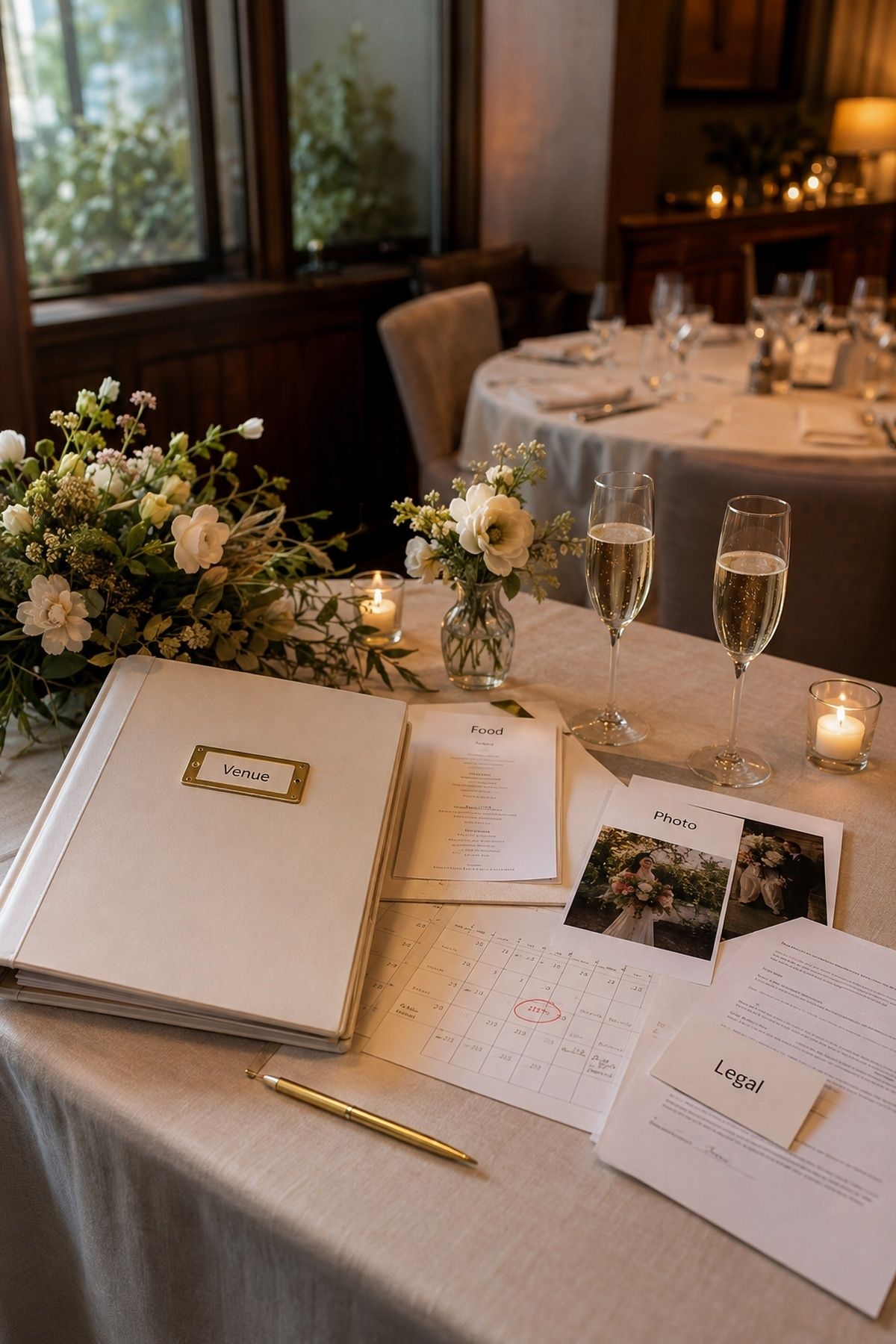
Once the foundation is clear, book the choices that control whether the wedding can happen on the date you want. Usually that means the venue or ceremony location, officiant or legal path, food plan, photographer, and any planner or coordinator support you truly need.
For small weddings, the venue may be a private dining room, courthouse, family property, inn, garden, restaurant, studio, chapel, or short-stay rental with event permission. The right-sized setting can remove a surprising amount of stress because you are not trying to fill a cavernous room or meet a huge catering minimum.
If many guests are traveling, lodging information may belong in this early phase too. You do not need to solve every welcome-bag detail, but you do need to know whether guests can realistically arrive, park, sleep, and get to the ceremony without confusion.
Communicate With Guests Earlier Than Feels Comfortable
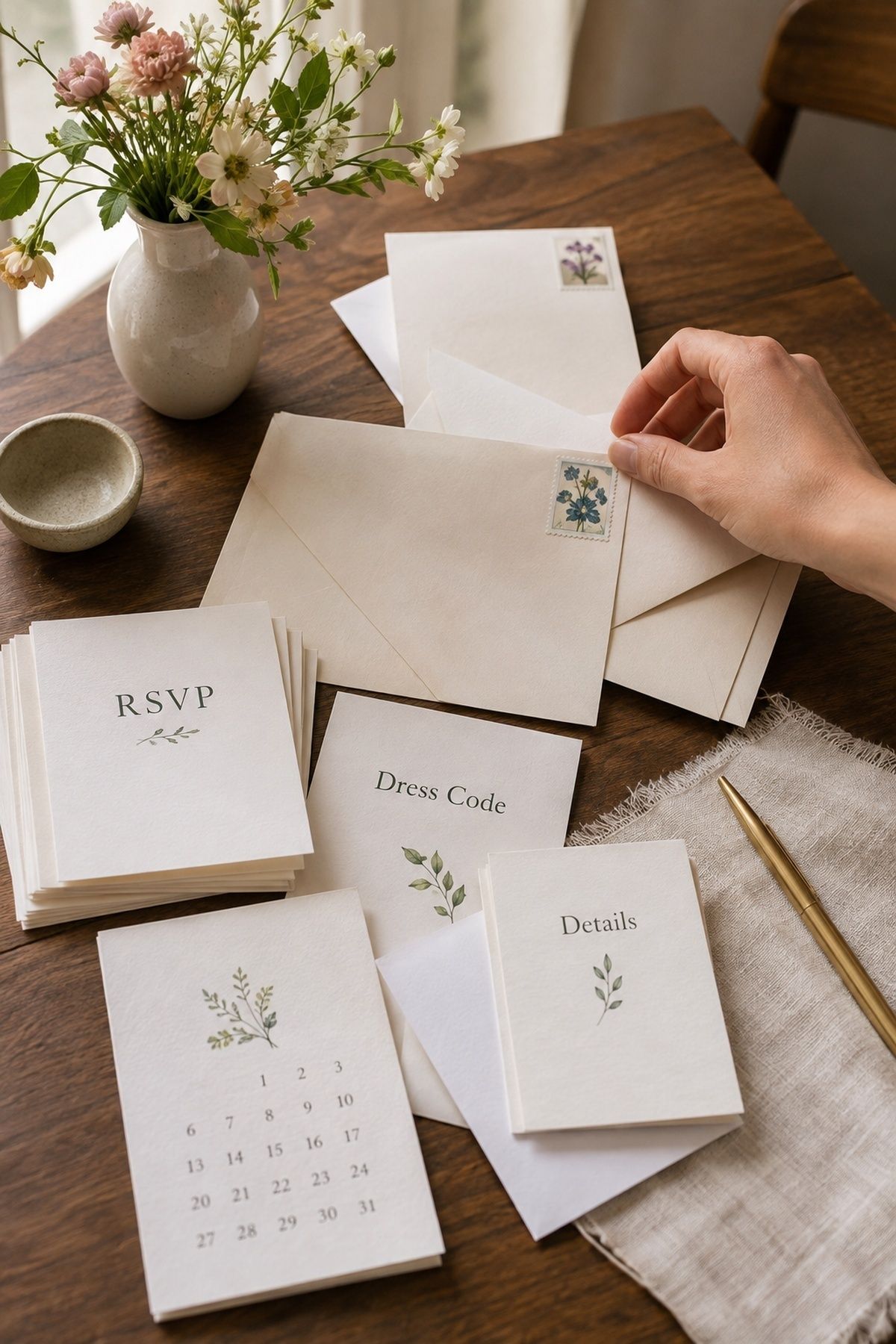
Overwhelmed couples often postpone guest communication because they want every detail to be perfect first. That usually creates more stress. Guests do not need your final candle count; they need the date, place, timing, travel expectations, dress code, RSVP method, and enough clarity to understand the kind of celebration they are attending.
Small weddings need especially thoughtful wording because guest-list boundaries can be emotionally loaded. If there are no plus-ones, no children, no extended family, or no larger reception afterward, say so with warmth and clarity. A small guest list is easier to honor when people are not left to guess.
Send save-the-dates only if they help. For a shorter timeline, invitations or a simple wedding website may do the job better. Set an RSVP deadline that leaves enough time for food counts, seating, transportation, and any accessibility needs.
Move Pretty Details To The Later Pile
Color palettes, signage, favors, welcome bags, playlists, printed menus, getting-ready robes, custom napkins, lounge furniture, and specialty decor can all be lovely. They are also the easiest place for an overwhelmed planning season to become bottomless.
Move these details to the later pile until the core plan is real. Then choose the few that carry the most meaning for your day. For a 24-guest dinner, flowers on one long table may matter more than a full signage suite. For a courthouse ceremony, a beautiful lunch reservation may matter more than custom stationery.
If the later pile still feels crowded, deciding what wedding details you can skip can make the whole plan feel more honest. A wedding can feel complete because people are welcomed, fed, witnessed, and cared for. It does not need every decorative layer the internet suggests.
Choose One Weekly Planning Hour
A calm wedding planning schedule needs a container. Choose one weekly planning hour and treat it like a standing appointment with a beginning and an ending. Open the same tracker. Review only the current bucket. Choose up to three decisions. Assign follow-ups. Then close the laptop.
This weekly wedding-planning routine is especially useful if you both work full time, have caregiving responsibilities, or feel flooded by constant micro-decisions. It keeps the wedding from spreading across every dinner, every walk, and every quiet moment you still need as a couple.
If time is the pressure point, a realistic approach to planning a wedding when you work full time starts with boundaries around when wedding decisions happen. For now, start with one hour, one list, and one shared rule: no surprise planning conversations at bedtime.
Make A Stop-Doing List

A stop-doing list is not a failure list. It is a protection list. Write down the tasks that do not serve your budget, your guest count, your energy, or the wedding you are actually having. This may include favors, elaborate signage, multiple outfit changes, a full wedding party, a welcome party, hotel bags, custom cocktails, or a heavily styled exit.
Then be specific about why each item is leaving. “No favors because we are spending that money on dessert.” “No wedding party because we want our friends to arrive as guests.” “No custom signage because the restaurant already has clear wayfinding.” This turns skipping into an intentional design choice.
Low stress wedding planning often comes from removing decisions before they become debts. You are not required to carry a task just because another couple loved it.
Plan The Handoff Before The Final Month
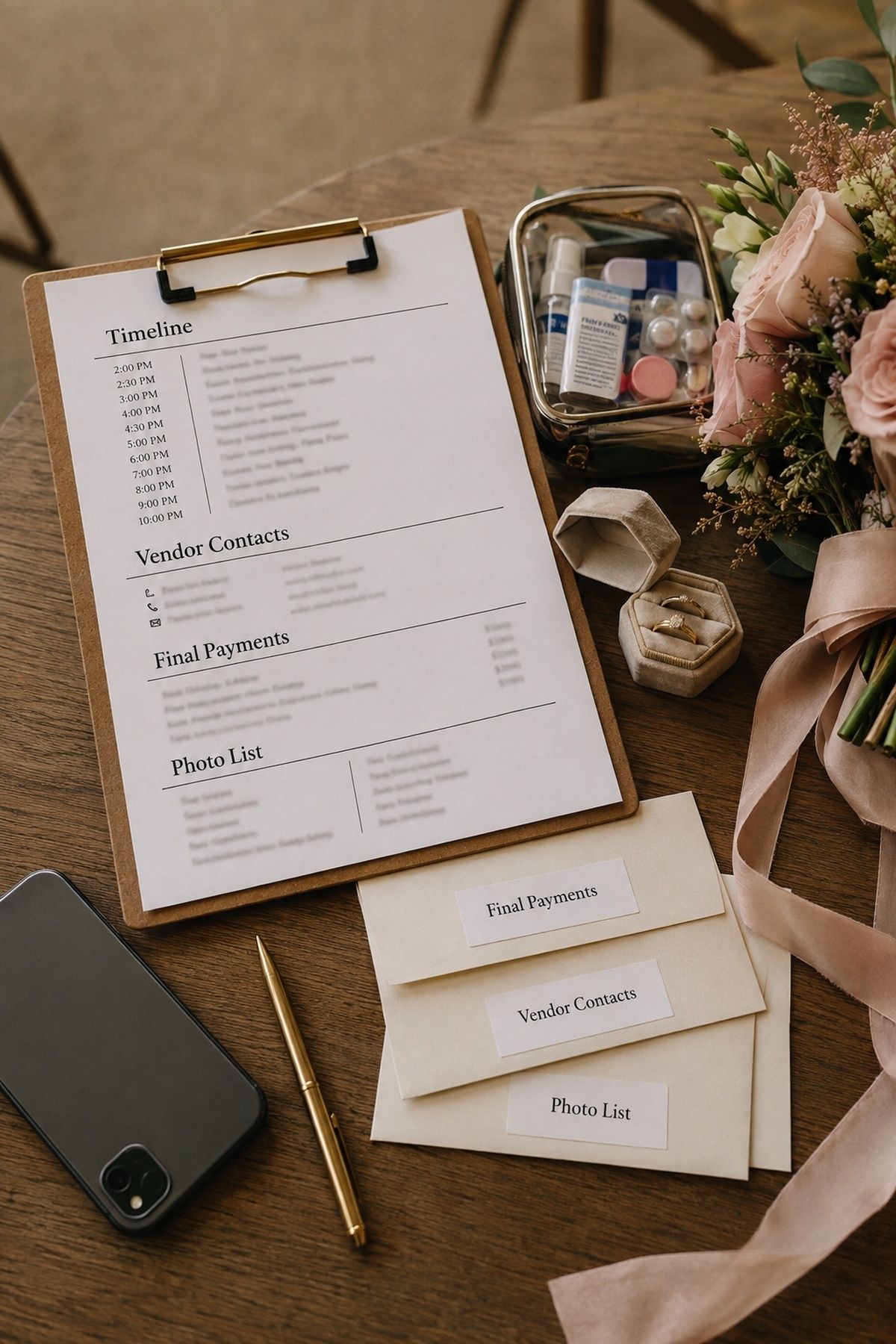
Before the final month, decide who holds the plan on the wedding day. That person might be a coordinator, planner, venue manager, trusted sibling, organized friend, or a small team with clear roles. What matters is that it is not you answering every setup question while you are supposed to be getting married.
Your handoff should include the day-of timeline, vendor contacts, arrival times, final payments, setup notes, family photo list, ceremony cues, emergency contact, and the person authorized to make small decisions. When you are planning a wedding without a planner, dividing ownership before the week becomes crowded is one of the kindest things you can do for yourselves.
The final month should be about confirming, not inventing. The earlier you name the handoff, the less likely you are to spend the wedding week solving things someone else could have held.
The Now, Next, Later, Optional Method

When you feel overwhelmed, sort every task into four buckets: now, next, later, and optional. This method works because it lets you see the whole wedding without treating the whole wedding as urgent.
Now: Decisions That Unlock The Wedding
The now bucket includes anything that blocks the rest of the plan: budget, guest ceiling, date window, location, venue or ceremony setting, officiant or legal route, food direction, photographer, and the first guest communication plan.
Keep this bucket short. If you put centerpieces, accessories, favors, playlists, and stationery flourishes in now, the method stops working. Now is for the decisions that make the wedding real enough for other people to respond to it.
Next: Decisions That Need Lead Time
The next bucket is for choices that matter soon but do not have to be solved tonight. Attire and alterations, invitations, ceremony details, rentals, floral direction, hair and makeup, lodging guidance, transportation, and a simple wedding checklist can live here until the foundation is steady.
For a small wedding, this bucket should still be edited. You may not need transportation if everyone is staying nearby. You may not need rentals if the restaurant provides tables, chairs, linens, and glassware. You may not need a large floral proposal if one long-table design and personal flowers are enough.
Later: Details That Make The Day Feel Finished
The later bucket includes menus, paper goods, decor accents, music refinements, welcome notes, getting-ready plans, guest book ideas, favor decisions, and special moments that are meaningful but not structural.
Later does not mean unimportant. It means protected from premature decision-making. You will make better detail choices once you know the room, the season, the table count, and the true shape of the day.
Optional: Beautiful Ideas You Can Release
The optional bucket is where overwhelm starts to loosen. Put anything here that would be nice but not necessary: signature cocktails, elaborate ceremony programs, extra signage, curated welcome bags, reception games, outfit changes, specialty rentals, favors, late-night snacks, or a second event.
Then choose only what adds real warmth. If an idea makes the wedding feel more like you, keep it. If it only makes the wedding look more like a saved image, let it go.
A Calm Small-Wedding Timeline By Phase
A simple wedding planning timeline does not have to depend on whether you have 12 months, six months, or three months. The order stays mostly the same; the space between decisions changes. Think of your simple wedding planning timeline as a rhythm you can compress or stretch, while this phase plan keeps the pressure lowered right away.
Phase One: Stabilize The Foundation
In the first phase, decide your budget range, guest ceiling, broad location, date window, decision owners, and the kind of wedding you are planning. If you have 12 months, this phase might take a few weeks. If you have three months, it may need to happen over one focused weekend.
Do not tour venues casually before this is done. Venue shopping without a guest ceiling and budget can make every option feel both exciting and impossible.
Phase Two: Secure The Date And Core Team
Book the ceremony and reception location, officiant or legal path, food, photographer, and coordinator if needed. If your wedding is very small, one venue may solve several of these at once: a restaurant private room, inn, courthouse-plus-dinner plan, or micro-wedding package can reduce the number of separate vendors you need to manage.
This is also the moment to watch vendor minimums. A guest list of 28 does not always fit vendors built around 150-person events. Right-sized support is calmer than trying to shrink a big-wedding system.
Phase Three: Tell Guests What They Need To Know
Send save-the-dates, invitations, or a clear digital notice depending on your timeline. Give guests the date, location, lodging information if needed, dress code, RSVP deadline, and any small-wedding boundaries that affect their plans.
For intimate celebrations, your wording can be brief and kind. You do not need to over-explain the guest list, but you do need to prevent confusion. Clear communication is one of the most generous things you can give your guests.
Phase Four: Choose The Details Guests Will Feel
After the structure is steady, choose the details guests will actually experience: ceremony flow, meal style, seating comfort, weather plan, music volume, lighting, temperature, signage where needed, and accessibility. This is where a small wedding checklist for a busy couple should stay practical rather than decorative.
Then choose atmosphere. Flowers, candles, paper goods, linens, favors, and special touches are easier to edit once you know what guests need physically and emotionally.
Phase Five: Confirm Counts, Payments, And Roles
As RSVPs arrive, confirm the final count, meal choices, seating needs, vendor arrival times, final payments, setup responsibilities, and the day-of timeline. This phase is less romantic but deeply calming. It turns vague concern into named responsibilities.
If you are following a small wedding planning timeline by month, this is where the final months become more detailed. Keep asking what matters for guests, vendors, legalities, and handoff. Let the rest stay quiet.
Phase Six: Protect The Wedding Week
The wedding week should not become a second planning season. Pack what needs to move, print or share timelines, confirm the license, hand over vendor contacts, assign personal-item responsibilities, and decide who will answer questions.
Leave white space where you can. Eat real meals. Stop re-opening choices that are already good enough. A calm wedding week is not created by finishing every idea; it is created by knowing which ideas are finished.
FAQ
Where Should Overwhelmed Couples Start With Wedding Planning?
Overwhelmed couples should start with budget, guest ceiling, date window, location, and the feeling they want the wedding to have. Do that before venue tours, colors, decor, or vendor browsing. Once those five decisions are clear, choose one next task that unlocks the rest, usually the venue or ceremony plan.
How Do You Make A Wedding Timeline Feel Less Stressful?
Make a wedding timeline feel less stressful by sorting tasks by dependency, not by every possible detail. A wedding planning timeline for overwhelmed couples should put budget, guests, date, venue, food, photos, legal steps, and handoff first. Move styling choices later, then review one shared tracker during a weekly planning hour.
What Wedding Tasks Matter First?
The wedding tasks that matter first are the ones that make the wedding possible: budget, guest count, venue or ceremony setting, date, officiant or legal path, food, photographer, and guest communication. After those are stable, you can make detail choices with less pressure because the bones of the day are already secure.
What Can Overwhelmed Couples Postpone Or Skip?
Overwhelmed couples can often postpone or skip favors, elaborate signage, welcome bags, custom stationery upgrades, complex rentals, multiple pre-wedding events, outfit changes, and decor that does not serve the guest experience. Choose the details that add comfort, meaning, or clarity. Release anything that only exists because a checklist said so.
How Often Should Couples Plan Each Week?
Most couples should plan once a week for 45 to 90 focused minutes, then assign follow-ups separately. Use that meeting to review the current bucket, make up to three decisions, and decide who owns each task. Shorter, contained planning sessions are easier to sustain than constant wedding talk.
How Do Small Weddings Reduce Planning Overwhelm?
Small weddings reduce planning overwhelm by lowering guest logistics, seating complexity, transportation needs, rental volume, and the number of people affected by each decision. They still need clear boundaries, guest communication, and right-sized vendors. The benefit comes when the couple protects the smaller scope instead of adding big-wedding expectations back in.
Final Thoughts
A wedding planning timeline for overwhelmed couples should help you breathe, not prove how much you can manage. Start with the decisions that protect the wedding itself. Give every task a place: now, next, later, or optional. Let your small wedding be smaller where smaller feels kinder, clearer, and more honest.
You do not need a perfect planning personality to create a beautiful day. You need a few steady decisions, a weekly place to return to them, and the courage to release details that do not serve your guests or your peace. Near the end of planning, confirm the legal timing for your location with current ceremony and marriage-license guidance, then let the final week belong to the vows, the meal, and the people who are coming close to witness you.
Last update on 2026-10-04 / Affiliate links / Images from Amazon Product Advertising API