

Your small wedding invitation wording should tell each guest exactly who is invited, what part of the celebration they are attending, when and where to arrive, and where to find extra details. Keep the main invitation warm and simple, move logistics to a details card, and save sensitive boundaries for your wedding website or a private conversation.
Small weddings often ask invitations to do more emotional work than big weddings. There may be fewer guests, a private ceremony, a dinner-party reception, a no-kids boundary, or a carefully limited plus-one rule. The wording has to be gracious, but it also has to be unmistakable.
The goal is not to explain every guest-list decision on paper. The goal is to help invited guests feel wanted and informed without making the invitation suite feel crowded, defensive, or confusing. Once you separate the main invitation, details card, wedding website, and private conversations, the wording becomes much easier to shape.
Recommended Wedding Products


You Might Also Like These Blog Posts
- Intimate Wedding Invitation Wording For Every Small Celebration
- Small Wedding Website Wording For A Small Guest List
- Small Wedding Website Wording Ideas For A Tiny Guest List
- Small Wedding Guest List Wording That Keeps Boundaries Kind
- Reception After Private Ceremony Wording That Keeps Expectations Clear.
- Wedding Invitation Mistakes That Make Guests Guess
Small Wedding Invitation Wording That Keeps Every Guest Clear
The best small wedding invitation wording begins with the event guests are actually being asked to attend. A guest invited to the full ceremony and reception needs different wording than a guest invited to a reception after a private ceremony. Someone coming to an intimate family dinner needs different cues than someone attending a casual backyard celebration.
Before you write a line, name the format privately. Are you hosting the ceremony and reception for the same group? Is the ceremony immediate family only? Are you already married and inviting friends to celebrate afterward? Is the reception small too, or is it the wider gathering? That format should shape every card in the suite.
Start With The Event Guests Are Actually Attending
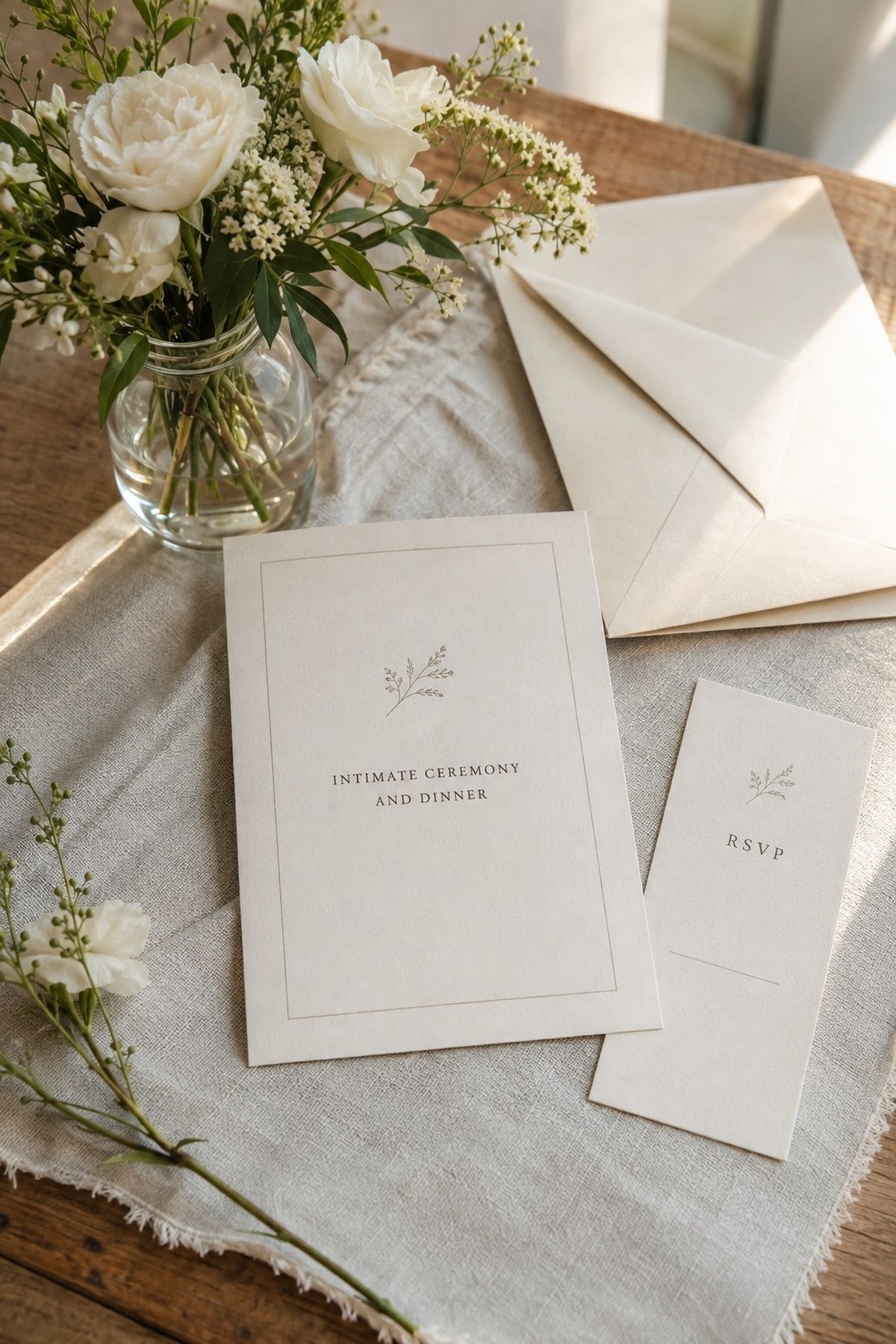
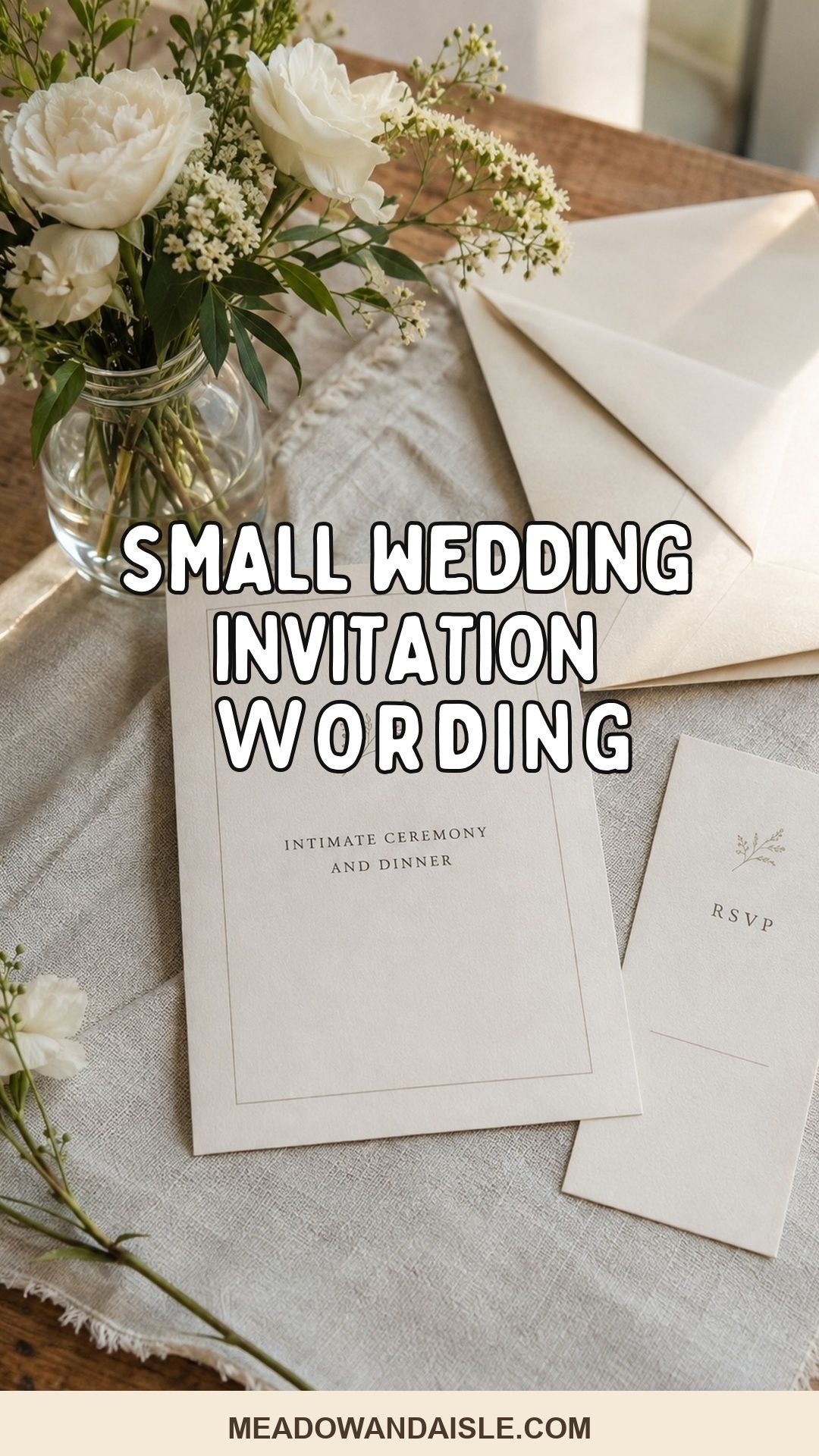
Invitation wording should not make guests guess whether vows are part of the event. If they are invited to the ceremony and reception, traditional wedding language works well: names, invitation line, date, time, place, and reception note. If the ceremony is private, the invitation should point guests toward the celebration they are invited to, not imply they missed something by accident.
For private ceremony invitation wording, keep the ceremony wording brief and confident. You might frame the reception as a celebration of your marriage, a dinner in honor of your vows, or a gathering after an intimate ceremony. The tone can be formal or relaxed, but the structure should be clear: the ceremony is separate, and this invitation is for the celebration listed.
Small ceremony invitation wording can also be simple when the same guests attend both moments. A line such as “join us for an intimate ceremony and dinner” gives guests the scale and shape of the day without turning the invitation into an explanation of the guest list.
Keep The Main Invitation Clean
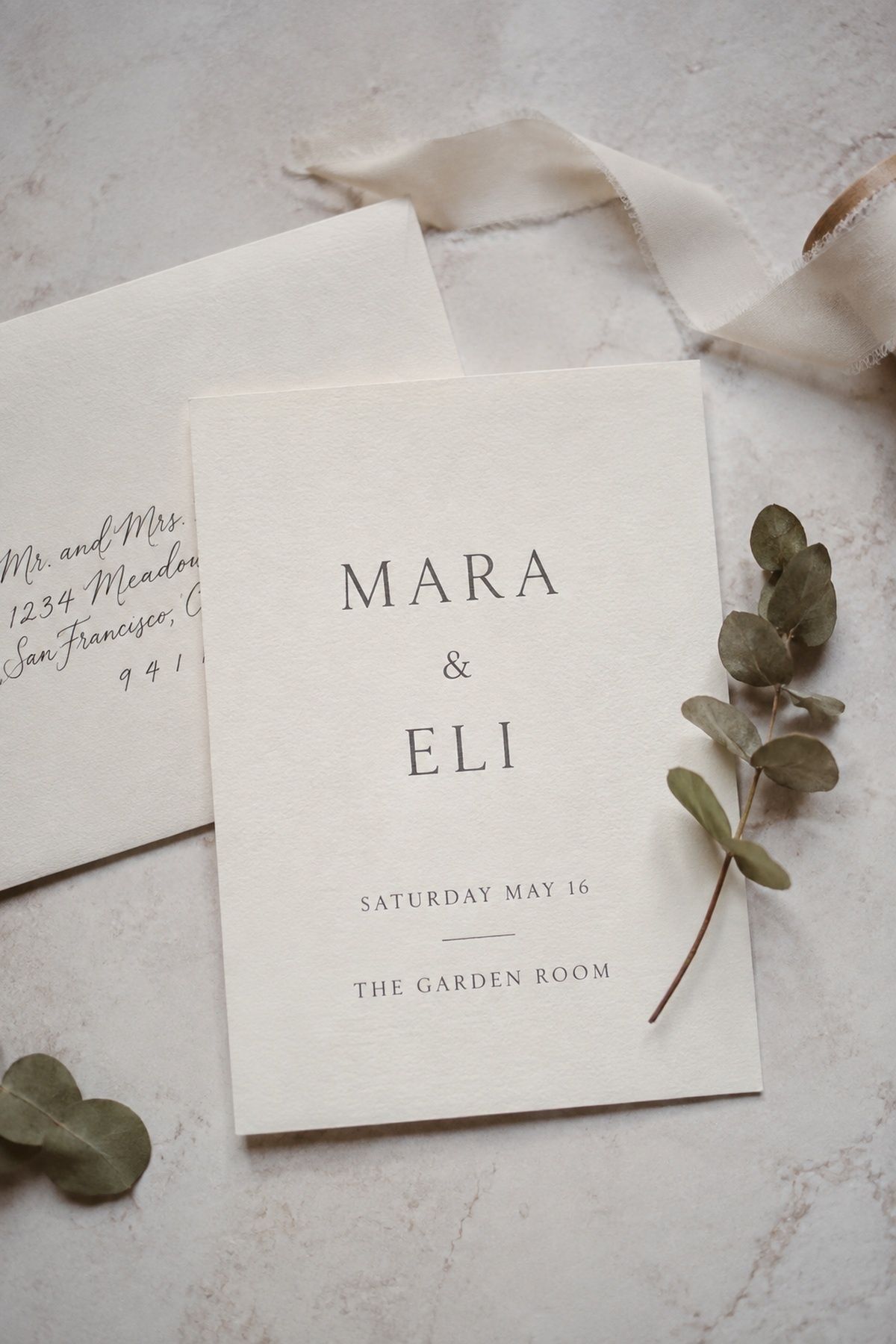
The main invitation is the front door. It should carry the essentials: host line if you are using one, couple names, invitation line, date, time, venue, city and state, and a simple RSVP direction. If the reception follows in the same place, that can usually be one short line.
What does not belong on the main card is a long defense of why the wedding is small. Avoid phrases that sound apologetic, such as “because we cannot invite everyone” or “due to limited space, please understand.” Those details may be true, but on the invitation they can make guests feel like logistics are the main story.
Instead, let the envelope and RSVP process do the precise guest-list work. Address the invitation to the exact people invited. Use named guests rather than vague household language when space is tight. If a plus-one is included, make that clear on the RSVP card or online RSVP. If children are invited, name them or address the invitation to the included family members.
Use A Details Card For Practical Information

Wedding details card wording is ideal for helpful information that would crowd the invitation. This is where you can place parking notes, transportation, dress code, accommodation details, a weekend schedule, a reception address, RSVP instructions, and the wedding website URL.
For a small wedding, a details card can also protect the tone of the invitation. Instead of stacking practical notes under the ceremony wording, give guests a clean main card and a short companion card that answers the questions they will actually ask next: Where do I park? What should I wear? Is dinner served? How do I reply?
Keep the card scannable. Use short lines, one or two grouped sections, and direct wording. If the note needs more than a few sentences, send guests to the website instead of shrinking the text until it feels like fine print.
Use Website Wording For Sensitive Boundaries

Small wedding website wording is the better home for sensitive explanations. Plus-one limits, no-kids details, registry information, livestream access, accessibility notes, travel reminders, and limited-seating language can all be handled with more warmth online than on a small printed card.
The invitation can point guests there with a graceful line: “For travel details, RSVP, and celebration notes, please visit our wedding website.” On the website, your wording can be both kind and firm. For example, you can explain that the invitation is limited to the named guests, that the celebration will be adults-only, or that the ceremony will be shared privately with a small family group.
Try not to overexplain. A clear boundary often feels kinder than a paragraph that sounds nervous. Guests need to know what applies to them; they do not need the full history of every seating, budget, or family decision.
Word Private Ceremony And Reception-Only Invites Carefully
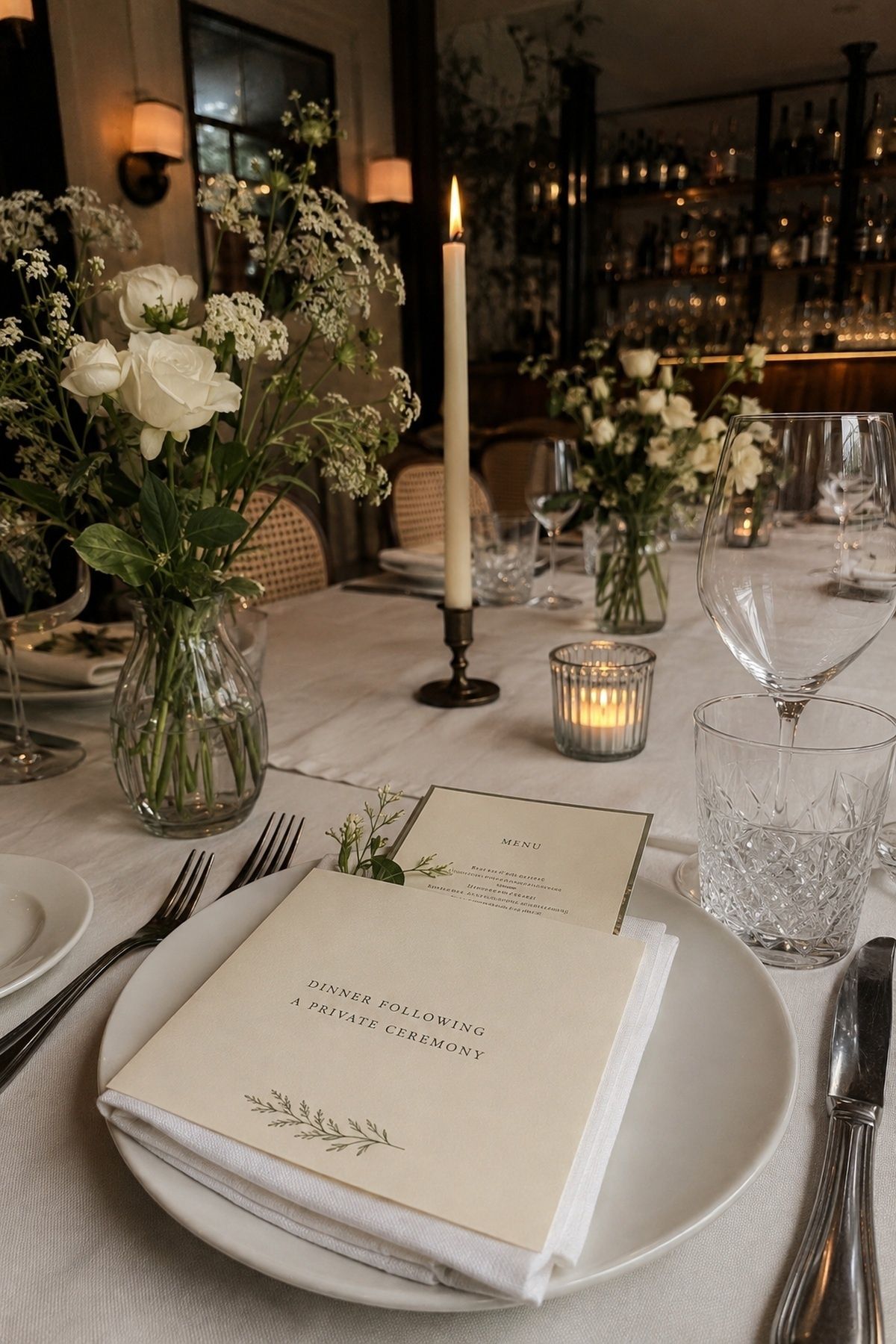
Reception-only wedding invitation wording should make the celebration feel intentional, not like a consolation event. The safest path is to center what guests are invited to enjoy: dinner, dancing, cocktails, brunch, a garden party, or a celebration of your marriage.
If the ceremony already happened, say so briefly. If the ceremony will happen privately before the reception, phrase the invite around the later gathering. For small reception invitation wording, the line “please join us for dinner and celebration following a private ceremony” is clearer than wording that mentions the wedding but leaves the ceremony status unclear.
The guest should never wonder, “Am I supposed to arrive for vows?” or “Was I invited to the whole wedding?” Proof this section with a guest’s eyes. The event type, start time, address, and RSVP path should answer the question before it becomes a text message.
Match The Wording Tone To The Wedding Tone
Intimate wedding invitation wording can be formal, casual, family-hosted, couple-hosted, religious, secular, romantic, or wonderfully plain. The right tone is the one that sounds like the event you are actually hosting.
A restaurant dinner may call for warm, simple wording. A family-hosted garden ceremony may feel right with a traditional host line. A backyard wedding might sound more natural with “join us as we exchange vows and share dinner under the trees.” A courthouse ceremony followed by brunch can be honest and sweet without pretending to be a ballroom reception.
Consistency matters more than formality. If your wedding is relaxed, do not choose wording so ornate that guests arrive overdressed and unsure. If the celebration is formal, do not make the invitation sound casual just because the guest list is small. Small does not automatically mean informal.
Proof The Invitation Like A Guest
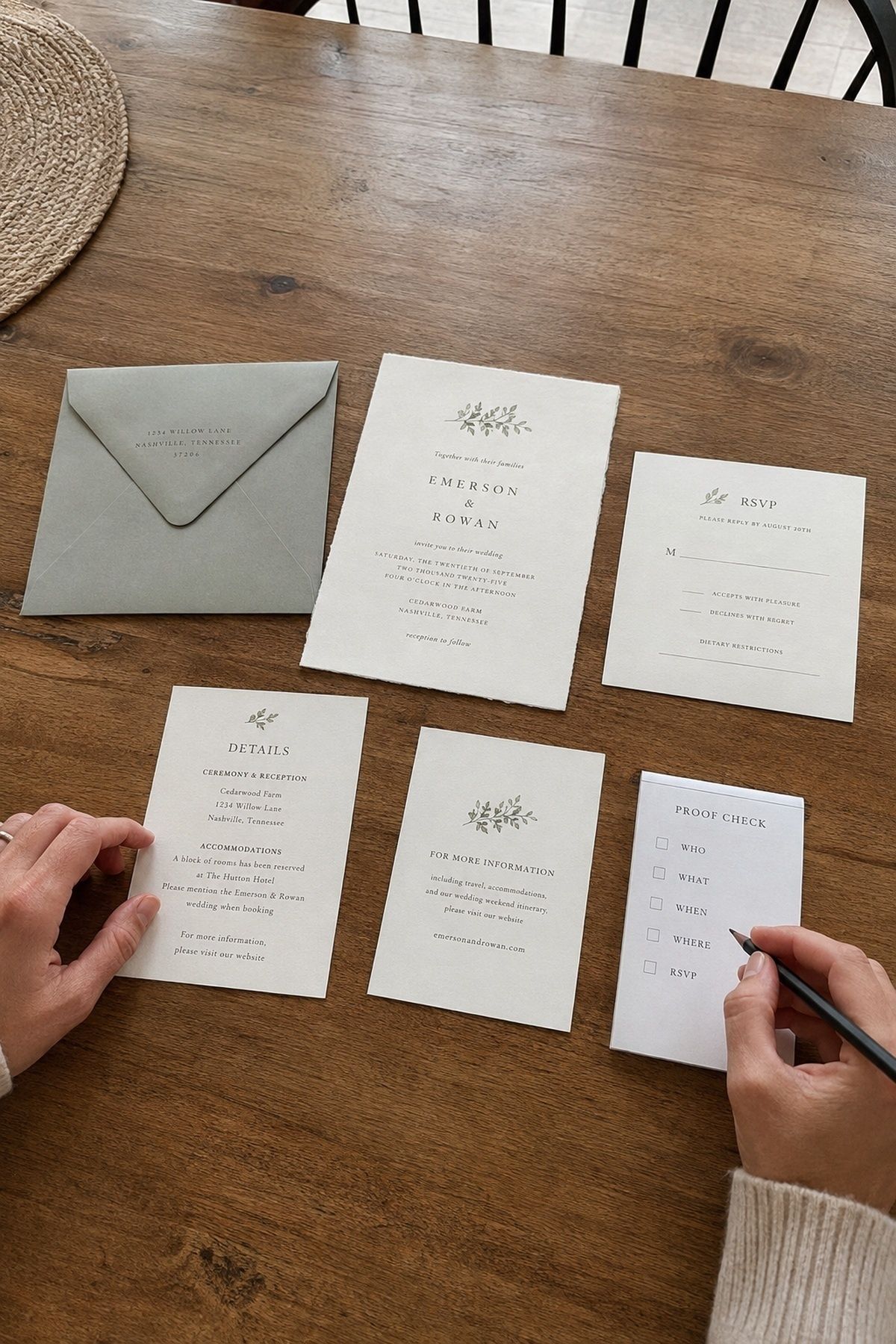
After the wording feels beautiful, test it for function. A guest should be able to answer six things quickly: Am I invited? Is anyone invited with me? What am I attending? When should I arrive? Where do I go? How do I reply?
This is where small-wedding wording often needs one more polish pass. A couple may know that “celebration” means reception-only, but a guest may not. A parent may know that “family dinner” includes children, but a friend may not. A line may feel elegant to you and still leave a practical question unanswered.
Read every visible piece together: outer envelope, invitation, RSVP card, details card, website note, and any FAQ. The invitation suite should sound like one steady host, not five separate explanations.
Avoid Small-Wedding Invitation Mistakes
The biggest mistake is vague wording. “Join us for our wedding celebration” can be lovely, but if there is a private ceremony or reception-only plan, it may not say enough. The second mistake is over-apology. Long explanations can make guests feel as if they are reading a seating-chart negotiation instead of an invitation.
Also avoid putting registry language on the main invitation, hiding plus-one or no-kids information until guests ask, using household names when only some people are invited, or copying wording that does not match your event. The prettiest phrase is not helpful if it sends people to the wrong place at the wrong time.
For last-minute changes, keep the same rule: communicate directly, briefly, and in the place guests are most likely to see it. If the ceremony timing shifts, guests need a message. If a website FAQ gets a small update, the printed invitation does not need a dramatic rewrite.
FAQ
How Do You Word Invitations For A Small Wedding?
Word a small wedding invitation around the exact event guests are attending. Include the couple names, invitation line, date, time, venue, city, and RSVP direction. Keep guest-list explanations off the main card, then use the envelope, RSVP, details card, and website to clarify who is invited and what guests need to know.
Should A Small Wedding Invitation Mention The Guest List Is Limited?
The main invitation usually does not need to mention that the guest list is limited. A warmer approach is to address the invitation to the exact named guests and explain limited seating on the wedding website if needed. For close family pressure or likely confusion, handle the explanation privately and kindly.
How Do You Word An Invitation For A Private Ceremony?
For a private ceremony, make the invited event clear. If guests are coming to a later celebration, use wording such as a celebration of your marriage, dinner following a private ceremony, or reception in honor of your vows. Avoid implying that guests should arrive for the ceremony if they are not invited to that portion.
How Do You Invite Guests To A Reception After A Small Ceremony?
Invite guests to the reception by naming the reception as the event. Include the date, start time, location, and RSVP details, and briefly note that the ceremony is private or has already taken place. The wording should make guests feel included in the celebration, not uncertain about whether they missed the vows.
What Details Belong On The Main Invitation?
The main invitation should include the host line if used, couple names, invitation request, date, time, venue, city and state, and a simple reception or RSVP note. It should not carry long travel notes, registry details, complicated schedule information, or emotional explanations about the guest list.
What Should Move To A Details Card Or Wedding Website?
Move parking, travel, accommodation, dress code, schedule, reception address, online RSVP, and website URL to a details card when space allows. Use the wedding website for longer explanations, plus-one rules, no-kids wording, registry information, livestream details, accessibility notes, and anything sensitive that needs more context.
Final Thoughts
Small wedding invitation wording works best when it feels warm, brief, and impossible to misunderstand. Give the main invitation one clear job, use the details card for practical guest care, and let the wedding website hold anything that needs a gentler explanation.
If you are planning a reception after a private ceremony, guest clarity matters more than elaborate wording; guests should know whether they are attending the ceremony, the reception, or a celebration after vows have already happened, while parking, travel, RSVP details, and website notes often feel cleaner when they sit with the small enclosure card wording instead of crowding the main invitation.
Last update on 2026-10-04 / Affiliate links / Images from Amazon Product Advertising API