

This small wedding guest count guide starts with a simple benchmark: a small wedding is usually around 50 guests or fewer, while a micro wedding is often closer to 20 guests or fewer. The best guest count is the number you can host well: people you can feed comfortably, seat in a room that feels full, greet without rushing, and include without quietly breaking your budget or boundaries.
A small wedding sounds simple until you have to turn the feeling into an actual invitation number. The label matters less than the experience. A 48-person restaurant wedding can feel intimate if everyone has a real reason to be there, while a 22-person backyard wedding can feel strained if half the list was added from obligation.
Before you ask, “How many guests is a small wedding?” ask what room, meal, conversation, and emotional pace you want. Use this guide as a decision tool so you can choose a guest-count ceiling, explain the reason behind it, and hold the line kindly.

Recommended Wedding Products


You Might Also Like These Blog Posts
- Micro Wedding Guest Count: How Small Should It Feel?
- Micro Wedding Guest List: Who Makes The Tiny Cut?
- Small Wedding Guest List Etiquette For A Guest List That Feels Fair
- How To Keep Your Wedding Guest List Small Before It Spirals
- What Is A Micro Wedding? The Intimate Celebration Guide For Couples Who Want More Meaning
- How Much Should A Small Wedding Cost Without Feeling Like Too Much
Use This Small Wedding Guest Count Guide To Choose A Number You Can Host Well
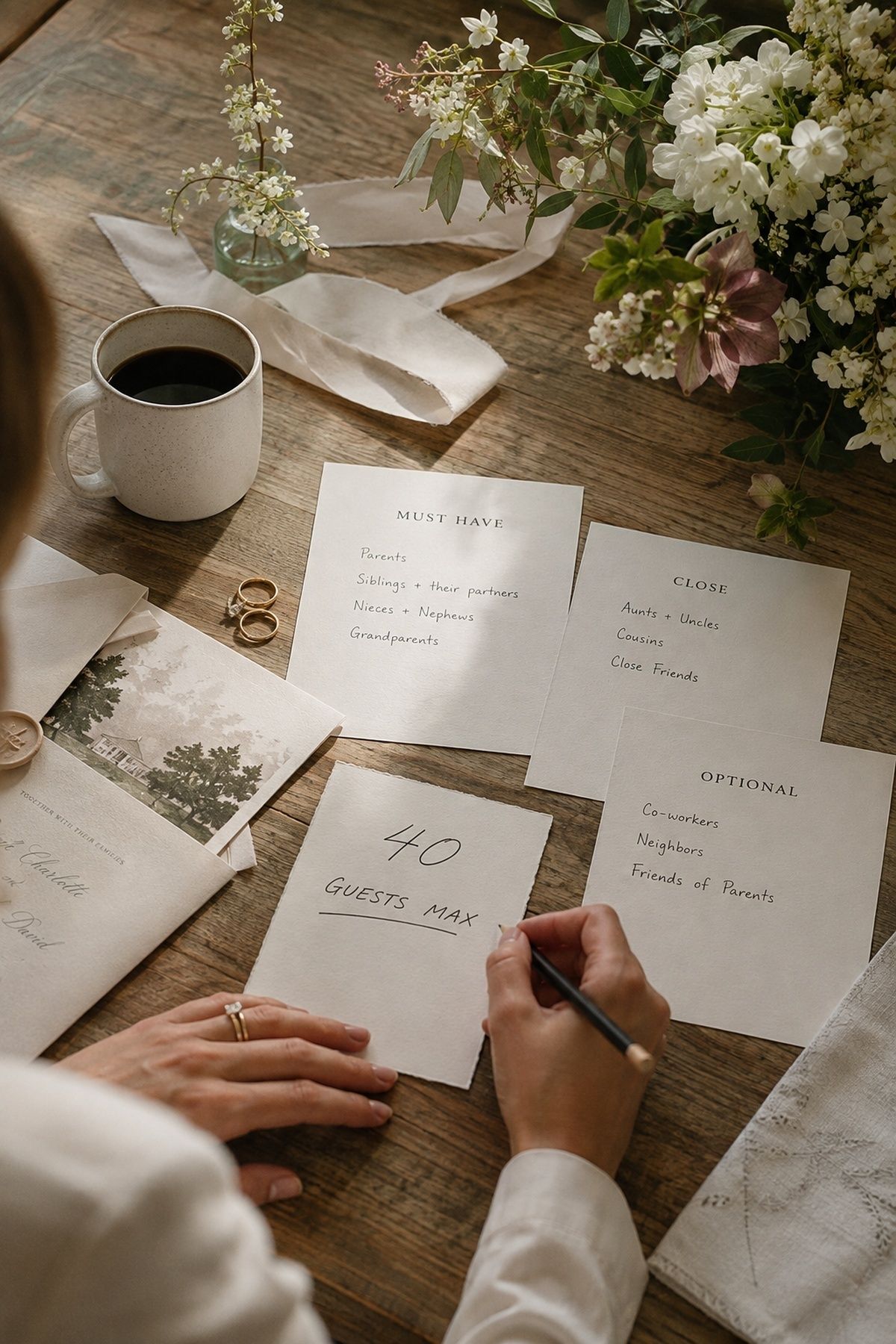
The right guest count is not just the smallest number you can tolerate. It is the number that lets the wedding feel generous, personal, and calm. Each extra person affects food, chairs, invitations, transportation, photos, room energy, and how much attention you can give the people who came to witness you.
Start by choosing a working range before you build the actual list. Couples who want a private, vow-centered day may land around 10 to 20 guests. Couples who want dinner-party warmth often land around 25 to 40. Couples who want a small wedding with a little more family and friend overlap often land close to 50.
What Counts As A Small Wedding
Most wedding planning conversations treat 50 guests or fewer as a small wedding guest count. That range is broad, though. A wedding with 12 people and a wedding with 50 people are both small, but they plan very differently.
Micro guest count
A micro wedding guest count usually sits around 20 guests or fewer. This size works beautifully for immediate family, chosen family, and a few closest friends. It often feels like a private ceremony followed by an exceptional meal, a weekend stay, or an unrushed celebration in a meaningful place.
The tradeoff is that there is very little room for soft obligations. If you invite one cousin, one coworker, or one casual friend, the pattern becomes visible quickly. Micro weddings need especially clear invitation rules because every seat carries emotional weight.
Intimate guest count
An intimate wedding guest count often falls between about 20 and 40 guests. This is enough room for immediate family, closest friends, and a few important extended relationships, while still keeping the day personal. It is also the range where private dining rooms, garden ceremonies, small inns, galleries, and homes can feel naturally full.
This count gives you more flexibility, but it still asks for discipline. Plus-one rules, children, and family branches can change the entire feeling of the day if you do not decide them before invitations go out.
Small wedding near 50 guests
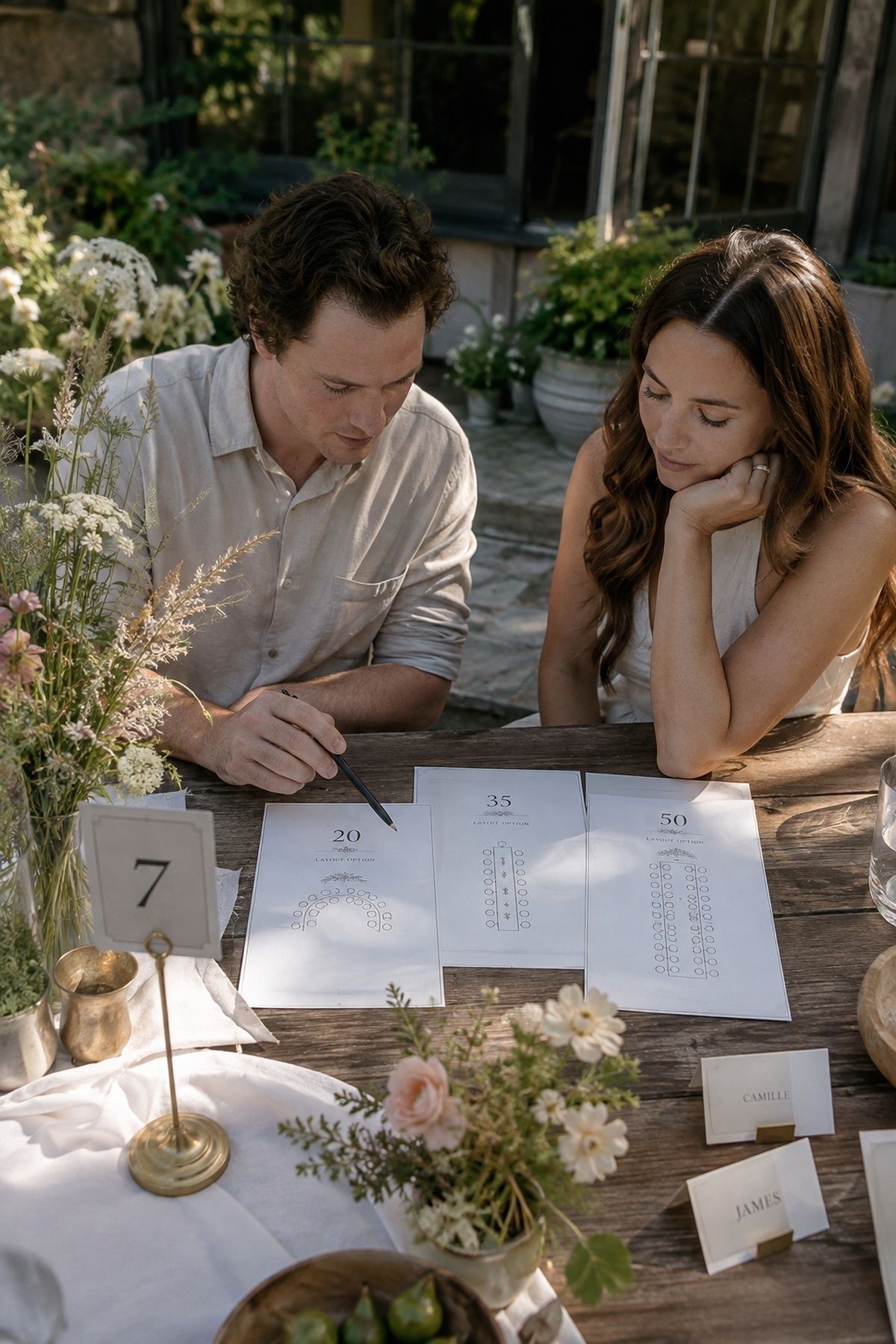
Is 50 guests still considered a small wedding? Yes, in most planning contexts, 50 guests still reads as small. It can feel wonderfully lively without becoming a large production, especially if the guest list is made of people who actually know you and will be part of your life after the wedding.
The caution is that 50 is often the point where a small wedding starts behaving like a larger one. You may need a fuller seating chart, more rentals, formal catering timing, transportation notes, more bathrooms, and firmer RSVP tracking. Once your number lands there, map the guest-facing details, deadlines, and room decisions in your small wedding checklist under 50 guests before the celebration starts expanding in quiet ways.
Choose The Guest Count By Relationship Circle
The cleanest small wedding guest list starts with relationship circles, not guilt. Write names in groups before you argue for or against individual people. This makes the decisions feel less personal and more consistent.
Must-have people

Your first circle is made of people whose absence would change the meaning of the day: parents or parent figures, siblings, children, chosen family, best friends, and anyone who has genuinely supported your relationship. Count their spouses, partners, and children according to the rules you both agree on, not according to habit.
If this first circle already reaches your target number, you have your answer. You are planning a deeply intimate wedding, and the rest of the work is about communicating that choice with care.
Close but optional people
Your second circle includes people you love, but whose invitation depends on the final size: close cousins, a small friend group, a mentor, or a couple you see often. This group is where many couples move from 20 guests to 30 or 40 guests.
Use a simple test: would you make time for a real conversation with this person during the wedding week? If yes, they may belong. If you would only say hello because they happened to be there, they may not fit a small wedding family invite list or friend list with a hard ceiling.
Extended family and obligation pressure
The third circle is the one that expands fastest: extended relatives, family friends, coworkers, parents’ friends, neighbors, and people invited because someone else expects it. These names are not automatically wrong. They simply need to pass the same standard as everyone else.
If family pressure is strong, decide whether each side gets the same number of optional seats or whether the guest list is built only from actual closeness. Either approach can be fair. What hurts feelings more is changing the rule every time a louder person asks.
Match Guest Count To Budget
Your budget will tell the truth quickly. A guest list of 18, 32, or 50 can all be beautiful, but those counts leave very different room for food, photography, flowers, attire, lodging, music, and a backup plan.
Fixed costs
Some wedding costs do not shrink much when the guest count shrinks. Photography, attire, ceremony music, officiant fees, hair and makeup, planning help, venue rental, and permits may cost nearly the same for 25 guests as they do for 75. That is why a small wedding is not automatically cheap.
If your fixed costs are important to you, a slightly larger count may still work because those costs are already committed. If your goal is to keep the whole wedding modest, you may need to choose a venue and format that reduces fixed costs too. Build a small wedding budget breakdown before optional names start feeling inevitable.
Per-guest costs
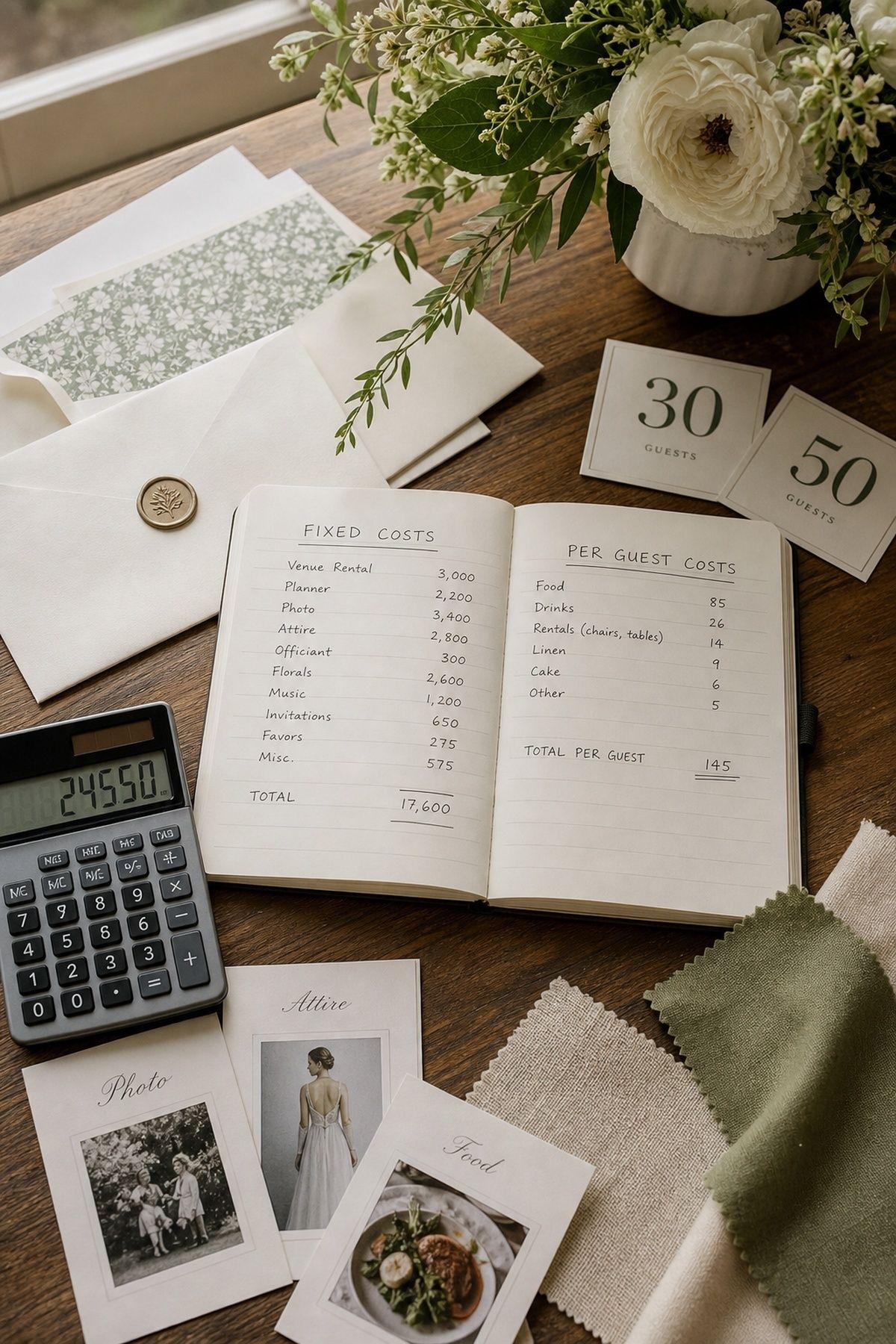
Food, drinks, rentals, invitations, favors, place cards, transportation, welcome bags, dessert portions, and sometimes staffing rise with each guest. This is where the difference between 30 and 50 becomes very real. Twenty extra people can mean two more tables, more service time, a larger bar tab, and a higher final gratuity.
Give yourself a per-guest estimate before you add optional names. If one guest adds $175 in food, beverage, rentals, and service, ten extra guests add $1,750 before any emotional cost enters the picture.
Minimum spends and room fees
Restaurants, inns, private rooms, and boutique venues may have minimum spends. Sometimes that is wonderful because the minimum covers the meal, service, room, tables, chairs, and cleanup. Sometimes it pushes you to spend more than your small wedding guest list needs.
Ask venues for the count where the minimum feels reasonable. If the room requires a $6,000 food-and-beverage minimum, 40 guests may feel comfortable while 18 guests may make the meal cost feel strained. Let the math help you choose a count you can host generously.
Match Guest Count To Venue
A venue should fit the number emotionally as well as physically. Capacity tells you how many people can legally stand there. It does not tell you whether the room will feel warm, scattered, cramped, loud, or private.
Rooms that feel full
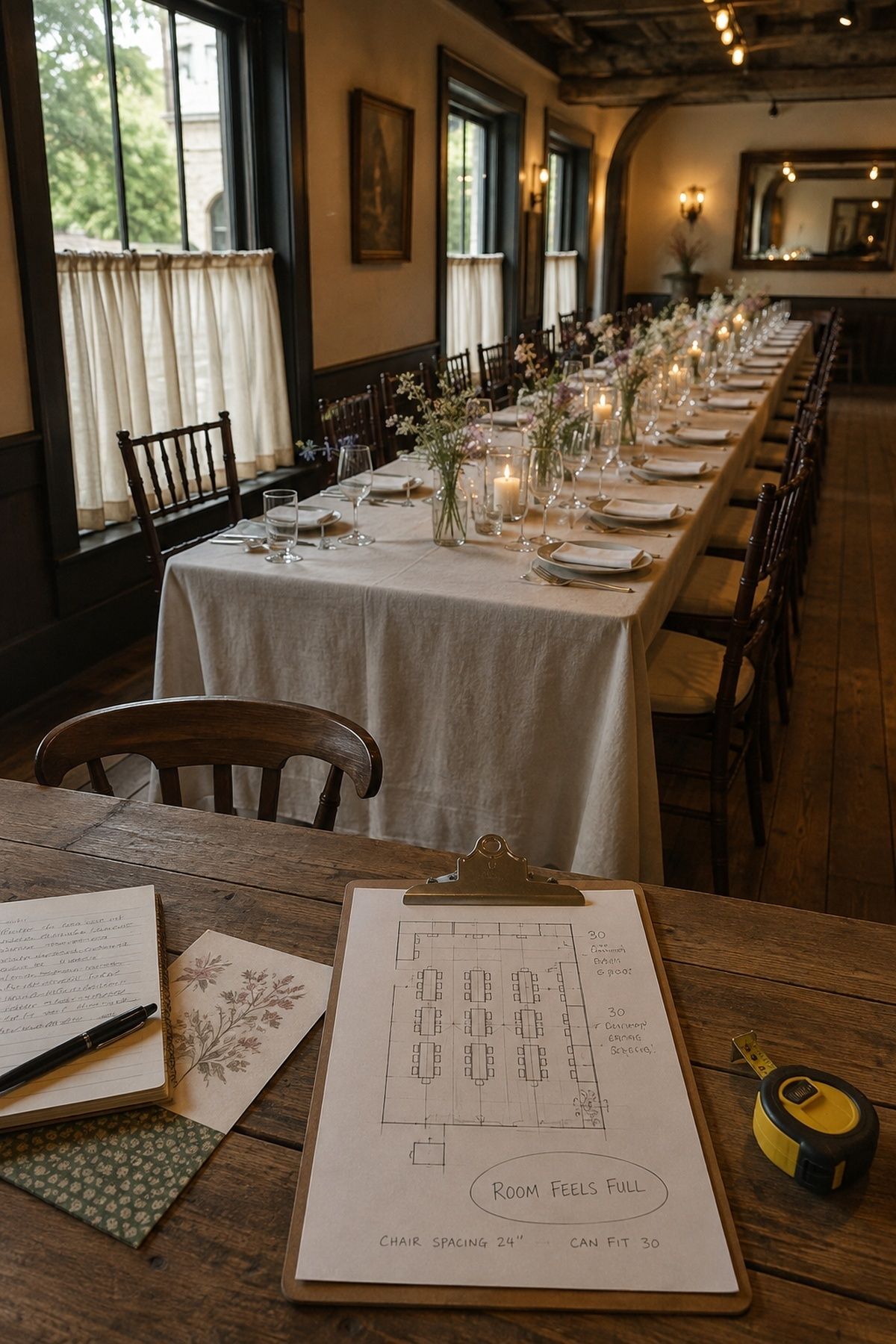
Ask each venue what guest count makes the room feel alive. A private dining room for 38 may be perfect with 30 guests. A 150-person barn may need draping, lounge areas, lighting, and a tighter floor plan to make 45 guests feel held rather than lost.
For ceremony layouts, consider a semi-circle, two short rows, or a close aisle instead of long rows with empty space. For dinner, one long table, two parallel tables, or a U-shape can make a small wedding feel gathered.
Seating, food service, and movement
Guest count affects how people move. At 20 guests, everyone can often gather for one toast, one photo, and one table. At 30 guests, you may need more intentional seating and a clear meal rhythm. At 50 guests, you probably need a real floor plan, a stronger RSVP system, and a seating chart that supports conversation.
If seating is one of your harder decisions, sketch a seating chart once your count is mostly set, keeping common wedding seating chart mistakes in mind. A beautiful number can still feel awkward if the room places guests too far apart or traps the quietest people together.
Backyard, restaurant, and private-room limits
At-home and restaurant weddings are lovely for intimate guest counts, but they need honest limits. Count bathrooms, parking, kitchen space, rain cover, heating or cooling, noise rules, accessibility, and where vendors will work. A backyard that feels perfect for 24 may become stressful at 45.
Private rooms need the same check. Ask whether your group will have a separate entrance, dedicated staff, enough room for speeches, and enough privacy that the ceremony or dinner does not feel like a reservation happening beside strangers.
Set Plus-One And Child Rules
Small wedding plus-one rules and child rules should be decided before anyone receives an invitation. These choices can change the count more than any other single category, and they can become emotionally messy when handled case by case.
Fair rules before exceptions
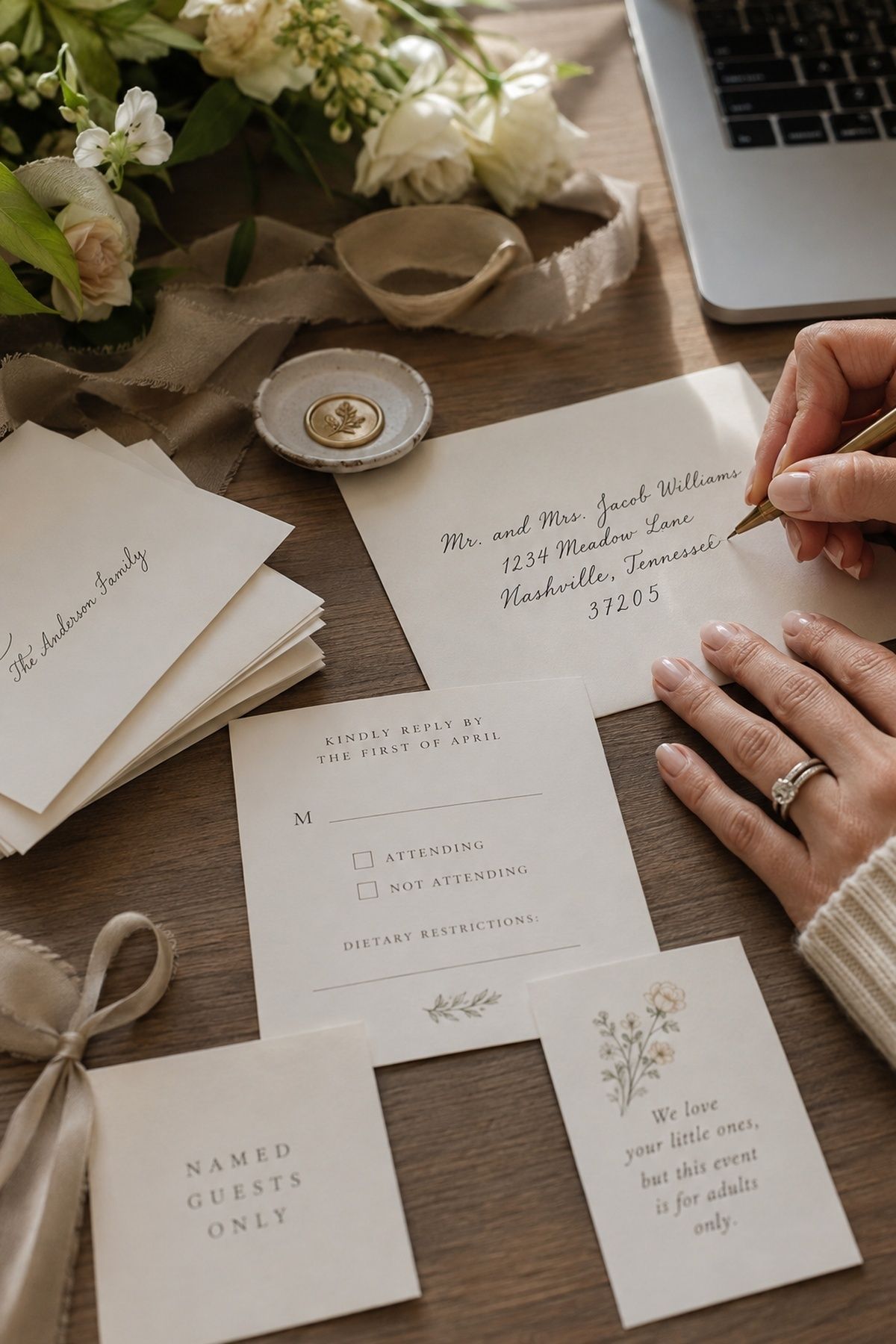
Choose a rule you can explain in one sentence. For plus-ones, you might invite spouses, engaged partners, live-in partners, and long-term partners only. For children, you might invite only immediate-family children, children in the wedding party, or no children at all.
Then decide what counts as an exception before someone asks. Exceptions are not bad, but hidden exceptions are what make people feel singled out. Consistency is one of the kindest things you can offer when the guest list is small.
How rules change at 20, 30, and 50 guests
At 20 guests, every plus-one may need a personal reason. At 30 guests, you may have room for established partners but not casual dates. At 50 guests, plus-ones may feel more natural, but they still need a standard. Children follow the same pattern: one flower child is different from inviting every cousin’s family.
If your guest count target is already close, write the envelope names exactly and make your RSVP form match those names. This prevents accidental additions and keeps your final wedding guest list under 50 if that is the ceiling you chose.
Communicate The Number Kindly
A small guest list can be loving and still disappoint people. Your job is not to make everyone delighted. Your job is to be clear, warm, and consistent so the boundary does not keep reopening.
Explain the small format
Use simple wording: “We are keeping the wedding very small and celebrating with immediate family and closest friends.” If the count is tied to venue size, budget, privacy, or the kind of day you want, you can mention that briefly without turning it into a debate.
If someone asks why they were not invited, repeat one kind sentence: “We care about you, and we are not able to expand the guest list for this very small celebration.” Long explanations usually create more room for negotiation.
Avoid reopening the guest list
Once invitations go out, treat the count as closed unless there is a true emergency or a clearly planned second wave. If you keep adding names from pressure, your budget, seating, and emotional calm will all feel it.
For couples planning around a very specific size, it helps to name the atmosphere first. A plan for a wedding with 20 guests may feel like a private dinner, while a wedding with 30 guests usually needs a little more structure around arrivals, seating, and toast timing.
Offer another way to celebrate when useful
Sometimes a separate dinner, casual drinks, brunch, livestream, announcement card, or photo note helps people feel included without changing the wedding. Only offer this if you genuinely want it. A second event should not become the large wedding you were trying not to plan.
Final Guest Count Test
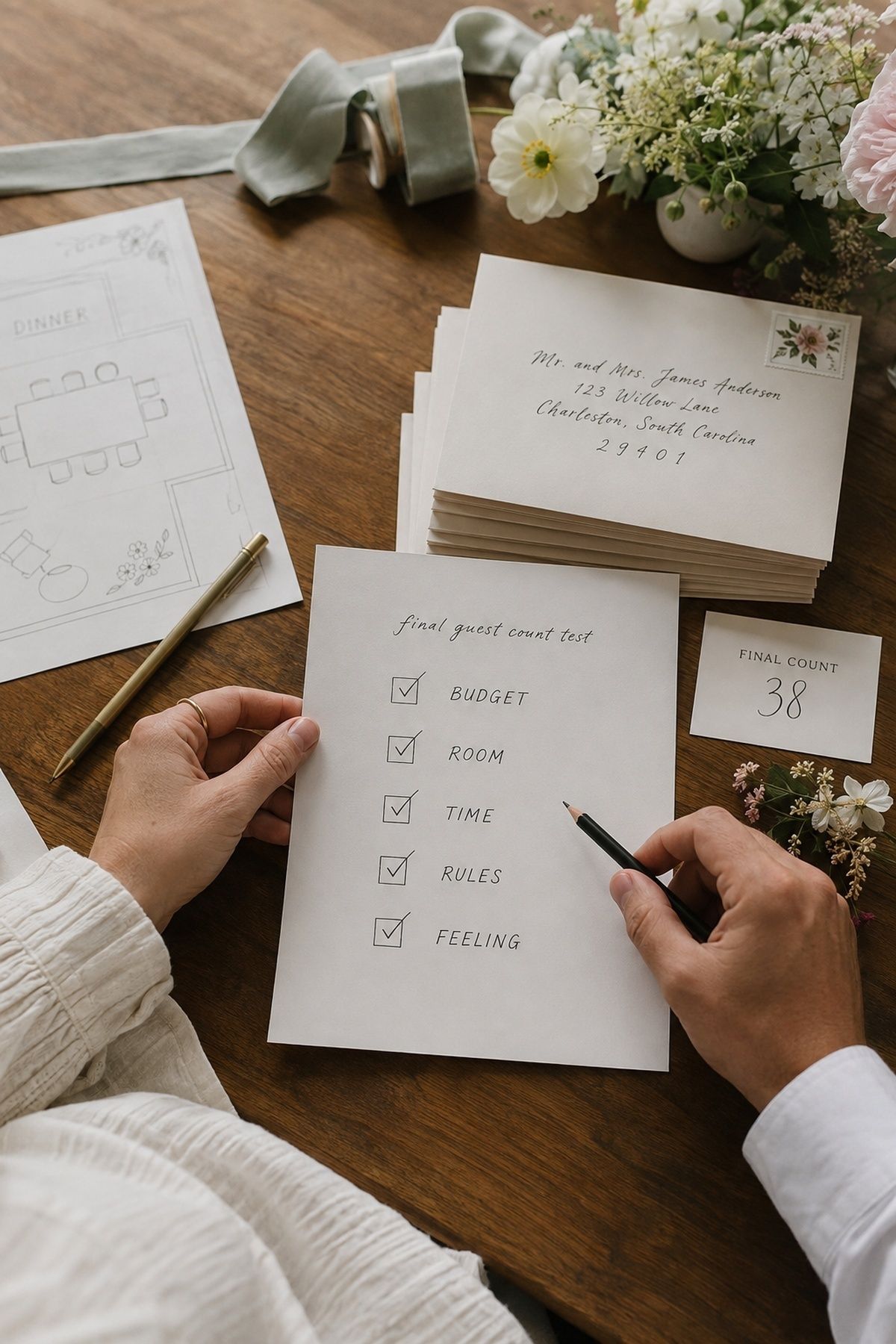
Before you send invitations, check the number against five questions. First, can you afford this many guests without cutting what matters most? Second, does the venue feel full and comfortable at this count? Third, can you speak to nearly everyone without feeling pulled apart?
Fourth, are your plus-one, no-kids, and family rules consistent enough to explain? Fifth, does each invited person fit the feeling you want in the room? If the answer is yes, your number is probably strong. If one answer feels shaky, adjust the count before invitations make the decision public.
The point of a small wedding is not to invite the fewest people possible. It is to build a celebration where the people in the room can feel your attention and care.
FAQ
How many guests is considered a small wedding?
A small wedding is usually considered 50 guests or fewer. Some couples use the term for anything under 75, but for planning purposes, 50 or fewer is a useful ceiling because the venue, meal, seating, and guest experience still feel noticeably intimate.
What is the difference between a micro wedding and a small wedding guest count?
A micro wedding is usually the smallest version, often around 20 guests or fewer. A small wedding guest count is broader and may include 25, 30, 40, or 50 guests. Micro weddings usually require tighter invitation rules, while small weddings near 50 can include a wider circle.
Is 50 guests still considered a small wedding?
Yes, 50 guests is still considered a small wedding in most planning conversations. It is also the upper edge of small, so plan it with enough structure: RSVP tracking, seating, catering timing, room flow, and clear plus-one rules.
How do you decide who to invite to a small wedding?
Start with must-have people, then add close but optional people only if the budget and venue still work. Avoid building the list from obligation first. A small wedding should include people who are part of your real life, not every person who might expect an invitation.
Should a small wedding include plus-ones?
A small wedding can include plus-ones, but the rule should be consistent. Many couples invite spouses, engaged partners, live-in partners, and long-term partners only. If the guest count is very tight, it is acceptable to limit plus-ones to named partners on the invitation.
How do you keep family from expanding a small wedding guest list?
Set the guest ceiling early, explain the small format, and use the same rule on both sides when possible. If parents are contributing financially, discuss how many seats their contribution affects before names are added. Once invitations go out, avoid reopening the list unless you planned a second wave.
What guest count feels intimate without making the room feel empty?
For many couples, 25 to 40 guests feels intimate without feeling sparse, especially in a private dining room, garden, home, inn, or small venue. The exact number depends on the room. Ask venues what count makes the space feel comfortably full, not just what the legal capacity allows.
Final Thoughts
Your guest count is not a verdict on who matters. It is a hosting decision that protects the kind of wedding you are actually trying to have. When the number fits the room, the budget, and your closest relationships, a small celebration can feel generous instead of limited.
As you settle the number, choose a guest count that fills the room comfortably, respects the budget, and lets you host each person with the real care behind an intimate celebration with your closest people.
Last update on 2026-10-03 / Affiliate links / Images from Amazon Product Advertising API