

Small wedding planning mistakes usually happen when a sweet vision stays too vague. Protect the day by defining your guest boundaries, comfort priorities, room setup, budget choices, vendor ownership, weather decisions, and final-week handoffs before the celebration starts.
A small wedding often begins with a feeling: close, relaxed, personal, warm, unfussy, a little more like gathering your favorite people than producing a formal event. That feeling is lovely, but it needs translation. Otherwise, each person involved may carry a different picture of what the day is supposed to become.
The goal is not to make an intimate wedding elaborate. The goal is to turn the heart of the celebration into decisions people can understand, quote, set up, serve, and follow. When the emotional promise has a practical plan underneath it, the day can stay beautiful without asking the couple to manage every tiny piece.
Recommended Wedding Products


You Might Also Like These Blog Posts
- Wedding Planning Mistakes That Quietly Make Everything Harder
- Small Wedding Planning Checklist For A Calm, Personal Day
- Wedding Day Stress Mistakes That Keep You From Feeling Present
- Wedding Flower Mistakes That Make Pretty Plans Harder Than They Need To Be
- How To Keep Wedding Planning Romantic When Your To-Do List Has Other Plans
- 6-Month Small Wedding Planning Checklist For A Calm, Beautiful Countdown
Small Wedding Planning Mistakes That Start With Unspoken Promises
The first mistake is planning from mood words alone. Intimate, simple, meaningful, elegant, casual, family-centered, and low-key are all beautiful intentions, but they are not instructions. A florist, parent, caterer, officiant, and best friend may all interpret them differently.
Give each mood word a visible decision. If the wedding should feel close, decide how guests will be welcomed and seated. If it should feel relaxed, protect open time instead of leaving vague gaps. If it should feel polished, choose the few details that deserve your money and attention.
Once those definitions are clear, your small wedding planning checklist can hold choices your vendors and helpers can actually carry out.
Turning Guest Decisions Into Private Stress
Many intimate wedding planning mistakes begin with kindness that stays too quiet. Couples want to spare feelings, so they delay the hard language around invitations, plus-ones, children, family expectations, or the true size of the celebration. Silence then becomes its own invitation for assumptions.
Choosing names before choosing the boundary

A guest list is easier to defend when it grows from a clear boundary. Immediate family only. Household-level family and closest friends. People both partners actively know. The rule does not remove every tender feeling, but it gives the decision a shape beyond personal preference.
Before names pile up, your small wedding guest count guide should connect the boundary to the room, budget, meal, and hosting style you can genuinely support.
Letting plus-one rules become case-by-case debates
Small wedding guest list mistakes often appear when exceptions are made quietly. One guest receives a date, another does not, and soon the invitation list feels less like a boundary and more like a ranking system.
Choose the plus-one rule early and write it in ordinary language. Named partners only. Wedding-party partners included. No additional guests because the dinner is limited to the closest circle. A kind, consistent rule is usually easier than a series of private negotiations.
Waiting until the wedding feels official to tell family
Family conversations are harder once the venue is booked and the invitation count feels fixed. If relatives have imagined a larger family table, they may experience the final number as rejection instead of context.
Share the shape of the wedding before details start traveling. Try language that is warm and firm: the ceremony is very private, the dinner is one close table, or the budget is being protected for a small circle. You can honor people without handing them the guest list.
Designing Comfort Moments Too Late
Small weddings feel generous when comfort is planned into the day, not added after the pretty decisions are finished. Comfort is not only chairs and dinner. It is the way guests are greeted, moved, fed, sheltered, seated, included, and released at the end of the night.
Treating arrival as an obvious detail

Guests may be arriving at a private home, restaurant room, garden, chapel, rented estate, or unfamiliar neighborhood. If no one knows where to park, which door to use, where coats go, or whether they should sit immediately, the first feeling of the wedding becomes uncertainty.
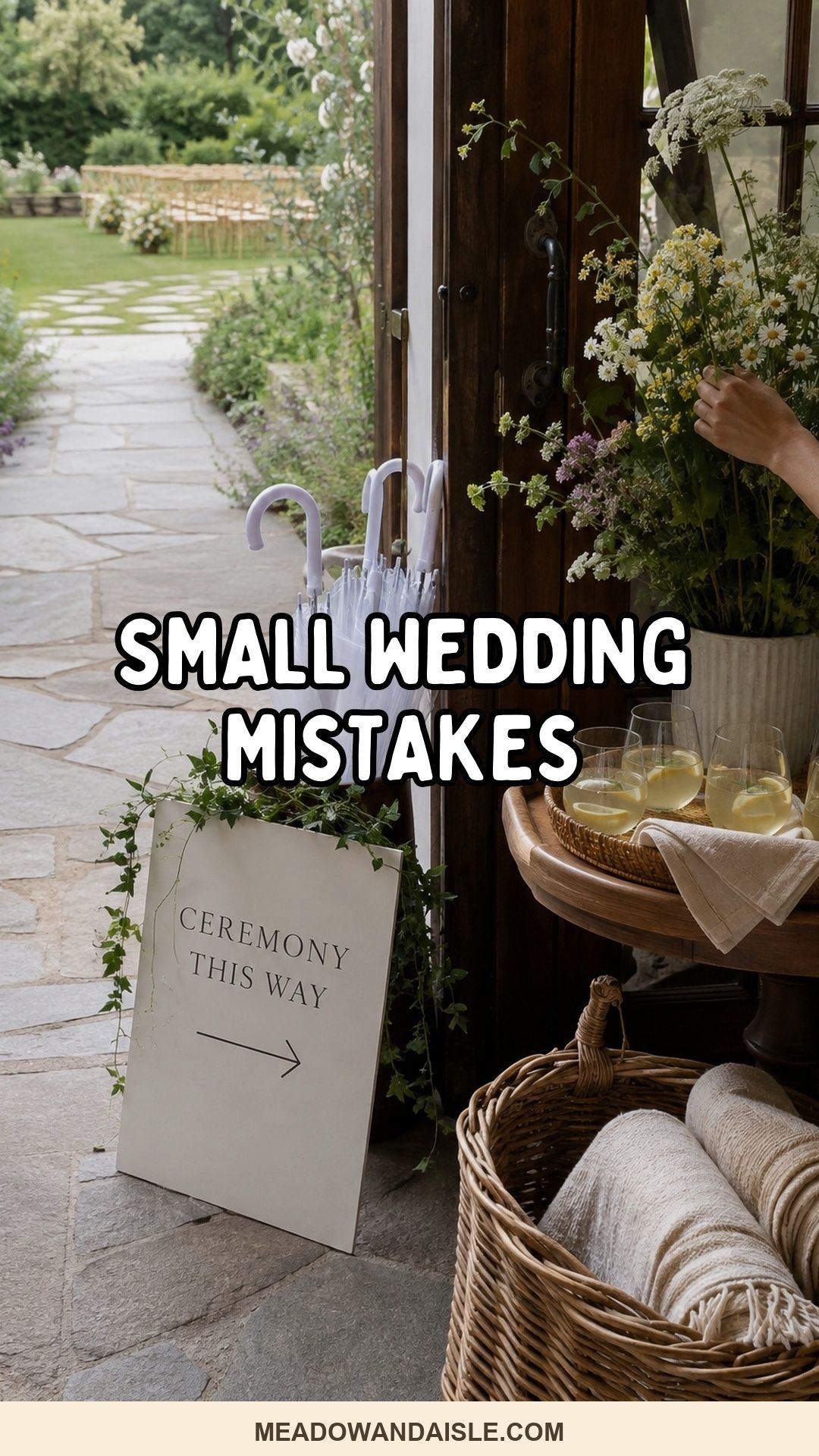
Plan the first five minutes with care. A welcome drink, a visible sign, a greeter, a coat plan, and a clear ceremony path can make a small wedding feel hosted before a single flower is noticed.
Budgeting for objects before comfort
Small wedding budget mistakes often look beautiful on paper: a little signage, extra favors, specialty linens, another floral accent, a custom detail that photographs well. The problem comes when those extras compete with heat, shade, seating, service, sound, food timing, or transportation clarity.
Build the budget around what guests physically feel first. A small wedding budget breakdown should make room for comfort before it makes room for decorative repetition.
Planning the meal without planning the waiting
A beautiful dinner still needs a graceful path into it. If guests arrive hungry, wait through photos, stand without drinks, or sit too long before the first bite, the meal has to recover from a feeling it did not create.
Think in appetite moments: something available when guests arrive, a clear drink plan after the ceremony, water already placed at the table, and dietary notes checked before the final count. These are small decisions, but they make the celebration feel cared for.
Assigning Decisions To The Couple By Default
Micro wedding mistakes often hide inside the phrase “we can handle it.” The couple may be capable of handling it, but capability is not the same as joy. On the wedding day, every unanswered question competes with being present.
Keeping ownership vague because the team is small

Someone needs to know who unlocks the door, where the rings are, when the caterer arrives, who cues the ceremony, where cards go, how tips are handled, and what happens if a vendor is late. If that person is the couple, the day becomes a management shift in wedding clothes.
Give every decision a name before the final week, then let a day-of coordinator checklist organize those responsibilities into one calm ownership map.
Assuming vendor minimums describe the whole service
A minimum spend or minimum hour count tells you where a vendor can begin. It does not always tell you who sets up, who stays through the room change, who clears personal decor, who manages late deliveries, or who handles overtime decisions.
Bring vendor minimums into the scope conversation, then ask what labor is included, what labor is excluded, and which moments still need a separate owner.
Giving beloved guests invisible jobs
A sibling might place a keepsake. A friend might cue a song. A parent might carry a few flowers. The mistake is stacking so many tiny favors onto close people that they miss the ceremony, arrive at dinner tired, or spend the last hour packing instead of celebrating.
Separate sentimental roles from labor roles. Let loved ones be witnesses, readers, toast-givers, memory keepers, and steady presences. Move setup and cleanup to people who are not expected to be emotionally available all day.
Choosing A Space Before Testing How It Behaves
Small wedding venue mistakes are often about behavior, not beauty. A space behaves well when guests can enter easily, hear clearly, sit comfortably, move naturally, see the couple, find restrooms, and understand where the celebration is going next.
Skipping the walk-through from a guest’s body
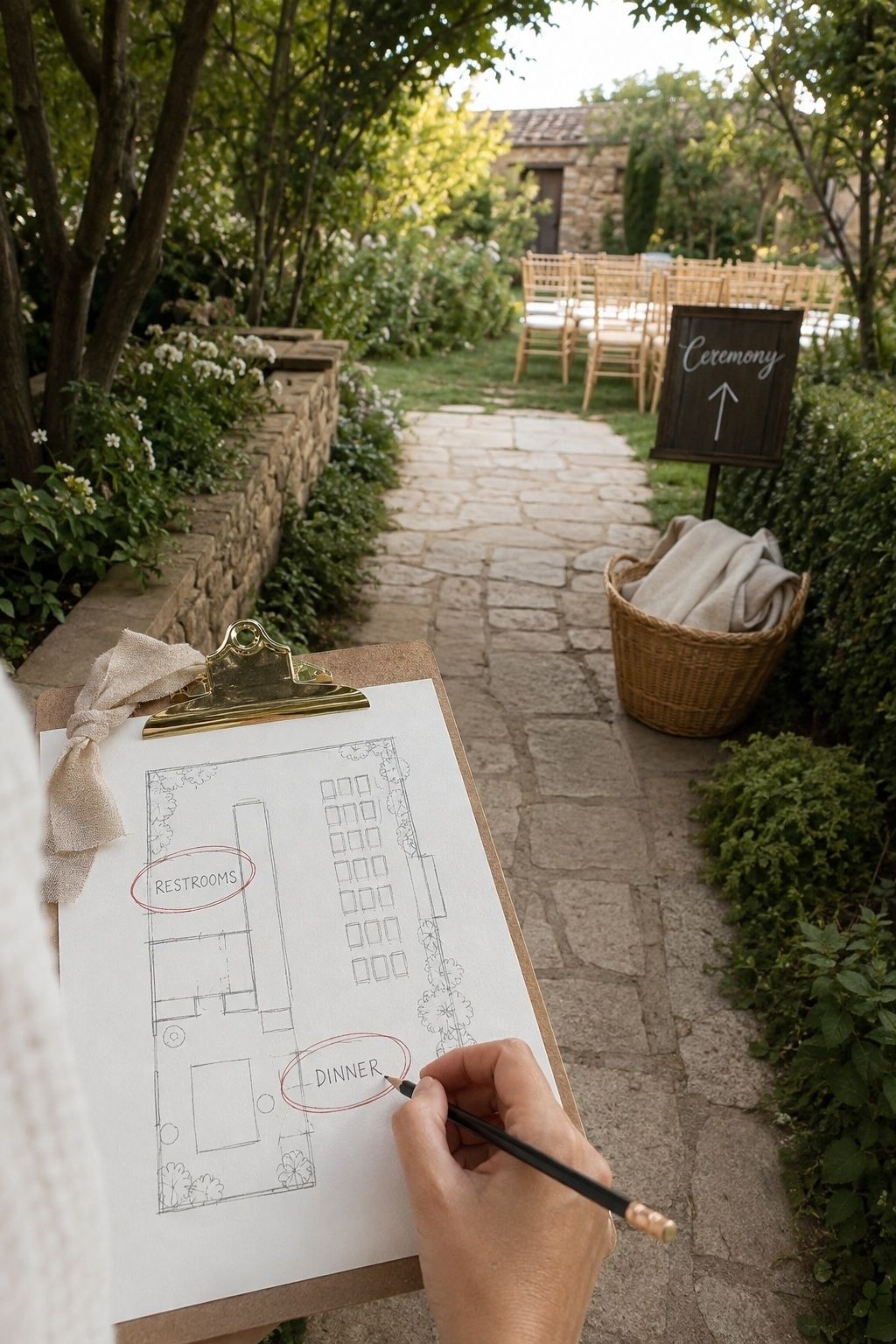
Stand where guests will stand. Sit where they will sit. Walk from parking to ceremony to drinks to dinner to restrooms. Notice stairs, narrow paths, soft ground, lighting changes, coat storage, and places where people might bunch up.
The room does not need to be perfect. It needs to make sense for the people you are inviting, including older relatives, guests in heels, anyone with mobility needs, and anyone arriving without insider knowledge of the property.
Treating bad weather like a footnote
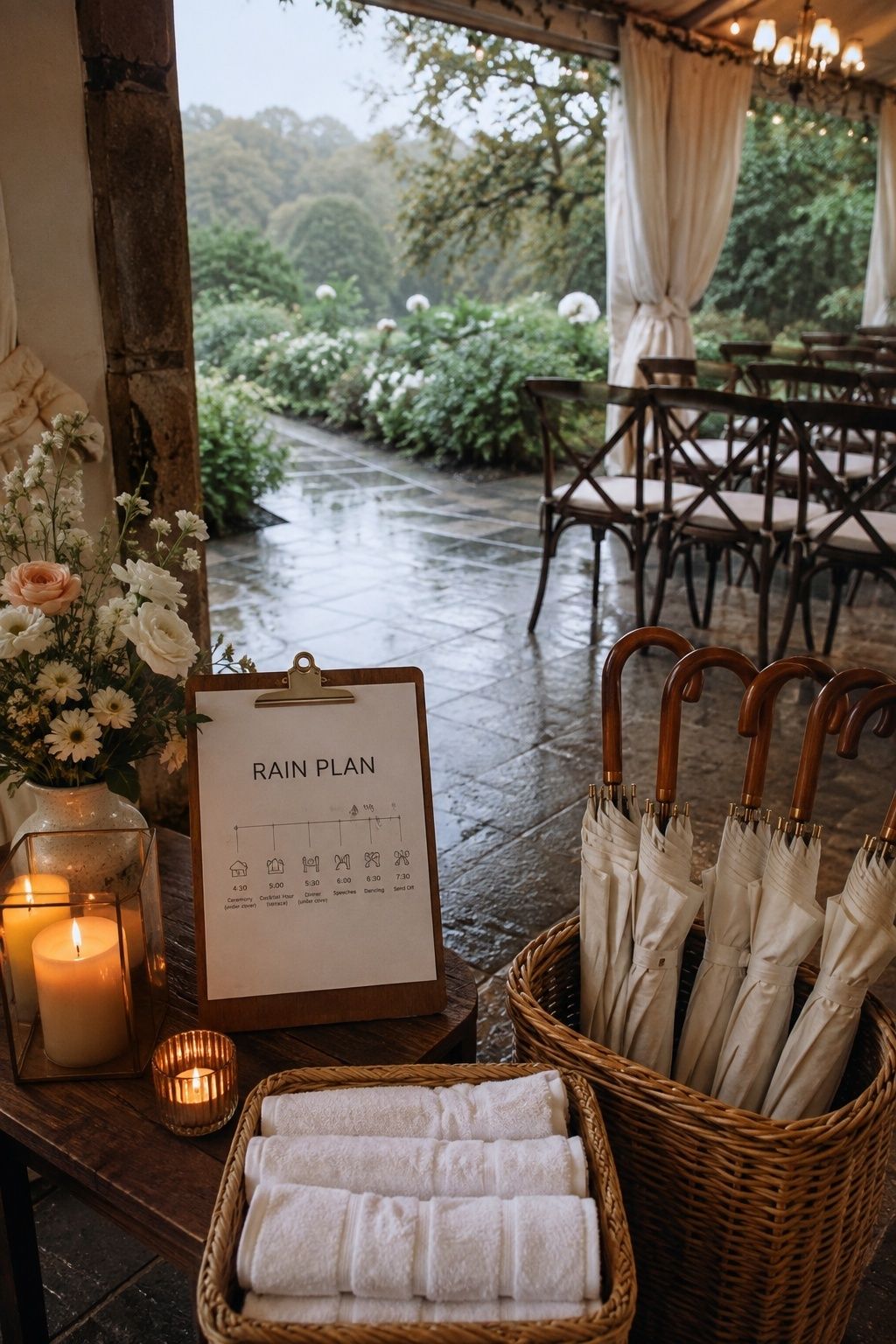
Outdoor plans need more than a backup location. They need a second version of the guest experience: where people enter, where chairs move, how vows are heard, how dinner stays warm, where umbrellas dry, and what gets communicated before guests leave home.
The best rain plan feels like a designed alternate path, not a storage-room compromise pulled forward at the last minute.
Forgetting the room after sunset
A patio, backyard, chapel, or private dining room can feel completely different after dark. Paths need light, speeches need sound, candles need backup, and dinner needs enough warmth for people to linger comfortably.
Ask for evening photos and practical notes: power access, heaters, lighting controls, noise rules, and how staff handles transitions. A space that works beautifully at 3:00 may need help by 8:30.
Letting The Day-Of Rhythm Stay Fuzzy
Small wedding timeline mistakes are usually less about strict timing and more about rhythm. Guests need to know when to gather, when to move, when to eat, when to listen, and when the formal parts have softened into celebration.
Leaving transitions to eye contact
A small group may not need a booming announcement, but it still needs cues. Music changes, a coordinator’s quiet invitation, a printed dinner card, a parent welcoming everyone, or servers opening the next space can move the day without making it feel staged.
Write each transition in one sentence: who moves guests, where they go, what they do there, and what happens next. If that sentence is hard to write, the moment needs more planning.
Rushing the ceremony because it feels intimate
A small ceremony can be simple without being thin. If the vows, readings, music, or officiant words are rushed because the room feels personal, the emotional center of the wedding may pass too quickly.
Give the ceremony enough shape to hold the meaning: a welcome, a pause, a short reading, a family blessing, or a moment for the couple to breathe before walking back down the aisle.
Skipping the couple’s private breath
When every guest is close, the couple can become beautifully available from start to finish. That is generous, but it can leave no private moment to absorb the ceremony, laugh together, eat quietly, or take in the room before joining everyone else.
Schedule a small pause that belongs only to the two of you: ten minutes after the ceremony, a quiet drink before dinner, a short walk, or a private final look at the room. Presence with guests is richer when the couple has a breath inside the day too.
Saving Proof Checks For The Final Week
The final week should confirm decisions, not invent them. When too many questions remain open, small wedding day-of mistakes can appear in ordinary places: the license, the floor plan, the meal count, the rain call, the vendor phone list, the gift plan, or the ride home.
Keeping the final packet in your head
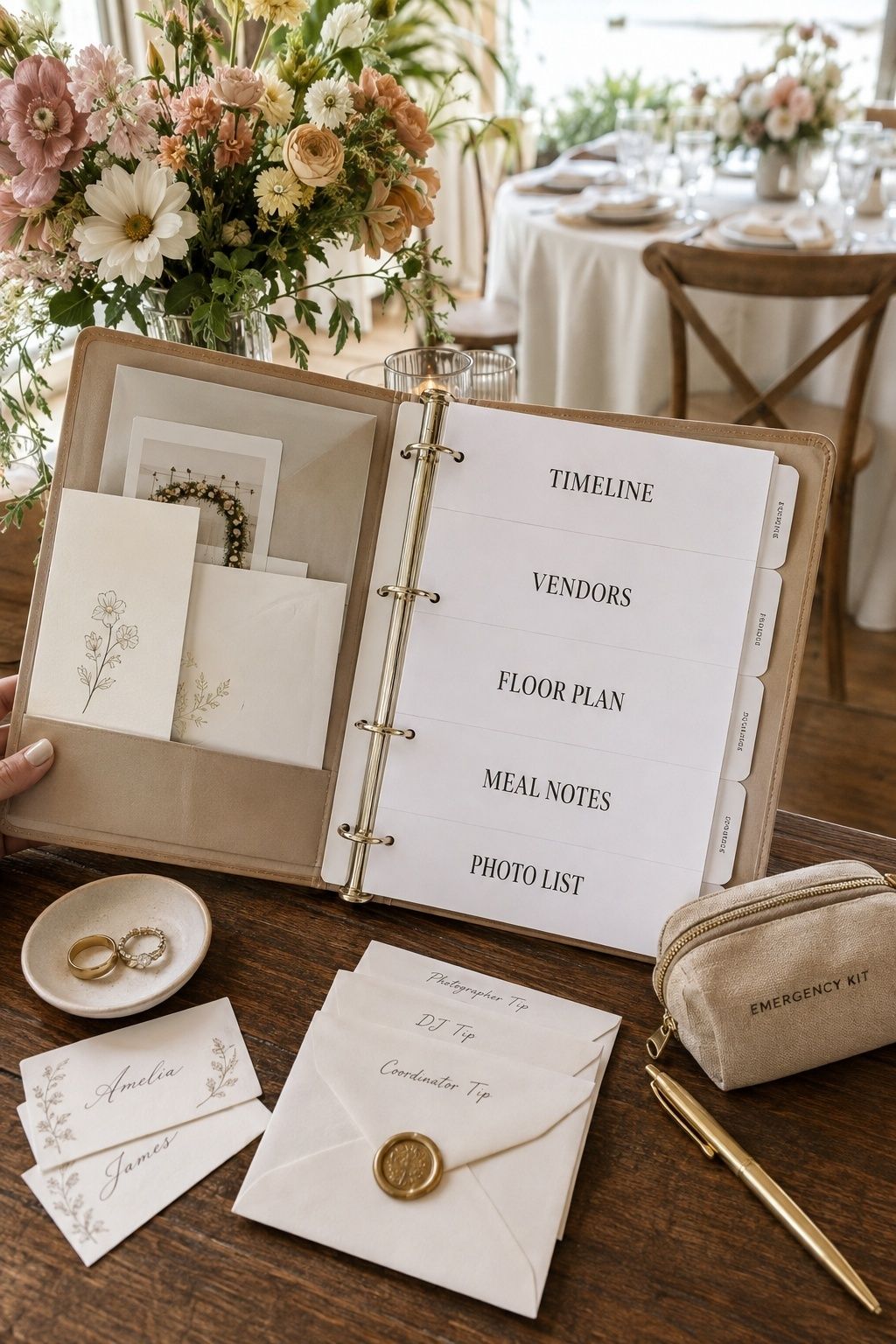
Even a very small wedding needs one shared packet. Include the timeline, addresses, vendor contacts, arrival windows, floor plan, meal notes, payment reminders, photo groupings, ceremony cues, weather decision time, emergency contacts, and cleanup plan.
Send it to the person running the day and to any vendor who needs the details. The couple should not be the only place where the wedding exists.
Failing to test the plan as a guest
Read the timeline like someone who has never been to the venue. Where do they go first? What do they do with a coat? When do they eat? Can they hear? Do they know whether children are included? Is there a clear ending?
That guest-view test catches the tiny gaps that couples skip because they already know the story. Fixing those gaps is one of the simplest small wedding mistakes to avoid before the day begins.
A Fresh Prevention Audit Before You Lock The Plan
Before invitations, contracts, and final payments are fixed, run the wedding through five questions. What promise are we making with this celebration? Which guests need clarity before they arrive? Which comfort moments matter most? Who owns each decision on the day? What proof do we have that the room, weather plan, timeline, and vendors will work as planned?
Those questions keep the wedding from resting on good intentions alone. They turn a beautiful small celebration into something sturdy enough to enjoy.
FAQ
What are the biggest small wedding planning mistakes?
The biggest small wedding planning mistakes are planning from vague mood words, setting guest rules too late, budgeting for decorative extras before comfort, leaving day-of decisions with the couple, choosing a space before testing how it behaves, and keeping final-week details in separate places.
Why do small weddings still need careful planning?
Small weddings still need careful planning because a personal celebration still has arrivals, vows, meals, timing, vendors, weather, family expectations, and cleanup. Planning gives those pieces owners so the day can feel relaxed instead of improvised.
What should you not do when planning a small wedding?
Do not assume simple means undefined. Avoid vague guest boundaries, inconsistent plus-one rules, unclear vendor scope, comfort cuts guests will feel, weather plans that are not designed, and day-of tasks that pull close family or the couple away from the celebration.
Is it a mistake to skip a coordinator for a small wedding?
It is not always a mistake to skip a full coordinator, but it is risky to skip a day-of owner. Someone other than the couple should manage timing, vendor questions, setup details, photo groupings, payment notes, weather calls, and cleanup decisions.
How do you avoid guest-list drama with a small wedding?
Avoid guest-list drama by choosing the invitation boundary before choosing names, keeping plus-one decisions consistent, setting a true maximum headcount, and explaining the shape of the wedding to close family before assumptions have time to harden.
What venue mistakes make a small wedding feel awkward?
The main venue mistakes are booking from photos without testing the room, ignoring the actual ceremony and dinner layout, treating bad weather as a footnote, missing lighting or sound issues after dark, and forgetting arrival, parking, restroom, and accessibility flow.
What details matter most when the wedding guest list is small?
The details that matter most are welcome, seating comfort, sound, food and drink timing, table conversation, weather protection, clear transitions, vendor handoffs, family communication, and a final packet that keeps practical questions away from the couple.
Final Thoughts
A small wedding becomes easier to plan when you stop asking whether it is simple and start asking whether it is supported. The most graceful intimate celebrations have boundaries people understand, spaces that behave well, vendors with clear ownership, and comfort choices that make guests feel genuinely cared for.
Before you call the plan finished, look for the places where a feeling still needs a decision: who is invited, who is hosting each moment, how the room works, what happens in bad weather, and who carries the final-week details. That kind of clarity keeps the day warm instead of fragile, especially when the common intimate-wedding pressure points are handled before they reach your guests.
Last update on 2026-10-03 / Affiliate links / Images from Amazon Product Advertising API