
How to plan a wedding that feels like us starts with translating your shared values into real choices. Choose the feeling you want, name the wedding you do not want, protect the decisions that shape the day most, and let every detail earn its place by sounding like your life together.
There is a strange moment in wedding planning when the day on the screen looks beautiful, expensive, polished, and completely unrelated to the two people getting married. The flowers are lovely. The tables are lovely. The outfits are lovely. Yet something about it feels as if a tasteful stranger moved into the engagement and started making executive decisions.
That is the quiet ache behind wanting a personal wedding. Most couples are not rejecting beauty. They are rejecting the feeling of being swept into trend pressure, family expectation, and vendor defaults until their own relationship is barely visible. A wedding that feels like you does not have to be quirky, tiny, handmade, or nontraditional. It has to feel honest.
The work is not to invent a theme from nothing. It is to notice what already exists between you: the meals you make, the songs you repeat, the places that softened you, the rituals that ground you, the people who feel like home, and the kind of atmosphere where you both become yourselves. Once those things are clear, planning becomes less about chasing inspiration and more about choosing with a spine.

Recommended Wedding Products


You Might Also Like These Blog Posts
- How To Choose A Wedding Vibe That Feels Like You Before Pinterest Takes Over
- How To Plan A Wedding Around Your Values Without Losing The Plot
- How Pinterest Affects Wedding Planning Budgets And How To Stop The Spiral
- How To Plan A Non Traditional Wedding That Still Feels Thoughtful
- How To Know What Kind Of Wedding You Want When Everything Looks Beautiful
- How To Make A Wedding More Personal Without Turning It Into A Theme Party
How To Plan A Wedding That Feels Like Us
How to plan a wedding that feels like us is less about adding personal details at the end and more about letting the relationship steer from the beginning. If the guest count, venue, ceremony, food, music, timeline, traditions, and decor all come from borrowed expectations, a few custom napkins will not rescue the feeling. The wedding has to be personal at the decision level, not only at the accessory level.
Start by shifting the main question. Instead of asking, “What does a wedding need?” ask, “What would make this feel like a true gathering for us?” A formal ballroom, black tie dinner, and full dance floor feels completely authentic for one couple. A courthouse ceremony followed by pasta in an intimate room feels completely authentic for another. The shape is not the proof. The fit is.
A personal wedding also needs a little discipline. Without it, every attractive idea feels like evidence. You save the bow aisle, the espresso martini tower, the embroidered veil, the champagne wall, the late-night fries, and the watercolor crest, then wonder why the wedding feels scattered. Beautiful details do not automatically create meaning. Meaning comes when the details point back to something true about the two of you.
Think of your wedding as an edit. Some ideas get to stay because they carry your values, comfort, humor, taste, family story, faith, culture, friendships, or ordinary life. Other ideas get admired from a distance and released. You are not trying to prove that every choice is original. You are trying to make choices that feel settled in your own hands.
This matters because wedding pressure often arrives with a polished voice. Family members talk about what guests expect. Online inspiration keeps refreshing with prettier versions of the same day. Vendors ask questions that assume a certain format. Friends tell you what they loved at their own weddings. None of those voices are automatically wrong. They simply are not the center.
The center is the two of you. Your wedding should make sense for your relationship, your budget, your capacity, your guests, your families, and your future life. When a choice protects that center, keep it. When it drags you away from that center, let it go, even if it looks gorgeous on someone else’s board.
One practical way to protect that center is to give every decision a reason before it gets a deposit, deadline, or shopping cart. “We are choosing this because it feels generous.” “We are skipping this because it makes us tense.” “We are spending here because guests will feel cared for.” Reasons like those keep the wedding grounded when outside opinions get loud.
That steadiness also gives each partner language for the tender conversations. Instead of defending taste, you return to purpose: the room, the meal, the ceremony, and the pace all point toward the same emotional truth.
It also keeps you from confusing personality with novelty. Your wedding does not need to shock anyone to feel personal. Classic flowers, a traditional aisle, a black suit, a white dress, a church, a hotel, a cake, and a first dance all feel personal when those things feel right in your life. Authenticity is not the opposite of tradition. It is the opposite of autopilot.
Start With The Feeling
Before you choose colors, rentals, flowers, or wording, choose the feeling. This is the simplest way to keep the wedding from turning into a pile of pretty fragments. A feeling gives every later decision a standard. It turns vague taste into practical direction.
Choose A Few Feeling Words
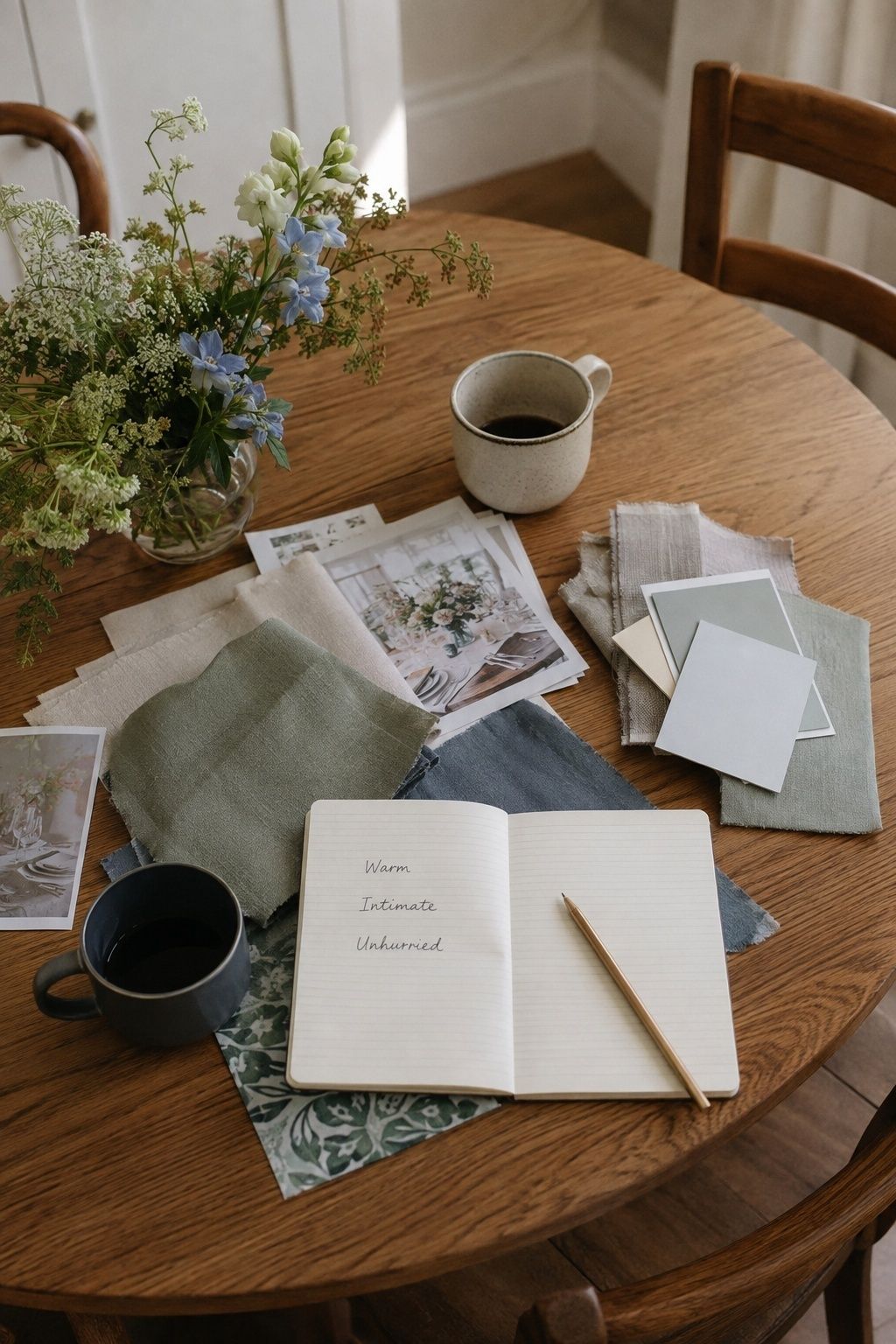
Sit together without a screen and choose three to five words that describe the wedding you want to stand inside. They do not have to sound like a design magazine. In fact, the plainer words are often better: relaxed, sacred, cinematic, playful, cozy, elegant, wild, intimate, generous, quiet, dinner-party, coastal, candlelit, family-centered, artful, nostalgic, unhurried.
Then define each word in your own language. “Relaxed” often means no formal wedding party, a later ceremony start, and plenty of time for dinner. “Elegant” often means fewer colors, better tailoring, thoughtful lighting, and no clutter. “Playful” could point to a game table, a chaotic dance floor, and vows with real humor. The same word changes depending on the couple using it.
Choose words that tell the truth about both partners. If one person wants quiet and the other wants joyful noise, the final language could be “warm, gathered, expressive, and unhurried.” That gives you room for an emotional ceremony and a lively reception without pretending you both want the exact same mood all day.
Decide What Guests Should Feel
Now turn toward your guests. Not what should they admire, photograph, or compliment. What should they feel? Welcomed into your home circle? Swept into romance? Fed generously? Free to laugh? Held by tradition? Surprised by color? Close to the ceremony? Like they are at the best dinner you have ever hosted?
This question keeps the wedding from becoming a display. If you want guests to feel known, spend energy on seating, food, accessibility, and small hospitality details. If you want guests to feel awe, put more energy into the ceremony setting, music, lighting, and entrance. If you want guests to feel relaxed, protect the timeline, avoid long gaps, and skip etiquette moves that make everyone stiff.
Guest feeling is also a filter for spending. A flower-covered bar looks beautiful, but if your guests would feel more loved by a longer dinner, better transportation, or a quieter welcome party, the better choice becomes clearer. Authentic wedding planning is not anti-beauty. It simply asks beauty to serve the experience.
Name What You Do Not Want
Couples are often shy about naming what they do not want because it sounds negative. It is actually generous. A clear no protects your budget, your energy, your partnership, and the emotional shape of the day. Say no to a receiving line, a bouquet toss, a huge wedding party, a formal plated dinner, late-night dancing, long speeches, a first look, a religious ceremony, or a public vow exchange when those choices feel wrong for you.
Make a shared “not us” list. Keep it between the two of you if that feels easier. The point is not to insult anyone else’s wedding. The point is to stop default choices from marching in simply because nobody caught them at the door. “We do not want a stage-managed feeling” points toward documentary photos, fewer formal entrances, and a simpler timeline. “We do not want to feel watched all night” shifts the seating layout, ceremony size, and speech plan.
A no is strongest when it points toward a yes. “No cake cutting” becomes “dessert served family-style.” “No wedding party” becomes “siblings sit in the front row and give toasts.” “No trend decor” becomes “seasonal flowers, candlelight, and the green glassware we already love.” The refusal is not the personality. The replacement is.
Ask What You Already Love Together
The best personal wedding ideas usually come from ordinary life, not a dramatic search for originality. What do you cook when friends come over? What music plays in the car? Where do you go on the first warm evening of the year? What movies, cities, books, faith practices, family recipes, design details, flowers, drinks, colors, or rituals keep appearing in your life without effort?
Write down the obvious things. Sunday coffee. Thai takeout. Long walks after dinner. Your grandparents’ garden. A jazz playlist. Late-night cards. The restaurant where you became a couple. The park bench where you talked about marriage. The vintage glasses you thrift together. The poem one of you has carried for years.
Then ask which of those things fit a wedding decision without feeling like a costume. A shared love of breakfast points toward a brunch reception. A favorite city shapes the menu or paper goods. A love of film shapes photography. A family garden inspires the flowers. An inside joke becomes a cocktail name instead of a speech. Keep the translation clean and tender.
Turn The Words Into Decisions
Feeling words only matter when they start deciding things. Put each major choice through the same three questions: Does this match the feeling? Does this sound like us? Does this protect the experience we want for guests? If the answer is yes, keep moving. If the answer is no, adjust before money or momentum makes it harder.
For example, if your words are “intimate, candlelit, and unhurried,” a 180-person Saturday ballroom wedding will fight you from the beginning. An intimate dining room, historic inn, garden tent, or small estate dinner carries the feeling with less friction. If your words are “loud, generous, and colorful,” a whispery minimalist ceremony in a tiny chapel probably feels like you are borrowing someone else’s personality.
Use the words when people offer opinions, too. “We are choosing the restaurant because we want the night to feel intimate and unhurried” sounds steadier than “We just liked it.” It gives the decision dignity without turning the conversation into a debate.
Keep the words visible somewhere personal during planning. Put them at the top of your budget spreadsheet, in your planning notebook, or on the first page of your shared document. When you feel pulled toward a new idea, return to the words. If the idea deepens them, consider it. If it competes with them, admire it and keep moving.
Apply It To The Big Choices
The big choices create the wedding guests actually experience. Personal details are charming, but guest count, venue, ceremony, food, music, timeline, traditions, and decor shape the day hour by hour. If those choices match you, the smaller details have room to breathe.
Guest Count
Guest count is one of the clearest expressions of values. A large wedding says, “Our community is wide, and we want everyone gathered.” A small wedding says, “We want emotional closeness and real conversation.” Neither one is automatically more meaningful. The wrong one for your relationship is the problem.
Build the guest list from the feeling, not guilt alone. If you want a dinner where every person has been part of your actual life, set a boundary around that. If you want a family reunion atmosphere, embrace the size and plan for flow. Trouble starts when couples say they want intimacy while inviting everyone their parents remember, or say they want abundance while trying to keep the room so small that every omission becomes painful.
A strong test is to imagine greeting each person without the performance layer. Are you genuinely glad they are witnessing this promise? Would their presence make the room warmer, truer, more complete? If the answer is mainly obligation, consider whether that obligation deserves a seat or a different form of acknowledgment.
For family pressure, separate relationship from invitation math. Loving relatives does not require a sprawling guest list. Respecting your parents does not require every courtesy invite. A larger list for peace is a valid tradeoff when chosen consciously. A guest count chosen through panic rarely feels personal later.
Venue
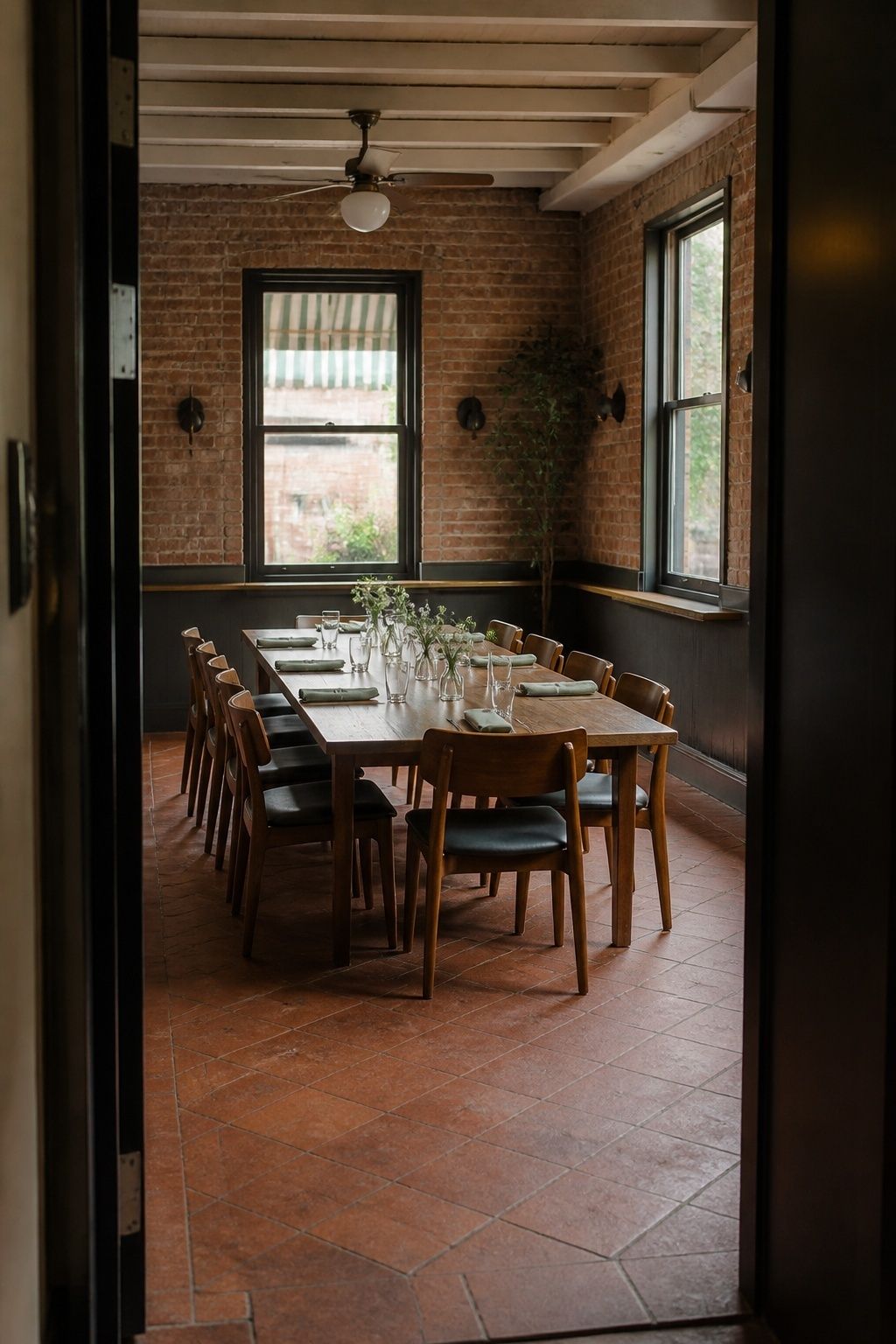
A venue carries mood before you add a single flower. A white barn, hotel ballroom, restaurant, museum, chapel, family backyard, garden estate, city hall, library, beach house, greenhouse, or rooftop already speaks. Listen before decorating over it.
Ask whether the place feels like a natural setting for your relationship. Do you relax there? Do your guests fit there comfortably? Does the space fit the kind of ceremony, dinner, movement, music, and conversation you want? A personal wedding venue is not always unusual. Sometimes it is simply the place where your shoulders drop.
Be careful with venues that require you to become a different couple to make them work. If you hate formal service, a venue built around a grand plated dinner will keep creating friction. If you want dancing until midnight, a quiet restaurant with a strict sound limit will frustrate you. The most beautiful venue is still wrong if it asks the whole wedding to pretend.
Ask vendors about the lived feeling of the space, not only the capacity and pricing. Where do guests gather before the ceremony? Where does dinner feel most intimate? What happens if weather changes? Where do older relatives sit comfortably? The answers reveal whether the venue fits the wedding you want or simply photographs well.
Ceremony
The ceremony is where the wedding becomes more than a party. It does not need to be long, but it should feel intentional. Decide what kind of promise you want guests to witness: spiritual, secular, poetic, traditional, playful, personal, public, family-rooted, or stripped back to essentials.
Personal ceremony details stay simple. Choose a passage that has survived real life. Ask an officiant who understands your cadence. Write vows that sound like speech, not a greeting card. Include a cultural or family ritual because it is part of your story, not because the ceremony needs more decoration.
If public emotion feels overwhelming, exchange personal vows before the ceremony and use classic vows during it. If humor is central to your relationship, let a little of it live in the script. If reverence matters, protect quiet. The ceremony should not be a generic pause before cocktails. It should sound like the threshold you are crossing.
Before finalizing the script, say parts of it out loud. Some lines look beautiful on a page and feel stiff in a real mouth. A personal wedding ceremony sounds natural enough to keep you present while speaking it. The words should carry the promise, not make you perform a version of romance you do not recognize.
Food And Drink
Food is one of the easiest ways to make a wedding feel like real life. It is also one of the easiest places to default into something polished but impersonal. Ask what kind of meal feels like your hospitality. Do you want a long table with shared plates? A tasting menu? Wood-fired pizza? Brunch? A family-style feast? Tacos and margaritas? A formal dinner because dressing up and sitting down matters to you?
The menu does not have to tell your entire relationship story. It only has to feel chosen. A late-night snack from the city where you met, a dessert from one partner’s childhood, a signature drink named after your first apartment, or a coffee bar because everyone knows you both run on espresso carries warmth without turning dinner into an exhibit.
Also think about pace. A couple who loves conversation often prefers family-style dinner, fewer interruptions, and bottles on the table. A couple who loves motion often prefers stations, passed food, and a faster route to music. The format changes the feeling as much as the menu.
Music And Timeline
Music reveals personality quickly. It tells guests whether the day is tender, electric, nostalgic, formal, funny, devotional, or loose around the edges. Choose music from the life you actually live: the song you cook to, the album that carried a road trip, the hymn your family knows, the track your friends will scream-sing, the jazz that makes dinner feel golden.
The timeline should give that music a home. If dancing matters, leave enough night for dancing. If dinner matters, do not interrupt it every ten minutes. If the ceremony matters, protect an arrival window that keeps guests settled. If portraits matter but you hate being away from the party, plan a shorter list and a stronger photo plan.
A wedding that feels like you often has a timeline that respects your temperament. Some couples need a quiet half hour after the ceremony. Some need to join cocktail hour immediately. Some want speeches early so everyone exhales. Some want the first dance tucked into dinner instead of staged in the center of the floor. Choose rhythm as deliberately as you choose color.
Traditions
Traditions deserve neither automatic obedience nor automatic rejection. Ask what each tradition is doing. Does it honor family? Mark a real transition? Create joy? Give structure to a sacred moment? If so, keep it and make it yours. If it only creates dread, awkwardness, expense, or pressure, release it.
Adapt traditions with care. Walk in together. Invite both parents. Skip parent dances and make one song for everyone. Replace a bouquet toss with a dedication to long marriages in the room. Keep the religious passage but simplify the reception. Wear the heirloom for portraits, then change into something comfortable. Authentic does not always mean new. Sometimes it means honest editing.
The strongest traditions are the ones you explain without sounding trapped. “We are doing this because it means something to our families” feels different from “We are doing this because people will talk if we do not.” That difference will show on your faces.
Decor
Decor should make the existing feeling visible. It does not need to prove creativity in every corner. Start with atmosphere: light, texture, color, flowers, linens, paper, table shape, chairs, candles, and negative space. Then ask what the room already gives you and what it needs from you.
If your relationship feels warm and gathered, choose long tables, lamps or candles, handwritten place cards, and flowers that look touched by the season. If it feels modern and sharp, choose clean lines, sculptural flowers, strong typography, and fewer objects. If it feels nostalgic, bring in family photos, old silver, pressed flowers, vintage glass, or paper goods that feel kept rather than bought for one day.
Decor becomes impersonal when it is chosen only because it is popular. It becomes personal when it shapes the room you want guests to enter. A single meaningful object at the ceremony space says more than five trend stations no one understands.
Small Personal Wedding Ideas That Do Not Feel Forced
Small personal wedding ideas work best when they feel woven into the day instead of announced as personality. The goal is not to make guests decode you. The goal is for the wedding to feel more recognizable, more specific, and more emotionally awake.
A Shared Meal Format
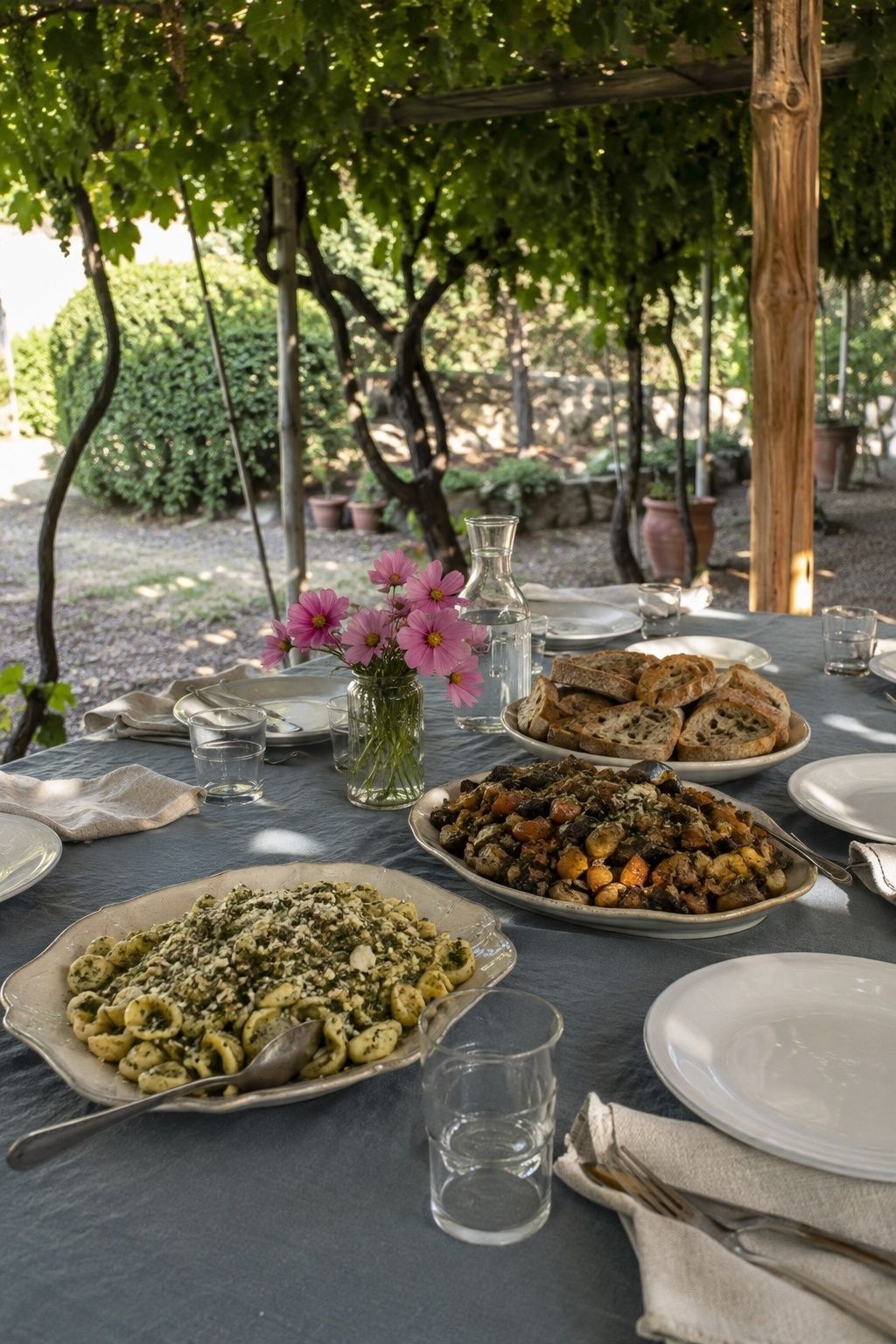
If you host friends around your table, let the reception borrow that spirit. Long tables, passed platters, shared sides, bread on the table, and a dessert course that arrives slowly make the room feel like an enlarged version of your home. The format tells guests, “Stay. Eat. Talk. We made room for you.”
For a couple who loves restaurants, an intimate dining room feels more personal than a decorated hall. For a couple who loves casual nights in, pizza, pasta, barbecue, dumplings, or breakfast food feels sincere when served beautifully. The key is confidence. If the food fits you, guests feel the ease.
A Ceremony Detail With Real Meaning
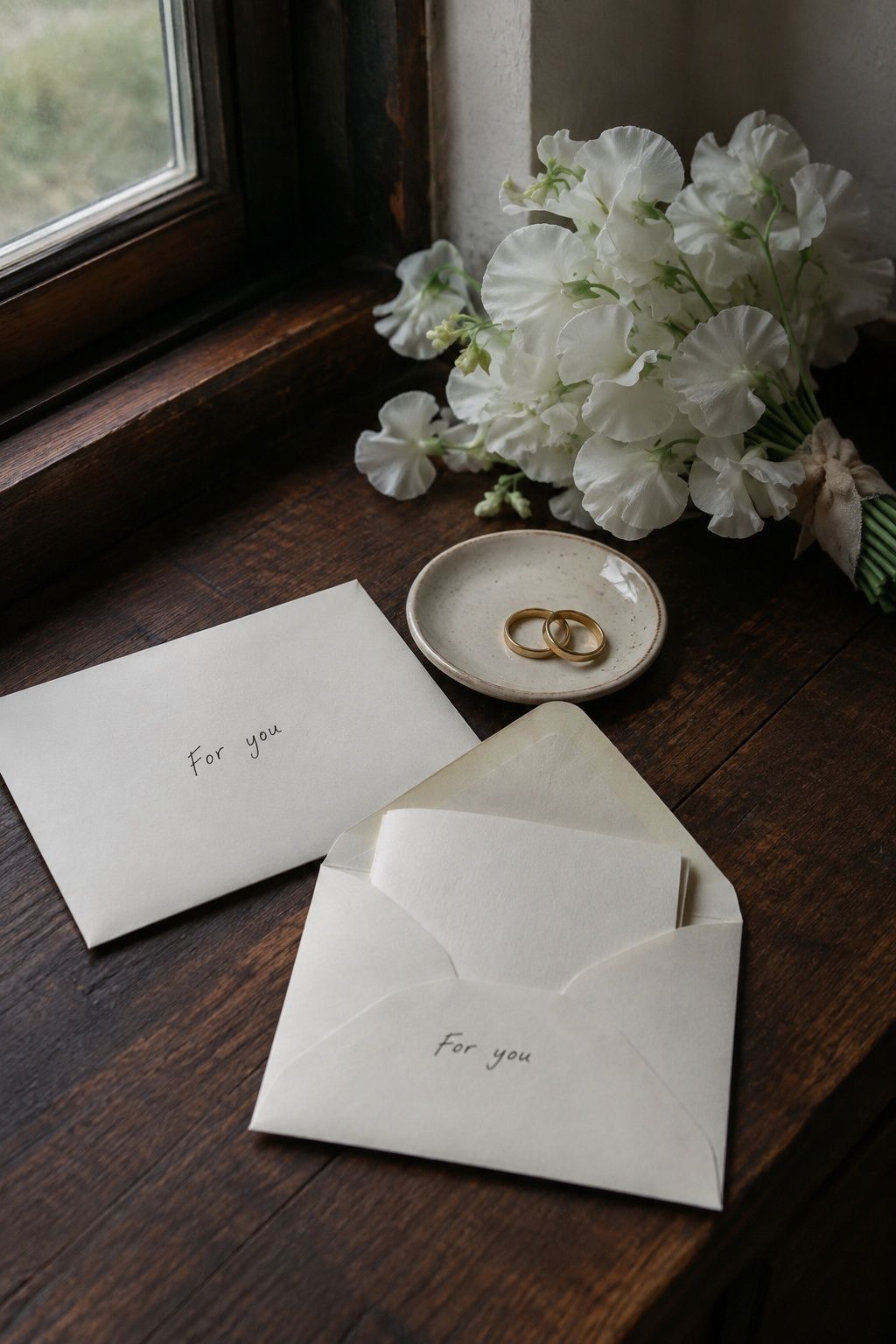
Choose one ceremony detail that carries weight. It could be a passage from a book you both love, a song played by a sibling, a blessing from grandparents, a ring warming, personal letters exchanged before the aisle, a unity ritual from your culture, or a moment of silence for people you miss.
Keep it focused. A ceremony grows crowded when every feeling becomes a separate ritual. One meaningful element with space around it is often stronger than five small gestures rushed together. Let guests understand why the moment matters through the officiant’s plain language, then let the moment breathe.
Music That Sounds Like Your Life
Personal music does not require obscure songs. It requires recognition. Walk back down the aisle to the song that makes you both grin. Start dinner with the album you play on Friday nights. Give your DJ a list of songs tied to real rooms, road trips, friends, and eras of your relationship.
Also give permission for contrast. A tender ceremony and a messy dance floor both feel true for many couples. A classical prelude and a disco exit work together when they match different parts of you. The whole day does not need one mood. It needs honest movement.
Guest Experience From Your Own Hosting Style
Think about how you already care for people. Do you feed them generously? Make playlists? Light candles? Mix drinks? Give clear instructions? Introduce friends who should know each other? Build a fire outside? Keep water glasses full? Your hosting style becomes the backbone of the guest experience.
A couple who loves comfort often prioritizes welcome drinks, shade, soft seating, and an easy timeline. A couple who loves conversation often seats guests with intention and keeps music lower during dinner. A couple who loves celebration often plans a shorter meal and a longer dance floor. Personal is not only what guests see. It is how guests are cared for.
A Place Or Object With Memory
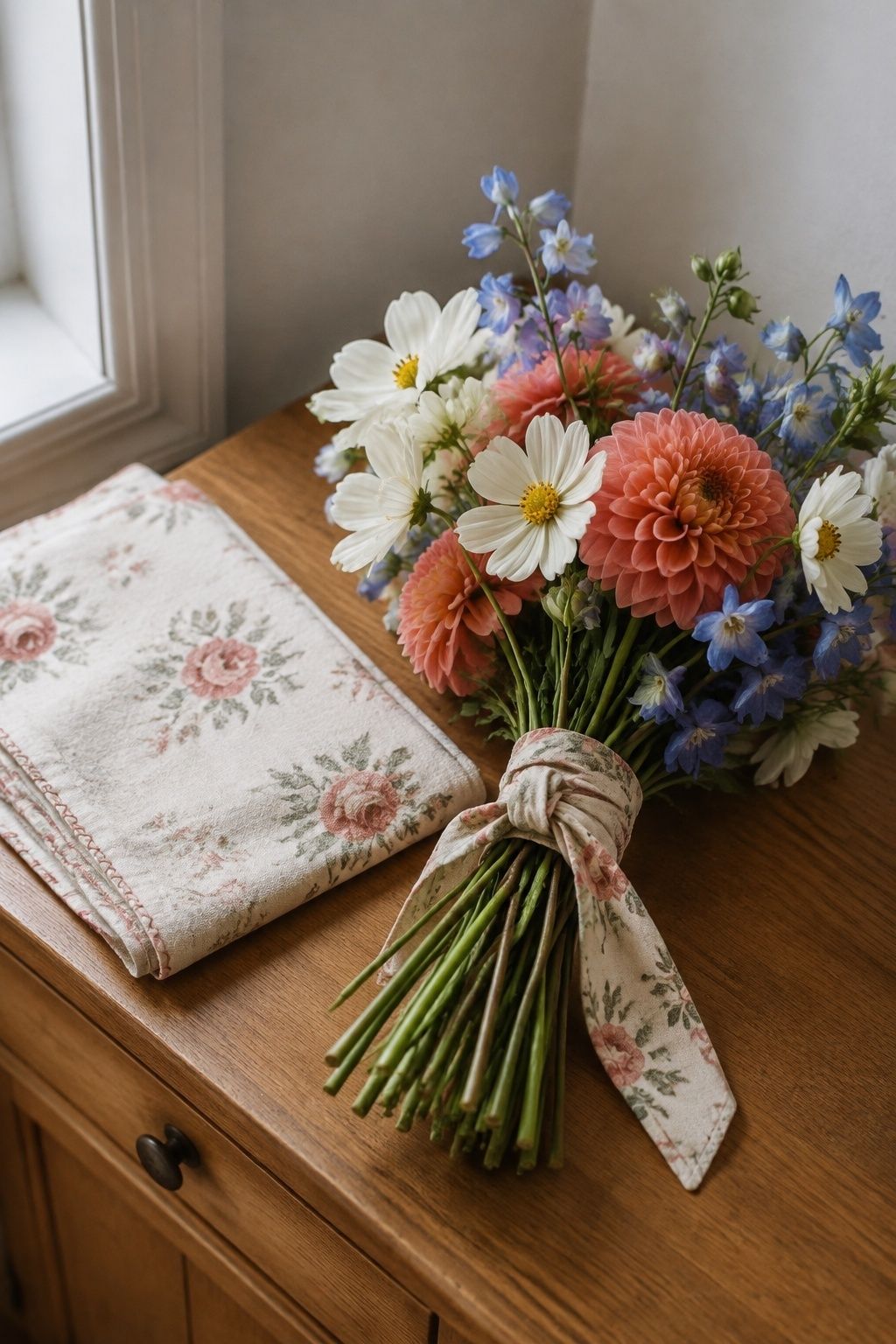
Memory lives quietly. Use a fabric from a family tablecloth around the bouquet. Display a few framed photos from marriages you admire. Name tables after places that shaped you. Serve coffee from the shop by your first apartment. Place a small object from home by the guest book. Print a line from a letter on the ceremony program.
The object should not need a long explanation to matter. It simply makes the room feel more like yours. Guests who know the story will feel it. Guests who do not will still sense that the detail was chosen with care.
What To Skip If It Does Not Feel Like You
Skip anything you are including only because you are afraid someone will think the wedding is not complete. That includes a wedding party, matching robes, favors, a cake cutting, a bouquet toss, a garter toss, a sweetheart table, a grand entrance, printed programs, formal parent dances, signature cocktails, elaborate signage, welcome bags, a content creator, outfit changes, or a sparkler exit.
Some of those things are wonderful for the right couple. None of them are proof that the wedding counts. A detail earns its place when it adds meaning, comfort, beauty, clarity, or joy. If it only adds cost, coordination, guilt, or another thing to manage, let it go.
Use a simple test: Would we still want this if nobody photographed it? Would we still choose it if no guest commented on it? Would we miss it in five years? Would removing it make the day feel calmer or hollow? The answers usually reveal whether a detail is part of your wedding or part of the performance around weddings.
Skipping does not have to be dramatic. Quietly omit what does not fit. Guests do not need an announcement that there is no bouquet toss. They will simply keep dancing. Family members do not need a manifesto about why there are no favors. They will notice the good food and conversation instead. Most missing details are less visible than couples fear.
When someone questions a skipped tradition, keep the answer warm and finished. “We decided to keep that part simple.” “We are putting that energy into dinner.” “It did not feel like us, so we left it out.” A calm answer is enough. The wedding does not need to defend itself at every turn.
The most personal weddings often have restraint. They do not try to include every possible sign of personality. They choose a few strong expressions and leave space around them. That space is where the couple, the guests, and the vows are actually felt.
When you are torn, remove the detail in your imagination and watch what happens. If the day still feels whole, the detail was optional. If the day suddenly loses warmth, rhythm, or meaning, it deserves another look. This is how values based wedding planning becomes practical: not a slogan, but a way of deciding what stays.
Also remember that guests take emotional cues from you. If you feel relieved after skipping something, the room usually feels easier too. If you feel resentful while including something, that tension has a way of leaking into the day. The goal is not perfect control. It is a wedding with enough honesty for you to actually enjoy being inside it.
FAQ
How Do You Plan A Wedding That Feels Like Us?
Plan from values before visuals. Choose a few feeling words, decide what guests should feel, name what does not fit, and run each major choice through that lens. How to plan a wedding that feels like us becomes clearer when the guest count, venue, ceremony, food, music, and traditions all connect back to your relationship instead of a borrowed checklist.
How Do You Make A Wedding Feel Personal Without Doing Too Much?
Choose fewer personal details and give them better placement. One meaningful ceremony passage, one meal choice tied to your life, one memory table, one playlist section, or one object from home feels stronger than a dozen tiny custom items. Personal does not mean crowded. It means specific.
What Makes A Wedding Feel Authentic?
A wedding feels authentic when the choices match the couple’s real relationship, not the version they think guests expect. The day should reflect how you gather, speak, eat, celebrate, honor family, handle tradition, and move through a room together. Authenticity shows up in fit more than novelty.
How Do You Choose Wedding Details That Reflect Your Relationship?
Look at what already repeats in your life together: favorite meals, meaningful places, family rituals, music, colors, textures, hobbies, travel memories, and ways you host people. Then translate only the strongest ones into wedding choices. A detail should feel like a natural extension of your life, not a costume built for one day.
How Do You Avoid Planning A Wedding For Other People?
Decide your non-negotiables privately before inviting opinions. Share finished decisions with family, ask for input only in clear areas, and keep returning to the experience you and your partner want. Guests matter, but they are witnesses and loved people, not the committee in charge of the wedding.
Can A Small Wedding Feel More Personal Than A Big Wedding?
A small wedding often feels more personal when the smaller guest count creates closeness, calm, and real attention. A big wedding also feels personal when it reflects a wide community and a generous celebration style. Size matters less than fit. The most personal guest count is the one that fits the wedding you actually want to experience.
Final Thoughts
The wedding that feels most like you will probably not be the one with the most ideas. It will be the one with the clearest center. When you know what you want guests to feel, what you already love together, and what kind of day would let you recognize yourselves, the choices become less frantic.
Admire beautiful weddings without copying them. Honor family without surrendering the whole day. Keep tradition, change tradition, or skip tradition with care. Plan a wedding that feels elegant, simple, romantic, loud, sacred, funny, quiet, or wildly social, as long as the feeling is truly yours.
How to plan a wedding that feels like us comes down to this: make the big choices personal first, then let the smaller details echo them. The result does not have to impress everyone in the same way. It has to feel true when you walk into it, together. Other couples want that feeling.
Last update on 2026-10-03 / Affiliate links / Images from Amazon Product Advertising API