

Yes, you can plan a wedding in 6 months, especially if you keep the guest list focused, choose an available venue, book the essential vendors first, and simplify the details that usually eat time. The key is to make the first week decisive, not perfect.
If you are staring at a short engagement and wondering whether you have already made the wedding harder, take a breath. Six months is not a leisurely timeline, but it is not automatically a rushed one either. The difference usually comes down to how quickly you can decide on the big pieces: guest count, date, venue, food, photos, legal requirements, invitations, attire, and who will keep the final details moving.
For a small or intimate wedding, the answer is even more reassuring. Can you plan a wedding in 6 months with fifty guests, a restaurant reception, a simple ceremony, and a clear priority list? Very often, yes. Can you plan a huge peak-season Saturday wedding with custom everything and every top vendor in town? Maybe, but the timeline will ask for bigger compromises.
Use this guide as a calm decision plan, not a frantic countdown. It will help you see what to book first, what to skip without regret, and how to make a six-month wedding timeline feel intentional instead of squeezed. If you’re working through planning a small wedding as a whole, the main guide covers it.
Recommended Wedding Products


You Might Also Like These Blog Posts
- Can You Plan A Wedding In 3 Months Without Chaos Taking Over
- How To Plan A Wedding In 18 Months Without Overthinking Every Detail
- How Long Does It Take To Plan A Wedding Without Losing Your Mind
- How To Plan A Wedding In One Year Without Turning It Into A Full-Time Job
- How To Plan A Wedding Under 20000 Without Making It Feel Bare
- How To Plan A Wedding From Scratch When You Have No Idea Where To Start
So, can you plan a wedding in 6 months and still keep it calm?
You can, but the honest version is this: six months rewards couples who are ready to choose. It is enough time to plan a beautiful wedding when you avoid endless comparison shopping, keep the guest list realistic, and stop trying to build a twelve-month wedding on a six-month calendar. If you have more time, see how to plan a wedding in 18 months.
The first mindset shift is to separate essential decisions from nice extras. Essential means you cannot have a wedding without it: a legal path, ceremony location, reception plan, food, guest communication, photography if it matters to you, attire you can actually receive or alter in time, and someone responsible for day-of flow. Nice extras can be lovely, but they should not hold the date hostage.
If you are comparing timelines, start with how long it takes to plan a wedding so you can see where a six-month schedule fits beside longer and shorter planning windows. For this post, the working question is simpler: what needs to happen so your short engagement wedding planning feels focused, not panicked?
The Honest Answer For Most Couples
For most couples, six months is workable if the wedding style matches the time available. A restaurant dinner, private estate celebration, courthouse ceremony with a hosted meal, backyard wedding, weekday venue, off-season date, or micro wedding can fit beautifully into this window. A highly custom event with multiple locations, elaborate rentals, and a large wedding party will feel tighter.
The goal is not to rush every decision. It is to make the early decisions in the right order. If you spend the first month browsing colors, favors, signage, and shoe options before confirming a venue, you will feel behind. If you spend the first week setting budget, guest ceiling, location, date range, and must-have experience, the rest of the timeline has somewhere to land.
Why Small Weddings Fit A 6-Month Timeline Better
A small wedding in 6 months is often easier because fewer guests create fewer dependencies. You may need fewer rentals, fewer invitations, fewer tables, less transportation, fewer hotel-room concerns, and a simpler seating plan. You can also choose venues that are not built around full-scale Saturday receptions, such as private dining rooms, gardens, inns, studios, family homes, and courthouse-plus-dinner plans.
Smaller weddings also make guest communication more personal. You can call immediate family, send a clear invitation sooner, and follow up with guests who truly need travel details. A micro wedding planning timeline still needs structure, but it usually has less noise. There are fewer opinions to manage and fewer moving pieces that have to be synchronized months in advance.
That does not mean small weddings plan themselves. Food still needs to be reliable, guests still need enough notice, legal paperwork still matters, and someone still has to know when flowers arrive and when dinner starts. The advantage is that every solution can be scaled to the size of the room instead of stretched to fit a traditional production.
What Makes A 6-Month Wedding Harder
The harder version of a six-month wedding usually includes several pressure points at once: a peak-season Saturday, a popular venue, a large guest list, destination travel, custom attire, a full wedding party, specialty rentals, complex florals, multiple events, or family indecision. None of those things are wrong. They simply ask for more lead time, more coordination, and more flexibility when vendors are already booked.
Custom attire is one of the biggest surprises. Some gowns, suits, and alterations need more time than couples expect, especially if shipping, made-to-order pieces, or multiple fittings are involved. Invitations can also compress the schedule if guests need flights, lodging, childcare, or time off work.
The emotional pressure point is comparison shopping. A fast wedding planning timeline does not leave much room for collecting twenty quotes, revisiting every decision, and waiting for perfect options. You need good options, not infinite options. Once something fits the budget, date, guest experience, and overall feeling, confirm it and move on.
What To Decide In The First Week
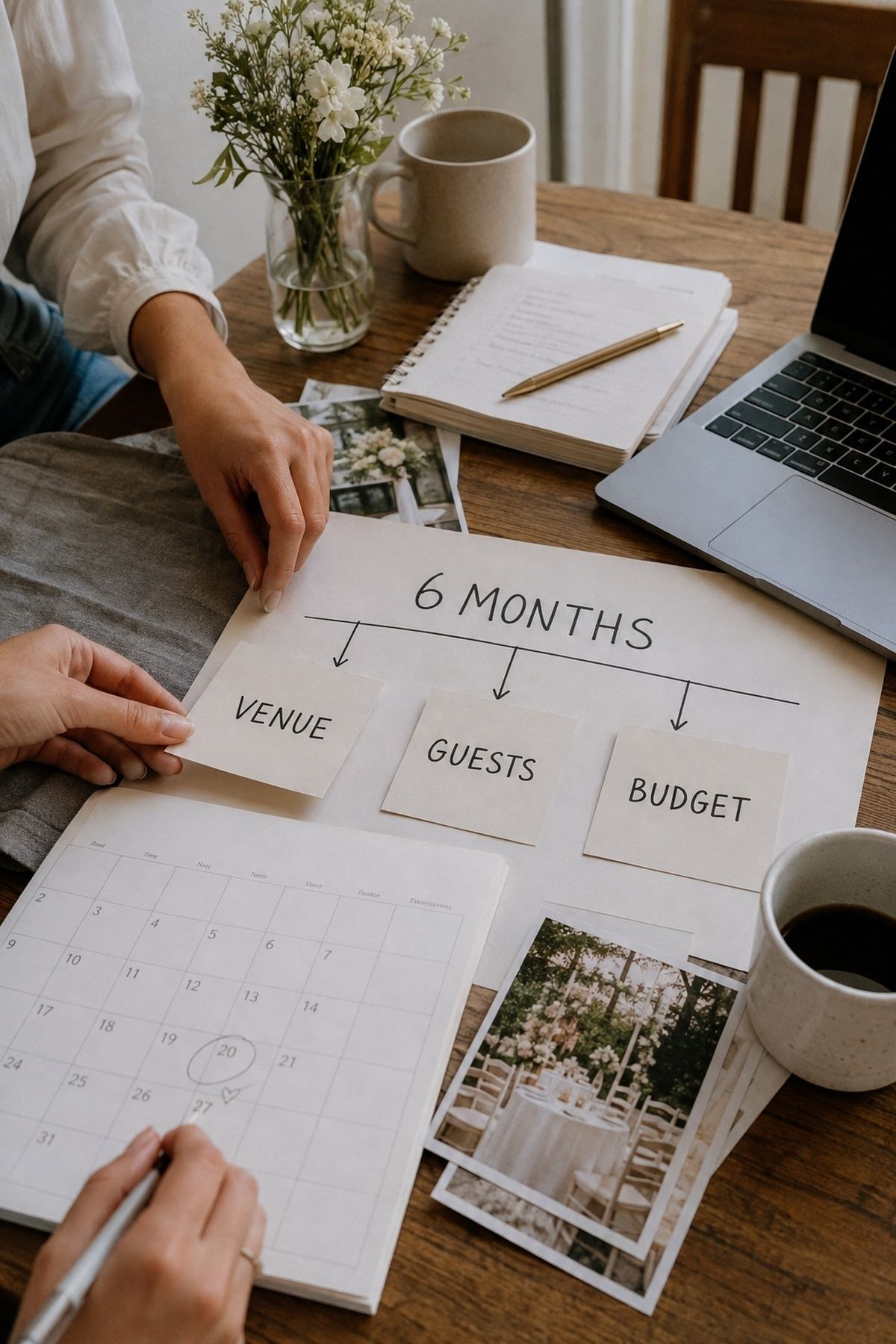
The first week should give the wedding a frame. Decide your total budget, guest ceiling, general location, possible date range, ceremony style, reception feeling, and three non-negotiables. Your non-negotiables might be excellent food, beautiful photos, a private ceremony, an accessible venue, a meaningful religious service, or enough time with every guest.
Also decide who has final decision authority. This is less romantic than choosing flowers, but it protects the whole process. If both of you need to approve every tiny item, the compressed wedding planning schedule will slow down. Choose which decisions are joint decisions, which one person can own, and which trusted helper can handle logistics without reopening the whole conversation.
By the end of the first week, you do not need the full wedding planned. You need enough clarity to inquire with venues and core vendors without rewriting the brief every time someone asks how many guests you expect.
What To Book First
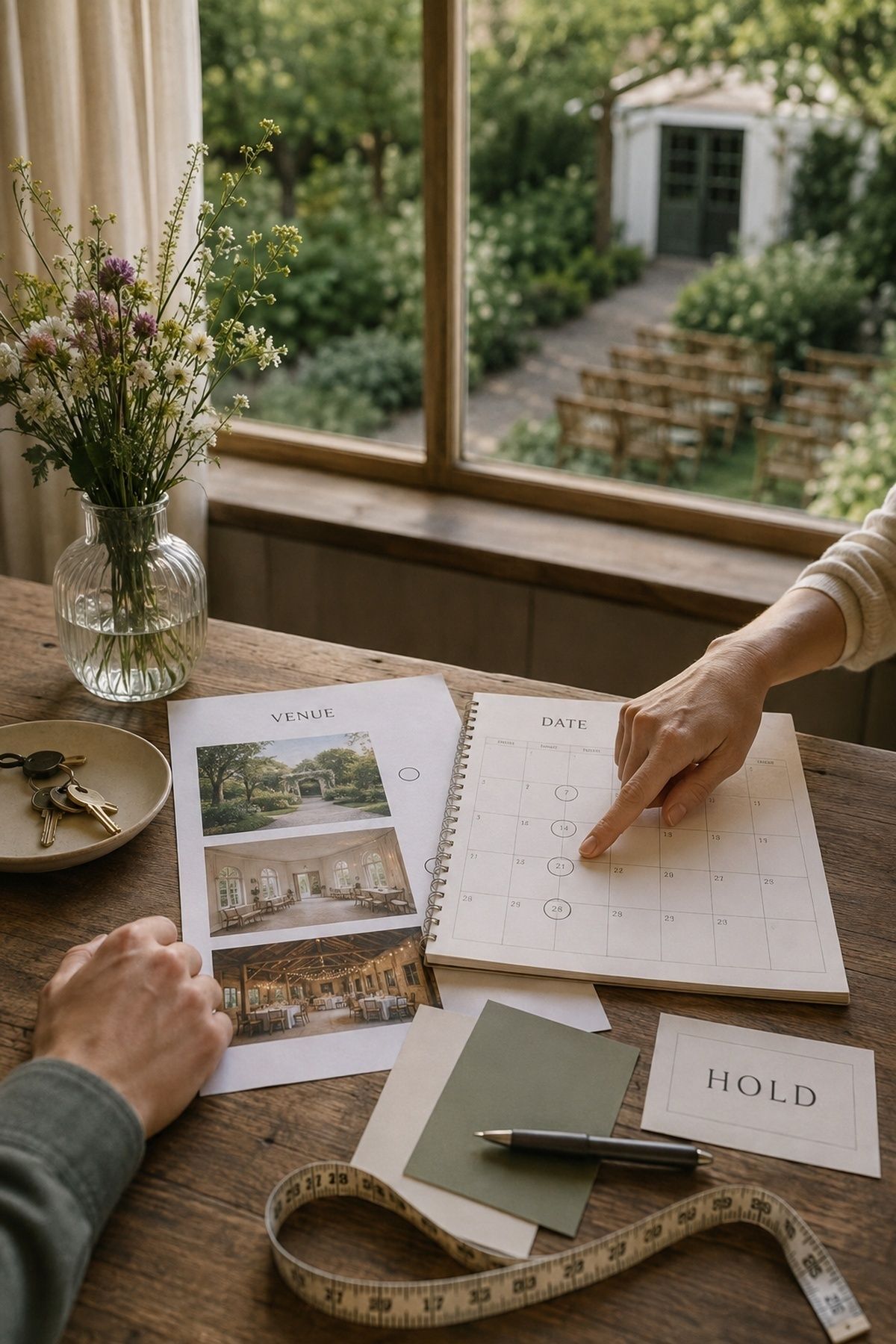
For a six-month wedding, book the pieces that control every other decision: venue and date, officiant or legal requirements, food, photographer, planner or coordinator if needed, and lodging if guests are traveling. These are the items that shape the ceremony time, invitation wording, budget, table plan, and day-of schedule.
If you are wondering how far in advance to book wedding vendors, the short version is that shorter timelines need faster outreach and fewer maybes. Send focused inquiries with your guest count, date range, location, budget range, and style. Ask what is available instead of asking each vendor to design a dream plan before you know whether the date works.
For food, be practical early. A restaurant private room, caterer with a clear package, venue-inclusive menu, brunch reception, or family-style dinner can save weeks of back-and-forth. For photos, decide what coverage truly matters: ceremony and portraits, full getting-ready story, dinner details, or a shorter documentary-style package for a smaller celebration.
What To Simplify Without Regret
You do not have to earn a beautiful wedding by keeping every traditional detail. Save-the-dates may be unnecessary if invitations go out promptly. A large wedding party can become one or two witnesses. Custom stationery can become a well-designed invitation suite with digital RSVPs. Favors can disappear. Signage can shrink. Multiple outfit changes can become one outfit you love and can move in.
The best details to simplify are the ones guests barely notice or that create more decisions than meaning. If a detail does not help people arrive, eat, understand the flow, feel welcomed, witness the ceremony, or remember the day, it may not deserve space in your six-month wedding checklist.
When your list starts feeling crowded, deciding what wedding details you can skip is part of good planning, not a sign that you are doing less. Skipping is not failure. It is how a shorter timeline becomes spacious enough for the details that actually feel like you.
How To Handle Invitations And RSVPs
With six months, guest communication needs to happen early and clearly. Once the date and place are confirmed, tell VIP guests first, especially anyone who must travel. Formal invitations often work best around eight to ten weeks before the wedding for a local celebration, and earlier if guests need flights, lodging, or significant planning time.
Digital RSVPs are especially useful on a shorter schedule because they reduce mailing delays, lost cards, and manual tracking. A digital RSVP tool can also collect meal choices, song requests, dietary needs, and lodging notes in one place. If your wedding is small, do not be afraid to follow up personally. A kind text or call can be more effective than waiting for a card that may never come back.
Keep invitation wording plain and complete. Guests should know the ceremony time, reception plan, dress code, parking or arrival notes, whether children are included, and what kind of meal or celebration to expect. Clear wording saves you dozens of tiny questions later.
When A Planner Or Coordinator Is Worth It
You do not automatically need a planner for a six-month wedding, but you do need a plan for execution. Full planning help is useful if you have a demanding job, a complex venue, many vendors, family pressure, destination logistics, or little interest in managing details. Partial planning can help you build the structure while still making personal decisions yourself.
A coordinator or trusted handoff person becomes most valuable in the final month. Someone needs to confirm arrivals, watch the timeline, answer vendor questions, manage setup, cue the ceremony, and protect you from becoming the point person in wedding clothes. If you are drawn to planning a wedding without a planner, make sure your no-planner plan still includes day-of support.
For very small weddings, this person may be a professional coordinator, venue manager, restaurant events lead, or a capable friend who is not also hosting, officiating, giving a speech, and trying to enjoy the day. The role matters more than the title.
The Stress Test Before You Commit
Before you fully commit to a six-month date, run a practical stress test. Do you have at least one realistic venue option? A legal path for the ceremony? A workable food plan? A guest communication window? A photography plan you can live with? Attire that can arrive and be altered? A weekly planning routine that will not swallow your life?
If the answer is yes to most of those, the date may be workable. If several are still completely unknown, pause before sending invitations. You may not need a longer engagement, but you may need a smaller guest list, a simpler venue, a weekday date, or a celebration style that fits the calendar you actually have.
If six months already feels almost too long and you are considering an even tighter plan, compare it with whether you can plan a wedding in 3 months. The shorter the timeline gets, the more important it becomes to reduce scope before stress makes the decisions for you. If planning a wedding when you work full time is next on your list, we cover it in full.
A Calm Six-Month Planning Rhythm
A calm six-month rhythm is not about copying a rigid monthly checklist. It is about grouping decisions so the right things happen before they are needed. If you want a more detailed monthly breakdown, pair this phase-based rhythm with a small wedding planning timeline by month.
Phase One: Foundation
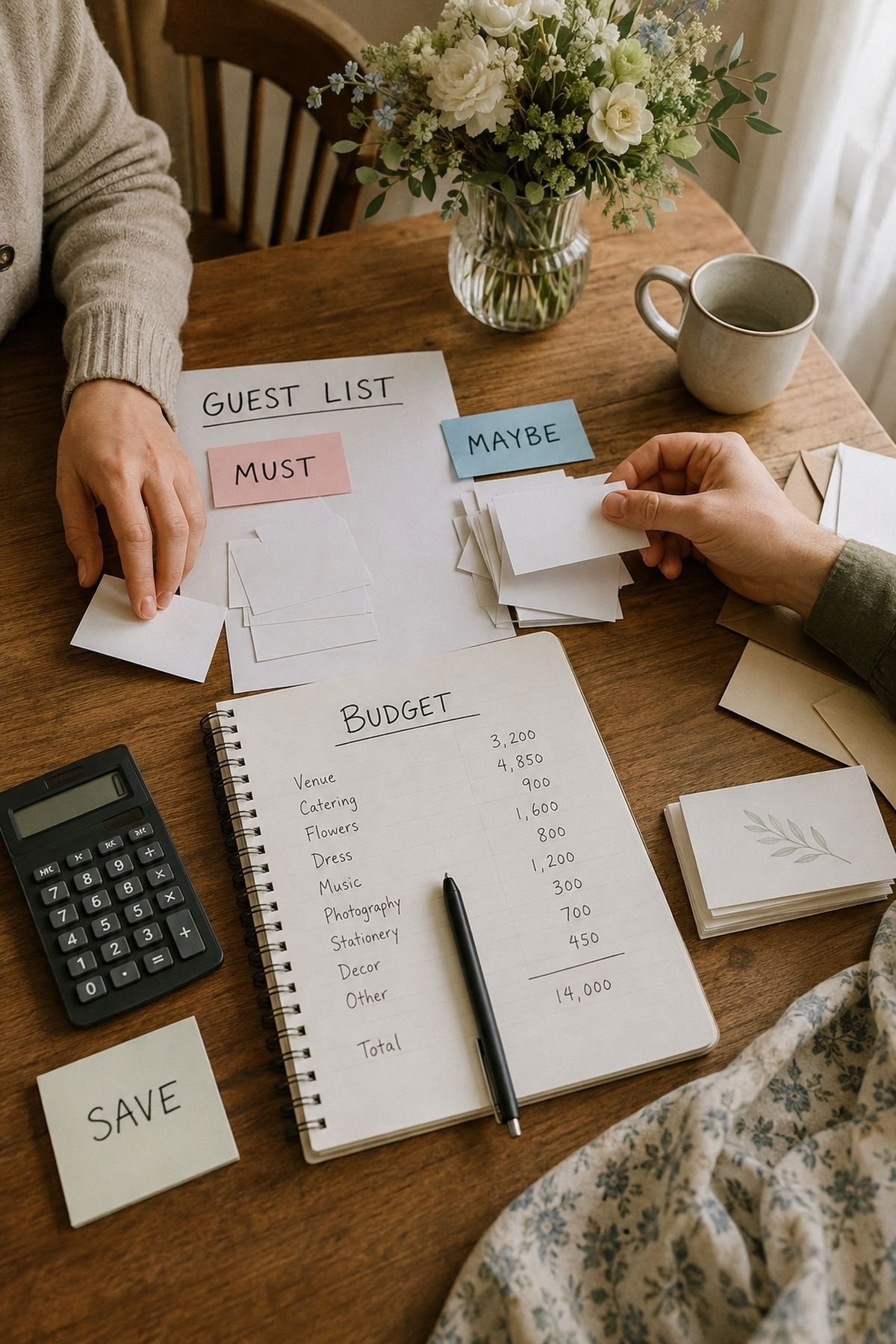
Start with the decisions that make everything else possible: budget, guest ceiling, location, date range, ceremony type, reception style, and priority list. Open a shared planning space for your guest list, budget, vendor contacts, and decisions. This is where a wedding planning notebook or spreadsheet becomes useful, because scattered notes are expensive on a short timeline.
By the end of this phase, you should be able to describe the wedding in one practical sentence: thirty guests, late spring, city hall ceremony, private dinner; or sixty guests, garden venue, family-style meal, simple flowers, candid photos. That sentence is the filter for everything else.
Phase Two: Booking

Move quickly on venue, food, officiant, photographer, and any vendor whose availability shapes the date. Use focused inquiries and avoid asking for full custom proposals from vendors who may not be available. If your first-choice vendor is booked, ask for referrals. Good professionals often know who still has openings.
Make booking decisions around guest care, not just aesthetics. Is the venue easy to reach? Can guests sit comfortably? Is there a rain plan? Will food be served at a reasonable time? Does the photo schedule leave room for the actual celebration? A wedding can look simple and still be beautifully hosted.
Phase Three: Guest Communication
Once the date and place are set, shift attention to guests. Tell immediate family, wedding party if you have one, and travel-dependent guests first. Then send invitations with clear RSVP instructions. A shorter engagement is not the time for vague wording or delayed details.
If the wedding is intimate, explain the shape of the day warmly but briefly. Guests do not need your whole decision history. They do need to know whether they are invited to the ceremony, dinner, after-party, family brunch, or only one part of the celebration.
Phase Four: Details
After the major bookings and invitations are handled, choose details that support the experience: attire, rings, flowers, table decor, music, ceremony readings, vows, printed pieces, and any personal touches. Keep each detail proportional to the wedding. A small dinner may need candlelight, place cards, and one floral moment more than a full decor build.
This phase is where many couples accidentally re-complicate the wedding. Before adding anything, ask whether it makes the day clearer, kinder, more beautiful, or more personal. If it only adds another errand, let it go. Keep the detail phase contained with a simple wedding planning timeline so it does not spread into every spare evening.
Phase Five: Final Logistics
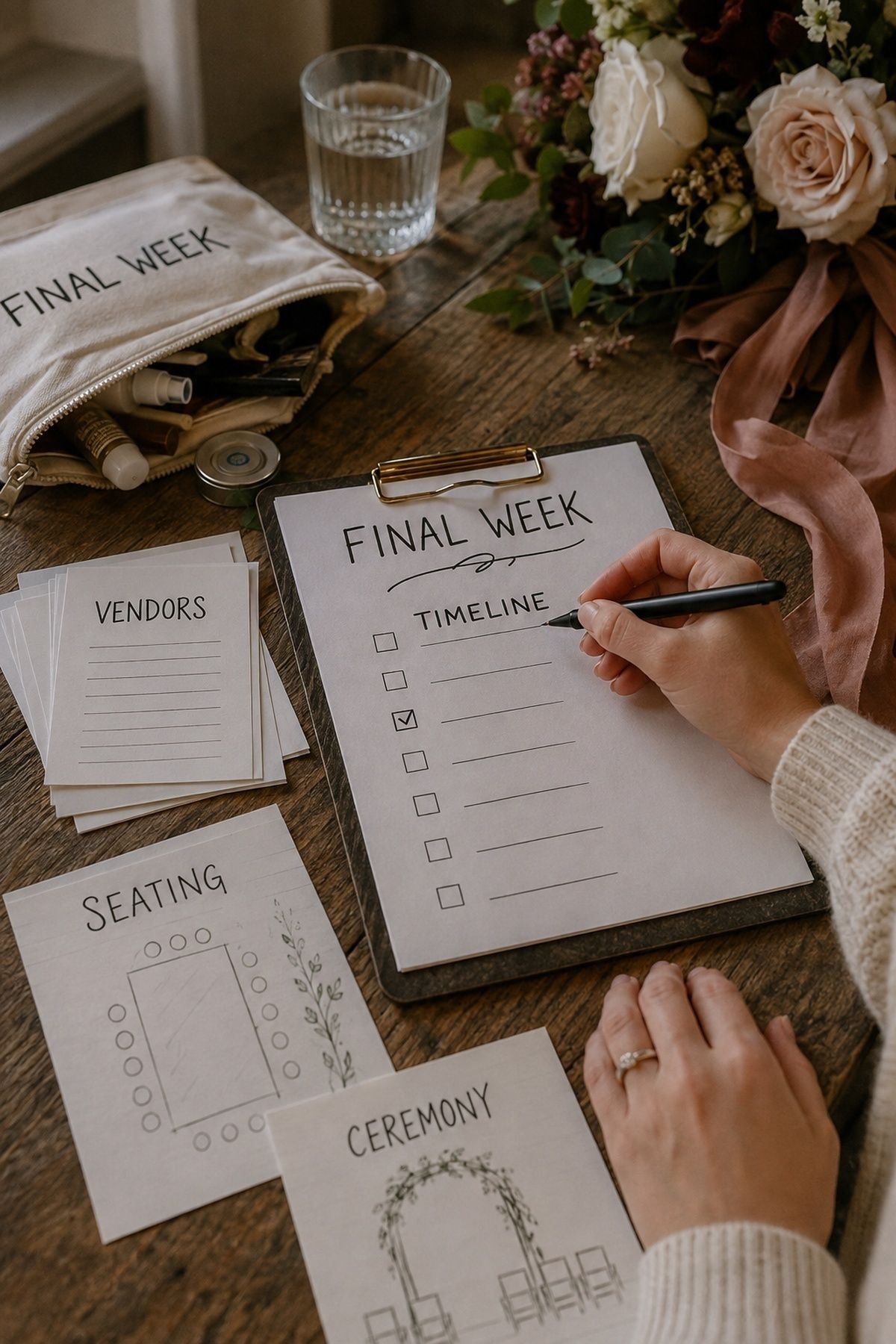
The final stretch should turn decisions into instructions. Confirm vendor arrival times, payment due dates, guest count, seating, meal choices, ceremony order, photo list, transportation, setup needs, weather plan, and who has emergency contacts. If something is still undecided, either decide it or remove it.
Build a simple wedding-week document with the timeline, addresses, vendor contacts, payment notes, family photo list, and setup responsibilities. Share it only with the people who need it. Too many versions floating around can create more confusion than clarity.
Phase Six: Wedding Week
Wedding week is not the time to redesign the celebration. It is the time to confirm, pack, rest, and hand off. Steam attire, gather rings and documents, prepare tips or final payments, confirm beauty timing, share the timeline, and decide who will answer questions on the day itself.
Protect some quiet. A six-month plan can still lead to a wedding week that feels tender and present if you stop adding new projects. Let the final version be enough. Your guests are coming to witness a marriage, share a meal, and celebrate you, not audit whether every idea you saved made it into the room. The rest of the set lives under Wedding Planning Basics.
FAQ
Can You Plan A Wedding In 6 Months?
Yes, you can plan a wedding in 6 months if you make the major decisions early and stay flexible about dates, venues, and vendors. Start with budget, guest count, location, and date range, then book the venue, food, officiant, and photographer. Smaller weddings usually fit this timeline better because there are fewer moving parts.
Is 6 Months Enough Time To Plan A Small Wedding?
Six months is often enough time to plan a small wedding, especially with a controlled guest list and a venue that already includes food, tables, chairs, or coordination. The best next step is to set your guest ceiling immediately. Once you know the size, you can choose a realistic venue and avoid planning for a wedding you are not actually hosting.
What Should You Book First For A 6-Month Wedding?
Book the venue and date first, then confirm the officiant or legal requirements, food, photographer, and coordinator if you need one. These choices control the schedule, invitation wording, budget, and guest experience. For a small wedding, you may be able to combine venue and food through a restaurant, inn, private dining room, or package venue.
What Do You Have To Skip When Planning A Wedding In 6 Months?
You may need to skip save-the-dates, custom attire with long lead times, elaborate favors, complex rentals, multiple pre-wedding events, or highly customized stationery. You do not have to skip meaning. Keep the ceremony, meal, photos, music, and personal details that matter most, then let go of extras that only add errands.
When Should Invitations Go Out For A 6-Month Wedding?
For many local weddings, invitations can go out about eight to ten weeks before the date, but tell VIP guests as soon as the venue and date are confirmed. If guests need flights, lodging, childcare, or time off work, communicate earlier. Digital RSVPs can help you collect answers quickly and keep meal choices organized.
Do You Need A Planner For A 6-Month Wedding?
You do not always need a planner for a 6-month wedding, but you do need someone responsible for logistics. Consider a planner if the wedding is large, destination-based, vendor-heavy, or emotionally complicated. For a small wedding, a coordinator, venue manager, restaurant events lead, or trusted handoff person may be enough.
Final Thoughts
Can you plan a wedding in 6 months and still make it feel like a real, generous celebration? Yes, if the timeline helps you focus instead of panic. Choose the people, place, meal, ceremony, photos, and support that matter most, then let the wedding become beautifully simple around those choices.
A shorter engagement can even be clarifying. It asks you to stop auditioning every possible version of the day and build the one that fits your actual life, budget, guests, and capacity. Keep your version smaller, kinder, and more personal while pacing the essentials against a realistic six-month wedding planning checklist.
Last update on 2026-11-29 / Affiliate links / Images from Amazon Product Advertising API