

Learning how to plan a wedding in one year starts with the decisions that unlock everything else: budget, guest count, venue, date, food, photography, legal requirements, and who owns the wedding-day handoff. Twelve months is enough when the plan moves in the right order.
A one-year engagement often sounds generous until the first venue quote, family question, dress timeline, hotel deadline, and photographer inquiry all arrive in the same week. The pressure is not only about having enough months. It is about knowing which choices deserve the first calm yes and which details should wait their turn.
This one-year wedding planning guide is built around dependencies, not panic. The date needs a venue. The venue needs a real guest count. Food needs the guest count and the setting. Photography needs the date. Legal plans need your location. The day-of flow needs someone other than the couple holding every moving part.
For small weddings, a year is often more than enough, and parts of the calendar often feel pleasantly spacious. Still, the essentials should not drift. A tiny ceremony still needs permission to happen, people to feed, a timeline to follow, and one trusted person who knows where the rings, vows, payments, and vendor contacts live.
Recommended Wedding Products


![The Knot Ultimate Wedding Planner [Revised Edition]: Worksheets, Checklists, Etiquette, Timelines, and...](https://meadowandaisle.com/wp-content/plugins/aawp/public/image.php?url=YUhSMGNITTZMeTl0TG0xbFpHbGhMV0Z0WVhwdmJpNWpiMjB2YVcxaFoyVnpMMGt2TlRGRmVVRnBablp0Tmt3dVgxTk1NVFl3WHk1cWNHYz18MTc5MTI3MzIxNQ=)
You Might Also Like These Blog Posts
- How To Plan A Wedding In 18 Months Without Overthinking Every Detail
- How To Plan A Wedding From Scratch When You Have No Idea Where To Start
- How To Plan A Wedding When You Work Full Time And Still Have A Life
- Can You Plan A Wedding In 6 Months Without Making It Feel Rushed
- How To Plan A Wedding After Getting Engaged When Everyone Has Opinions
- Wedding Regrets Couples Can Actually Plan Around
How To Plan A Wedding In One Year By Protecting The Decisions That Matter First
The best one-year wedding timeline does not treat every task as equally urgent. It puts the immovable pieces at the beginning, the flexible pieces in the middle, and the handoff pieces toward the finish. That order keeps the year from becoming twelve months of open tabs and unfinished conversations. With a longer runway, here is how to plan a wedding in 18 months.
Before the month-by-month plan, name the core promise of the wedding. Decide what the day must feel like, who it must hold, and what it must not cost emotionally or financially. Those answers make the calendar easier to trust. A couple planning a 140-person ballroom dinner needs a different runway than a couple planning a 26-person garden ceremony followed by lunch, but both need clean early decisions. It also makes common wedding regrets easier to spot early.
Think of this timeline as a planning rhythm. Each month has one main job, plus a few practical moves that support it. If something happens earlier or later in your real life, do not spiral. Return to the dependency order: secure the date, define the guest experience, book scarce vendors, build the details, then hand the day to people who are ready to hold it.
The rhythm also protects ordinary life. Choose one weekly planning appointment, one shared place for documents, and one rule for decisions that need both partners. Wedding planning becomes heavier when it leaks into every dinner, commute, and Sunday morning. A year gives you enough space to contain the work instead of letting the work fill the year.
Month 12: Set The Budget, Guest Ceiling, Venue Direction, And Date Range
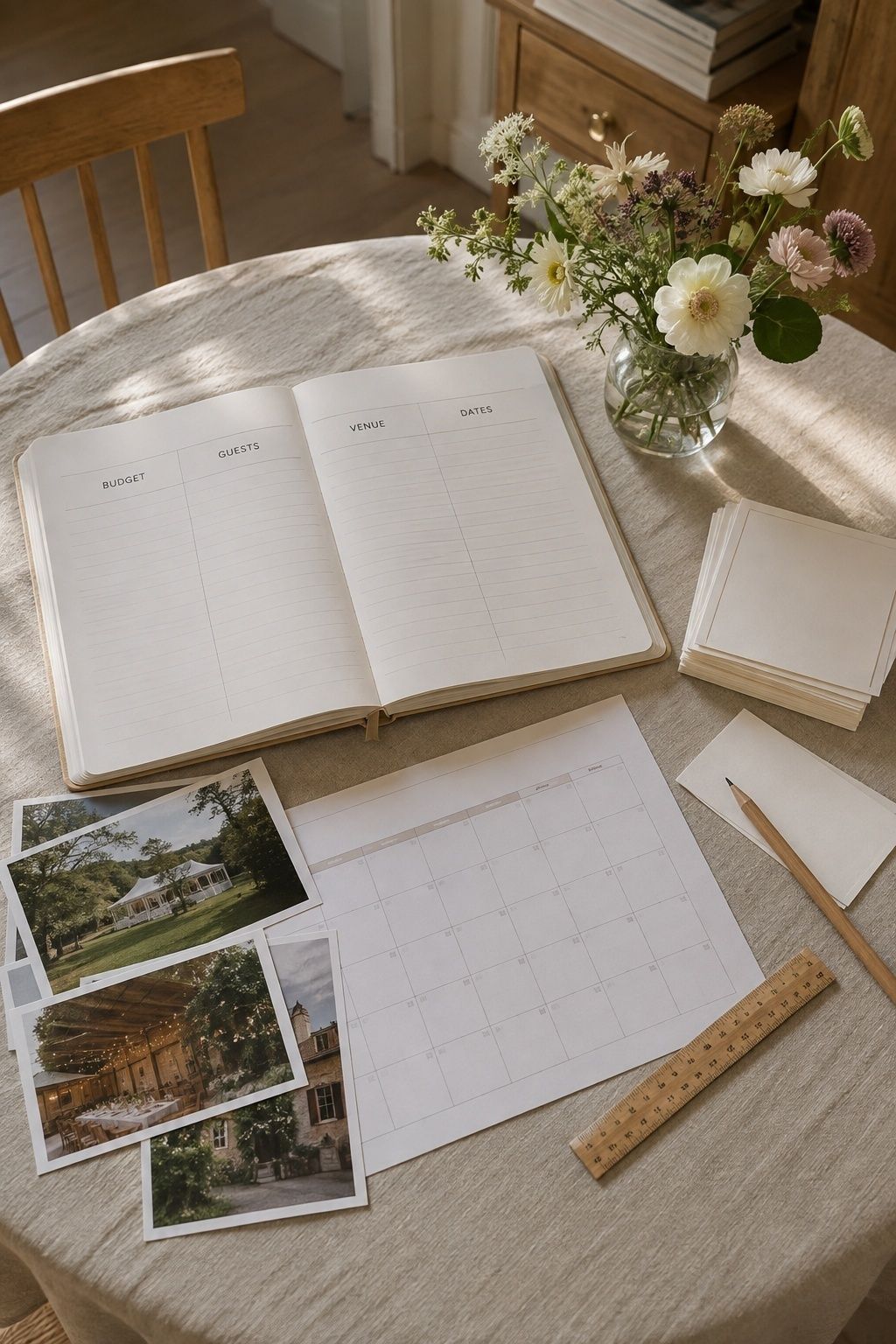
Month 12 is the foundation month. Start by agreeing on a total budget, who is contributing, when money arrives, and which costs are outside the wedding budget, such as honeymoon travel, attire alterations, beauty trials, welcome events, or family gifts. A number in a spreadsheet is kinder than a vague promise in a tense conversation later.
Next, draft the guest ceiling. This is not the final invitation list; it is the maximum number your budget, venue style, and emotional capacity are meant to hold. Guest count is the quiet multiplier behind catering, bar, rentals, stationery, transportation, staffing, cake, favors, and room layout. If you guess low and invite high, the year gets expensive quickly.
Use the same month to choose a date range and venue direction. Decide whether you are looking for an all-inclusive venue, restaurant, private estate, courthouse, garden, hotel, blank-space venue, or destination setting. Tour only places that fit the budget and guest ceiling you just named. By the end of this month, the wedding should have a financial frame, a people frame, and a short list of realistic settings.
If the first month feels emotionally loaded, keep the work small and specific. One evening for money, one evening for guests, one weekend for venue research, and one pause before deposits is enough. The point is to make choices you understand, not to rush into the most polished version of someone else’s wedding calendar.
Month 11: Book The Venue, Confirm The Date, And Choose The Food Path
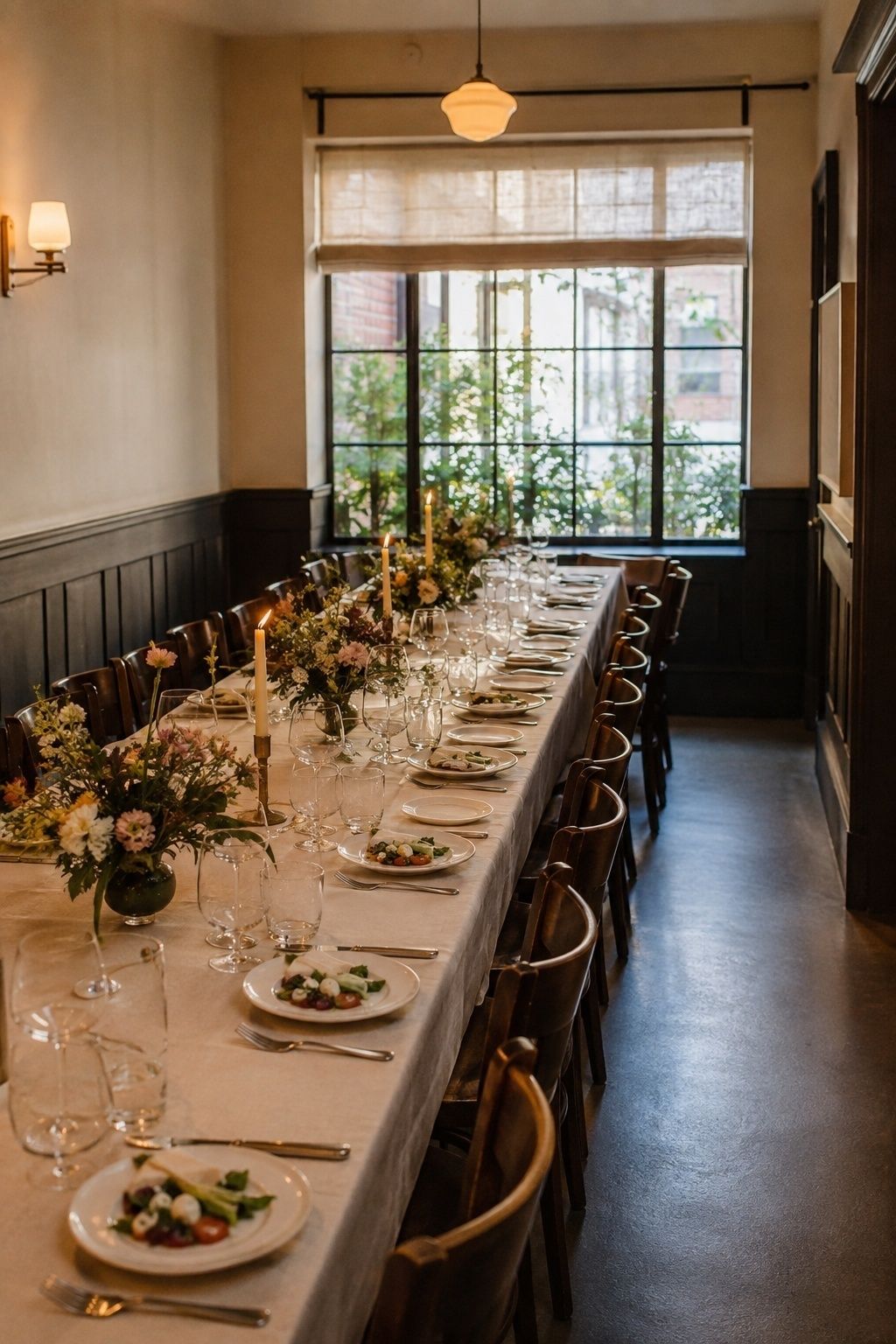
Month 11 is when the wedding becomes real on the calendar. Compare venue quotes by total expected cost, not the prettiest brochure number. Ask what is included, what is required, what is restricted, and what happens if guest count changes. Ceremony fees, staffing, linens, glassware, bar minimums, overtime, security, valet, cake cutting, service charges, and taxes often decide whether a venue is truly inside the budget.
Once the venue contract is signed, confirm the date publicly only as far as needed. It is tempting to order save-the-dates immediately, but food and guest logistics should have shape first. Decide whether catering is in-house, preferred-list, private chef, restaurant menu, buffet, plated dinner, brunch, cocktail reception, family-style meal, or dessert-only gathering.
Food deserves early attention because it touches guest comfort, timeline, rentals, staffing, bar service, budget, and venue rules. A small wedding often simplifies this beautifully with a private dining room or set menu. A private property wedding often grows more complex once kitchen access, rentals, generators, water, trash, and restroom plans enter the conversation.
Month 10: Reserve The Vendors Whose Availability Shapes The Day

Month 10 is for date-sensitive vendors. Photographer, videographer, planner, month-of coordinator, officiant, caterer, florist, band, DJ, ceremony musicians, and hair and makeup teams often have limited availability on a single date. Start with the people whose absence would change the wedding most.
You do not need every vendor booked this month, especially for an intimate wedding, but the priority team deserves movement. If photography is central to your memory of the day, protect that early. If food is the heart of the celebration, secure the caterer before choosing decorative rentals. If the venue provides almost everything, this month centers on officiant, photography, and coordination instead.
Keep a vendor tracker from the first inquiry. Record contact details, quote amounts, proposal dates, deposit deadlines, contract status, payment schedule, cancellation terms, insurance requirements, arrival windows, and who on your side owns the relationship. A wedding with one spreadsheet and two calm decision-makers is already ahead of many larger productions.
Month 9: Build The Guest List, Wedding Website, Hotel Plan, And Save-The-Date Decision
Month 9 turns the guest ceiling into an actual list. Divide names into clear groups, settle partner and family expectations, and decide whether children, plus-ones, coworkers, distant relatives, or parents’ friends are part of the celebration. The goal is not to make everyone happy. The goal is to create a guest list that fits the wedding you are building.
If guests will travel, begin the lodging plan now. Ask the venue about nearby hotels, room blocks, shuttle needs, parking, accessibility, and local event weekends that affect rates. Then build the wedding website with the date, city, general schedule, lodging details, dress code direction, and RSVP expectations that are already safe to share.
Save-the-dates should wait until the venue and date are contracted and the guest list is mature enough to trust. For a small wedding, this month is also a boundary month. A short guest list often needs warmer communication, not colder manners. Tell close family what kind of wedding you are planning before they hear assumptions through someone else.
Month 8: Choose Attire, Ceremony Shape, And The Design Boundaries
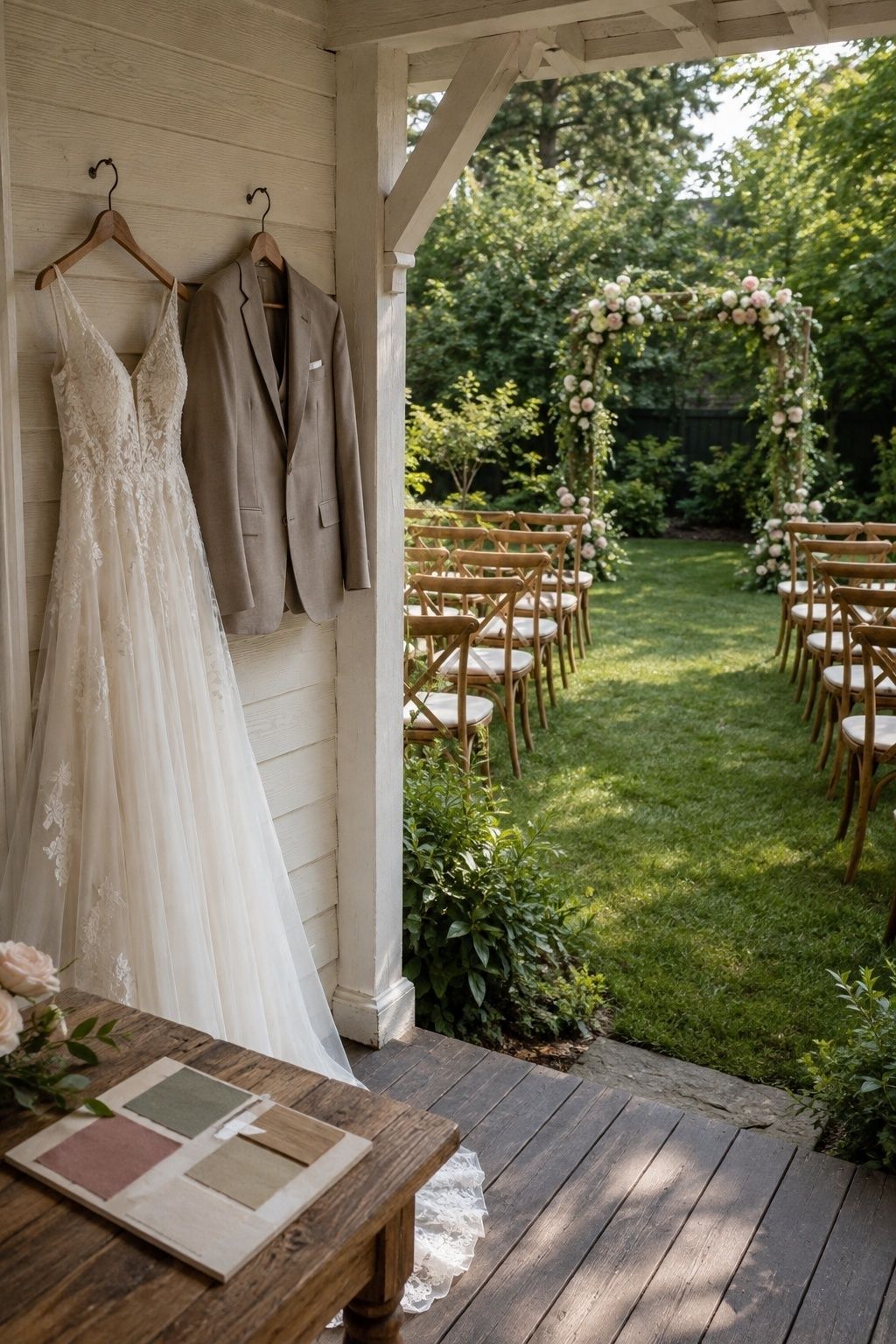
Month 8 is a natural time to begin attire decisions. Wedding gowns, suits, custom pieces, accessories, shoes, undergarments, and alterations all need more time than couples expect. If you are ordering something custom or shopping at a boutique with long production windows, start now. If you are choosing ready-to-wear, this month still gives you breathing room for tailoring.
At the same time, begin shaping the ceremony. Confirm the officiant path, legal paperwork requirements, readings, vows, processional order, family involvement, sound needs, and whether the ceremony space needs seating, shade, microphones, programs, florals, or a weather version. The ceremony is short, but it is the reason everyone is gathering.
Keep design decisions contained. Choose a palette, level of formality, and a few atmosphere words, then stop before you buy a dozen unrelated decor pieces. The table design, flowers, paper, signage, and rentals will make more sense once the floor plan, menu, guest count, and season are steadier.
Month 7: Map The Budget Against Real Quotes And Cut Scope Before It Spreads
Month 7 is where a one-year wedding plan often drifts. The venue is booked, the date is real, a few vendors are in motion, and the next deadlines do not always feel close. This is the perfect moment for scope creep: upgraded chairs, welcome bags, extra signage, elaborate favors, second outfits, additional floral moments, or a casual after-party that is not actually casual in the budget.
Pull every real quote into the budget and compare estimated cost to contracted cost. Track deposits paid, balances due, due dates, taxes, service fees, gratuities, delivery, rentals, alterations, postage, tips, transportation, meals for vendors, and weather backup costs. Hidden costs are not always hidden by vendors. Often they are simply scattered across too many conversations.
This is a graceful month to simplify. If the guest experience is protected, decorative extras become easier to edit. Choose the details that support the feeling of the day and release the ones that mostly create more ordering, storing, transporting, setting up, and cleaning up.
Month 6: Confirm Invitations, Rentals, Florals, Music, And The First Draft Timeline

Month 6 begins the build phase. Confirm invitation design and mailing timing, especially if guests need travel arrangements. Decide whether invitations are formal suites, simple cards, digital RSVPs, or a wedding website-first system. The invitation should match the kind of hosting guests will experience, not a version of the wedding you abandoned three months ago.
Now refine florals, rentals, music, and decor around the actual venue and guest count. A florist needs ceremony location, tables, season, palette, budget, and setup rules. A rental company needs guest count, floor plan, catering needs, weather plan, delivery window, and pickup rules. A musician or DJ needs ceremony cues, reception length, power access, and any sound limits.
Create a first draft of the wedding-day timeline. It should include getting ready, first look or pre-ceremony portraits, vendor arrivals, ceremony, family photos, cocktail hour, dinner, toasts, dances, cake, transportation, cleanup, and end time. This draft will change, but making it now reveals missing decisions while there is still time to solve them calmly.
Month 5: Order The Details That Need Production Time And Assign Decision Owners
Month 5 is for production and ownership. Order or finalize anything that needs lead time: stationery, signage, favors, custom accessories, guest books, vow books, ceremony programs, printed menus, place cards, rental upgrades, attire accessories, and gifts. Keep the list short enough that each item has a reason to exist.
This is also the month to decide who owns decisions. If parents are contributing, confirm which areas they influence and which ones remain yours. If a wedding party is helping, assign specific jobs instead of vague emotional labor. If friends are providing music, flowers, desserts, officiating, or setup, put the arrangement in writing with times and expectations.
A one-year plan stays gentle when nobody has to guess. Decide who confirms vendor questions, who tracks RSVPs, who handles family communication, who watches the budget, who manages attire appointments, and who will become the day-of point person once the wedding week arrives.
Ownership matters most for tasks that sound small. Someone should know where contracts live, when balances are due, which decor pieces are rented, which pieces go home, and who is allowed to approve substitutions. Without that clarity, tiny questions gather at the couple’s feet right when the year should begin feeling lighter.
Month 4: Send Invitations, Tighten The Menu, And Prepare The Guest Experience
Month 4 moves from planning the wedding to hosting the people. Send invitations according to your guest travel needs and RSVP deadline. Make sure the website matches the invitation details, including ceremony address, start time, dress code, parking, shuttle information, hotel details, children or plus-one boundaries, registry, and weekend schedule.
Work with the caterer or venue on menu selections, bar plan, dietary needs, serving style, rentals, staff count, and meal timing. If the wedding is small, the meal often becomes the whole mood of the day, so give it real attention. A private dinner, family-style lunch, tasting menu, picnic reception, or brunch table should still feel hosted from arrival through dessert.
Review the guest experience from the parking lot forward. Where do guests go first? Who greets them? Where do coats, gifts, cards, wheelchairs, strollers, umbrellas, and late arrivals go? What happens if the ceremony starts late or the weather shifts? Beautiful weddings often look effortless because the practical path has already been imagined.
Month 3: Collect RSVPs, Build Seating, And Confirm The Legal Pieces
Month 3 is when the guest list turns into logistics. Track RSVPs in one place with meal selections, plus-ones, dietary needs, accessibility requests, song responses, lodging details, shuttle needs, and contact information. Follow up warmly but firmly with missing replies before the caterer needs the final number.
Begin seating if the reception includes assigned tables. Seat for comfort first, politics second, and aesthetics last. Consider family dynamics, mobility needs, children, hearing needs, exits, bathrooms, speakers, and anyone who would feel more cared for with a quieter table. Small weddings do not remove seating tension; they often make it more visible.
Confirm the legal route this month. Marriage license timing, waiting periods, officiant registration, witnesses, identification, ceremony wording, and return instructions vary by place. Add legal deadlines to the same planning hub as vendor payments so the most important paperwork is not floating in someone’s inbox.
Month 2: Finalize Vendor Details, Payments, Photo Lists, And The Day-Of Handoff
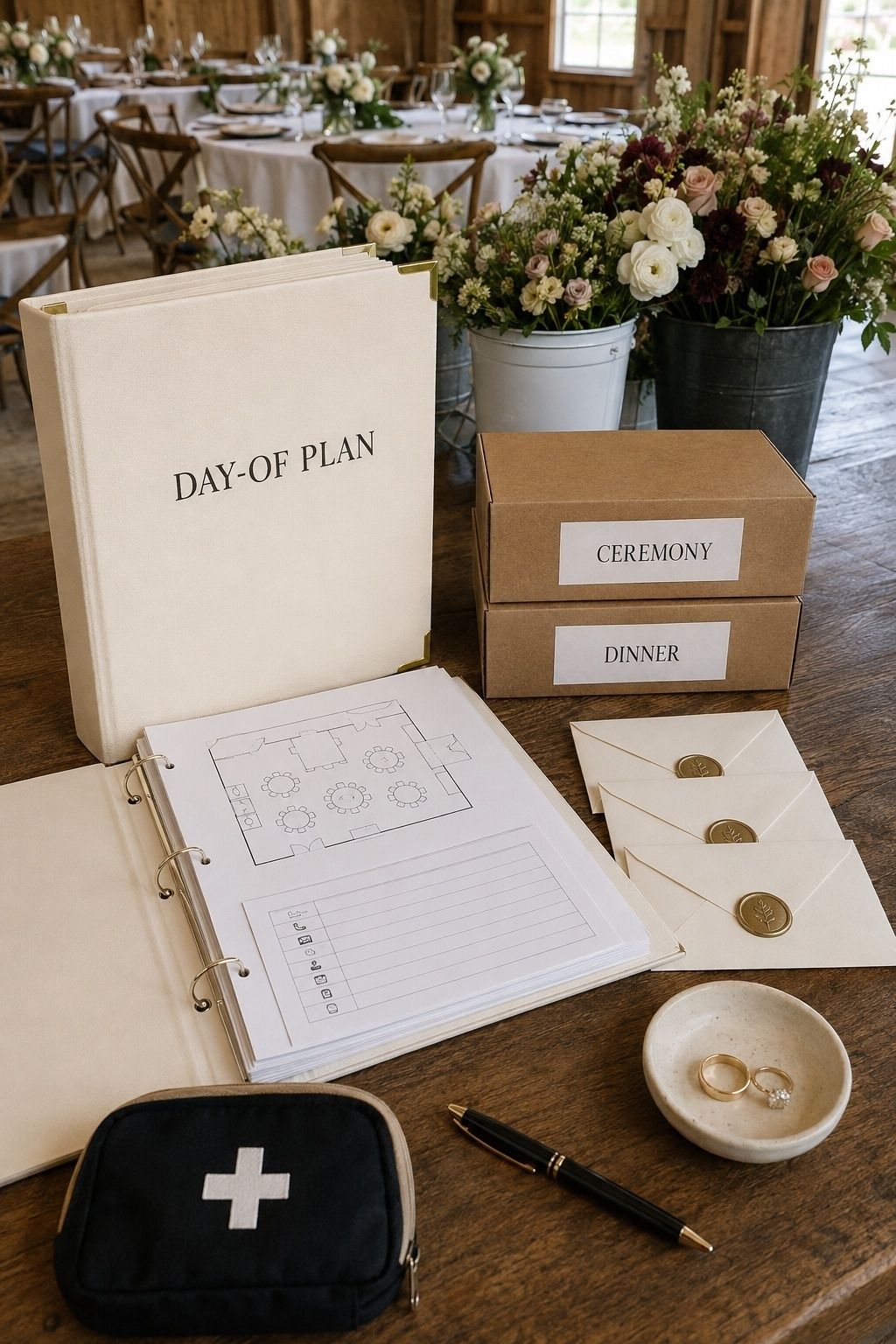
Month 2 is detail month, but not in the decorative sense. This is when you confirm vendor arrival times, setup locations, balances due, insurance documents, menu counts, rental quantities, ceremony cues, transportation timing, hair and makeup schedule, family photo groupings, music choices, packing lists, and cleanup responsibilities.
Create a day-of handoff packet. Include the master timeline, vendor contacts, venue rules, floor plan, family photo list, ceremony order, payment and tip plan, emergency contacts, weather plan, setup instructions, decor inventory, personal item list, and who has authority to answer questions. The point is not to make a perfect binder. The point is to stop being the only person who knows the plan.
If you hired a coordinator, this is when their role becomes deeply useful. If you did not, choose a capable point person who is not getting married, not officiating, not performing, and not already emotionally overloaded. A cousin with good taste is lovely. A calm person with the timeline, phone numbers, and permission to make small decisions is better.
Month 1: Lock The Final Count, Walk The Timeline, And Stop Adding Work
Month 1 is for confirmation, not reinvention. Give the final count to the venue and caterer, finish the seating chart, confirm rentals, approve floral counts, send final vendor payments, share the timeline, break in shoes, finish alterations, write vows, pack ceremony items, and organize anything that travels to the venue.
Walk through the wedding day from morning to exit. Who opens the getting-ready space? Who brings lunch? Who has the rings? Who receives flowers? Who cues the ceremony? Who moves gifts? Who collects personal items? Who signs the license? Who handles vendor meals? Who tips vendors? Who takes leftovers? Who knows what happens if rain moves the ceremony?
The hardest discipline this month is to stop adding work. Last-minute projects feel romantic until they need supplies, labor, transportation, setup, and cleanup. Choose rest over novelty whenever the new idea does not improve guest comfort, ceremony meaning, or your own peace.
Wedding Week: Hand Off The Plan And Let The Wedding Become Real
Wedding week is not the time to hold everything tighter. It is the time to hand the plan to the people who agreed to carry it. Send final timelines, confirm arrival windows, pack labeled boxes, steam attire, gather legal documents, prepare tips, hydrate, eat real meals, and give yourself fewer decisions each day.
Make one person the communication filter. Vendors, family, wedding party members, and helpers should know who to contact before they contact you. If a question does not involve your consent, vows, body, safety, or money, it should have somewhere else to land.
A wedding planned in one year does not need to feel rushed on the day. The point of the timeline was never to control every second. It was to make enough decisions early that the final week opens into presence: the last quiet dinner before marriage, the ceremony words, the hand squeeze before walking in, and the strange, beautiful fact that the plan has become a life event.
If something remains unfinished, decide whether it truly serves the wedding or only an old version of the wedding. Guests need welcome, food, comfort, timing, and a ceremony that feels held. They do not need every idea that once felt charming at midnight. Let the final edit be part of the plan.
FAQ
How Do You Plan A Wedding In One Year?
Plan a wedding in one year by handling the foundation first: budget, guest count, venue, date, food, photography, legal requirements, and day-of ownership. Then move through vendors, guest communication, attire, invitations, rentals, timeline, RSVPs, final payments, and handoff details in dependency order.
Is One Year Enough Time To Plan A Wedding?
Yes, one year is enough time to plan many weddings, especially when the couple is clear about budget, guest count, venue style, and priorities early. Peak-season Saturdays, destination plans, custom attire, and highly sought-after vendors benefit from decisive first-month action.
What Should You Do First When Planning A Wedding In One Year?
First, decide the budget ceiling, guest ceiling, location, date range, wedding format, and who has decision authority. After that, tour venues, compare full costs, secure the date, and begin conversations with the vendors whose availability shapes the wedding day.
What Vendors Should Be Booked Early In A 12-Month Wedding Plan?
Book the venue first, then protect the vendors tied closely to your date and guest experience: caterer, photographer, videographer, planner or coordinator, officiant, florist, music, and hair and makeup. The exact order depends on what matters most and what the venue already includes.
How Does A One-Year Timeline Change For A Small Wedding?
A small wedding usually needs fewer invitations, rentals, seating decisions, and communication layers, so some details move faster. The essential pieces should still happen early: budget, guest list, venue or ceremony location, food, photography, legal paperwork, and a day-of point person.
What Should Happen In The First Month Of A One-Year Wedding Plan?
The first month should create the frame for the whole wedding. Agree on budget, guest count, season, location, date range, venue type, planning roles, and priorities. Then tour realistic venues and start the food, photography, officiant, and coordination conversations that depend on the date.
Final Thoughts
How to plan a wedding in one year becomes much less intimidating when the calendar has a purpose. The first months are not there to make you busy. They are there to protect the decisions that every other decision depends on.
Give the year a clear rhythm: define the wedding, secure the setting, book the scarce people, host your guests well, finish the legal and timeline pieces, and hand the day to someone steady before you step into it. A one-year plan has enough room for beauty, but it works best when beauty is allowed to follow structure.
Keep the order tender but firm: budget before browsing, guest count before contracts, food before flourishes, and handoff before wedding week. The couples who stay calm usually follow that order.
Last update on 2026-10-04 / Affiliate links / Images from Amazon Product Advertising API