

Most couples should answer how far in advance should you book wedding vendors by protecting the date-dependent team 9 to 12 months out, or 12 to 18 months out for peak-season Saturdays, destination weddings, and in-demand photographers, planners, caterers, and florists. Smaller weddings often move faster, but the safest order is venue first, then the vendors whose availability shapes the whole day.
If you are staring at a calendar and wondering whether you are already late, take a breath before you start sending frantic inquiries. Vendor booking is not about collecting the longest possible list of professionals. It is about understanding which decisions are locked to your date, which ones stay flexible, and how to build a team that fits the wedding you are actually hosting.
The real pressure behind this question is usually emotional as much as practical. You do not want to lose the photographer whose work feels like you, the caterer who handles an intimate dinner beautifully, or the florist who understands restraint. A clear booking order gives you urgency without panic, which is exactly the posture a wedding plan needs. The bigger plan, including how to plan a small wedding, is in the main guide.
Recommended Wedding Products


You Might Also Like These Blog Posts
- How Far In Advance Should You Book A Wedding Venue For A Small Celebration
- How To Plan A Wedding In 18 Months Without Overthinking Every Detail
- Wedding Vendor Mistakes That Make Planning Feel Like Chasing People
- Wedding Planning Order Of Tasks That Keeps You From Backtracking
- What Month Should You Start Planning A Wedding For A Calmer Engagement
- Can You Plan A Wedding In 6 Months Without Making It Feel Rushed
How Far In Advance Should You Book Wedding Vendors When The Calendar Starts Feeling Real?
The calmest wedding vendor booking timeline starts with the pieces that disappear first: venue, planner or coordinator, photographer, caterer, officiant, florist, music, beauty, rentals, stationery, cake, transportation, and attire support. Not every wedding needs every vendor, but every wedding needs a sequence. Once the order is clear, every decision stops feeling equally urgent.
For many couples, the sweet spot is 9 to 12 months before the wedding for core vendors. If you are planning during a popular season, marrying on a Saturday, hosting in a competitive city, or hoping for a very specific creative professional, 12 to 18 months gives you more choice. For a small weekday dinner, courthouse celebration, restaurant wedding, or private-room reception, focused guest lists and flexible scope often leave workable vendor options inside 3 to 6 months.
The question is not only how far ahead to inquire. It is whether your wedding is defined enough for a vendor to quote, hold, staff, and contract the day honestly. Before you book, make sure the date range, location, guest count, budget range, ceremony style, reception format, and priorities are steady enough that the vendor is not guessing.
| Vendor | Ideal booking window | Why timing matters |
|---|---|---|
| Venue | 12 to 18 months | The venue controls date, location, guest capacity, food rules, rental needs, and often the rest of the booking order. |
| Planner or coordinator | 9 to 15 months | A planner helps shape the vendor team early; a coordinator still needs time to learn the plan before final logistics. |
| Photographer and videographer | 9 to 15 months | Popular creative teams often book one event per date, so availability narrows quickly. |
| Caterer, florist, music, rentals | 6 to 12 months | These vendors depend on guest count, venue rules, labor, delivery windows, and design scope. |
| Beauty, cake, stationery, transportation | 3 to 9 months | Timing depends on wedding size, travel, customization, production needs, and how many guests are involved. |
The Rule: Dependencies Matter As Much As Dates

Order matters as much as timing because vendors depend on each other. The venue affects access, catering rules, capacity, rental needs, sound limits, load-in times, and weather backup. The guest count changes food, rentals, staffing, stationery, transportation, and sometimes even photo coverage. The budget decides whether each quote fits the plan or needs a simpler version.
This is why a booking timeline is not just a countdown. It is a dependency map. Before you ask every vendor to hold a date, make sure the date, venue rules, guest count, budget, and service style are clear enough that the quote means something real.
Venue timing deserves early attention because the venue usually decides which other vendors serve the day well. Confirming the place, access window, catering rules, and guest capacity first gives every later inquiry a sturdier foundation.
Book Date-Controlling Vendors Before Flexible Ones

Some vendors serve only one wedding on your date. Photographers, videographers, planners, coordinators, musicians, officiants, hair and makeup artists, and boutique caterers often have hard calendar limits. If one of them is central to how the wedding will feel, inquire early and be ready to move once the scope, price, contract, and fit are right.
Other vendors have more flexible capacity. A stationer, rental company, bakery, or larger floral studio often serves several weddings in one weekend, though that does not mean you should wait until the final month. Production time, delivery logistics, proposal revisions, and payment schedules still need room.
A useful wedding vendor booking order is simple: secure the professionals whose absence would change the wedding first, then fill in the details that adapt. If a particular photographer, private chef, planner, or string trio is part of the heart of the day, treat them as a date anchor, not a finishing touch. Decide early whether photo, video, or both need protection before those calendars close.
Guest-Experience Vendors Deserve Early Attention

A 150-person ballroom wedding usually needs more lead time than a 28-person dinner because there are more contracts, staffing plans, rentals, room flips, transportation details, hotel needs, meal counts, and family expectations. The bigger the guest list, the more vendors depend on each other. A delay in one category often ripples into the next.
Intimate weddings compress more gracefully when the format is realistic. A restaurant private room, weekday ceremony, courthouse-and-dinner plan, family property with minimal rentals, or all-inclusive venue leaves more room for a shorter booking window. A small wedding in a blank field with tents, power, restrooms, catering equipment, rentals, lighting, sound, shuttles, and weather contingencies is not automatically simple.
Guest comfort is the quiet test for when to book wedding vendors. Food, service, seating, shade, heat, restrooms, accessibility, parking, rain plans, and timing deserve earlier attention than decorative extras. Guests rarely notice whether the welcome sign had three revisions. They will notice if dinner starts late because staffing, rental delivery, or kitchen access was never settled.
Save Design And Detail Vendors Until The Framework Is Clear
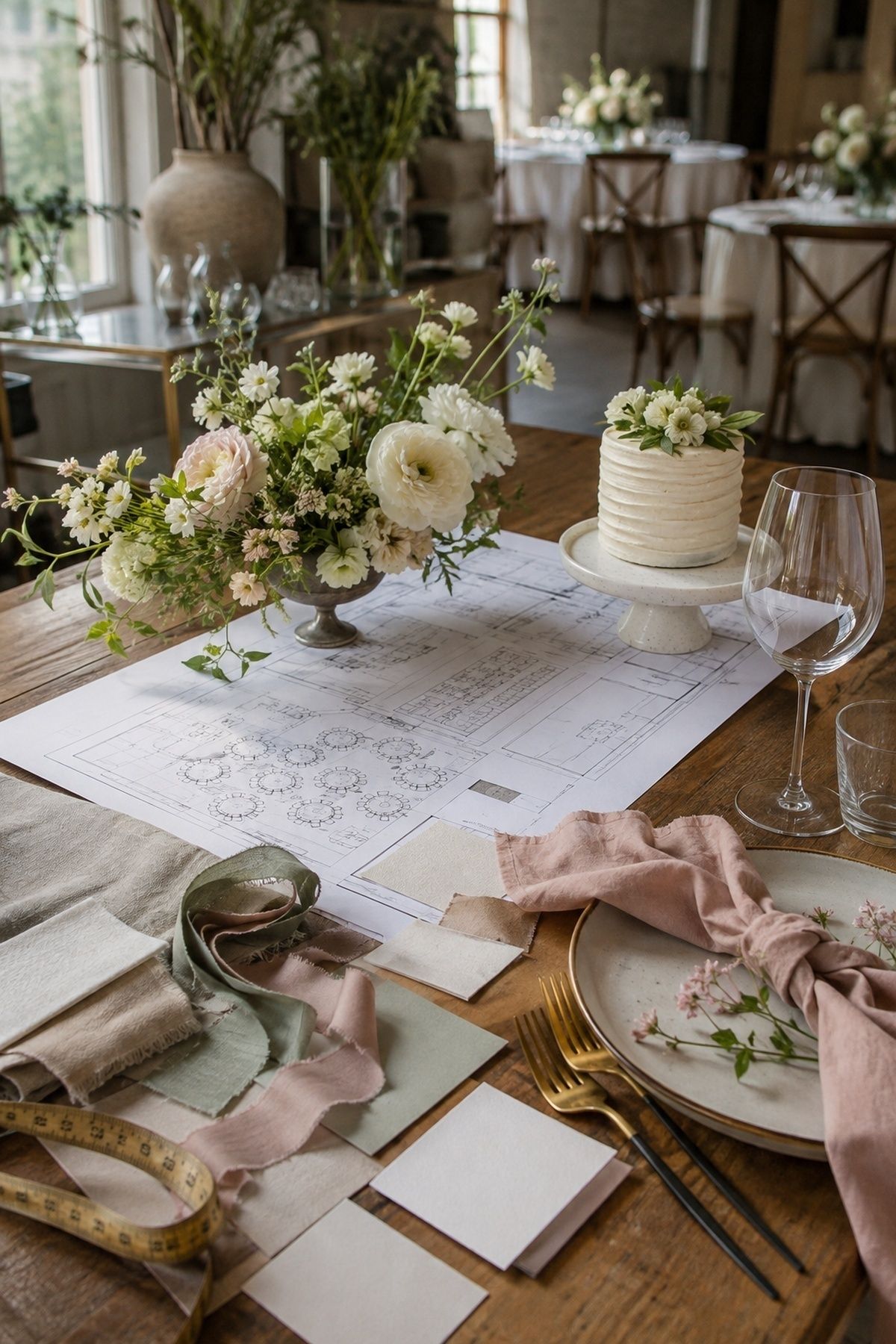
Florals, rentals, stationery, cake, signage, favors, accessories, and day-of paper are easier to book well once the framework is clear. A florist needs the venue, table count, ceremony location, season, palette, and budget. A rental company needs the floor plan, guest count, kitchen or catering plan, rain plan, and delivery rules. A baker needs guest count, storage conditions, serving plan, and sometimes floral coordination.
That does not make design vendors unimportant. It makes them dependent. Book them after the date, venue rules, guest count, and core guest-experience choices have enough shape to guide the creative brief. This keeps beautiful details from creating expensive revisions later.
What Small Weddings Should Still Book Early
Small weddings still need early decisions around ceremony, food, photos, guest comfort, and day-of handoff. The guest list is shorter, but the day still needs to be legal, hosted, documented, fed, and calmly managed. A small wedding feels effortless to guests only when someone has quietly handled the practical parts.
A planner is optional for some intimate celebrations, but coordination is not. Ask early whether professional planning support, venue coordination, or a trusted point person will own the timeline if the venue is private, the schedule has moving parts, or family members expect you to answer logistics on the wedding day.
What Small Weddings Can Book Later
Small weddings often book dessert, simple florals, printed menus, accessories, guest books, vow books, small signage, welcome cards, and non-custom details later than a large event. Restaurant weddings also simplify rentals because chairs, linens, serviceware, staffing, bathrooms, and lighting already exist. That built-in structure is one reason intimate weddings move faster without feeling thin.
Later does not mean forgotten. Put these categories on a simple wedding planning vendor timeline so you know when quotes, proofs, final counts, and payments are due. The goal is calm sequencing, not a giant list of disconnected reminders.
Which Vendor Categories Can Small Weddings Skip?
Small weddings often skip or simplify favors, elaborate signage, transportation, hotel blocks, formal stationery suites, complex rentals, late-night food, large floral installations, multiple entertainment acts, and full wedding-party styling. The right filter is not whether a traditional wedding usually includes it. The right filter is whether it protects the ceremony, food, photos, guest comfort, or day-of handoff.
If skipping a category makes the day clearer, calmer, or more personal, it is often the better choice. The question is not doing less for the sake of less. It is choosing the parts guests and couples actually feel.
How To Book Vendors In Under 6 Months
If you need to book vendors in under 6 months, shift from ideal lead times to availability-first planning. Choose a smaller guest list, consider weekdays or Sundays, ask venues for open dates instead of one fixed date, and contact vendors with complete information. The more flexible you are about date, format, and style, the more possible the plan becomes.
Then ask a few clear questions before the contract: Are you available? What is included? Who will be there on the day? What do you need from us? What costs extra? What happens if timing changes? How do payments work? What is the backup plan if you are unavailable, sick, delayed, or affected by weather?
Keep the decision grounded in fit. A vendor with a beautiful portfolio but vague communication creates more stress than a slightly less famous professional who answers clearly, understands your scale, and has a process you trust. If you are skipping full planning support, assign ownership before the final month instead of hoping everyone remembers the plan.
Avoid The Wrong Vendor Booking Order
Begin with the venue or ceremony and reception location. Next, book the planner or coordinator if you are using one, because they help shape the rest of the team. Then move to photographer, videographer, caterer, officiant, florals, entertainment, rentals, beauty, stationery, cake, transportation, attire services, and any smaller experience vendors.
If your wedding has one unusual need, move that category earlier. A destination wedding needs travel support before florals. A food-centered dinner needs the chef before design. A family property needs rentals, restrooms, tenting, and power before almost anything pretty is promised.
The right order is the one that protects the wedding’s structure first, then its atmosphere, then its finishing details. When those layers are separate, the calendar stops feeling like a swarm of equal emergencies. It also helps you catch forgotten costs before gratuities, delivery, overtime, rentals, meals, alterations, and service fees crowd the final budget.
Use A Simple Vendor Priority Worksheet

Before sending inquiries, make a one-page vendor priority worksheet. List each vendor category, whether it controls the date, whether it affects guest comfort, whether it depends on venue rules, whether it has a hard guest-count impact, your budget range, your must-have standard, and the latest date you are willing to book it.
Then sort the list into three groups: book now, research next, and simplify or skip. This turns a vague book wedding vendors checklist into an actual decision tool. You will see which categories are structural, which are emotional, and which are only there because someone else’s wedding had them. The rest of the set lives under Wedding Planning Basics.
FAQ
How Far In Advance Should You Book Wedding Vendors?
Book core wedding vendors 9 to 12 months in advance for many weddings, and 12 to 18 months in advance for peak-season Saturdays, competitive cities, destination weddings, and highly sought-after vendors. Smaller or off-season weddings often find workable vendor options 3 to 6 months out when the plan is flexible. For more on how far in advance should you book a wedding venue, see the full guide.
Which Wedding Vendors Should Be Booked First?
Book the venue first in most cases, then the planner or coordinator, photographer, videographer, caterer, officiant, florist, music, rentals, beauty, stationery, cake, and transportation. If one vendor is essential to the wedding’s identity, such as a specific photographer or private chef, treat that vendor as an early date anchor.
Do Small Weddings Need Fewer Vendors?
Small weddings often need fewer vendors, but they do not need fewer essentials. Skip favors, large rentals, transportation, or elaborate stationery when they do not serve the day, but keep a ceremony plan, food, photos, guest comfort, and a day-of handoff. Fewer vendors works best when the venue or restaurant already provides useful structure.
When Should You Book A Wedding Photographer?
Book a wedding photographer 9 to 15 months before the wedding when possible, especially for peak-season Saturdays or a photographer with a distinct style. For small weddings, weekday dates, courthouse ceremonies, or off-season events, strong options sometimes appear closer in, but photo coverage is still worth protecting early.
Can You Book Wedding Vendors In Under 6 Months?
Yes, booking wedding vendors in under 6 months is realistic when you are flexible about date, format, and vendor style. Focus first on venue, legal ceremony, food, photos, guest comfort, and coordination. Then simplify custom details, widen availability, and choose vendors who work quickly without vague terms.
Which Wedding Vendors Can Small Weddings Skip?
Small weddings often skip or simplify transportation, hotel blocks, favors, elaborate signage, large rental builds, late-night food, formal stationery suites, and extra entertainment. Do not skip the pieces that protect comfort and flow: ceremony structure, food, seating, photos, accessibility, weather backup, and someone responsible for day-of logistics.
Final Thoughts
How far in advance should you book wedding vendors depends on the date, city, season, guest count, venue type, and how specific your dream team already is. Still, the principle is beautifully simple: protect the vendors who shape the structure first, then layer in the details that make the day feel personal.
Start with the wedding’s real shape, ask better questions before deposits, and give yourself enough room to choose people who communicate clearly. Vendor calendars can close sooner than couples expect, so once the date, location, guest count, and priorities are steady, book the team your day truly needs with a timeline that keeps the pace calm and honest.
Last update on 2026-11-29 / Affiliate links / Images from Amazon Product Advertising API