

A small wedding planning timeline by month works best when you plan only the pieces your guest count, venue, vendor list, and family needs actually require. Start with the month you are in, secure the ceremony place, food plan, photographer, legal steps, and guest communication first, then skip any traditional tasks that do not serve your small wedding.
Planning a small wedding often feels wonderfully light until every generic timeline starts asking you to book ballroom blocks, full wedding parties, transportation fleets, and favors for people you are not inviting. The point of a smaller celebration is not to do a large wedding in miniature. It is to protect the ceremony, feed the people who matter most, and choose the few details that make the day feel like yours.
Use this month-by-month plan from your current month, not as a test you have already failed. If you have twelve months, move calmly. If you have six, compress the foundation decisions. If you have three, choose fewer vendors and make faster deposits. If you are having a courthouse ceremony followed by dinner, your timeline is measured in appointments, documents, reservations, and simple styling rather than a full event calendar. The goal is a clear next step, not a perfect binder.
Recommended Wedding Products


You Might Also Like These Blog Posts
- 3-Month Small Wedding Planning Checklist For A Short, Sane Timeline
- Simple Wedding Planning Timeline For A Day That Feels Easy
- 6-Month Small Wedding Planning Checklist For A Calm, Beautiful Countdown
- Wedding Planning Timeline For Overwhelmed Couples Who Need A Calm Start
- Small Wedding Timeline: A Simple Flow That Lets The Day Breathe
- Simple Wedding Planning Checklist For Couples Who Want Less Noise
Small Wedding Planning Timeline By Month
A small wedding planning timeline by month should start with your real wedding shape. Count your guests honestly. Name the ceremony type. Decide whether the reception is a restaurant meal, backyard dinner, private room, venue rental, vacation house, courthouse lunch, or tiny weekend gathering. Then list only the vendors you truly need. For many small weddings, the essential team is venue or reservation, officiant if needed, photographer, food, beauty, flowers, attire, and a day-of helper.
The smaller guest count changes the order of decisions. A twenty-person restaurant wedding needs a private dining contract before it needs a florist. A backyard wedding needs rentals, weather cover, restrooms, and cleanup earlier than decor. A courthouse wedding needs legal appointment timing before anything else. Let the venue type and guest experience decide what deserves your attention first.
Before moving into the months, choose your planning lane. A hosted venue lane means you mostly confirm date, menu, ceremony space, photos, attire, flowers, and guest details. A private-property lane needs more infrastructure, including seating, lighting, bathrooms, weather cover, staff, trash, and neighbors. A restaurant lane needs contract clarity, timing, menu, cake rules, speeches, and room flow. A courthouse-plus-dinner lane needs legal accuracy, witnesses, portraits, and a reservation. When you know the lane, whole categories become easy to ignore without guilt.
Also decide how you will communicate with the people who are not invited. Small weddings often bring tender family expectations, and avoiding the topic rarely makes it softer. Prepare one kind sentence about keeping the day intimate, then share celebration plans only if they are real. Clear wording protects the guest count and keeps the planning calendar from becoming an apology tour.
12+ Months Before

Begin by defining what small means for you. Write down the guest count you feel able to host warmly, the budget you feel able to spend without resentment, and the feeling you want guests to leave with. This is the month for the big container decisions: city, season, ceremony style, reception style, and whether you want a planner, coordinator, or no professional planning support at all.
Tour or research the spaces that fit the guest count before you fall in love with details. A small wedding fits beautifully in a restaurant, garden, chapel, home, inn, courthouse, studio, historic room, or private dining space, but each one carries different rules. Ask about capacity, food minimums, ceremony permissions, noise, accessibility, parking, rain plans, and cleanup. Once the place is real, the timeline becomes much easier to trust.
11 Months Before
Build the first working budget around the actual wedding format. Do not divide money into traditional categories just because a template says so. For a small wedding, food and photography often become the largest emotional investments, while decor, transportation, stationery, favors, and entertainment often stay lean. Put money toward the parts guests will feel: comfort, timing, meal quality, ceremony clarity, and the couple’s ease.
This is also a good month to draft the guest list in tiers. Start with the people who must be in the room for the day to feel right, then add people only if the venue, budget, and emotional tone still work. Small weddings become stressful when the guest list is treated like a quiet negotiation with everyone else’s expectations. Protect the number early so later decisions do not wobble.
10 Months Before
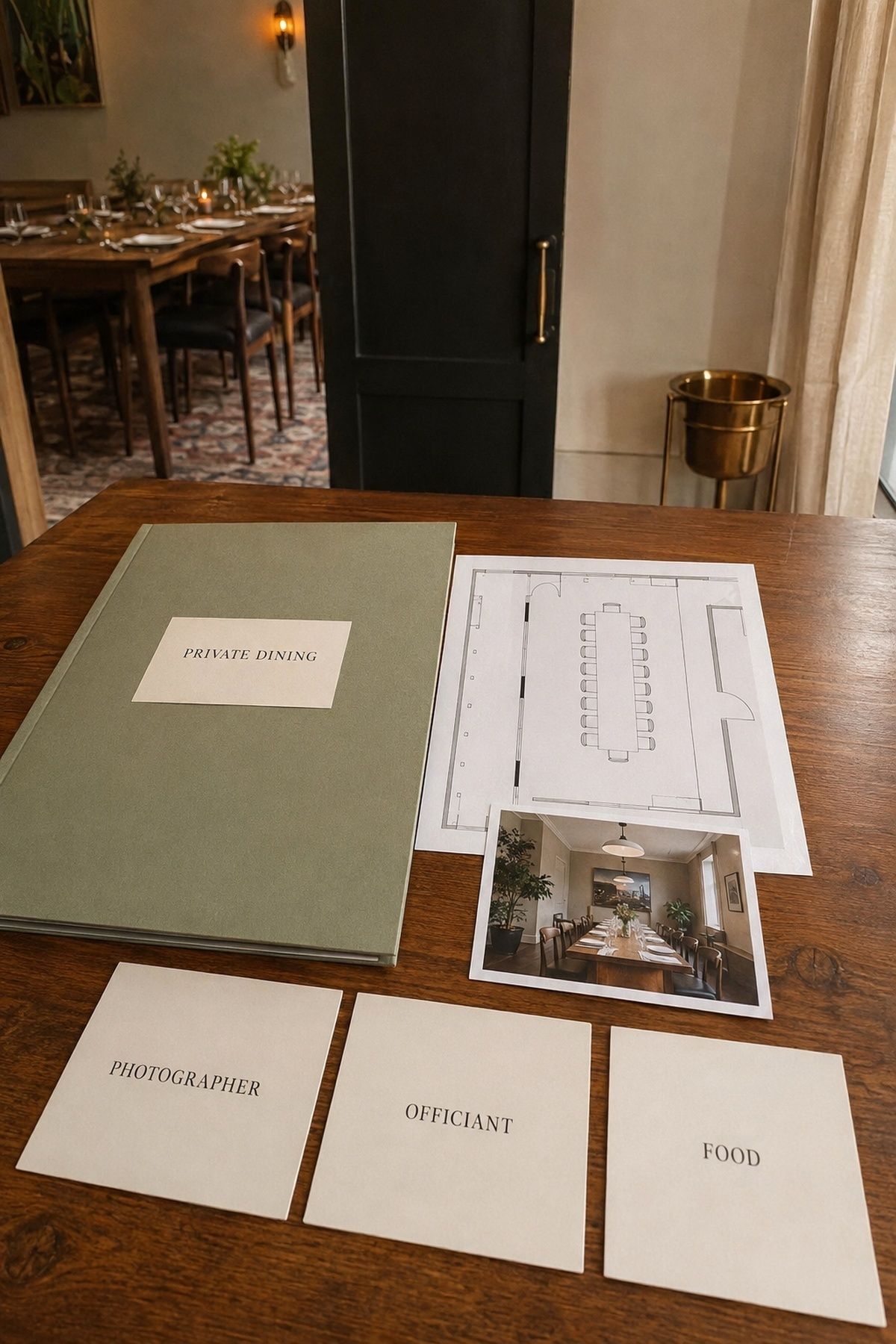
Book the ceremony and reception location, or place the restaurant/private-room hold in writing. If the same place handles ceremony, food, chairs, linens, staff, and cleanup, your vendor list often shrinks immediately. If the location is raw or personal, such as a backyard or family property, start a practical needs list for rentals, bathrooms, power, lighting, kitchen access, trash, parking, and neighbors.
Begin researching your highest-priority vendors. For most small weddings, that means photographer, officiant, food provider, planner or coordinator, and beauty if those matter to you. Ask each vendor whether they offer shorter coverage, weekday pricing, intimate wedding options, or restaurant-friendly service. You are not asking for less care. You are asking for a scope that fits the wedding you are actually planning.
9 Months Before
Choose the photographer and ceremony support. Small weddings often rely on photos to carry the memory of the day with fewer formal events, fewer guests, and less extended coverage. Look for galleries with intimate ceremonies, restaurant dinners, courthouse exits, backyard receptions, or family-heavy moments. A photographer who understands small weddings will notice the hands, glances, table conversations, and quiet transitions.
Confirm the officiant path this month if your venue or local law does not provide one. Ask about ceremony length, personalization, legal filing, rehearsal needs, and whether a friend or family member is allowed to participate. For courthouse or civil ceremonies, confirm when license and appointment windows open so you do not build the rest of the plan around a date that is not legally available.
8 Months Before
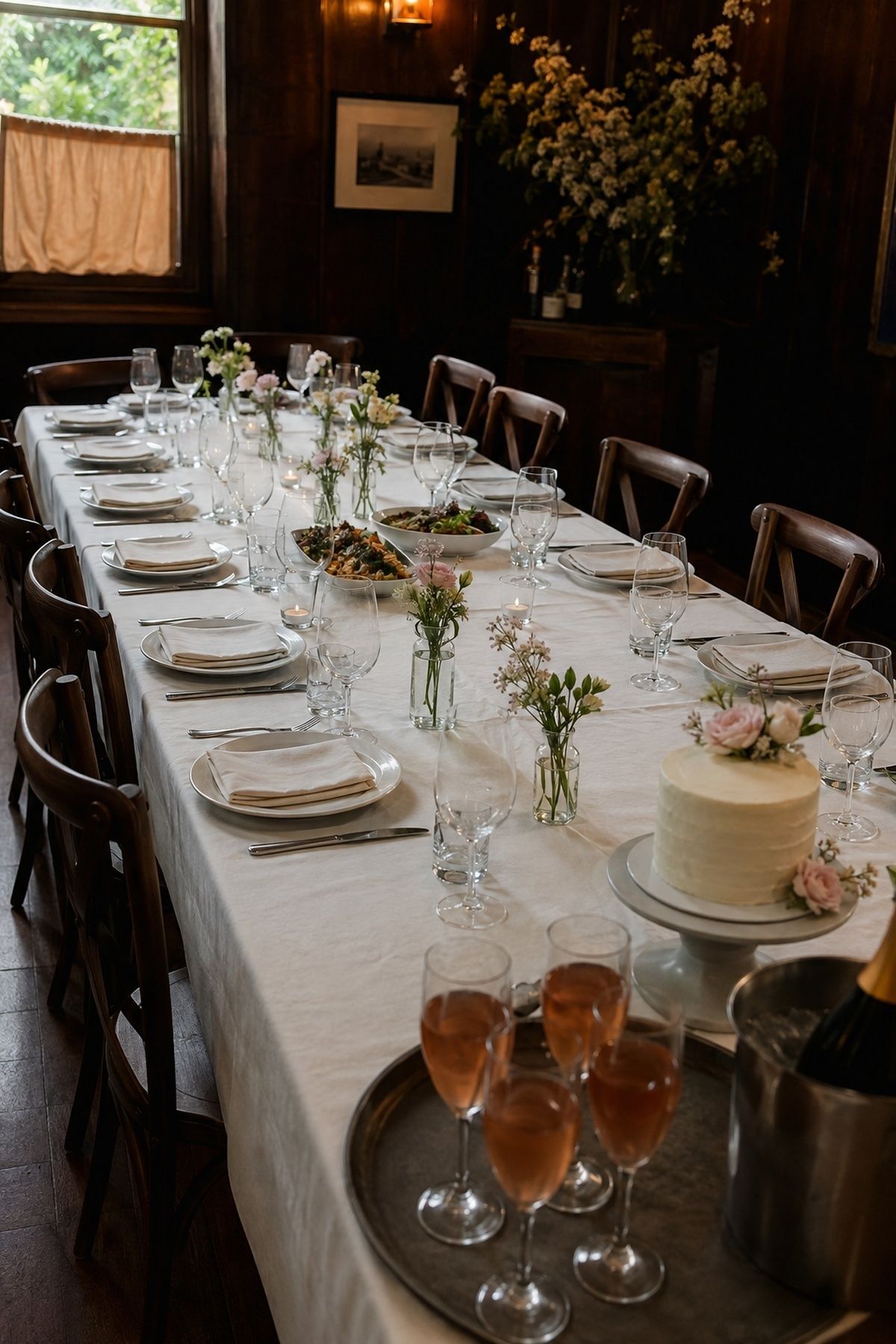
Settle the food and drink plan. This might mean signing a restaurant agreement, booking a caterer, choosing a private chef, planning family-style service, arranging a cake-and-champagne reception, or deciding on brunch instead of dinner. With a smaller guest list, food feels more personal, but it still needs structure: arrival drinks, meal timing, dietary needs, service style, cake cutting, cleanup, and who pays any final bill.
If guests are traveling, send save-the-date information once the date, city, and venue are firm. Formal cards are optional. A clean email, wedding website, or simple mailed card is enough. Small does not mean vague. Guests need travel timing, lodging suggestions, dress tone, whether children are included, and whether the event is ceremony-only, dinner-only, or both.
7 Months Before
Shop for attire with the level of formality your wedding deserves. Small weddings still carry fashion beautifully: a tailored suit, relaxed gown, courthouse mini, silk slip dress, heirloom veil, embroidered jacket, or outfit comfortable enough for the whole evening. Order early if alterations, shipping, custom work, or multiple fittings are involved. Buy sooner if your wedding is destination-based or during a busy season.
Decide whether you will have attendants, ceremony speakers, a ring bearer, witnesses, or no wedding party. For a small guest list, roles should make people feel included, not managed. If assigning roles creates outfits, gifts, logistics, and emotional debt you do not want, skip them. If roles would make the ceremony warmer, keep them simple and communicate expectations clearly.
6 Months Before
Now confirm the vendor list you are truly using. Your plan either needs florist, rentals, hair and makeup, cake or dessert, music, transportation, lodging blocks, childcare, or a coordinator, or it needs none of those. The six-month mark is a smart point to compare your plan against your guest count and venue type. If the venue already includes tables, linens, food, staff, and sound, do not invent extra vendors to look busy.
Start the ceremony and reception flow. Name the arrival window, ceremony time, photo time, meal time, speeches if any, cake or dessert, first dance if any, and end time. A small wedding often needs fewer events, but the transitions matter more because guests feel every pause. Give the day a gentle rhythm rather than a long checklist.
5 Months Before
Choose flowers, tabletop pieces, and any visual details that make the room feel intentional. Small weddings do not need large design plans, but they benefit from a few repeated choices: one flower palette, candles, cloth napkins, printed menus, a small cake display, ribbon, bud vases, or framed photos. Let the venue do some of the work. A beautiful restaurant, garden, chapel, or home needs far less styling than a blank room.
Make the music decision. You might book a solo musician for the ceremony, hire a small ensemble for dinner, create playlists, ask the restaurant about speakers, or skip formal dancing altogether. Music is one place where small weddings feel surprisingly emotional. Even a short aisle song, first song after the ceremony, or dinner playlist marks the day without turning it into a full reception.
4 Months Before
Send invitations if you skipped save-the-dates, or prepare them now if guests already know the date. For local small weddings, invitations often work well around three to four months out. For destination or holiday-weekend weddings, send earlier. Include the exact address, start time, dress tone, meal information, parking, lodging, RSVP deadline, and whether the celebration is adults-only or includes children.
This is also the month to handle lodging and travel clarity. With a small guest count, a hotel block is often unnecessary, but confusion still needs attention. Share favorite local hotels, transport details, airport suggestions, and any venue quirks. If the wedding is at a private home, tell guests what to expect with parking, shoes, weather, restrooms, and neighborhood quiet hours.
3 Months Before
Collect RSVPs, update the budget, and start final guest experience planning. The smaller the wedding, the more each person’s attendance affects the table, meal count, transportation, and ceremony feeling. Follow up kindly with anyone who has not replied. Then give updated counts to the venue, restaurant, caterer, rentals, florist, and planner as needed.
Write or outline ceremony words this month. Choose ceremony passages, vows, ring exchange language, cultural or family rituals, music moments, and who will stand where. A small ceremony often feels deeply exposed, in the best way, because every guest is close. Give yourself time to shape words that sound natural rather than borrowing a script at the last minute.
2 Months Before
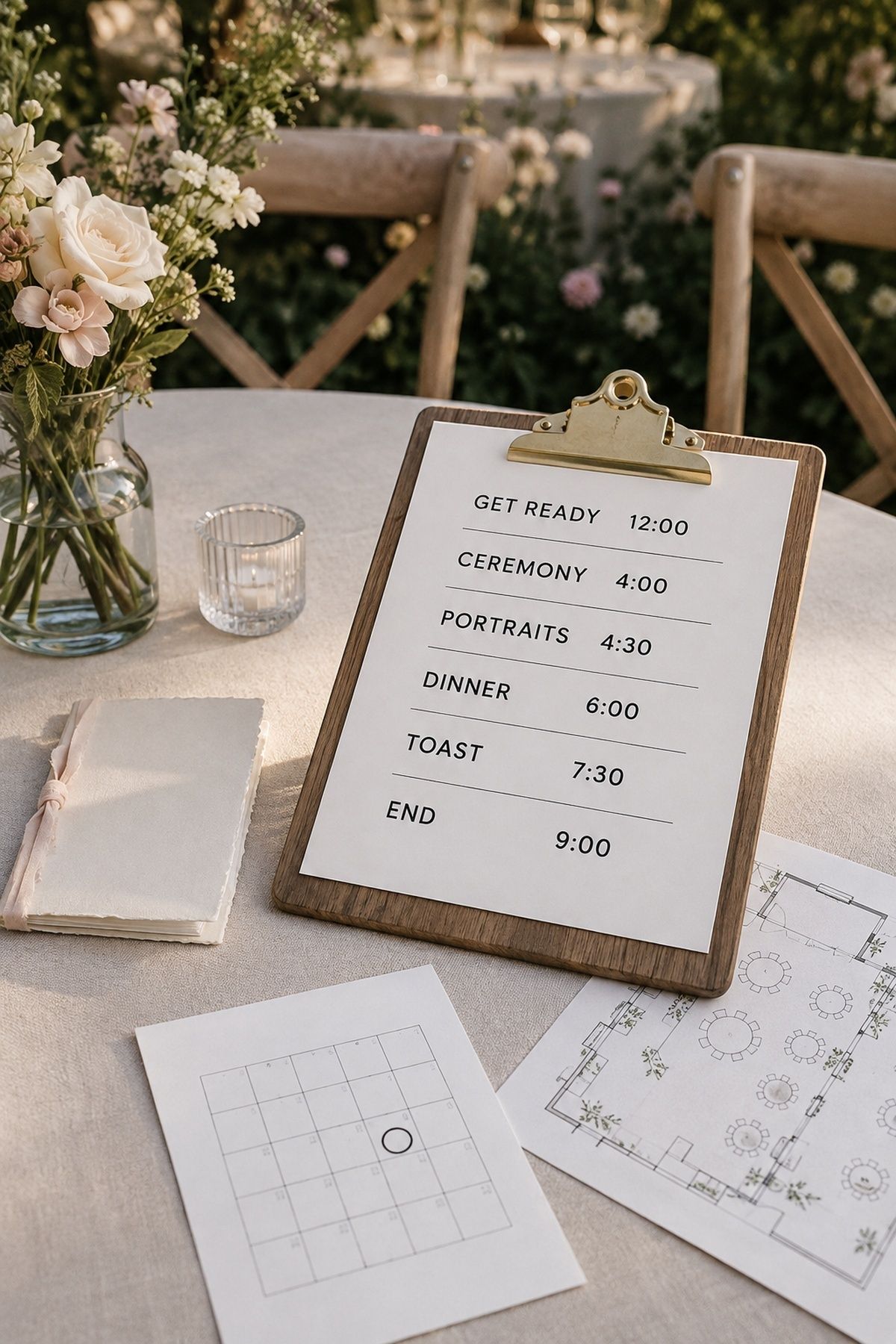
Build the wedding day timeline in real hours. Start with the ceremony time and work outward: getting ready, first look if any, family photos, guest arrival, ceremony, portraits, meal, speeches, cake, dancing or playlist time, final toast, and cleanup. Ask each vendor what they need, then remove anything that feels performative. A small wedding should have enough structure to relax inside, not so much structure that it becomes brittle.
Confirm beauty trials, alterations, rings, accessories, printed pieces, vows, and legal steps. If your jurisdiction has a marriage license window, calendar the earliest and latest days for applying. If witnesses are required, tell them what identification and arrival time are required. Legal details are not romantic, but they are the floor under the romantic parts.
1 Month Before
Move from planning to confirming. Send final guest count, meal selections, floor plan, ceremony plan, playlist details, photo list, payment schedule, and contact sheet to the people who need them. If there is no planner, choose one steady person to answer vendor questions on the day. That person should not be the couple, and ideally should not be the most emotionally involved parent.
Prepare the tiny details that prevent last-minute scrambling: steamer, emergency kit, ring box, printed vows, marriage license, pens, umbrella, comfortable shoes, touch-up makeup, tips, cards, gifts, menu cards, candles, lighters, cake knife, and cleanup bags. For a small wedding, these details fit in one tote. Label it, assign it, and stop letting it live in your head.
Wedding Week
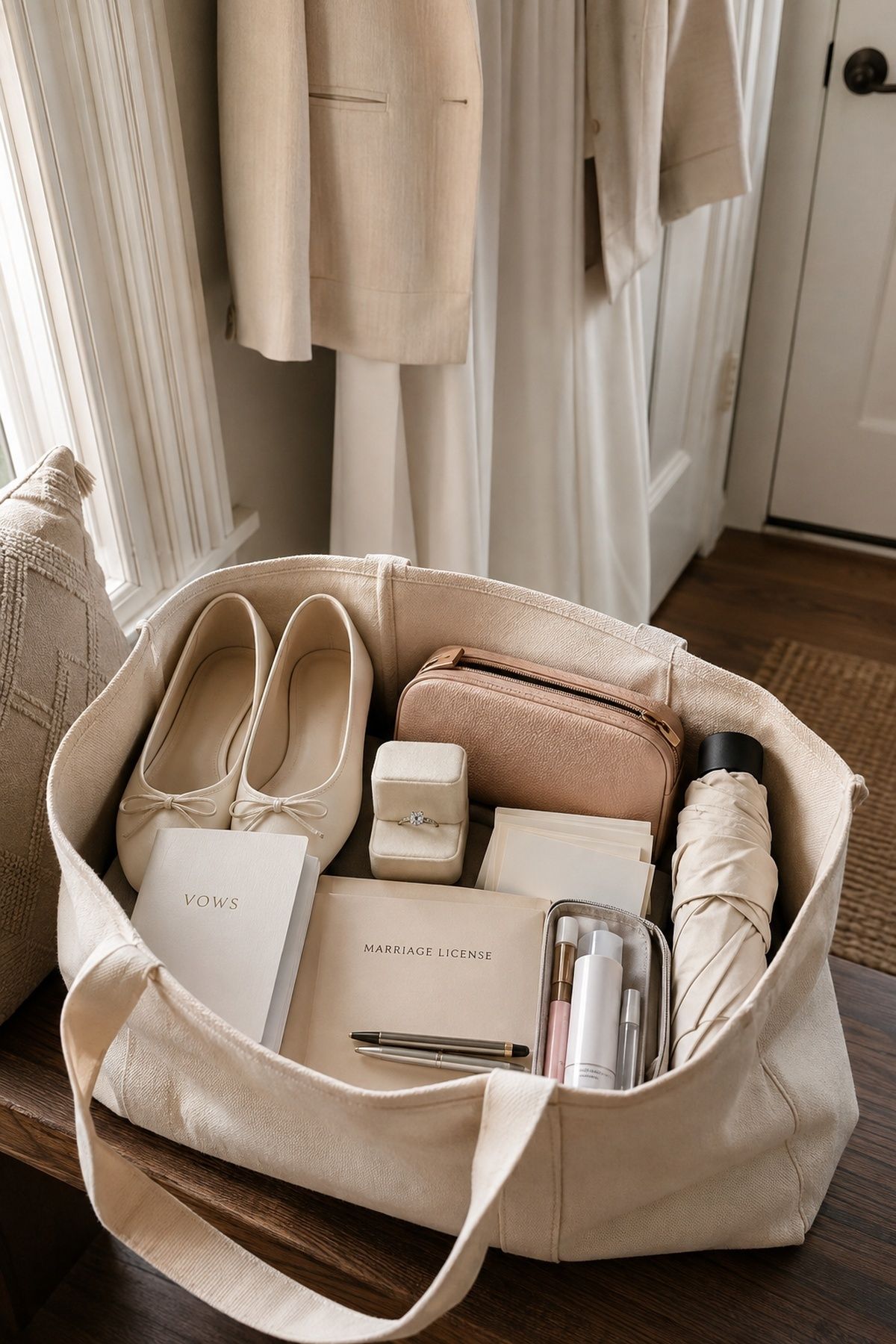
The week before a small wedding is for communication, rest, and gentle tightening. Confirm every arrival time, address, balance, weather plan, legal document, outfit, ring, and meal count. Share the final timeline with vendors, helpers, witnesses, immediate family, and anyone giving a toast or ceremony passage. If your plan involves a home, restaurant, or courthouse, confirm access and rules one more time.
Then protect the quiet. Steam clothes, pack documents, charge phones, write cards, practice vows, and decide what deserves to be ignored. A small wedding becomes magical when there is room to notice it. Do not fill that room with emergency errands that belonged to someone else, mattered less than they seemed, or had a simpler answer.
How To Compress The Timeline Without Losing The Day
If You Have 6 Months
In a six-month plan, make the first two weeks decisive. Pick the guest count, date range, ceremony location, reception format, and budget before shopping details. Book the venue or restaurant, photographer, officiant, and food quickly, because those decisions unlock everything else. Choose attire with realistic lead time, or shop ready-to-wear, sample, rental, vintage, or tailored pieces that do not require months of lead time.
Send guest information as soon as the location is firm, especially if travel is involved. Keep the vendor list short and prioritize businesses that already know small events. A restaurant with a private room, a florist with a small event menu, a photographer with intimate coverage, and a coordinator available for the final stretch will help you avoid building a large wedding machine for a simple celebration.
If You Have 3 Months
With three months, choose a wedding format that is easy to execute. A private dining room, courthouse plus dinner, backyard ceremony with restaurant catering, inn elopement with family, or chapel ceremony followed by brunch will usually be smoother than a blank-space venue. Confirm the legal path immediately. Book the ceremony place, meal, photographer, attire, and any required officiant before spending time on color palettes.
Invite guests quickly and make the RSVP deadline close. Use digital communication if it helps people make decisions sooner. Skip save-the-dates, wedding party proposals, elaborate showers, custom signage, complex rentals, and anything that needs long shipping. Flowers, music, cake, vows, photos, and a beautiful meal are still within reach. You are simply choosing the version of each that arrives on time.
If It Is Courthouse Plus Dinner
For a courthouse ceremony followed by dinner, the timeline begins with the law and the reservation. Confirm where to apply for the license, whether there is a waiting period, how long the license remains valid, how to book the ceremony, how many witnesses or guests are allowed, whether photos are allowed, and what identification or payment is required. Then reserve the meal that gives the day a place to land.
After that, add only the details that make the short day feel complete: outfit, bouquet, rings, vows, photographer, car or rideshare plan, cake or dessert, announcement wording, and a small timeline for getting ready, ceremony, portraits, and dinner. Courthouse weddings do not need to feel improvised. They feel best when the legal appointment is clear and the celebration around it is chosen with care.
What Small Weddings Can Safely Skip
A smaller wedding gives you permission to question every inherited task. Skip favors if they do not feel personal. Skip a full wedding party if it creates more outfit, schedule, and gift work than joy. Skip save-the-dates for a local wedding with a short guest list if you communicate clearly another way. Skip a seating chart if everyone fits at one or two tables and the meal service does not require assigned seats.
Also skip formal transportation if the venue is accessible, hotel blocks if guests prefer their own lodging, a big dance floor if the celebration is dinner-focused, a large cake if dessert is included, and layers of signage if guests already know where to go. The test is simple: would skipping this confuse guests, risk the legal ceremony, harm comfort, or remove something emotionally important? If not, it is probably clutter.
Be more careful about skipping coordination. Even a tiny wedding needs someone to hold the timeline, cue the ceremony, receive deliveries, handle restaurant questions, keep documents safe, and notice when the couple should be left alone. That person might be a professional, venue manager, trusted friend, or family member with a calm temperament. The role matters more than the title.
FAQ
What is a small wedding planning timeline by month?
A small wedding planning timeline by month is a planning calendar that breaks the wedding into monthly decisions while accounting for a smaller guest count, simpler venue, shorter vendor list, and details the couple does not need. Instead of assuming a full traditional wedding, it helps you book the essentials first and scale everything else to the celebration you are actually hosting.
How long does it take to plan a small wedding?
A small wedding often takes anywhere from a few weeks to twelve or more months, depending on the venue, guest travel, vendor demand, legal requirements, and how customized the day will be. Twelve months gives more choice, six months is very workable, and three months works well when the couple chooses a simple format and makes decisions quickly.
Can a small wedding timeline be shorter than a traditional wedding timeline?
Yes, a small wedding timeline is often shorter than a traditional wedding timeline because there are fewer guests, fewer rentals, fewer formal events, and fewer moving parts. The timeline should not be rushed past the legal steps, venue or restaurant booking, food, photography, attire, and guest communication, but many traditional extras are easy to remove or compress.
What should you book first for a small wedding?
Book the ceremony and reception location first, or confirm the courthouse appointment and dinner reservation if that is your plan. After that, prioritize photographer, officiant if needed, food, and any planner or coordinator support. Those decisions shape the date, budget, guest count, timeline, and how much help you will need from other vendors.
When should you send invitations for a small wedding?
For a local small wedding, sending invitations about three to four months before the date usually gives guests enough time to reply and plan. For destination weddings, holiday weekends, or celebrations with many traveling guests, send information earlier. If you are planning quickly, digital invitations or direct messages work as long as the details are clear and complete.
What should you do the week before a small wedding?
The week before a small wedding, confirm the timeline, vendor arrivals, guest count, meal details, legal documents, payments, weather plan, attire, rings, vows, and who is responsible for setup and cleanup. Pack everything in one place, share final instructions with helpers, and remove any detail that no longer feels necessary.
Final Thoughts
A small wedding planning timeline by month should make the day feel calmer, not heavier. Start wherever you are, protect the guest count, book the ceremony and meal, choose the vendors that genuinely support the experience, and let the rest earn its place. The smaller scale is not a limitation. It is a chance to plan with more honesty.
Before you lock the last details, compare your timeline against your venue rules, legal requirements, guest travel, food plan, and the kind of memories you want to keep, then trim anything that does not help the day feel personal, practical, and complete afterward.
Last update on 2026-10-04 / Affiliate links / Images from Amazon Product Advertising API