

You can plan a wedding without a planner if you keep one shared master plan (budget, guest list, vendors and deadlines), check in on vendors and guests every week, and hand the wedding day itself to a trusted day-of captain, so the two of you get to enjoy it instead of running it.
I am an ex-banquet chef who had a DIY wedding in 2024, so I say this with love: the hard part of skipping a planner is that nobody hands you the list of jobs a planner does in the background. Fifteen years of running service teaches you that every smooth event has one person holding the clipboard, and at a DIY wedding that person has to be invented.
So this guide on how to plan a wedding without a planner breaks those jobs into twelve steps, grouped by the stage you are in: decisions to make before you book anything, keeping vendors and guests on track, and handing the day to someone else. It works best for small weddings, though the system is the same at any size. If you’re working through planning a small wedding as a whole, the main guide covers it.
Recommended DIY Wedding Planning Essentials
A binder or spreadsheet, a budget tracker, a timeline template and a guest list tracker do most of what a planner’s software would do.


Recommended blogs to read:
- Do You Need A Wedding Planner For A Small Wedding Or Just Better Help
- How To Plan A Wedding From Scratch When You Have No Idea Where To Start
- How To Plan A Wedding When You Work Full Time And Still Have A Life
- Can You Plan A Wedding In 6 Months Without Making It Feel Rushed
- How To Plan A Wedding In One Year Without Turning It Into A Full-Time Job
- How To Choose Wedding Priorities As A Couple Before Everyone Else Gets A Vote
What Should You Decide Before Booking Anything?
The format, the budget, the guest ceiling and where the plan will live, in that order, and then the venue and date.
1. Choose A Simple Wedding Format First

The format you pick decides how much coordinating you sign up for, so choose one that does some of the work for you.
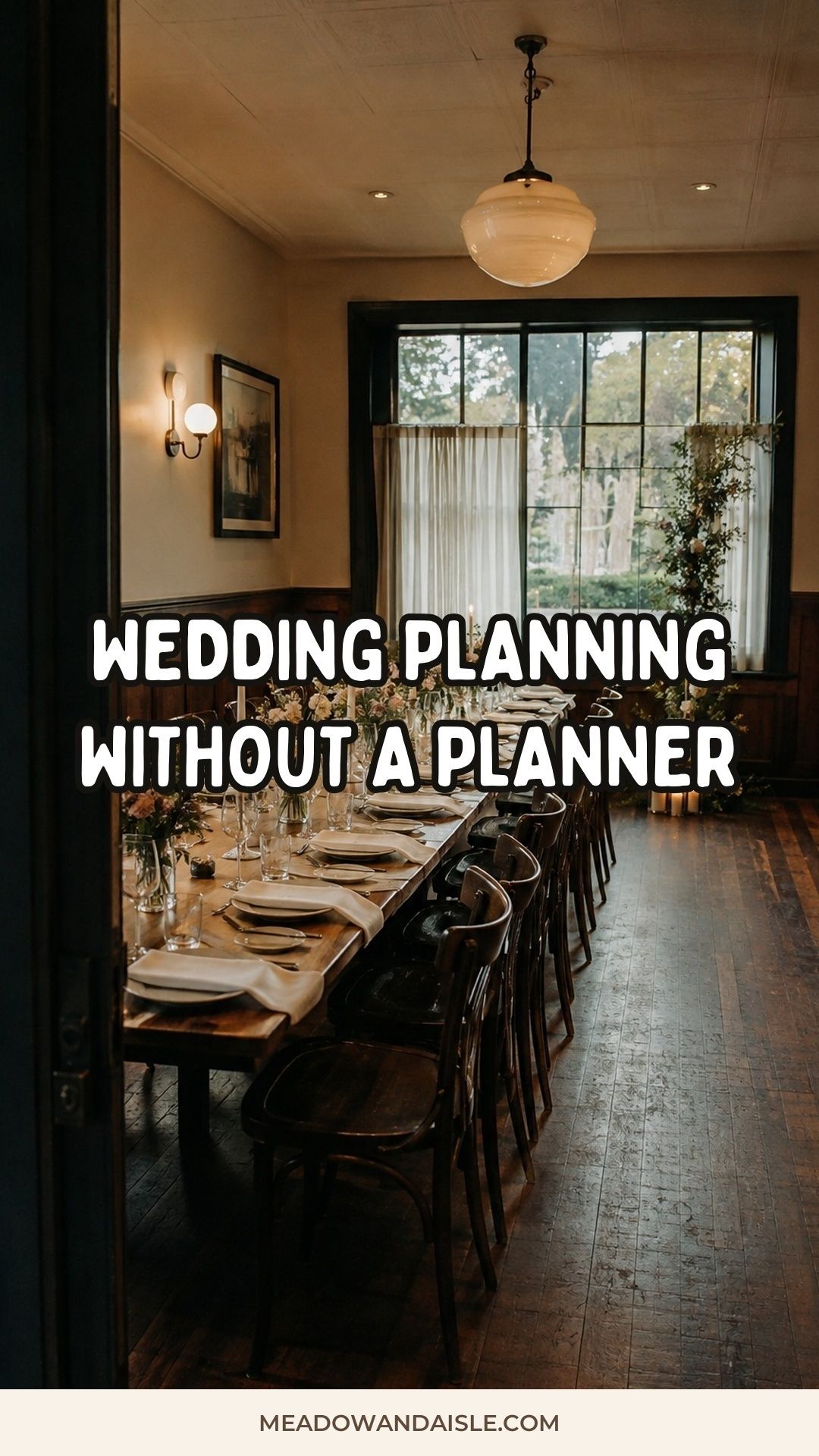
A private dining room like this one, a long table already set with candles and small flowers under a pendant lamp, comes with tables, chairs, staff, restrooms and cleanup built in. A blank field or a family backyard looks simpler and quietly adds rentals, power, toilets, trash, parking and a rain plan. If you are planning alone, the restaurant or the all-in package is the kind choice to yourself.
2. Set The Budget And Guest Ceiling Before Shopping
Your total budget and a firm maximum guest count are the two numbers that stop a DIY wedding from drifting.
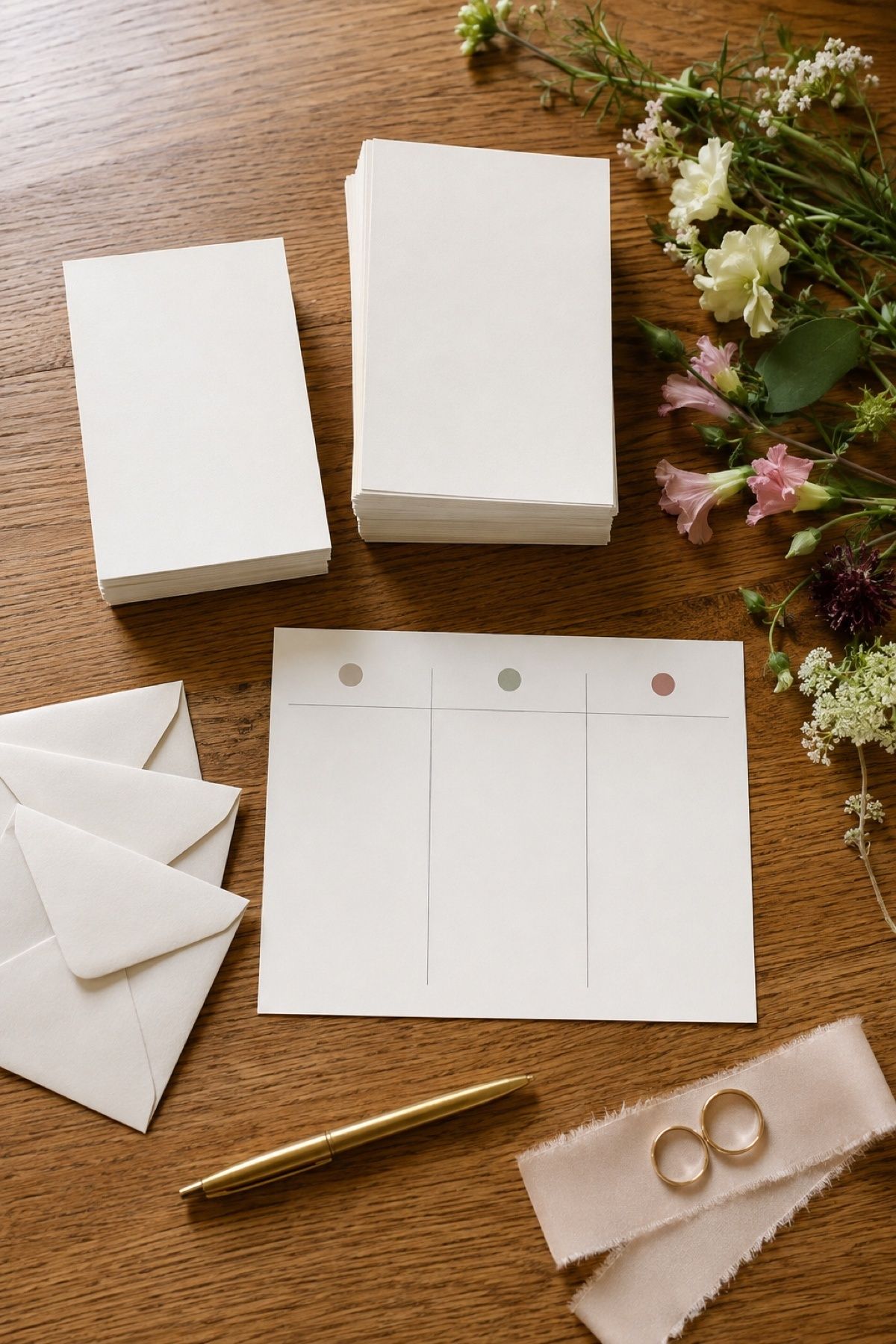
Those two stacks of blank guest cards next to a blank three-column worksheet are the right picture of this step: decide how many people and how much money before any venue tour or casual “you’re invited, obviously” at a family dinner. Every quote you get after that is easy to read, because catering, chairs, tables and restrooms all scale with the headcount. A sample split for smaller weddings is in this small wedding budget breakdown.
3. Build One Shared Planning Hub

Pick one place where the whole wedding lives and make both of you use it.
On this round table there is a laptop with a color-coded spreadsheet, an open ring binder, a calendar printout and a floor plan, with a phone and a fabric swatch off to the side, which is a planning hub in real life. Digital or paper does not matter. What matters is that the budget, guest list, vendor contacts, contracts, deadlines and decisions sit in one spot, with a one-page summary on top that a friend could read cold.
4. Book Venue And Date Before Everything Else
Everything else waits on the venue and date, since photographers, caterers and florists can only confirm once both exist. On tours, ask the practical questions first: what is included, who sets up and breaks down, whether outside vendors are allowed, whether there is a food and drink minimum, and whether the on-site coordinator runs your timeline or only looks after the building. For a small group, pick a room that feels full rather than a huge hall with half the lights off.
How Do You Manage Vendors And Guests Without A Planner?
Keep the vendor list short, track every contract and deadline in one place, and give guests the same information in the same few places.
5. Keep Vendors To The Essentials
Every vendor is one more relationship you manage alone, so hire for the guest experience and skip the rest. Couples in The Knot 2025 Real Weddings Study hired about 14 vendors on average, and a small wedding can usually manage with half that. A restaurant wedding rarely needs rentals, a courthouse dinner rarely needs a DJ, and a backyard ceremony needs toilets long before it needs signage.
6. Track Contracts, Payments, And Deadlines
Memory is not a system, so log every vendor with the total, deposit, balance, due dates, arrival time and cancellation terms. Read each contract for service charges, overtime and what happens if the headcount changes. From the catering side, the date that sneaks up on couples is the final guest count, usually due one to two weeks before the wedding, right when everything else is due too. Set reminders two weeks ahead of every deadline.
7. Create A Guest Communication Plan
Decide where information lives, usually the invitation and the wedding website, and repeat the same wording everywhere. Cover date, time, address, parking, dress code, RSVP deadline, kids and plus-ones, and gently explain the small guest list once. If three people ask the same question, fix the wording instead of answering three texts.
8. Make Decisions In Weekly Planning Blocks
Give the wedding one standing slot a week, say Sunday morning with coffee, and keep it out of every other dinner. Walk through what changed, what is due, what is stuck and who owns it. This matters even more if you both work full time, and these tips on planning a wedding when you work full time go deeper on that.
Who Runs The Wedding Day If There Is No Coordinator?
A trusted friend or paid helper acting as captain, working from a written timeline and a handoff packet you prepared weeks before.
9. Write The Wedding Day Timeline Early
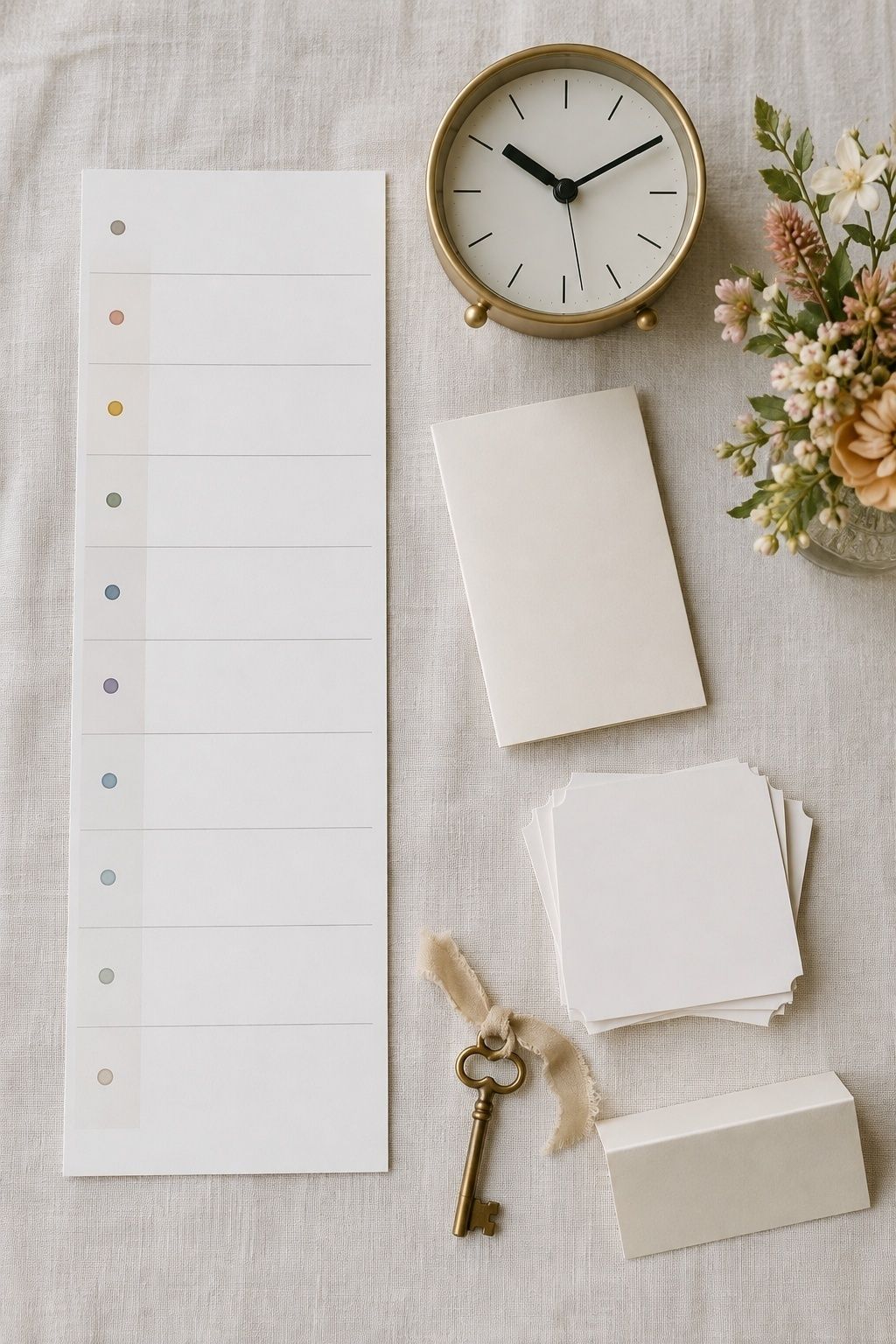
A rough timeline written months ahead shows you the gaps while you can still fix them.
This flat lay has a long timeline sheet with colored dots down the side, a brass desk clock, a few blank cards and a key on a ribbon, which is pretty much what a first draft should look like: every hour from hair and makeup to the last car leaving, with vendor arrivals marked. Build in buffers, too. One simple version is the 30-5 rule some venues use, about 30 minutes of slack around the big blocks and 5 minutes around small changeovers. Our small wedding timeline has a sample day you can copy.
10. Assign A Day-Of Captain Who Is Not The Couple
Someone has to answer the florist, find the cake knife and cue the music, and it cannot be either of you. Pick a calm sibling, a friend who organizes trips for fun, or a paid setup lead, then tell them out loud that they have the authority to decide small things. Give the other helpers small named jobs, so your captain is not also carrying chairs.
11. Prepare Vendor Contact Sheets And A Handoff Packet
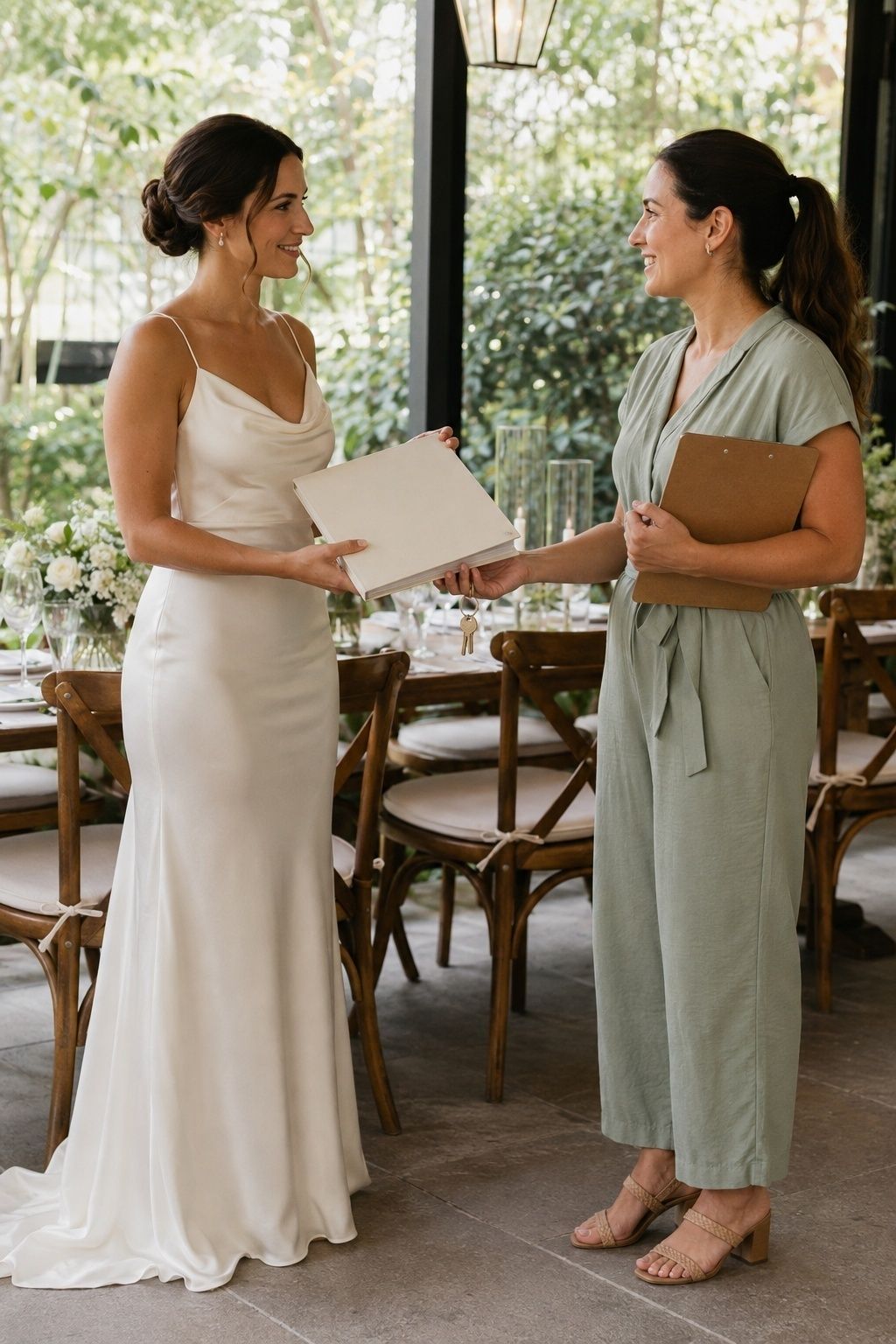
The handoff is where your planning turns into someone else’s plan.
In this photo the bride, already in her satin slip dress, is handing the papers to her friend in the sage jumpsuit, who has a brown folder ready. That folder should hold the vendor contact sheet, timeline, floor plan, family photo list, payment envelopes and the cleanup plan, all short enough to skim on a phone. Hand it over at least a week before, and walk through it together once.
12. Know When To Pay For Partial Help
Skipping a full planner does not mean skipping all help. A month-of coordinator, a few paid setup hours or a one-time timeline review fixes most DIY weak spots, especially with a blank-canvas venue, two locations or a lot of out-of-town guests. If you are still deciding, this look at whether you need a wedding planner for a small wedding helps you weigh it.
What Small Weddings Simplify
A small wedding lets you remove whole categories of work, so fewer things need managing in the first place. Skip the hotel block, the second invitation insert, the late-night snack station and the five decor zones, and put that energy into one great dinner and a calm ceremony. Personal place cards for 35 guests take an evening, which is less time than tracking 35 favors that people leave on the table anyway.
The No-Planner Mistake To Avoid
The big mistake is assuming someone will just know what to do. Your mom may be generous and your best friend may be organized, but neither of them can run the day from a group chat and good vibes. Tell vendors who the day-of contact is, tell family who answers logistics questions, and tell everyone that the two of you are off duty once the day starts.
What Is The Cheapest Way To Plan A Wedding Without A Planner?
Keep the guest list small, pick a venue that includes food, tables and staff, and cut whole categories instead of buying cheaper versions of everything. Guest count moves the budget more than any other choice, because almost every line, from catering to chairs, is charged per person.
Frequently Asked Questions
Can You Plan A Wedding Without A Planner?
Yes. Plenty of couples plan their own weddings, especially small ones, by keeping one master plan, tracking vendors and deadlines, and handing the wedding day to a trusted day-of captain.
What Do You Need To Organize If You Skip A Planner?
The budget, guest list, vendor contacts, contracts, payment dates, timeline, floor plan, guest information and cleanup. If a calm friend could read your notes and know the next step, your system works.
How Do You Handle The Wedding Day Without A Coordinator?
Give a day-of captain who is not the couple a timeline, a vendor contact sheet and a handoff folder at least a week before. Tell vendors and family that this person answers the logistics questions.
What Tools Help Replace A Wedding Planner?
A shared spreadsheet or binder, a budget tracker, a guest list tracker, a payment calendar and a written timeline. A plain spreadsheet you open every week beats a fancy app you avoid.
When Should DIY Couples Still Hire Help?
Hire help for a blank-canvas venue, two locations, lots of travel logistics or tricky family dynamics. A month-of coordinator or a few paid setup hours is often enough.
Is Planning Without A Planner Easier For A Small Wedding?
Yes, because fewer guests mean fewer tables, questions and vendors. A small wedding still needs a written timeline, a setup plan and someone in charge on the day.
Key Takeaways
- Choose a format, like a restaurant or venue package, that handles logistics for you.
- Fix the budget and the maximum guest count before you tour anything.
- Keep one shared planning hub and a weekly planning slot.
- Watch the catering final count, usually due one to two weeks out.
- Hand the day to a captain with a written timeline and handoff folder.
Who Gets Your Clipboard?
You have the twelve jobs now, and the only one you truly cannot do yourself is the last one, running the day while you are getting married. So who in your life is calm, organized and slightly bossy enough to hold that folder, and have you asked them yet? The rest of the set lives under Wedding Planning Basics.
Last update on 2026-11-29 / Affiliate links / Images from Amazon Product Advertising API