

The simplest answer for how to plan a wedding in 18 months is to use the extra time for decisions that actually benefit from early attention: budget, guest count, venue, major vendors, savings, and calm family conversations. Then give the middle months small assignments so the engagement does not turn into overthinking, scope creep, or a guest list that quietly grows beyond the wedding you wanted.
An 18-month engagement often feels beautifully spacious. You have room to breathe, compare dates, save money, tour without panic, and talk through the kind of wedding you actually want before every vendor email becomes urgent.
The tricky part is that extra time also turns into extra noise. When there is no immediate deadline, couples often revisit settled choices, browse too much, add people because the list still feels flexible, and upgrade details simply because there is time to imagine more. A good 18-month wedding timeline should protect your attention as much as it organizes your tasks. The bigger plan, including how to plan a small wedding, is in the main guide.
Recommended Wedding Products


You Might Also Like These Blog Posts
- How To Plan A Wedding In One Year Without Turning It Into A Full-Time Job
- Can You Plan A Wedding In 6 Months Without Making It Feel Rushed
- Can You Plan A Wedding In 3 Months Without Chaos Taking Over
- How Long Does It Take To Plan A Wedding Without Losing Your Mind
- How To Plan A Wedding From Scratch When You Have No Idea Where To Start
- How Far In Advance Should You Book Wedding Vendors Without Overbooking Your Life
How To Plan A Wedding In 18 Months Without Letting The Plan Take Over
The best way to use an 18-month engagement is to separate early commitments from late decisions. Some choices become easier when you make them early: your budget, guest ceiling, venue, season, planner or coordinator decision, photographer, caterer, entertainment, and any vendor limited to one wedding on your date. Other choices do not get better with endless attention. Napkin colors, favor ideas, tiny decor upgrades, and last-minute trend swaps should wait until the wedding has an actual shape.
Think of the extra runway as having three jobs. First, it gives you more choice before calendars fill. Second, it gives you more room to save, pay deposits, and avoid rushed purchases. Third, it gives you calmer conversations with family, wedding party members, and vendors because you are not asking everyone to solve problems in a panic. If a task does not serve one of those jobs, it probably does not deserve your attention yet.
This 18-month wedding planning checklist is written for couples who want a thoughtful wedding, not a year and a half of constant wedding homework. It works especially well for small weddings, intimate weddings, family-only celebrations, restaurant receptions, backyard weddings, and low-key venues where the emotional tone matters more than producing a giant event.
Month 18: Enjoy The Engagement, Then Set The First Boundaries

At 18 months out, you do not need to book everything this week. Take a little time to tell your people, enjoy the news, and notice what kind of celebration feels natural when you are not under pressure. Then move into the first real planning conversation: your spending limit, contribution timing, guest comfort zone, and the kind of wedding that still feels like yours.
Do not start by shopping venues for fun with no guest count or budget. That is how a long engagement begins with fantasy math. Decide whether you are picturing 25 guests, 60 guests, 100 guests, or something else entirely. A rough ceiling is enough for now, but it needs to exist before pricing starts shaping your imagination.
This is also the month to choose your planning rules. You might agree that any decision over a certain amount needs both partners involved, that guest-count growth requires removing another line item, or that signed decisions stay closed just because a prettier idea appeared later. Those rules sound simple, but they are what keep an 18-month wedding plan from drifting.
Month 17: Choose The Season, Guest Ceiling, And Venue Shortlist

Month 17 is for narrowing the world. Choose your preferred season, the general location, your ideal day of the week, and the guest ceiling you will use for venue tours. Keep a little flexibility, but give the plan a frame. A couple considering a spring garden ceremony with 45 guests will make very different choices from a couple imagining a winter restaurant dinner for 80.
Build a venue shortlist with practical filters before emotional ones. Capacity, rental fee, catering rules, ceremony options, accessibility, weather backup, noise restrictions, restrooms, parking, and end time matter before the room’s prettiest corner. For an intimate wedding, also ask how the space feels when it is not filled to its maximum. A venue that technically holds 150 might make 40 guests feel scattered unless the layout tightens gracefully.
Begin touring, but keep your venue details in one place. Record what is included, what costs extra, who handles setup, how deposits work, and which dates are available. The goal is not to collect every possible option. The goal is to identify the place that supports your budget and the atmosphere you want to host.
Month 16: Book The Venue And Protect The Budget Shape
By month 16, try to choose the venue and date. This does not mean every couple who waits is in trouble, but this is where an 18-month timeline gives you the most value. Popular venues, photographers, caterers, and entertainment teams often book far ahead for peak weekends, and the venue date unlocks almost every other vendor conversation.
Before signing, review the contract slowly. Look for payment dates, cancellation terms, minimum spends, required insurance, outside vendor rules, service charges, taxes, overtime fees, cleanup responsibilities, and what happens if the guest count changes. A long engagement gives you the luxury of asking questions before a deposit makes the answer expensive.
Once the venue is booked, update your budget with real numbers. Do not let the remaining categories pretend the venue cost was lower than it was. If the venue took more than expected, adjust flowers, attire, stationery, rentals, or guest count now. Eighteen months is enough time to recover from an honest budget conversation, but it is also enough time for denial to grow quietly.
Month 15: Book The Vendors Who Shape The Day
Month 15 is a strong time to book the vendors limited to one wedding per day or responsible for the whole guest experience. That usually includes photographer, videographer if you want one, caterer if the venue does not provide food, entertainment, officiant, planner, or coordinator. For a very small wedding, your vendor list might be shorter, but the same principle applies: secure the people whose availability matters most.
Keep inquiry emails specific. Share the date, venue, guest count range, budget range if helpful, and the atmosphere you want. Vendors answer more clearly when they know whether you are planning a formal ballroom reception, a family dinner, a backyard ceremony, or a ceremony followed by a restaurant private room.
This is also a good month to set up your vendor payment tracker. Long engagements scatter money across many months. A simple tracker should list deposits, due dates, final balances, payment methods, gratuities, and contract details. The point is not to obsess over money every week. It is to avoid surprise balances arriving in the same stressful final stretch.
Month 14: Build The Savings Plan And Stop The Guest List From Expanding

At month 14, the wedding often starts feeling far away again. Use that calm for money and guest-list discipline. Divide the remaining budget by the number of months left, then decide what you need to set aside each month. If family contributions are involved, confirm timing and amounts gently but clearly. A promised contribution that arrives late creates awkward pressure when the plan depends on it too tightly.
Return to the guest list before it becomes social folklore. Decide your plus-one rule, child policy, family allotments, and whether you will have a second wave of invitations. If you are planning a small wedding, every additional household changes the dinner feeling, the floor plan, and the budget. A long engagement gives people more time to ask for exceptions, so your rules need to be written before requests start landing.
Collect addresses slowly, without sending save-the-dates yet. Use a guest address template, a shared spreadsheet, or a wedding website form later. For now, your job is to make the guest list real enough that stationery decisions will not be built on guesses.
Month 13: Set The Look, But Keep It Small Enough To Finish
Month 13 is a good time to define the wedding’s visual direction in broad strokes: palette, formality, floral mood, attire feeling, and the kind of table or ceremony atmosphere you want. Keep this at the level of decisions that help vendors quote accurately. You do not need to choose every ribbon, candle, sign, and napkin yet.
The easiest way to avoid overplanning is to write a short design filter. For example: warm garden dinner, 50 guests, soft florals, candlelit tables, no complicated installations. When a new idea appears later, ask whether it fits the filter or simply adds more to manage. This keeps inspiration useful instead of letting it become a second job.
If you are hiring a florist, designer, or rental company, start conversations this month if they are important to your day. Share the feeling, the venue, the guest count, and your actual priorities. A smaller wedding still holds beautiful design, but it usually looks best when a few details are chosen well instead of every surface receiving attention.
Month 12: Start Attire And Confirm The Vendor Team
With a year left, attire becomes practical. Wedding dresses, suits, custom pieces, alterations, accessories, and wedding-party clothing all need enough time to arrive and be adjusted without rush fees. Even if you are wearing something simple, start looking now so your final months do not inherit avoidable stress.
Use this month to review your vendor team. Who is booked? Who is still missing? Which vendors are optional rather than essential? A small wedding often does not need every traditional category. You might skip a large floral installation, formal transportation, favors, printed programs, or a full entertainment package if they do not serve the kind of gathering you are hosting.
Month 12 is also a natural checkpoint for decision fatigue. If you have spent the last six months browsing constantly, pause. Remove saved ideas that no longer match the venue, budget, or guest count. A cleaner inspiration folder is more useful than a thousand options you no longer intend to use.
Month 11: Handle Lodging, Transportation, And Guest Comfort
Month 11 is for the guest experience around the wedding, especially if people are traveling. Look at lodging, room blocks, transportation needs, parking, accessibility, ceremony timing, weather protection, and how guests will move from one part of the day to the next. These choices rarely feel glamorous, but they make the day calmer for everyone.
For a small wedding, guest comfort is often more visible. If only 35 people are attending, a confusing parking situation or long gap between ceremony and dinner feels personal. Think through the day as if you were a guest: arrival, greeting, ceremony, drinks, meal, restroom access, temperature, noise level, and departure.
If you need hotel blocks, courtesy blocks, shuttle quotes, or accessibility plans, begin now. You might not finalize every detail this month, but you should understand whether guest logistics will require budget, contracts, or family communication.
Month 10: Build The Wedding Website And Draft Save-The-Date Details
At month 10, start building the wedding website and preparing save-the-date information. Most couples do not need to send save-the-dates at 18, 15, or 12 months unless there is unusual travel involved. Sending them too early creates questions before the plan is ready and makes later changes feel like broken promises.
The website should answer the questions guests will reasonably have once they receive the date: where the wedding is, what city or area they should plan for, whether children are invited, whether plus-ones are named, where to stay, and when more details will follow. Keep private or undecided information off the site until it is settled.
This is also the month to make sure names and mailing addresses are clean. Household names, apartment numbers, partner names, and family spellings often take longer to confirm than couples expect. Address cleanup is quiet work, but it saves a surprising amount of final-month irritation.
Month 9: Send Save-The-Dates And Lock The Guest Communication Tone
Month 9 is a reasonable save-the-date window for many weddings, with more lead time for destination weddings or guests who need significant travel planning. Before sending anything, make sure the guest list is stable enough to stand behind. A save-the-date is not a casual hint; guests often treat it as an invitation.
Use this moment to set the tone for guest communication. If the wedding is intimate, name invited guests clearly. If plus-ones are limited, make the envelope and website language consistent. If children are not invited or are limited to immediate family, say so kindly and directly. Clarity now prevents uncomfortable assumptions later.
After save-the-dates go out, resist the urge to keep adding people. Late additions might be possible, but they should be intentional. The guest list you send into the world should match the room, budget, and emotional scale you chose at the beginning.
Month 8: Plan The Ceremony, Music, And Meal Experience
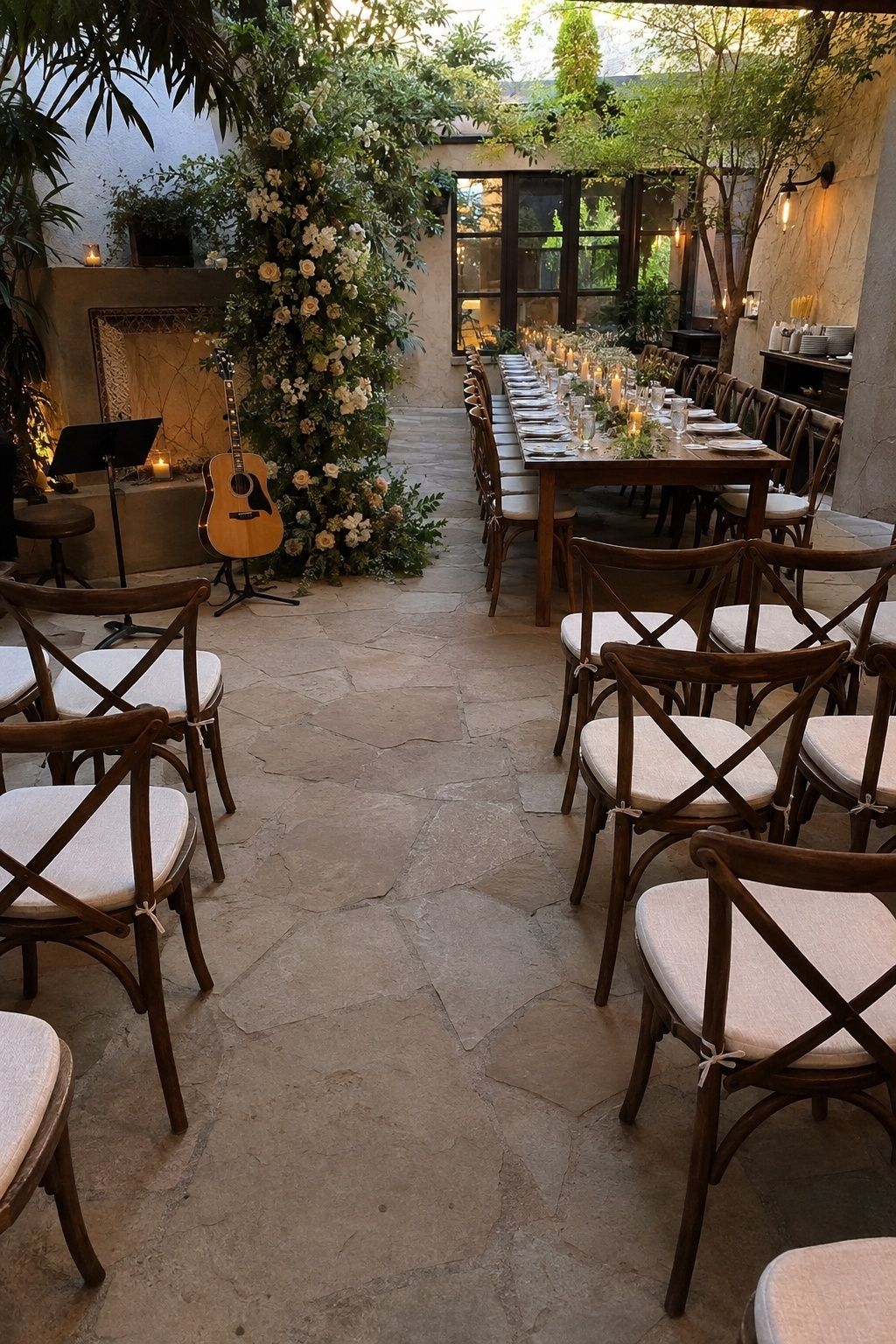
Month 8 is a lovely time to work on the parts guests will actually feel: ceremony shape, readings, vows, music, meal style, bar plan, and the rough flow from arrival to farewell. These decisions create the emotional pace of the wedding more than tiny decor purchases do.
Meet with your officiant if you have one. Decide whether your ceremony will include personal vows, family readings, a cultural ritual, a private vow exchange, or a short and simple script. A long engagement gives you time to make the ceremony personal without writing it the night before.
For the meal, think about hospitality first. Do guests need a full dinner, a brunch, a cocktail-style reception, or a private-room menu? A smaller wedding often makes the meal feel especially generous, but it does not need to become elaborate. Good timing, enough food, comfortable seating, and warm service will matter more than novelty.
Month 7: Choose What You Are Willing To Skip
Month 7 is the perfect time to cut the plan on purpose. Review every optional detail: favors, welcome bags, signage, extra floral moments, specialty rentals, second outfits, late-night snacks, ceremony programs, printed menus, bridesmaid proposal boxes, and anything added because it looked charming online. Some will be worth keeping. Many will not.
Skipping is not the same as giving up. It is how you protect the parts of the wedding that matter most. If your priorities are a meaningful ceremony, a beautiful meal, and relaxed photos with family, then every extra task should support those priorities directly.
This checkpoint is especially helpful for small weddings. A small guest count does not automatically make the planning simple if you keep adding custom details for every person, every table, and every moment. Simplicity has to be defended while there is still time.
Month 6: Order Invitations And Confirm The Practical Middle
At six months, begin the formal invitation process. Choose the design, confirm wording, check names, review addresses, and decide what guests need to receive in print versus what should stay on the wedding website. If your wedding is destination, highly travel-heavy, or logistically unusual, earlier mailing might fit better than a local celebration.
Month 6 is also a good time to confirm rentals, catering details, bar structure, rehearsal plans, beauty appointments, wedding rings, and attire progress. None of this should feel frantic if the early months were handled well. You are simply turning broad decisions into workable details.
Look at the budget again before ordering anything final. Small upgrades become tempting in the middle months because the big decisions are already done. If a new expense does not improve guest comfort, the ceremony, the meal, or your own peace, pause before adding it.
Month 5: Make The Day-Of Timeline Real
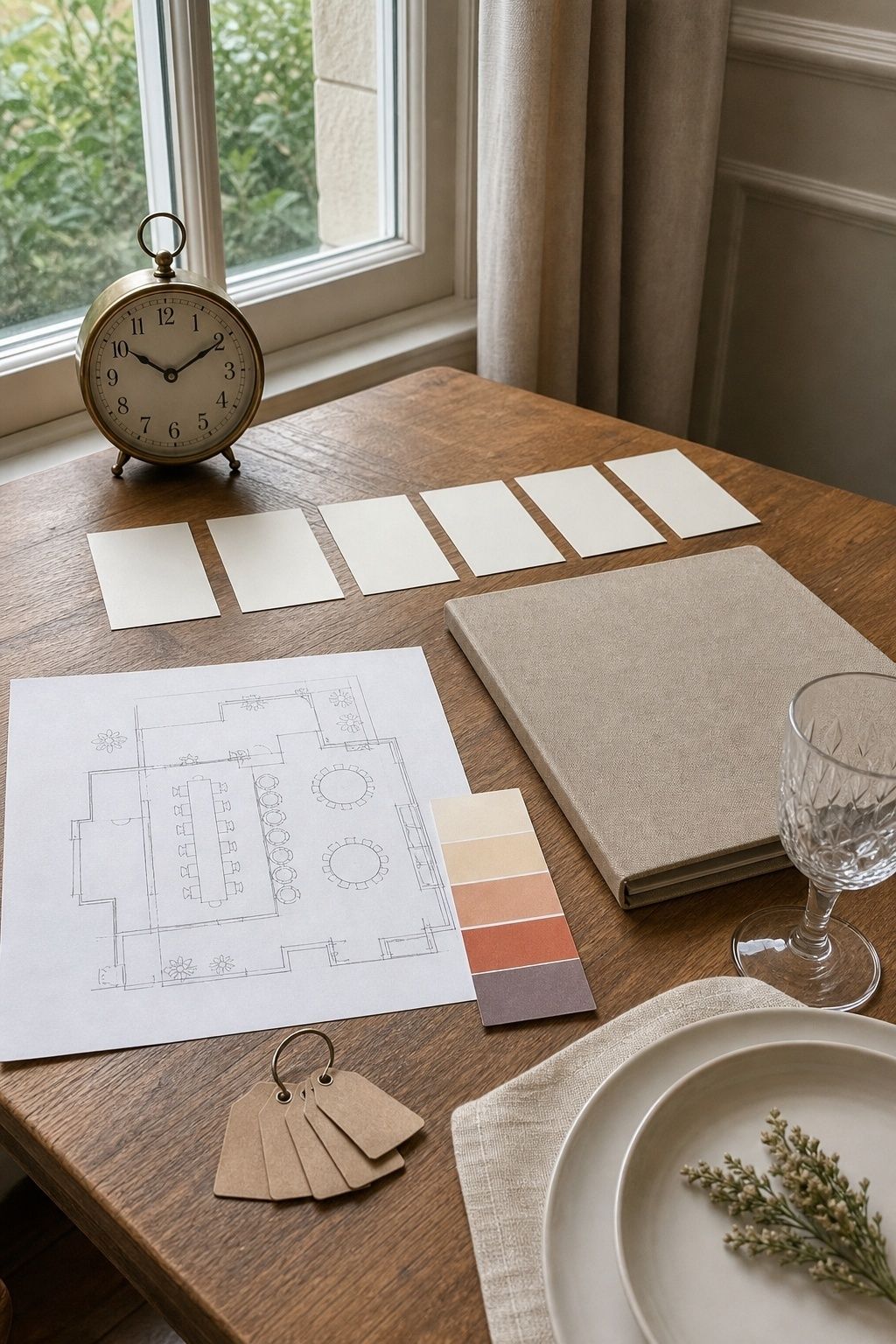
Month 5 is when the wedding day needs a rough timeline. Start with fixed points: ceremony time, venue access, photography coverage, meal service, sunset, vendor arrival windows, transportation, and any hard end time. Then build the day around human needs, not just pretty moments.
Leave breathing room. Getting dressed, family photos, room flips, private vows, travel between locations, and dinner service all take longer than they look on paper. A small wedding should not feel like a production sprint. If the timeline is too tight, guests will feel the pressure even if the decor is beautiful.
Share the rough timeline with key vendors and ask what they need. Your photographer, caterer, planner, venue manager, and entertainment team might notice timing conflicts early. Fixing those conflicts now is much easier than repairing them during the final week.
Month 4: Send Invitations And Prepare For Answers
Four months out, invitations often go out for destination weddings, holiday weddings, or celebrations with a lot of travel. For many local weddings, preparation continues before mailing. Either way, this month is about making sure the invitation stage is clean: correct names, clear RSVP method, meal choices if needed, dress code, website link, and RSVP deadline.
Decide how you will track responses before replies arrive. One wedding planning spreadsheet should hold RSVP status, meal choices, allergies, addresses, household groupings, gifts, thank-you records, and any accessibility details guests share. Scattered texts and verbal replies are fine for real life, but they need to end up in one reliable place.
This is also the month to prepare gentle boundary wording. Someone might ask for a plus-one, a child exception, a late addition, or a changed RSVP. You do not need a dramatic script. You need a short answer that protects the decision already made.
Month 3: Finalize Attire, License Timing, And Vendor Details
At three months, the wedding begins to feel close in a useful way. Schedule final attire fittings, confirm accessories, order any remaining personal items, and check whether wedding-party clothing is on track. This is also the time to research your marriage license requirements in the county or location where you will marry. Waiting periods, expiration windows, appointments, witnesses, and identification rules vary, so do not rely on someone else’s timeline.
Contact vendors with updated details. Confirm addresses, arrival times, setup access, meal counts if available, balance due dates, insurance documents, floor plan drafts, and who has authority to answer questions on the day. Keep these details in your vendor payment tracker or planning spreadsheet so they do not live only in email threads.
If you have been revisiting decisions, make month 3 the end of major changes. The final stretch is for execution. It is not the moment to redesign the wedding because a new trend appeared or because the long engagement made the original plan feel too familiar.
Month 2: Collect RSVPs, Build The Seating Plan, And Pay Attention To People

Two months out, invitations for many local weddings are already mailed or about to be mailed, and RSVPs start shaping the final version of the day. Keep the tracker current. Follow up kindly with anyone who misses the deadline, and do not apologize for needing an answer. Caterers, venues, rentals, and seating plans depend on it.
Start the seating plan once enough replies are in. For an intimate wedding, seating carries emotional weight. Think about who will make guests feel included, which relatives need distance, who might need mobility support, and where older guests will be comfortable. The best seating chart is not merely tidy; it is thoughtful hosting.
Month 2 is also a good time to check in with each other. Long engagements sometimes hide stress because the pressure has been spread out for so long. Ask what still feels unresolved, what deserves simplification, and what you are most excited to experience together.
Month 1: Confirm, Simplify, And Hand Off
One month out, the planning should become narrower. Confirm final headcount, meal choices, vendor balances, timeline, ceremony wording, music selections, floor plan, rentals, transportation, room block details, and any final beauty or attire appointments. Put the final timeline somewhere everyone who needs it will find it.
This is not the month for new projects. If a detail is not already ordered, assigned, or truly necessary, consider letting it go. A wedding checklist printable helps you see what remains, but it should not tempt you into inventing more work. The last month should make the wedding steadier, not fuller.
Choose your point person for the wedding day if you have not already. This might be a coordinator, planner, trusted friend, sibling, or venue manager. Give them vendor contacts, timeline details, final balances if relevant, emergency contacts, and permission to make small decisions without interrupting you.
Wedding Week: Stop Planning And Start Hosting
Wedding week is for packing, rehearsing, confirming, resting, and being present. Send the final timeline to vendors and key family members. Pack rings, license, vows, attire, accessories, tips, emergency items, getting-ready pieces, and anything needed for the ceremony or reception.
Do one final communication sweep, then stop changing the plan. Tiny improvements in wedding week often cost more energy than they return. Your guests are not coming to audit your signage or count whether every corner received styling. They are coming to witness you marry and to be welcomed into the day with care. For more on can you plan a wedding in 3 months, see the full guide.
The best ending to an 18-month plan is not a perfect checklist. It is a couple walking into the week trusting that the important things have been handled and the unnecessary things have been left alone. There’s a full guide on can you plan a wedding in 6 months if you want to go deeper.
What To Avoid During A Long Engagement
Do Not Turn Browsing Into A Planning Habit
Inspiration is useful when it clarifies a decision. It becomes a problem when it keeps reopening one. Give yourself specific browsing windows: before choosing the venue, before meeting the florist, before ordering attire, and before finalizing stationery. Outside those windows, save your attention for real decisions and real life.
Do Not Let The Guest List Become A Moving Target
A long engagement gives the guest list many chances to expand. New partners appear, family friends ask questions, coworkers become closer, and old acquaintances drift back into view. That does not mean every relationship earns a seat. Revisit the list at planned checkpoints, not every time someone mentions the wedding.
Do Not Upgrade Because You Are Bored
Some upgrades are worth it. Many are boredom wearing a pretty dress. Before adding anything, ask what problem it solves. Does it improve guest comfort, make the ceremony more meaningful, protect the timeline, or support the meal? If not, it is probably just a way to feel productive during a quiet planning month.
Do Not Let Every Conversation Become A Wedding Meeting
When the engagement is long, the wedding sometimes becomes the default topic with your partner, parents, friends, and wedding party. Protect ordinary conversations. Set a weekly or monthly wedding check-in, keep a shared list for questions, and leave other dinners, walks, and phone calls for your life outside the wedding.
How To Keep A Small Wedding Simple With 18 Months To Plan
A small wedding becomes complicated when couples assume every guest needs a custom touch, every meal needs a special moment, and every open month needs a project. The simpler path is to choose a strong center and let the rest support it. For many intimate weddings, that center is the ceremony, the meal, the room, and the people.
Use the guest count as a simplicity tool. Fewer guests often mean fewer tables, fewer transportation needs, fewer invitations, fewer favors, fewer opinions, and more time with each person. It does not have to mean a miniature luxury event with more detail per guest. Decide where the smallness should create ease.
Choose repeatable details. One floral style used well, one menu format, one paper suite, one ceremony focal point, and one clear timeline often feels more polished than many disconnected ideas. Long engagements tempt couples to layer. Small weddings usually feel better when they are edited.
Finally, keep decision ownership tight. Too many opinions make an 18-month engagement feel endless. Invite help with tasks, not control over the wedding’s identity. Accept address help, setup help, family photo lists, or travel research without letting every helper vote on the guest list, budget, or design direction. For more ideas in this vein, browse Wedding Planning Basics.
FAQ
How do you plan a wedding in 18 months?
Plan a wedding in 18 months by handling the foundation early, then pacing the details. Start with budget, guest count, venue, date, and major vendors. Use the middle months for attire, guest logistics, website, save-the-dates, ceremony, meal planning, and design edits. Save final RSVPs, seating, vendor confirmations, marriage license timing, and handoff documents for the last few months. If you like this, browse how long does it take to plan a wedding next.
Is 18 months too early to start planning a wedding?
No, 18 months is not too early to start planning a wedding, especially if you want a popular venue, peak-season date, specific photographer, or more time to save. The key is not to fill all 18 months with constant decisions. Book the choices that benefit from early timing, then let smaller details wait until they are closer and clearer.
What should you do first with an 18-month wedding timeline?
The first things to do with an 18-month wedding timeline are setting a realistic budget, choosing a working guest count, discussing family contributions, and deciding the kind of wedding you want to host. After that, research venues that fit those numbers and choose a date before booking the vendors who depend on it.
When should you book vendors for a wedding 18 months away?
Book the venue around 16 to 15 months out when possible, then secure major vendors such as photographer, caterer, entertainment, officiant, planner, or coordinator around 15 to 12 months out. Vendors limited to one wedding per date should be booked earlier than flexible categories like small decor purchases or final printed pieces.
When should save-the-dates go out for an 18-month engagement?
Save-the-dates usually go out around 8 to 10 months before the wedding, or closer to 10 to 12 months for destination weddings and guests who need significant travel planning. Sending them much earlier creates confusion if the website, guest list, travel details, or plus-one rules are not settled yet.
How do you avoid overplanning during a long engagement?
Avoid overplanning during a long engagement by giving each month a limited job, closing decisions once contracts are signed, and setting rules for new ideas. Keep one planning document, schedule wedding check-ins instead of talking about it constantly, and ask whether each added detail improves the ceremony, guest comfort, meal, timeline, or peace of mind.
Final Thoughts
Planning a wedding in 18 months works best when the time stays useful instead of taking over. Book the choices that deserve early attention, give the quieter months honest but limited jobs, and keep returning to the wedding you meant to host before the options got loud.
Once the budget, guest count, vendor commitments, and final handoff are clear, let the remaining time protect your focus instead of reopening the plan. Keep that steady rhythm.
Last update on 2026-11-29 / Affiliate links / Images from Amazon Product Advertising API