

How do you plan a wedding when you work full time? Make the wedding smaller on purpose, settle the big decisions (budget, guest count, date, venue) first, and give planning two fixed slots a week, one short admin block and one longer decision block. Give every task one owner, and pay for help where your schedule is tightest.
When exactly are you supposed to plan a wedding if you work full time, at 10 pm after a long shift, with half a sandwich in one hand and a venue spreadsheet in the other? I spent about 15 years working kitchen hours, evenings, weekends and holidays included, so I know how little is left of a person by the time the “free time” shows up.
This guide is for couples with real jobs, long commutes and full inboxes who still want to enjoy being engaged. It covers how to plan a wedding when you work full time without letting it eat every evening: a smaller scope, a weekly rhythm, clear task owners and the few places where paying for help buys back the most calm. The bigger picture lives in how to plan a small wedding, and this post handles the scheduling side.
Recommended Wedding Planning Essentials for Busy Couples
Nothing fancy here, just the tools that keep everything in one place so you’re not digging through texts on a lunch break.


Recommended blogs to read:
- How To Plan A Wedding In One Year Without Turning It Into A Full-Time Job
- Wedding Regrets Couples Can Actually Plan Around
- Can You Plan A Wedding In 3 Months Without Chaos Taking Over
- How To Plan A Wedding Without A Planner And Still Feel Organized
- How To Plan A Wedding Around Your Values Without Losing The Plot
- Can You Plan A Wedding In 6 Months Without Making It Feel Rushed
How To Plan A Wedding When You Work Full Time Without Losing The Life Around It
Start by deciding what the wedding is allowed to ask of your week, then build a small system around that limit. Thinking this way now also helps you skip the most common wedding regrets later.
1. Accept That You Need A System, Not More Free Time
More free time isn’t coming, and waiting for a quiet month usually means the decisions that would have made the month quieter get pushed back too. Work gets busy, someone has a birthday, the car needs new tires, and suddenly it’s three months later and you still haven’t booked a venue.
What helps is a small system that still works in a bad week. One shared planning hub, one short admin slot, one longer decision slot and one rule for anything urgent, like “if it costs money or has a deadline this week, it goes in the hub tonight.” A spreadsheet or a free project board is plenty, as long as you both actually open it.
2. Make The Wedding Smaller On Purpose
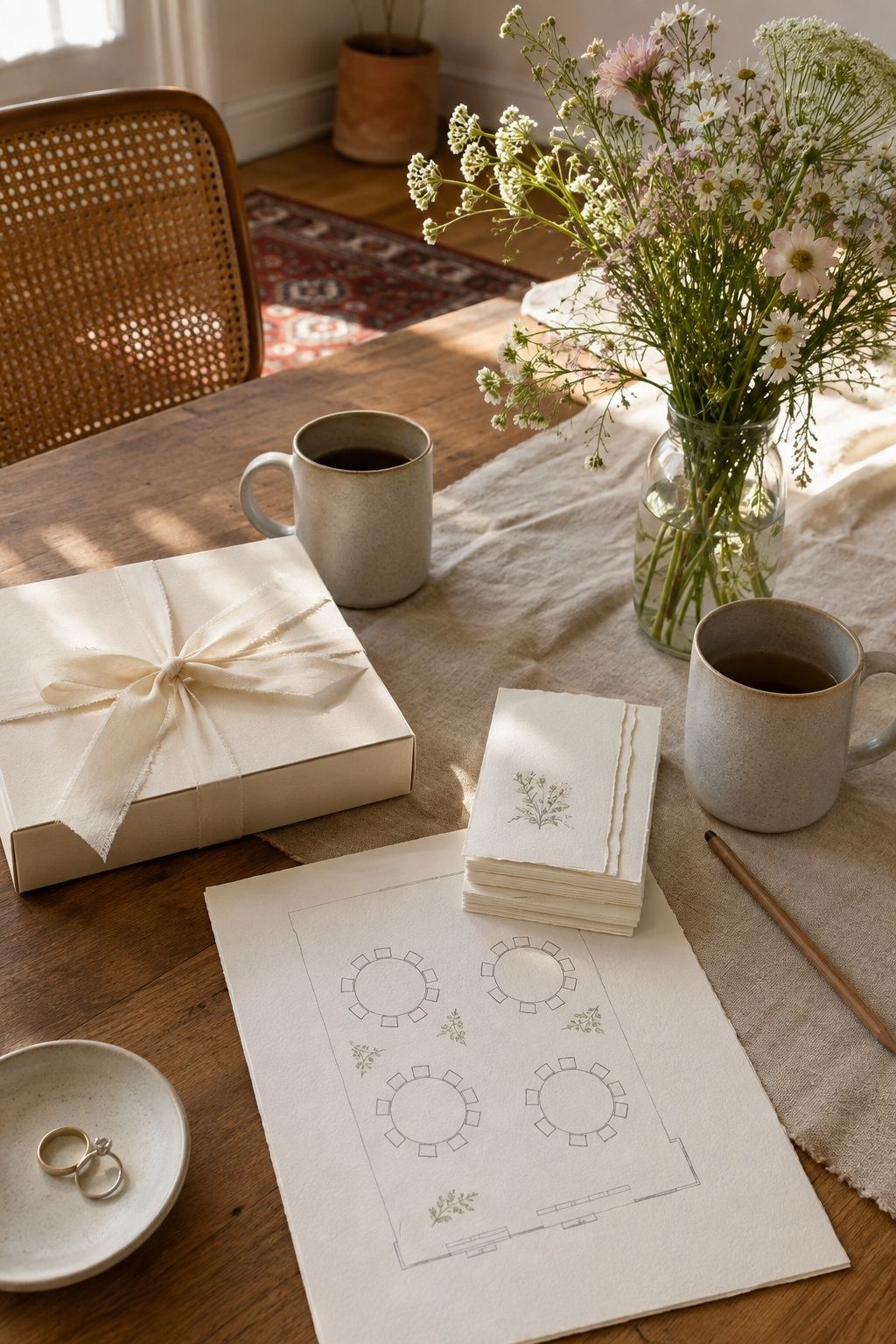
Guest count is the biggest lever a busy couple has, because every person on the list brings their own small pile of work. An invitation, an address to chase, an RSVP to follow up, a meal choice, a chair, a seat at a table and very often an opinion from a relative about whether they’re invited. That table plan in the photo, with just four round tables sketched out, is what a manageable wedding looks like on paper.
Pick the number before you tour a single venue or ask your parents for their list. Immediate family only, a 30-person dinner and a 50-person garden ceremony are all fine choices, they just need to be decided, written down and protected.
Then keep the extras small too. A tiny wedding with welcome bags, hand-lettered signs, three locations and a full weekend of events still takes as many hours as a big one, just with fewer chairs.
3. Choose A Venue Or Format That Removes Work

The venue decides how much of the work lands on you. A private restaurant room like the long, candlelit table in that photo comes with tables, chairs, linens, a kitchen, a bar, staff and someone who cleans up, so all you really do is choose a menu and show up. A blank backyard or a raw barn asks you to source, rent, deliver, set up and take down every single one of those things.
When you compare venues, compare the work along with the price. Ask what’s included, who sets the tables, who handles the trash, where guests park and what happens if it rains. A cheaper room fee with no staff can quietly cost you two full weekends of labor, and those are weekends you don’t have.
4. Lock The Decisions That Affect Everything Else First
Limited planning time gets wasted on details that depend on bigger choices, like comparing flowers before you know the season, or favors before you know how many guests there are. Work through the foundation in this order instead:
- Budget, including who is contributing.
- Guest count ceiling.
- Date range or season.
- Venue and ceremony location.
- Food, then photography.
Give each of those its own planning session and don’t stack three of them on one tired Thursday night. Once the venue and date are signed, every vendor conversation gets faster because you can answer their first three questions without thinking.
How Do You Organize Wedding Planning Around a Work Schedule?
Keep everything in one shared place, give planning set hours, and batch similar tasks together. That way the wedding has a home that isn’t your phone’s notifications.
5. Keep One Shared Wedding Inbox Or Folder

A shared wedding email and one folder, digital or a binder with colored tabs like the one on that desk, stops information from hiding in five different apps, and it does a second job that matters even more, which is making the work visible to both of you. Contracts, quotes, invoices, guest addresses, timelines and receipts all go in, named plainly with the vendor, the date and whether it’s a quote or a final version (future you does not want to open six files called “proposal FINAL final”). If one partner is always the one forwarding, remembering and explaining, the wedding quietly becomes their second job, and a shared folder fixes that faster than any conversation.
6. Use Fixed Planning Blocks Each Week

Planning time needs a start and an end, otherwise it leaks into dinner, then bedtime, then the next morning at work. Pick two slots a week, like the two highlighted blocks in that planner: a short admin block of about 45 minutes for emails, payments and checklist updates, and a longer decision block of about 90 minutes for comparing options and actually saying yes.
Treat them like meetings. Write a tiny agenda first, set a timer, and finish by writing down the next action, who owns it and the deadline, then close the laptop. Some weeks will need more, especially around booking, invitations and the final month, but the baseline keeps everything else wedding-free, and that’s the part that keeps you sane.
7. Batch Vendor Emails And Calls By Category
Jumping from florist to photographer to caterer in one hour is exhausting, so do one vendor category per block. Write a short inquiry message once and reuse it, with:
- your date or date range and the city or venue
- your guest count
- the style you want, in one sentence
- a budget range if it helps them answer
- the one question you actually need answered
Send all the inquiries for that category in one sitting, then compare the replies together in your next decision block. Answers that arrive around the same time and the same questions are much easier to compare fairly.
8. Divide Tasks By Owner, Not By Vibes
“We should do invitations soon” is a wish. “You own the wording by Sunday, I own the address list by Tuesday and we approve the proof Wednesday night” is a plan, and it’s the kind of plan that survives a busy work week.
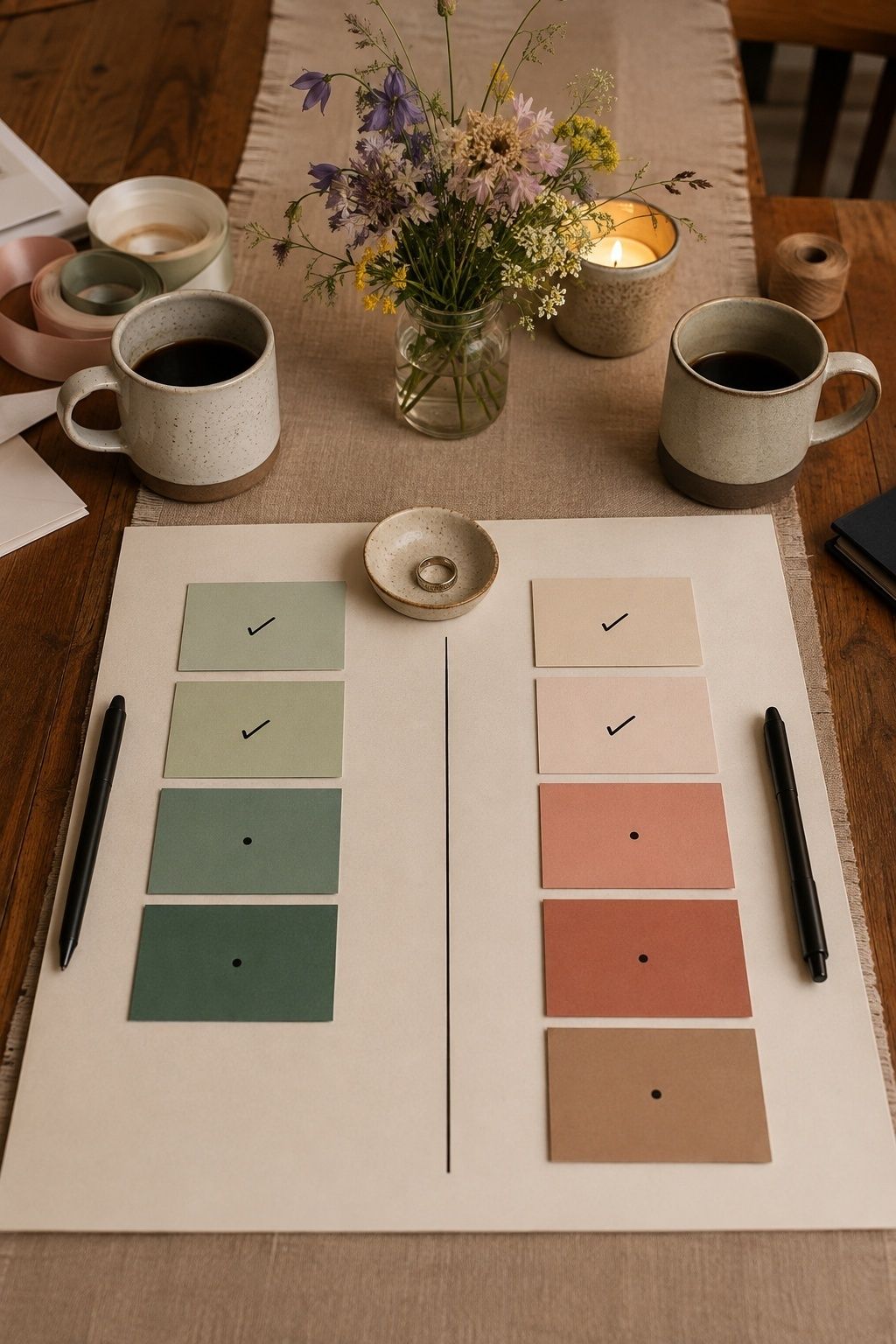
Every task gets one owner, one next step and one deadline. The owner doesn’t have to decide alone. Their job is to gather options, narrow them to two or three and bring a recommendation, which is far less draining than both of you researching the same florist at midnight. That two-column board in the photo, with checked cards on each side, is a good way to see the split at a glance.
Split by skill and capacity, not by tradition or by who seems more “into” weddings. One of you might love spreadsheets and vendor math, the other might be better at family phone calls. Fair doesn’t always mean identical, it means agreed out loud and visible to both of you.
9. Use Lunch Breaks Only For Light Tasks
A lunch break is great for the small stuff and terrible for anything with feelings attached. Good lunch-sized jobs take ten to fifteen minutes:
- update the checklist or the budget sheet
- confirm one address or one appointment
- save a contract or receipt to the shared folder
- send a reply you already drafted
- add a payment deadline to the calendar
Keep the hard ones, like a tense message to a relative, a budget talk or a vendor call that needs privacy, for your planning block at home, where you’re not half-listening and eating at your desk.
How Do You Keep Wedding Planning From Taking Over Your Evenings and Weekends?
Give browsing a limit, protect some weekends completely, and say no to projects that cost more time than they save. The goal is a wedding plan that still leaves you a life.
10. Save Evenings For Decisions, Not Endless Browsing
Scrolling feels like progress because it looks like wedding planning, but an hour of it after dinner rarely ends with a single decision made. Decide how many options are enough before you start, three invitation designs, two menu styles, four photographers in budget, and bring only those to your decision block.
Keep a “parking lot” note for ideas that are lovely but not urgent. If an idea still matters once the venue, date and guest count are settled, it gets its turn. If it was only a tired 11 pm impulse, it quietly disappears, and nobody misses it.
11. Protect Weekends From Becoming Planning Marathons
Weekends look wide open from Monday, and then laundry, groceries, birthdays and plain old recovery from the work week show up, so protect at least two weekends a month from wedding work completely and cluster the rest. Tour two venues in the same area on one day, book the tasting and the rental showroom in the same part of town, and pair the stationery appointment with a nice lunch so it feels like a date and not a chore. Then go for a walk together where nobody says the words “guest list,” because the relationship you’re throwing the wedding for needs some attention during the engagement too.
12. Limit DIY Projects Before They Steal Your Time
DIY looks like savings until you count the hours. Someone has to choose the supplies, order them, store them in your already small apartment, assemble them, pack them, drive them, set them up, take them down and bring them home again.
Before you say yes to any project, ask who buys it, who makes it, where it lives until the wedding, who sets it up and who cleans it up. If nobody wants those jobs, the cheap idea isn’t cheap.
Keep the projects that are small and meaningful and can be finished well before the final month, like handwritten vows, a simple seating display or a few framed family photos. Leave the 80 hand-tied favors to people with free weekends (do those people exist?).
13. Hire Help Where It Buys Back The Most Peace
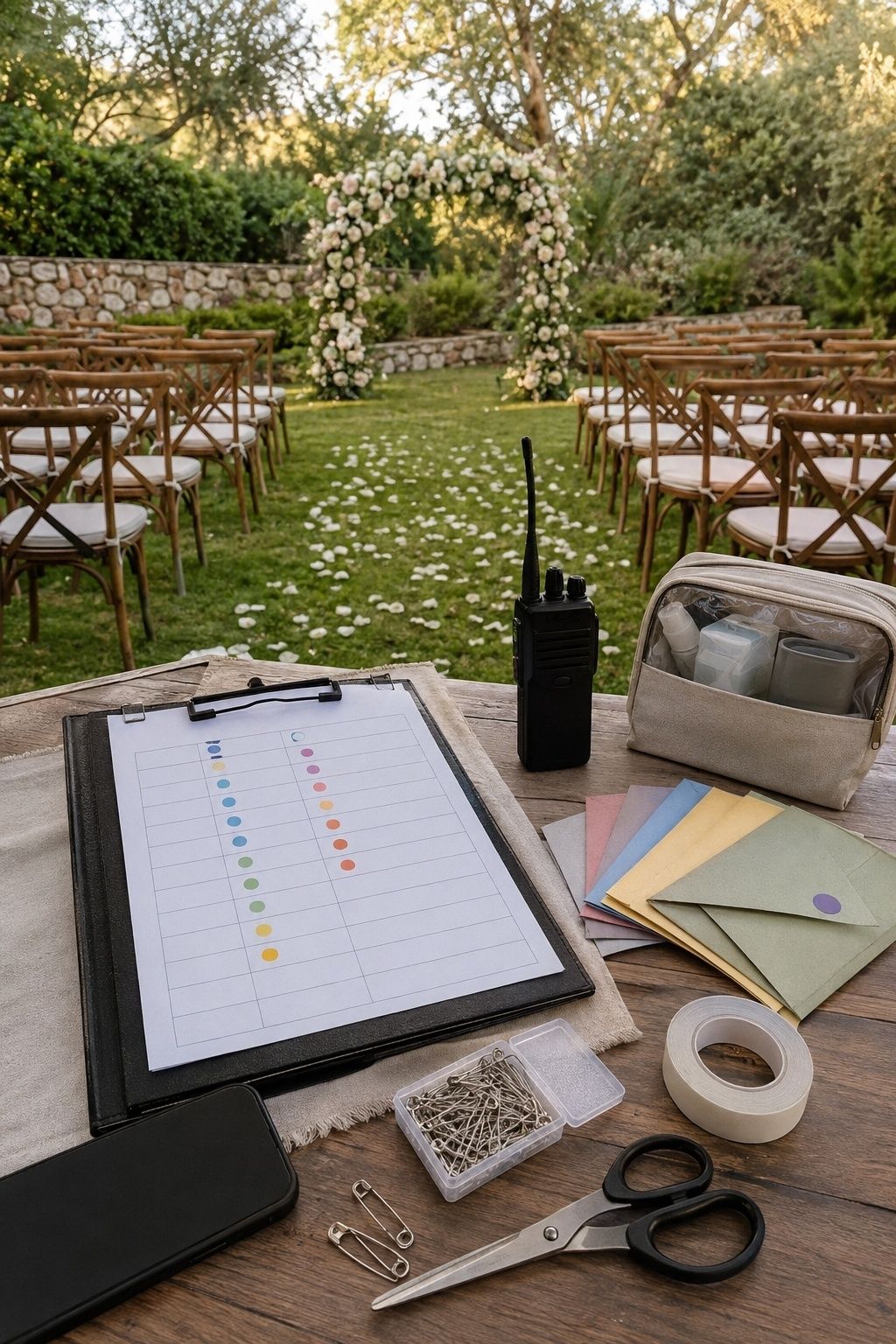
Hiring help doesn’t mean handing over the whole wedding. For working couples the most useful help is usually targeted, and the clipboard timeline, walkie-talkie and emergency kit in that photo are the toolkit of the most useful hire of all, a day-of or month-of coordinator who confirms vendors, runs the timeline and answers every “where do these go?” on the day.
Spend where a task is time-consuming, risky or impossible to do while wearing your wedding outfit: setup and cleanup crews, invitation addressing, floral delivery, transport. If money is tight, give friends narrow, written jobs with times attached, and let them say no without guilt, because “you’re good at this stuff, can you just help?” is how friends end up working your wedding instead of enjoying it.
What Should the Final Month Look Like?
Mostly confirming, not deciding. If your notes are in one place and someone else holds the day-of plan, the last few weeks stay manageable even with a full work calendar.
14. Plan The Final Month Before It Arrives
The final month is where every postponed decision comes due at once, so build the handoff as you go. Keep vendor contacts, payment dates, floor plans, family photo groupings and the timeline in the shared hub from the very beginning, not in a panic six weeks out.
From the catering side, here’s the deadline couples underestimate. Most caterers and venues want your final guest count and meal choices one to two weeks before the wedding, and that number is what they order, prep and staff against, so it’s a hard date, not a suggestion. Work backward from it: RSVPs due about three to four weeks out, chasers sent the week after, seating done once the count is locked. Tastings get booked months earlier, so put those on the calendar as soon as the caterer is signed.
By about six weeks out, pick the day-of point person and hand them everything. The last month should be for confirming attire, vows, payments and final counts, and new ideas only get in if they make guests more comfortable or the ceremony more meaningful.
15. Let Small-Wedding Simplicity Be The Strategy
A small wedding saves time only if you let the format stay simple, so choose a day that holds itself together: ceremony and dinner in one place, a restaurant reception, a courthouse ceremony followed by a long lunch, or an all-inclusive package for a small group. Fewer transitions mean fewer directions to write, fewer rides to arrange and fewer late-night texts about where the cake goes, and then please resist filling the time you saved with brand-new projects. If you’re also weighing how long your engagement should be, the guide to planning a wedding in one year lays it out month by month.
A Weekly Rhythm Busy Couples Can Actually Keep
A week that works for a lot of couples looks something like this, and you can shift the days around your shifts:
- Monday: no wedding talk, the week is just starting.
- Tuesday lunch: one light admin task.
- Wednesday evening: 45 minutes for inbox, payments and the checklist.
- Saturday morning: a 90-minute decision block with coffee and one category only.
- Sunday: wedding-free unless a tour was booked ahead.
End each week by saying three things out loud: what moved forward, what’s stuck, and what’s next. It takes two minutes, and it stops the wedding from turning into a fog of almost-done tasks that follows you into Monday.
What To Outsource When Your Schedule Is Full
Outsource the jobs that grow under pressure. Coordination comes first, because timelines, vendor questions, setup, family logistics and last-minute problems all get louder as the date gets closer, and even a month-of coordinator changes the final stretch from “everyone asks the couple” to “there’s a person for that.”
Setup and cleanup come next. Candles, linens, signs, flowers, gifts, cards, leftovers and rented items all have to go somewhere at the end of the night, and nobody wants to finish their reception sorting boxes in formalwear. After that, look at addressing invitations, deliveries and anything with a strict time window you can’t leave work for.
What To Stop Doing If Planning Is Taking Over
Stop checking the wedding every day. Daily checking feels responsible, but it mostly makes you anxious without moving anything forward, so park non-urgent ideas for the next planning block and let the rest of the day be a normal day.
Stop comparing every vendor on the internet once you have enough good options, and stop reopening decisions that were already made unless something has actually changed. You can care a lot about your wedding and still close the spreadsheet on a Thursday night. The rest of this series lives under Wedding Planning Basics.
How Long Does It Take to Plan a Wedding While Working Full Time?
About a year is comfortable for most working couples, and the average US engagement is 15 months according to The Knot 2025 Real Weddings Study. A small wedding can be planned in four to six months with two planning blocks a week, as long as the venue and date get booked in the first few weeks. Shorter than that is possible, but expect to lean harder on a venue that includes food, staff and setup.
Should You Take Time Off Work to Plan a Wedding?
A few strategic days off help more than a long break. Use single days for things that only happen during business hours, like venue tours, the marriage license, a tasting or a final fitting, and try to take the day before the wedding off so you’re not answering work emails while someone steams your dress. If you can, save some vacation days for after the wedding too, because the week after is when you’ll want to sleep.
Frequently Asked Questions
How Do You Plan A Wedding When You Work Full Time?
Choose a smaller scope, keep one shared planning hub, set two fixed planning blocks a week and give every task one owner and deadline. Settle the budget, guest count, date and venue before anything decorative. More on can you plan a wedding in 3 months is in its own guide.
How Many Hours A Week Should You Spend Wedding Planning?
Most working couples manage well with two to four focused hours a week. Expect more around booking the venue, sending invitations, collecting RSVPs and the final month.
How Do You Divide Wedding Planning With Your Partner?
Split it by ownership. Each task gets one owner who gathers options and brings a recommendation, while the big decisions stay joint.
Should Busy Couples Hire A Wedding Planner Or Coordinator?
If you can afford only one kind of help, make it a day-of or month-of coordinator. They take over the timeline, vendor calls and setup questions in the stretch when work and wedding both get loud.
Can you plan a wedding in six months while working full time?
Yes, especially for a small wedding. Book the venue and date in the first two or three weeks, choose a format with food and staff included, and keep DIY to one or two small projects.
Key Takeaways
- Decide the guest count before touring venues, because every guest adds work.
- Pick a venue that includes food, staff and setup if your free time is limited.
- Plan in two fixed weekly blocks: short admin, longer decisions.
- Give every task one owner, one next step and one deadline.
- Know your caterer’s final headcount date and work backward from it.
- Pay for coordination before you pay for extra decor.
Back to That 10 PM Question
So, when do you plan the wedding? Not at 10 pm with half a sandwich, ideally. You plan it on Wednesday for 45 minutes and Saturday morning with coffee, with a list small enough to finish and a partner who owns half of it, and the rest of the week goes back to being your life. Planning this way leaves you with enough energy to enjoy the day you worked so hard on, and you’ll still have a Thursday night or two to yourselves. The Knot’s Real Weddings Study is a good reality check on timelines if you want the bigger picture.
Last update on 2026-11-29 / Affiliate links / Images from Amazon Product Advertising API