

Start with a private planning conversation before you book, tour, buy, or announce anything big. The first real answer to what to do first when planning a wedding is to agree on your priorities, total budget, rough guest count, date window, general location, and who gets a say.
The first days after getting engaged can feel strangely split in two. One part of you wants to float around in the sweetness of it. The other part opens a search tab and gets handed venue checklists, color palettes, vendor timelines, registry prompts, dress deadlines, hotel blocks, invitation etiquette, seating-chart advice, and seventeen opinions from people who love you.
If you are trying to understand what to do first when planning a wedding, the answer is smaller and calmer than most checklists make it sound. Do not start with centerpieces. Do not start with venue tours. Start with the conversation that makes every later choice less chaotic: what are we protecting, what can we spend, who are we inviting, where might this happen, and how do we want the day to feel?
That order matters even more for a small wedding. With fewer guests, every invitation feels more personal, every dollar works harder, and every decision says something about the kind of experience you are creating. Early clarity keeps the planning season from becoming a tug-of-war between inspiration, family expectations, and numbers you have not named yet.
Recommended Wedding Products


You Might Also Like These Blog Posts
- What Month Should You Start Planning A Wedding For A Calmer Engagement
- Date Planning Wedding Engagement Ideas That Make The Season Feel Like You
- What Decisions Matter Most When Planning A Wedding Before Details Take Over
- Wedding Planning Order Of Tasks That Keeps You From Backtracking
- Wedding Planning Mistakes That Quietly Make Everything Harder
- Wedding Planning Timeline For Overwhelmed Couples Who Need A Calm Start
What To Do First When Planning A Wedding Before You Book Anything
The first move is not research. It is alignment. Before you compare venues or save fifty tablescapes, sit together without an audience and decide what this wedding is allowed to become. That one conversation gives your first planning steps the structure they need most: a shared emotional direction, a working budget, a guest ceiling, a date window, a general location, and a clear sense of decision authority.
Think of this as the foundation beneath the pretty things. Inspiration matters, but it behaves better when it has edges. A venue photo can make you want a grand ballroom, a vineyard weekend, or a candlelit restaurant buyout, but your guest count and budget decide whether that idea will feel generous or strained.
Start With One Honest Conversation
Set aside one quiet hour for your first real wedding-planning conversation. Put your phones away unless you are using them for notes, make something simple to drink, and agree that the goal is not to solve the whole wedding. The goal is to tell the truth early, before deposits and family expectations make every change feel expensive. If one hour feels too formal, these wedding planning date ideas soften it.
Ask each other what you most want to remember. Is it a ceremony that feels private and sacred? A dinner where every guest feels known? A weekend with family? A beautiful room? A low-stress morning? A dance floor? A destination? Write down the overlap before you talk about costs. Shared priorities make the numbers less abstract.
Then ask the less romantic questions with the same gentleness. How much can we spend without resentment? Who might contribute, and what expectations might come with that? How small do we actually want this to be? What would make the planning process feel peaceful instead of consuming?
Decide What The Wedding Should Feel Like
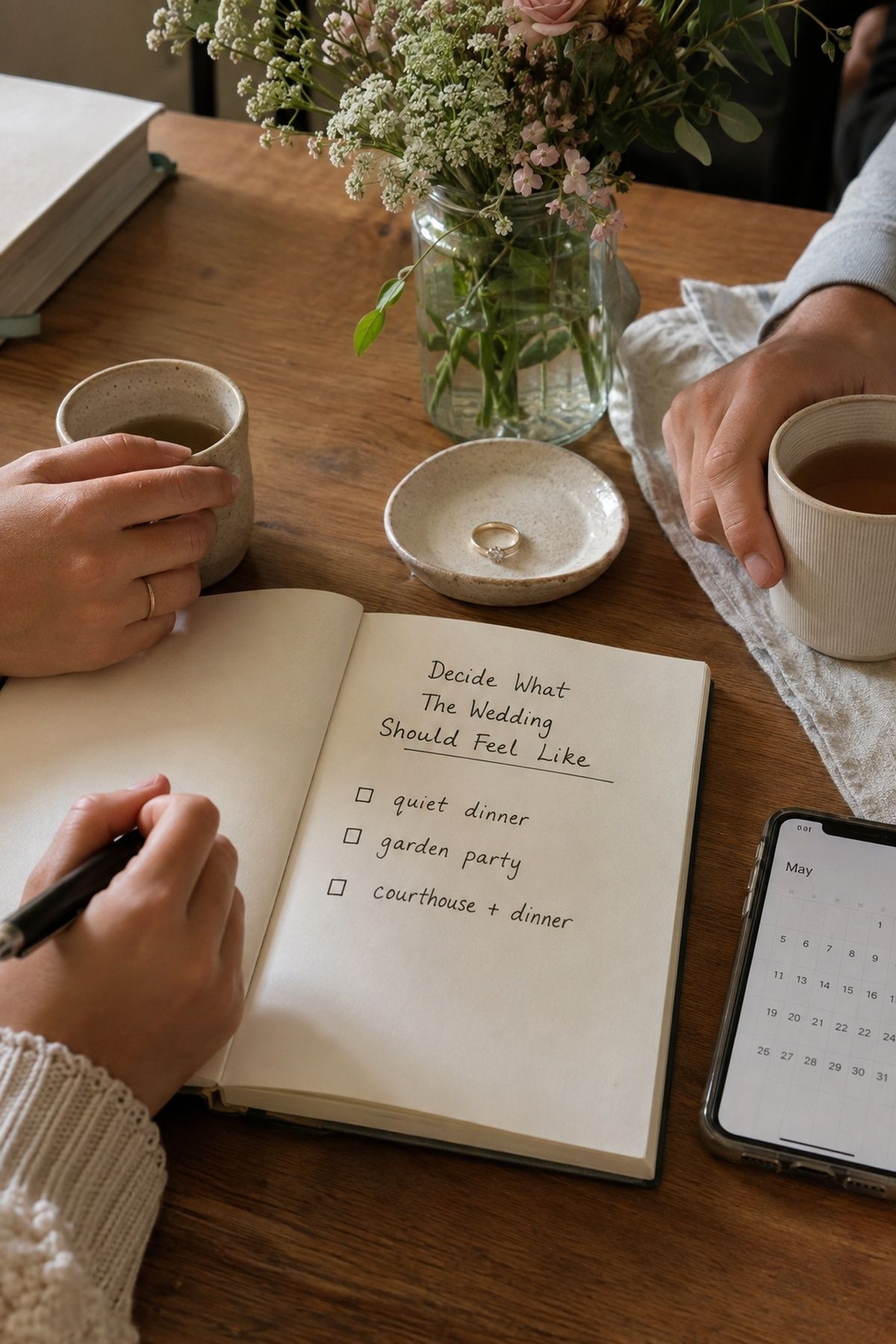
Before you choose a style, choose a feeling. A quiet dinner, courthouse celebration, family garden party, restaurant reception, destination gathering, chapel ceremony, or fuller traditional reception will each ask different things from your budget and guest list.
This is where many checklists for newly engaged couples become overwhelming. They ask you to pick vendors before you have named the experience. Instead, describe the room you want to be in. Do guests talk across one long table? Do they sit in rows for a formal ceremony? Does the day feel like a hosted dinner, a family reunion, a weekend away, or a classic reception scaled down?
For an intimate wedding, the feeling is not a decorative extra. It helps you decide whether a small guest list should mean better food, a more meaningful location, more photography coverage, a calmer timeline, or simply fewer moving parts.
Set A Real Budget Before Browsing Venues

The budget does not need to be perfect on day one, but it needs to be honest enough to guide your next move. Decide your total comfort number, your stretch number if there is one, and the categories you refuse to fund with stress. If family is contributing, ask for the actual amount before you start promising space on the guest list.
Putting budget and guest-count decisions before venue shopping is not the most glamorous advice, but it prevents one of the easiest early mistakes: falling in love with a venue that quietly leaves too little for food, photography, attire, transportation, tips, taxes, or the small guest comforts that make the day feel hosted.
For small weddings, the budget conversation can feel more flexible because fewer guests reduce some per-person costs. Still, a smaller wedding is not automatically cheap. A private dining room, excellent photographer, family-style meal, or full-service venue can still use a meaningful share of the budget. The difference is that your money can be spent with more intention.
Choose A Guest Ceiling Early
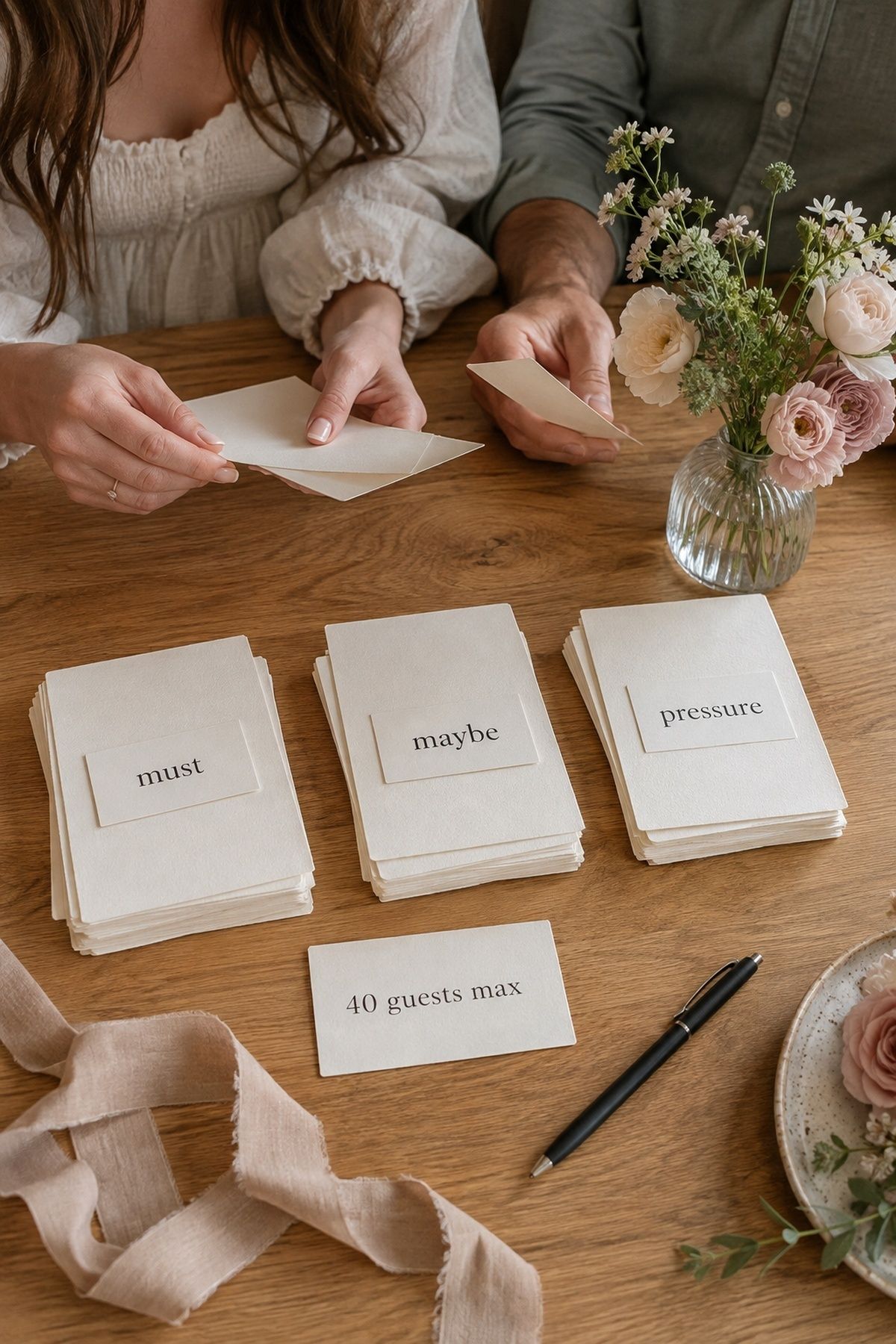
Your guest ceiling is the highest number you are willing to plan around, not the first dreamy list of everyone you love. For a small wedding, this number is one of the kindest boundaries you can set early because it protects the emotional tone of the day before extra invitations begin appearing through guilt or habit.
Guest count affects venue size, catering, bar cost, table count, invitations, rentals, transportation, restrooms, ceremony seating, and the amount of time you can spend with each person. It also changes the feeling of the room. Twenty-five guests feels like a shared table. Fifty feels like a small party. Ninety may still be modest, but it is no longer the same kind of intimacy.
Start with three lists: absolutely invited, deeply loved if space allows, and people you feel pressure to include. That last list is not a command. It is information. Once you see the names on paper, you can decide whether the wedding you want can hold them with care.
Pick A Date Window, Not One Perfect Date
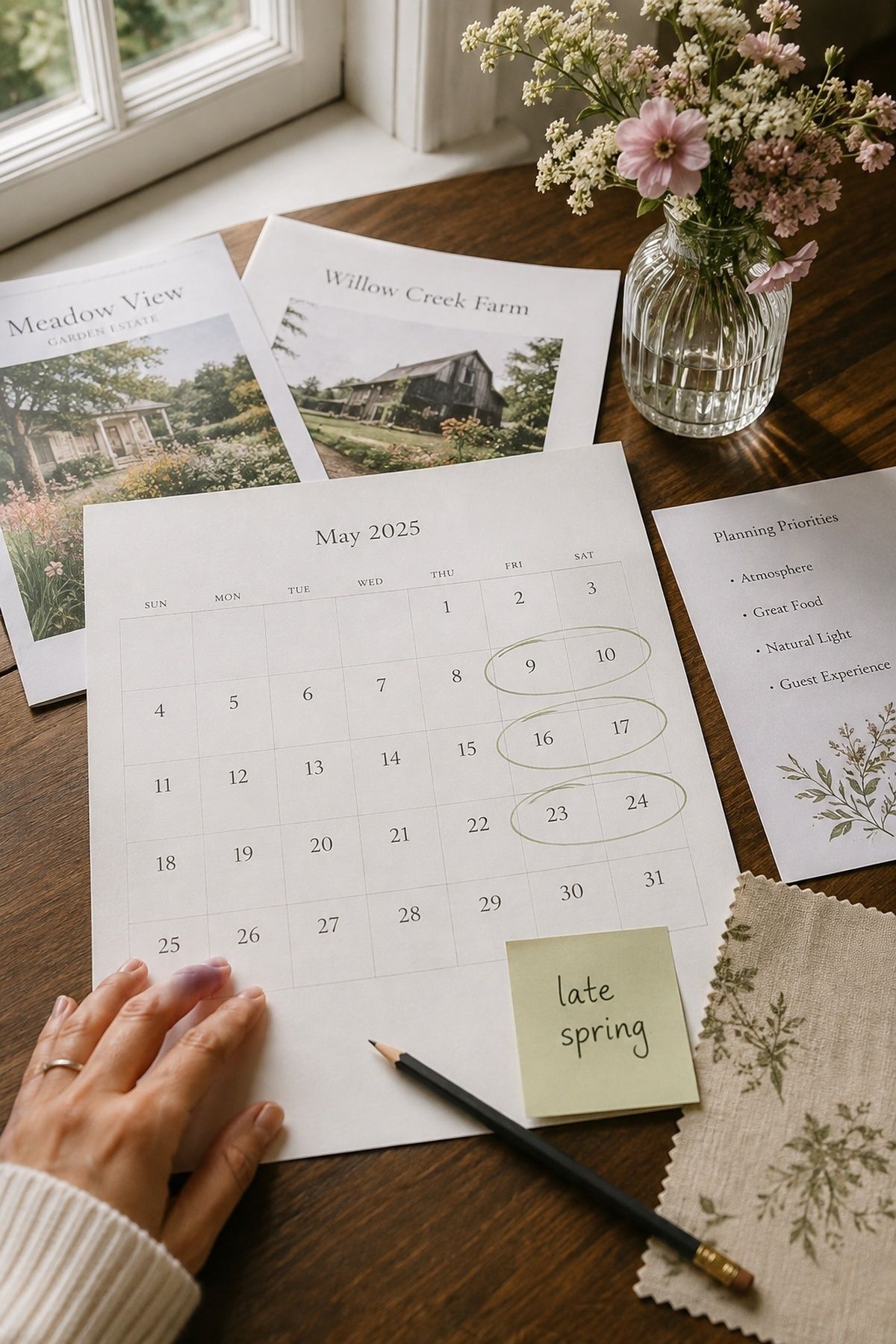
A perfect date can become a trap if you choose it before knowing venue availability, travel realities, weather, family needs, or vendor schedules. Start with a season, month, or a few possible weekends. A date window gives you direction without closing doors too early.
This is especially useful when you are figuring out where to begin wedding planning and already feel pulled toward venue tours. If you can tell a venue, “We are looking at late spring, with a guest ceiling around forty,” you will get clearer answers than if you ask about one date with no room to move.
Small weddings sometimes have more date flexibility because restaurants, inns, gardens, private rooms, and weekday celebrations may have openings that large Saturday weddings cannot use. Let that flexibility work for you before you lock yourself into a single square on the calendar.
Choose The General Location
You do not need the venue yet, but you do need the broad location. Local, hometown, destination, courthouse, backyard, restaurant, hotel, and private-event-space weddings all create different planning paths. The location affects travel, lodging, attire, transportation, weather backup, legal requirements, guest notice, and who can realistically attend.
For a small wedding, location can also become part of the intimacy. A favorite restaurant may feel more personal than a blank ballroom. A family garden may carry more meaning than a formal estate. A courthouse followed by dinner may protect privacy while still giving loved ones a way to celebrate.
Once you know the region, you can compare venue formats with a steadier eye. You are not asking, “What is the prettiest place?” You are asking, “What place can hold our guest count, budget, feeling, and logistics without bending the wedding out of shape?”
Decide Who Gets A Say

Decision authority can be tender, especially when parents are excited, contributing money, or imagining a different kind of celebration. Talk about it before anyone starts calling venues, inviting relatives verbally, or assuming their preferences are already part of the plan.
A helpful rule is to separate input from ownership. You can welcome opinions on food, music, traditions, lodging, or family comfort without giving every person a vote on the guest list or budget. If money is offered, clarify whether it is a gift or a shared decision. The earlier you do this, the kinder the boundaries sound.
Couples planning small weddings often need this step most. A limited guest list can feel personal to people who are not included, so you need a shared answer before pressure arrives. The message should be warm, consistent, and true: you are keeping the wedding intimate by design.
What To Book First After The Foundation Is Clear
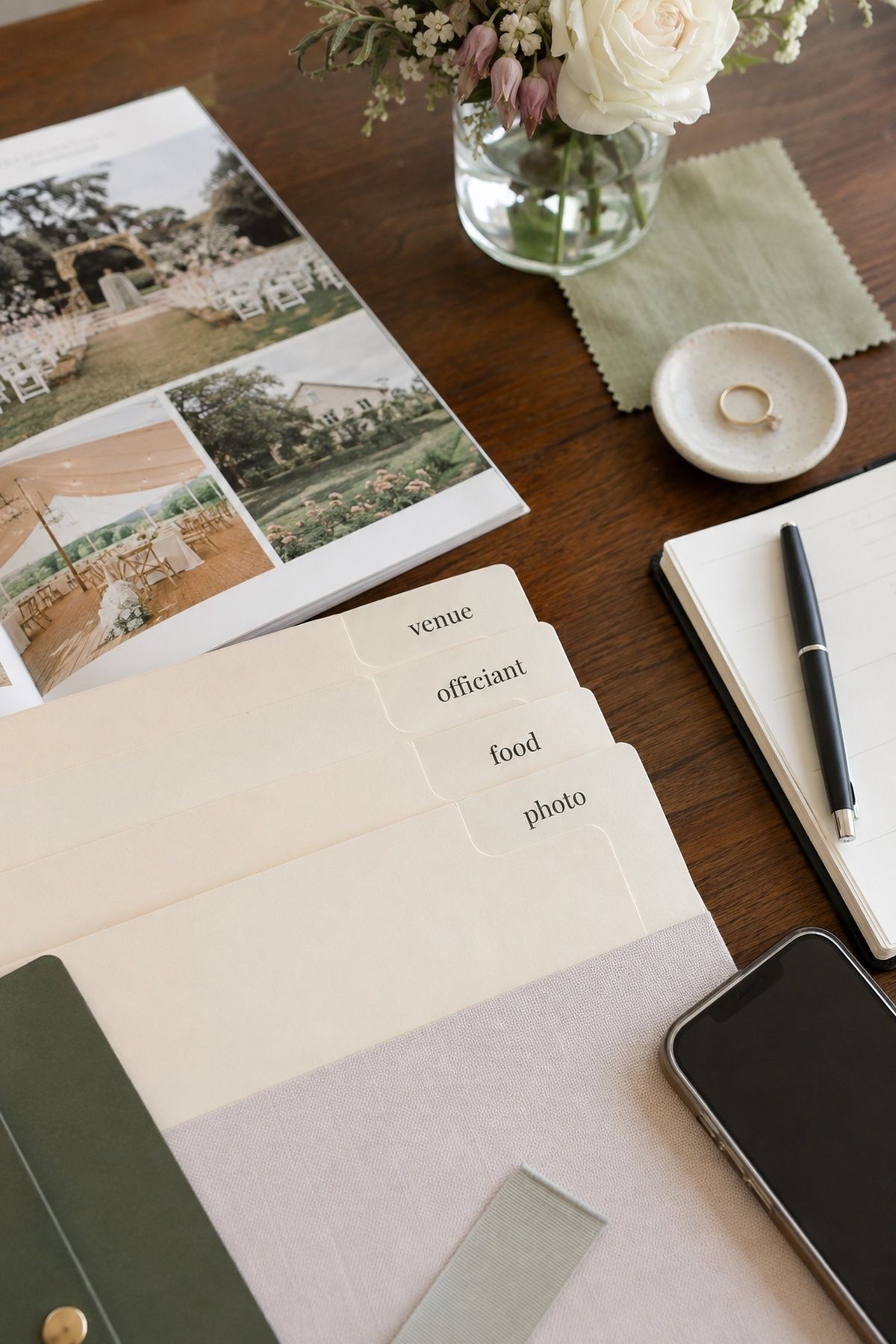
Once your priorities, budget, guest ceiling, date window, location, and decision authority are clear, you can move from thinking into booking. The wedding planning priorities that usually come first are the venue and date, the officiant or legal path, food and beverage, photography, and planner or coordinator support if you need help holding the moving pieces.
The venue often anchors the exact date, but it should not be chosen in a vacuum. Compare what is included, what costs extra, whether catering is required, how many guests fit comfortably, how the room feels at your size, and whether the timeline works for ceremony, dinner, photos, and guest arrival.
After that, book the pieces that protect the experience. For an intimate wedding, food and photography often carry more emotional weight than elaborate extras because guests will remember the meal, the ease of the day, and the images that hold it afterward. This is also the moment to decide whether you can plan independently or need a professional to keep contracts, timing, and setup from living entirely in your head.
What Can Wait For Later
Colors can wait. Favors can wait. Registry details, signage, playlists, dress-code language, wedding party outfits, guest books, menus, linens, ceremony programs, and floral specifics can wait. They will be easier to choose once you know the setting, guest count, meal style, and budget left for detail.
This does not mean those choices are shallow. Small details can be beautiful and meaningful. They simply should not lead the plan. If you choose decor before you know the room, you may spend money solving problems the venue would have answered for you. If you choose stationery before the schedule is firm, you may rewrite everything twice.
You can start planning without the overwhelm by giving yourself permission to ignore entire categories until they have somewhere to land. A calm wedding planning order is not about doing everything early. It is about doing the right few things first.
A Small-Wedding Starting Plan For This Week
If you want a simple first-week rhythm, use conversations instead of a sprawling checklist. This keeps the early planning human, especially when the wedding is small enough that family, money, and guest boundaries are closely connected.
Day one: enjoy being engaged without turning the whole evening into logistics. Write down the three things you both most want to feel on the wedding day. Keep the list short enough that it can actually guide decisions.
Day two: talk about money. Name your comfortable total, possible contributions, and any spending lines you do not want to cross. If you are waiting on family numbers, ask clearly and kindly before you plan around assumptions.
Day three: build the first guest ceiling. Do not polish the final invitation list yet. Just find the number that matches the wedding feeling you want and the budget you can live with.
Day four: choose a date window and general location. Give yourself enough flexibility to find a venue that fits the plan, not a plan that has to stretch around one perfect date.
Day five: decide who owns which decisions. If you are planning without a planner, choose one shared place for notes, contracts, passwords, guest information, and deadlines.
Day six: make a short venue research list based on your actual constraints. Look for fit, inclusions, food rules, guest comfort, accessibility, timing, and whether the space feels right at your size.
Day seven: stop and review. If the plan already feels too large, trim before you book. If the plan feels clear, begin venue inquiries with your budget range, guest ceiling, date window, and location already in hand.
FAQ
What Is The First Thing To Do When Planning A Wedding?
The first thing to do is have a private planning conversation before booking anything. Agree on your priorities, total budget, rough guest count, date window, location, and who gets a say. Those early decisions give every vendor search and venue tour a clear purpose, so you are not building a wedding around impulse, pressure, or pretty photos alone.
Should You Set A Budget Or Guest List First?
Set them together, because budget and guest count change each other immediately. A smaller guest list may let you spend more per person on food, photography, or a meaningful venue, while a larger list spreads the budget thinner. Start with a comfortable total budget, draft a guest ceiling, then adjust both until the wedding still feels generous and realistic.
Should You Choose A Venue Before Setting A Budget?
No, you should know your budget range before choosing a venue. You can browse lightly for context, but do not tour or book seriously until you know what you can spend. A venue can consume so much of the budget that food, photos, rentals, attire, and guest comfort become harder to fund with care.
Why Does Guest Count Matter Before Venue Tours?
Guest count matters because it decides which venues are realistic and how the wedding will feel inside them. It affects catering, seating, room size, table count, restrooms, transportation, invitations, and cost. For a small wedding, the number also protects intimacy, so set a guest ceiling before touring spaces that could tempt you into a different celebration.
What Should Newly Engaged Couples Decide Together First?
Newly engaged couples should first decide what kind of experience they want, how much they can spend, roughly how many people they want present, where the wedding might happen, and how decisions will be made. These choices do not have to be final forever, but they should be clear enough to guide the first venue and vendor conversations.
How Do You Start Planning A Small Wedding?
Start a small wedding by choosing the feeling and guest ceiling before the venue. Decide whether the day is a private ceremony, family dinner, restaurant reception, destination gathering, or tiny traditional wedding. Then set a budget, choose a date window, and research spaces that genuinely fit your size instead of making a larger wedding plan smaller later.
Final Thoughts
The kindest answer to what to do first when planning a wedding is not to do more. It is to agree on the few truths that make every later choice easier: what matters most, what you can spend, who you can host well, where the day might happen, and who is allowed to shape it.
Once those pieces are honest, the rest of the planning has somewhere to belong. Venue tours become clearer. Family conversations become steadier. Budgets become less mysterious. Even the beautiful details become easier to choose because they are serving a real celebration, not trying to define one from scratch.
At that point, move into a practical planning sequence with your budget, guest ceiling, date window, and location already in place.
Last update on 2026-10-03 / Affiliate links / Images from Amazon Product Advertising API