

A 6 month small wedding planning checklist should begin with the decisions that hold everything else in place: guest count, budget, date, venue, food, photography, officiant, and final handoff. Once those are steady, use each month for one clear layer: invitations, guest care, vendor confirmations, RSVPs, final counts, and wedding-week details.
A six-month engagement can feel wonderfully romantic until the calendar starts looking back at you. There is less time for dreamy wandering, fewer chances to circle the same decision, and a very real need to know what matters first. The lovely part is that a small wedding gives you an advantage: fewer guests to communicate with, fewer tables to place, fewer opinions to manage, and more room to design a day around what will actually be felt.
Use this six-month wedding checklist as a steady countdown for an intimate dinner, a private ceremony with family, a restaurant reception, a backyard celebration, or an under-50 guest wedding. This is not a giant 12-month checklist squeezed into half the time. It is a compressed wedding planning timeline built for couples who want the day to feel personal, organized, and possible.
Recommended Wedding Products


You Might Also Like These Blog Posts
- 3-Month Small Wedding Planning Checklist For A Short, Sane Timeline
- Small Wedding Planning Checklist For A Calm, Personal Day
- Micro Wedding Planning Checklist For A Calm, Close Celebration
- Simple Wedding Planning Checklist For Couples Who Want Less Noise
- Small Wedding Planning Timeline By Month For Couples Keeping It Simple
- Last Minute Wedding Planning Checklist For Pulling Together A Beautiful Day
Your 6-Month Small Wedding Planning Checklist For A Calm, Guest-Ready Countdown
The best way to plan a small wedding in 6 months is to separate the work into decisions, bookings, guest communication, confirmations, and handoff. For a couple learning how to plan a small wedding on a shorter timeline, those categories matter more than doing every pretty task in a perfect month-by-month order. A small wedding can move quickly, but it still needs a firm date, a realistic guest count, a ceremony plan, food, photos, legal paperwork, and someone who is not you managing the final details.
Before you start, open one shared planning place. It can be a binder, a notebook, a spreadsheet, or a calendar-based planner, but it should hold the same five things: the guest list, budget, vendor contacts, payment dates, and final timeline. That one home keeps a short engagement wedding checklist from turning into scattered notes.
The First Two Weeks: Build The Foundation
The first two weeks carry more weight than any other stretch. This is where you turn the engagement into a plan instead of an open-ended idea.
Set The Guest-Count Ceiling

Choose the maximum number of guests before you tour venues or ask for catering quotes. A 24-person wedding, a 38-person wedding, and a 50-guest wedding all create different rooms, budgets, and timelines. Write the number as a ceiling, not a flexible hope, because every extra invitation changes food, seating, rentals, communication, and family expectations.
If you are still shaping the list, your small wedding planning checklist should name the kind of celebration you want before the guest count gets pulled in every direction.
Choose The Format Before The Details
Name the wedding format in plain language: ceremony and dinner, courthouse and private room, backyard lunch, destination weekend, garden vows with cocktails, or micro wedding with immediate family. The format tells you what vendors matter. A restaurant wedding may need less rental work but more menu communication. A backyard wedding may need bathrooms, lighting, power, rain cover, and cleanup help. A private ceremony may need a stronger plan for announcements and family boundaries.
Build A Budget Around Priorities
Choose three priorities together before you price everything. For a small wedding, those priorities might be a beautiful meal, an audible ceremony, strong photography, accessible guest flow, privacy, or one long table where everyone feels included. Then divide the budget into fixed costs and guest-based costs. Photography, attire, officiant fees, and coordination may not shrink much with guest count. Food, drinks, stationery, rentals, favors, and transportation usually do.
Months 6 To 5: Hold The Date And Book The Core Team
Once the shape is clear, move quickly on the pieces that control the rest of the planning. This is the booking window where flexibility matters most.
Book The Venue Or Ceremony Location First
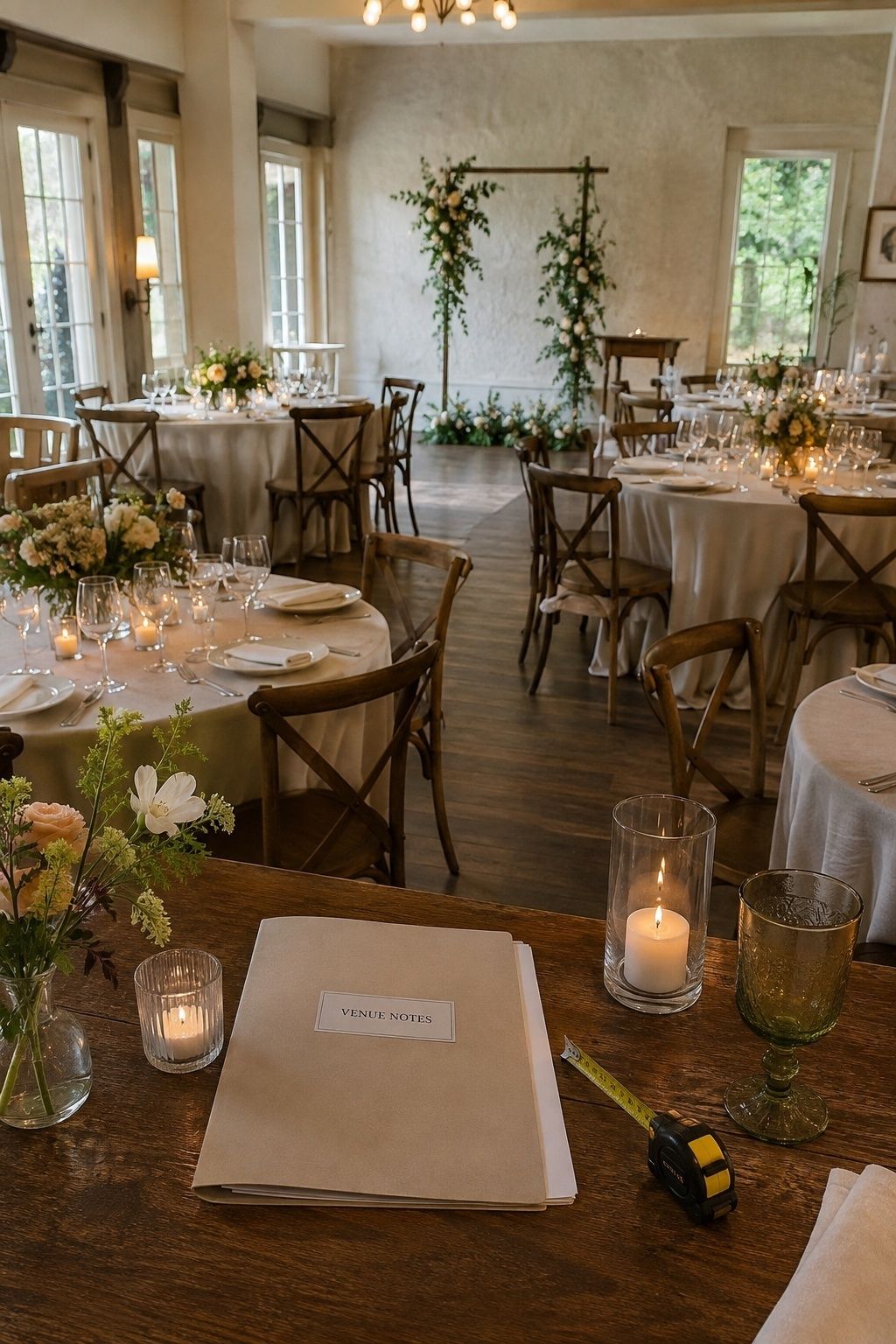
The venue comes first because it gives you the date, guest capacity, food rules, rental needs, access hours, and rain plan. For a small wedding planning timeline 6 months out, you may need to consider Fridays, Sundays, weekdays, brunches, lunch receptions, private dining rooms, or less traditional spaces. Smaller celebrations often have more venue flexibility, but they can still run into minimum spends and limited availability.
Ask each venue what guest count makes the room feel warm, whether ceremony and reception can happen in one place, what is included, what must be rented, how late you can stay, and who handles setup and cleanup. A small wedding should feel gathered, not swallowed by a room built for twice the number.
Book Food, Photos, Officiant, And Coordination
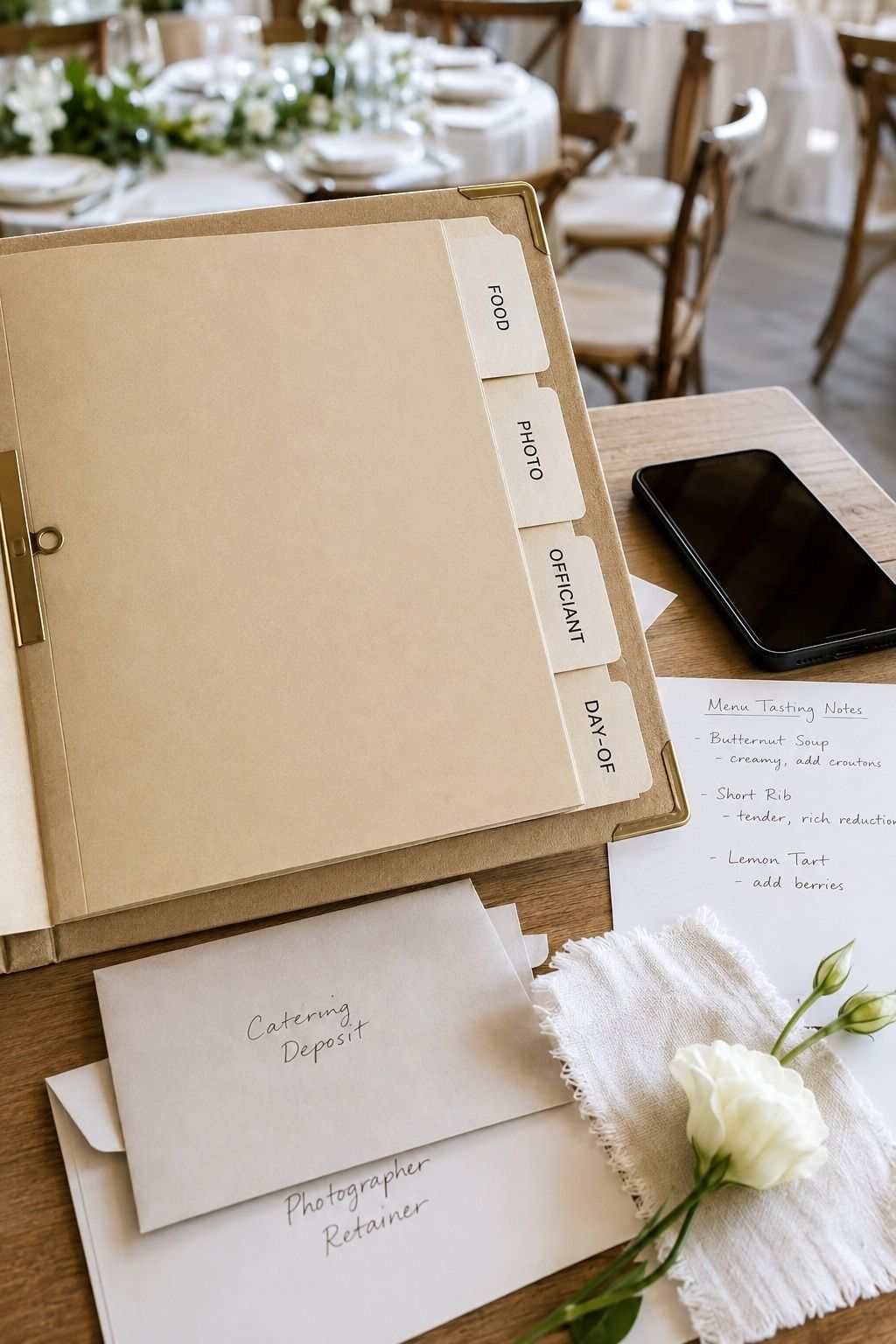
The vendors to book first for a six-month small wedding are the ones that protect the date and the experience: venue, catering or restaurant, photographer, officiant, and planning or Day-Of coordination. Depending on your format, florals, rentals, hair and makeup, music, transportation, lodging support, and dessert may also need early attention.
Let your vendor checklist match the actual shape of the day. A tiny ceremony may not need a DJ, but it may need excellent sound. A dinner-party reception may not need elaborate decor, but it does need pacing, service, lighting, and a clear toast plan.
Read Contracts For Minimums And Handoffs
Short timelines leave less room to fix misunderstandings later, so read contracts with extra care. Look for payment dates, cancellation terms, guest-count minimums, staffing fees, overtime rates, setup responsibilities, vendor meals, power needs, insurance, delivery windows, and what happens if the guest count changes.
Keep every vendor’s contact name, phone number, arrival time, balance due, and setup need in one organizer. This is the quiet system that saves you from answering logistical questions while getting dressed.
Month 4: Invite The Right People And Shape The Guest Experience
By month 4, your small wedding should be moving from big decisions into guest communication. This is where the intimacy becomes practical.
Send Save-The-Dates Or Early Personal Notices
If guests need to travel, give them the date and location as soon as the venue is confirmed. You may send formal save-the-dates, but a small wedding can also use personal calls, thoughtful texts, or simple digital notices when the group is close. Include the date, city, ceremony or reception location if confirmed, dress code direction, travel notes, and when the formal invitation will follow.
For a family-only or friends-only wedding, clarity is kindness. Tell guests whether children are included, whether Plus-Ones are limited, whether the ceremony is private, and whether there will be a later celebration. The less people have to guess, the fewer tender conversations you will need to clean up later.
Order Invitations And Set The RSVP Deadline

For a small wedding planned in 6 months, invitations usually work best when they go out about 8 to 10 weeks before the wedding, or earlier if travel is involved. Set the RSVP deadline about 3 to 4 weeks before the date so you have time for the final headcount, seating, menu counts, and rental adjustments.
Because the guest list is small, you can follow up personally instead of waiting forever on missing cards. That is one of the true advantages of a six-month intimate wedding timeline: fewer people, faster answers, and a clearer final count.
Plan Guest Comfort Early
Small weddings make every guest’s experience more visible. Check parking, accessibility, bathroom access, coat storage, temperature, ceremony sound, meal timing, dietary needs, and whether anyone needs help with stairs, transportation, or lodging. If the celebration is at home, add lighting, rain cover, trash, power, rentals, and cleanup to the list now.
Month 3: Turn Decisions Into A Working Timeline
Month 3 is where the wedding starts to become a real day instead of a collection of bookings. This is the moment to draft the flow.
Map The Ceremony And Reception Flow
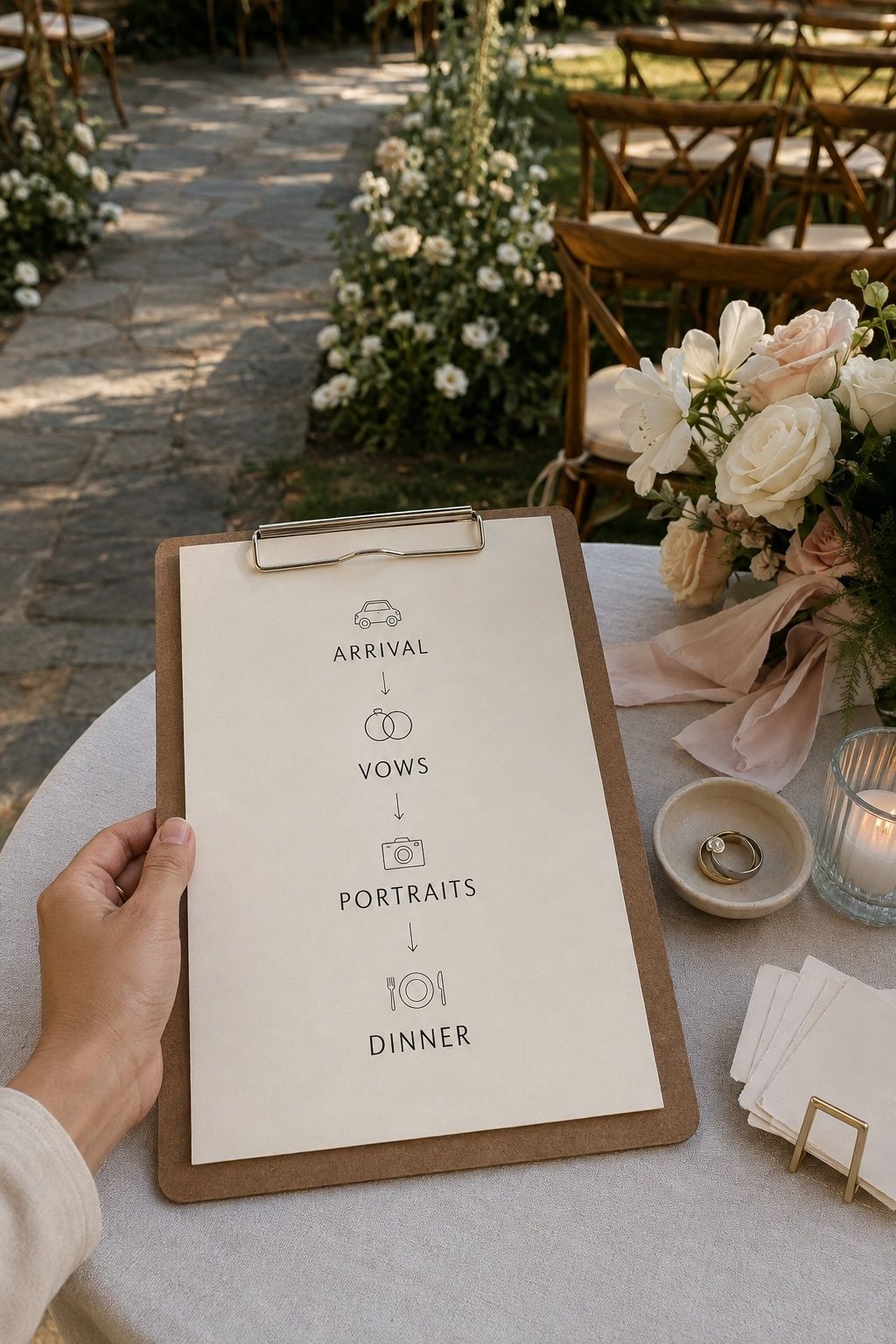
Write the day from the first arrival to the final goodbye. Include getting ready, first look if you want one, ceremony setup, guest arrival, processional, vows, recessional, portraits, cocktail time, dinner, toasts, dessert, dancing or after-dinner conversation, transportation, and cleanup. A small wedding does not need a fussy timeline, but it does need transitions that make sense.
If you are choosing between a six-month and a shorter countdown, a 3-month small wedding planning checklist shows how quickly venue, food, license, guest communication, and final handoff decisions start to overlap.
Confirm Ceremony, Legal, And Personal Details
Check marriage license rules for the place where you are legally marrying, including waiting periods, expiration windows, witness requirements, appointments, identification, and who returns the license. Then work with your officiant on ceremony tone, readings, vows, music, pronouncement language, and any family or cultural details you want included.
Small ceremonies often feel most moving when they are lightly structured. Decide who holds rings, who stands where, whether anyone reads, how vows are delivered, and whether microphones are needed. Guests may be few, but they still need to hear you.
Choose What You Are Skipping
A compressed timeline becomes overwhelming when every tradition is treated as mandatory. Decide what you can skip now: large wedding party logistics, elaborate favors, multi-event weekends, formal programs, specialty signage, matching robes, endless DIY decor, or anything that exists mostly because it appeared on someone else’s checklist. For the next step, see last minute wedding planning checklist.
When you decide what to skip for a small wedding, the checklist becomes kinder. Skipping is not a failure of planning. It is how you protect the parts of the day that matter. If you like this, browse small wedding planning timeline by month next.
Month 2: Send Invitations And Confirm The Moving Pieces
At two months out, the guest experience and vendor plan should become concrete. This is the check-in month.
Mail Invitations And Track RSVPs
Send formal invitations about 8 weeks before the wedding, or earlier for travel-heavy plans. Include the location, ceremony time, reception details, RSVP deadline, dress code, menu choice if needed, wedding website, parking or transportation notes, and any private-ceremony wording. For a small guest list, your RSVP tracker should include attendance, meal choice, dietary notes, relationship, address, gift tracking, and whether a follow-up is needed.
Confirm Food, Rentals, Florals, Music, And Beauty
Touch base with each vendor before the final month arrives. Confirm menu direction, bar plan, rental quantities, floral scope, cake or dessert details, playlist or live music needs, hair and makeup timing, attire fittings, transportation, lodging information, and any decor that affects setup. If a vendor is not needed, remove that line from the checklist instead of letting it sit there like a quiet accusation.
Draft The Floor Plan And Seating Direction
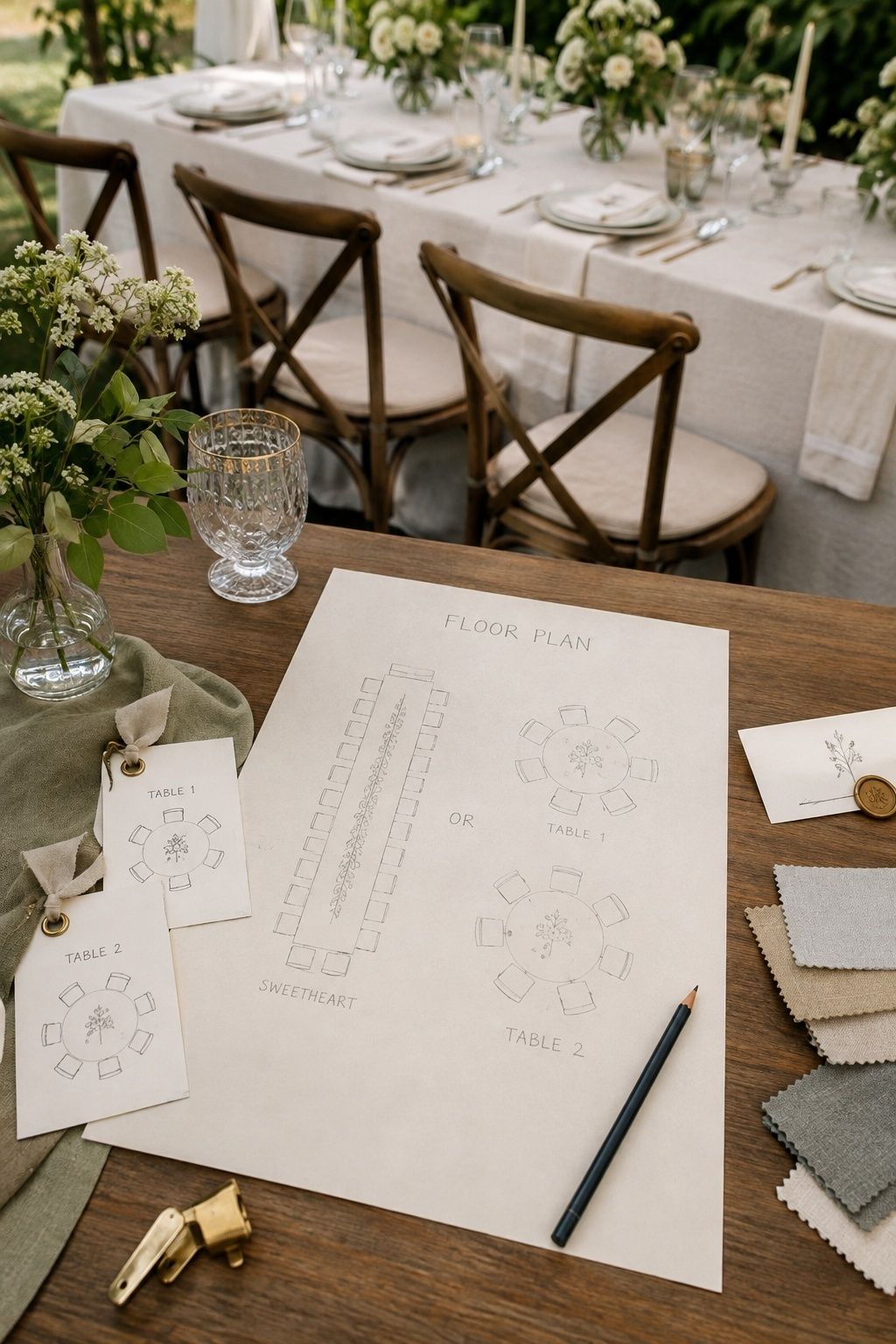
Start the seating plan before every RSVP is in. Decide whether you want one long table, a few family tables, mixed friend groups, sweetheart seating, or open seating for a very small group. Think through guests who need easy exits, quiet corners, accessible paths, or distance from speakers. With a small wedding, seating is less about filling a ballroom and more about helping conversation feel natural.
Month 1: Finalize The Small Wedding
The final month should not be a frantic invention month. It should be a confirmation month. Use it to lock the count, tighten the timeline, and hand off responsibilities.
Lock The Final Headcount
Follow up with missing RSVPs, confirm meal choices, update dietary notes, and send final numbers to the venue, caterer, rental company, florist, stationer, transportation provider, and anyone else affected by guest count. Then update your seating chart, place cards, menus, and welcome notes. At this stage, a final-month checklist keeps the last few weeks from filling with tiny tasks you meant to remember later.
Confirm Every Vendor In Writing
Send each vendor the date, address, arrival time, setup location, point-of-contact name, payment status, meal needs, parking notes, and any special instructions. Ask them to confirm what they are bringing, what they need from you, and when they will leave. Put all responses in your vendor contact organizer so your coordinator or helper can answer questions without calling you.
Create The Day-Of Handoff
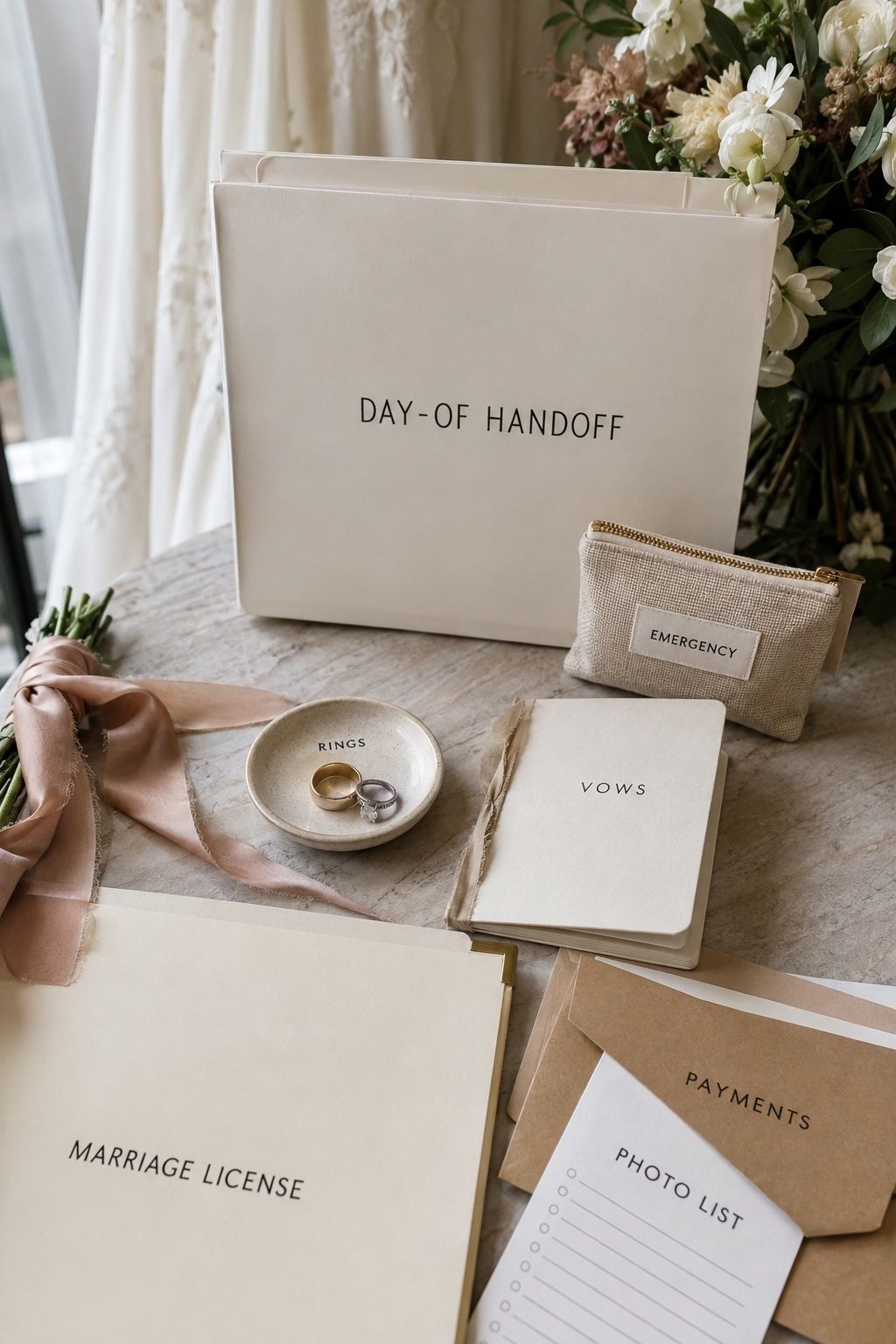
Your final handoff should include the timeline, vendor contacts, floor plan, seating chart, ceremony notes, family photo list, payment envelopes if needed, emergency kit, personal items, decor inventory, legal documents, and cleanup plan. Choose one person to own the handoff. If there is no planner, this should be a calm, reliable helper who is not also trying to be emotionally present in every family moment.
Final Week: Keep It Simple And Present
The final week is not the time to add new projects. It is the time to protect the wedding you already planned.
Pack The Things That Cannot Be Replaced
Pack rings, vows, license, identification, attire, shoes, accessories, undergarments, touch-up items, family heirlooms, gifts, printed timelines, vendor payments, and any ceremony objects. Keep essentials in one labeled place. If you are moving between locations, decide who carries each item and when.
Brief Helpers Without Overloading Them
Give helpers clear jobs: greet guests, cue the processional, carry flowers, gather family for photos, move cards and gifts, distribute tips, check the bathroom basket, or confirm transportation. Do not hand someone a vague role like “make sure everything goes well.” Small weddings run better when each person has one or two specific responsibilities.
Protect Rest, Food, And Breathing Room
A short engagement can train you to move quickly, but your wedding day should not feel like another task sprint. Schedule real meals, water, private minutes together, and a stopping point for planning conversations. The goal is not to complete a checklist perfectly. The goal is to arrive at the ceremony awake to the people in front of you.
What To Skip On A 6-Month Micro Wedding Checklist
When planning time is short, skip anything that adds coordination without adding meaning. You can usually release elaborate wedding party roles, multiple pre-wedding events, custom favors, complex seating displays, oversized floral installations, printed programs for a brief ceremony, transportation for guests who are already staying nearby, and decor that needs hours of setup.
What you should not skip is guest comfort, legal paperwork, vendor clarity, food and drink, sound, weather backup, and a final point person. A six-month micro wedding checklist can be beautifully lean, but it still needs the bones of a hosted event. There’s more in our Wedding Planning Basics collection.
FAQ
Can You Plan A Small Wedding In 6 Months?
Yes, you can plan a small wedding in 6 months if you make the foundation decisions immediately and stay flexible about dates, venues, and extras. Small guest counts help because there are fewer invitations, fewer meal counts, and fewer seating complications. The key is booking the venue, food, photographer, officiant, and coordination early.
What Should You Book First On A 6-Month Wedding Timeline?
Book the venue or ceremony location first because it sets the date and determines nearly every other choice. After that, book food, photography, officiant, and planning or Day-Of coordination. These are the pieces that protect the date, the ceremony, the guest experience, and the final handoff.
When Should Invitations Go Out For A Small Wedding Planned In 6 Months?
Send invitations about 8 to 10 weeks before the wedding, or earlier if guests need to travel. Give a personal save-the-date or early notice as soon as the date and location are confirmed. Set the RSVP deadline 3 to 4 weeks before the wedding so you can finish seating, food counts, and vendor updates.
What Vendors Should Be Booked First For A 6-Month Small Wedding?
The first vendors to book are the venue, caterer or restaurant, photographer, officiant, and planner or Day-Of coordinator. Depending on your location and format, you may also need rentals, florals, hair and makeup, music, dessert, and transportation. Book the vendors that affect the date and guest experience before the decorative extras.
How Do You Keep A 6-Month Wedding Checklist From Becoming Overwhelming?
Keep one planning home, assign each month one main purpose, and decide what you are skipping by month 3. Use a short weekly planning meeting instead of talking about the wedding every night. If a task does not support the ceremony, guests, meal, photos, legal needs, or final handoff, it may not belong on the checklist.
What Can You Skip When Planning A Small Wedding In 6 Months?
You can often skip large wedding party logistics, elaborate favors, printed programs, custom signage, multiple pre-wedding parties, complicated DIY projects, and traditions that do not fit your guest list. Do not skip guest comfort, food and drink, ceremony sound, legal paperwork, vendor confirmations, or a Day-Of point person.
What Should Be Done In The Final Month Before A Small Wedding?
In the final month, lock the headcount, finalize seating, confirm vendors in writing, finish the ceremony plan, check the marriage license timeline, prepare final payments, pack personal items, and give one trusted person the Day-Of handoff. The final month is for confirming and simplifying, not adding new projects.
Final Thoughts
If the countdown starts to feel tight, come back to the simple order that makes a small wedding work: date, place, people, food, ceremony, photos, guest care, and handoff. A six-month plan is absolutely possible when you stay organized, stay flexible, and let the smaller guest list protect the day; while you are planning a wedding in 6 months, keep the big milestones visible, then give yourself permission to let the celebration stay intimate, intentional, and unmistakably yours.
Last update on 2026-11-29 / Affiliate links / Images from Amazon Product Advertising API