

Wedding invitation mistakes make guests guess who is invited, where to go, when to arrive, how to reply, or what kind of celebration they are joining. The strongest invitation suite feels warm and personal while spelling out names, timing, location, RSVP details, website information, guest-count boundaries, and mailing basics before anything goes to print.
Invitations are often the first moment when a wedding starts to feel real for everyone else. For a small or intimate wedding, they carry even more weight because every envelope is tied to a real seat, a real meal, and a guest list that was probably chosen with care.
The goal is not stiff etiquette or fussy stationery rules. It is clear hospitality. Your invitation should help guests understand the day quickly, answer the questions that affect attendance, and protect you from awkward follow-up texts, expensive reprints, and last-minute headcount surprises. The full picture is in wedding mistakes to avoid.
Recommended Wedding Products


You Might Also Like These Blog Posts
- Wedding Website Mistakes That Make Guests Text You Anyway
- Small Wedding Invitation Wording Ideas That Feel Clear And Personal
- Intimate Wedding Invitation Wording For Every Small Celebration
- Spring Wedding Invitation Ideas That Open Like a Garden Gate
- Fall Wedding Invitation Ideas That Feel Like the Season Arrived
- Summer Wedding Invitation Ideas That Feel Like the First Warm Breeze
Wedding Invitation Mistakes That Blur the Guest Plan
Most wedding invite mistakes begin with good intentions. Couples want the suite to look elegant, sound kind, and avoid awkwardness, so they soften details until the guest has to interpret them. A small wedding does not have much room for that confusion. One unclear envelope might change a dinner count, a shuttle list, a ceremony seat, or a family expectation.
Think of the invitation suite as a gentle map. The main card should carry the core facts, the details card should handle extra logistics, the RSVP card or digital form should gather decisions cleanly, and the wedding website should hold the longer explanations. When those pieces agree, guests feel cared for instead of tested.
Making the Main Invitation Do Too Much
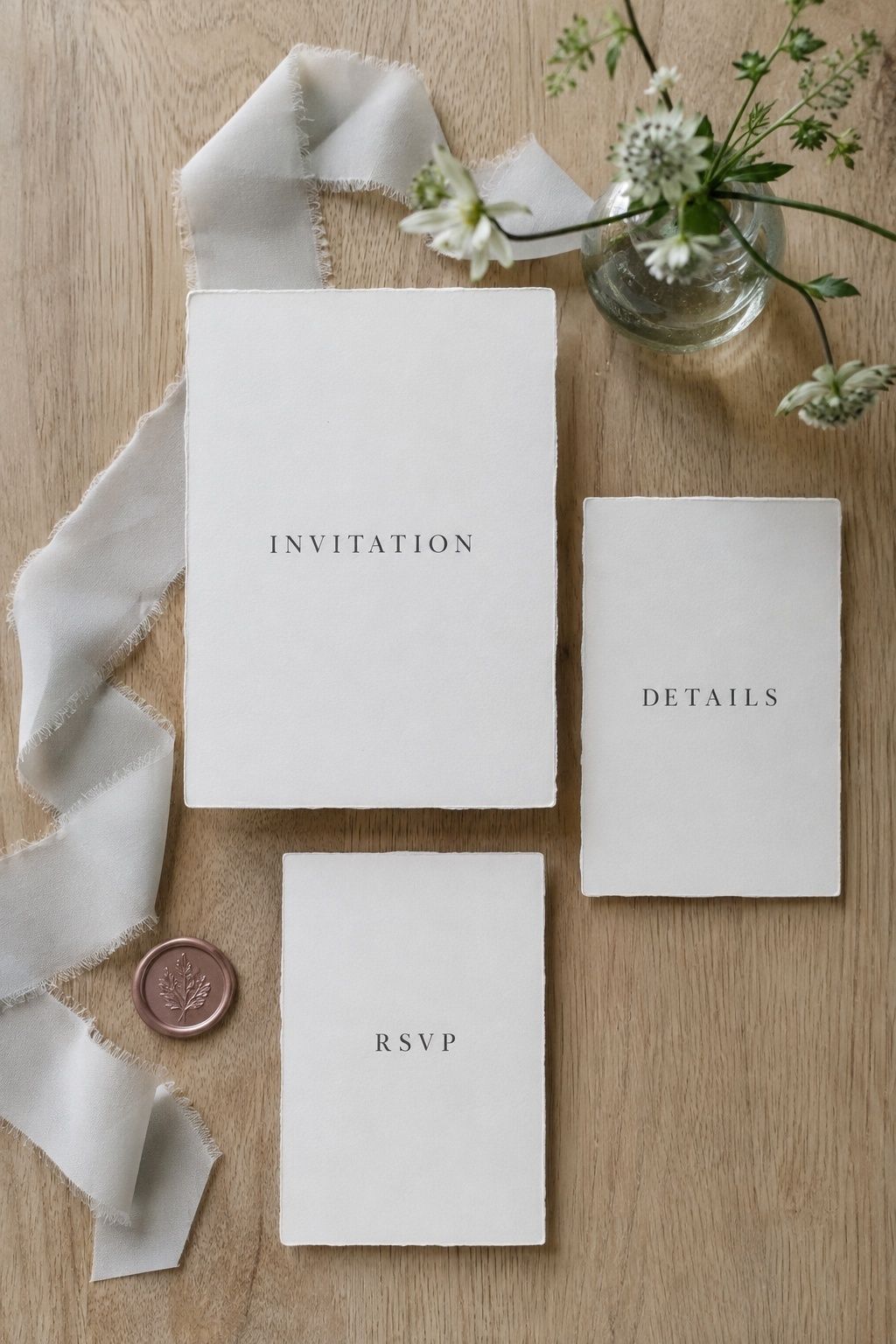
The main invitation has one job: invite the named guest to the wedding with the essential who, what, when, and where. Trouble starts when couples squeeze lodging details, registry language, children policies, shuttle timing, dress code explanations, meal choices, website directions, and reception details onto one card.
A crowded card looks busy and still leaves guests unsure about what matters most. Keep the main card graceful and direct. Move extra logistics to a details card or website, then make sure the main card points guests toward the RSVP path and any companion information they need next.
Leaving the Location Too Thin
Venue names feel obvious to the couple, but guests need enough location information to arrive without searching through old texts. A venue name without the city, a private residence without parking guidance, or a restaurant wedding without the room name may create small delays that feel bigger on the day.
Write the location as if a guest is standing at the door with ten minutes to spare. Include the venue name, city and state, and any detail that prevents wrong entrances, wrong addresses, or ceremony-versus-reception confusion. For intimate weddings in homes, courthouses, gardens, or private dining rooms, practical clarity feels just as polished as beautiful paper.
Using Wording That Does Not Match the Wedding
Wedding invitation wording mistakes often happen when the tone of the card promises a different day than the one being planned. A black-tie style invitation for a backyard dinner may make guests overdress. A casual line for a formal ceremony may make the event feel less settled than it is.
Choose language that reflects the real celebration. A courthouse ceremony, private restaurant dinner, family garden wedding, and candlelit micro wedding may all be deeply meaningful, but they do not need matching levels of formality. Warm wording is welcome. Vague wording is where the trouble begins.
Being Unclear About Who Is Invited
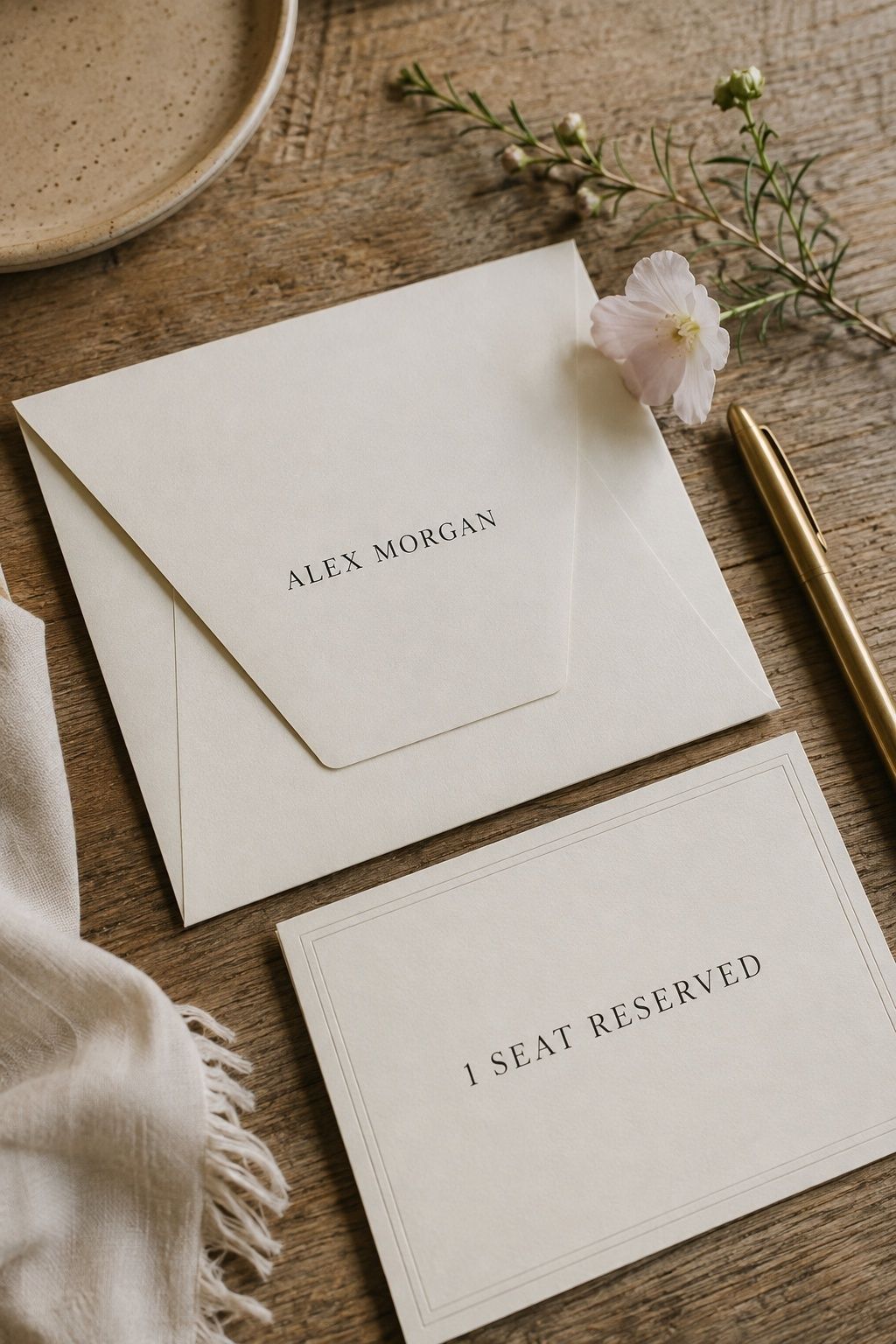
For a small wedding, guest-count boundaries need precision. If the envelope names only one person but the RSVP form accepts two, a guest may assume a plus-one is expected. If a household envelope names parents but not children, the family may wonder whether the omission was intentional or accidental.
Put invited names clearly on the envelope and match that choice in the RSVP system. If the wedding is adults-only, no-plus-one, or limited to named guests, keep the invitation itself calm and brief while making the response form impossible to misread. The kindest boundary is the one guests understand before they have to ask.
Forgetting a Clean RSVP Deadline
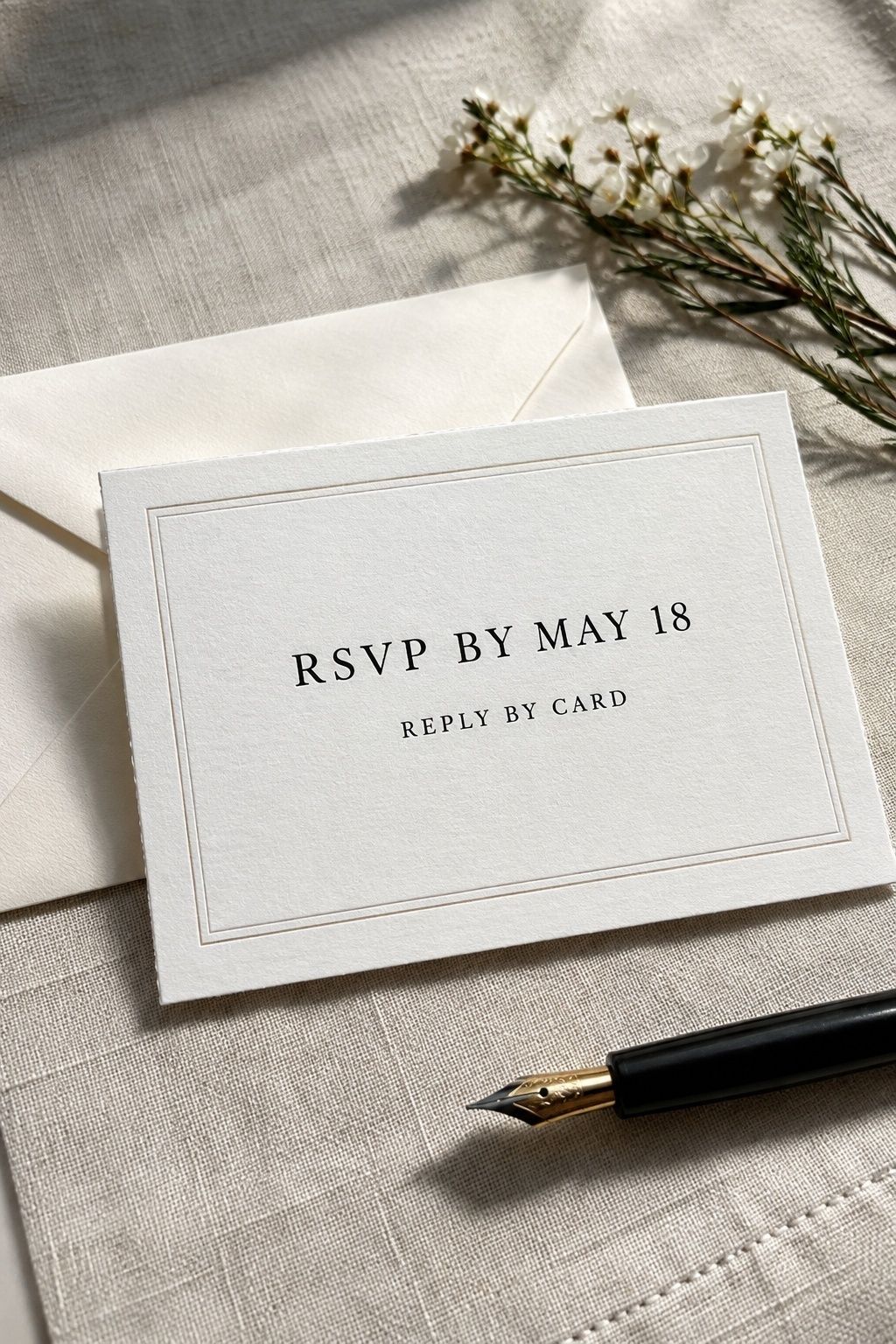
RSVP card mistakes ripple into catering, seating, transportation, rentals, welcome bags, and final payments. A reply card or digital form without a deadline invites delays. A deadline that arrives too close to the wedding leaves the couple chasing answers during the weeks when they should be confirming details.
Set the RSVP date far enough ahead to handle follow-up, meal counts, and seating. Make the response method plain: card, website, email, text, or a form. If meals are involved, ask guests to mark initials for each choice so no one has to decode who wanted what later.
Letting Paper and Digital Details Disagree
Many couples now split information between an invitation suite and a wedding website. That works beautifully when the details match. It becomes stressful when the paper says one time, the website says another, or the RSVP form asks different questions than the reply card.
Before printing, audit the date, ceremony time, reception time, venue name, address, dress code, RSVP deadline, meal choices, website URL, and guest names everywhere they appear. For a small wedding, even one mismatch may create a personal round of clarification with people you already know well.
Putting Registry Details on the Main Card
Registry information is useful, but the main invitation should not feel like a gift request. This is especially true for intimate weddings, where the invitation should feel like a personal welcome first. Guests who want gift details will look for them once the event basics are clear. These wedding registry mistakes cover how to share gift details gracefully.
Place registry details on the wedding website or a separate information area, depending on the style of your suite. Keep the invitation focused on presence, timing, and response. That small separation makes the whole suite feel more gracious.
Ordering Too Few Extras
Wedding stationery mistakes often show up after the first count feels finished. A couple may forget keepsake copies, photographer flat-lay copies, late additions, damaged envelopes, returned mail, or a household that needs a corrected address. Reordering a tiny batch often costs more and takes longer than expected.
Order a small cushion of invitations, envelopes, RSVP cards, and detail cards. The right number depends on your guest list, but extras are not wasteful when they prevent panic. They give you room for human error, mailing trouble, and one beautiful untouched copy for your own memory box.
Skipping Postage and Mailing Checks
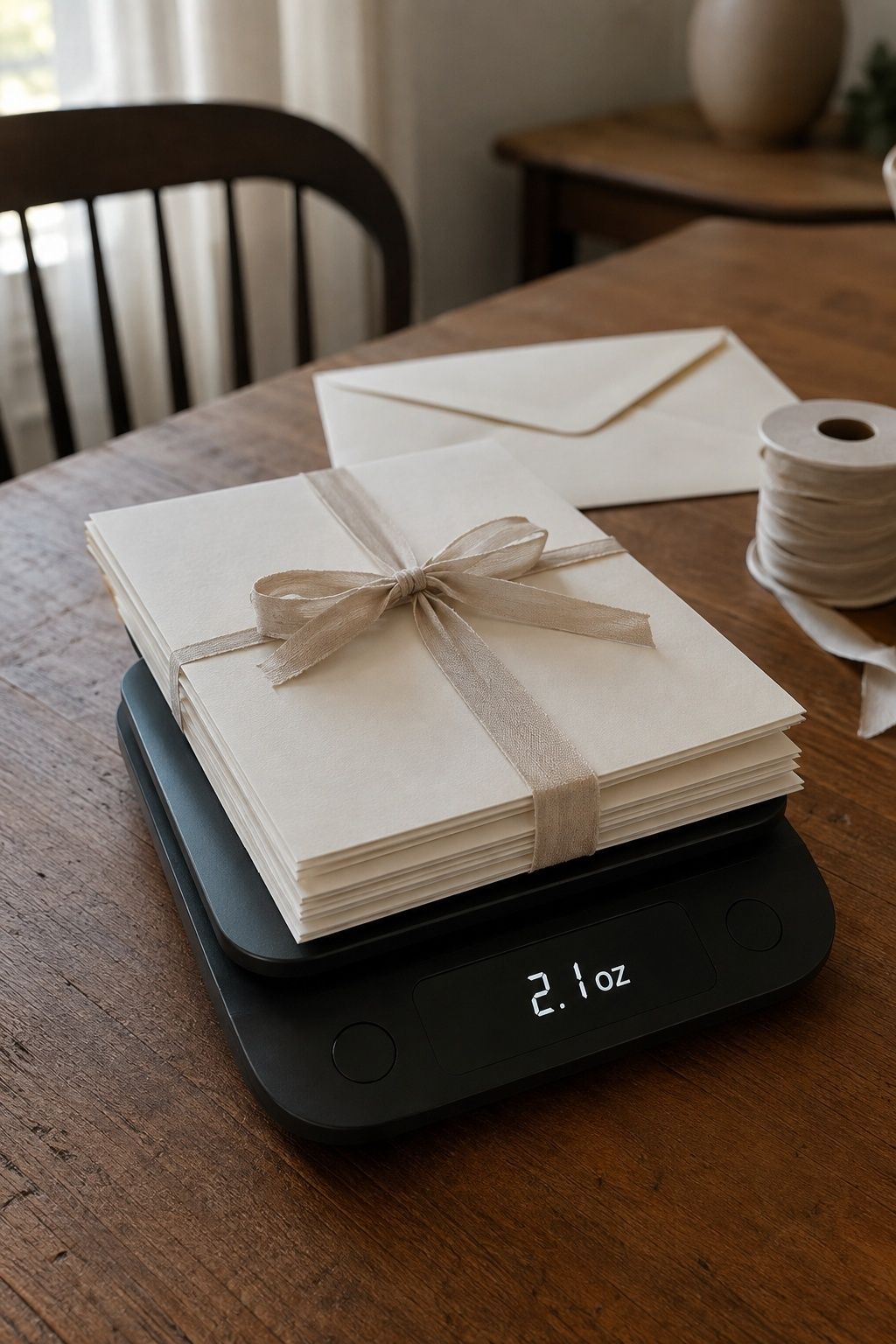
Wedding invitation postage mistakes are easy to miss until envelopes start returning. Thick paper, wax seals, ribbon, multiple inserts, unusual sizes, square envelopes, and international addresses may change the cost or handling. A pretty suite still needs to survive the mail.
Weigh a complete assembled invitation before buying postage. Confirm return postage for mailed RSVP cards, check hand-canceling or non-machinable fees where relevant, and send one test envelope if the suite is unusual. Mailing is not the glamorous part, but it is the part that gets the invitation into guests’ hands.
Proofing Names and Dates Too Quickly
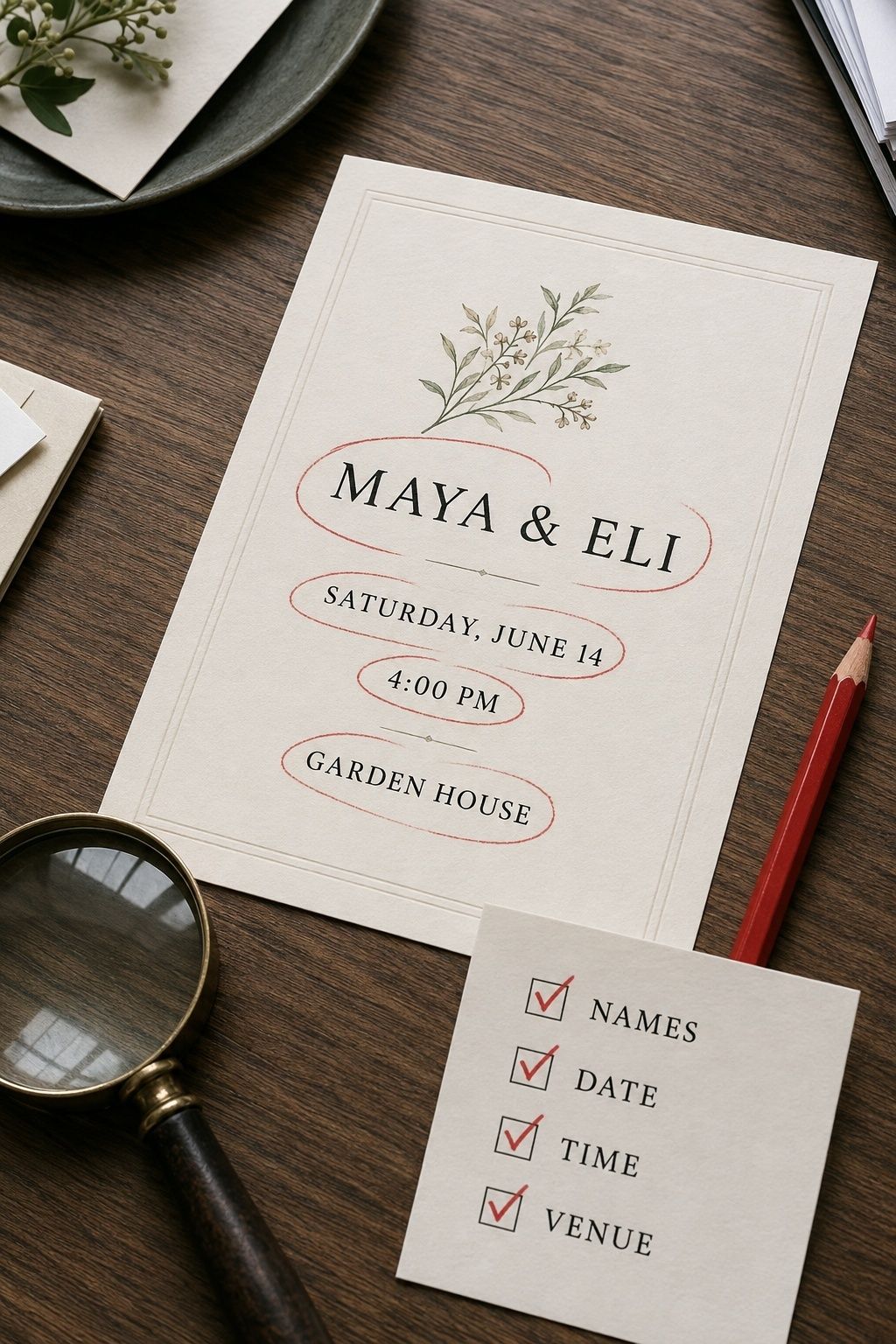
Wedding invitation proofing deserves a slower pass than most couples expect. Names, titles, dates, times, addresses, website URLs, QR codes, meal choices, and envelope spellings are all tiny places for expensive errors. The more familiar the details feel, the easier they are to skim past.
Proof the suite in separate rounds. First check guest-facing logistics, then names, then dates and times, then web links, then envelope details. Ask someone outside the planning bubble to look at the suite as a guest and tell you exactly what they would do next.
Sending Invitations Too Late
Late invitations place pressure on everyone. Guests may need work schedules, childcare, travel plans, hotel decisions, or meal responses. The couple may need final numbers for a private room, tasting menu, shuttle, ceremony seating, or rental order.
Work backward from the decisions that depend on guest replies. A local dinner with thirty people may need a different timeline than a destination weekend with twelve, but both deserve breathing room. Send invitations early enough that responses arrive before your final planning choices harden.
Hiding Important Details in Pretty Design
Beautiful stationery should still be legible. Pale ink, tiny script, low contrast, delicate maps, and decorative layouts may look lovely in a mockup and become frustrating in real life. Guests should not have to enlarge a photo or call a sibling to confirm the time.
Print one physical proof if possible. Look at it in evening light, hand it to someone older, scan it from arm’s length, and check every insert as a set. The invitation should feel considered, but the important details must remain easy to find.
Forgetting Dress Code and Arrival Expectations
Guests at small weddings often know the couple personally, which sometimes makes the dress code feel less necessary. That is exactly why a simple cue matters. Without one, guests may wonder whether a private dinner means cocktail attire, garden clothes, courthouse polish, or relaxed family-party outfits.
Keep the wording brief and useful. Name the level of formality, mention terrain or weather when it affects shoes and layers, and place longer arrival guidance on a wedding invitation details card or website. Guests should know how to show up comfortably without needing a private message from the couple.
Forgetting the Guest View Before You Print
The final invitation check should not ask, “Do we like it?” That matters, but the better question is, “Would a guest know what to do?” A guest needs to know who is invited, what event they are attending, where to arrive, when to respond, what to wear if needed, and where extra details live. For more ideas in this vein, browse Wedding Mistakes to Avoid.
Walk through the suite from envelope to RSVP. If a guest has to infer a plus-one, hunt for the website, guess whether children are included, or wonder whether the reception shares the ceremony location, revise before printing. The invitation has done its job when warmth and clarity arrive together. Keeping it small? See small wedding planning mistakes.
FAQ
What are common wedding invitation mistakes?
Common wedding invitation mistakes include unclear invited names, missing RSVP deadlines, vague venue details, crowded main cards, mismatched website information, poor postage planning, registry wording in the wrong place, late mailing, and rushed proofing of names, dates, addresses, and web links. Related reading: wedding website mistakes.
What information should be on a wedding invitation?
A wedding invitation should clearly name the couple, the event, date, time, venue, city, and response path. Extra details such as dress code, parking, accommodations, transportation, registry, meal choices, and longer explanations usually fit better on a details card or wedding website.
How do you avoid RSVP mistakes?
Avoid RSVP mistakes by giving a clear deadline, matching invited names across the envelope and RSVP form, requesting meal initials when needed, testing the digital form, including return postage for mailed cards, and leaving enough time to follow up before final counts are due.
When should wedding invitations be mailed?
Mail invitations early enough for guests to reply before catering, seating, lodging, and travel decisions become final. Local weddings often need less lead time than destination or holiday weddings, but every couple should work backward from vendor deadlines and guest travel needs.
What wording mistakes confuse guests?
Guests get confused by vague plus-one wording, unclear children policies, missing reception information, casual language for a formal event, formal language for a relaxed dinner, incomplete address details, vague dress code wording, and RSVP instructions that do not match the website or reply card.
Should registry information go on a wedding invitation?
Registry information usually feels more gracious on the wedding website or a separate information area rather than the main invitation. The invitation should focus on welcoming guests, sharing the essential event details, and making the RSVP path easy to understand.
How do you proof wedding invitations before printing?
Proof wedding invitations in separate rounds for names, dates, times, addresses, website URLs, QR codes, RSVP details, envelope spelling, and postage. Print or view the full suite together, then ask one person outside the planning process to explain the event details back to you.
Final Thoughts
Invitations are not just paper. They are the first piece of guest care your wedding sends out into the world. When the suite names the right people, explains the right details, and keeps the extra information organized, wedding invitation mistakes become much easier to avoid.
Before printing, walk through every card as a guest, then confirm names, timing, RSVP, postage, registry placement, clarity, and guest welcome until the suite feels calm. A second proof outside the planning bubble matters once the essentials already make sense so the people you love receive a clear, warm welcome to the day.
Last update on 2026-11-29 / Affiliate links / Images from Amazon Product Advertising API