

The biggest wedding mistakes to avoid usually begin before the wedding day: setting a guest list without a real budget, booking vendors before the scope is clear, building a timeline with no breathing room, and treating guest comfort as a detail instead of the foundation. For a small or intimate wedding, prevention is really about protecting the feeling of the room.
Most couples are not careless. They are excited, under pressure, and trying to make dozens of emotional decisions while everyone seems to have an opinion. That is why common wedding mistakes can feel so ordinary at first: one extra table, one vague contract line, one overpacked timeline, one family request that seems easier to accept than discuss.
For a small wedding, those choices sit closer to the surface. A cramped dinner, confused guest arrival, thin rain plan, or couple trying to answer vendor questions during cocktail hour is not hidden by a crowd. The right wedding planning mistakes to avoid are the ones that protect your money, your guests, your memories, and your ability to be present.
Recommended Wedding Products


You Might Also Like These Blog Posts
- Outdoor Wedding Mistakes That Make Beautiful Plans Feel Uncomfortable
- How To Avoid Wedding Debt And Still Celebrate Beautifully
- DIY Wedding Mistakes That Turn Personal Touches Into Extra Work
- Wedding Timeline Mistakes That Make the Day Feel Rushed
- How To Avoid Wedding Decision Fatigue When Every Choice Feels Too Loud
- Destination Wedding Mistakes That Follow Guests Home
Wedding Mistakes To Avoid When You Want A Calm, Intimate Day
The most useful way to think about wedding mistakes to avoid is not as a scary list of disasters. Think of them as pressure points. Each one asks a simple question: does this choice make the wedding easier to host, easier to pay for, easier to understand, and easier to actually experience?
In small or intimate weddings, mistakes often come from underestimating how visible everything feels when the guest list is close. The fix is not perfection. It is planning with enough honesty that the room feels cared for instead of improvised. If you are making things yourself, these DIY wedding mistakes are worth reading first.
Making The Guest List Before You Know The Wedding You Can Actually Host
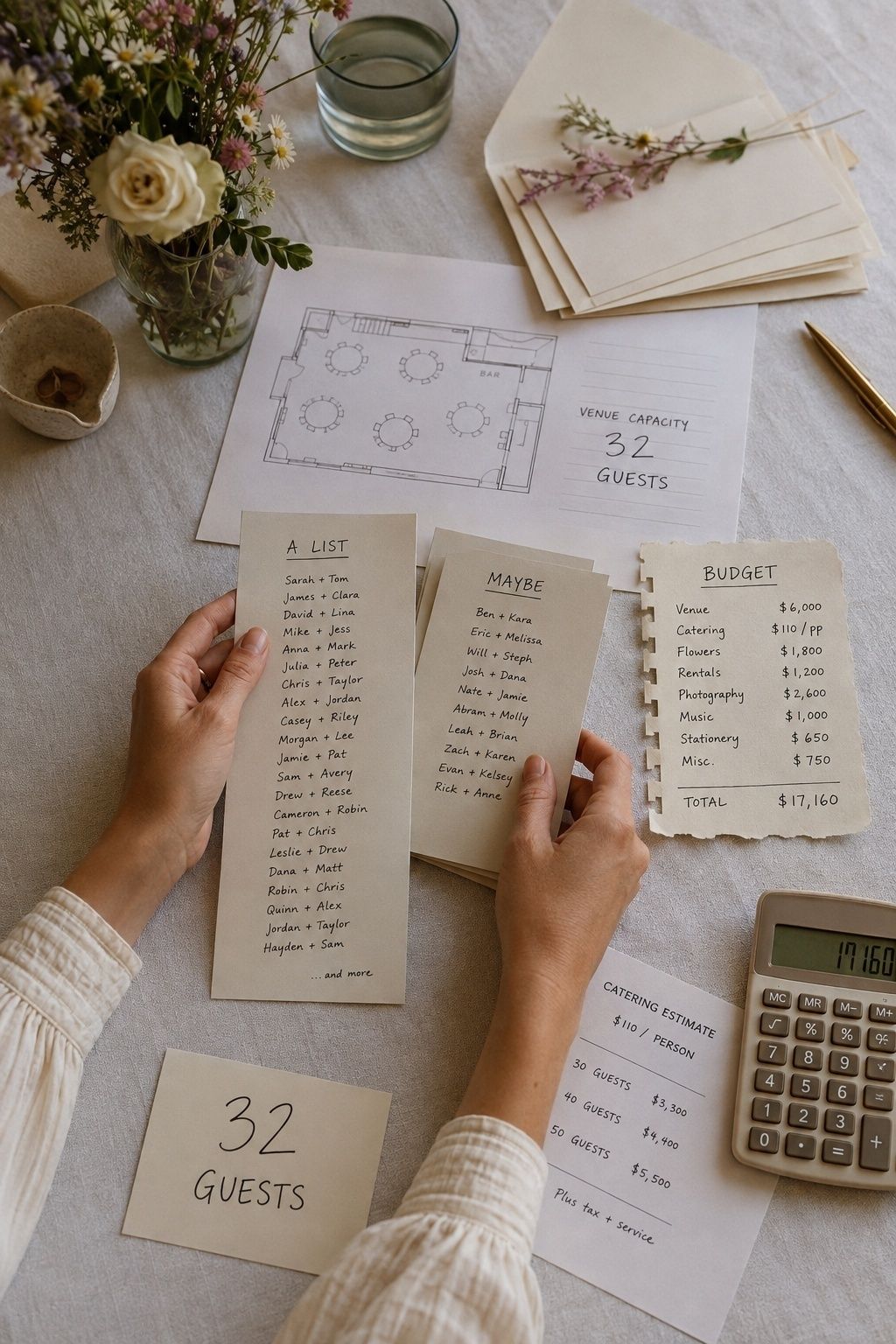
The guest list is not just a names document. It controls the venue size, catering total, bar cost, invitation count, table layout, restroom needs, transportation questions, and the entire emotional shape of the day. When couples invite first and calculate later, they often discover that the wedding they wanted and the wedding they promised are two different events.
This is one of the biggest wedding mistakes for intimate celebrations because every extra person changes the room. A 32-person dinner can feel like one generous table. A 58-person dinner may need a different layout, more service staff, a larger space, and a different style of hosting.
Do this instead: choose a guest ceiling before anyone starts casually offering invitations. Make a private A-list together, name the relationships that truly belong in the room, and use your budget to test whether that number works. If family is contributing money, discuss invitation expectations before accepting the contribution so the support does not quietly become a second guest list.
Spending Before You Choose The Three Priorities That Matter Most

Wedding spending can feel harmless in the beginning because each decision looks separate. A deposit here, a dress appointment there, a few decor purchases, a nicer invitation suite, a small rental upgrade. The problem is that the budget does not experience those choices separately. It absorbs them all at once.
For a small wedding, the best budget is not the one that funds every pretty idea equally. It is the one that protects the parts guests and the couple will actually feel: food, photography, comfort, ceremony meaning, music, and the setting that lets the room feel close. Low-impact details can still be lovely, but they should not drain money from the pieces that hold the day together.
Do this instead: each partner names three priorities before major spending begins. Compare your lists, choose the shared nonnegotiables, and build the budget around those first. This prevents the quiet regret of overspending on things that looked beautiful in the planning season but barely registered on the wedding day.
Booking Vendors Without A Clear Date, Scope, Contract, And Backup Plan
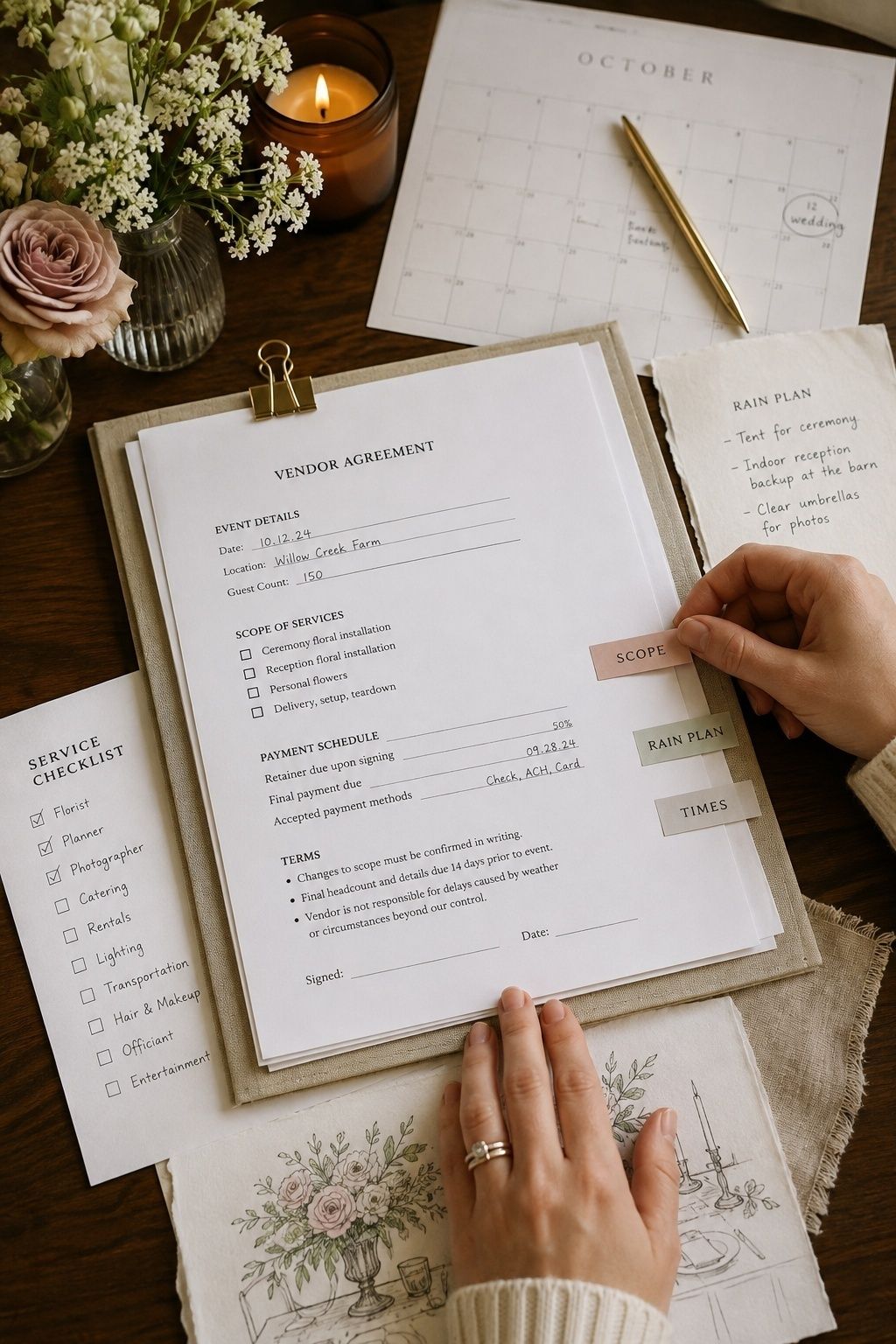
Vendors can be wonderful, but vague agreements create stress. A couple may think they booked full-day photography when the contract says six hours. They may assume setup is included when the florist expects someone else to place candles. They may believe a venue coordinator will manage the full event when that person is responsible only for the property.
These mistakes couples make when planning a wedding usually come from eagerness, not neglect. You find a vendor you love, worry about losing the date, and move quickly. But if your wedding date, venue rules, guest count, setup needs, rain plan, and decision owner are still fuzzy, every vendor conversation has holes in it.
Do this instead: before paying a deposit, confirm the date, exact services, arrival and departure times, included staff, travel fees, overtime rates, cancellation terms, weather backup, delivery responsibilities, and who handles cleanup. Put every promise in writing. A clear contract is not cold; it is what lets everyone relax later.
Planning A Timeline That Looks Pretty But Does Not Breathe
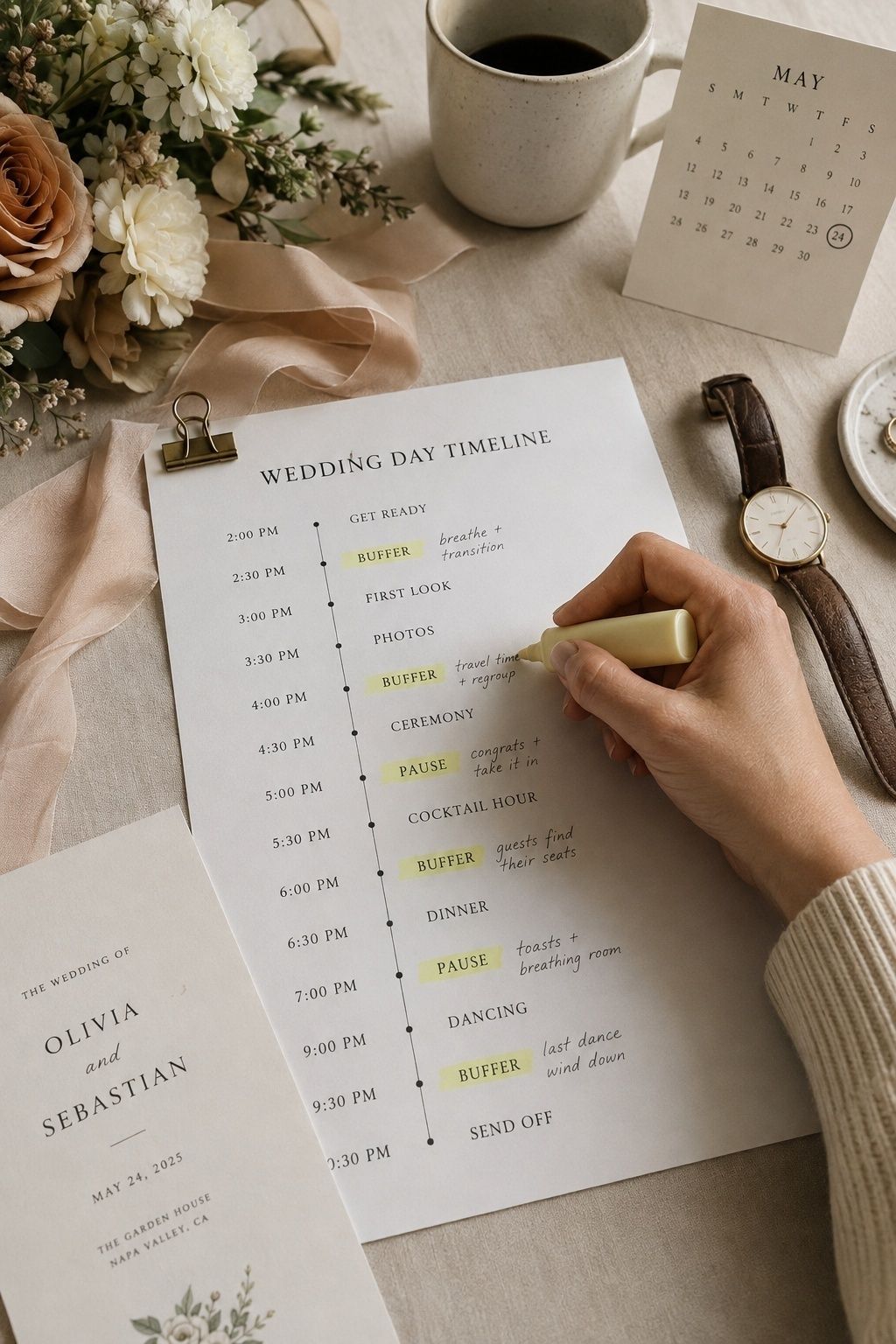
A wedding timeline can look perfect in a spreadsheet and still feel awful in real life. Ten minutes for family photos sounds efficient until someone parks far away, a grandparent needs a chair, the bouquet is missing, or the ceremony runs long. Dinner service may need more time than expected. Weather may slow transitions. Dresses, shoes, stairs, elevators, and greeting every guest all take minutes.
Small weddings are especially vulnerable to overpacked timelines because couples assume fewer guests automatically means faster everything. Sometimes it does. Other times, intimacy creates more conversation, more hugs, more meaningful toasts, and more moments that deserve room.
Do this instead: build buffer around every transition. Add time for getting dressed, travel, family photos, private vows, food service, speeches, sunset portraits, restroom breaks, and a quiet pause after the ceremony. If your schedule only works when every person moves perfectly, it is not a wedding timeline; it is wishful thinking.
Forgetting Food, Water, Seating, Staffing, Weather, And Restrooms
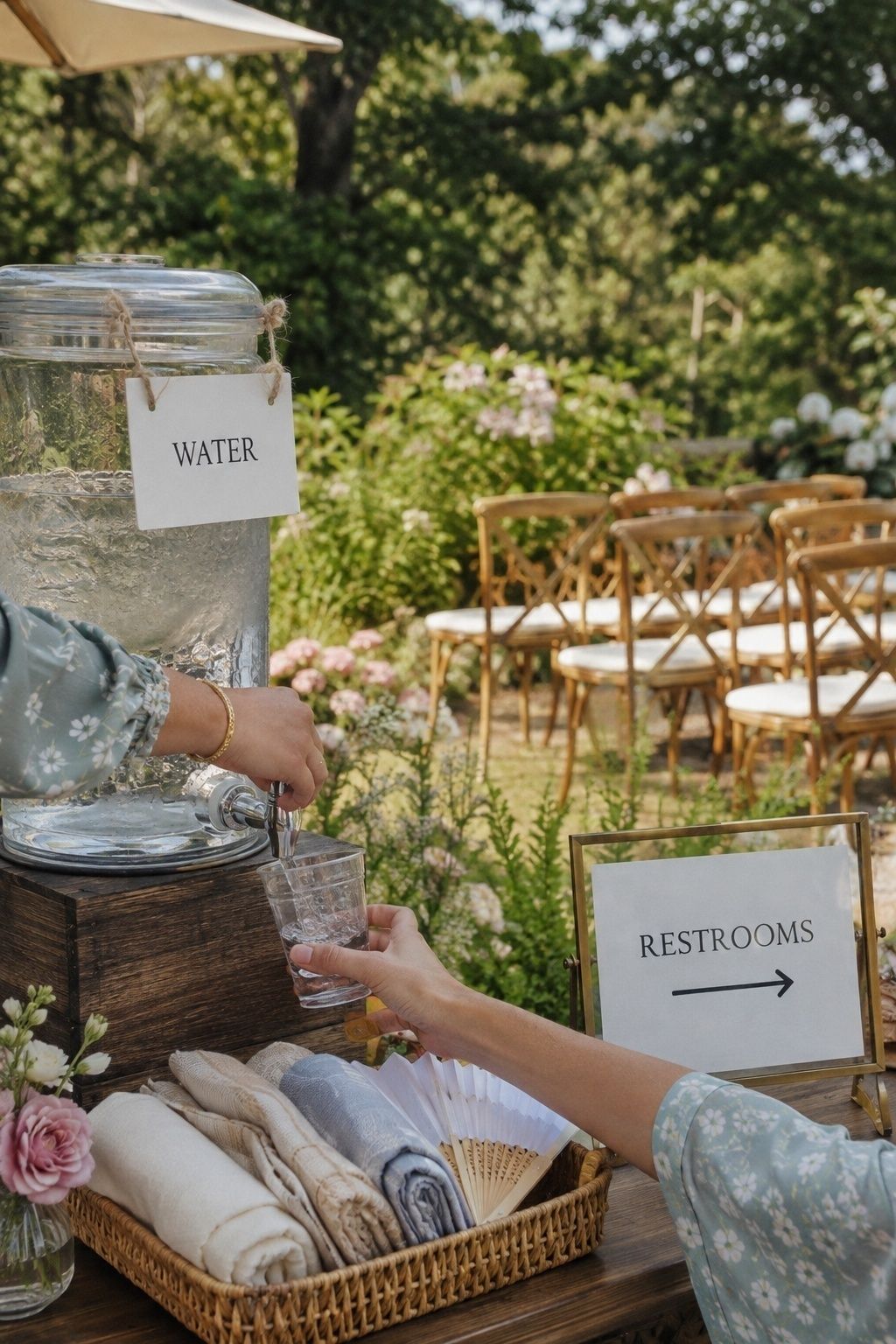
Guest comfort is where many wedding regrets begin. People remember being hungry, thirsty, too hot, too cold, unsure where to sit, stuck in a long line, or confused about where to go next. They may admire the flowers, but they feel the hospitality.
At an intimate wedding, these details matter even more because the event feels personal. If there are not enough chairs at cocktail hour, guests notice. If the ceremony is in full sun with no water nearby, guests notice. If one bartender is trying to serve everyone at once, the celebration begins with waiting instead of warmth.
Do this instead: walk through the day as a guest. Where do they park? Who greets them? Where do they put coats? Is water visible before the ceremony? Are older guests seated comfortably? Is there shade, heat, or rain coverage? Are restrooms easy to find? Is there enough service support for your guest count? Hospitality basics are not boring. They are the frame that lets beauty work.
Letting Family Pressure Quietly Rewrite The Day
Family pressure rarely arrives as one dramatic demand. It usually comes as a series of small additions: one cousin, one parent’s friend, one tradition, one formal moment, one speech, one opinion about the ceremony, one more table. Each request can feel easier to accept than to explain.
The trouble is that small weddings depend on clarity. When the guest list expands through guilt, the budget follows. When the ceremony fills with obligations, the couple’s voice gets quieter. When every family preference becomes a plan, the day may still look like a wedding, but it no longer feels like the one you meant to host.
Do this instead: decide together which parts of the wedding are open for input and which are not. Use kind, steady language: “We are keeping the ceremony small, but we would love your help choosing a reading” or “We cannot add more guests, but we are planning a relaxed dinner where everyone invited can feel included.” Boundaries are easier when they come before conflict.
Trying To Manage Problems Instead Of Experiencing The Wedding
One of the most painful things to avoid when planning a wedding is becoming the person everyone needs on the wedding day. If the caterer has a question, the photographer needs a family member, the rental team is missing a table, or a guest cannot find parking, those questions should not land on the couple.
This is not about needing a luxury planner. It is about having a point person with authority, context, and a written handoff. For a small wedding, that might be a day-of coordinator, venue manager with expanded duties, trusted friend, sibling, or hired assistant. The key is that the person knows the plan and is not also trying to be fully present as an emotional guest.
Do this instead: create a final handoff document with the timeline, vendor contacts, payment notes, setup list, photo groupings, transportation details, emergency kit location, and decision rules. Then give vendors that person’s number. Your wedding day should not require you to project-manage your own joy.
Choosing Details That Photograph Well But Do Not Help Anyone Feel Cared For
Beautiful details are part of the pleasure of planning. The mistake is letting the camera become the only guest you are hosting. A seating chart can be visually perfect and still send guests on an awkward hunt. A ceremony backdrop can be stunning and still place everyone in glaring sun. A tablescape can be exquisite and still leave no room for bread, wine, elbows, or conversation.
For intimate weddings, the best design choices usually have manners. They help people know where to go, sit comfortably, hear the vows, pass food, find their drink, and feel the couple’s care in the room. Beauty should deepen the experience, not compete with it.
Do this instead: before approving a detail, ask what it does for the day. Does it guide, comfort, honor, feed, light, soften, or simplify? If the only answer is that it will look good in a photo, decide whether it still deserves the money, space, and attention.
Missing A Private Moment To Notice What Is Happening
A wedding can be planned for months and then vanish in a bright blur. Couples often regret not taking a private minute together, not eating the food they chose, not looking around the room, or not letting the ceremony land before the next transition began.
This is one of the gentler wedding regrets to avoid because it does not require a bigger budget. It requires permission. A small wedding gives you a rare chance to notice your people in one place, hear the texture of the room, and feel the meaning of the promise without being rushed immediately into the next cue.
Do this instead: schedule two private pauses. Take five minutes right after the ceremony before family photos, and another five before dinner or the final dance. Ask your coordinator or point person to protect those moments. Nothing elaborate has to happen. Just look at each other and let the day be real.
Ending The Night Without A Clear Cleanup And Gift Plan

The end of the night is where tired decisions pile up. Cards, gifts, decor, leftover cake, borrowed vessels, rented linens, personal vows, signage, marriage license paperwork, guest books, and family heirlooms all need somewhere to go. If no one owns that plan, the couple may spend the last hour answering questions instead of leaving well.
Smaller weddings can make cleanup feel deceptively casual. Because the event is intimate, people assume someone will naturally handle it. But after speeches, dancing, drinks, and goodbyes, “someone” is often unclear, and important items can be misplaced.
Do this instead: assign a named person for cards and gifts, another for personal items, and another for vendor pickup if needed. Label boxes before the wedding. Confirm when rentals must be packed. Decide who takes the marriage license, bouquet, guest book, and leftovers. A graceful ending is planned long before the music stops.
FAQ
What Are The Biggest Wedding Mistakes To Avoid?
The biggest wedding mistakes to avoid are setting the guest list too late, spending without clear priorities, booking vendors with vague contracts, underbuilding the timeline, and forgetting guest comfort. For a small wedding, also protect family boundaries and appoint someone else to manage day-of questions.
What Do Couples Regret Most About Their Wedding?
Couples often regret feeling rushed, missing private moments, overspending on low-impact details, not protecting photography or food, and personally handling problems during the day. Many wedding regrets to avoid come down to presence: build a calmer timeline and hand off logistics before the celebration begins.
What Should You Not Do When Planning A Wedding?
Do not book major vendors before your guest count, budget, venue rules, and date are clear. Do not let inspiration photos outrank food, seating, weather, and staffing. Do not rely on verbal promises. Most importantly, do not plan a day that requires you to manage every problem yourself.
How Do You Avoid Wedding Mistakes On A Small Wedding Budget?
Start with the guest count, then choose three priorities before spending. Put money toward the parts guests and the couple will feel most: food, comfort, photography, ceremony, and a workable space. Keep decor focused, ask for written vendor details, and leave a small buffer for last-minute needs.
What Wedding Mistakes Make Guests Uncomfortable?
Guests feel uncomfortable when they are hungry, thirsty, too hot, too cold, unsure where to sit, stuck waiting, unable to hear, or confused about the schedule. At a small wedding, hospitality shows quickly, so plan water, seating, shade, restrooms, clear signage, and enough service help.
How Can Couples Avoid Wedding-Day Stress?
Couples can avoid wedding-day stress by creating a realistic timeline, confirming vendor details in writing, packing an emergency kit, and assigning a point person for questions. Share the final schedule before the wedding, then protect a few private pauses so the day feels lived, not managed.
Final Thoughts
The wedding mistakes to avoid are not about chasing a perfect day. They are about making decisions in the right order, protecting the people in the room, and giving yourselves enough support to be emotionally present. A small wedding can be simple, generous, and deeply personal when the budget, guest count, timeline, contracts, comfort plan, and handoff are clear. As your plans narrow into real decisions, keep returning to the budget, guest comfort, timeline, and vendor clarity that shape how to avoid wedding planning mistakes.
Last update on 2026-10-03 / Affiliate links / Images from Amazon Product Advertising API