

Intimate wedding invitation wording should tell each guest exactly what they are invited to attend while keeping the tone warm, personal, and calm. Name the event clearly, include the essential details, move sensitive explanations to a details card or website, and choose wording that makes guests feel welcomed rather than uncertain.
A small invitation list can make every word feel more important. You may be inviting guests to the ceremony and reception together, a private ceremony with a later celebration, a reception-only party, a family-only ceremony, or a small dinner reception where every seat is intentional.
The best invitation does not try to explain every private decision. It simply matches the actual event. Once the invitation, details card, RSVP, and website each have a clear job, your wording can feel gracious without becoming vague, apologetic, or overly ornate.
Recommended Wedding Products


You Might Also Like These Blog Posts
- Small Wedding Invitation Wording Ideas That Feel Clear And Personal
- Wedding Invitation Mistakes That Make Guests Guess
- Post Elopement Party Invitation Wording For Every Kind Of Celebration
- Reception After Private Ceremony Wording That Keeps Expectations Clear.
- Fall Wedding Invitation Ideas That Feel Like the Season Arrived
- Small Wedding Guest List Wording That Keeps Boundaries Kind
How To Use Intimate Wedding Invitation Wording Without Confusing Guests
The first decision is not whether the wording should sound formal, modern, romantic, or casual. The first decision is what the guest is actually attending. A guest invited to both vows and dinner needs different cues than someone invited to drinks after a private ceremony. A small reception invitation needs different wording than a family ceremony card.
Before choosing a phrase, write one private planning sentence: “These guests are invited to the ceremony and dinner,” “These guests are invited to the reception only,” or “These relatives are invited to the family ceremony.” That sentence does not have to appear on the invitation, but it should guide every line you send.
Start With The Event Type
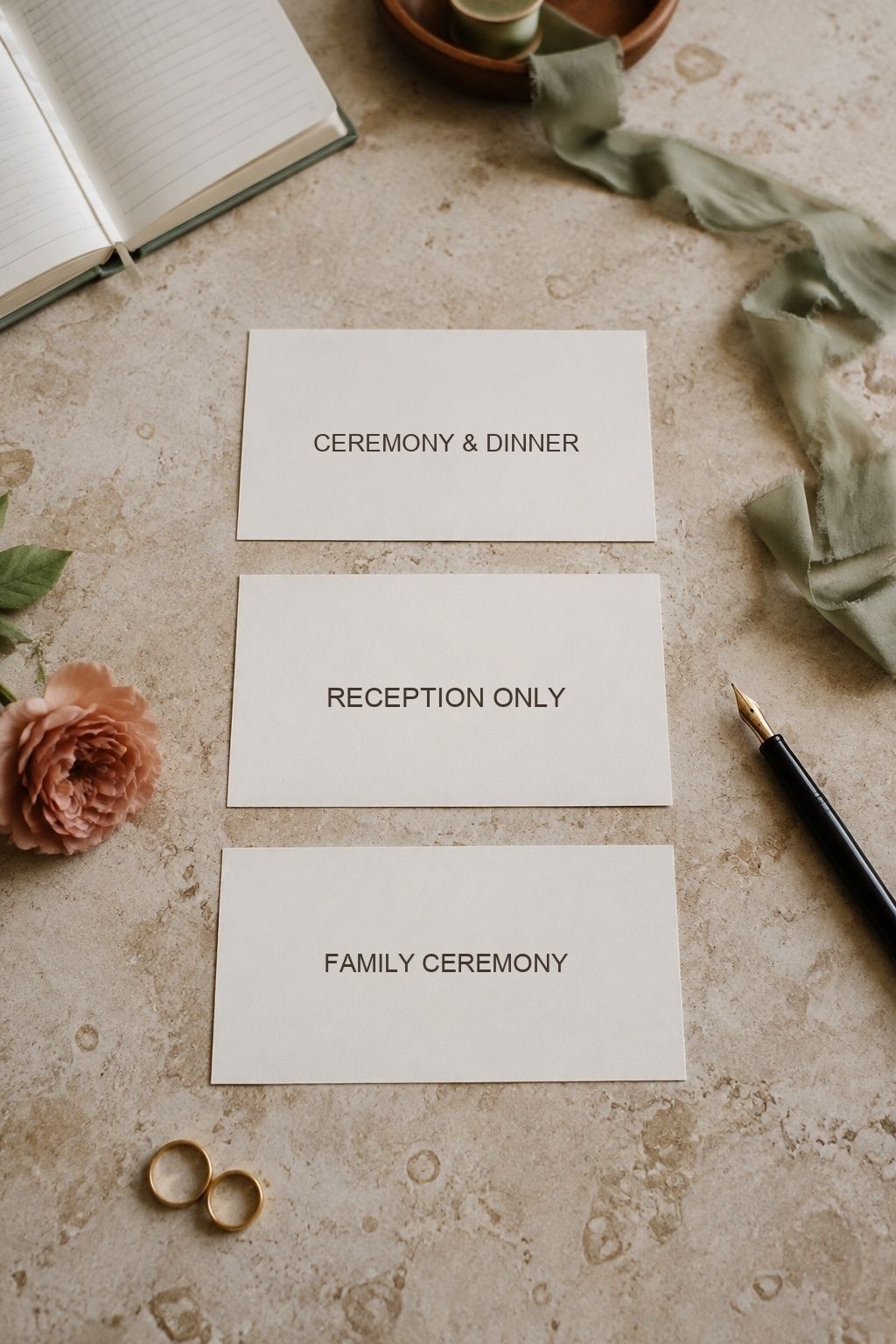
If the same guests are invited to the ceremony and reception, the main card can stay simple: couple names, invitation line, date, time, venue, and a reception note. You can add an intimacy cue such as “small ceremony and dinner” or “intimate celebration” if it helps guests understand the scale.
For small intimate wedding invitation wording, avoid language that sounds like everyone is invited to every part unless that is true. “Join us for our wedding celebration” may feel lovely, but if the ceremony is private and the invitation is for dinner only, the wording needs a clearer event name.
A clean full-day line might be: “Together with our families, we invite you to join us for an intimate ceremony and dinner.” For a smaller, couple-hosted version, try: “Please join us as we exchange vows and celebrate over dinner with our closest loved ones.”
Include The Main Invitation Essentials
The invitation should answer the basics before it tries to sound beautiful. Include the couple names, invitation request, date, time, venue name, city and state, and a clear note about what follows. If the celebration includes dinner, say dinner. If it is cocktails and dessert, say that instead.
Use the envelope and RSVP to clarify who is invited. Address the card to the exact guests, then make the response card match those names. If only two seats are reserved, your small wedding RSVP wording should not leave room for four names.
Details like parking, dress code, website URL, menu choices, hotel notes, and accessibility information usually belong somewhere else. The main card feels more gracious when it welcomes guests first and lets companion pieces handle the logistics.
Use Reception-Only Wording When Guests Are Not Attending The Ceremony
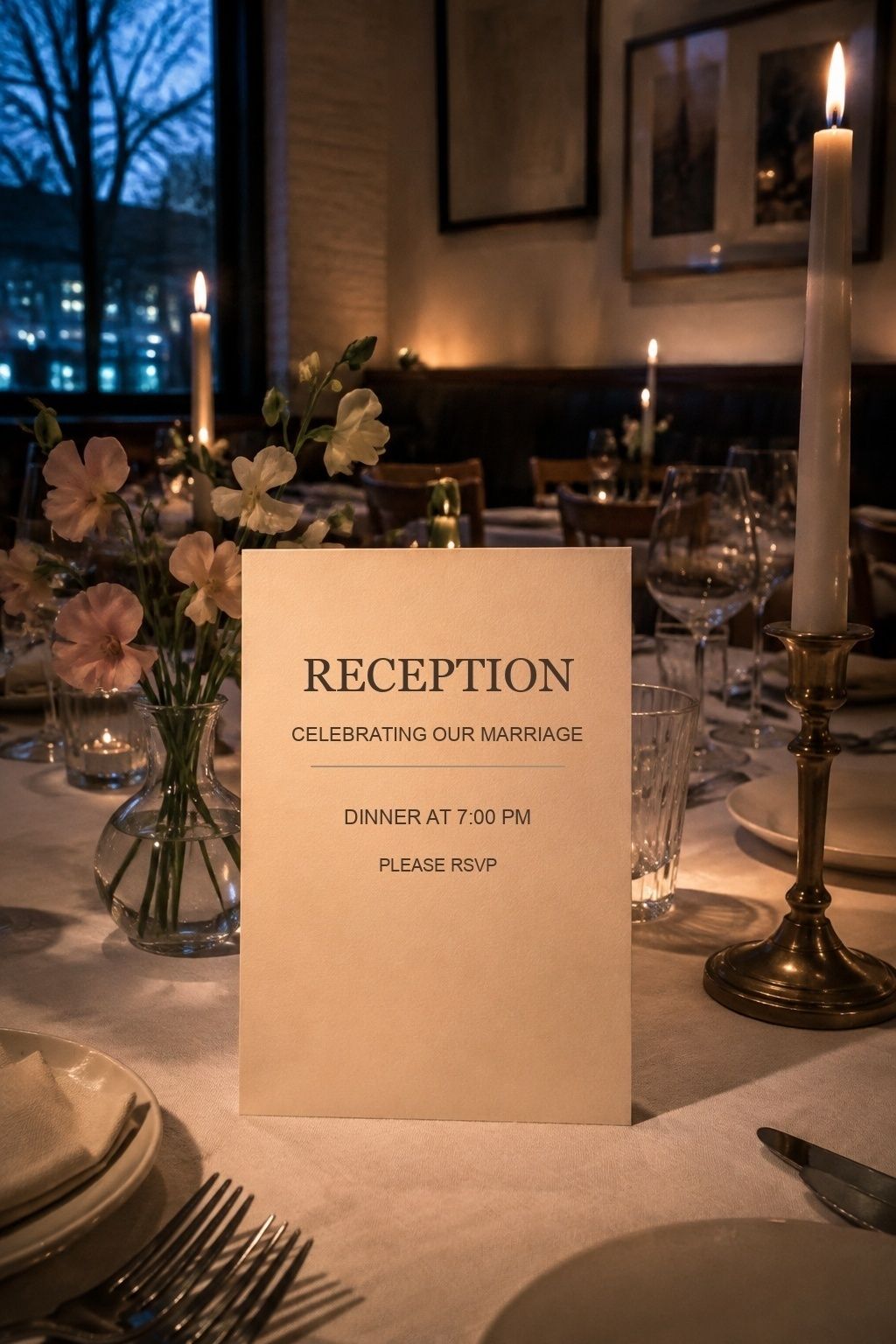
Reception only wedding invitation wording should make the invited event feel complete, not secondary. Center the celebration guests are actually attending: dinner, cocktails, dancing, brunch, a garden party, or a small reception in honor of your marriage.
For private ceremony invitation wording with a later reception, try wording like: “Following a private ceremony, we invite you to join us for dinner and celebration.” If the ceremony has already happened, a line such as “Please join us for a reception celebrating our marriage” is often clearer than implying vows are still ahead.
For small reception invitation wording, include the start time, location, meal style, and RSVP path. A guest should not have to text you to ask, “Am I coming for the ceremony too?” If that question is possible, the invitation needs one more plain sentence.
Handle Private Ceremony Context Gently
Private wedding ceremony wording works best when it is short and steady. You do not need to apologize for having a small ceremony, but you do need to prevent guests from arriving at the wrong moment or assuming they were left out by mistake.
If ceremony guests and reception guests are different groups, keep the ceremony card and reception card separate. A family ceremony invitation might say, “Please join us for a private family ceremony and dinner.” A reception invitation for the wider circle might say, “We would love to celebrate with you at an evening reception following our private ceremony.”
When the wording overlaps with family boundaries, keep your family-only wedding wording warm and brief so the invitation does not become a guest-list explanation.
Put Extra Details On The Details Card
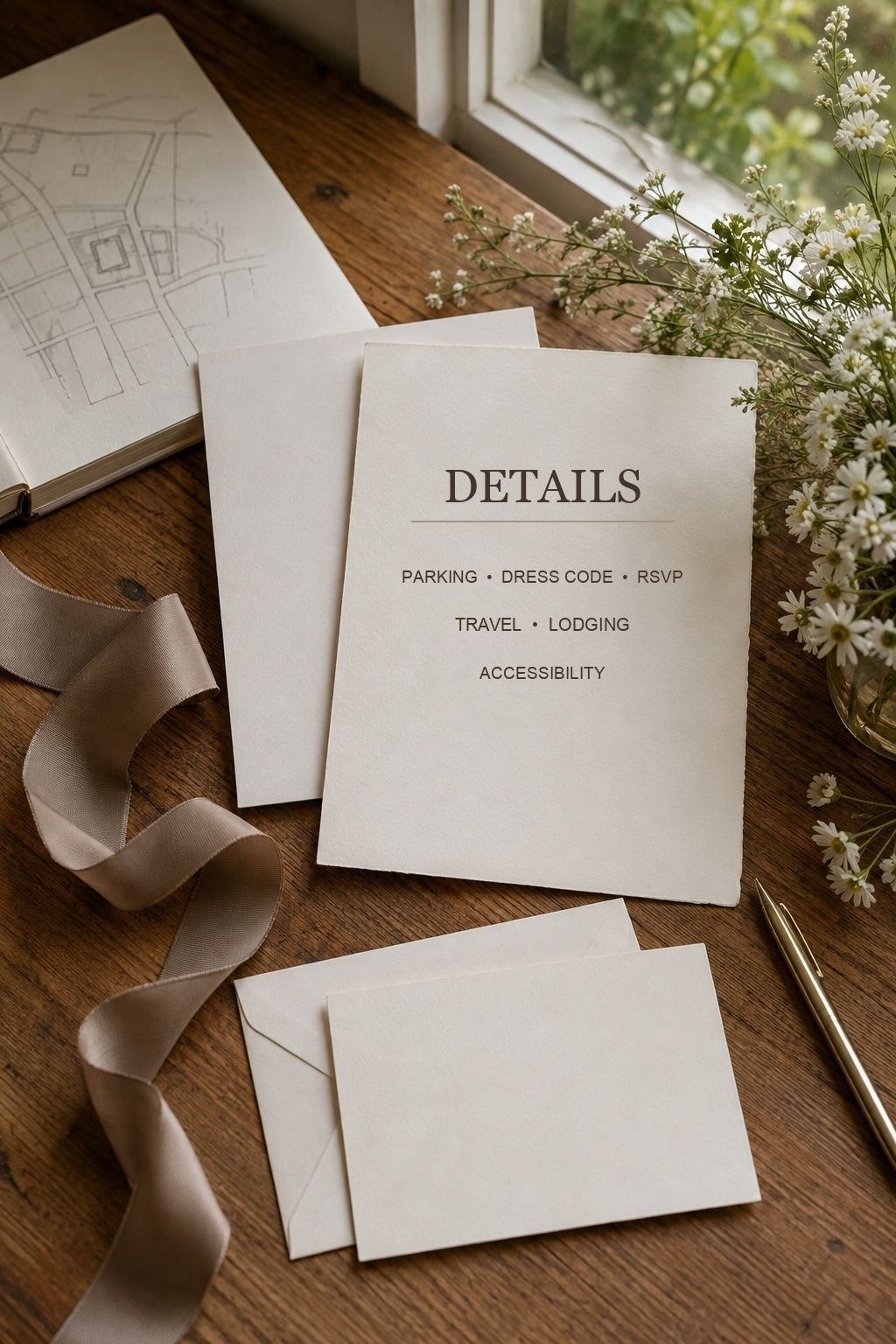
Intimate wedding details card wording should support the invitation without repeating it. Use this card for the wedding website, RSVP deadline, reception address, parking notes, dress code, travel details, lodging suggestions, outdoor comfort notes, and schedule items that guests genuinely need.
A details card is also the right place for one gentle intimacy note if invited guests need it. For example: “Our ceremony will be shared with a small group of loved ones, and we are grateful to celebrate with you at dinner afterward.” Keep it factual and kind. Avoid long explanations about budget, venue size, or family negotiations.
If the explanation needs more than a sentence or two, move it to the website. Thoughtful small wedding website wording gives longer notes about named guests, schedule clarity, lodging, registry details, and livestream access a calmer home.
Match The Tone To The Celebration
Intimate ceremony wording can be formal, romantic, casual, family-centered, faith-based, secular, or beautifully direct. Small does not automatically mean informal. A chapel ceremony for twenty guests may want traditional phrasing, while a backyard dinner for thirty may need something simpler and more relaxed.
For a formal tone, try: “Together with their families, Amelia and Rowan request the pleasure of your company at their marriage ceremony and intimate dinner.” For a relaxed tone, try: “We are getting married with a small circle of people we love. Please join us for vows, dinner, and a cozy evening together.”
The tone should prepare guests for the day they will experience. If your celebration is a seated dinner, say so. If it is a casual dessert reception, say that. Clear wording is part of hospitality, especially when the wedding is small enough for each guest to notice the details.
Make Dinner Invitations Specific

A dinner-centered intimate wedding needs wording that tells guests the meal is part of the celebration, not an afterthought. “Dinner to follow” is enough for many full-day invitations. For a restaurant room, private home, or long-table reception, add more shape.
You might write: “Please join us for a private ceremony followed by a candlelit dinner.” For a reception-only dinner, try: “We exchanged vows privately and would love to celebrate with you over dinner.” For a tiny restaurant gathering, try: “Join us for an intimate dinner reception in honor of our marriage.”
Food wording matters because guests plan around it. If dinner is served, guests arrive differently than they would for cake and champagne. If the reception is small and seated, collect RSVPs early enough to confirm the table, menu, and any meal choices.
Use Named Guests To Protect A Small Guest List

Small weddings leave less room for assumption. The outer envelope, inner envelope, RSVP card, and online RSVP should all name the invited guests in the same way. If a couple, child, or plus-one is included, make that clear. If they are not included, do not use broad household wording that suggests otherwise.
A line such as “We have reserved two seats in your honor” can be clear when the guest list is tight. For especially limited gatherings, the website can say, “Because our wedding is very small, our celebration is limited to the guests named on each invitation.”
If the same boundary affects several cards, consistent small wedding invitation wording can carry the full suite without adding a defensive note to the main card.
Clarify Livestream Or Separate Attendance Details
Some intimate weddings invite a few people in person and include others by livestream. Keep those invitations separate. An in-person guest needs arrival time, address, and RSVP details. A livestream guest needs the link timing, platform, time zone, and any note about whether the stream is ceremony only.
Do not combine a livestream invitation with a reception invitation unless the guest is truly invited to both. If someone is invited to watch the ceremony online and attend a later party, say both pieces clearly: “We invite you to join our ceremony by livestream, then celebrate with us at a reception this fall.”
For remote guests, clear livestream wording keeps the online invitation warm while making the practical details easy to follow.
Proof Every Piece Like A Guest

After the wording sounds right, test it for function. A guest should know who is invited, whether they may bring anyone, what event they are attending, when to arrive, where to go, what happens afterward, and how to reply.
Read the invitation suite in order: envelope, invitation, details card, RSVP card, website, and any follow-up message. The pieces should feel like one steady host. If the invitation says “celebration,” the details card says “reception,” and the website says “party after our private vows,” choose one event description and make it consistent.
Also proof for tone. If the card sounds like an apology, simplify. If it sounds poetic but guests might not know where to show up, make it plainer. Intimate does not mean vague. It means personal and clear.
Avoid Common Wording Mistakes
The most common mistake is trying to soften the wording until the event becomes unclear. “Celebrate with us” may be enough for a full reception, but it may not explain whether guests are invited to vows, dinner, dancing, or an after-party. Add the event type before guests have to ask.
The second mistake is overexplaining. Avoid lines about not being able to invite everyone, only choosing the most important people, or hoping no one is offended. Those phrases can make guests feel ranked. A calmer note is usually better: “We are sharing the ceremony privately and celebrating with loved ones at dinner afterward.”
Finally, do not hide practical boundaries. If the reception is adults only, if the ceremony is family only, or if the invitation is limited to named guests, place that information where guests can find it before they RSVP.
FAQ
How Do You Word An Intimate Wedding Invitation?
Word an intimate wedding invitation around the exact event guests are attending. Include the couple names, invitation line, date, time, location, reception or dinner note, and RSVP direction. Add one warm intimacy cue if it helps, such as “small ceremony” or “closest loved ones,” but keep the practical details unmistakable.
What Do You Write For A Private Ceremony Invitation?
For a private ceremony invitation, write only to the people invited to that ceremony. A simple line such as “Please join us for a private family ceremony and dinner” can work well. If other guests are invited to a later reception, send separate wording that names the reception as their event.
How Do You Invite Guests To A Reception After A Small Ceremony?
Invite guests by centering the reception, not the ceremony they are not attending. Say that you exchanged vows privately or will share a private ceremony, then invite them to dinner, cocktails, brunch, or a reception celebrating your marriage. Include the start time, location, RSVP deadline, and meal or celebration style.
Should The Invitation Mention The Ceremony Is Intimate?
Mention that the ceremony is intimate only if it helps guests understand the event. For guests attending both ceremony and reception, “intimate ceremony and dinner” can set the tone beautifully. For guests attending the reception only, be more direct: note that the ceremony is private and clearly name the celebration they are invited to.
What Details Belong On An Intimate Wedding Details Card?
An intimate wedding details card can include the wedding website, RSVP deadline, reception address, parking, dress code, travel notes, lodging, menu choices, accessibility details, and outdoor comfort information. It can also hold one short note about limited seating or a private ceremony if that note helps guests understand their invitation.
How Do You Avoid Confusing Guests About What They Are Invited To?
Use separate wording for separate guest groups, name the event clearly, and make the RSVP match the invitation. Avoid vague phrases when guests are invited to only part of the wedding. Before sending, ask whether a guest can answer who is invited, what they are attending, when to arrive, and how to respond.
Final Thoughts
An intimate invitation does not need to carry the whole story of your guest list. It needs to welcome the right people to the right part of the celebration with enough warmth to feel personal and enough clarity to feel considerate.
Choose the event name first, then build the wording around it: ceremony and dinner, private vows with a later reception, a family ceremony, or a small dinner celebration. When the ceremony and reception are separate, thoughtful reception-only invitation wording keeps the invitation gracious, specific, and easy for every guest to understand.
Last update on 2026-10-03 / Affiliate links / Images from Amazon Product Advertising API