

Wedding dress alterations mistakes usually happen when timing, shoes, undergarments, movement, bustle practice, pickup, steaming, and day-of support are treated like tiny details. The safer plan is to make every fitting answer one question: will this dress let you walk, sit, hug, eat, dance, and feel like yourself?
Wedding dress alterations mistakes feel especially stressful because they touch the part of the day that lives closest to your body. A gown might look beautiful on a hanger and still pull at the ribs, catch on a stair, slip at the neckline, drag at the hem, or need a bustle nobody feels confident fastening after portraits.
For a small or intimate wedding, the goal is not a dress that only photographs well for ten still minutes. It is a dress that supports the real day: getting ready, vows, hugs, dinner, doorway photos, porch steps, candlelit dancing, bathroom breaks, and one last walk back to the room when your feet are tired and your heart is full.
Recommended Wedding Products


You Might Also Like These Blog Posts
- Wedding Photography Mistakes That Steal the Feeling From the Day
- Wedding Timeline Mistakes That Make the Day Feel Rushed
- Wedding Dress With Bolero Ideas for Coverage That Feels Chosen
- Wedding Hair And Makeup Mistakes That Make the Morning Feel Rushed
- Wedding Rehearsal Mistakes That Make The Ceremony Feel Unsteady
- Vintage Vera Wang Wedding Dress Ideas Worth the Hunt
Wedding Dress Alterations Mistakes That Steal Comfort From the Day
A strong alterations plan is quiet. It does not ask the dress to become a completely different gown or ask your body to behave on command. It gives your seamstress enough information, gives you enough time to speak honestly, and gives your wedding morning a little backup if a hook loosens or a hem catches on gravel.
The most common bridal alterations mistakes are not dramatic disasters. They are small planning gaps that slowly transfer attention away from the ceremony, the meal, and the people you love. A strap rubs. A train drags. The bodice feels secure until you hug your grandmother. The bustle works in the fitting room, then becomes a mystery when the reception begins.
Think of alterations as a dress rehearsal for movement, not a last-minute attempt to chase perfection. Your gown should feel beautiful, yes, but it should also feel cooperative. That is the line this checklist is here to protect.
Starting Alterations Too Late For The Dress You Bought
Wedding dress timeline mistakes often begin before the first pin goes in. Couples wait for the gown to arrive, assume the first available appointment will work, and forget that bridal tailoring depends on the dress construction, the season, the seamstress’s calendar, and how many rounds the gown actually needs.
Start the conversation as soon as you have a real delivery window, then ask the tailor what spacing makes sense for your fabric, hem, bodice, bustle, sleeves, beading, or train. A simple dress might move quickly. A structured gown with lace, boning, layers, or a long train deserves more breathing room. The mistake is not having a specific number of fittings. The mistake is leaving no margin for the dress you actually chose.
Assuming A Dress That Almost Fits Does Not Need Tailoring
A dress that zips is not always a dress that is ready. Bridal sizing is built around standard measurements, while real bodies and real wedding days ask for more nuance. The hem may need to meet your shoe height. Straps may need to hold without digging. The bodice may need support while you breathe, sit, and reach for a toast.
This is where wedding dress fitting mistakes become subtle. If the gown looks close enough, it is tempting to save the appointment for later or skip a second opinion. Instead, put the dress on and move like the wedding is already happening. Wedding dress hem mistakes rarely announce themselves while you stand still, so notice whether you step on the front hem or feel the waist folding when you sit.
Bringing The Wrong Shoes, Undergarments, Or Shapewear To Fittings
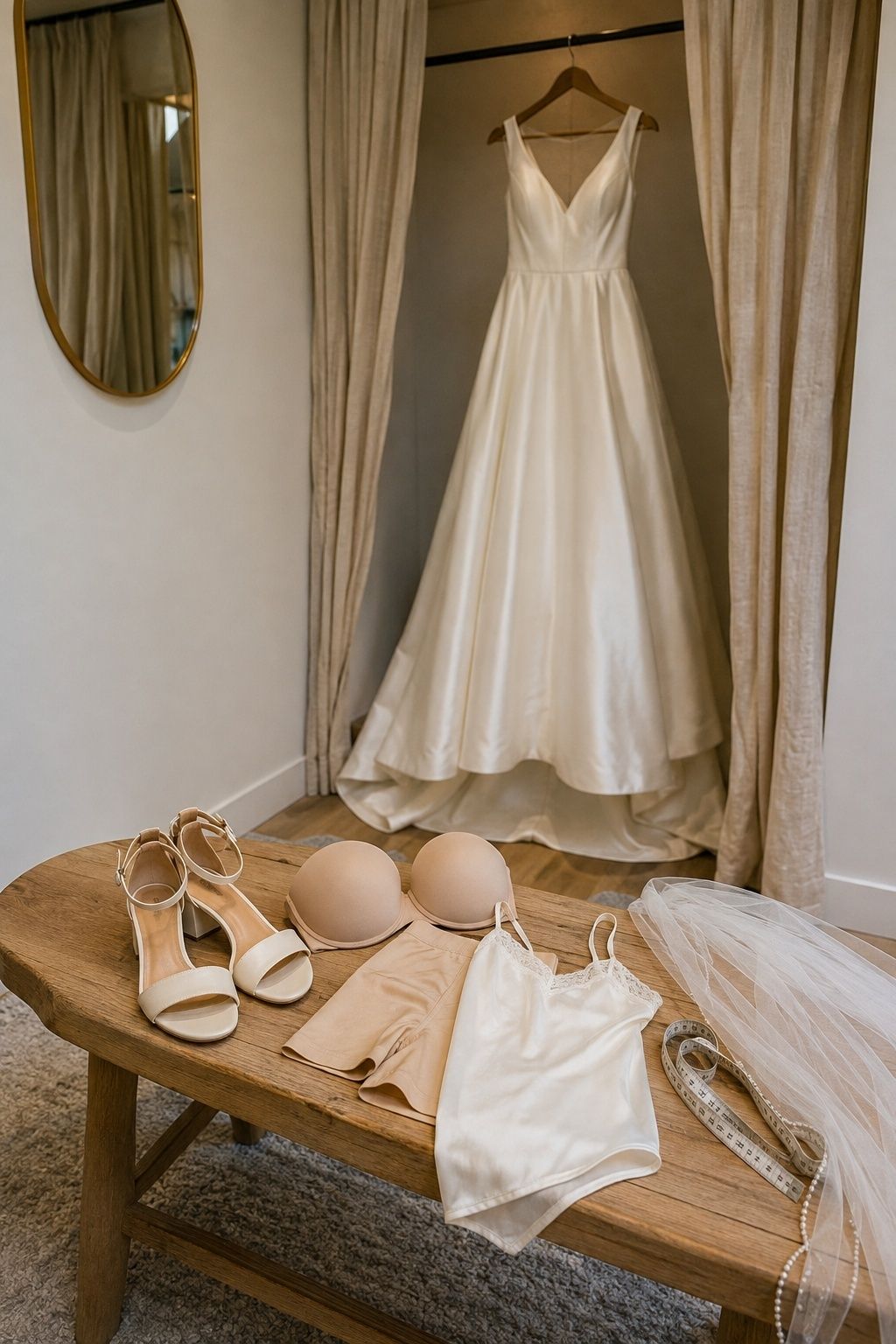
Your shoes, bra, shapewear, slip, and any meaningful accessories are not extras at the fitting. They are part of the fit. Change the heel height and the hem changes. Change the bra and the neckline may change. Change the shapewear and the bodice may sit differently against your waist, hips, or back.
Choose the items you realistically expect to wear, then bring them to each appointment once they are decided. If you are not sure about a piece, say so before the tailor pins the dress. Comfort matters as much as appearance here. Wedding dress undergarments should support the gown without leaving you unable to breathe through dinner or relax during portraits.
Misreading The First Fitting As The Final Fit
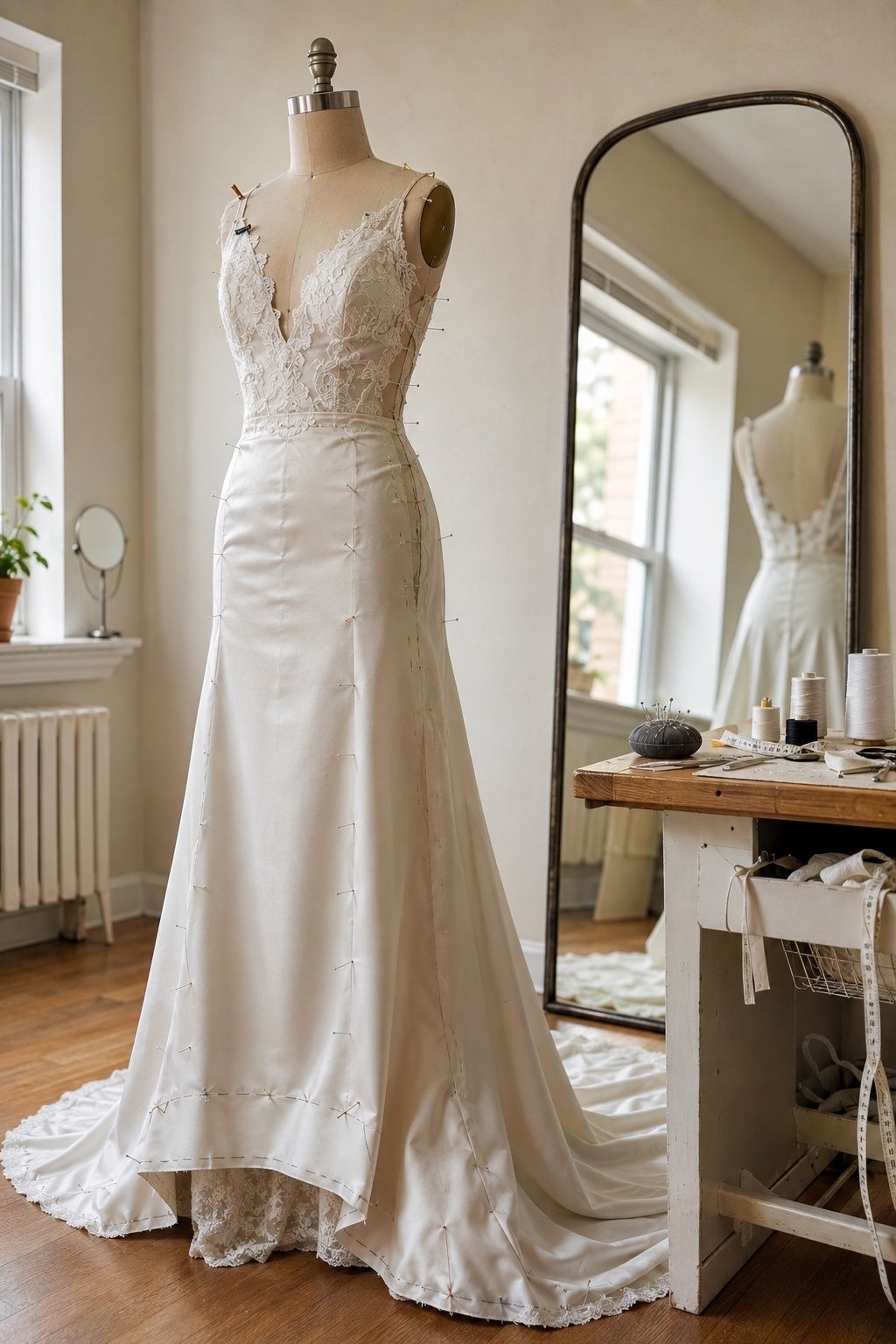
The first fitting often feels disorienting. There may be pins, bunching fabric, uneven layers, a hem that looks chaotic, or a bodice that seems less polished than you hoped. That does not automatically mean the dress is wrong. Often, the first appointment is a structural map: where the gown needs lifting, releasing, shortening, securing, or balancing.
Ask what each pinned area is meant to solve. Ask which parts will change by the next fitting and which parts are still being evaluated. This keeps wedding dress regret from growing around an unfinished stage. You deserve clarity, but the dress also deserves to be judged at the right point in the process.
Inviting Too Many Opinions Into The Fitting Room
A fitting room is not the ideal place for a committee. Too many voices turn practical tailoring questions into emotional noise: one person wants more sparkle, another worries about the neckline, another remembers a different dress, and suddenly you are trying to please the room instead of listening to your body.
Bring one or two people who understand your taste and will notice practical issues without taking over. The best support person watches how you move, hears when you say something feels tight, and remembers that the wedding dress final fitting is partly about confidence. You should leave with fewer doubts, not a new set of opinions to manage.
Staying Quiet About Pulling, Digging, Slipping, Or Restricted Movement
Your body gives the tailor information the gown alone never shows. If a seam pulls when you inhale, if straps dig, if the neckline slips when you lift your arms, or if the skirt keeps catching between your knees, say it while the dress is on. Those comments are not complaints. They are essential fit information.
This is also where the day becomes real. Practice walking at ceremony pace, turning for photos, bending slightly to hug a child, sitting for dinner, and taking a few dance steps. A dress that only works while standing still may create a wedding wardrobe malfunction once the day begins moving around you.
Trying To Rebuild The Dress Instead Of Refining It
Alterations are powerful, but they are not magic. A skilled specialist may reshape a neckline, adjust a bodice, refine straps, shorten a hem, add a bustle, or improve support. Major structural redesigns are different. Changing the whole silhouette, forcing a gown several sizes beyond its construction, or rebuilding heavy lace may cost more, take longer, and still leave you uneasy.
Before asking for a transformation, ask what is realistic for the fabric, seams, lining, boning, beading, and train. Personal touches are lovely when they respect the gown. The mistake is using alterations to rescue a dress that never matched the wedding, the body, or the movement you needed in the first place.
Skipping Sitting, Walking, Hugging, Dancing, Stairs, And Bathroom Tests
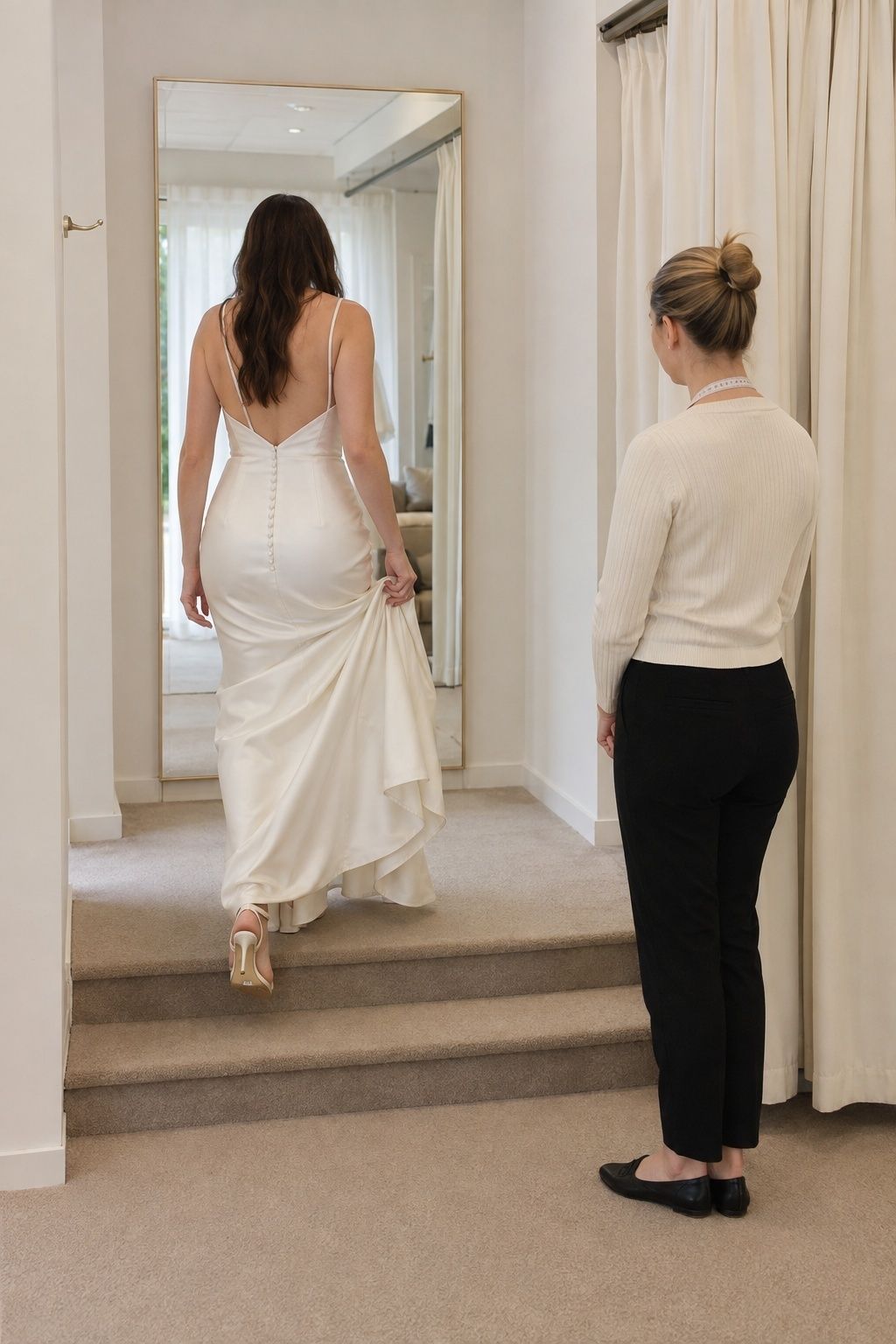
A wedding dress has to do ordinary things beautifully. You may walk on grass, climb stone steps, sit for a plated dinner, lean across a sweetheart table, hug guests, crouch for a flower girl photo, or dance in a room smaller than a ballroom. These are not awkward tests. They are the day.
During a fitting, move slowly enough to notice where the dress resists you. Does the hem skim cleanly? Does the bodice stay secure when you sit? Do your arms lift comfortably for a hug? Does the train turn without twisting? Small weddings often include more close contact and less distance between moments, so comfort has very little room to hide.
Forgetting The Bustle Lesson And Who Will Do It
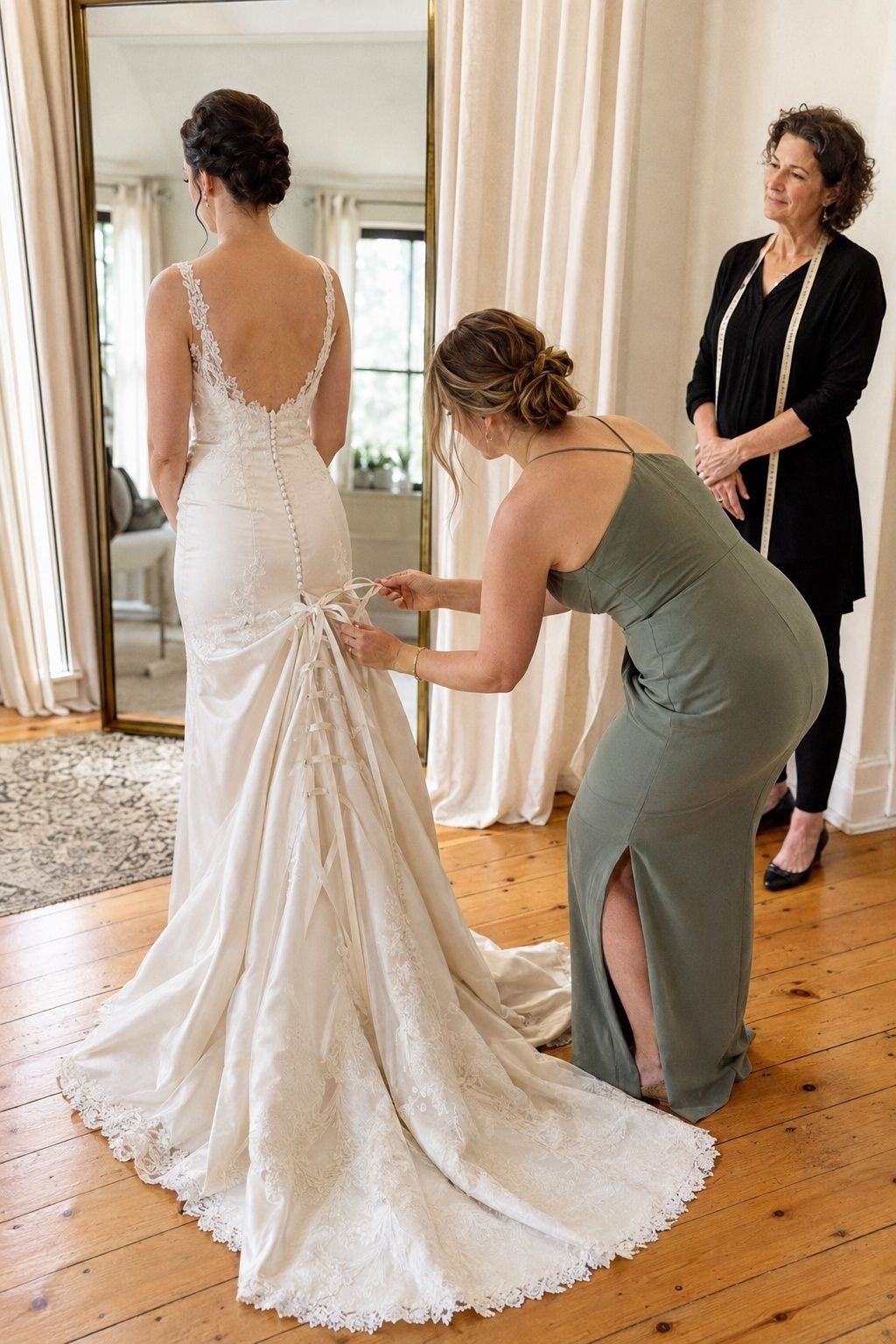
Wedding dress bustle mistakes are famous for a reason. The bustle may look obvious when the seamstress demonstrates it under bright fitting-room lights, then become baffling in a dim reception corner while guests are waiting and the photographer is trying to move everyone toward dinner.
Choose the person who will actually be present when the bustle needs fastening, and invite that person to practice it before the wedding. Photos, a short phone video, and a small detail about hidden loops or color-coded ribbons are worth the tiny effort. If the gown has a long train, the bustle plan deserves the same seriousness as the bouquet handoff.
Ignoring Final Pickup, Steaming, Transport, And Storage
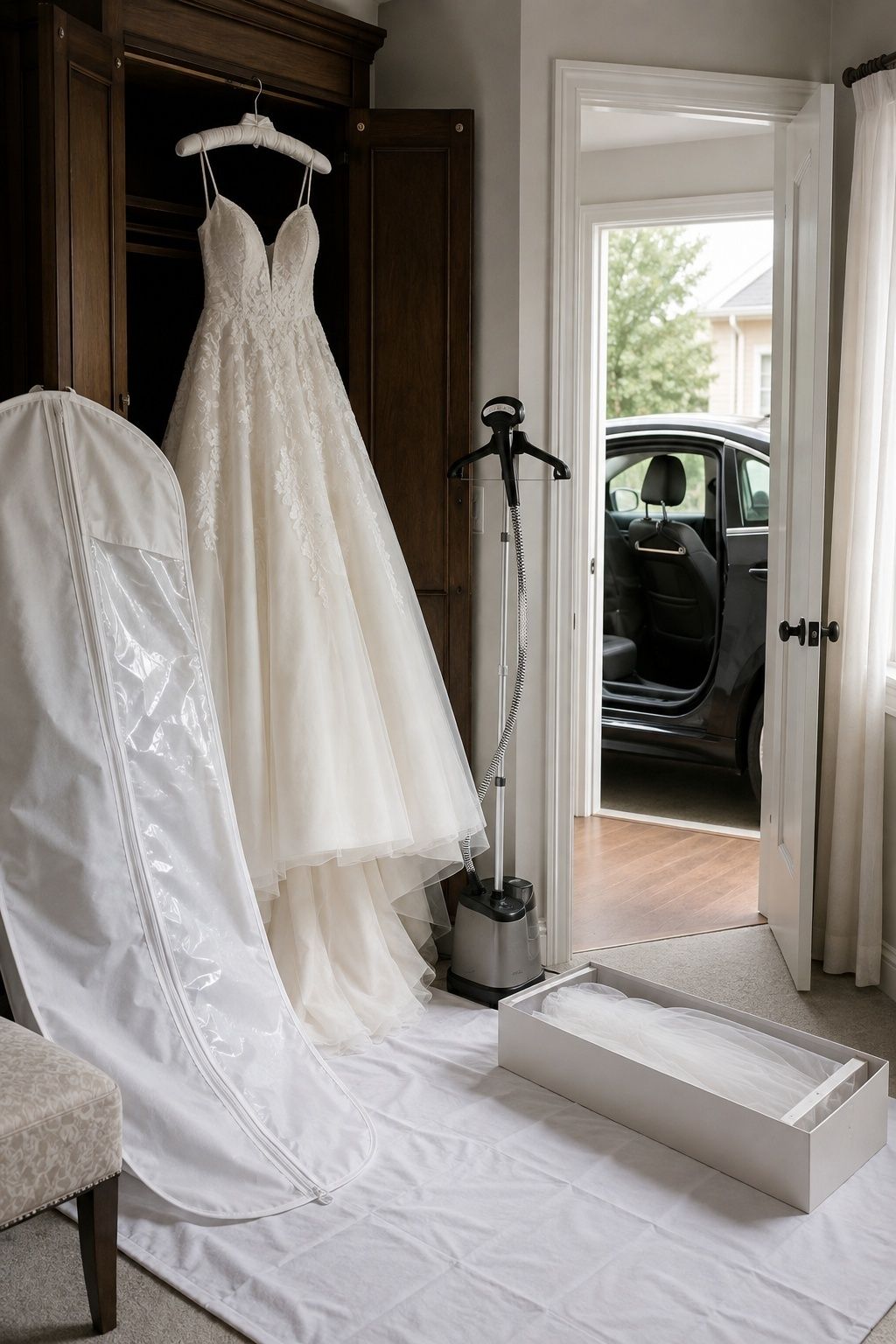
The dress is not finished the moment the last stitch is finished. It still has to leave the shop, travel safely, hang correctly, steam properly, and arrive where you are getting dressed. Wedding dress steaming, garment-bag space, car layout, and storage height all matter more once a gown has a full skirt, train, veil, or delicate surface details.
Ask how the dress should be transported and whether it will be pressed or steamed before pickup. Confirm who brings it to the venue or getting-ready space. Make sure there is somewhere high and clean to hang it. A beautiful final fit deserves a practical route to the aisle.
Packing No Plan For Stains, Zippers, Straps, Tears, Or Hems
Even a perfectly altered dress may need tiny day-of care. A button loosens, a strap needs securing, makeup brushes the lining, a hem catches, or the train collects a little dust before portraits. These moments should not become the story of the wedding morning.
Pack a small kit or assign it to someone steady: fashion tape, safety pins, a needle and thread, stain wipes, a lint roller, clear elastics, and anything your seamstress recommends for your specific gown. Keep the plan calm and simple. The goal is not expecting trouble. It is giving the dress a quiet safety net.
A Final Dress Check Before The Wedding Morning
Before the wedding week begins, run one final dress check on paper. Confirm the fit, final pickup time, steaming plan, garment bag, transport, hanger, getting-ready location, bustle helper, emergency kit, and any tailor details. Then match those details to the real day: ceremony aisle, photo locations, dinner seating, bathroom access, weather, and shoe choice.
This is not about creating another task list to worry over. It is about releasing the dress from the center of your attention. When the gown has been fitted for your body and your actual wedding movement, it becomes what it was supposed to be all along: part of the day, not the thing running it.
FAQ
What Are Common Wedding Dress Alterations Mistakes?
Common wedding dress alterations mistakes include starting too late, bringing different shoes or undergarments to fittings, staying quiet about discomfort, skipping movement tests, forgetting the bustle lesson, expecting a major redesign, and failing to plan pickup, steaming, transport, and day-of dress support.
When Should Wedding Dress Alterations Start?
Wedding dress alterations should start early enough for your gown’s construction, your wedding date, your tailor’s calendar, and any follow-up adjustments. Ask for a timing plan as soon as the dress arrival is clear, especially if the gown has lace, beading, boning, sleeves, a long train, or a complicated hem.
How Many Wedding Dress Fittings Do You Need?
The number of wedding dress fittings depends on the gown, the alterations, and the tailor. Some dresses need only a few careful check-ins, while detailed gowns may need more. Instead of chasing a universal count, ask what each appointment should confirm: structure, hem, bodice, movement, bustle, and final pickup readiness.
What Should You Bring To A Dress Fitting?
Bring the shoes or heel height you expect to wear, your wedding undergarments, shapewear or slip, veil or key accessories if they affect the look, and a trusted person for bustle practice if the gown has a train. Bring honest feedback too, because fit depends on what you feel while wearing the dress.
How Do You Avoid A Wedding Wardrobe Malfunction?
Avoid a wedding wardrobe malfunction by testing the dress while walking, sitting, hugging, dancing, climbing steps, and using the restroom. Confirm the bustle helper, pack a small emergency kit, ask the tailor about fragile closures, and keep steaming, transport, and storage plans clear before the wedding morning.
What If Your Dress Does Not Fit Before The Wedding?
If your dress does not fit before the wedding, contact your tailor or bridal shop right away and explain exactly what feels wrong. Avoid forcing the dress, cutting tags, changing undergarments repeatedly, or trying risky fixes alone. A specialist will tell you what is realistic and what needs a backup plan.
Who Should Know How To Bustle The Wedding Dress?
The person who will be nearby after the ceremony should know how to bustle the wedding dress. That might be a maid of honor, sibling, parent, planner, or trusted friend. Have them watch the tailor, take photos or a short video, and practice once before the reception.
Final Thoughts
The best alterations do not make you think about the dress more. They make you think about it less. You step forward without checking the hem. You sit down without holding your breath. You hug people without gripping the neckline. You move through the reception without wondering whether the bustle will survive the next song.
As you protect the final fitting, pickup, steaming, transport, and bustle handoff, keep the plan gentle but specific, trust your tailor’s realistic limits, and give your wedding dress alterations mistakes checklist enough time before the wedding morning arrives. Timing matters once your tailor has matched the gown, your shoes, and your real movement to the date.
Last update on 2026-10-03 / Affiliate links / Images from Amazon Product Advertising API