

To plan a wedding when families disagree, get aligned as a couple before you negotiate with anyone else. Choose your non-negotiables, define where family input is welcome, clarify money and guest-list limits, route each family through their own partner, and plan seating, photos, speeches, and day-of buffers so old tension has fewer chances to take over.
Family disagreement turns wedding planning strangely lonely. You are supposed to be choosing a ceremony, a guest list, a meal, and a day that begins your marriage, but suddenly everyone has an opinion about money, relatives, religion, alcohol, photos, traditions, and who should sit where.
The hard part is that many of those opinions come from people you love. A parent feels scared of looking rude to relatives. An in-law feels left out. Divorced parents often carry years of tension into one room. Extended family sometimes treats the wedding as a reunion. None of that makes the couple less entitled to choose a wedding that fits their actual life.
If you are trying to stay kind without handing over the whole day, start with the team at the center. The aim is not to win every argument. The aim is to become steadier together, define where input has a place, and design the wedding so fewer conflicts need to be solved in public.
Recommended Wedding Products


You Might Also Like These Blog Posts
- How To Plan A Wedding Without Pleasing Everyone And Still Feel Kind
- How To Set Wedding Boundaries With Family Before Your Guest List Learns To Multiply
- How To Choose Wedding Priorities As A Couple Before Everyone Else Gets A Vote
- How To Split Wedding Costs Between Families Without Keeping Score
- How To Plan A Wedding Around Your Values Without Losing The Plot
- How To Plan A Wedding In One Year Without Turning It Into A Full-Time Job
How To Plan A Wedding When Families Disagree
The best way to plan a wedding when families disagree is to align as a couple before you respond publicly as a family system. Decide what matters most, what money actually means, who gets input, which decisions are closed, and how each side of the family will receive updates. Then build the guest list, seating, photos, traditions, and day-of roles around clarity instead of hope.
Hope is lovely, but it is a weak planning strategy for family conflict. Hoping everyone will behave, hoping parents will stop pushing, hoping in-laws will understand, or hoping divorced relatives will naturally avoid each other creates too many places for disappointment. Clarity is calmer. It gives people fewer openings to misread silence as permission.
For small and intimate weddings, family disagreement often feels even more intense because every seat, role, toast, and tradition is visible. There is less room to hide tension inside a crowd. That does not mean you need a bigger wedding. It means your plan needs cleaner boundaries and warmer communication.
Start with a simple rule: the couple owns the wedding. Family often offers money, history, hands-on time, traditions, names, and emotion, but the vows center on the two people getting married. When that is clear, generosity does not require becoming available for every demand.
A practical conflict plan has four layers. First, the couple decides together. Second, family input gets sorted into clear lanes. Third, each partner communicates with their own side when possible. Fourth, the wedding day includes seating, photo, alcohol, speech, and role decisions that reduce predictable friction.
This approach does not erase disappointment. Some relatives will still wish you chose differently. That is allowed. A healthy wedding plan does not prevent every feeling; it prevents other people’s feelings from quietly becoming the couple’s burden at every turn.
Get Aligned As A Couple First
Family disagreement becomes more powerful when the couple is still negotiating in front of everyone. Before you answer parents, siblings, stepfamilies, grandparents, or future in-laws, sit down together and choose the center of the wedding.
Name The Wedding You Are Actually Planning
Describe the wedding in practical, emotional language. Not the fantasy version, not the family-approved version, and not the version that pleases every branch of the tree. Say the real plan: a 45-person restaurant wedding, a church ceremony with a casual garden dinner, a courthouse ceremony followed by a family meal, a sober brunch reception, or a small destination weekend.
A named wedding is easier to defend because the limits make sense together. If the wedding is a small dinner, the guest list has to stay tight. If the ceremony is secular, religious readings are not simply missing; they are outside the chosen shape. If the budget is self-funded, expensive traditions need to earn their place.
Choose Your Shared Non-Negotiables

Choose the few decisions that protect the marriage, the budget, and the emotional feel of the day. The list often includes guest count, ceremony tone, spending cap, alcohol policy, parent roles, cultural rituals, no open mic, no extra invitations, or no separate family tables if that would create drama.
Keep the list short enough to remember under pressure. A wedding with thirty non-negotiables becomes brittle. A wedding with four or five clear commitments gives the couple something sturdy to return to when relatives push from different directions.
Decide Where Input Is Welcome
Family input lands best when it has edges. Invite relatives into address gathering, family photo combinations, travel details, rehearsal dinner menu ideas, accessibility details, heirloom options, or a short list of relatives who need extra care. Avoid asking open-ended questions about the entire wedding unless you truly want the entire wedding weighed in on.
Choose language that separates input from authority. Try: We would love your thoughts on family photo groupings, and we will make the final schedule with the photographer. Or: Please send the two traditions that matter most to you, and we will decide what fits the ceremony.
Agree On The Communication Chain
In most families, each partner should speak to their own relatives about emotional decisions. Your parent is less likely to turn your partner into the villain when the limit comes from you. Your partner’s family deserves to hear your shared decision from the person whose history they already understand.
Decide who calls whom, what the message is, and when the conversation ends. Use we language for the decision and I language for the delivery: We have chosen a smaller guest list, and I am asking you not to add names through my partner. Keeping it small? There’s a full guide on how to plan a small wedding.
Common Wedding Disagreements And How To Handle Them
Different conflicts need different responses. A money disagreement is not the same as a seating disagreement. A religious tradition is not the same as a cousin list. Sorting the conflict accurately keeps you from answering every issue with the same exhausted explanation.
When Families Disagree About Money
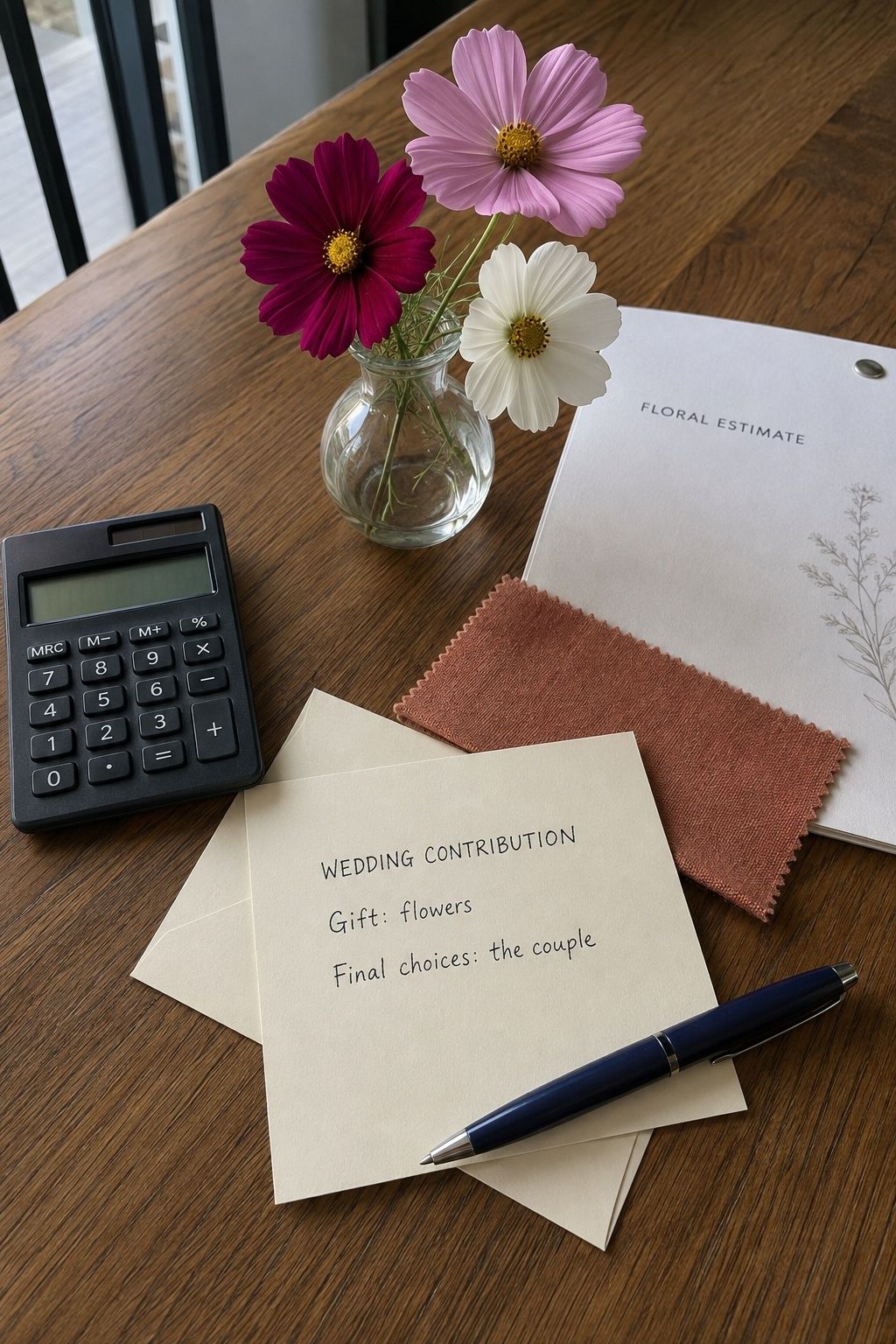
Money needs a definition before it enters the wedding. Ask whether a contribution is a gift, a loan, a payment for a specific item, or money tied to influence. The kindest time to clarify this is before anyone pays a deposit or announces what their contribution entitles them to decide.
If the money comes with control that feels too costly, decline it or narrow it. A smaller self-funded wedding often feels better than a larger wedding funded by resentment. If you accept a contribution, write down what the money covers and which choices remain with the couple.
When Families Disagree About The Guest List
Guest-list conflict gets easier when the couple uses numbers and categories instead of case-by-case pleading. Decide the total count, how many seats each household receives for suggestions, whether children attend, how partners are handled, and when the list closes.
Then repeat the rule without debating every individual name. We are inviting immediate family and closest friends. We are not adding extended relatives beyond the list we already shared. Sympathy is allowed; extra seats are not automatically available because someone feels disappointed.
When Families Disagree About Traditions
Tradition disagreements deserve a slower conversation because they often carry faith, culture, memory, or grief. Ask what the tradition means before accepting or declining it. Sometimes a parent wants a ritual because it marks family identity, not because they are trying to control the ceremony.
After listening, choose the version that fits your marriage. Keep the ritual, shorten it, move it to the rehearsal dinner, invite one elder to offer a blessing, or skip it with kind notice. Do not insult the tradition. Do not pretend a choice is open if it is already closed.
When Divorced Or Remarried Parents Disagree
Divorced and remarried-parent dynamics need logistics, not wishful thinking. Decide ceremony seating, reception tables, aisle roles, speeches, family photos, new partner invitations, and who should not be placed in forced proximity. Speak to each household separately before the wedding week.
A clear photo list is especially clarifying. Give the photographer combinations that avoid awkward improvising: parent with couple, parent with partner, parent with siblings, separate parent groups, and any blended family groupings you genuinely want. Nobody should be negotiating old hurt while holding a bouquet.
When Families Disagree About Alcohol Or Religion
Alcohol and religion become heated because they touch values, safety, identity, and family reputation. Treat them as couple-level decisions. If you are hosting a sober reception, a limited bar, a faith ceremony, a mixed-faith ceremony, or a nonreligious ceremony, say so plainly and early.
Offer practical clarity instead of moral arguments. We are serving beer, wine, and nonalcoholic drinks. We are not hosting an open bar. Or: We are including a short family blessing at dinner, and the ceremony language will be the one we chose with our officiant. The less you debate values, the more peaceful the planning conversation stays.
When Families Disagree About Roles And Attention
Some conflict is really about visibility. A parent wants a speech, a sibling wants a wedding party role, an in-law wants to host something, or a relative wants to be included in getting ready. Decide which roles are meaningful, which are practical, and which would create more pressure than joy.
Offer specific alternatives when they feel sincere: reserved seats, a quiet toast, a family photo, an aisle honor, a rehearsal dinner welcome, address gathering, or a calm getting-ready visit. Avoid giving someone a public role only because you fear their reaction. A role given from fear often becomes a larger problem later.
Set Boundaries Without Turning The Wedding Into A Fight
Boundaries land best when they are warm, brief, and repeatable. The couple does not need a legal brief for every decision. Most relatives need to hear appreciation, the decision, and the line that will not move.
Keep The First Explanation Short
Long explanations feel generous, but they often create more places for people to argue. Say the decision, give one reason if needed, and stop. We are keeping the wedding to fifty guests because the space and budget are set. We are not adding more names.
If someone asks again, repeat the same sentence. New reasons sound like new negotiations. Consistent wording teaches family that the decision has already been made.
Route Each Family Through Their Own Partner
When a parent is upset, the partner from that family should usually lead the conversation. This protects the future in-law relationship and keeps blame from landing on the person marrying into the family. The couple still decides together; the delivery follows the relationship line that holds it best.
For group chats, send one shared update instead of many side conversations. We finalized the schedule and will send guest details next week. Please send questions to us by Friday so we answer them in one place.
Limit Wedding Talk With People Who Escalate
If a relative turns every update into a debate, share fewer drafts and more finished decisions. You are not required to narrate the whole planning season to someone who treats each detail as a new opening. Quiet planning is a boundary too.
The tone stays gentle. We are keeping the planning quieter for a while and will share details once they are final. That sentence lowers the volume without accusing anyone of being difficult.
Let Money Create Clarity, Not Control
A family contribution deserves gratitude, but it does not automatically purchase the guest list, ceremony, vendor choices, or timeline. If someone expects control, name that before accepting the money. Thank you for offering this. We want to accept only if everyone is comfortable with us making the final decisions.
If the answer is no, believe the answer. Choose a smaller version of the wedding before you spend months paying for peace with your own comfort.
Plan The Wedding Day To Reduce Conflict
A peaceful wedding day is often built months earlier. The goal is not to make tense relatives love each other by cocktail hour. The goal is to avoid avoidable collisions and give the couple fewer fires to manage.
Build A Seating Chart Around Calm

Seat tense family members where they have comfort, conversation, and space. Divorced parents do not have to sit together. Feuding relatives do not need adjacent tables. Put each person with guests who bring out their better self, and avoid dramatic symbolism that forces closeness for appearance’s sake.
For a small wedding, that often means two family tables rather than one large parent table, assigned tables instead of assigned seats, or a ceremony layout where both sides feel honored without sitting shoulder to shoulder.
Make A Family Photo List Before The Wedding Week
Family photos are a common flashpoint because they combine time pressure, public positioning, and old relationship stories. Create a written list of groupings, give it to the photographer, and assign one calm person who knows the relatives to gather people.
Keep sensitive combinations separate unless everyone has agreed. A smooth photo plan is not cold; it is considerate. It lets each household be seen without forcing a tense scene in front of guests.
Assign A Day-Of Buffer
The couple should not be the complaint desk on the wedding day. Ask a planner, coordinator, sibling, trusted friend, or steady relative to redirect questions, handle seating confusion, and absorb minor comments before they reach you.
Give that person real authority and a simple script: The couple has already decided this, and we are going to keep the day moving. A buffer needs the plan in writing and the couple’s backing.
Control Speeches And Microphones
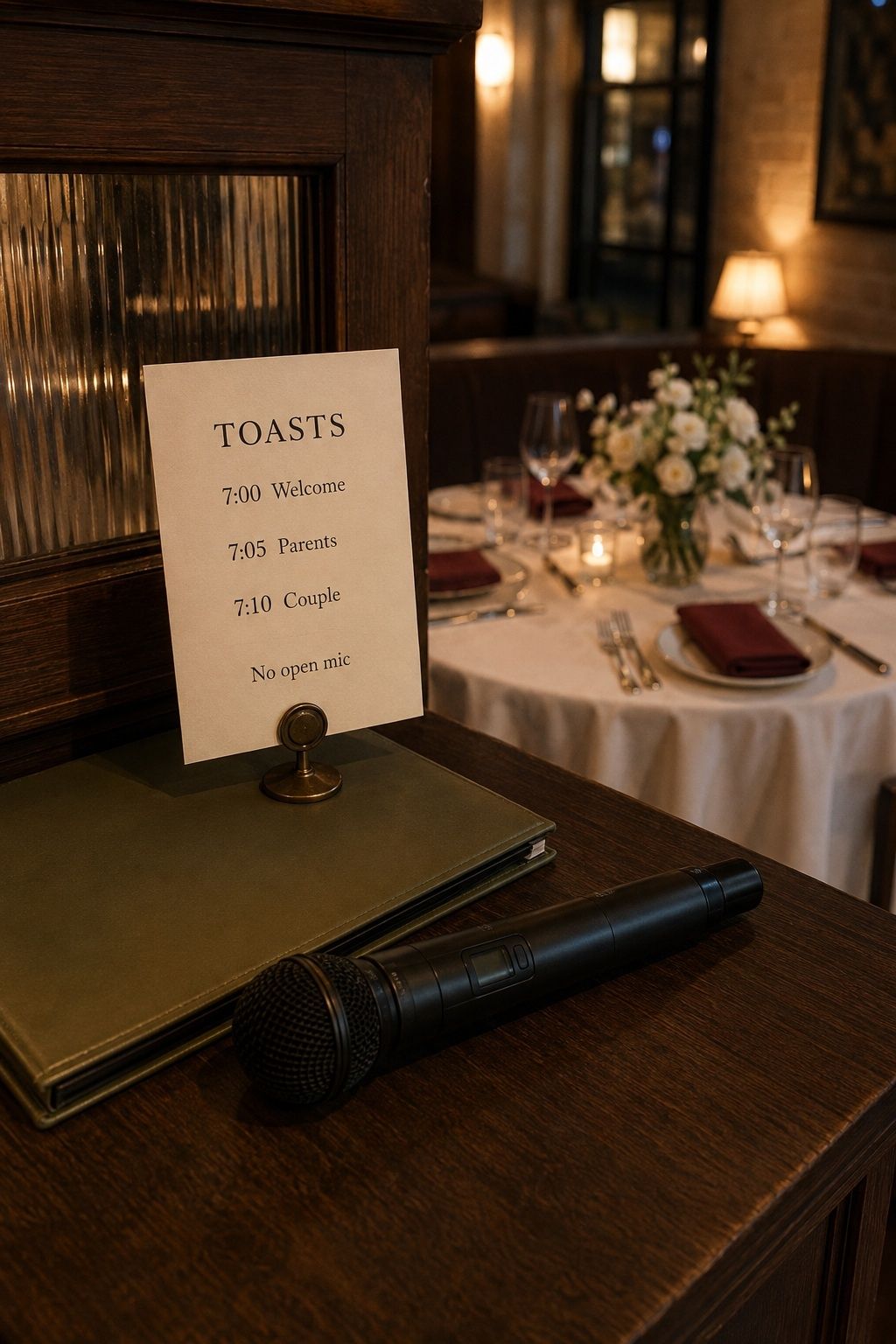
Open microphones are risky when families already disagree. Choose speakers ahead of time, set time limits, and tell the DJ or coordinator there will be no surprise toasts. If a parent needs a moment, offer a quiet toast, rehearsal dinner speech, or written letter instead.
This boundary protects guests too. A wedding toast should not become a family meeting, a grievance session, or a public negotiation about choices the couple already made.
What To Say When Everyone Wants Something Different
Use words that sound calm enough to repeat. A good script does not fix every feeling, but it keeps the couple from explaining from scratch every time.
For guest-list pressure: We understand why you would love to include them. The guest list is final, and we are keeping the wedding small.
For money pressure: We are grateful for your contribution. We need to be clear that our final decisions will stay with us as a couple.
For tradition pressure: We know this tradition matters to you. We chose a version that fits our ceremony, and we hope you join us for the day.
For divorced-parent tension: We are not asking anyone to be best friends. We are asking everyone to respect the seating, photo, and speech plan so the day stays peaceful.
For repeated criticism: We have heard your concern. We are not reopening this decision, and we are excited to celebrate with you.
For vendor interference: Please send ideas to us instead of contacting vendors directly. We are keeping communication in one place so details do not get missed.
Mistakes To Avoid When Families Disagree
The first mistake is trying to please both families before you know what the couple wants. That puts everyone else’s preferences in the center and leaves the marriage orbiting around them.
The second mistake is accepting money without clarifying expectations. A generous contribution becomes painful when everyone silently assumes it means something different.
The third mistake is sharing half-formed ideas with relatives who campaign hard. Share finished decisions with high-conflict people, not early drafts.
The fourth mistake is using your partner as a shield. Do not blame a decision on the other person to avoid conflict with your own family. That trade buys one quiet afternoon while weakening the team.
The fifth mistake is saving hard conversations for the wedding week. By then, timelines are tight and emotions are loud. Discuss seating, roles, speeches, money, and traditions early enough for people to settle. Related reading: how to handle late wedding RSVPs.
Finally, avoid confusing peace with total agreement. The wedding stays loving even when someone is disappointed. Peace means the couple stays respectful, the plan stays clear, and no one gets to turn disagreement into control. For more ideas in this vein, browse Wedding Guests & Etiquette.
FAQ
How do you plan a wedding when families disagree?
Plan a wedding when families disagree by aligning as a couple first, choosing your non-negotiables, defining where family input is welcome, and communicating finished decisions clearly. Handle money, guest list, traditions, seating, speeches, and family photos early. Each partner should usually speak to their own family, while both partners stand behind the same decision. For a related look, see how to plan a wedding without pleasing everyone.
How do you handle family conflict during wedding planning?
Handle family conflict during wedding planning by separating the issue from the emotion around it. Decide whether the conflict is about money, guests, traditions, roles, religion, alcohol, or old family tension. Then choose a specific boundary instead of a vague argument. Short, repeated wording lands better than long explanations that reopen the decision.
What if parents disagree with your wedding plans?
If parents disagree with your wedding plans, listen once with respect, look for any practical concern worth considering, and then decide as a couple. Parents are allowed to feel disappointed without receiving final say. If they are contributing money, clarify whether the contribution is still a gift if the couple keeps decision authority.
How do you set boundaries with family about a wedding?
Set boundaries with family about a wedding by naming the exact limit, keeping the first explanation brief, and deciding what happens if the boundary is ignored. Examples include closing the guest list, limiting vendor communication, choosing who attends appointments, setting speech rules, or sharing fewer planning details with relatives who escalate.
Who gets final say in wedding decisions?
The couple gets final say in wedding decisions because the wedding begins their marriage. Family members offer care, money, ideas, and meaningful traditions, but final authority should stay with the couple. If another person is paying for a specific item, clarify decision authority before accepting the contribution.
How do you seat family members who do not get along?
Seat family members who do not get along with people who make them feel comfortable, not with the person they are tense with. Divorced parents sit at separate ceremony rows or reception tables when needed. Feuding relatives sit across the room with natural buffers. Assigned tables, a clear escort display, and a coordinator who knows the plan reduce day-of awkwardness.
Final Thoughts
How to plan a wedding when families disagree is really how to protect the couple while still treating family with care. You are allowed to listen without surrendering. You are allowed to accept contributions without handing over the wedding. You are allowed to choose a smaller, calmer, more honest day if that is what keeps the marriage at the center.
Let the wedding become the first practice of your new team: clear decisions, kind words, firm edges, and a room arranged for peace. Some relatives will need time to adjust. That is not failure. The plan is steady when the two of you walk into the day knowing what you chose, why you chose it, and how you will care for the people around you.
Last update on 2026-11-29 / Affiliate links / Images from Amazon Product Advertising API