

To deal with wedding guilt, pause before changing the plan, name what the guilt is about, and ask whether the decision rests with you, your partner, your budget, your venue, or someone else’s disappointment. Take responsibility for kindness and clarity, but do not hand over your guest list, money, traditions, or peace just because another person has feelings about the wedding.
Wedding guilt usually arrives dressed as good manners. It sounds like, “They will be hurt,” “My parents gave so much,” “We invited one cousin, so now we owe everyone,” or “Maybe we are selfish for wanting something small.” For couples planning an intimate wedding, those thoughts get loud quickly. A small guest list, a modest budget, an adults-only reception, no plus-ones, skipped traditions, or vows spoken just to each other all create real choices. Real choices create real limits. Real limits create real reactions.
The goal is not to become unmoved by other people. The goal is to stop treating every uncomfortable feeling as a command. Wedding guilt deserves attention, but it does not deserve the final vote. A calmer wedding starts when the couple separates compassion from compliance and realizes that disappointment is not always damage.
Recommended Wedding Products


You Might Also Like These Blog Posts
- How To Set Wedding Boundaries With Family Before Your Guest List Learns To Multiply
- How To Handle Wedding Opinions From Family Without Handing Over The Whole Wedding
- Wedding Guest List Family Pressure: How To Set Boundaries Kindly
- How To Plan A Wedding Around Your Values Without Losing The Plot
- How To Keep Your Wedding Guest List Small Before It Spirals
- Who Pays For Weddings Now When Tradition No Longer Fits
How To Deal With Wedding Guilt
The first step in how to deal with wedding guilt is to notice the difference between a feeling and an instruction. Guilt often tells the truth about one small thing: someone matters to you, a choice has consequences, or a conversation needs care. Then it overreaches. It starts acting as though one sad text, one parent sigh, or one awkward family dinner means the wedding plan is wrong.
Start with the actual decision in front of you. Are you deciding whether to invite someone, accept money, offer plus-ones, include children, follow a tradition, choose a venue, or tell relatives that the list is closed? Each question has a different answer. Treating all guilt as one giant cloud makes every choice feel impossible. Naming the exact decision shrinks it back to a size the couple is able to discuss.
Then ask what the wedding is responsible for. A wedding is responsible for honest invitations, clear information, reasonable hospitality, respectful communication, and decisions the couple stands behind. It is not responsible for healing every family wound, proving loyalty to every branch of the family tree, rewarding every past favor, or giving each person the same closeness they imagined.
Wedding guilt gets especially heavy when a couple wants a smaller day. A tiny ceremony makes every missing seat visible. A restaurant reception turns the math into names, not numbers. A backyard wedding makes relatives assume there is always room for one more. Yet an intimate wedding only works when the couple protects the intimacy. Adding people solely to avoid discomfort changes the event at its core.
A good decision usually holds two truths together: “We care about this person” and “We are still choosing this limit.” Those truths are not enemies. You are allowed to feel tenderness toward someone and still decline the request. You are allowed to honor a parent and still reject a guest-list demand. You are allowed to love children in your family and still host an adults-only evening. That is the emotional muscle wedding guilt asks you to build.
A practical way to begin is to write two columns before the next family conversation. In the first column, list what the couple decides: guest count, total spend, ceremony tone, invitation categories, vows, traditions, and wedding-day roles. In the second column, list what other people carry: their disappointment, their hopes, their social image, their surprise, and their adjustment time. How to deal with wedding guilt becomes less foggy when every feeling is placed in the right column.
Then choose the next honest action. Sometimes the action is a call. Sometimes it is a written message. Sometimes it is no action at all because the couple has already communicated clearly. Guilt often pressures people to keep explaining after the answer has been given. Repeating the same decision with calm respect is usually stronger than searching for a brand-new reason everyone will approve.
Decide what a kind outcome actually looks like. A kind outcome does not mean nobody feels sad. It means the couple has spoken truthfully, avoided cruelty, honored real commitments, and protected the scale they chose. That standard is much more reachable than universal approval, and it keeps the wedding from becoming an endless apology tour.
For a small wedding, that standard matters even more. The couple has fewer seats, fewer rituals, fewer buffer events, and fewer places to hide a decision made from pressure. Every yes changes the room, so every yes deserves real consent from both partners. That pause keeps kindness from turning into automatic surrender.
The Types Of Wedding Guilt Couples Feel
Guilt becomes easier to manage once it has a name. Most couples are not wrestling with one feeling. They are carrying several types of guilt at once, all mixed with excitement, fear, loyalty, and fatigue. Separate them before you try to solve them.
Guest List Guilt
Guest list guilt is the ache of leaving someone out. It shows up around cousins, coworkers, old friends, neighbors, parents’ friends, new partners, children, and relatives who once invited you to their celebrations. The smaller the wedding, the more personal each absence seems.
The antidote is a clear invitation rule. Try categories rather than vibes: immediate family, closest friends, partners known by name, or people actively in your life as a couple. A consistent rule does not remove every hurt feeling, but it stops the couple from judging every name by panic, nostalgia, or pressure.
For small weddings, the rule also protects the atmosphere guests were invited into. A twenty-eight-person dinner feels different from a sixty-person reception. The conversation, seating, food pace, and emotional energy all change when the couple keeps expanding the room. Guest list guilt asks for one more chair; the couple has to look at the whole table.
Money Guilt

Money guilt appears when a parent contributes, when the couple spends more than expected, or when the budget forces cuts. It also appears when the couple chooses something modest and worries relatives will see the wedding as insufficient. Money turns emotional quickly because people confuse generosity with control and cost with care.
Before changing the plan, define the terms. A gift is not a vote unless that agreement was made openly. A smaller budget is not a moral failure. A couple who chooses fewer guests, simpler flowers, a weekday dinner, or a registry-free celebration is still hosting a real wedding.
Money guilt needs especially plain language. “We are grateful, and we are still keeping final decisions as a couple” is better than accepting quiet pressure for months. If the contribution would require a bigger room, a different menu, a larger guest list, or a ceremony style the couple does not want, the couple should decide whether the money is worth the emotional cost.
Family Expectation Guilt
Family expectation guilt often sounds like history. “In our family, everyone is invited.” “Your grandmother always imagined this.” “Your cousin had children at hers.” “Your father waited years for this moment.” Some expectations are loving. Some are outdated. Some are really about image, control, or unresolved family roles.
Respect the emotion without surrendering the wedding. A parent is allowed to grieve a tradition. A relative is allowed to wish for a larger gathering. Their reaction deserves humane language, not automatic authority. The couple still gets to choose the form of the day.
Tradition Guilt
Tradition guilt shows up when the couple skips rituals that used to feel automatic: a large bridal party, a bouquet toss, a religious ceremony, a formal parent dance, a receiving line, a white dress, speeches, favors, or a full reception. The fear is not only “Will people be upset?” It is also “Are we doing marriage wrong?”
Traditions are invitations, not invoices. Keep the ones that still carry meaning. Let go of the ones that feel performative, expensive, gendered in a way that bothers you, or disconnected from the way you actually live. A wedding with fewer rituals is not less committed.
Attention Guilt
Attention guilt is quieter. It happens when one partner dislikes being the center of attention, when the couple worries about asking people to travel, or when every shower, registry, toast, and gift makes them feel overexposed. The wedding starts to feel like asking too much from everyone.
Scale the attention to your comfort. Skip the shower, keep the registry small, decline extra parties, write vows for only the two of you, choose a short ceremony, or host a relaxed dinner instead of a highly produced reception. Gratitude matters. Self-erasure does not.
Separate Guilt From Responsibility
Wedding guilt gets messy because some discomfort points toward a real responsibility. If you gave confusing information, changed a plan late, accepted money with vague expectations, or let someone assume they had a role, then a repair is fair. If the only issue is that someone dislikes a reasonable limit, the responsibility is different. You owe clarity, not a reversal.
Ask Whether You Caused Harm Or Set A Limit
Harm and limits feel similar in the body, but they are not the same. Harm means you misled someone, spoke cruelly, excluded someone to punish them, ignored a promise, or created needless confusion. A limit means you chose a smaller guest count, a ceremony with only your closest people, an adults-only reception, a budget ceiling, or a tradition-free plan.
If there was harm, repair the harm. Apologize, clarify, or adjust where appropriate. If there was a limit, hold the limit kindly. Do not apologize as though the wedding itself is an offense. Say, “I know this is disappointing,” instead of “We are terrible for doing this.”
Ask Whether The Choice Is The Couple’s To Make
Some wedding choices sit primarily with the couple: the guest count, the ceremony tone, the vows, the budget they are willing to carry, the traditions they include, and the people who stand closest on the day. Family opinions enter the conversation only when the couple chooses to invite them there.
Other choices involve guests more directly: accessibility, food safety, accurate start times, travel information, weather plans, and respectful hosting. Guilt around those topics deserves practical action. Guilt around someone wanting more control deserves a boundary.
Ask Whether A Clearer Explanation Would Be Enough
Sometimes guilt fades after the couple communicates better. A relative who thought they were excluded personally often understands the ceremony is immediate family only. A friend without a plus-one often relaxes after hearing the same rule applies to all single guests. Parents often soften when they see the venue count in writing.
Offer the smallest clear explanation that protects dignity. “We are keeping the ceremony very small.” “The venue count is firm.” “We are not opening plus-ones beyond established partners.” “We are having an adults-only evening.” Avoid a long defense. A long defense often turns into a negotiation.
The explanation should match the relationship. A beloved aunt deserves more tenderness than a distant acquaintance fishing for an invitation. A parent contributing money deserves direct clarity about terms. A coworker who has never met the couple’s partner does not need a detailed emotional debrief. Fairness does not require identical conversations with everyone.
Ask Whether The Change Would Create New Guilt
Before adding one more guest, one more tradition, or one more family request, ask what new guilt the change creates. If you invite one cousin, do you exclude another? If you accept one parent’s friend, do your own friends get cut? If you include children for one household, what happens to the others?
Guilt is not always solved by saying yes. Sometimes yes simply moves the discomfort to the couple, the budget, the partner, or another guest. A decision that creates resentment inside the marriage deserves more scrutiny than a decision that creates temporary disappointment outside it.
This question is especially valuable when both families are involved. Saying yes to one side often creates an imbalance on the other. Saying yes to one child often raises questions about every child. Saying yes to one casual date often changes the plus-one rule. The couple is not only deciding whether one person feels better. They are deciding what precedent now exists.
How To Handle Guest List Guilt
Guest list guilt deserves its own plan because invitations are the place where wedding emotions become visible. People know whether they received an envelope. They know whether their partner or children were named. They know whether the ceremony included only a few people. That visibility makes couples feel exposed, even when the decision is reasonable.
Build The List From Shared Rules

Rules protect the couple from making each name a referendum on love. Decide the guest categories first, then place names inside them. Immediate family only. Immediate family and closest friends. No coworkers unless you socialize outside work. No children except nieces and nephews. Plus-ones only for spouses, engaged partners, live-in partners, or long-term partners known to the couple.
Write the rules where both partners see them. When pressure arrives, return to the rule instead of relitigating the relationship. “We are not adding coworkers” feels steadier than “I do not know whether this coworker counts enough.” The first sentence protects the plan. The second invites guilt to run the meeting.
If the rule exposes a real unfairness, fix the rule before invitations go out. Maybe one partner has a tiny family and the other has a huge one. Maybe one side has more local relatives while the other has more close friends. Balance does not always mean identical numbers. It means both partners understand the reasoning and neither person feels erased by the final list.
Use Capacity And Budget As Real Boundaries
Venue capacity and budget are not excuses. They are actual boundaries. A dinner for forty does not quietly become a dinner for fifty-eight without affecting tables, food, rentals, staff, timeline, and cost. A tiny ceremony space does not stretch because an aunt feels excluded.
Give numbers when numbers settle the conversation. “Our room holds thirty-six seated guests.” “We budgeted for forty plates.” “The ceremony space is immediate family only.” Then stop. Relatives who want the plan changed will often ask for more detail. More detail is not always more kindness.
Do Not Turn Every Exclusion Into A Confession
You do not need a personal conversation with everyone who is not invited. In many cases, silence is kinder than a preemptive apology that makes the other person manage your guilt. Speak directly only when the relationship is close enough that hearing through someone else would feel careless.
When a conversation is needed, keep it plain. “We are having a very small wedding, and we were not able to include everyone we care about. I wanted you to hear that from me.” That sentence respects the relationship without pretending the decision is open.
Offer Another Kind Of Inclusion Only If It Is Real

Announcements, a casual post-wedding dinner, a family visit, a photo card, or a livestream for distant relatives all work only when the couple actually wants them. Do not create a second event as emotional ransom. A consolation event that drains the couple usually leaves them with another round of guilt.
If another gesture feels right, make it specific and low-pressure. Send announcement cards after the wedding. Share a small album with relatives. Invite a few local friends to coffee months later. The gesture should express care, not reopen the guest list.
Be careful with promises made from panic. “We will celebrate with everyone later” sounds soothing, but it creates a new obligation if the couple has no desire, budget, or energy for another event. A truthful smaller gesture is kinder than a large vague promise that lingers after the wedding.
Handle Family Guilt Without Handing Over The Wedding
Family guilt is powerful because weddings carry symbols. A seat at the ceremony often feels like inclusion. A dance often feels like gratitude. A tradition often feels like family continuity. A missing invitation often feels like a public ranking. Couples often underestimate how much meaning relatives attach to these choices.
Understanding the symbolism does not mean obeying it. It means choosing language that acknowledges the emotion while protecting the decision. “I know this feels important to you” lands differently than “You are overreacting.” The first keeps dignity in the room. The second starts a fight about the reaction instead of the plan.
When family money is involved, clarify the connection between contribution and authority. If a parent gave money freely, thank them without treating every request as a contract. If money was offered with strings, decide whether the strings are worth it. A smaller wedding paid with cleaner boundaries often feels lighter than a larger wedding funded by pressure.
When family says, “But people will talk,” ask who is being protected. Sometimes the answer is an elder’s pride, a parent’s social circle, or a desire to keep appearances smooth. That does not make the feeling fake, but it also does not make the couple responsible for preserving an image that costs them the wedding they wanted.
Choose one family spokesperson per side when possible. The partner connected to that family usually leads the message, with the other partner aligned behind it. This keeps one person from being cast as the outsider who ruined the wedding. Use “we” for the decision and “I” for the relationship: “We are keeping the ceremony small. I know this is hard to hear, and I love you.”
When old family roles are involved, expect guilt to sound familiar. The responsible child gets told to keep peace. The oldest sibling gets asked to make everyone proud. The couple with the first wedding in years gets handed every family dream. Naming the pattern between partners keeps the couple answering the present request instead of stepping back into an old assignment.
Set Boundaries Without Sounding Cold
A boundary sounds cold when it skips care or when it tries too hard to prove the couple is right. The middle path is brief, warm, and firm. Thank the person. Name the decision. Acknowledge the feeling. Close the topic.
Try this structure: “We love you, and we know this is disappointing. We are keeping the wedding very small, so we are not adding more guests.” Or: “We are grateful that you want to celebrate with us. We are having an adults-only evening, and we wanted to be clear early.” Or: “We understand this tradition matters to you. We are choosing a ceremony that feels true to us.”
Notice what those sentences do not include. They do not accuse. They do not list every reason. They do not invite a vote. They do not say, “Maybe later,” when the answer is no. Softness comes from tone and respect, not from leaving the door cracked open.
Repeat the decision with the same wording when someone pushes. A second explanation often teaches people that pressure earns a longer hearing. A repeated sentence teaches them that the answer has settled. “I know. We are still keeping the list closed.” “I understand. We are still not adding plus-ones.” “I hear you. We are still choosing a ceremony with only our closest people.”
After the conversation, resist the urge to repair every uncomfortable silence. Give people time to be disappointed. Many relatives need a few days to adjust. If the couple rushes in with more concessions, the family learns that guilt creates movement. Patience is part of the boundary.
Choose the format wisely. Text is better for exact wording and high-emotion relatives who interrupt. A call is better for close relationships that deserve warmth. An in-person conversation is best only when the couple has enough steadiness to leave without changing the decision under pressure. The kindest format is the one where the message stays clear.
Make Decisions Around Values, Not Reactions
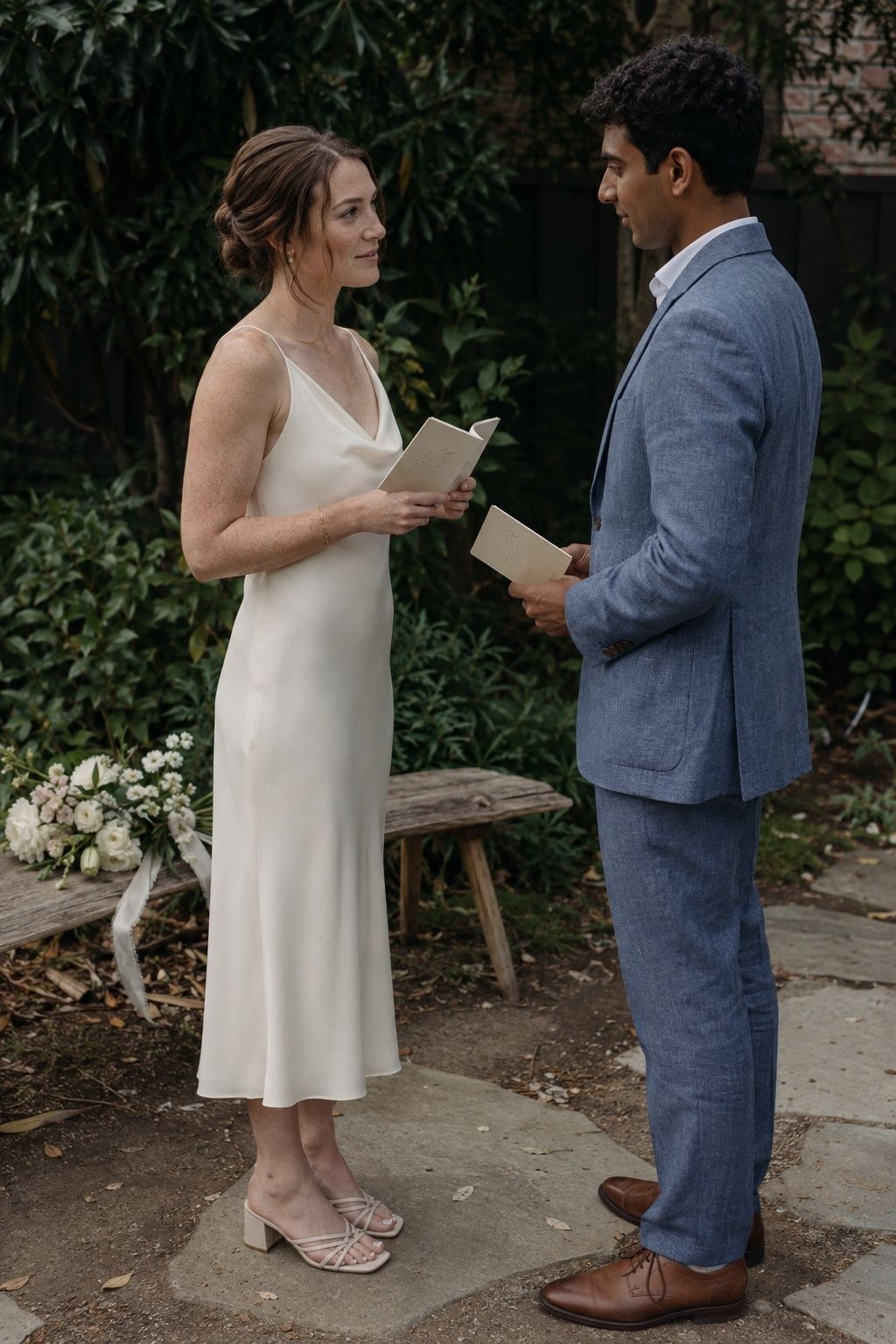
Values are steadier than reactions. Reactions change by the hour. One aunt cries, one friend shrugs, one parent calls three times, one cousin understands completely. If the couple bases every decision on the strongest reaction, the wedding becomes a reward system for whoever protests hardest.
Choose three wedding values before finalizing emotional decisions. They could be intimacy, ease, hospitality, financial peace, family warmth, quiet, faith, creativity, nature, great food, or presence. Then test guilt against those values. Does adding twenty relatives protect intimacy? Does accepting a paid upgrade protect financial peace? Does adding a tradition protect meaning, or only appearances?
Values also protect the couple from guilt inside the partnership. If one partner agrees to every family request out of fear, the other partner becomes the place where the resentment lands. The wedding is the start of a household. The decisions need to honor that household, not only the families around it.
When a request conflicts with a value, say so in simple language. “We are keeping the day intimate.” “We are avoiding debt.” “We are choosing a quiet ceremony.” “We are making room for real conversation at dinner.” These statements do not attack anyone. They explain what the wedding is built around.
This is why how to deal with wedding guilt is also a values exercise. The couple is not trying to win an argument against relatives. They are trying to protect the emotional center of the wedding. When the values are visible, guilt has less room to pretend that every request is equally important.
When Guilt Shows Up After The Decision
Some guilt appears after the couple has already made the right call. The invitation list is done, and then a relative posts a sad comment. The adults-only wording goes out, and a friend goes quiet. The couple skips a tradition, and a parent says the day will feel incomplete. Suddenly a settled decision feels shaky again.
Return to the reason, not the reaction. Why did you choose this? What problem did the decision solve? What did it protect? If the answer still makes sense in daylight, keep it. A reaction is new information about someone’s feelings, not automatic proof that the decision failed.
Let grief exist without managing every inch of it. A cousin could feel sad. A parent could feel embarrassed. A friend could wish their partner had been included. Those feelings are real. They also stay with the person feeling them. Couples often confuse empathy with emotional ownership. Empathy says, “I understand this hurts.” Ownership says, “I must remove the hurt by changing the wedding.”
If the guilt keeps looping, write the decision and the reason in one sentence. “We chose a thirty-person dinner because we wanted the day to feel intimate and financially calm.” “We chose no children because the venue and timeline were built for adults.” “We chose vows spoken just to each other because we wanted that promise to stay between us.” Return to the sentence when pressure rises again.
Share that sentence with your partner before answering anyone else. If one partner starts wavering from exhaustion, the other partner returns to the agreed reason rather than shaming them for feeling guilty. The point is not emotional toughness. The point is staying aligned long enough for the couple’s earlier wisdom to matter.
What Not To Do With Wedding Guilt
Guilt is not the enemy. Unexamined guilt is. A couple who never questions guilt ends up saying yes to plans they do not want, then wondering why the wedding feels heavy. Avoid the patterns that turn temporary discomfort into long-term resentment.
Do Not Add People One At A Time To Feel Better
One extra guest rarely stays one extra guest. A cousin brings a partner. A parent’s friend implies another couple. A child exception creates three more questions. If the original rule was sound, protect it. If the rule was unfair, revise it openly instead of sneaking people in until the list loses shape.
Do Not Overexplain Every Choice
Overexplaining feels polite in the moment, but it often creates more debate. The more reasons you give, the more material someone has to challenge. Keep the explanation short enough to repeat. “The list is full” is stronger than a five-minute tour through catering math, table layouts, family fairness, and emotional exhaustion.
Do Not Use Your Partner As The Villain
Blaming your partner eases one hard conversation at the cost of trust and invites family to campaign against them. Say “we decided” even when one partner felt the limit first. A marriage needs a united front more than a temporary escape route.
Do Not Let Gratitude Become Debt
Gratitude matters. Debt is different. You are allowed to thank a parent for love, money, time, advice, or enthusiasm without giving them the guest list, ceremony, dress, menu, or timeline. If a gift was actually a trade, it needs honest terms. If it was truly a gift, it should not quietly become ownership.
The cleanest repair is often a grateful reset. “We appreciate everything you have done. We also need to make this decision ourselves.” That sentence lets gratitude stay intact while removing the invisible contract. How to deal with wedding guilt often comes down to this exact balance: let love be love, and let decisions stay with the people making the promise.
Watch for guilt that appears only after someone disapproves. If the couple felt calm before the reaction and panicked only after a complaint, the issue is often pressure rather than conscience. Pause for a night before answering. A delayed, steady no is usually kinder than a rushed yes followed by weeks of regret, especially when both partners need time to breathe, sleep, and return to the reason they chose the boundary in the first place.
FAQ
How Do You Deal With Wedding Guilt?
Deal with wedding guilt by slowing the decision down. Name the specific issue, decide whether there is actual harm to repair, and return to the couple’s shared values. Offer clear, kind communication where needed, but do not change a reasonable wedding plan only to end another person’s disappointment.
Is It Normal To Feel Guilty When Planning A Wedding?
Yes. Wedding planning brings together money, family roles, social expectations, traditions, and public choices. Guilt is especially normal for couples planning small weddings because every limit feels visible. The feeling is common, but it does not mean the couple is doing anything wrong.
How Do You Stop Feeling Guilty About Not Inviting Someone?
Return to the invitation rule instead of the single name. If the wedding is immediate family only, closest friends only, or limited by venue and budget, the exclusion is part of a broader boundary. Acknowledge the sadness, speak directly when the relationship calls for it, and avoid treating every missing invitation as a personal rejection.
How Do You Handle Family Guilt About A Wedding?
Handle family guilt with warmth and firmness. Let relatives have their feelings, thank them for caring, and repeat the decision in simple language. If money or tradition is involved, clarify whether the request is a preference, a condition, or a true logistical need. The couple still makes the final call.
Should Guilt Decide Your Wedding Guest List?
No. Guilt should invite reflection, not decide the guest list. A guest list should come from relationship closeness, venue capacity, budget, safety, and the kind of celebration the couple is creating. If guilt alone adds a name, the couple usually pays for that decision in stress, money, or resentment.
How Do You Set Wedding Boundaries Without Being Rude?
Set wedding boundaries without being rude by using short, respectful sentences. Thank the person, name the decision, acknowledge any disappointment, and avoid arguing. “We love you, and we are keeping the ceremony very small” is kinder and clearer than a long explanation that sounds open for debate.
Final Thoughts
Wedding guilt feels convincing because it often grows from love. You care about your families. You care about your friends. You care about being gracious hosts. None of that requires building a wedding around everyone else’s comfort before your own.
The steadier path is compassionate ownership. Make the decision as a couple. Say it plainly. Give people dignity. Let them feel what they feel. Then return to the wedding you are actually trying to create: one with the right people, the right scale, and enough emotional room for the marriage beginning inside it.
A short, honest answer protects dignity.
Last update on 2026-10-03 / Affiliate links / Images from Amazon Product Advertising API