

The fairest way to handle how to split wedding costs between families is to price the wedding first, ask each contributing household for a comfortable amount, choose one clear split model, write down timing and expectations, and keep guest-list control separate from money. Equal shares work for some families, but fair usually means affordable, transparent, and free of hidden obligations.
Wedding money gets tense when everyone is generous but no one is specific. One parent says they will help with food. Another says they will take care of flowers. The couple books a venue, deposits begin, and suddenly each person has a different picture of what was promised. A fair wedding cost split removes that fog early, which is why how to split wedding costs between families needs an actual system.
This is especially important for small weddings. A twenty-five person dinner, a backyard ceremony, or a quiet restaurant reception has a natural limit. Family wedding contributions should support that shape, not quietly turn it into a larger event with extra tables, extra opinions, and extra pressure.

Recommended Wedding Products
No products found.


You Might Also Like These Blog Posts
- Who Pays For Weddings Now When Tradition No Longer Fits
- Hidden Wedding Costs Couples Forget Until The Budget Starts Leaking
- How To Plan A Wedding When Families Disagree And Still Feel Like A Team
- What Gen Z Is Really Spending On Weddings And What Actually Feels Worth It
- How To Talk To Parents About Wedding Money Without Losing The Room
- Why Are Weddings So Expensive And What Can You Actually Control
How To Split Wedding Costs Between Families
To split wedding costs between families, start with the full wedding budget rather than a traditional payment chart. Confirm the couple’s contribution, ask each household what amount feels comfortable, choose the split model together, then document who pays which amount, by which date, and with what decision expectations attached.
That last part matters. A contribution is not only a number. It often carries assumptions about guests, traditions, vendors, timing, gratitude, and who gets consulted before decisions are final. Naming those assumptions early keeps wedding expense splitting from becoming a weekly family debate.
Do not begin with “the bride’s family pays for this” or “the groom’s family pays for that” as the rule. Those customs describe one older pattern. Modern couples often share costs among two families, several households, chosen family, divorced parents, stepparents, grandparents, or no parents at all. The cleanest wedding budget split is the one every contributor understands and accepts.
Start With The Total Budget, Not The Tradition

Before assigning expenses, price the wedding you are actually planning. List venue or reservation fees, food, bar, cake, photography, attire, hair and beauty, florals, music, ceremony costs, officiant, license, invitations, transportation, tips, taxes, rentals, insurance, lodging support, brunches, welcome meals, and a cushion for small surprises.
Then separate fixed costs from guest-based costs. A photographer, officiant, license, bouquet, dress, suit, or ceremony musician could stay similar whether you invite twenty people or seventy. Food, drinks, tables, chairs, linens, favors, shuttle seats, and late-night snacks rise with every guest. That distinction helps families see why a guest-list request affects real money.
For an intimate wedding, set the guest ceiling before the contribution conversation ends. A family member offering more money does not automatically mean more people fit the day. The couple still needs the wedding to feel like the wedding they chose, not a larger party paid for by someone else’s enthusiasm.
Once the total number is visible, reduce anything that already feels heavy. It is kinder to shrink the plan before asking for help than to ask relatives to rescue a budget no one truly wants. A smaller venue, shorter bar service, simpler flowers, weekday dinner, or tighter guest list often makes the family wedding contributions easier to discuss.
Give the budget a small reserve before assigning shares. Ten percent is a reasonable starting place for service charges, overtime, postage, alterations, weather backup, transportation changes, or a final vendor balance that lands higher than expected. If the reserve is not needed, lovely. If it is needed, no one has to reopen the family contribution conversation during the final month.
When couples skip this step, the wedding budget split looks balanced until the hidden costs arrive. Then the couple asks one family for another cheque, one parent wonders why the original number changed, and the whole arrangement feels less honest than it was meant to be. Build the cushion first, then divide the real number.
Common Ways To Divide Wedding Expenses
There is no single fair wedding cost split. The right model depends on budgets, relationships, who wants involvement, how many households are contributing, and whether the couple wants maximum control or shared participation. Use the models below as decision tools, then adapt them to the people at the table.
Equal Family Split
An equal family split means both families contribute the same amount, usually after the couple has named the full budget. It feels simple when both households have similar budgets, similar excitement, and similar expectations about the wedding. It also works best when both sides understand that equal payment does not mean unlimited decision power.
The risk is false fairness. Equal numbers are not fair if one household is stretched, one parent is retired, one side has several children with upcoming weddings, or one family is also covering travel. Do not turn equality into pressure. If one family hesitates, listen to that hesitation before deposits lock everyone into a promise.
Equal splitting also needs agreement about upgrades. If one family wants a larger floral plan and the other family does not, the couple should decide whether the upgrade fits the shared budget or whether the person requesting it will cover the difference separately. This keeps equal shares from quietly becoming unequal stress.
Three-Way Split Between Couple And Both Families
A three-way split divides the wedding among the couple and two families. Some couples use even thirds. Others use thirds as a starting point, then adjust based on savings, income, location, or family comfort. This model works well when everyone wants shared ownership without leaning too heavily on one household.
For small weddings, thirds are easiest after the couple has defined the nonnegotiables. Decide what the ceremony, meal, and photography need to cost before adding extras. If each share is too high, change the wedding first. Do not pressure families into covering the difference between a dream version and the version everyone comfortably supports.
A three-way split also gives the couple emotional footing. When the couple contributes meaningfully, parent money feels like support rather than permission. That does not mean the couple must match wealthier parents dollar for dollar. It means the couple has a named stake in the budget and a clear voice in the choices.
Percentage-Based Split
A percentage split assigns each household a portion of the total, such as 50 percent from the couple, 30 percent from one family, and 20 percent from another. It is useful when one contributor has more room in the budget than another, or when the couple wants the split to reflect ability rather than tradition.
This model needs a firm cap. Percentages get messy when the total keeps growing. If the wedding rises from $18,000 to $24,000, every percentage share rises with it unless you agree otherwise. Write the percentage and the maximum dollar amount together so no one discovers a larger obligation late in the process.
Use percentage language carefully with parents who prefer certainty. “Twenty percent of the final wedding” sounds fair but vague. “Twenty percent, up to $4,000, paid before the catering balance” is much clearer. The cap protects the contributor, and the date protects the couple from planning around money that arrives too late.
Flat Contributions

A flat contribution is often the cleanest option. Each family names an amount they feel good giving, and the couple builds the wedding around confirmed money. It avoids category confusion, late invoice surprises, and quiet arguments about whether paying for food means choosing the menu.
This approach is especially kind for blended families or households with different financial realities. One parent gives $2,000, another gives $8,000, a grandparent covers attire, and the couple funds the rest. No one needs to pretend the numbers are identical. Gratitude stays equal even when amounts are different.
Flat contributions also make thank-you language easier. Instead of discussing percentages all year, the couple simply says, “Thank you for giving this amount toward the wedding.” The couple then makes the choices inside the budget. That simplicity is often worth more than a mathematically perfect split.
Category-Based Contributions
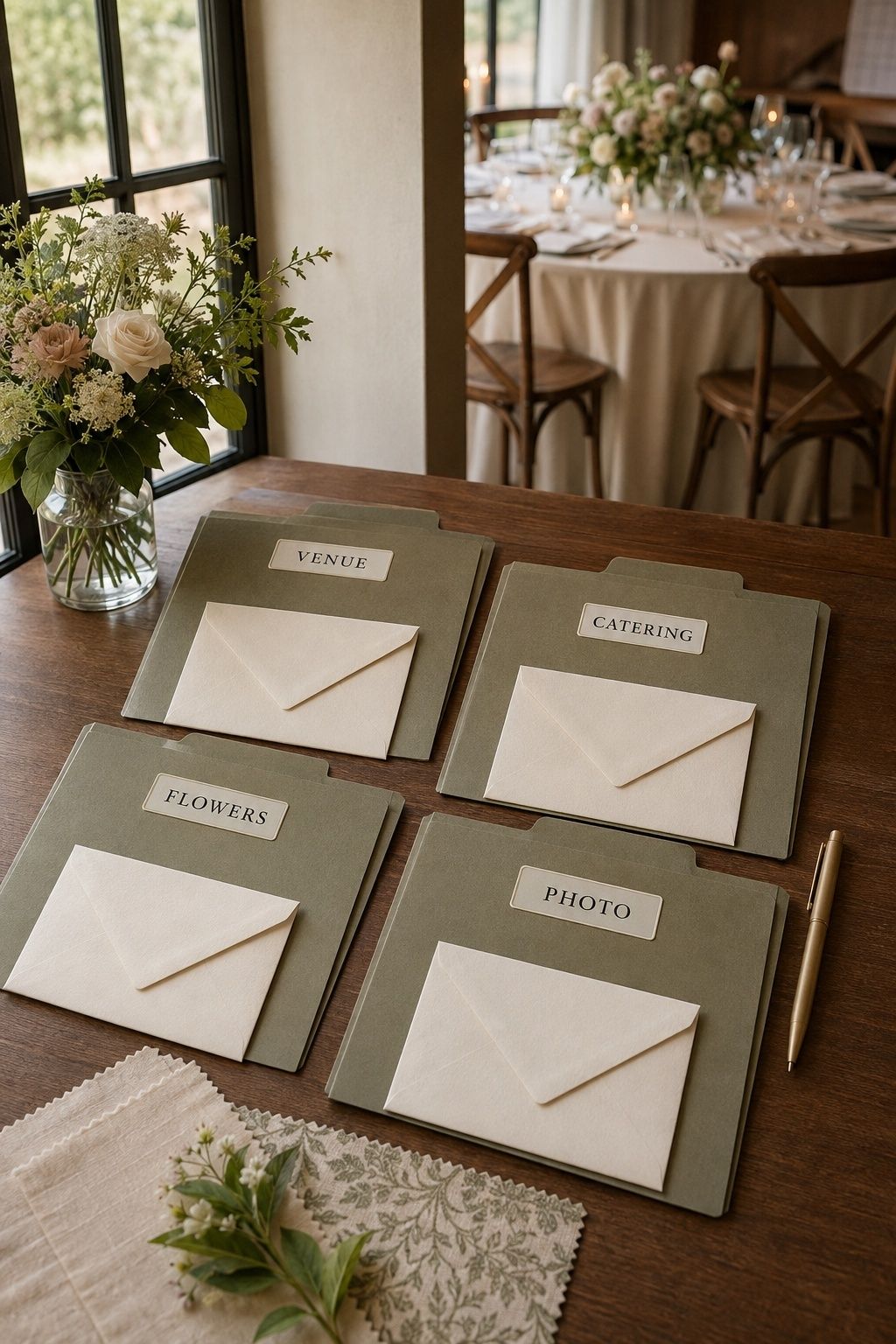
Category-based splitting assigns a person or household to a specific part of the wedding: venue deposit, catering, bar, flowers, photography, rehearsal dinner, attire, music, brunch, or rentals. It feels tangible because each contributor sees exactly where the money goes.
The category still needs a dollar limit. “We will cover flowers” is unclear if the florist offers three proposals. “We will cover flowers up to $1,500” gives the couple room to choose without handing relatives an open invoice. If the couple chooses a higher floral plan, they cover the difference.
Category-based help also needs one person responsible for vendor communication. A parent paying for photography does not need to manage the photographer unless the couple wants that arrangement. Decide who signs the contract, who receives invoices, who approves changes, and who handles final payment. Otherwise one line item turns into three decision paths.
Guest-Added Contributions
Sometimes parents ask for additional guests and offer to cover the added cost. This works only when the couple truly wants those people there. Money solves the meal cost, but it does not solve venue capacity, emotional energy, table layout, ceremony intimacy, or the couple’s desire for a smaller day.
If you accept guest-added money, calculate the real per-person cost: food, drink, rentals, stationery, favors, transportation, taxes, service charges, and any extra staffing. Then set a hard limit. A clear sentence helps: “We have room for six additional family guests, and we are not expanding beyond that.”
Also decide whether guest-added contributions affect table placement, invitations, welcome bags, rehearsal events, or transportation. Extra guests rarely touch only the dinner bill. A small wedding is a hosted experience, and every added person changes the couple’s attention, movement, and feeling in the room.
Couple-Funded Core With Family-Funded Extras
Some couples fund the essentials themselves, then accept optional help for extras: upgraded flowers, attire, welcome drinks, a musician, a morning-after brunch, or a family dinner. This keeps the couple in charge of the ceremony, guest count, venue, and total scale while still leaving room for relatives to contribute with joy.
This model works well when money has historically carried pressure. The couple starts from a wedding they could afford alone, then treats family help as a way to soften the day rather than define it. If the extra disappears, the marriage still begins, the celebration still happens, and the couple is not stranded.
It also gives relatives a positive role. A parent who loves flowers gets to add beauty. A grandparent who values family meals gets to host brunch. A sibling who wants to help with music gets a clear lane. The couple keeps the core steady while loved ones add something personal around it.
What To Put In Writing

Putting wedding money in writing is not cold. It is one of the gentlest ways to protect relationships. A shared tracker, email recap, or simple document prevents different memories from forming around the same conversation.
Include the contributor’s name, promised amount, category if any, payment date, whether the money is a gift or loan, who pays the vendor, whether the contributor wants to approve anything, and what happens if the invoice changes. If the contribution is tied to guests, write the guest names and the maximum number.
Also list deposits and final balances by due date. Wedding payments rarely arrive all at once. A parent who plans to give $5,000 in October is not available to cover a $3,000 venue deposit in June unless everyone agrees to bridge the timing. Track timing as carefully as totals.
End each money conversation with a warm recap. For example: “Thank you again for offering $3,000 toward catering by the September invoice. We are keeping the guest list at forty people, and we will cover any amount above that.” That kind of sentence reduces awkwardness later because the agreement has already been named.
Keep the tracker simple enough that people will actually use it. A column for promised amount, paid amount, due date, category, vendor, and remaining balance is usually enough. Add a private couple-only column for sensitive family details if needed, especially where divorced parents or uneven contributions make open comparison unhelpful.
Update the tracker after each invoice, not only after each conversation. A $2,500 catering contribution looks complete until the service charge, tax, gratuity, and menu change turn the final balance into $3,180. The point of tracking is not to catch anyone out. It is to keep the wedding contribution tracker aligned with real bills.
If a vendor payment is coming from a parent, decide whether the parent pays the vendor directly or transfers money to the couple. Direct payment reduces transfers, but it also means the parent receives invoice details and payment reminders. Couple-managed payment keeps communication tidy, but it requires trust that the money is used as agreed.
How To Handle Unequal Contributions
Unequal contributions are normal. One family has more savings. One parent has medical expenses. One side paid for a sibling’s wedding last year. One household gives money, another gives labor, another gives emotional steadiness. A fair split does not require pretending every family has the same wallet.
Keep gratitude even and decision power clear. Thank each contributor with the same sincerity, regardless of amount. Then state how decisions will be made: the couple makes final choices, contributors are consulted on the parts they are funding, or everyone agrees on a few shared decisions only. Do not leave decision power implied.
If one family gives more, resist turning that into quiet control over the whole event. If one family gives less, resist making them feel smaller in the room. Money should not become a seating chart for love. The wedding is still the couple’s day, and the family relationships still matter after the last invoice clears.
For divorced or remarried parents, avoid announcing every amount to every household unless there is a practical need. The couple could keep the full tracker private and share only the details each contributor needs. Privacy is not secrecy when it prevents comparison from overtaking planning.
When a parent gives less than expected, do not punish them with less inclusion. Inclusion and payment are separate choices. A parent who contributes little financially could still give a toast, help with family communication, join attire appointments, host a casual breakfast, or simply show up with warmth. Those roles have value even when they do not reduce an invoice.
When a parent gives more than expected, do not let gratitude erase the couple’s boundaries. Say thank you often, share updates where appropriate, and be honest about the decisions that remain yours. The healthiest arrangement allows generosity to be visible without letting money become the loudest voice in the planning room.
How Small Weddings Keep Splits Cleaner
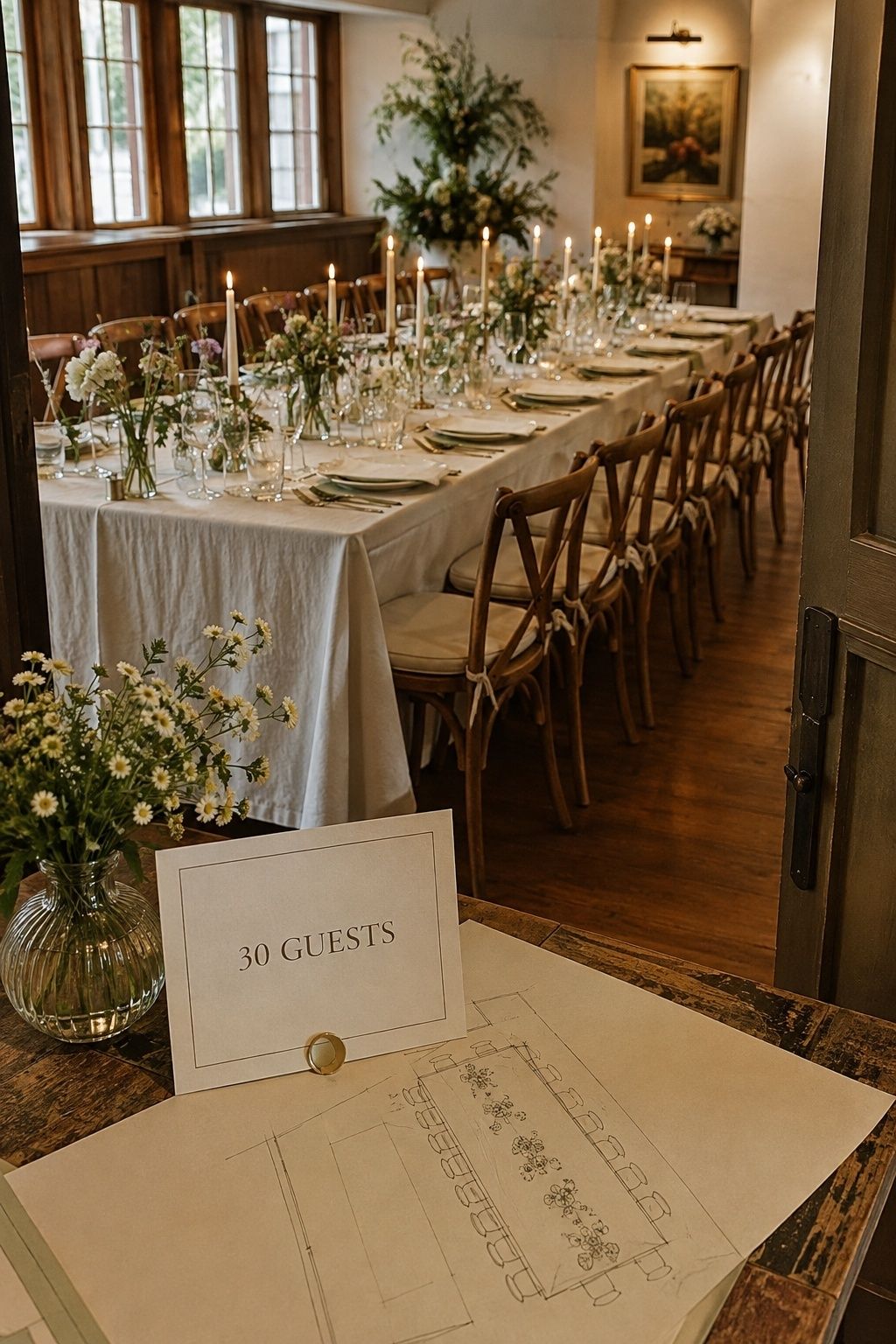
Small weddings make the numbers easier to see. The guest list is shorter, the meal count is clearer, the venue capacity is usually firm, and the couple’s priorities are less buried under layers of obligation. That clarity is a gift during cost-splitting conversations.
Use the small guest count as a boundary, not an apology. Say, “We are planning for thirty people, so the budget is built around hosting those thirty people well.” That frames the wedding as intentional. It also prevents a contribution from becoming an invitation to reopen the full list.
Then connect each cost to the size of the day. A family paying for dinner should know whether that means twenty-four guests in a private room or sixty guests in a ballroom. A parent covering flowers should know whether the plan is one ceremony arrangement and bud vases or full installations. Small does not mean vague.
If relatives want more tradition, find smaller expressions of it. A toast at dinner, a family song, a blessing, a photo list, a memory table, or a post-wedding brunch often honors family without changing the entire wedding budget split. The answer does not have to be all yes or all no.
Small weddings also make category choices more personal. Instead of dividing a long list of ballroom expenses, families could help with the pieces guests will feel most: a beautiful meal, comfortable transportation, a few meaningful flowers, or extra time with the photographer. The spending feels less like obligation and more like hosting.
If parents are worried that a small wedding looks ungenerous, show them where the money is going. A smaller guest count often means better food, less rushed conversation, a calmer ceremony, and more attention for the people present. That explanation keeps the conversation focused on care, not exclusion.
What To Do When The Split Causes Conflict
If the split starts causing conflict, pause new bookings. Do not add deposits while people are arguing about who owes what. Return to the total budget, confirmed contributions, payment dates, and guest ceiling. Most conflict comes from one of those pieces being assumed rather than stated.
Look for the pressure point. Is one household uncomfortable with the amount? Is a parent linking money to guests? Is the couple planning a wedding larger than the confirmed budget supports? Is someone paying a vendor directly without sharing the balance? Name the actual issue before rewriting the whole plan.
If the money has conditions you do not want, decline it kindly or reshape the offer. “We are grateful, but we are not able to expand the guest list, so we should plan without that contribution.” That sentence feels hard in the moment, but it is often easier than months of resentment.
When the numbers still do not work, reduce the wedding before asking anyone to stretch. Cut guest count, simplify the bar, choose a restaurant meal, shorten the reception, skip rentals, use seasonal flowers, or move a hosted family meal to another day. A smaller wedding you afford honestly is better than a bigger wedding funded by anxiety.
If the conflict is emotional rather than financial, separate the two conversations. First solve the money: what is confirmed, what is optional, what is declined, and what must be reduced. Then solve the relationship issue: who feels left out, unheard, compared, or pressured. Mixing both at once usually makes every number feel personal.
Bring the conversation back to shared values. Most families want the couple to begin married life with support, not debt, bitterness, or an event that feels owned by committee. When the budget conversation returns to peace, hospitality, and a realistic start to marriage, the numbers often become easier to adjust.
FAQ
How do you split wedding costs between families?
Split wedding costs between families by creating the full budget first, confirming each household’s comfortable contribution, then choosing equal shares, percentages, flat gifts, category payments, or guest-added costs. Put the amount, due date, payment method, and expectations in writing so no one relies on memory once invoices arrive.
What is the fairest way to divide wedding expenses?
The fairest way is the one each contributor understands, affords, and accepts without hidden control. Equal shares are simple when households have similar budgets. Proportional or flat contributions are often kinder when budgets differ. Fairness also means the couple keeps clear decision boundaries and no family is shamed for giving less.
Should wedding costs be split equally between families?
Wedding costs should be split equally only when both families genuinely have similar capacity and want that arrangement. Equal numbers are not automatically fair. If one household is stretched, retired, paying for travel, or supporting other relatives, a flat gift or percentage split usually protects relationships better than forced equality.
How does a three-way wedding cost split work?
A three-way split divides the wedding among the couple and two families, either in even thirds or adjusted shares. The couple should set the total budget first, then confirm whether each third is a fixed dollar amount or a percentage with a cap. Without a cap, every upgrade raises all three shares.
How do you split costs when one family can contribute more?
When one family has more room to contribute, use flat gifts or percentage shares instead of forcing equal numbers. Thank both sides equally, keep decision authority clear, and avoid turning the larger contribution into control over the whole wedding. The couple should also protect the smaller-contributing household from comparison.
How do you track wedding contributions without conflict?
Track contributions in one shared place with contributor name, amount, category, due date, paid status, vendor balance, and any expectations. Send gentle recap messages after each conversation. Keep the tone appreciative, but be precise. Conflict drops when people know the same numbers, dates, and limits.
Final Thoughts
A fair answer to how to split wedding costs between families is not the split that looks perfect on paper. It is the split everyone understands, affords, and remembers the same way. Start with the real budget, ask for comfortable contributions, choose the model openly, and protect the small wedding from silent expansion.
Family help should make the wedding steadier, not more confusing. When the couple leads with clear numbers, clear guest boundaries, and equal gratitude, money has less room to become a scoreboard. The goal is a wedding budget split that keeps everyone honest and lets the couple stay kind, grateful, and firm.
Last update on 2026-10-03 / Affiliate links / Images from Amazon Product Advertising API