

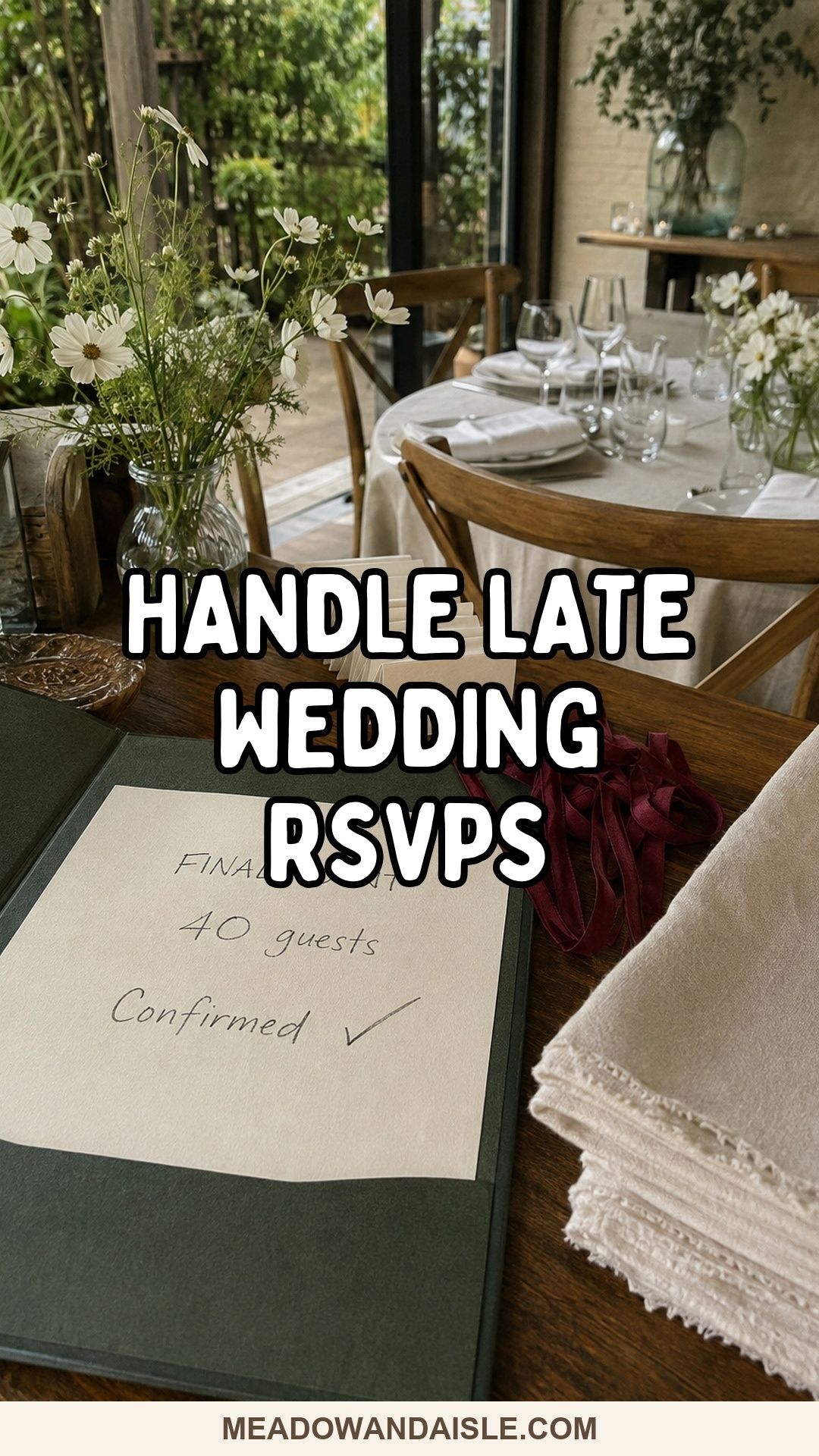
How to handle late wedding RSVPs starts with one calm system: follow up once warmly, ask for a clear yes or no by a firm date, make one final direct contact before your vendor count closes, then mark silence as a no so your seating, meals, and budget stop drifting.
Late wedding RSVPs have a strange way of making the most organized couple feel as if the whole celebration is suddenly being planned through a fogged window. You have the venue layout open, the caterer waiting, the seating chart half built, and a handful of blank guest rows turning into a larger emotional problem than anyone expected.
The hard part is not only the missing number. It is the feeling that you are chasing adults for a decision they already had time to make. Still, most missing replies are not personal. Guests lose cards, miss emails, forget online forms, wait on travel plans, or assume a deadline is flexible because they do not see the caterer, rentals, escort cards, shuttle list, and meal count sitting behind it.
The goal is not to scold people into replying. It is to protect the wedding from becoming an endless open tab. With a firm sequence, gracious wedding RSVP follow up wording, and one clear stop date, you get the headcount you need without spending the final weeks of engagement in a loop of reminders.
Recommended Wedding Products


You Might Also Like These Blog Posts
- Wedding RSVP Mistakes That Wreck Your Final Count
- Wedding Vendor Mistakes That Make Planning Feel Like Chasing People
- How To Handle Wedding Opinions From Family Without Handing Over The Whole Wedding
- How To Ask Wedding Guests To RSVP Without Feeling Pushy
- Small Wedding RSVP Wording That Gets Clear Replies
- 6-Month Small Wedding Planning Checklist For A Calm, Beautiful Countdown
How To Handle Late Wedding RSVPs
How to handle late wedding RSVPs is less about personality and more about timing. If the RSVP deadline passed wedding week by week with no plan, every blank answer starts to feel like a separate social puzzle. If you already know what happens on day three, day seven, and the vendor-count date, the blank rows become ordinary admin.
Start by separating emotion from logistics. Emotion says, “They should have answered.” Logistics says, “We need a confirmed count by a date that protects food, chairs, place cards, shuttles, and room layout.” The logistical version is kinder because it gives you language that is clear, fair, and finished.
Before you contact anyone, pull every missing wedding RSVP into one tracker. Include the guest name, household, invitation count, contact channel, meal choice, plus-one status, follow-up date, reply deadline, and final decision. This keeps you from sending scattered messages from memory and gives the whole plan a paper trail if a relative asks why someone was counted as absent. These wedding RSVP mistakes explain how gaps happen in the first place.
Then choose the deadline that matters most: the earliest wedding headcount deadline from your caterer, venue, rental company, transportation team, or stationery plan. Many couples set the RSVP date roughly three to four weeks before the wedding so there is room to follow up before final counts are due. Travel-heavy weddings often need a longer window. Your vendor date, not your frustration, should decide when the chasing stops.
If you are wondering how to follow up on wedding RSVPs without sounding tense, treat the message as ordinary hosting coordination. You are not asking for a favor. You are gathering the answer that lets dinner, tables, printed materials, and staff move into place. That mindset changes the tone from apologetic to composed.
The same logic answers what to do when guests do not RSVP after the date has passed: move them through one consistent sequence, give them a real chance to answer, and close the decision when planning requires it. Consistency is what keeps the deadline fair. Close friends, cousins, coworkers, and distant family should all face the same final-count rule, even if the message style changes by relationship.
Start The First Reminder Three Days After The Deadline
Give guests a tiny grace period after the printed RSVP date. A card arrives late, an online reply fails to submit, or a couple answers one half of the invitation but forgets the meal choice. Waiting about three days keeps you from sounding impatient while still preserving the follow-up window.
This first wedding RSVP reminder should be short and low-drama. Send it through the channel where that guest usually responds: text for close friends and siblings, email for coworkers and older family contacts who use email, or a quick call for relatives who do not manage digital forms well. Include the RSVP link or the exact yes-or-no question so the guest does not have to search for anything.
Do not open with guilt. Open with the planning need. “We are finalizing our wedding count this week” works better than “You never replied.” One line gives the guest a clean path to answer; the other invites defensiveness.
This is also the moment to check whether the RSVP method itself created friction. If you used a mailed card, give the guest another way to answer. If you used an online form, paste the link directly into the message. If the guest is older or does not text often, call instead of assuming silence means disregard. The goal of the first reminder is to remove friction, not to make a point.
Give Each Household A Firm Reply Window

After the first reminder, every no response wedding RSVP needs a new mini-deadline. Not a vague “soon.” Give a date and time that fits your actual planning calendar. A reply window of twenty-four to forty-eight hours is usually fair once the original RSVP date has passed.
The wording should make either answer easy. “A yes or no by Thursday evening is perfect” lowers the social pressure for guests who feel awkward declining late. Some people go quiet because they are embarrassed about saying no. A gracious exit often produces a faster answer than another cheerful nudge.
For households, ask for the whole household at once. “Are you both able to join us?” or “Should we count all four of you?” prevents partial answers that leave you chasing again for a partner, child, or meal selection.
Put the new mini-deadline in your tracker the same moment you send it. Couples often lose time because they remember sending a reminder but not the exact date attached to it. A tracker makes the next step automatic: if the household answers, update the count; if the deadline passes, move to the final contact.
Switch From Text To Call Before Vendor Counts Close
If a guest does not answer the first follow-up, change the channel instead of repeating the same message. A text that sits unanswered for two days is unlikely to become urgent just because it receives another text. A phone call, voicemail, or message from the relative closest to that guest often resolves the silence faster.
Use this step for people whose attendance truly affects the plan: whole families, wedding-party partners, elderly relatives, travel guests, or anyone tied to transportation and meal counts. For distant acquaintances, a final written message is often enough.
The call does not need to be emotional. Say that the vendor count closes on a specific day and you need a final answer. If there is no answer, leave a voicemail with the same deadline. A missed call plus a clear written follow-up gives the guest a fair chance to respond without turning the couple into full-time attendance managers.
This is where many couples ask how many times to follow up RSVP stragglers before the whole thing becomes rude. Two touches is enough for most people: a warm reminder and a final direct message or call. Reserve a third touch for guests whose relationship or logistical importance justifies it. After that, continued chasing usually protects the guest’s comfort more than the wedding plan.
Freeze Your Planning Count When The Vendor Date Arrives
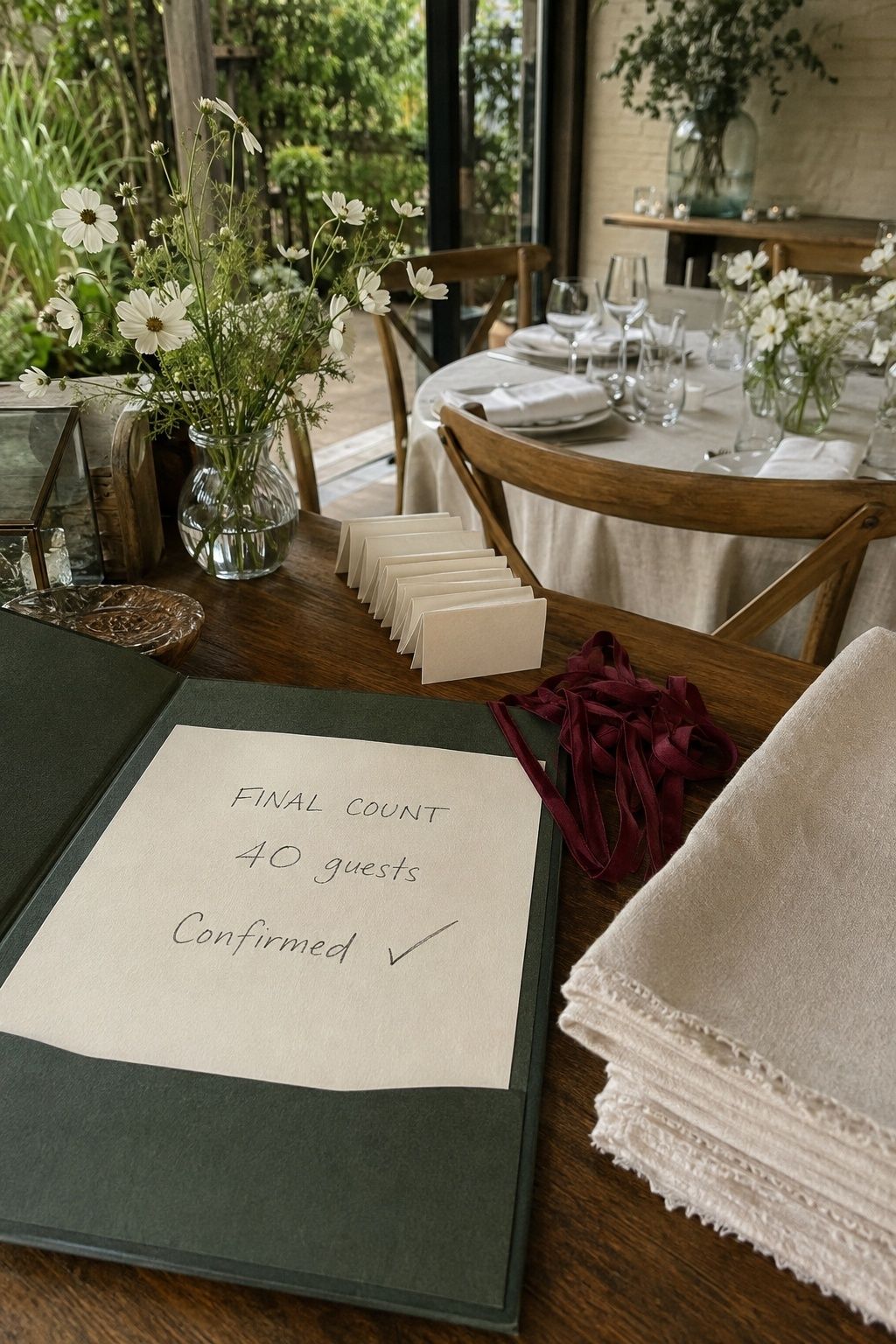
The final count date is the moment the RSVP chase ends. Once the caterer, venue, rental team, transportation company, or stationer needs numbers, the guest list needs to stop staying emotionally open. Mark every unanswered household according to the rule you chose in advance.
For most weddings, silence after clear follow-up becomes a no. That does not mean the couple is punishing anyone. It means the wedding has moved from invitation mode into production mode. Meals, chairs, menus, escort cards, and staffing need a number.
Document the final decision in your tracker: “No response after two follow-ups; counted as not attending on final count date.” This gives you a calm record if a guest appears later with confusion. You are not relying on memory or emotion. You are following the same rule for everyone.
Freezing the count also protects your vendors. A caterer orders ingredients, schedules staff, and prepares service based on the number you submit. A rental company counts chairs, linens, chargers, and glassware. A stationer prints escort cards and menus. When you keep reopening the number, the whole back end of the wedding absorbs the uncertainty.
Confirm Late Yes Replies Only If The Wedding Still Has Room
Late RSVP etiquette wedding situations get tense when couples feel forced to honor every late yes. You are allowed to check the real capacity first. If the meal count, seating chart, room layout, shuttle list, and budget still have space, accept the reply graciously. If the vendor count is closed, answer kindly but firmly.
A late yes before the vendor deadline is usually easy to absorb. A late yes after final counts have been submitted is a different issue. The guest missed both the original deadline and the follow-up window. At that point, the couple should not pay rush fees, rebuild tables, or reopen the chart unless they genuinely want to and the vendor agrees.
Keep the answer factual: “We would have loved to celebrate with you, but our final numbers have already been submitted.” That sentence is clean, regretful, and closed.
If the reply arrives just before the count closes, pause before answering. Check whether the guest was included in a buffer, whether the table plan still works, and whether their meal choice is available. Then answer once. A late yes should not create a day of private debate between the couple, parents, planner, and caterer.
Keep The First Reminder Warm And Specific
The best wedding RSVP follow up wording sounds like a quick planning check, not a complaint. Use names, the wedding date, and the reply deadline. Avoid sarcasm, jokes about hunting people down, or comments about how many times you have asked. Those lines feel funny while drafting and sharp when received.
A polished first reminder: “Hi Lena, we are wrapping up RSVPs for our wedding on September 12 and have not seen your reply come through. Are you able to join us? A yes or no by Thursday would be wonderful.”
For a more casual guest: “Hi Marco, quick wedding count question. Are you coming on September 12? A yes or no by tomorrow evening is perfect.” The shorter version works because it removes every barrier except the decision.
For an online RSVP, keep the message even simpler: “Hi Alana, RSVPs closed this week and we have not received yours. Are you able to join us on September 12? Please reply here or use the RSVP link by Thursday evening.” The link is useful, but the direct reply option matters because a guest who is already late should not have to solve another tiny errand before answering.
Ask For A Yes Or No Instead Of An Explanation
When wedding guests not RSVPing finally hear from you, they sometimes overexplain because they feel late and awkward. Do not ask for the story unless the relationship needs it. Ask for the answer. The cleaner the question, the easier it is for the guest to reply quickly.
Use “Are you able to join us?” rather than “Do you know what your plans are yet?” The first question leads to a count. The second leaves space for another delay. If travel, childcare, or work is unresolved, the guest needs to decide whether they are attending by your count date.
This approach is especially useful for missing wedding RSVPs from friends who are nervous about disappointing you. When you say that either answer is okay, you make room for a no without making the guest perform guilt.
If someone answers with uncertainty, treat uncertainty as a decision point. “I understand. We do need to close the count by Friday, so if you are not sure by then, we will count you as unable to attend.” That line gives the guest respect and gives the wedding a boundary.
Name The Vendor Deadline Without Blaming The Guest
A vendor deadline gives your message a reason beyond personal irritation. The sentence should not make the caterer sound like a threat. It should explain why the date is real. “We need to give final numbers to our venue on Friday” is enough.
Good wording: “We are giving our final headcount to the caterer this Friday, so we need to know by Thursday evening whether to count you in.” It is direct, time-bound, and practical. It also keeps the couple from sounding as if they are negotiating every reply personally.
Avoid softening the deadline so much that it disappears. “Whenever you get a chance” creates another gap. “By Thursday evening” closes the gap.
Use the same date in every channel. If your email says Thursday, your text should say Thursday, and your parent should say Thursday on the phone. Mixed deadlines make guests think there is hidden flexibility. One date makes the answer easier for everyone.
Give A No Reply Dignity
Some guests delay because they think a no will disappoint you. Give them language that keeps the relationship warm. “No pressure either way; we just need the final count” is often enough to turn silence into an answer.
When a late no arrives, do not answer with a lecture about deadlines. Reply once, graciously: “Thank you for letting us know. We will miss you and hope to celebrate with you another time.” Then update the tracker and move on.
This matters because you are still hosting a wedding, not running a collections department. A guest who missed a date does not need unlimited patience, but the reply still reflects the tone of the celebration.
Late no replies also have value. They release a seat, lower the meal count, and bring the chart closer to truth. Thanking the guest is not pretending the deadline did not matter. It is choosing to close the exchange gracefully so you return your attention to the people who will be in the room.
Let One Relative Handle Their Side
Family late RSVPs often resolve faster when the message comes from the person with the existing relationship. If your aunt ignores your online form but answers your father in two minutes, let your father make that call. This is not avoidance. It is efficient hospitality.
Give each family messenger the same sentence and deadline. That keeps the tone consistent and prevents relatives from offering extra space, secret extensions, or casual promises the couple never approved. The person calling should gather only the answer: attending, not attending, meal choice, and any invited household details.
For complicated families, assign the follow-up by branch. One person handles one side, another handles the other, and the couple receives final answers in the tracker. This protects the final weeks from becoming a family group-chat spiral.
Give family messengers boundaries around tone as well as facts. They should not say the couple is upset, stressed, or desperate for answers. They should say the wedding count is closing and a yes or no is needed by the stated date. That keeps the couple out of the emotional center of every call.
When A Guest Says They Sent It Already
Sometimes the guest did reply and the answer was lost, misread, or entered under another name. Treat that as a normal correction, not a courtroom scene. Thank them, confirm the details, and update the tracker immediately.
Say: “Thank you for checking. I do not see it on our side, so I am going to confirm it here: two attending, chicken and vegetarian meals. Is that right?” This turns the confusion into a clean record.
If the guest sounds offended, keep your tone steady. RSVP systems are imperfect, mail goes missing, and digital forms occasionally fail. The outcome matters more than who was technically correct.
After confirming, look for related details before you close the row. Did they include a meal? Did they answer for every invited person? Did they add someone who was not named? A “sent already” conversation is a good moment to clean the whole household record instead of finding a second problem later.
When Someone Adds A Plus One Late
A late reply with an uninvited plus one needs a separate answer from the RSVP itself. Do not let the extra name slide into the count by accident. First confirm the invited guest’s attendance. Then address the plus-one boundary clearly.
Use wording such as: “We are so glad you are able to come. We are only able to host the names listed on each invitation, so we do not have an additional seat available.” That response is warm but final.
If the guest pushes back, repeat the same boundary once. Do not explain table math, family politics, venue cost, or fairness across the whole guest list. The more detail you give, the more there is to debate.
Do not solve a late plus-one request by quietly moving other guests around unless the couple truly wants that change. A plus one affects more than one chair. It changes meal count, seating balance, introductions, transportation, and sometimes the emotional comfort of the table.
When Meal Choices Are Missing
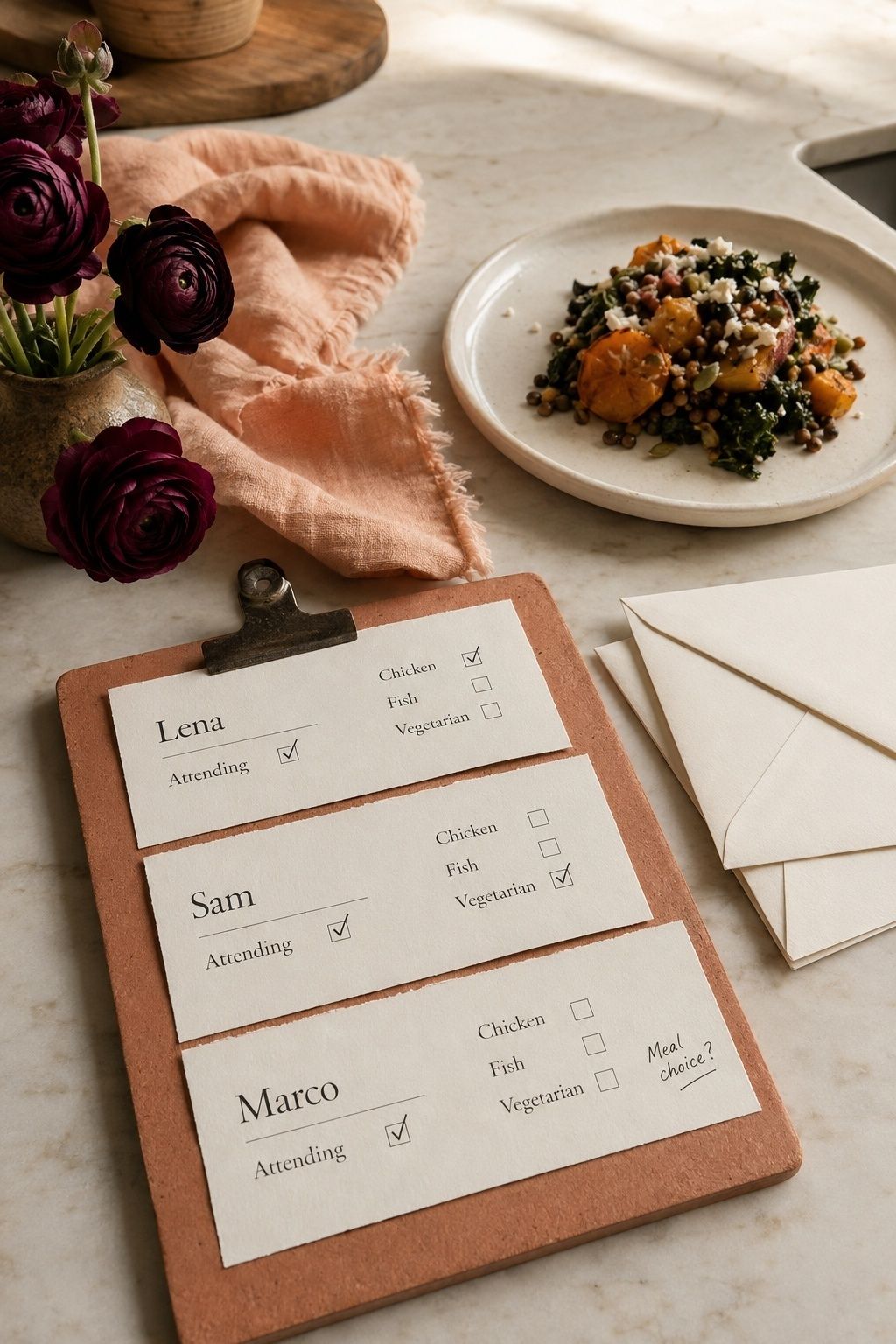
A guest who RSVPs yes but skips meal choices is not fully confirmed for catering. Treat the meal as part of the RSVP, not a tiny side question for later. If choices are due to the caterer, follow up with the same urgency as a missing attendance reply.
Make the question easy: “We have you counted in for the wedding. Please send chicken, fish, or vegetarian by tonight so we submit the meal count tomorrow.” If the guest does not answer, choose the default meal your caterer recommends and record that choice.
Dietary restrictions deserve care, but they still need a deadline. After menus are finalized, the caterer has less room for new requests. A clear early message protects both the guest experience and the kitchen plan.
If your caterer allows a default choice, decide it in advance. Some couples default to the most widely liked option; others default to vegetarian for guests who do not answer. The specific rule matters less than writing it down and applying it consistently.
When A Family Group Sends Partial Replies
Family invitations often create partial answers: one parent is coming, one adult child is unsure, one partner forgot the meal choice, and a teenager is suddenly invited in someone’s mind. Do not track this casually. Household ambiguity is where headcounts drift.
Write the household back as a complete list. “To make sure we have this right, we are counting Priya and Dev as attending, Anika as not attending, and no additional guests. Please confirm by tonight.” This forces the whole answer into one clean line.
If one person remains undecided after the household deadline, count that person out unless your vendor count still has room. A family group should not keep several seats open because one person has not chosen.
Partial household replies are also where guest names get misspelled or duplicated. Before sending final stationery details, compare the household answer against the invitation list. This small cleanup prevents escort-card confusion and awkward table searches during cocktail hour.
When A Guest Answers After Seating Is Finished
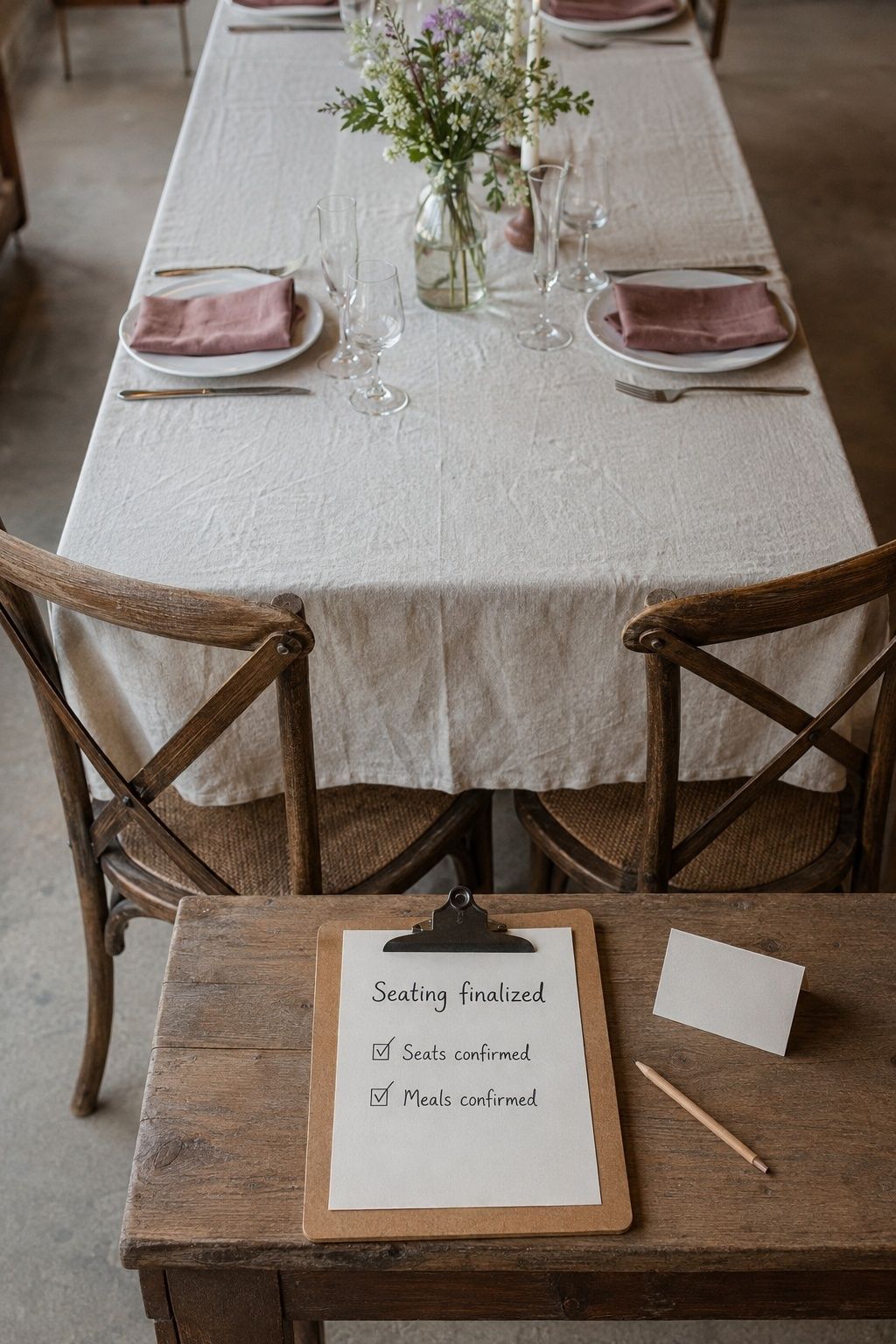
A late yes after the seating chart is finished is not automatically impossible, but it needs a practical check. Look at table capacity, meal count, escort cards, ceremony seating, transportation, and any venue cap. If one more guest changes several details, the answer should respect the work already closed.
If you have a clean seat and a meal, welcome them without making the guest feel like a problem. If not, use the final-count wording. The kindest boundary is one that does not invite a long negotiation.
Couples sometimes feel guilty saying no after inviting someone originally. Remember that the invitation included an RSVP deadline. A guest who missed the deadline and the follow-up window changed the planning conditions.
If parents are involved, tell them the seating chart is finished before late answers start floating through the family. A clear internal line prevents last-minute pressure. “We are only accepting late replies if the venue and meal count still work” is easier to hold than deciding from scratch every time someone texts.
Use Smaller Guest Lists To Your Advantage
Small weddings make follow-up more personal, but also more manageable. With thirty or fifty guests, every missing reply is obvious. That means you usually know the best channel for each person and the right messenger for each family pocket.
Use that closeness well. A short call to a grandparent, a direct text to a college friend, or a parent-to-sibling message often feels more natural than a formal email blast. The smaller the list, the less reason there is to hide behind generic reminders.
At the same time, do not let intimacy erase the deadline. A tiny dinner still has chair counts, menus, place cards, and room flow. Small does not mean endlessly flexible.
Small weddings also make late answers more visible at the event itself. One unexpected person at a table of ten changes the table. One missing couple at a private-room dinner changes the room energy. That is why small celebrations deserve the same RSVP discipline as larger receptions.
Decide Whether Silence Counts As No
Before follow-up starts, decide the silence rule. The fairest rule for most weddings is this: after the printed deadline, one warm reminder, one firm final message, and no answer by the final count date, the household is marked not attending.
Do not begin with “no RSVP means no” before any personal follow-up. People make mistakes, and the couple should give invited guests a real chance to answer. But once that chance has been offered clearly, the wedding needs a closed number.
Share the rule with anyone assisting. That prevents a parent from saying, “I am sure they are coming,” while your spreadsheet says no response. A wedding headcount should be based on confirmed answers, not family optimism.
Write the silence rule in plain language for yourself: “After the final follow-up deadline, any household with no answer is counted as not attending.” Seeing the rule in writing removes the temptation to reopen one person because you feel guilty and close another because you feel annoyed.
Protect The Couple From Endless Messages
The couple should not spend the entire month before the wedding sending awkward reminders. Choose a follow-up captain if the list is large or family dynamics are tender. That person updates the tracker and escalates only the replies that need a couple decision.
This is especially useful when the same guests also have plus-one questions, meal confusion, hotel-block issues, or travel uncertainty. One organized person keeps the communication from scattering across texts, email, social messages, and parent calls.
Set office hours for yourself if needed. Ten minutes each evening is healthier than checking every buzz on your phone. Your engagement should not feel held hostage by people who missed a form.
Keep all replies in one place as soon as they arrive. If someone answers by text, copy the answer into the tracker. If someone tells your mother verbally, ask your mother to send the exact count back in writing. The system only works when the final document is more reliable than everyone’s memory.
Keep A Tiny Buffer Without Advertising It
If your venue and budget allow it, a tiny practical buffer brings peace. This does not mean inviting more uncertainty. It means knowing whether one or two late corrections could fit before you answer. Ask vendors how late minor changes are possible and what fees apply.
Do not tell guests there is a buffer. The moment people hear that late changes are possible, the RSVP deadline loses force. Keep the buffer as an internal planning cushion, not a public promise.
Use the buffer for true exceptions: a reply that got lost, a grandparent whose caregiver changed, a travel guest with a real flight issue, or a household correction that matters deeply to the couple. Do not use it to reward every person who ignored the deadline.
FAQ
How Do You Handle Late Wedding RSVPs?
Handle late wedding RSVPs with a simple sequence: wait a few days after the RSVP date, send a warm reminder with a clear yes-or-no question, give a short reply window, change channels if needed, and close the count on the vendor deadline. Track each household so the final number is based on confirmed answers.
Is It Rude To Follow Up After The RSVP Deadline?
No. It is normal to follow up after the RSVP deadline because the couple needs a final count for food, seating, rentals, transportation, and stationery. The key is tone. A short, specific message feels courteous; a guilt-heavy message feels sharp.
How Many Times Should You Follow Up With Guests Who Have Not RSVPed?
Follow up two times for most guests: one warm reminder and one firm final message or call before the vendor count closes. For close family or someone essential to the seating plan, one additional call from the right relative is reasonable. After that, mark the household according to your silence rule.
Can You Assume No RSVP Means No?
Do not assume no RSVP means no before any direct follow-up. Give the guest a clear chance to answer. If the original deadline passed, follow-up was sent, the final count date arrived, and there is still no answer, then counting the guest as not attending is usually the fairest planning choice.
What Do You Say To Guests Who Miss The RSVP Deadline?
Say something direct and kind: “Hi, we are finalizing our wedding count and have not received your RSVP. Are you able to join us? Please send a yes or no by Thursday evening so we submit accurate numbers.” Add the RSVP link if you are using one.
When Should The RSVP Deadline Be Before A Wedding?
Set the RSVP deadline by working backward from the earliest vendor headcount date. Many weddings use a deadline about three to four weeks before the wedding, with extra time for destination or travel-heavy celebrations. Leave enough room to follow up before catering, venue, and rental numbers close.
Final Thoughts
Handling late wedding RSVPs well means stopping one missing answer from taking over the whole planning mood. The kindest system is steady: one warm reminder, one direct deadline, one final count, and one clear decision for every household.
You are allowed to be gracious without being endlessly available. You are allowed to care about guests and still protect your caterer deadline, seating chart, and final week. Once the count closes, let it close. The wedding needs your presence more than it needs another round of unanswered messages.
If a guest replies late, answer with the same calm you used all along: clear count, clear date, and a kind boundary for any household that missed the final number.
Last update on 2026-10-04 / Affiliate links / Images from Amazon Product Advertising API