

How to choose wedding priorities as a couple starts with a one-on-one conversation before venues, vendors, families, trends, or budgets get a vote. Each partner names what matters most, what feels optional, and what would create regret. Then you choose three to five shared priorities and use them as a steady filter for money, guest list, traditions, timing, and every yes or no that follows.
Wedding planning gets loud quickly. One person asks about the guest list, another asks about flowers, a venue tour throws five new decisions at you, and suddenly a celebration that was meant to feel personal starts sounding like a committee project.
That is why how to choose wedding priorities as a couple matters so much at the beginning. Your priorities are not a rigid rulebook. They are a shared language for what deserves your money, your time, your attention, and your emotional energy.
Recommended Wedding Products


You Might Also Like These Blog Posts
- How To Choose Between Wedding Photographer And Videographer Without Regret
- How To Choose A Wedding Vibe That Feels Like You Before Pinterest Takes Over
- How To Plan A Wedding When Families Disagree And Still Feel Like A Team
- January Outdoor Wedding Planning for a Beautiful Day That Knows Weather Gets a Vote
- What To Do First When Planning A Wedding So The Rest Feels Clear
- What Decisions Matter Most When Planning A Wedding Before Details Take Over
How To Choose Wedding Priorities As A Couple
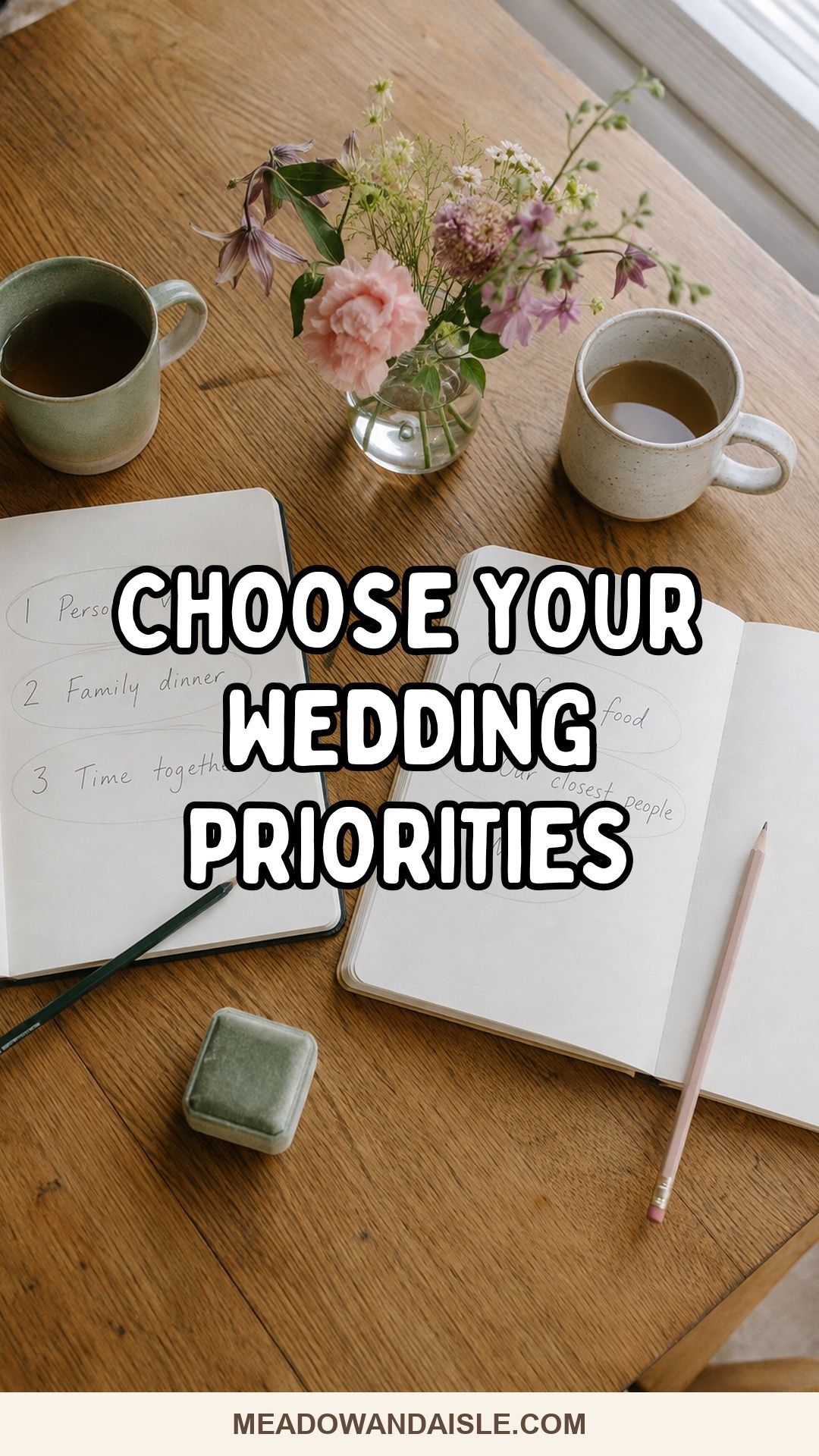
The simplest way to choose wedding priorities is to separate the emotional conversation from the shopping conversation. Before you ask what the flowers cost, ask what the flowers are meant to do. Before you tour another venue, ask what kind of room would make you feel present. Before you cut the guest list, ask who you want around you when the vows are spoken.
Good wedding priorities usually describe an experience, not a product. “A relaxed dinner with our closest people” is stronger than “expensive catering.” “A ceremony that feels honest” is stronger than “custom vows because everyone says we should.” “Great music and a packed dance floor” is stronger than “the top DJ in town.” When the priority is clear, the purchase becomes easier to judge.
Try to end with three to five shared priorities. Three keeps the list clean and memorable. Five gives room for couples who have a wider celebration or more family dynamics to balance. Once the list gets longer than that, everything starts competing again. A priority list should create clarity, not become a prettier version of your entire checklist.
It is also worth naming what you do not care about. Couples often spend far too much energy on categories neither partner actually values, simply because those categories appear on every wedding checklist. If neither of you cares about favors, matching robes, a formal cake cutting, a full invitation suite, a send-off, or a huge wedding party, give yourselves permission to release those things early.
How to choose wedding priorities as a couple is really about protecting the two of you from planning by default. Default planning says yes to whatever comes next. Priority-led planning asks whether the choice matches the wedding you are trying to create.
A strong way to test your list is to imagine two versions of the same wedding. In the first version, everything looks polished, but the two of you feel rushed, overextended, and slightly absent from your own celebration. In the second version, a few details are simpler, but the day protects the people, memories, and feelings you care about most. Most couples would choose the second version when the question is that plain.
That is the heart of how to choose wedding priorities as a couple: you are deciding what makes the wedding worth the effort. Not what photographs best for strangers. Not what an algorithm repeats. Not what every relative assumes. The wedding is still a hosted event, and guest care matters, but the center has to be the two people getting married.
Do The Priority Conversation Before You Book
The best time for this conversation is before deposits. Once money is tied to a venue, date, vendor, or guest count, the conversation becomes more loaded. Adjustment remains possible, but every new realization has a price tag attached. Talk first, book second.
Set aside one quiet hour. Put phones away. Do not open venue tabs, budget calculators, or family text threads. The goal is not to finish the whole wedding plan. The goal is to hear each other before the outside world gets louder.
Choose a time when neither of you is already depleted. A Sunday night after a family argument is rarely the right moment. A walk, breakfast, or quiet evening at home usually works better. Keep the tone curious. You are not pitching a wedding concept to each other. You are discovering which parts of the celebration carry the most meaning.
Answer Separately First

Start alone. Each partner writes a short list without editing for the other person. This keeps one confident voice from setting the tone for both of you. It also gives quieter thoughts a chance to show up before they get talked away.
Write ten answers if you need to, then circle the three that feel most true. Your list could hold feelings, people, rituals, money choices, family hopes, comfort, food, music, photography, faith, quiet, travel, accessibility, or ease. Nothing has to sound impressive. It only has to be honest.
If blank-page writing feels hard, finish these sentences: “I would feel sad if we skipped…” “I would feel relieved if we simplified…” “I want our guests to feel…” “I want us to remember…” “I am afraid we will spend too much energy on…” Short answers are fine. The first honest draft is only there to start the conversation.
Compare Similarities
When you come together, begin with overlap. Maybe both of you wrote down a meaningful ceremony, a smaller guest list, good food, less stress, or a real dance party. Circle those shared answers first. Shared priorities are the strongest starting point because they already carry agreement.
Look for similar meanings even when the words differ. One partner could list “family dinner” while the other writes “everyone relaxed.” One person could list “photos” while the other writes “remembering the day clearly.” Those are not identical answers, but they often point toward the same value: presence, memory, closeness, or celebration.
Grouping your answers by feeling also works well. Put ceremony, vows, officiant, and music under meaning. Put food, drinks, seating, and flow under hospitality. Put photography, video, letters, and heirlooms under memory. Put budget, fewer events, and shorter to-do lists under calm. Once the clusters appear, the shared priorities are easier to see.
Notice The Differences Without Scoring Them
Different answers are information, not a contest. If one partner cares deeply about photography and the other cares about music, neither priority wins by being more traditional, more expensive, or more visible. Ask what sits underneath the wish. Photography often means memory, family legacy, or feeling seen. Music often means release, joy, or the party finally feeling alive.
Avoid ranking each other’s answers by who has stronger feelings. Some people speak with certainty even when the decision is small. Others speak softly about something that matters a great deal. Slow down long enough to understand the reason behind the answer.
Use language that keeps the door open. Try “Tell me what that gives you” instead of “Why do you care about that?” Try “What feels hard about my answer?” instead of “What is wrong with my answer?” The wording changes the emotional temperature of the conversation. You are trying to understand the need, not win the category.
Choose A Few Shared Must-Haves
Choose the must-haves that both of you stand behind. A must-have does not mean unlimited spending. It means this part of the wedding deserves intention, protection, and an early plan. A must-have ceremony still fits a modest budget. Guest comfort does not require luxury furniture. Caring about photos does not require every add-on.
Write each must-have as a sentence. “We want a guest list small enough for real conversation with everyone.” “We want the ceremony to feel personal, not rushed.” “We want the reception to feel like a generous dinner party.” Sentences are clearer than single words.
After you write the sentences, attach one planning action to each one. If the priority is a personal ceremony, the action could be choosing the officiant early and saving time for vows. If the priority is guest comfort, the action could be checking seating, shade, bathrooms, shuttles, and meal timing before decor upgrades. If the priority is budget peace, the action could be setting a firm ceiling before touring venues.
Name The Things You Both Do Not Care About
This part feels surprisingly freeing. Make a second list called “fine to skip, simplify, or spend less on.” Include anything that does not carry meaning for either of you. The list stays between the two of you. It is simply there to keep you from being pulled into every standard wedding category.
If you do not care about favors, choose none or choose something tiny. If neither of you cares about a late-night snack, skip it. If a big wedding party feels like more coordination than joy, keep attendants small or skip formal attendants. A wedding still feels complete without every expected element.
The lower-care list also protects you from upgrade drift. A vendor menu, rental catalog, or stationery suite makes every add-on sound tempting in the moment. If you already know a category is not central, admire the option without absorbing it into the plan. That is not deprivation. It is focus.
Priority Questions To Ask
The right questions move you away from “What are we supposed to do?” and toward “What are we actually trying to create?” Use these prompts when everything feels equally urgent.
How Do We Want The Day To Feel?
Choose feeling words before design words. Calm, joyful, reverent, lively, intimate, elegant, playful, grounded, romantic, family-centered, secluded, or celebratory all point in different directions. A calm wedding usually needs fewer transitions. A lively wedding needs music, timing, and space for momentum. A secluded wedding needs boundaries around the guest list and phones.
If your feeling words conflict, talk about the sequence of the day. Maybe the ceremony is quiet and the reception is lively. Maybe dinner feels intimate before dancing begins. Maybe the afternoon is family-centered and the evening is reserved for the two of you. Feelings do not have to flatten into one mood.
Then translate each feeling into a planning choice. Calm could mean fewer locations, an earlier hair and makeup start, a coordinator, or a smaller wedding party. Joyful could mean brighter music, casual seating, a shorter formal program, and room for laughter. Elegant could mean a beautiful meal, restrained design, and a venue that already carries the mood. Feeling words become practical when you ask what they require.
Who Do We Most Want To Be Present With?
This question turns the guest list from arithmetic into intention. Picture the ceremony. Picture dinner. Picture the morning after. Who feels central to those memories? Who would you seek out if you had only one hour to talk? Who makes the day feel warmer just by being there?
The answer does not automatically mean a tiny wedding. Some couples truly want a big, generous gathering. Others want a tight circle. The point is to choose from relationship, not pressure. A guest list built from obligation alone often creates budget strain and emotional exhaustion.
Make this question concrete by naming tables, not just totals. Would you feel glad to sit with this person at dinner? Would you feel relaxed greeting them during cocktail hour? Would you introduce them proudly to your partner’s family? The guest list becomes clearer when each name is tied to the actual day, not only to history or expectation.
What Do We Want Guests To Remember?
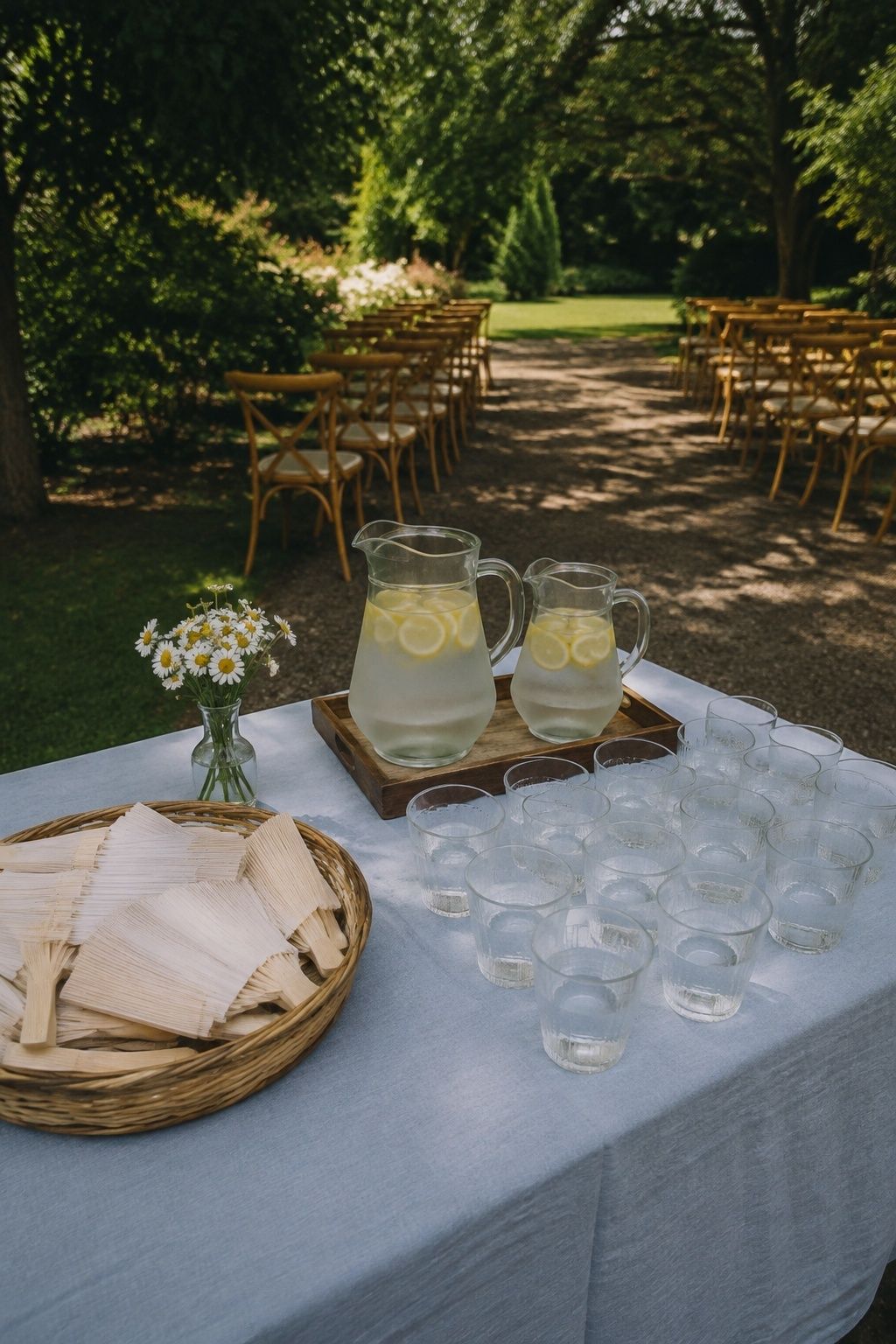
Guests rarely remember every linen, sign, or tiny decorative choice. They remember how the day felt in their bodies: whether they were welcomed, fed, comfortable, moved, entertained, and included. If guest experience is one of your priorities, decide which memory matters most.
For some couples, that memory is the ceremony. For others, it is a meal where everyone lingers. It could be an unforgettable band, heartfelt toasts, a beautiful view, family traditions, or a reception that feels easy to navigate. Choose the guest memory before you choose the line item.
This question is also a guardrail against over-decorating the wrong spaces. If you want guests to remember feeling welcomed, invest in arrival flow, signage that actually directs them, drinks before a hot ceremony, and enough seats. If you want them to remember emotion, give the ceremony the right sound, pacing, and quiet. If you want them to remember the party, protect the music and timeline.
What Would We Regret Spending Too Much On?
Regret is not always about the amount. It is about mismatch. Spending more on something you value often feels peaceful. Spending the same amount on something you barely care about often feels heavy. Ask which categories would make you wince later if they grew beyond the plan.
This question is especially good for decor, stationery upgrades, attire extras, favors, transportation, pre-wedding events, and vendor add-ons. None of those categories is wrong. They simply deserve different levels of investment depending on the couple.
Ask it before you sign, not after. The first quote often feels like the baseline even when it includes upgrades you never wanted. Compare each proposal against your priority list. If an item does not touch a must-have, decide whether it is still worth the cost. Sometimes the answer is yes. Often the answer is a peaceful no.
What Would We Regret Skipping?
Now reverse the question. Which choices would you still think about years later if you skipped them? A quiet first look. A longer photo window with grandparents. Live ceremony music. A great meal. A smaller guest list. A destination weekend. A planner. A slower morning. A late dance floor. This question often reveals the real must-haves.
Be careful with borrowed regret. If you only fear skipping something because another couple loved it, that is not enough. Your own future memory is the test. Ask, “Would we miss this, or do we only feel uneasy because weddings usually include it?”
Real regret often has a specific shape. “I would regret not having photos with my grandmother.” “I would regret not sharing vows just between us.” “I would regret being too stressed to enjoy dinner.” “I would regret inviting so many people that we barely saw each other.” Specific regret is worth listening to because it points toward action.
Turn Priorities Into Planning Choices
Priorities matter most when they leave the conversation and enter the plan. Keep them visible in your budget file, vendor tracker, guest list, and calendar. Each time a new decision appears, ask which priority it serves, which one it strains, and whether the tradeoff feels worth it.
Budget
A priority-led budget is not equal spending across every category. It is intentional imbalance. If food and conversation are central, more money goes toward the meal, seating, service, and room layout. If music is central, the entertainment line grows while other categories get simpler. If peace is central, a coordinator or planner could outrank extra decor.
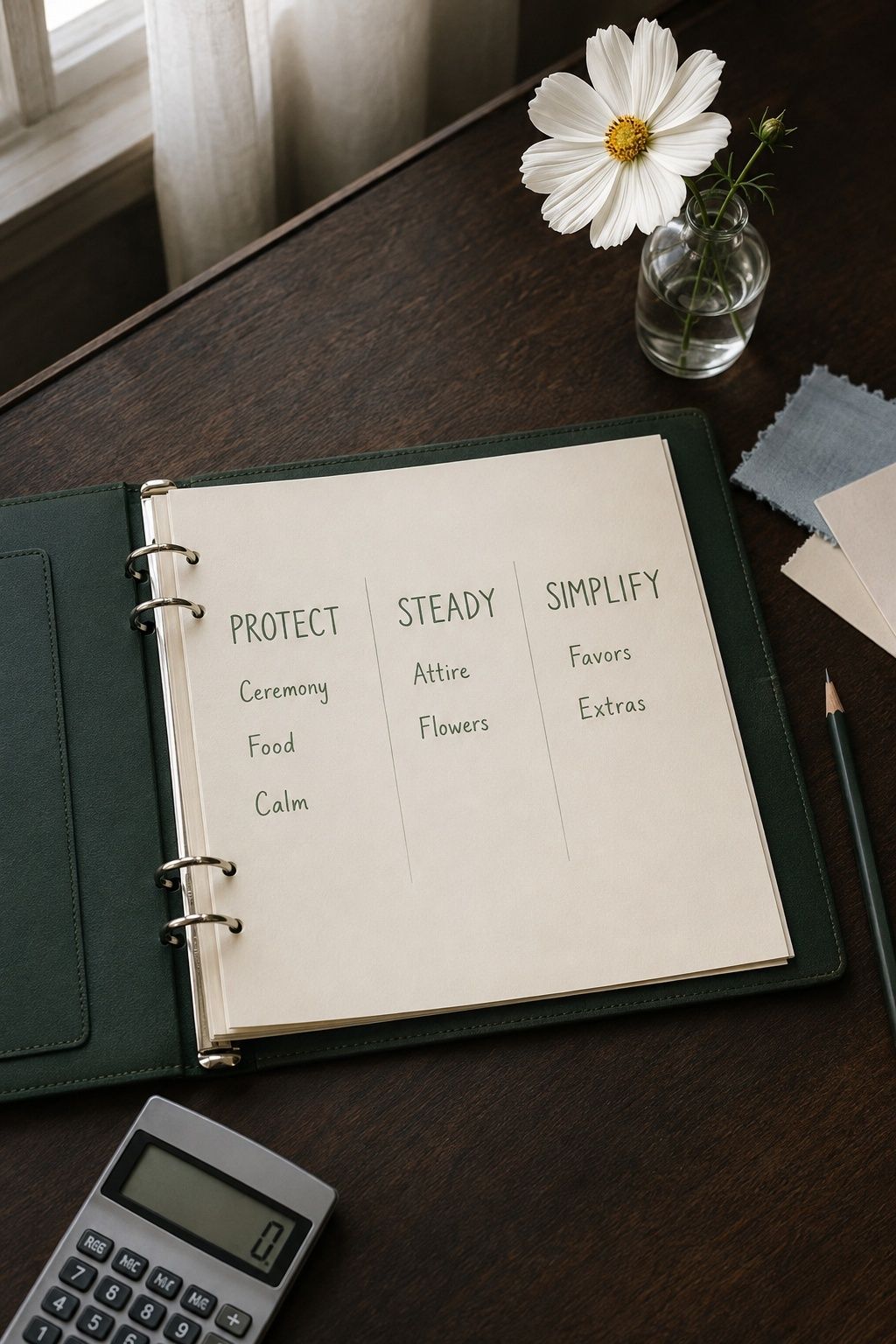
Use three budget tiers: protect, steady, and simplify. Protect categories tied directly to your shared priorities. Keep steady the categories that matter but do not define the day. Simplify anything both of you placed on the lower-care list. This keeps cuts from feeling random.
For example, if your top priorities are ceremony, food, and calm, your protected spending could include officiant, sound, catering, seating, and coordination. Your steady spending could include attire, flowers, and stationery. Your simplified spending could include favors, specialty signage, a multi-event weekend, or elaborate transportation. Another couple could make the opposite choices and still be right.
Guest List
Your guest list is one of the clearest expressions of your priorities. If presence and intimacy matter, the list needs real boundaries. If family reunion energy matters, the list gets wider. If guest comfort matters, the number has to match the venue, meal style, bathrooms, parking, and budget.
When the list gets hard, return to your shared sentence. “We want a dinner with time for every guest” leads to different choices than “We want all branches of both families gathered.” Both are valid. The priority tells you which discomfort is worth carrying.
Guest count also affects almost every other line. More people means more food, chairs, tables, linens, invitations, staff, bathrooms, favors, shuttle seats, and time spent greeting. Fewer people often mean more room in the budget for the meal, venue, photography, or weekend experience. The list is never just a list. It is a design and budget decision.
Venue
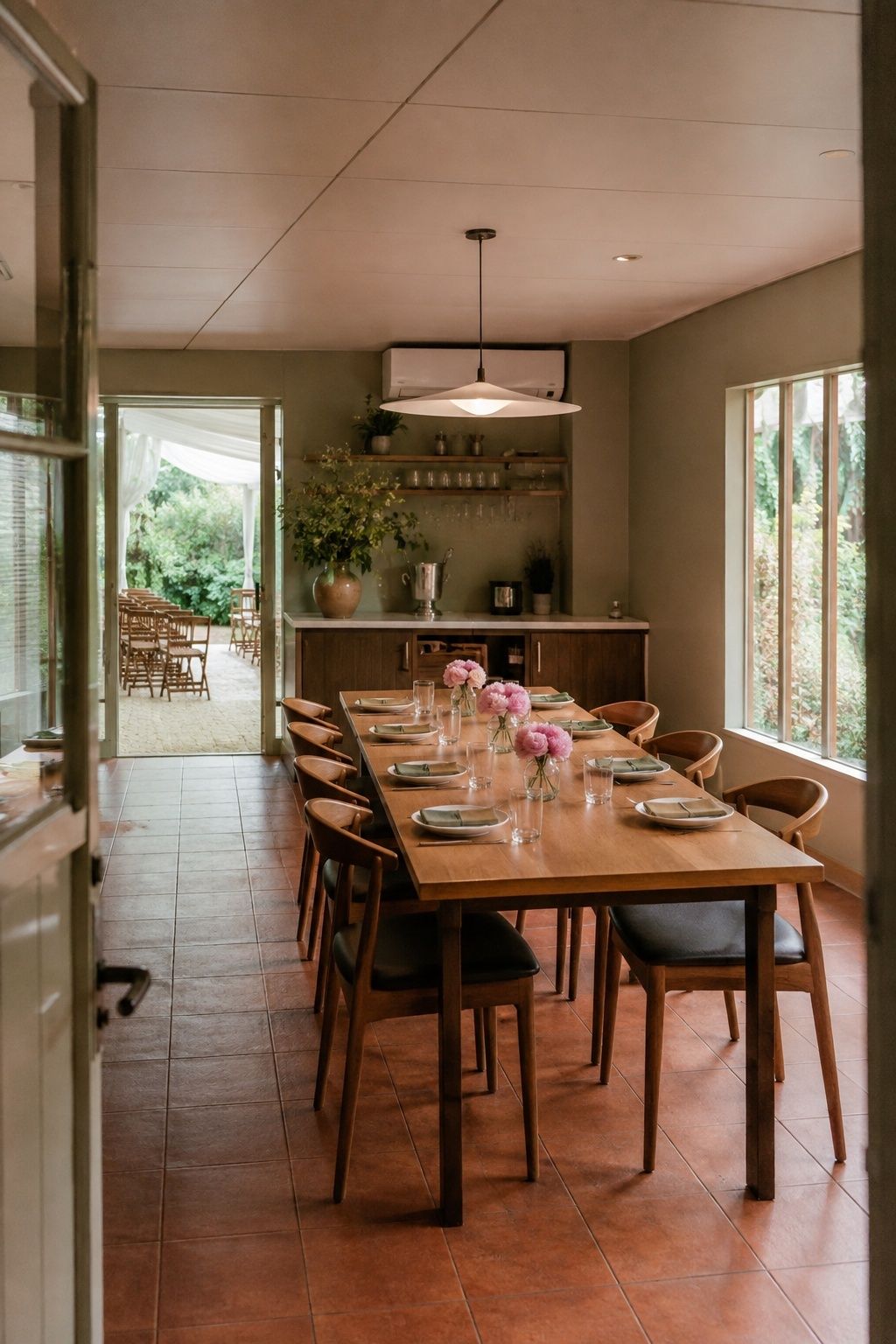
Venues are emotional because they make the wedding feel real. Still, the prettiest venue is not always the right one. Compare each space against your priorities. Does it fit the guest count you actually want? Does it give the atmosphere you named? Does it demand rentals, transportation, or timing compromises that push against your values?
If your priority is ease, an all-inclusive venue or restaurant buyout often beats a blank-slate space. If your priority is creative freedom, a blank-slate space becomes worth the coordination. If your priority is a meaningful ceremony, a venue with the right ceremony location matters more than a dramatic cocktail hour wall.
Bring your priorities on venue tours. Ask how the space handles the parts that matter most: sound for vows, dinner pacing, rain plans, guest movement, photo timing, accessibility, quiet spaces, after-party rules, or setup complexity. A venue that is beautiful but fights your priorities will create work all year.
Vendors
Vendor choices get easier when you know what role each vendor plays in the experience. A photographer matters differently when memory is a top priority. A caterer matters differently when hospitality is central. A planner matters differently when calm and family boundaries are central.
Ask vendors questions tied to your priorities. Instead of only asking what each offer includes, ask how they handle the part of the day you care about most. For photography, ask about family portraits, quiet moments, or candid reception coverage. For catering, ask about pacing, dietary needs, and service flow. For music, ask how the dance floor builds over the night.
A vendor who is excellent for one couple is not automatically right for another. If you value calm, you need vendors who communicate clearly and manage timing well. If you value creative design, you need vendors who bring ideas without overwhelming you. If you value family connection, you need vendors who move warmly through a multigenerational room.
Traditions
Traditions deserve a yes, no, or adapted version. Do not keep a tradition only because it is familiar. Do not drop a tradition only because it is common. Ask what it means to you. A first dance feels deeply romantic for one couple and painfully performative for another. A bouquet toss feels playful to one group and awkward to another.
If a family tradition matters to someone you love but not to you, decide whether it fits your shared priorities. Sometimes a small adaptation keeps the meaning without overtaking the day. Other times a kind boundary is cleaner. Your priority list gives you language for both.
Adaptation is often beautiful. A formal receiving line becomes a welcome toast. A large wedding party becomes a quiet getting-ready morning with close friends. A parent dance becomes a family dance. A religious passage moves into the ceremony, dinner blessing, or printed program depending on what feels sincere. Traditions are strongest when they are chosen awake.
Timeline

The timeline is where priorities either breathe or disappear. If you want a calm morning, do not pack it with too many portraits, errands, reveals, and setup questions. If you want time with guests, do not vanish for photos during the entire cocktail hour. If you want dancing, do not let speeches, courses, and formalities fill the whole reception.
Build the schedule around the moments you named first. Give them actual minutes. A meaningful ceremony needs enough time before and after it. A generous dinner needs service pacing that does not rush guests. A packed dance floor needs an opening, not just the last thirty minutes after everyone is tired.
Also protect transition time. Many wedding days feel stressful because every event technically fits, but nothing has room to breathe. If presence is a priority, add buffer around travel, portraits, bustling, family greetings, and dinner service. Ten quiet minutes matter more than another decorative detail.
What If You Disagree
Disagreement does not mean you are planning badly. It means two real people are bringing different families, budgets, social habits, fears, and hopes into one event. The goal is not to erase difference. The goal is to turn difference into a plan both of you respect.
Start by translating each disagreement into the need underneath it. A larger guest list often means family loyalty, fear of hurting people, cultural expectation, or genuine joy in a crowd. A smaller guest list often means quiet, budget care, anxiety, or a desire for deeper conversation. Once you know the need, the answer gets less personal.
Then look for a version that honors both sides without pretending both sides get everything. A partner who wants a big celebration could agree to a smaller ceremony and a larger casual party later. A partner who wants quiet could agree to a bigger guest list if the venue gives them a calm getting-ready morning and a last dance just for the two of you.
Use a tradeoff rule: if one partner gets a strong yes on a priority, the couple protects another priority for the other partner with equal seriousness. This keeps compromise from becoming one person giving in over and over.
When you still feel stuck, define the decision by scale. Some disagreements are about the whole wedding, such as guest count or budget. Others are about one moment, such as vows, portraits, music, or parent involvement. Solve the smallest true version of the disagreement first. A smaller answer often creates enough relief to move forward.
If the disagreement is about family pressure, separate what you two want from what others expect. Kindness to relatives does not mean giving them the steering wheel. A clear shared priority lets you say, “We are keeping the ceremony small because we want it to feel very personal,” rather than defending every individual decision.
How To Use Priorities Later
Priorities are not only for the first planning night. They are a living filter you return to whenever a choice gets expensive, emotional, or confusing. Put your shared priorities at the top of the budget sheet. Add them to the first page of your planner. Keep them in the vendor comparison file. Use them in family conversations when you need a clear reason.
When a new option appears, ask four questions. Does this match one of our priorities? What would we give up to afford it? Would we still want it if nobody else saw it? Would this make the wedding feel more like us or simply more like a wedding? Those questions slow the yes down long enough for both of you to think.
Priorities are also a cure for second guessing. You will see other weddings. You will see gorgeous details you did not choose. You will hear opinions. When that happens, return to the list. You did not skip something because you failed to imagine it. You skipped it because you chose something else on purpose.
Revisit the list after major bookings. A venue contract, a real guest count, or a firm budget often reveals pressure points. You do not need to rewrite the whole list every time. Just ask whether the priorities still sound true and whether the current plan reflects them.
Mistakes To Avoid
The first mistake is choosing priorities after the budget is already spent. Once deposits are paid, priorities still guide smaller choices, but they lose some power. Talk early enough that your biggest commitments reflect what you value.
The second mistake is choosing categories without meaning. “Venue, food, photos” is a start, but it does not say enough. Try “a venue that feels relaxed and easy for our guests,” “food that feels generous and local,” or “photos that capture family and candid emotion.” Meaning makes the category easier to act on.
The third mistake is letting every priority become expensive. A priority deserves intention, but intention is not the same as the highest price. If ceremony is central, invest in writing, music, timing, seating, and quiet. Those choices matter as much as a costly floral arch.
The fourth mistake is treating one partner’s priority as less valid because it is less visible. Wanting a calm morning, fewer family interruptions, a shorter reception, or a lower budget matters just as much as wanting flowers, music, attire, or photography. Invisible comfort shapes the day.
The fifth mistake is using priorities as weapons. A priority list should guide decisions, not end conversations. If one partner says, “That is not on the list,” with no curiosity, the list becomes another pressure point. Stay open to new information while still protecting the core.
The sixth mistake is copying another couple’s priorities. Their wedding, family, budget, venue, and personalities are different. Borrow questions, not answers. Your list should sound like the two of you, even if it looks simple from the outside.
The seventh mistake is avoiding the lower-care list. Couples often fear that naming what they do not care about sounds negative. In reality, it creates breathing room. A kind no to one category gives a stronger yes to the parts of the wedding that matter most.
FAQ
How Do You Choose Wedding Priorities As A Couple?
Choose wedding priorities as a couple by answering separately first, comparing your lists, finding shared themes, and choosing three to five must-haves you both understand. Write each priority as a sentence so it guides real choices. For example, “We want a small guest list where we feel fully present” is clearer than “intimate.”
If you are wondering how to choose wedding priorities as a couple, start before you book anything. Early priorities shape the budget, venue search, guest count, vendor team, and timeline before those choices become hard to change.
What Are The Most Important Wedding Priorities?
The most important wedding priorities are the ones that shape the experience you want to remember. Common priorities include a meaningful ceremony, guest comfort, food, photography, music, a manageable budget, family presence, cultural traditions, quiet, and a timeline that feels calm. The right list depends on your relationship, not a universal ranking.
How Many Wedding Priorities Should You Choose?
Choose three to five wedding priorities. Three is easiest to remember and apply. Five works when you need room for family, budget, guest experience, ceremony, and atmosphere. More than five often makes every decision feel equally important again.
What If Partners Have Different Wedding Priorities?
If partners have different wedding priorities, ask what each priority means underneath the surface. One person could want a big guest list because family connection matters; the other could want a small guest list because quiet matters. Once the need is clear, build a compromise that respects both people instead of arguing over the category alone.
How Do Wedding Priorities Affect The Budget?
Wedding priorities affect the budget by showing where to protect money and where to simplify. Spend more carefully on categories tied to your must-haves, keep middle categories steady, and reduce or skip lower-care items. This creates a budget that reflects your values instead of spreading money evenly across every wedding category.
How Do You Use Wedding Priorities To Make Decisions?
Use wedding priorities to make decisions by turning each choice into a filter question. Ask whether the option matches a shared priority, what it costs in money or time, what it would replace, and whether you would still choose it without outside pressure. If the answer points back to your priorities, it is likely a strong yes.
Final Thoughts
Wedding priorities are not meant to make your wedding smaller, stricter, or less beautiful. They are meant to make it more honest. When you know what matters most, stop treating every detail like a test and start making choices that match the life you are beginning together.
Have the conversation before everyone else gets a vote. Name the day you want, the people you want around you, the memories you want to keep, and the spending you would rather avoid. Your priorities keep the budget, guest list, venue, and timeline calmer, and they give both of you a phrase to return to when another option appears.
Last update on 2026-10-05 / Affiliate links / Images from Amazon Product Advertising API