

Wedding speech mistakes usually come from talking too long, centering the speaker, sharing private stories, leaning on inside jokes, roasting the couple, drinking too much first, skipping practice, or ending without a clear toast. The strongest speeches are brief, specific, generous, and prepared enough to let the room feel close instead of trapped.
Wedding speech mistakes feel especially sharp at an intimate celebration because every laugh, pause, and uncomfortable detail lands close to the couple. A toast does not need polished performance energy; it needs care, restraint, and enough shape that guests know they are being invited into love rather than someone else’s private archive.
That is good news for nervous speakers and couples planning the reception. Most awkward toasts are preventable long before the microphone is passed. A few boundaries around timing, tone, delivery, and content give each speaker room to sound sincere without drifting into stories the room was never meant to hold.
Recommended Wedding Products


You Might Also Like These Blog Posts
- Wedding Guest List Mistakes That Make the Room Feel Wrong
- Wedding Music Mistakes That Quietly Empty The Room
- Wedding Reception Mistakes That Quietly Drain the Room
- Wedding Rehearsal Mistakes That Make The Ceremony Feel Unsteady
- Wedding Rental Mistakes That Make The Pretty Plan Fall Apart
- Rehearsal Dinner Mistakes That Make The Night Before Feel Heavier
Wedding Speech Mistakes That Quietly Lose the Room
A wedding toast asks for a rare balance. It should feel personal without becoming private, funny without turning cruel, emotional without sprawling, and prepared without sounding stiff. The speaker is part of the moment, but not the center of it. The couple is.
For a small wedding, that balance matters even more. Guests might know each other well, or they might be meeting across two families for the first time. Either way, the speech becomes a shared cue for the room: this is who the couple is, this is why we are gathered, and this is the warmth we are carrying into the rest of the night.
Letting The Speech Run Longer Than The Room Can Hold
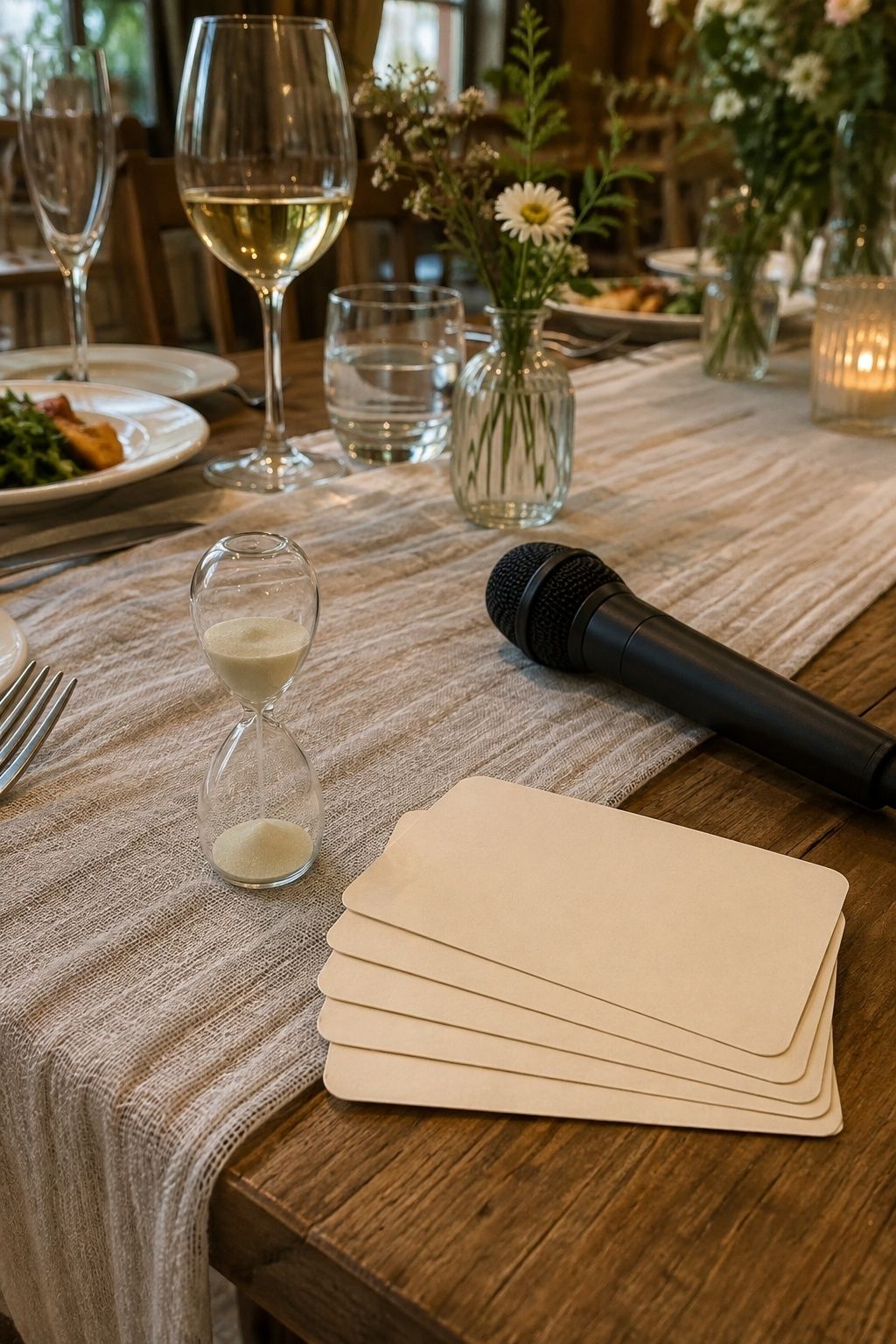
A wedding speech too long rarely feels generous. It can begin warmly, then lose its shape as guests wait for the point, dinner cools, or the couple starts smiling through fatigue. Long speeches often happen when the speaker tries to include every memory instead of choosing one clear emotional thread.
Keep the toast short enough to feel intentional. Three to five minutes is plenty for most speakers, especially when several people are speaking. If a story needs a long setup, it is probably too complicated for the room. A brief toast leaves energy behind instead of asking guests to recover from it.
Starting With An Apology Or A Generic Introduction
Many awkward toasts begin with a nervous apology: the speaker says they are bad at speeches, warns everyone it will be rough, or spends the first minute explaining why they were asked. That opening makes guests manage the speaker’s anxiety before they hear anything about the couple.
Begin with calm setup instead. A simple introduction of the relationship, a warm sentence about being honored, and a direct turn toward the couple gives the room confidence. The opening does not need flair. It needs to tell guests that the speaker knows where the toast is going.
Making The Speech About The Speaker Instead Of The Couple
Some wedding toast mistakes happen when the story technically includes the couple but emotionally celebrates the speaker. A long account of the speaker’s friendship, sacrifice, humor, history, or importance shifts attention away from the marriage everyone came to witness.
A good test is simple: after every story, ask what it reveals about the couple. Does it show their tenderness, resilience, humor, loyalty, steadiness, or way of caring for each other? If the answer mostly explains the speaker’s personality, trim it. The toast should return again and again to the people getting married.
Telling Too Many Stories Instead Of One Specific Story
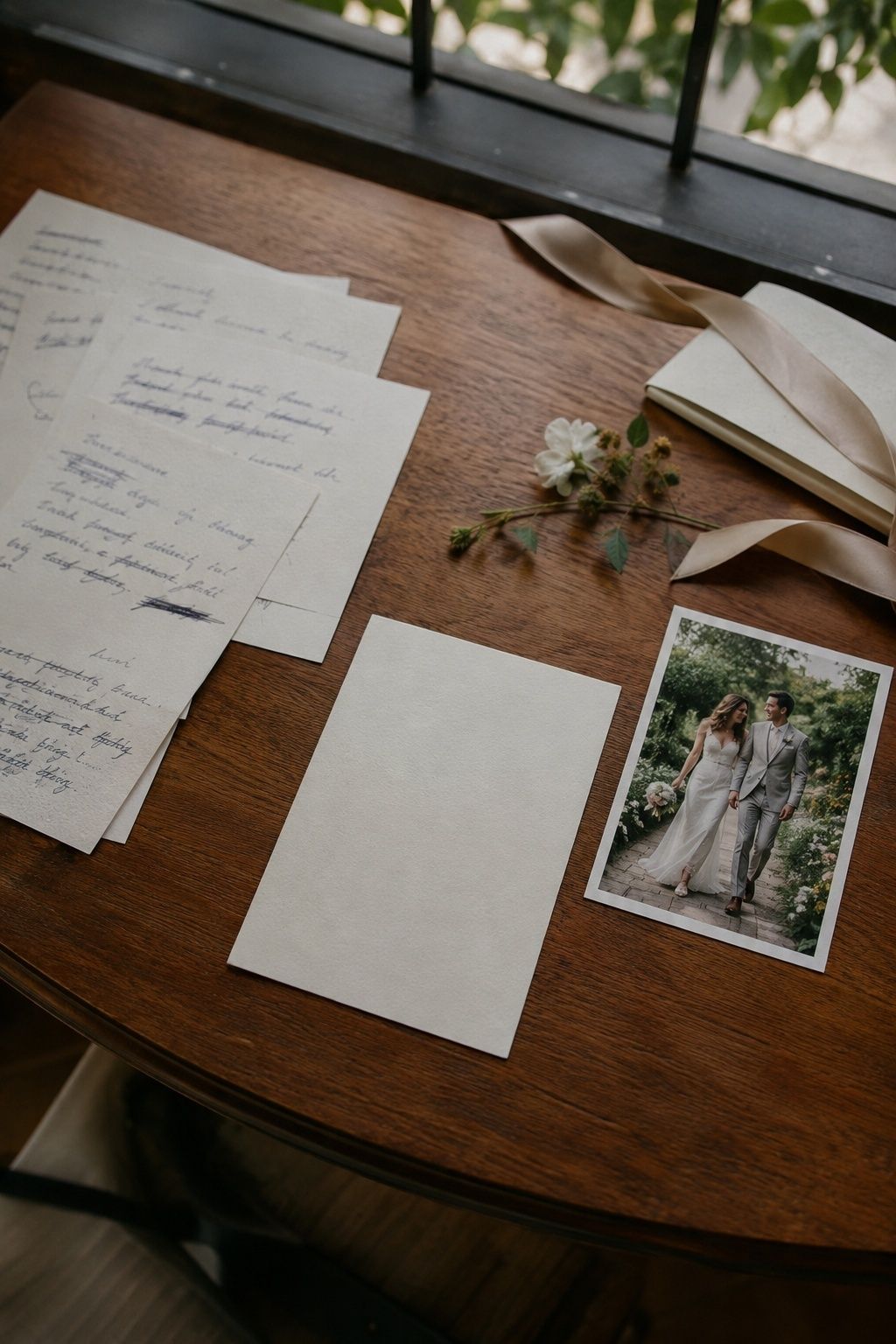
A list of memories sounds loving while it is being written, but it often feels scattered aloud. Guests hear place names, years, roommates, trips, nicknames, and moments they do not fully understand. The emotional center gets buried under proof that the speaker has known the couple a long time.
Choose one story that proves one point. It might show how one partner makes the other braver, how the couple handles ordinary life with humor, or how their care changed a room. Specificity matters, but so does clarity. A single well-chosen story gives guests something to feel together.
Relying On Inside Jokes That Exclude Most Guests
Wedding speech inside jokes are risky because the speaker hears the old laugh while the room hears a locked door. A private nickname, college reference, workplace joke, or travel mishap might delight a small circle and leave everyone else politely waiting for the toast to include them again.
If the joke needs background, give just enough setup for guests to understand the affection behind it. If the setup takes too long or exposes something private, remove the joke. The best humor widens the room. It lets grandparents, old friends, new in-laws, and the couple all laugh without decoding the history first.
Mentioning Exes, Divorce, Embarrassing Nights, Or Private History
What not to say in wedding speech planning is less mysterious than speakers sometimes pretend. Exes, breakups, divorce predictions, old crushes, humiliating nights, family wounds, private conflict, money stress, fertility pressure, and anything the couple would not choose to share in front of the room should stay out.
A toast is not the place to prove honesty through discomfort. It is a public act of care. If a story would make the couple brace, blush from embarrassment, explain later, or hope a relative missed the line, leave it away from the microphone.
Roasting The Couple When The Room Needs Warmth
Humor has a place in many wedding speeches, but a roast asks the couple to absorb public teasing while dressed for one of the most tender days of their life. That exchange might look playful from the speaker’s side and feel exposing from the sweetheart table.
Make the laugh affectionate and small. Tease a harmless habit only when it turns quickly into praise. Avoid jokes that rely on incompetence, body image, jealousy, drinking, past relationships, family stereotypes, or the idea that marriage is a trap. The room should feel the speaker’s fondness underneath every laugh.
Forgetting The Partner Or Only Praising One Person
Maid of honor speech mistakes and best man speech mistakes often share the same pattern: the speaker knows one partner deeply and treats the other like a charming late arrival. That impulse is understandable, but the toast should honor the marriage, not only the original friendship.
Name what the speaker has noticed about the partner, even briefly. Speak to the way the couple changes each other, steadies each other, or moves through life together. A toast feels complete when both people are seen, especially in a small room where every family is listening for warmth.
Drinking Too Much Or Winging It At The Microphone
Wedding reception speech mistakes often begin before the speech starts. A speaker who drinks heavily to calm nerves can lose timing, volume, judgment, or emotional steadiness. A speaker who plans to wing it might discover that affection alone does not organize a toast in front of a quiet room.
Write the toast early, practice it aloud, and save celebratory drinks for afterward. Nerves are normal. Preparation gives those nerves a place to go. Even a speaker with a natural presence needs a beginning, a middle, an ending, and a printed version that survives low light and shaky hands.
Speaking From A Phone Without Looking Up
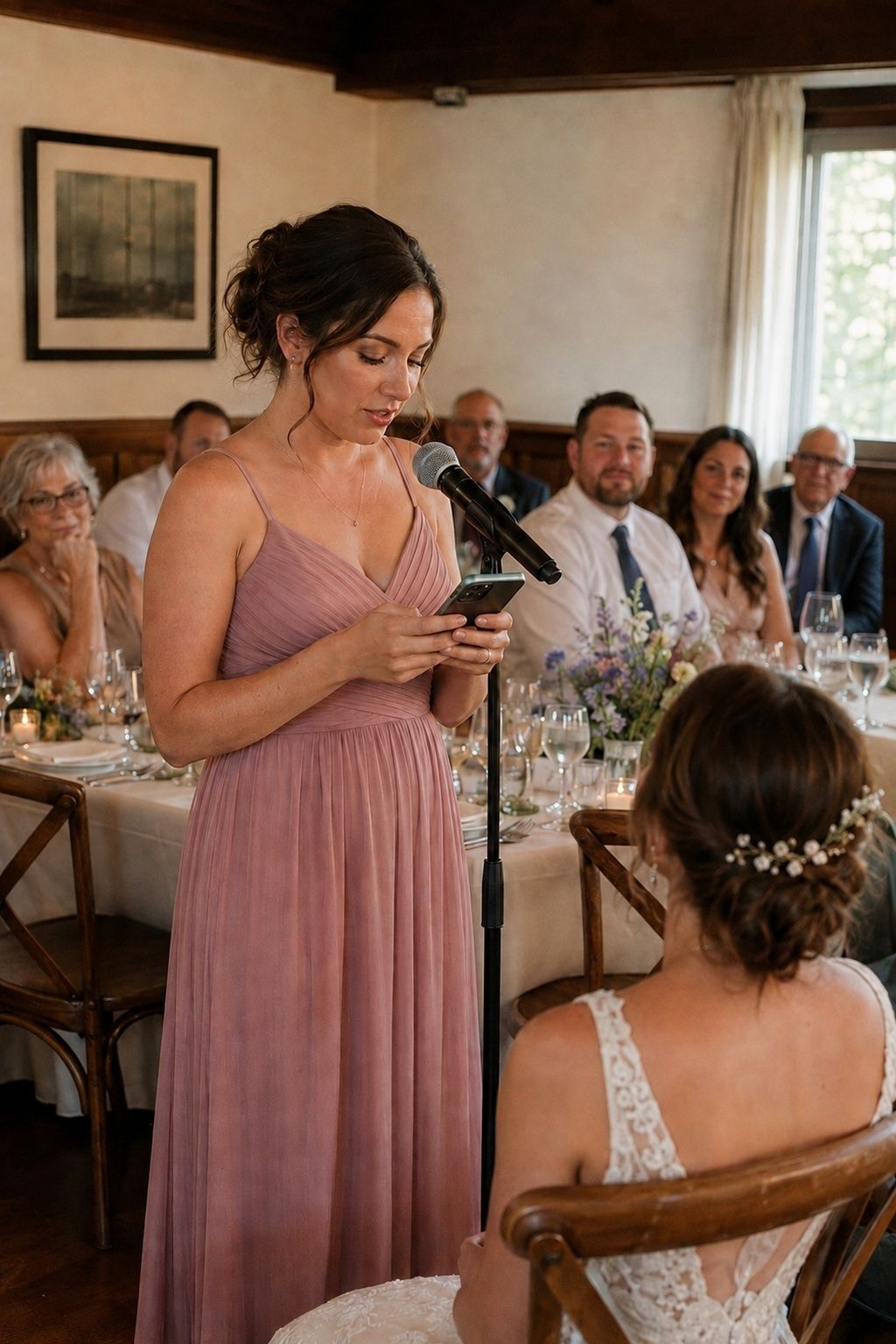
A phone is convenient, but it changes the feeling of delivery. Screens dim, notifications appear, hands shake, and the speaker’s face drops toward the device. Guests then watch someone recite from a screen instead of feeling spoken to.
Printed cards or simple index cards usually feel more graceful. Large text, short paragraphs, and a few natural breath marks keep the speaker present. Look at the couple during the most personal line, look at the room during the welcome, and slow down more than nerves want to allow.
Scheduling Too Many Speeches Too Close Together
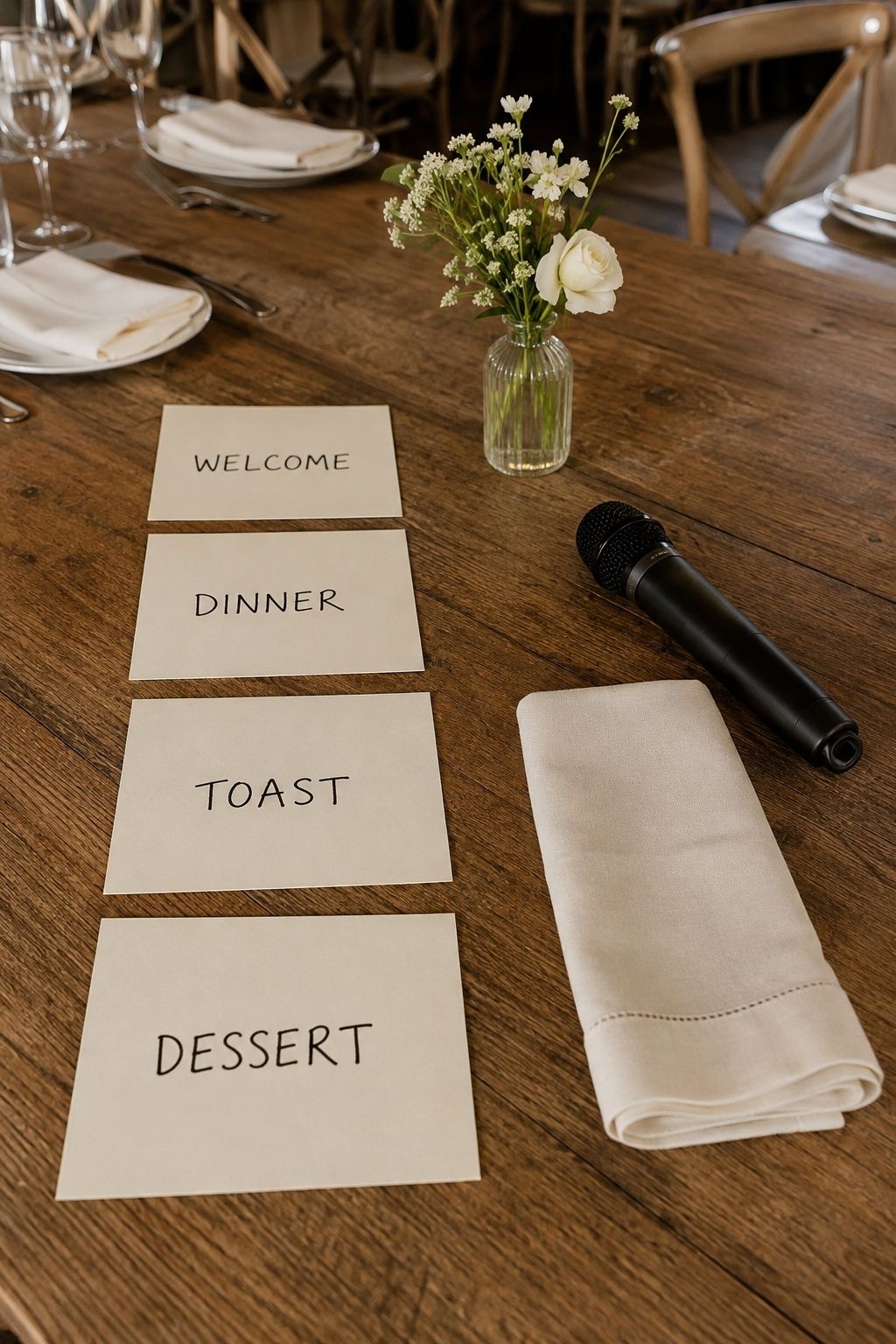
Wedding speech order affects how the whole reception feels. Too many toasts in a row can turn dinner into a listening assignment. Speeches before food can make guests restless. Speeches after the dance floor opens can interrupt the first real lift of the party.
Couples should choose speakers with intention, not obligation. Limit the number, set a wedding toast length, and place speeches where guests are seated, comfortable, and ready to listen. For intimate weddings, fewer voices often feel more meaningful because each one has space to land.
Skipping A Clear Ending And Raise-The-Glass Moment
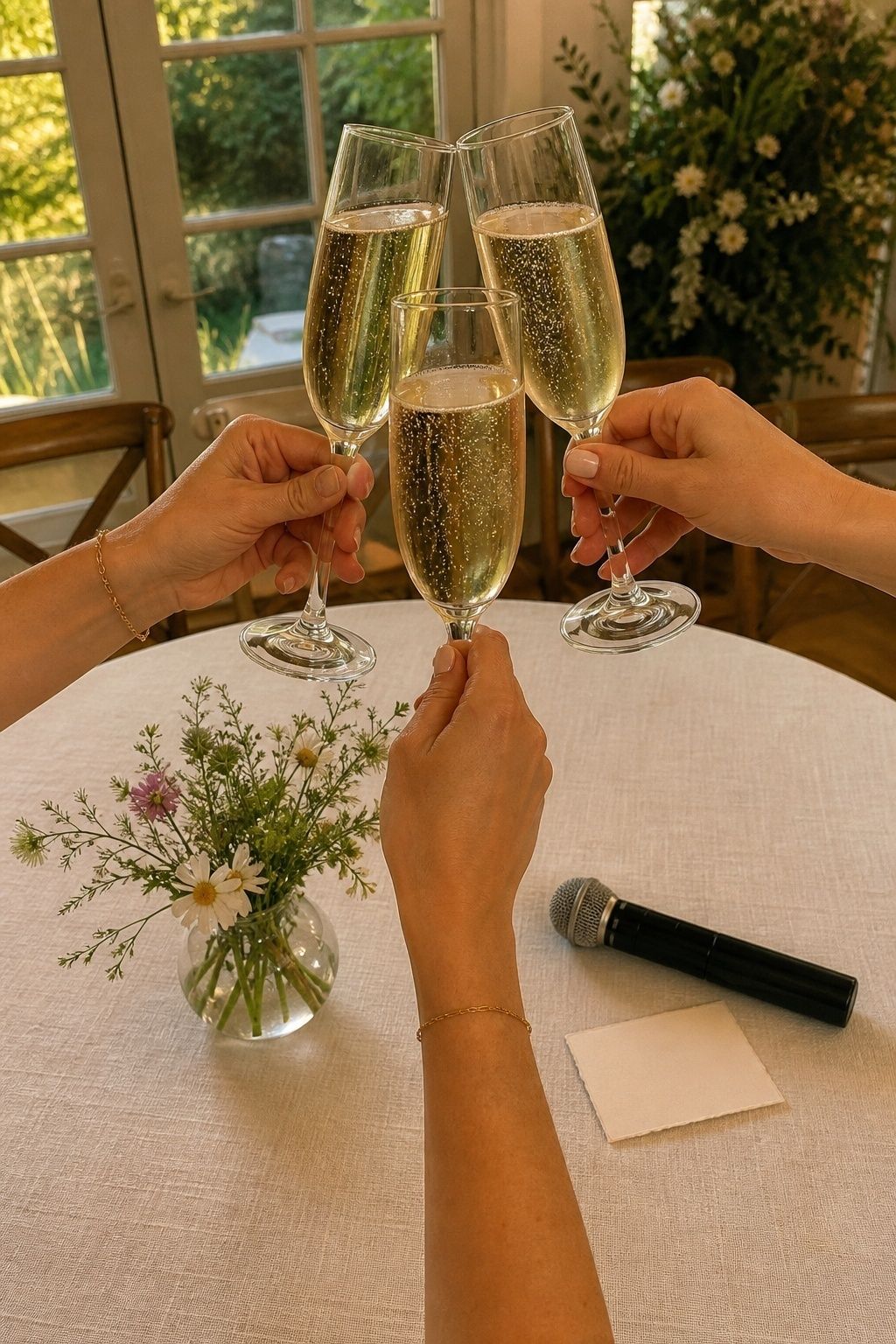
A toast needs an ending the room understands. Without it, guests hesitate, the speaker trails off, the couple waits, and the applause arrives unevenly. The final turn should gather the feeling of the speech into one generous wish for the marriage.
Think in four movements rather than a script: relationship setup, one specific story, one sincere meaning drawn from that story, and a clear invitation to raise a glass. That shape protects the speaker from wandering and protects the couple from becoming the subject of a rambling open mic.
Leaving Speakers Without Couple Boundaries
Couples sometimes avoid giving speech direction because they do not want to seem controlling. Gentle boundaries are not controlling; they are hosting. They protect speakers from guessing and protect guests from a toast that accidentally changes the mood of the evening.
Share the basics early: who is speaking, approximate length, when speeches happen, which topics are off limits, whether humor should stay soft, and who will cue the microphone. This is especially helpful when family dynamics are tender, the guest list is small, or a speaker is known for improvising beyond the moment.
A Simple Toast Framework Speakers Can Actually Follow
The simplest framework is not a template. It is a restraint system for love. Start by naming the relationship to the couple. Tell one story that reveals something generous. Turn from the story to what it shows about the marriage. Offer one clear wish. Invite everyone to raise a glass.
That structure works because it keeps the speaker from overexplaining, overjoking, or overclaiming the room. It also gives nervous people enough direction to feel steady without handing them canned lines. The speech still sounds like them; it simply arrives with a beginning, a heart, and a graceful close.
FAQ
What should you not say in a wedding speech?
Do not mention exes, embarrassing private stories, divorce jokes, family conflict, money tension, old crushes, humiliating nights, or anything the couple would not want shared publicly. Avoid jokes that make one partner look foolish or leave guests wondering whether the speaker has crossed a line.
How long should a wedding speech be?
Most wedding speeches feel strongest around three to five minutes. A shorter toast is especially wise when several people are speaking, dinner is waiting, or the wedding is intimate enough that every pause feels close.
What are common wedding toast mistakes?
Common wedding toast mistakes include talking too long, telling too many stories, making the speech about the speaker, using inside jokes, roasting the couple, drinking too much first, forgetting one partner, staring at a phone, and ending without a clear toast.
How do you avoid an awkward wedding speech?
Avoid awkwardness by choosing one specific story, practicing aloud, keeping the tone warm, trimming private details, speaking to both partners, and giving the room a clear ending. Couples should also set length and content expectations before the wedding day.
Who should give wedding speeches?
The right speakers are the people who know the couple well, respect their boundaries, and will add warmth to the room. That might include parents, close friends, siblings, chosen family, or the couple themselves, depending on the reception style.
How many speeches should a wedding have?
Many weddings feel best with two to four speeches, though the right number depends on guest count, dinner pacing, and family expectations. At a small wedding, fewer speeches usually feel more intimate because each one receives more attention.
Should wedding speeches happen before or after dinner?
Wedding speeches usually work best when guests are seated, drinks are poured, and no one is waiting too long for food. Some couples place short welcomes before dinner and emotional toasts during or after the meal so the room stays comfortable.
Final Thoughts
The best wedding speeches are not the longest, funniest, or most dramatic. They are the ones that make the couple feel known without making the room tense. When speakers stay brief, specific, generous, and prepared, wedding speech mistakes become much easier to avoid.
Before the microphone is passed, choose fewer speakers, give each one a time limit, name any off-limit topics, place the toasts where guests are comfortable, and ask each person to bring a printed copy so the first raised glass arrives before the celebration moves on.
Last update on 2026-10-03 / Affiliate links / Images from Amazon Product Advertising API