

Wedding rehearsal mistakes usually happen when the night becomes a casual walk-through instead of a protected handoff. The rehearsal works best when one calm leader handles decisions, late questions, arrival snags, family-role friction, venue changes, and next-day reminders so the couple is not solving ceremony logistics on the edge of the wedding.
The rehearsal is the last low-stakes chance to notice the problems that only appear when real people gather in a real place. A locked side gate, a missing reader page, a late parent, or a friend officiant waiting for someone else to speak up changes the room faster than any planning document.
For small and intimate weddings, the rehearsal should feel practical without turning stiff. Use it to protect the couple’s attention, settle awkward questions privately, and send every role-holder home with the next clear action.

Recommended Wedding Products


No products found.


You Might Also Like These Blog Posts
- Rehearsal Dinner Mistakes That Make The Night Before Feel Heavier
- Wedding Vendor Mistakes That Make Planning Feel Like Chasing People
- Wedding Registry Mistakes That Make Gift-Giving Awkward
- Wedding Speech Mistakes That Make the Room Go Quiet
- Wedding Flower Mistakes That Make Pretty Plans Harder Than They Need To Be
- Wedding Dress Alterations Mistakes That Make the Dress Run the Day
Wedding Rehearsal Mistakes That Turn Calm Into Guesswork
A strong rehearsal is less about reciting the ceremony and more about removing weak points from the night before the wedding. These wedding rehearsal mistakes focus on behavior: who takes charge, who interrupts, what gets assumed, what gets skipped when everyone is hungry, and what information fails to travel home with the people who need it.
Arriving Without One Rehearsal Owner
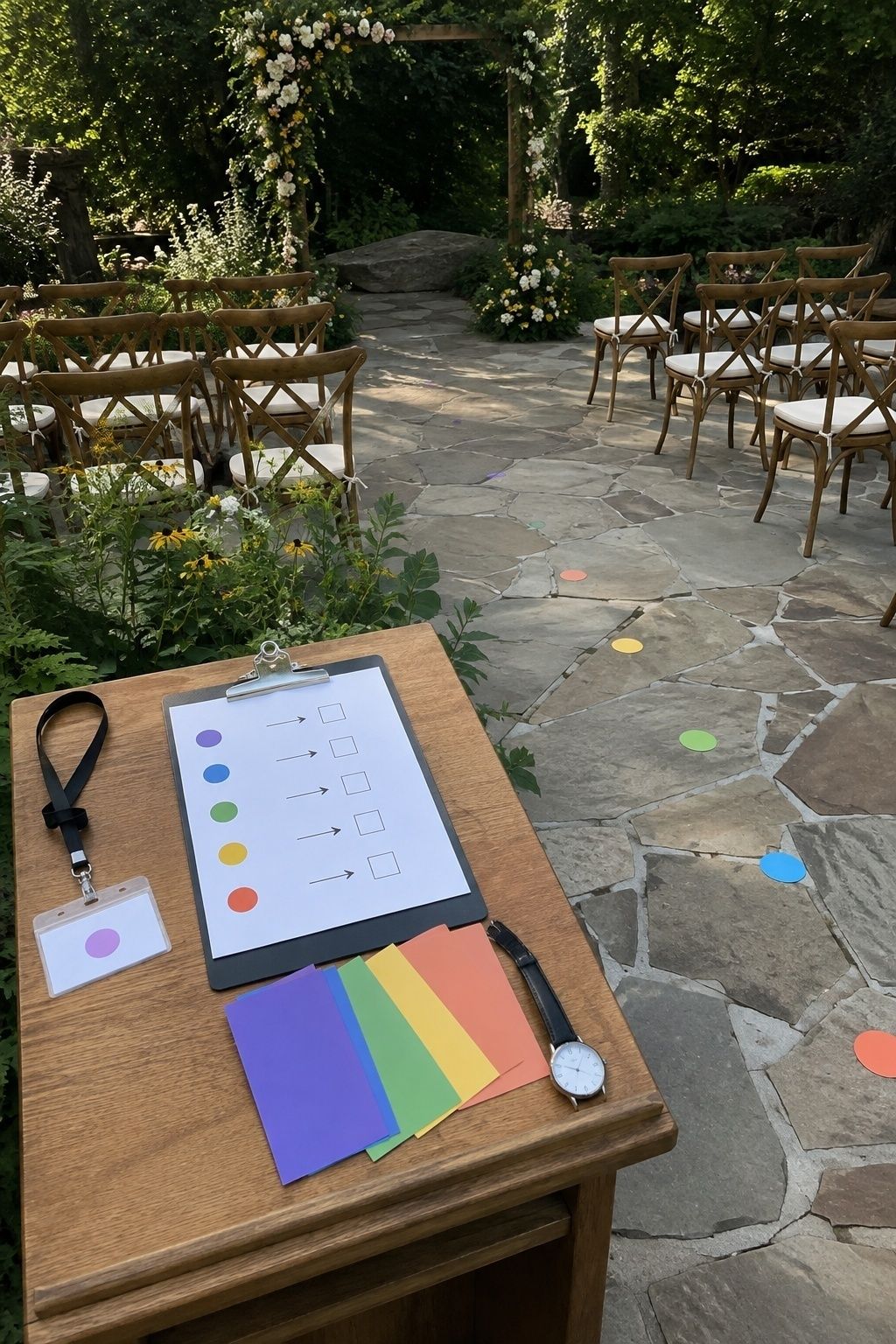
The fastest way to unsettle a rehearsal is to let authority float around the room. One person asks the couple. Another asks the officiant. A parent asks the venue manager. Someone from the wedding party starts answering based on an old group text. Within ten minutes, nobody knows which version is current.
Name one rehearsal owner before people arrive. It might be a planner, officiant, venue coordinator, sibling, or organized friend, but the role should be public: this person starts the rehearsal, answers process questions, redirects commentary, and closes the night with reminders.
This matters most when the wedding feels informal. Backyard weddings, restaurant patios, courthouse-adjacent dinners, and tiny guest lists often run on trust, which is lovely until a locked gate or missing chair row needs a decision. Give one person the authority to say what happens next.
Treating The Venue Walkthrough As The Rehearsal
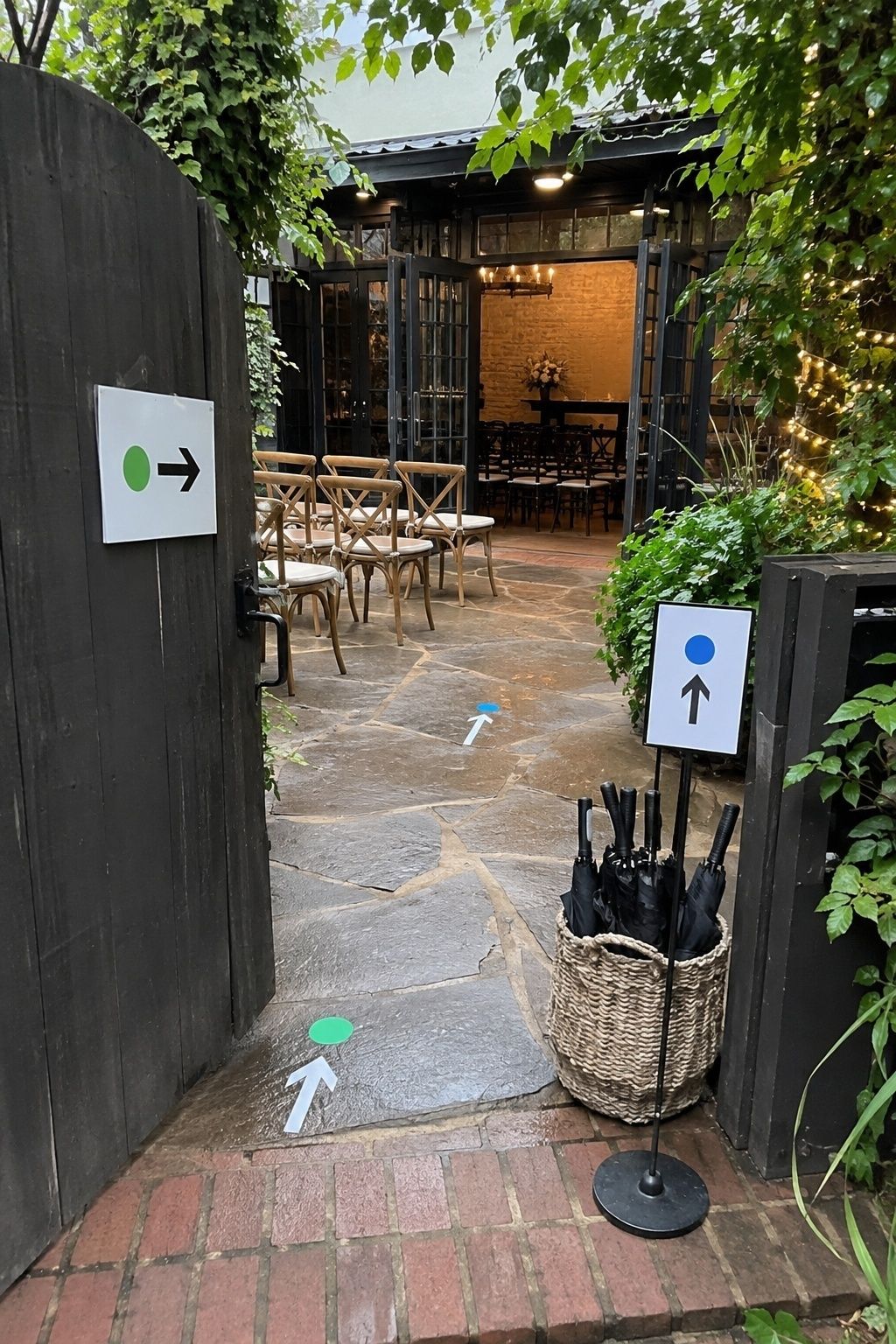
A venue tour is not the same as a ceremony rehearsal. Seeing the patio, garden, chapel corner, or private dining room helps everyone picture the day, but it does not answer what happens when people arrive late, where the wedding party waits, or who redirects guests when the weather plan changes.
Many ceremony rehearsal mistakes begin when everyone stands in the space, agrees that it looks beautiful, and leaves before the operational pieces are tested. Walk the route from parking to the gathering spot. Check the gate code. Ask who unlocks the building. Decide where early relatives wait if the space is still being set.
If the ceremony has a rain location, do more than point at it. Walk the relocation path, decide who tells guests, and name where the couple disappears while chairs move. A weather backup discussed only in theory tends to feel much shakier when clouds arrive.
Practicing Only The Entrance Because It Looks Obvious
The entrance gets attention because it is visible and easy to imagine. People line up, walk forward, laugh, correct the spacing, and feel productive. Then the rehearsal ends before anyone handles the awkward middle and ending moments that cause real confusion.
Wedding processional rehearsal mistakes matter, but the entrance is only one stress point. The rehearsal also needs the transition into private vows, the moment a reader approaches without blocking the couple, the pause after the pronouncement, the exit toward photos or cocktail hour, and the minute when family members start asking where to go.
Use a rehearsal owner to move the group past the pretty first impression. Run the part everyone understands quickly, then spend attention on the handoffs that are harder to picture from inspiration photos or a timeline.
Letting Observers Turn The Walkthrough Into Commentary
A rehearsal with too many watchers quickly becomes a suggestion circle. Someone wants the couple closer to the arch. Someone questions the parent order. Someone thinks the flower child should try again. Someone starts solving reception timing while the officiant is waiting to continue.
Invite role-holders, not an audience. If a relative wants to understand their reserved seat or arrival time, give that information separately. If someone raises a question that does not affect the next run-through, park it with the rehearsal owner and keep the group moving.
This is especially important for small weddings because every voice feels close. Kind boundaries keep the night from becoming family governance when all the couple needed was a clean operational pass.
Failing To Name The Decision-Maker For Family Questions
Some questions are not logistical on the surface. Who escorts a parent after a divorce? Which grandparent enters first? What happens if a late family member arrives after the ceremony starts? Who answers a relative who expected a larger role?
Do not make the couple field those questions in front of everyone. Choose a decision-maker before the rehearsal and give them enough background to answer gently. That person should know the family-sensitive choices that are settled, the areas with flexibility, and the moments that should stay out of public debate.
This keeps small weddings from feeling more exposed than they need to feel. The ceremony stays intimate when private family dynamics are kept out of the group activity.
Assuming A Friend Officiant Will Direct Traffic Naturally
A friend officiant brings warmth, history, and a familiar voice. That does not automatically make them a rehearsal director. They might be focused on their script, nervous about official language, or unsure whether they are allowed to correct the wedding party.
Officiant rehearsal mistakes often show up as hesitation. The friend officiant waits for a planner who is not there. The couple waits for the officiant. The wedding party waits for the couple. Give the officiant a written role for the rehearsal night, including when to speak, when to pause, and who handles questions outside the ceremony script.
If another person is better suited to direct traffic, say so kindly before the group arrives. Let the friend officiant focus on presence and words while the rehearsal owner manages bodies, timing, late arrivals, and quick corrections.
Leaving The Audio Person Out Because They Are Not There Yet
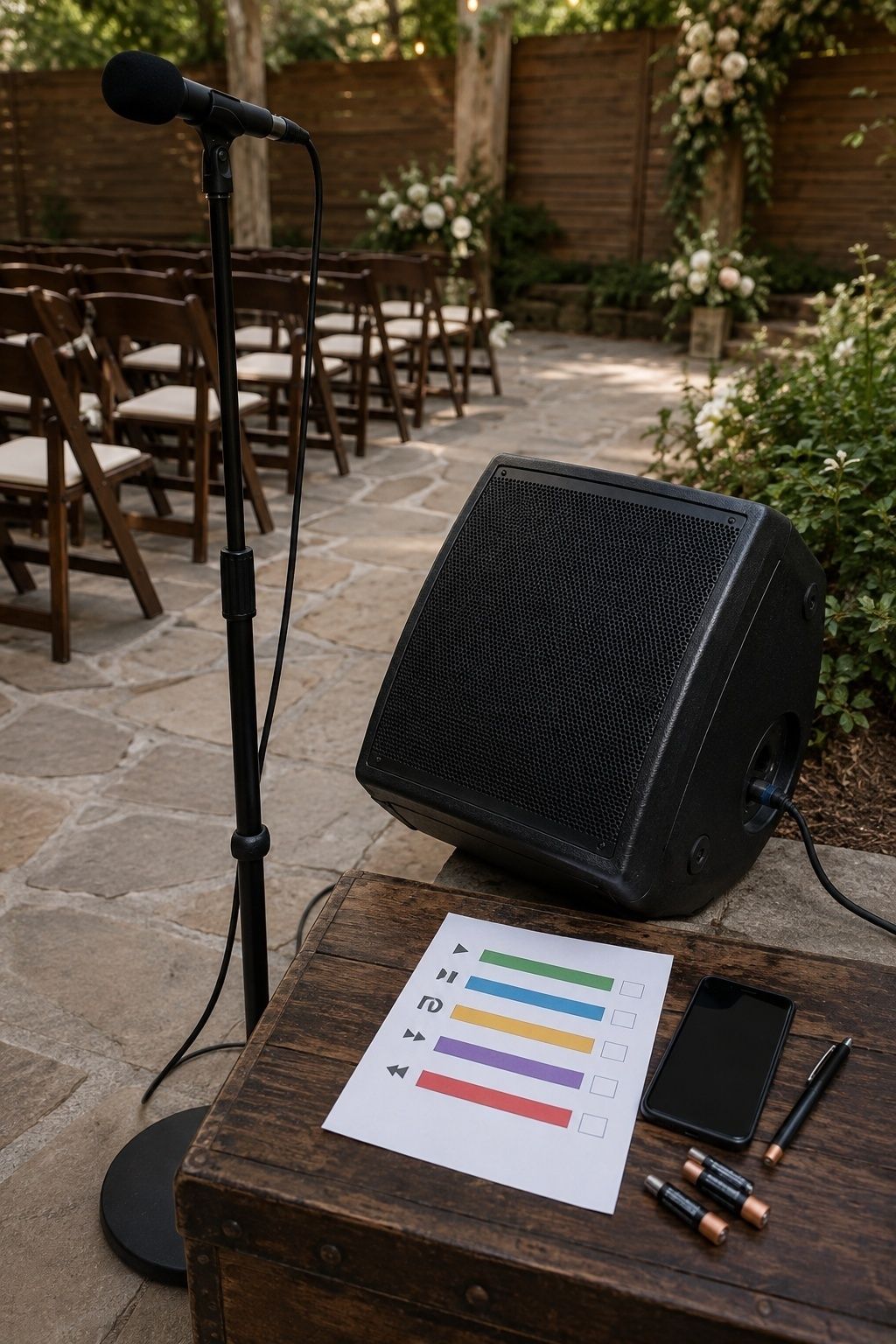
The DJ, band, venue technician, or cousin running the speaker is often missing from the rehearsal. That absence becomes a problem when the group practices starts, pauses, and exits with imaginary sound and nobody sends the audio person the decisions afterward.
Do not rebuild the whole sound plan in the article or at the rehearsal. Instead, collect the operational facts the audio person needs: which track opens the ceremony, what visible moment starts each change, who gives the signal, where the device lives, and what backup exists if the outdoor speaker fails.
Wedding music cue mistakes are often communication mistakes after the rehearsal ends. Send the audio recap the same night while decisions are fresh, especially for DIY audio, live musicians arriving only on the wedding day, or a restaurant patio where staff turnover changes who is helping.
Discovering Missing Materials In Front Of Everyone
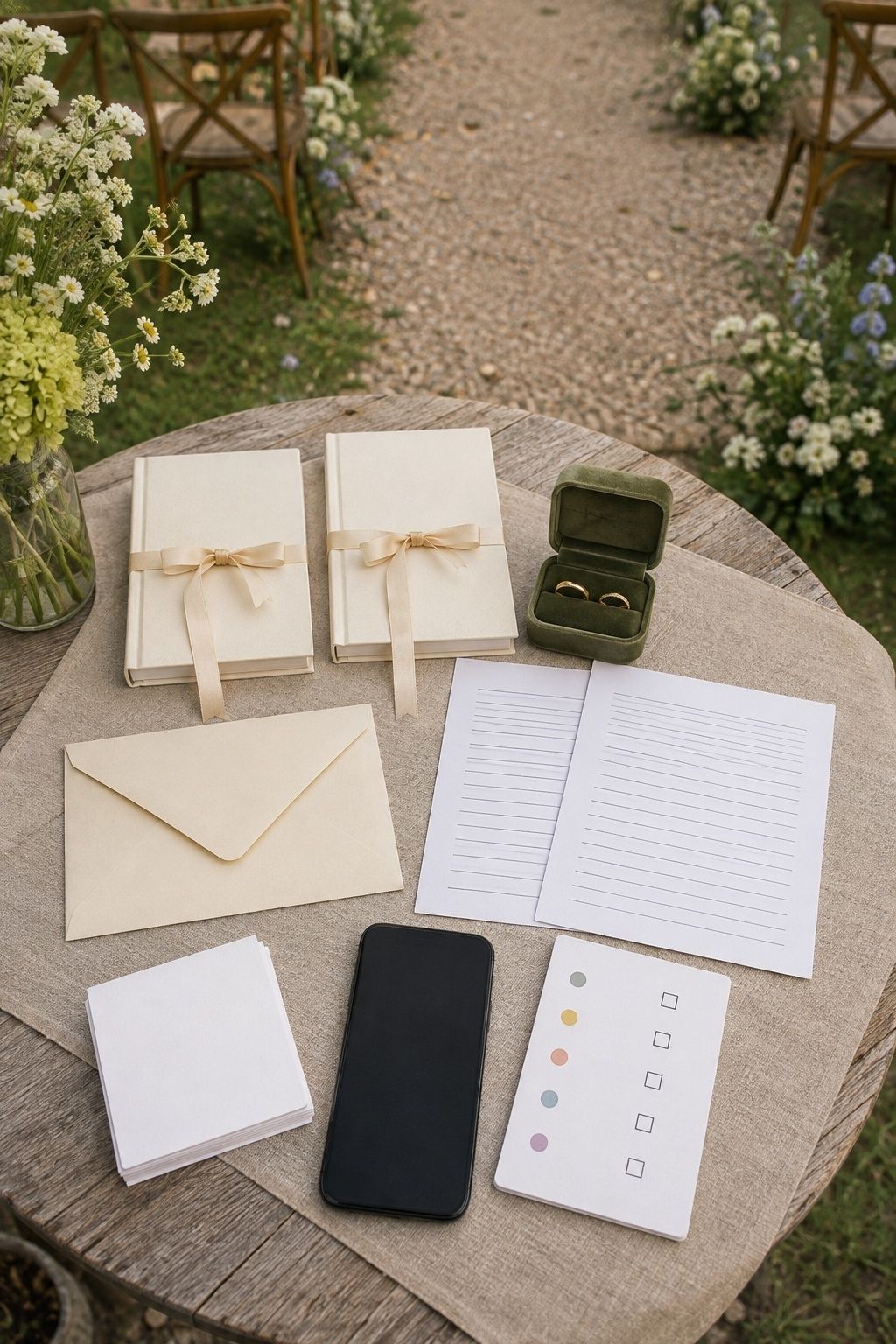
A reader arriving without printed text, a vow booklet sitting at home, a ring box in the wrong bag, or a private-vow line still on a phone does not need to become a group drama. The rehearsal owner should ask for materials quietly before the run-through starts.
Keep the material check simple: written ceremony order, reader text, vow copy, wedding ring handoff, license envelope, family photo list, audio details, and anything a role-holder physically touches. If an item is missing, assign one person to fix it after rehearsal rather than letting everyone brainstorm.
This is where a wedding rehearsal checklist still earns its place, but only as a backup tool. The mistake is not forgetting one object; the mistake is making the couple become the search engine for every object while relatives are watching.
Practicing The Ideal Version But Not The Likely Disruption
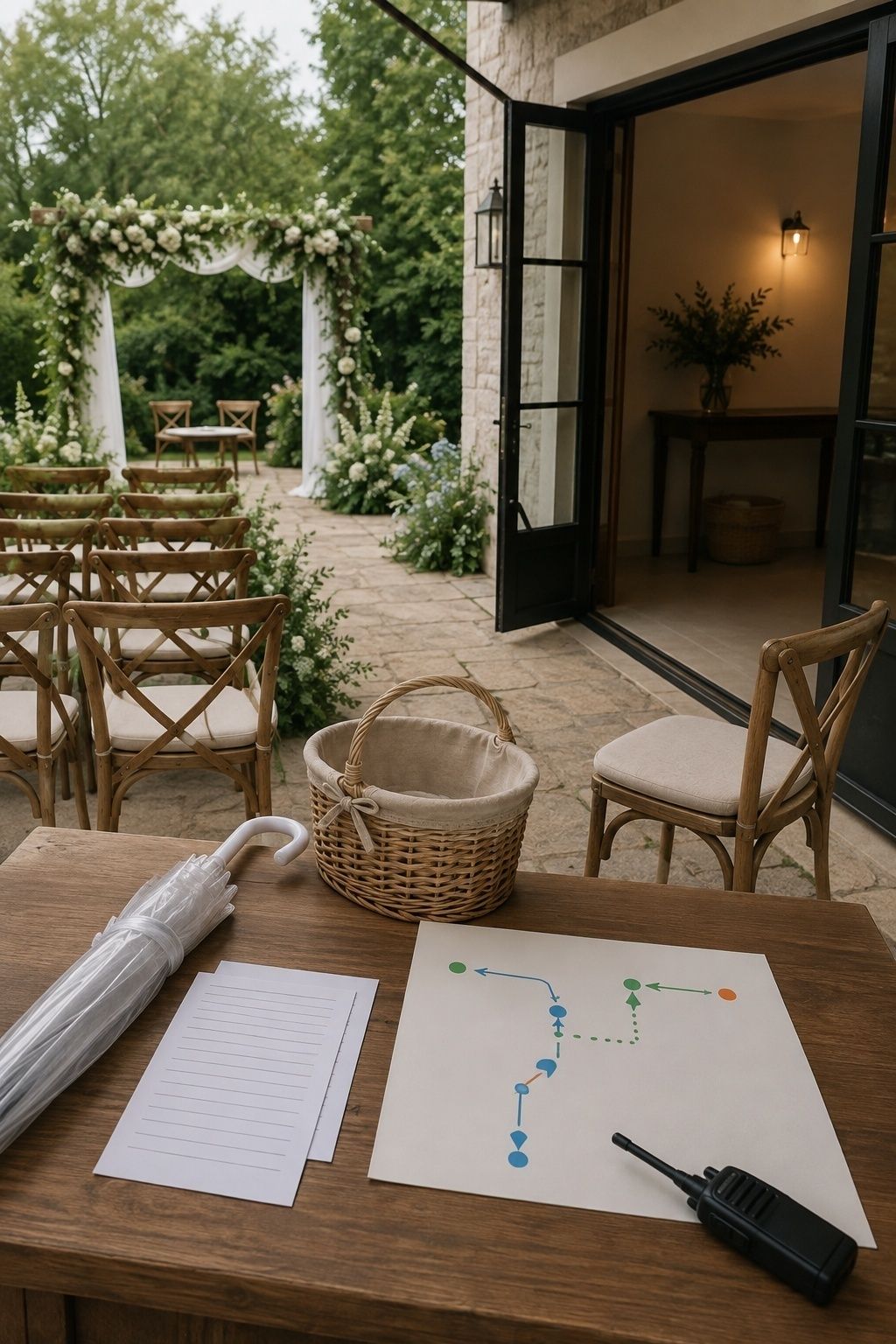
The ideal version is easy: everyone arrives on time, the child attendant walks happily, the gate opens, the weather behaves, and the reader has their page. Rehearsals become useful when they name the likely disruption without making the room anxious.
Choose a few realistic what-if moments. If a child refuses to walk, who takes over? If a parent is late, does the ceremony wait or adjust? If rain moves the ceremony indoors, who tells guests at the parking area? If the reader forgets their text, who has the backup copy?
These are wedding party rehearsal mistakes even when the wedding party is only two siblings and a best friend. You are not rehearsing fear; you are giving ordinary problems a calm path before emotion and time pressure arrive.
Skipping The Transition Out Of Rehearsal Mode
One overlooked wedding rehearsal timeline mistake happens after the last walk-through. Everyone relaxes, dinner plans take over, and the people with ceremony responsibilities leave without knowing the next-day call time, parking plan, door code, clothing detail, or meeting point.
End the rehearsal before the social shift begins. Gather the role-holders for two minutes and say the next action out loud. Where do they arrive tomorrow? Who texts if traffic delays them? Which entrance should they use if the venue has multiple doors? Who receives the final update if rain changes the ceremony location?
This is not rehearsal dinner etiquette. It is the operational bridge between practice and wedding day, and it keeps the couple from answering the same questions all night.
Failing To Send A Post-Rehearsal Recap
People forget details as soon as they leave, especially when dinner, travel, nerves, and family conversations follow. A post-rehearsal recap turns the decisions into something portable: arrival time, parking reminder, role reminder, audio contact, weather location, reader backup, and the person to text with changes.
Keep the recap short enough for a quick phone screen. Send it to role-holders only, not the full guest list. Include any private-vow timing, child-attendant backup plan, late-family rule, or locked-gate instruction that surfaced during the rehearsal.
The recap also protects the couple’s emotional bandwidth. Instead of becoming the help desk from dessert through bedtime, they get to step away knowing the night produced decisions, not just memories of decisions.
Over-Rehearsing The Feeling Out Of The Ceremony
A rehearsal should not drain the ceremony of its emotional privacy. Repeating personal vows in full, practicing the kiss over and over, or staging every expression turns a meaningful night into performance management.
Practice the public mechanics and protect the private moments. If the couple has personal vows, use a placeholder line. If the first look down the aisle matters, mark the timing without asking them to manufacture the emotion early. If a reader is nervous, let them test the first sentence and save the full reading for the wedding.
The best rehearsal leaves people oriented and the couple still tender toward the ceremony. That balance is the difference between preparation and overhandling.
FAQ
These quick answers cover the wedding rehearsal mistakes couples most often face when the rehearsal night starts to blur into family time, venue logistics, and next-day pressure.
What mistakes happen at a wedding rehearsal?
Common wedding rehearsal mistakes include arriving without one rehearsal owner, mistaking a venue tour for a rehearsal, letting observers add commentary, skipping disruption plans, leaving a friend officiant without direction, forgetting a post-rehearsal recap, and sending role-holders away without next-day instructions.
Who needs to attend the wedding rehearsal?
The couple, officiant, rehearsal owner, attendants, family members with ceremony roles, readers, ushers, children with roles, and anyone handling a physical ceremony responsibility should attend. Curious observers and relatives without assignments usually make the rehearsal longer and noisier.
What should you practice at a ceremony rehearsal?
Practice the moments where confusion would travel into the wedding day: arrivals, locked-door or gate access, the first entrance, reader approach, private-vow timing, child-attendant backup, rain-location switch, post-ceremony direction, and the final responsibility handoff before people leave.
How long should a wedding rehearsal take?
Most wedding rehearsals take about 30 to 60 minutes when one person leads and the major decisions are already settled. A short intimate wedding often finishes faster; a rehearsal with family sensitivities, venue access questions, weather changes, or several role-holders often needs the full hour.
Do readers and ushers need to rehearse?
Yes. A wedding reader rehearsal should include the reader’s printed text, approach, first sentence, and backup copy. Ushers should receive family names, reserved-row instructions, late-arrival direction, and the name of the person who answers seating questions.
How do you avoid ceremony cue confusion?
Avoid wedding ceremony cue mistakes by naming the person who leads the room, recording the visible trigger for each audio or movement change, and sending the audio operator a short recap after rehearsal if they were not present.
Who should lead the wedding rehearsal?
The rehearsal should be led by an officiant, planner, venue coordinator, or trusted point person with enough authority to stop side conversations, answer role questions, and move the group from practice into next-day reminders. The couple should not manage the room.
Final Thoughts
A strong rehearsal night protects the couple from becoming managers at the exact moment they need to become present. When one leader owns the room, likely disruptions have answers, and role-holders leave with the next clear step, wedding rehearsal mistakes lose their power to unsettle the ceremony.
Before the night turns social, gather role-holders for one final recap, send the same details in writing, and let the couple hand the room to someone else cleanly before the wedding morning arrives.
Last update on 2026-10-04 / Affiliate links / Images from Amazon Product Advertising API