

Wedding music mistakes include hiring without wedding experience, overcontrolling the playlist, skipping exact song versions, forgetting a focused do-not-play list, ignoring microphones and sound checks, leaving band breaks unplanned, and choosing songs that do not fit the room. The best music plan gives your DJ, band, or trusted music lead clear priorities while leaving enough flexibility to respond to guests in real time.
Wedding music mistakes rarely announce themselves with one dramatic failure. They usually show up as a first dance version nobody meant to use, a dinner room that goes strangely quiet, a packed dance floor interrupted by the wrong announcement, or a small reception where every guest suddenly feels watched instead of invited.
Music is not just a list of favorite songs. It is timing, sound, transitions, volume, mood, and the quiet skill of noticing what the room comfortably holds. At an intimate wedding, that matters even more because there is less crowd energy to hide awkward pauses or forced choices. A good plan protects the formal moments and gives the celebration room to breathe.

Recommended Wedding Products


You Might Also Like These Blog Posts
- Wedding Reception Mistakes That Quietly Drain the Room
- Wedding Rental Mistakes That Make The Pretty Plan Fall Apart
- Wedding Speech Mistakes That Make the Room Go Quiet
- Wedding Planning Mistakes That Quietly Make Everything Harder
- Wedding Photography Mistakes That Steal the Feeling From the Day
- Wedding Family Boundary Mistakes That Quietly Take Over The Day
Wedding Music Mistakes That Drain The Reception Energy
The right music plan starts with the kind of celebration you are actually hosting. A black-tie ballroom, backyard dinner, restaurant buyout, chapel ceremony, and thirty-person supper all need different sound, pacing, and expectations. The mistake is assuming one reception formula works everywhere.
Before you choose songs, decide what the music needs to do. The plan might welcome older relatives, cover transitions, support emotional dances, keep dinner warm, give the photographer clean cue moments, help an MC sound confident, or invite dancing without making it mandatory. Once those jobs are clear, every playlist and vendor conversation becomes easier.
Hiring A DJ Or Band Without Wedding-Specific Experience
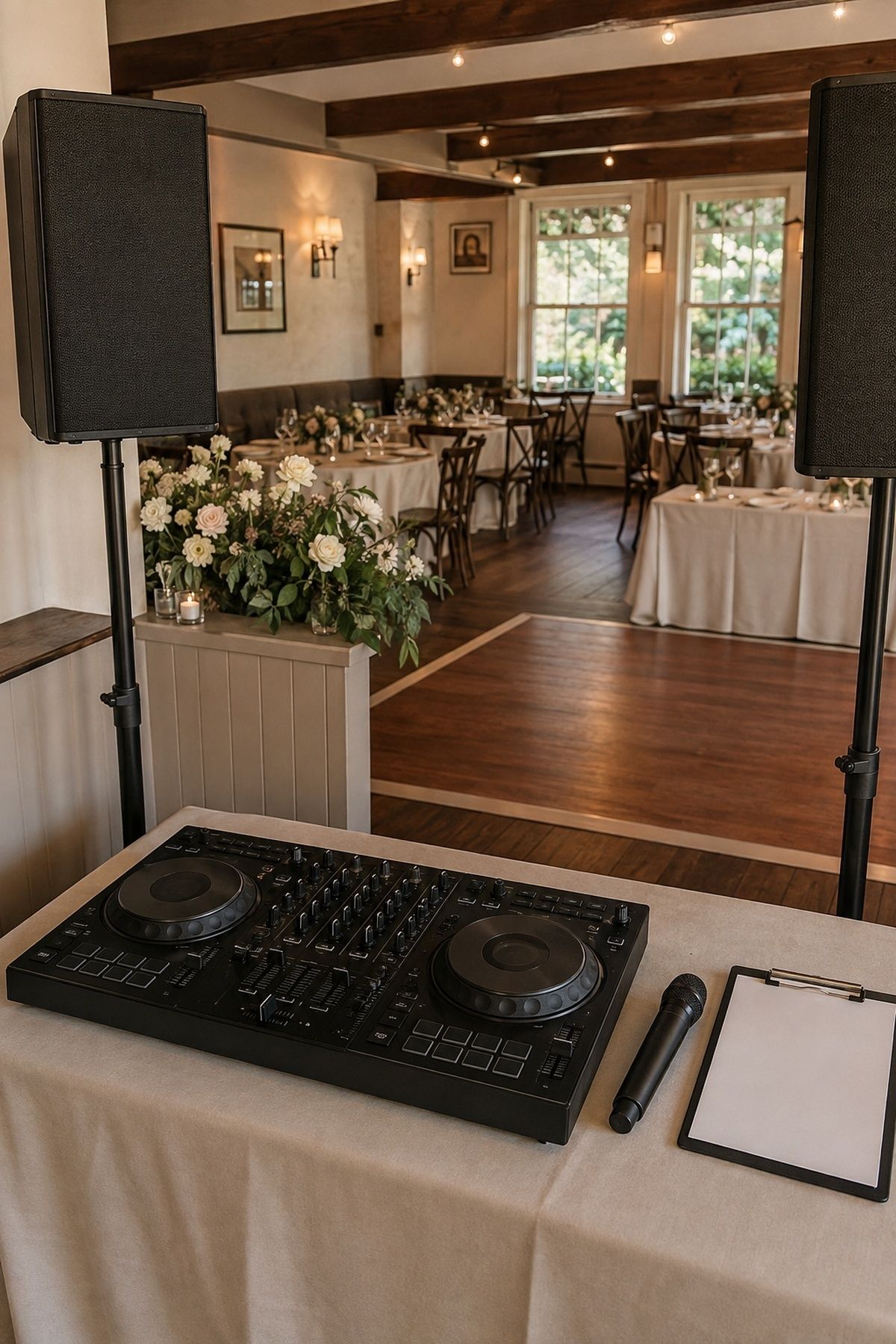
A talented club DJ, bar band, or musician friend still faces a different challenge at a wedding if they have not handled formal entrances, announcements, family dances, speeches, timeline delays, and mixed-age rooms. Wedding entertainment asks for more than taste. It asks for judgment.
Wedding DJ mistakes often begin when couples hire someone based only on price, personality, or music style. Ask how they handle ceremony cues, grand entrances, dinner volume, parent dances, requests, last-minute timing changes, and rooms where the dance floor is slow to start. A good wedding pro should be able to explain their process without sounding rigid or dismissive.
If you are hiring a band, ask the same operational questions. Who makes announcements? How many sets do they play? What happens during breaks? Do they provide ceremony or cocktail-hour sound? Ask whether they learn special songs, and by what deadline. The performance matters, but the flow around the performance matters too.
Giving A Full Rigid Playlist Instead Of Clear Preferences
A full-night playlist feels reassuring because it gives the couple control. The problem is that a reception is alive. Guests might respond differently than expected, dinner might run late, older relatives might leave early, or one song might open the floor in a way nobody predicted.
Wedding playlist mistakes happen when every minute is locked before the room exists. Instead of scripting the whole night, give your DJ or band a short must-play list, a few artists or genres you love, a focused do-not-play list, and a clear description of the atmosphere you want. That gives them enough direction to protect your taste while still watching the room’s energy.
If you are running your own playlist, build in sections rather than one endless queue. Ceremony, cocktail hour, dinner, first dance, parent dances, open dancing, and last song each need their own pacing. Put a responsible person in charge of transitions so nobody is unlocking a phone at the exact moment guests are waiting.
Forgetting Exact Song Versions And Links
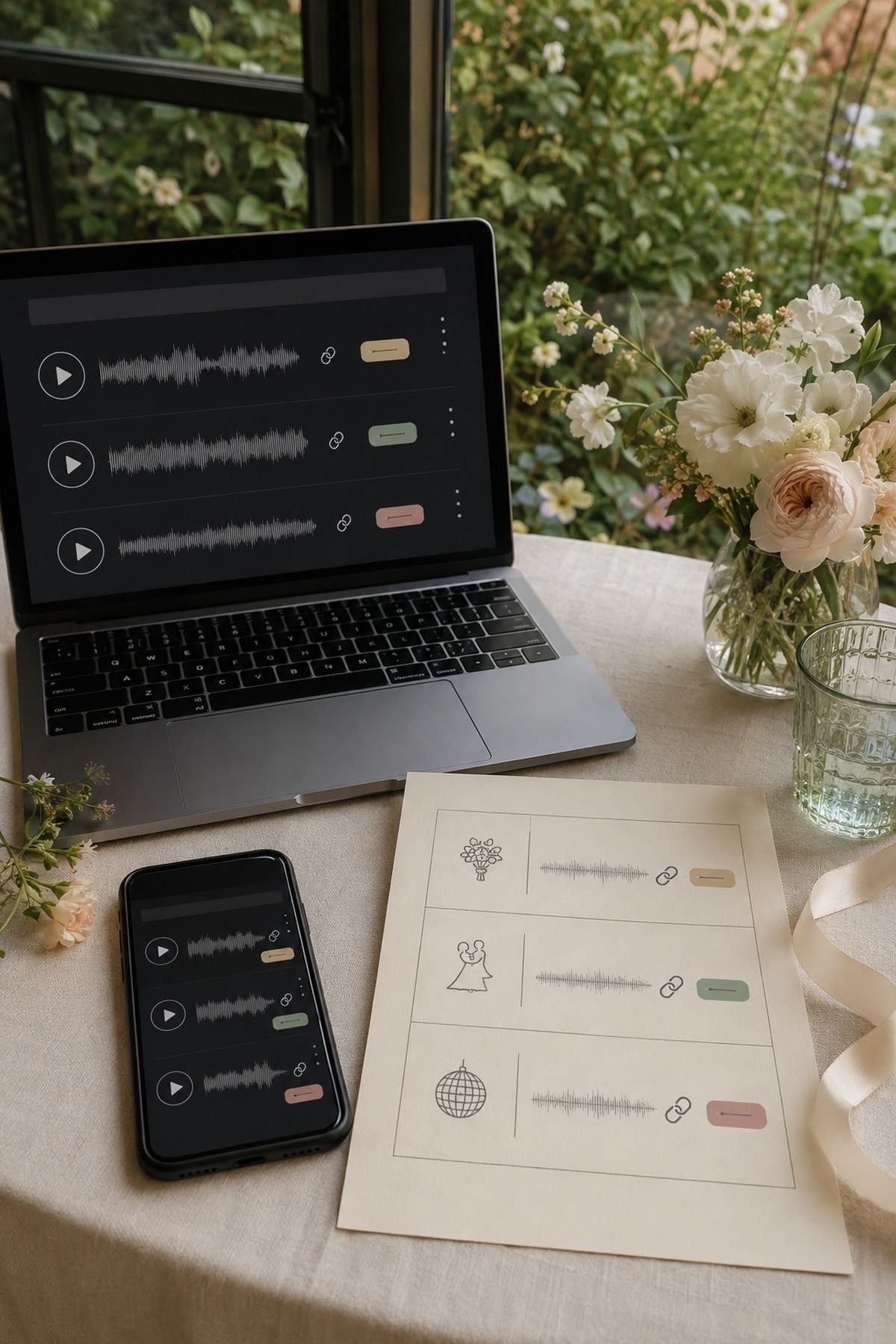
A song title is not always enough. Acoustic versions, live versions, remixes, explicit edits, remastered tracks, covers, shortened radio edits, instrumental versions, and artists with similar names all create room for confusion. The wrong version changes the whole feeling of a ceremony entrance or first dance.
First dance song mistakes are especially common because couples remember the song emotionally but forget the technical details. Send exact links, artist names, version details, and start or fade instructions for ceremony music, entrance songs, first dance, parent dances, private last dance, and final song.
For ceremony cues, pair each track with a specific action. Name when the wedding party walks, when the couple enters, when the signing or unity moment happens, and when the recessional begins. Clear cue details prevent the music lead from guessing during the most visible moments of the day.
Making The Do-Not-Play List Too Vague Or Too Long
A do-not-play list works best when it protects the mood without handcuffing the person managing the room. If it only says “no cheesy songs,” your vendor has to guess what cheesy means to you. If it has eighty songs, the truly important boundaries become harder to remember.
Wedding do not play list mistakes usually come from either embarrassment or overcorrection. Be direct about songs tied to difficult memories, artists you truly dislike, explicit tracks you do not want, cultural or family sensitivities, and songs that would feel wrong for your guest group.
Then separate hard no songs from simple preferences. A guest request you dislike mildly does not need the same weight as a song that would genuinely upset you. This helps the DJ make fast choices without treating every preference as a crisis.
Choosing Music Only For Personal Taste
Your wedding should sound like you, but it still needs to welcome the people in the room. A playlist built only around niche favorites might feel meaningful to the couple and confusing to guests who are trying to join the celebration.
The fix is not to erase your taste. It is to create a bridge. Keep deeply personal songs for moments where guests are listening with you, then mix in familiar rhythms, eras, or genres that help different age groups feel invited. A dance floor does not need to be generic to be generous.
This matters at small weddings, where every empty chair and hesitant guest is visible. If dancing is not natural for your group, choose music that supports conversation, dinner, and warmth instead of forcing big-party energy. An empty dance floor wedding is not a failure if dancing was never the right measure of the night.
Forgetting Ceremony, Cocktail Hour, Dinner, And Transition Music
Reception music gets most of the attention, but guests hear the day long before the dance floor opens. Silence during seating, a jarring cocktail-hour shift, or dinner music that fights conversation makes the event feel less polished than the decor suggests.
Wedding reception music mistakes often come from planning only the party portion. Choose music for guest arrival, processional moments, recessional, cocktail hour, dinner, speeches, cake cutting if you are doing one, transitions, open dancing, and the last song. Each section should stay simple and intentional.
Volume deserves the same attention. Dinner music should support the room, not make guests shout. Ceremony music should be loud enough to guide movement. Cocktail-hour music should keep energy alive without making conversation feel like work.
Skipping Sound Checks, Microphones, And Backup Equipment
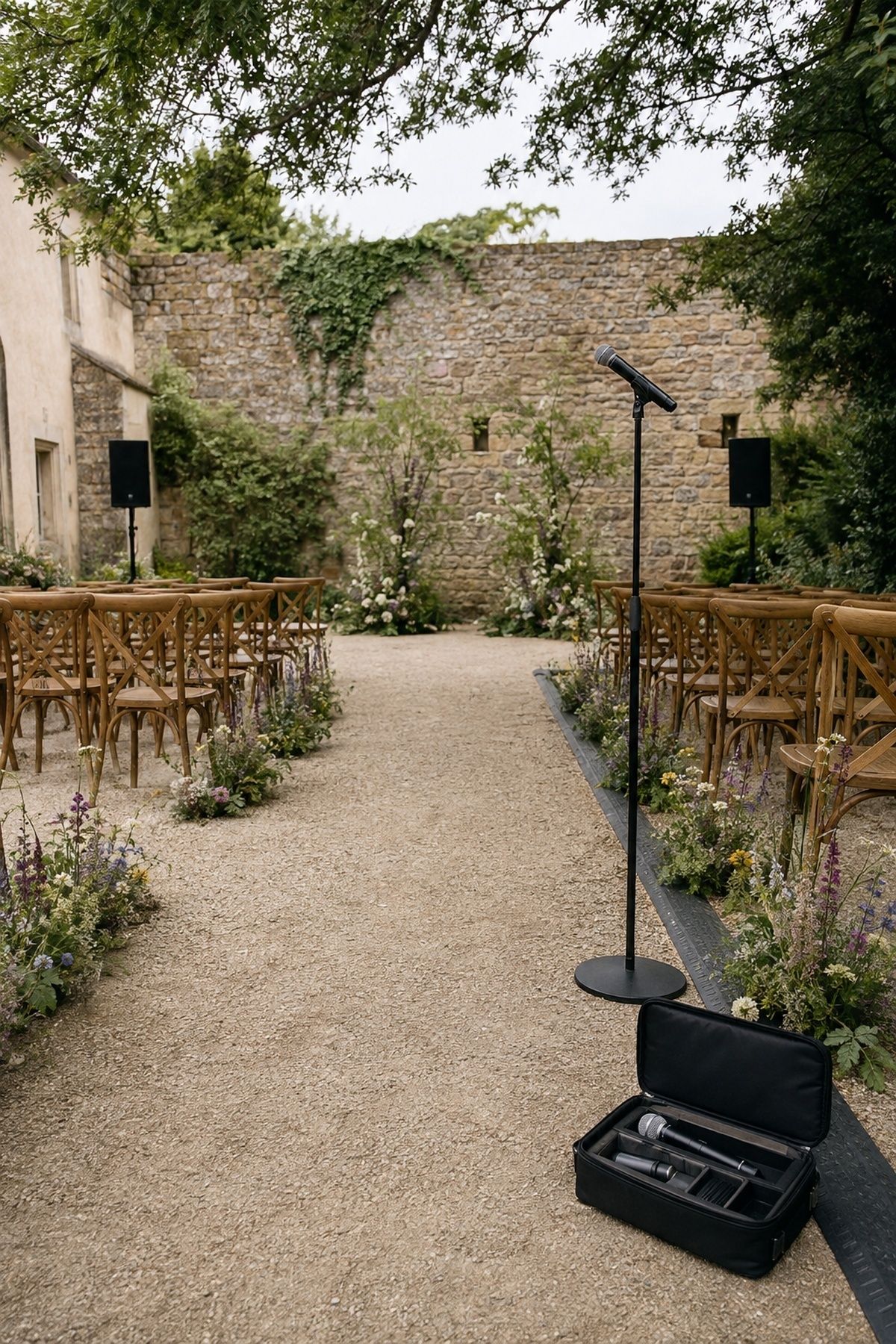
Sound problems make guests feel disconnected even when the plan is beautiful. If vows are muffled, speeches cut in and out, or announcements echo through the wrong speaker, people miss the moments they came to witness. Sound equipment is often rented, so check these wedding rental mistakes too.
Wedding sound check mistakes are preventable when someone tests the actual setup in the actual space. Check microphones, speaker placement, batteries, cables, ceremony sound, reception sound, and music playback before guests arrive. Outdoor weddings need extra attention to wind, generators, extension cords, and backup power.
Ask what happens if a microphone dies, a laptop fails, Wi-Fi disappears, or rain changes the setup. You do not need a dramatic emergency plan for every possibility, but you do need enough backup equipment that one small failure does not silence the ceremony or speeches.
Not Planning Band Breaks Or DJ Coverage For Quiet Gaps

Live music brings a gorgeous energy, but musicians need breaks. If those breaks are not planned, the room drops suddenly from full performance to awkward silence. Guests might assume the party is ending even when the next set is still coming.
Wedding band break mistakes are easy to miss during booking because everyone is focused on the songs. Ask when breaks happen, what music plays during them, who controls that playlist, and whether the band or DJ makes announcements during the gap.
If you have both a band and DJ, clarify handoffs. If you only have a band, arrange background music for breaks, dinner, and late-night wind-down. The goal is steady energy, not nonstop noise.
Letting Announcements Feel Awkward Or Overdone
An MC helps the night feel calm, but too many announcements make a wedding feel like a program people are trapped inside. Too few announcements leave guests confused about speeches, dinner, transportation, or where to gather next.
Wedding MC mistakes often come from unclear authority. Decide who is allowed to speak into the microphone, what needs to be announced, and what tone fits the event. A small wedding often needs fewer formal introductions and more gentle transitions.
Write names phonetically, confirm family titles, and keep announcements short. The best MC work is usually invisible: guests know what to do, the couple does not have to manage the room, and the music returns before energy drains away.
Forgetting To Coordinate Music With The Timeline And Photographer
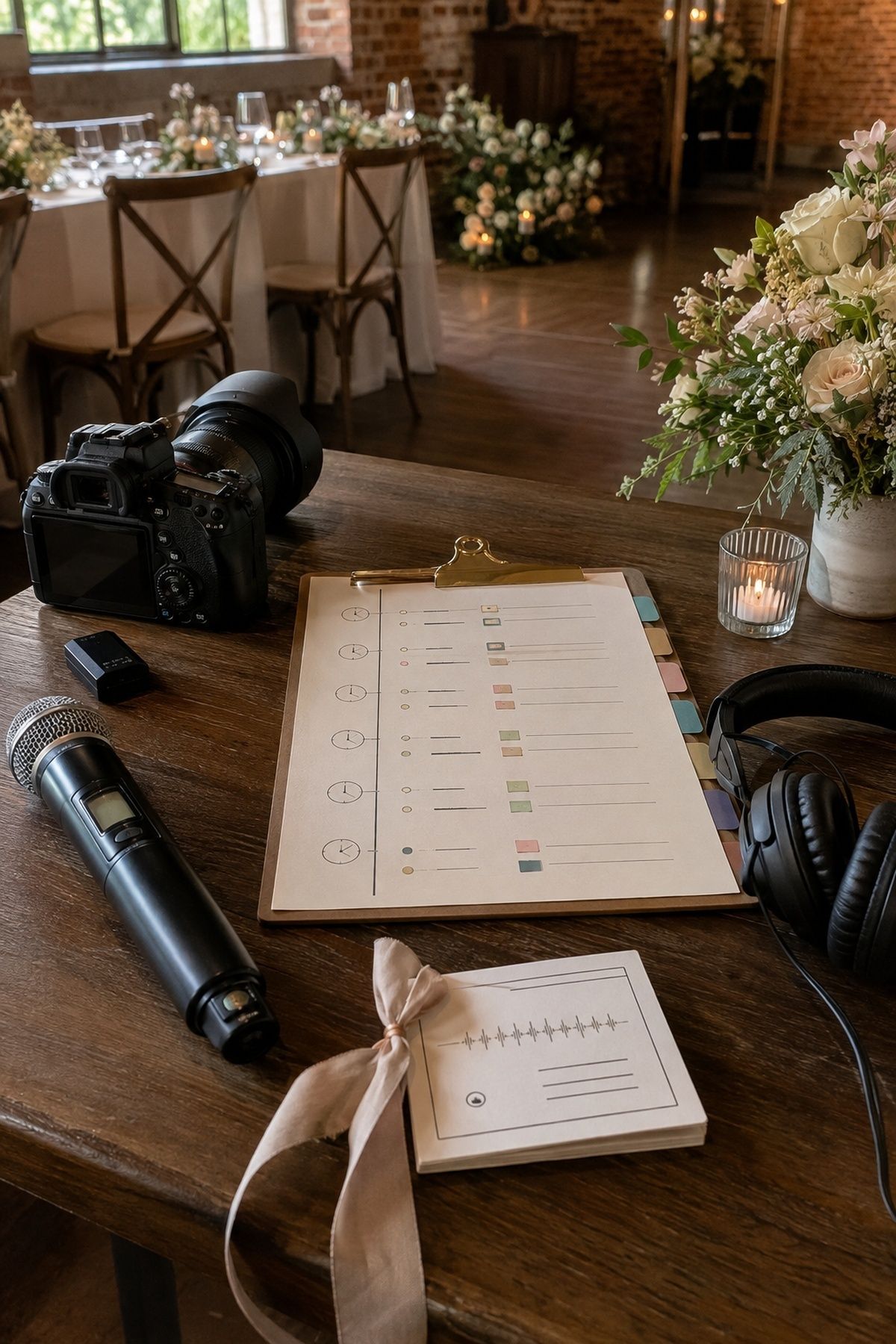
Music cues and photo moments are connected. Entrances, first dance, parent dances, speeches, cake cutting, private last dance, and send-off all require timing the photographer needs to anticipate.
Share the final music timeline with your planner, photographer, videographer, DJ, band, venue lead, and anyone making announcements. If the photographer expects the first dance after dinner but the DJ starts it before salads are cleared, the moment feels rushed even if the song is perfect.
Build cue points into the timeline, not just song names. Name who introduces the moment, where the couple starts, whether parents join at a specific time, and what happens immediately afterward. That keeps formal moments from floating loose in the evening.
Ignoring A Small Wedding’s Natural Energy
A small wedding deserves a beautiful dance floor when dancing fits the group, though it will not look like a packed club. With twenty-five or forty guests, the same ten dancers might carry the whole night. That energy is joyful, but it should not be the only way the reception feels successful.
Plan music around the group you invited. If guests love conversation, keep dinner and lounge music warm. If your families dance early, move key dance moments sooner. If only a few friends will dance late, create a smaller pocket of energy instead of leaving a huge empty floor in the center of the room.
Offer alternatives without apologizing for them: a long dinner playlist, a few meaningful dances, a cozy after-dinner bar, acoustic music, or one final song everyone gathers around. The celebration should fit the room, not shame it for being intimate.
A Music Planning Check Before The Final DJ Call
Before your final call, gather the details in one place. Include ceremony cues, exact song links, artist names, clean versions, pronunciation details, entrance order, first dance timing, parent dances, do-not-play boundaries, request policy, announcement list, vendor meal timing, band breaks, and backup sound needs.
Then talk through the feeling of the night. Which songs are nonnegotiable? Which moments should feel quiet? When do older relatives need to hear announcements clearly? How much dancing do you actually want? What should happen if the floor is slow? A good final call turns scattered preferences into a shared plan.
Most wedding music planning mistakes become visible in this conversation, when missing song links, unclear handoffs, vague announcements, and unrealistic dance-floor expectations still have time to be fixed.
Once the music lead understands the timeline, the room, and the couple’s boundaries, stop managing every song. That is the point: enough clarity to prevent avoidable problems, enough trust to let the reception respond to real people.
FAQ
These FAQ answers cover the wedding music mistakes couples ask about most often, including playlist control, empty dance floors, do-not-play lists, first dance versions, DJ communication, and whether a small wedding needs dancing at all.
Should We Give The DJ A Full Playlist?
Give your DJ clear preferences rather than a full script for the entire night. A must-play list, short do-not-play list, special songs, and style details usually work better because the DJ still has room to respond. If you want total control, be honest about that before booking so expectations are clear.
How Do We Avoid An Empty Dance Floor?
Start by matching the music plan to your actual guest group. Put high-energy moments when guests are still present, avoid long interruptions once dancing starts, choose some familiar songs across generations, and make the dance area feel proportional to the guest count. At a small wedding, a cozy dance pocket often works better than a wide open floor.
How Long Should A Do-Not-Play List Be?
Keep it focused. Include songs, artists, explicit versions, or genres that truly matter to you, then mark softer dislikes as preferences. A concise list helps your DJ protect the mood without losing the flexibility needed to handle requests and changing energy.
What Details Should We Send For The First Dance Song?
Send the exact song link, artist name, version, clean or explicit preference, start point, fade point, and whether anyone joins you partway through. If you have a private edit, confirm the file format and backup access before the wedding day.
What Should We Confirm With The DJ Before The Wedding?
Confirm arrival time, setup location, ceremony and reception sound needs, microphones, backup equipment, timeline cues, announcement names, special songs, do-not-play boundaries, request policy, vendor meal timing, and last song. Put the final version in writing so everyone is working from the same plan.
Does A Small Wedding Need Dancing?
No. A small wedding might include dancing, but it does not have to. Music supports dinner, conversation, ceremony emotion, toasts, a few special dances, or a relaxed after-party. Choose the energy that fits your people instead of forcing a reception format that feels unnatural.
Final Thoughts
The best way to avoid wedding music mistakes is to think beyond favorite songs. Music should guide movement, protect emotional moments, help guests hear what matters, and respond to the room you actually have.
Before the final call, confirm exact versions, sound checks, microphones, announcement names, break coverage, do-not-play boundaries, and the energy you want guests to feel.
Last update on 2026-10-04 / Affiliate links / Images from Amazon Product Advertising API