

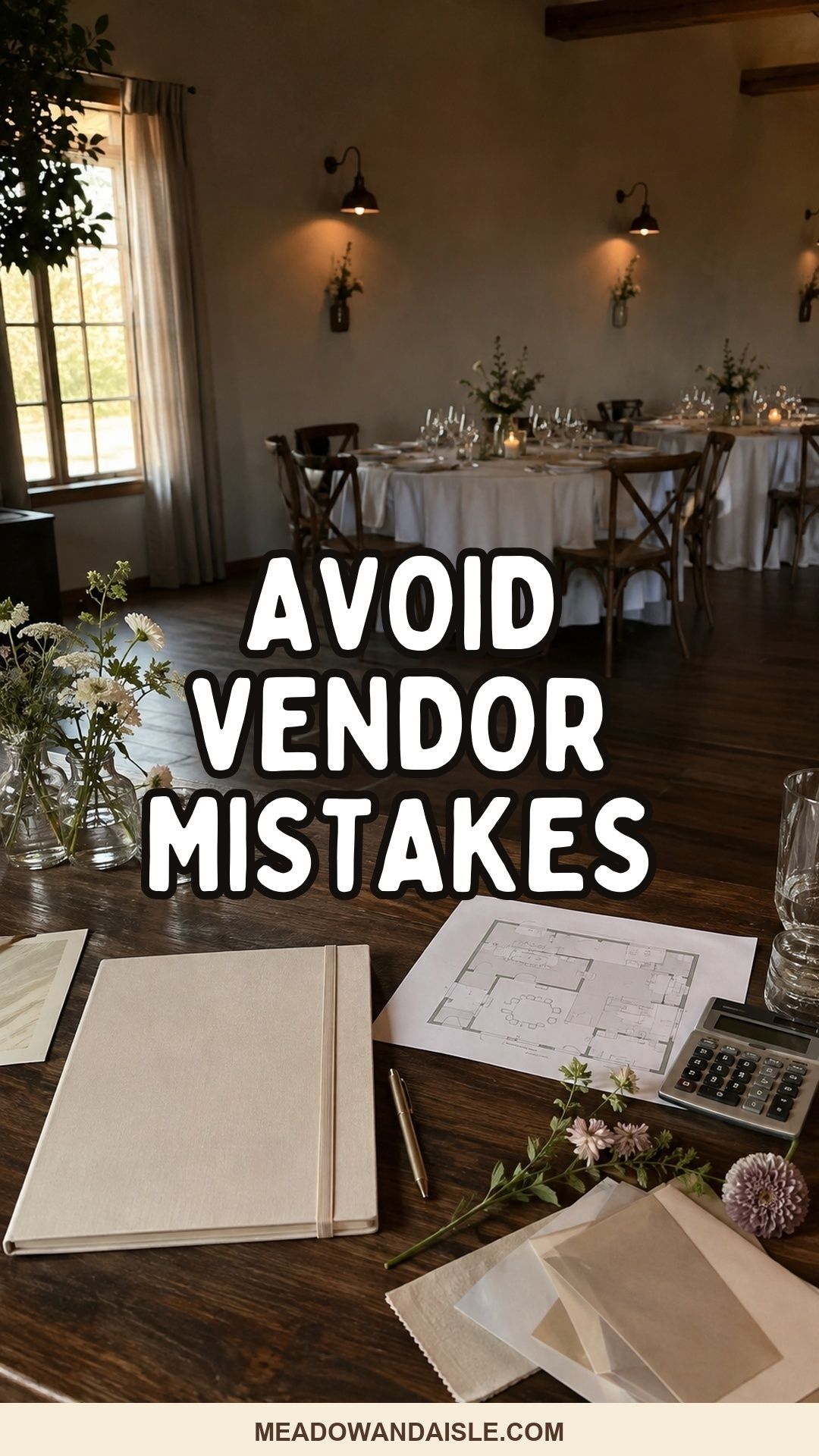
The wedding vendor mistakes couples regret most usually happen when they book before the wedding structure, scope, contract, and communication expectations are clear. The safest path is to ask what the vendor owns, who appears on the day, what is included, what costs extra, and what happens if timing, staffing, weather, or plans change.
Vendor shopping should feel like building a calm little team around the wedding, not chasing replies from people who already have your deposit. For a small wedding, the stakes feel even closer. One caterer, photographer, florist, musician, rental company, or planner may shape the whole mood because there are fewer moving parts to hide behind.
That is why wedding vendor mistakes are rarely just about hiring the wrong person. They often start earlier, when the couple has not yet named the date, guest count, budget, venue rules, timing, deliverables, backup plan, and handoff process clearly enough. A beautiful portfolio matters, but so does the way a vendor answers ordinary questions before anything is signed.
Recommended Wedding Products


You Might Also Like These Blog Posts
- Wedding Contract Mistakes That Cost More Than The Deposit
- Wedding Planning Mistakes That Quietly Make Everything Harder
- Wedding Flower Mistakes That Make Pretty Plans Harder Than They Need To Be
- Wedding Party Mistakes That Turn Support Into Stress
- How Far In Advance Should You Book Wedding Vendors Without Overbooking Your Life
- How To Handle Late Wedding RSVPs Without Chasing Everyone Forever
Wedding Vendor Mistakes That Turn A Beautiful Team Into Extra Emotional Labor
The best vendors do more than provide flowers, food, music, photos, or rentals. They reduce uncertainty. They explain their process, name their limits, honor the setting, and make the next step obvious. The wrong fit may still be talented, but talent without clarity becomes another planning job for the couple. With florists in particular, these wedding flower mistakes are worth knowing before you book.
Before hiring anyone, outline the day you are actually hosting, then treat each vendor conversation as evidence. A strong answer should give you scope, timing, cost, ownership, and a sense of whether this person understands the intimacy of the room.
Booking Before Your Date, Venue, Guest Count, And Budget Are Clear

The first risk is moving too quickly. A vendor may sound perfect, but their price, staffing, travel, setup window, and deliverables depend on the date, location, guest count, venue access, and budget. If those pieces are still soft, the quote may be built on assumptions rather than your real wedding.
Ask, “What details do you need before your quote is dependable?” A clear answer should name the event date, location, estimated headcount, ceremony and reception timing, service length, venue rules, setup access, and any minimums. If the vendor is comfortable taking a deposit while major facts are missing, slow the decision down.
This matters for intimate weddings because small changes are not always small financially. A restaurant room, backyard, private estate, or tiny chapel may have access limits, rental needs, staffing needs, and minimum spends that shift the entire vendor plan.
Choosing A Vendor From Style Alone Instead Of Reliability And Fit
Beautiful taste is important. It is also only one part of the decision. A florist may have dreamy arrangements but weak logistics. A photographer may have romantic portraits but little full-day consistency. A caterer may plate beautifully but struggle in a home or outdoor setting. Style shows the look; fit shows whether their process suits your day.
Ask, “What kinds of weddings feel closest to ours, and what should we know about working together?” A thoughtful vendor should describe similar guest counts, venues, service styles, family dynamics, or timing constraints. Listen for specificity. Generic warmth is pleasant, but grounded experience is what keeps mistakes hiring wedding vendors from becoming expensive. If you are handling pieces yourselves instead, these DIY wedding mistakes deserve the same attention.
Not Checking Reviews, Full Galleries, Tastings, Or Real Past Work
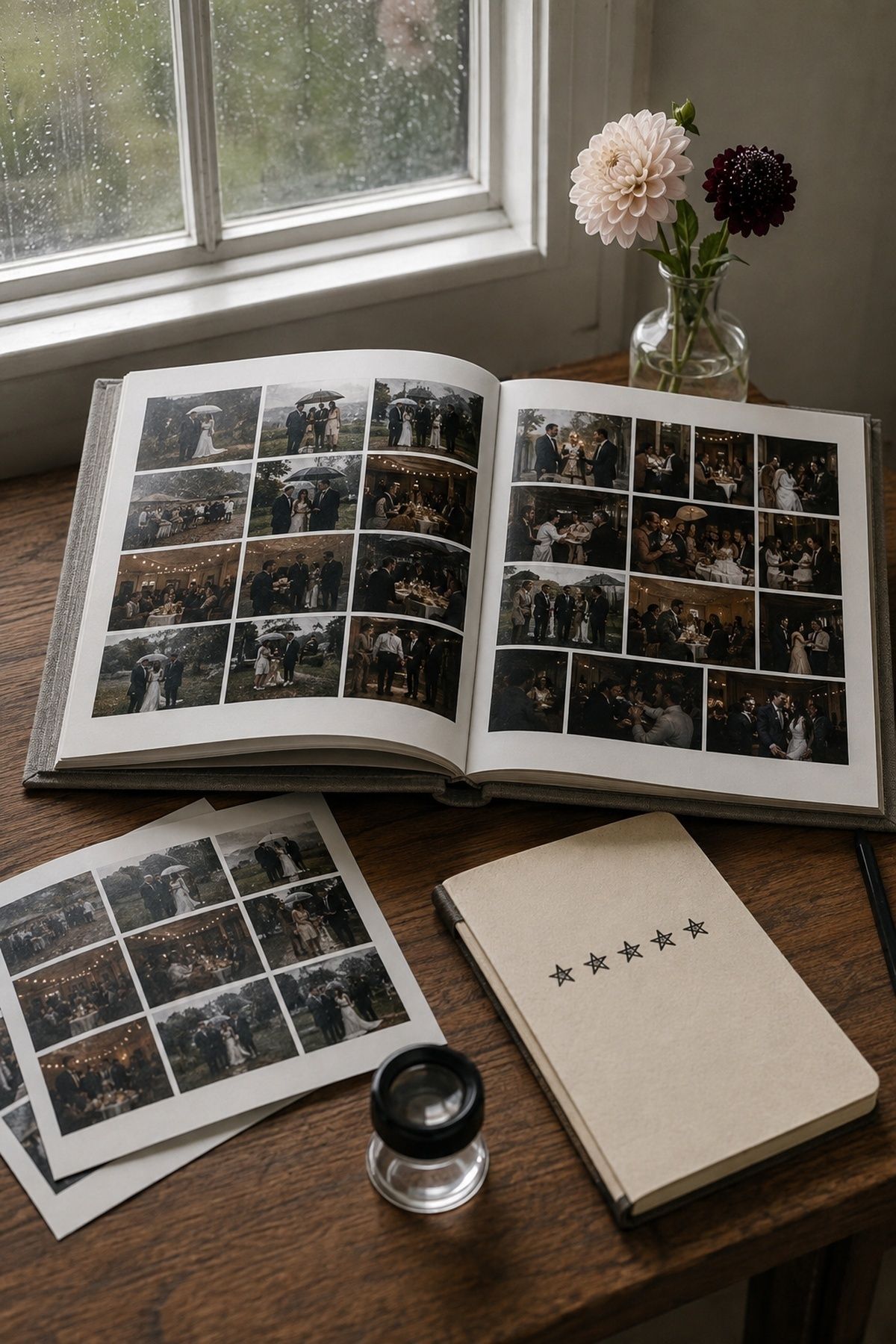
Highlight reels are designed to enchant. They do not show late dinner service, dark ceremony rooms, rainy entrances, crowded prep spaces, imperfect timelines, or how a vendor handles ordinary pressure. Wedding vendor red flags often appear in the gap between the polished sample and the full body of work.
Ask for the right kind of proof. A photographer should have full galleries in lighting and venue conditions like yours. A caterer should explain tastings, staffing, and service flow. A florist should share real event examples, not only styled shoots. A planner should describe how they solve small problems before the couple hears about them.
Reviews matter too, especially when they mention communication, punctuality, cleanup, flexibility, and follow-through. One uneven review does not automatically define a vendor, but patterns deserve attention.
Ignoring Communication Patterns Before The Contract
Pre-booking communication is not a perfect preview of the wedding day, but it is useful evidence. If a vendor avoids direct answers, misses promised follow-ups, sends vague pricing, or becomes warm only when a payment is due, notice it. The courting stage should not require constant nudging.
Ask, “How do you normally communicate after booking, and what is your reply window?” A strong answer should name the main contact, the usual response time, the planning milestones, and where documents live. Bring your vendor questions to each call so enthusiasm does not replace clarity.
For a small wedding, this protects emotional bandwidth. You may not have a large planning team buffering every question, so the vendor’s communication style has a direct effect on how calm the months feel.
If replies already feel scattered, ask for one written recap after the call.
Signing Without Scope, Fees, Payment Dates, And Cancellation Terms
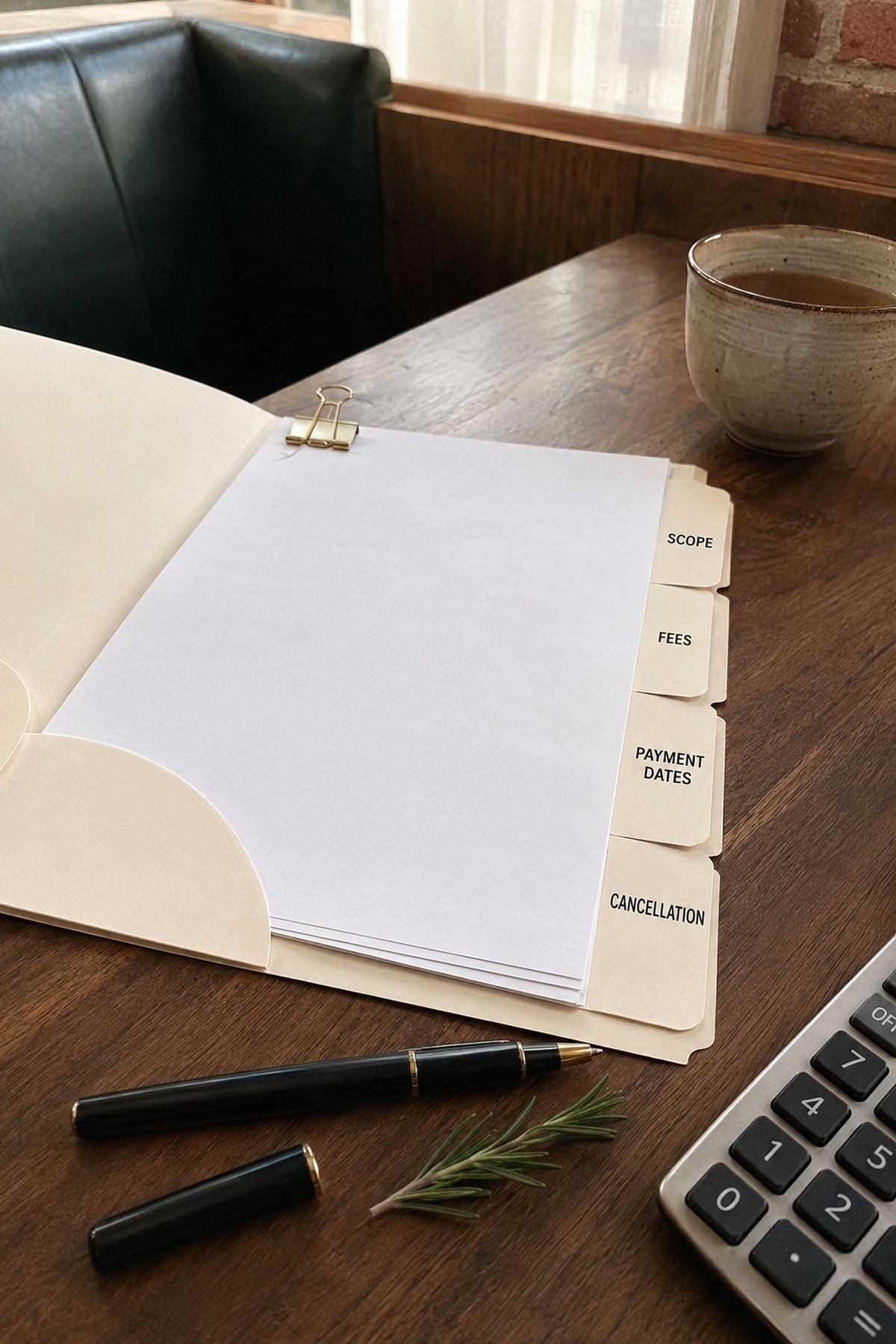
A friendly email is not enough to define the work. Wedding vendor contract mistakes happen when couples assume the conversation and the contract say the same thing. They need to see the package, hours, deliverables, payment schedule, taxes, service charges, travel fees, overtime, cancellation terms, rescheduling terms, and any exclusions in writing.
Ask, “Where does the contract state this?” A clear answer should point to exact language, not reassurance. This is not about becoming suspicious. It is about making sure both sides remember the same promise six months later, when the wedding is close and emotions are high.
If a contract feels thin, request plain explanations before paying. Confirm vendor minimums before you assume a reduced guest count means reduced cost.
Forgetting Backup Staff, Equipment, Insurance, And Substitution Plans
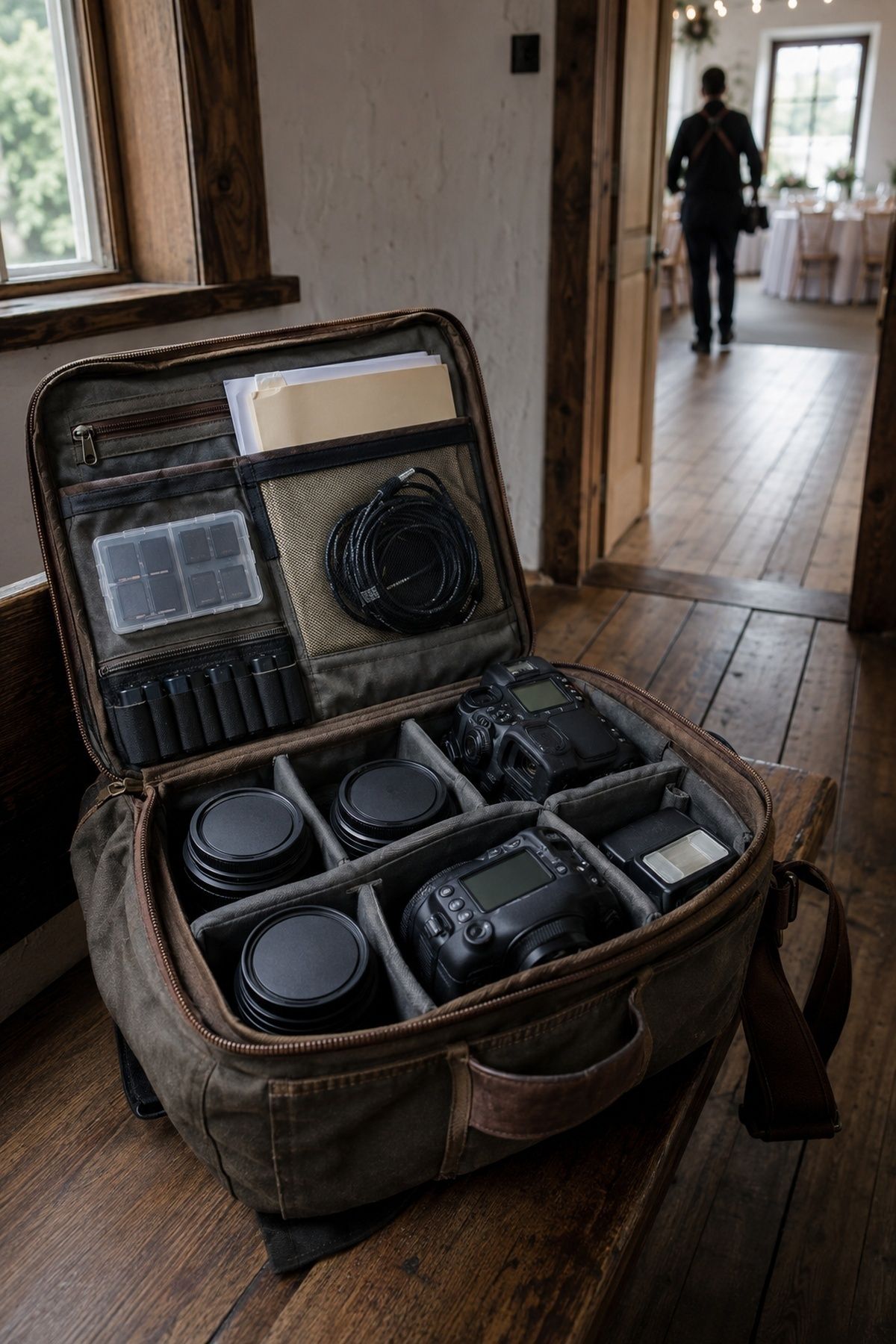
No couple wants to plan around someone getting sick, a van breaking down, a camera failing, or a supplier changing inventory. Still, calm planning asks what happens next. Backup plans are not dramatic; they are part of professional continuity.
Ask, “What is your backup plan if you, your staff, your equipment, or a required item becomes unavailable?” A clear answer should cover staffing, associates, rental substitutions, equipment backups, insurance, emergency contacts, and what the couple is told. If the answer is only “That never happens,” keep asking.
At a small wedding, losing one key vendor may affect the whole atmosphere. Backup planning gives the day a softer landing if something changes.
Missing Delivery Timelines, Overtime, Travel, Setup, And Cleanup Details
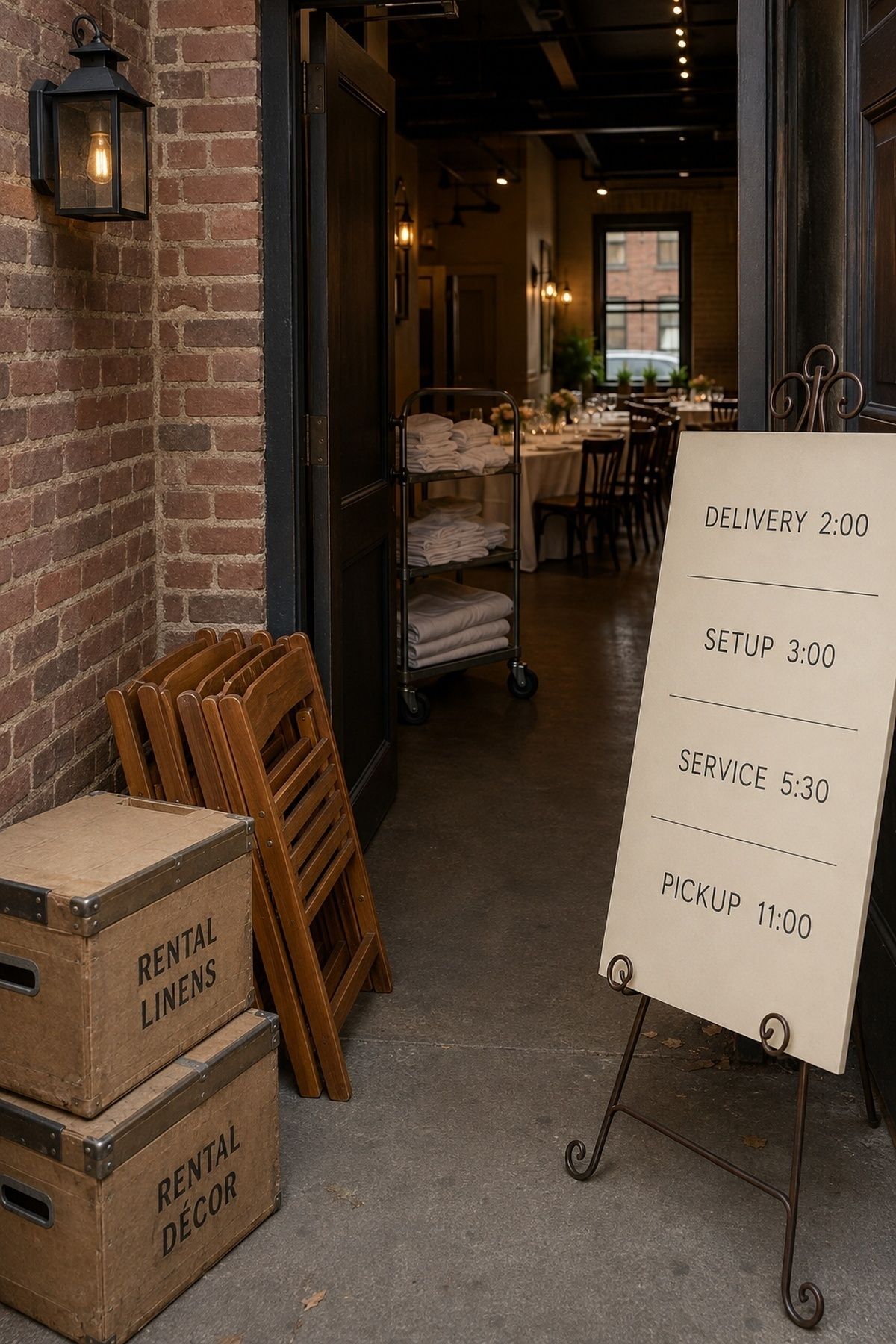
Many vendor surprises are practical rather than glamorous. Delivery windows, travel fees, setup time, strike time, access rules, overtime rates, parking, load-in routes, meal breaks, power needs, and cleanup responsibilities all affect the day. If these details are absent, someone else has to solve them later.
Ask, “What has to happen before you arrive, while you are working, and after you leave?” A helpful answer should walk through timing from access to departure. For rentals, confirm who receives items, who places them, who counts them, and who handles pickup.
These details may sound unromantic. They are actually what protect romance from becoming a last-minute logistics meeting in formalwear.
Not Asking Who Will Be There On The Wedding Day
The person selling the service is not always the person present at the wedding. Some companies send associates, assistants, lead captains, setup crews, second shooters, or contracted staff. That may be completely fine, as long as the couple knows who is responsible for decisions on site.
Ask, “Who is our day-of contact, and who has authority if something changes?” A clear answer should identify names or roles, arrival times, backup contacts, and the chain of communication. Decide which vendor questions go through the coordinator instead of the couple.
This is especially important for photographers, planners, caterers, rental teams, musicians, transportation providers, and beauty teams. The wedding should not depend on the couple remembering who is supposed to call whom.
Forgetting To Share Small-Wedding Details That Change The Work
Small weddings are not just mini versions of large weddings. They have different rhythms, sightlines, family dynamics, dinner pacing, sound needs, and emotional closeness. A vendor who expects a big reception may miss how much each toast, table, pause, and transition matters in a smaller room.
Ask, “What should we tell you about our guest count, venue, family dynamics, dinner style, and priorities so your work fits the wedding?” A good answer should invite specific detail. The florist may adjust scale, the photographer may plan quieter coverage, the caterer may pace service differently, and the musician may soften the room rather than overpower it.
The more precise you are about the feeling of the event, the easier it is for vendors to protect it.
This is also where small weddings become beautifully personal. Tell vendors which moments need privacy, which relatives need gentle direction, which spaces are tight, and which traditions you are skipping. Details like those help the team serve the wedding you are actually imagining.
A Vendor Question List To Ask Before Paying A Deposit
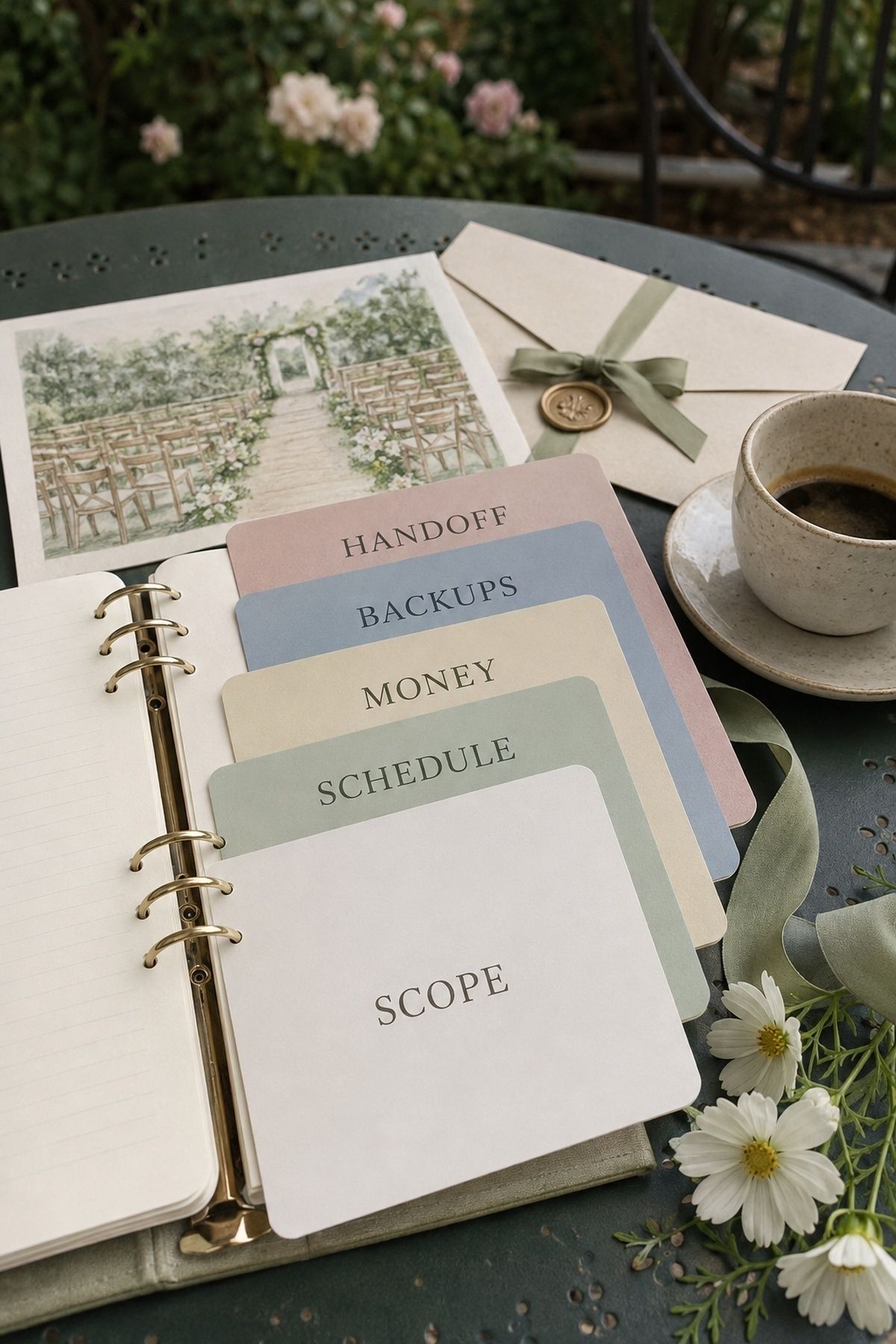
The most useful questions to ask wedding vendors are not clever. They are clarifying. Ask what is included, what is excluded, what costs extra, what the timeline looks like, who appears on the day, how communication works, when payments are due, what happens if plans change, and what the vendor needs from you.
For scope, ask what the package covers and what deliverables you receive. For schedule, ask about arrival, setup, service, breaks, overtime, and departure. For money, ask about deposits, taxes, travel, minimums, tips, and cancellation. For backups, ask about staff, equipment, illness, weather, and substitutions. For handoff, ask who your contact is once the wedding week arrives.
Before the final call, group your planning questions by category so the conversation follows the real shape of the event. A vendor who answers calmly and specifically is showing you more than professionalism. They are showing you how planning may feel after you hire them.
FAQ
What mistakes do couples make when hiring wedding vendors?
The biggest mistakes are booking before the date, venue, budget, and guest count are clear; choosing style over reliability; skipping full work samples; ignoring slow communication; and paying deposits before scope, fees, backup plans, and cancellation terms are written down.
What are wedding vendor red flags?
Wedding vendor red flags include vague pricing, pressure to book immediately, no written agreement, evasive answers about who appears on the day, poor communication before booking, missing insurance details, weak backup plans, and reviews that repeat the same problem across different weddings.
What questions should you ask vendors before booking?
Ask what is included, what costs extra, who will be present, how communication works, what the payment schedule is, what the cancellation terms are, what backup plans exist, what the vendor needs from you, and what could change the final price.
Should you book vendors before the venue?
In most cases, book the venue first or at least confirm the date, location, guest count, access rules, and vendor policies before signing other vendor contracts. The venue affects catering, rentals, photography timing, music rules, insurance, setup, parking, and delivery.
How do you avoid unreliable wedding vendors?
Look for patterns before paying. Review full examples of past work, check recent reviews, ask direct questions, notice reply habits, request written scope, confirm backups, and avoid anyone who makes you feel difficult for asking normal planning questions.
What should every wedding vendor contract include?
Every contract should clearly state the vendor name, date, location, service scope, deliverables, hours, payment schedule, fees, cancellation and rescheduling terms, overtime rates, travel costs, substitution policies, liability or insurance requirements, and the main contact for the wedding day.
Final Thoughts
The most avoidable wedding vendor mistakes are the ones that begin as tiny uncertainties: a vague package, a loose timeline, a missing name, an unanswered fee, a promise that sounds lovely but never reaches the contract. None of this means you should distrust every vendor. It means your wedding deserves people who are as clear as they are talented.
Choose vendors who lower emotional labor. Ask specific questions, expect written answers, notice communication patterns, confirm backup plans, name every fee, compare reliability against charm, and decide who owns the final handoff while the deposit is still yours to keep. The calmest choice usually has clear terms before excitement starts doing the work.
Last update on 2026-10-03 / Affiliate links / Images from Amazon Product Advertising API