

Say no to an expensive wedding trend by pricing the full version first, including labor, delivery and setup, and comparing it with one thing your guests would feel instead, like a better dinner. If it doesn’t beat that, decline with one calm sentence about where the money is going, and stop explaining.
I spent years as a banquet chef putting gold leaf on desserts for people who ate them in two bites and never mentioned the gold. That’s most expensive wedding trends in a nutshell: someone pays a lot for a detail that photographs well for a second and then quietly disappears into the night. Knowing how to say no to expensive wedding trends is mostly knowing which details are gold leaf and which ones are the actual dessert.
What you’ll find below is a practical way to price a trend, decide if it earns its place and turn it down with family, vendors and your own scrolling thumb, plus scripts you can copy word for word. If you’re still working out your overall number, how much should a small wedding cost is the place to start.
Recommended Wedding Budget Essentials
Writing decisions down is what keeps them decided, and these tools make that easier.


Recommended blogs to read:
- Why Are Weddings So Expensive And What Can You Actually Control
- Wedding Budget Mistakes That Make Small Weddings Feel Expensive
- How TikTok Affects Wedding Planning When Every Idea Feels Urgent
- How To Make A Cheap Wedding Feel Expensive Without Pretending
- How To Choose Wedding Priorities As A Couple Before Everyone Else Gets A Vote
How Do You Know if a Wedding Trend Is Worth the Money?
A trend is worth it when it supports one of your top priorities and guests will experience it in person. If it mainly exists for one photo or calms a moment of comparison, it usually isn’t.
1. Name the Wedding Priorities Before Looking at Trends
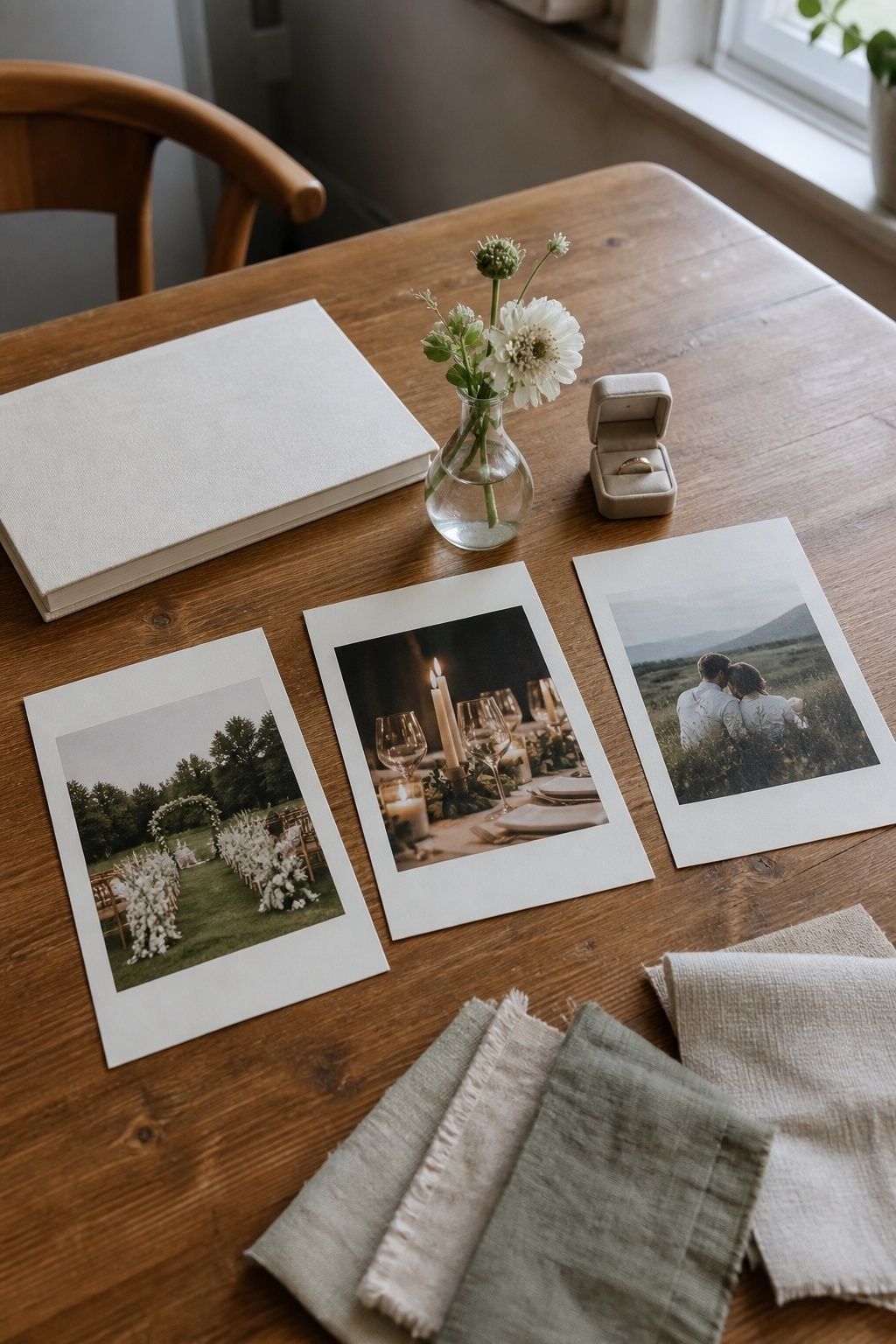
Before you open another saved folder, pick three priorities and write them down. They might be the ceremony setting, the dinner and relaxed photos, or music, a great dress and an easy day for your guests. Three photos on the table, one for each, make the list feel real in a way a note on your phone doesn’t.
The reason this comes first is simple: without a short list, the trend with the prettiest picture wins every argument. Every new idea gets measured against those three things. Does it make the ceremony, the dinner or the photos better? If yes, it can stay in the running. If it improves something that isn’t on the list, it needs a very good reason to be there, and it usually doesn’t have one.
2. Price the Full Trend, Including Labor and Setup
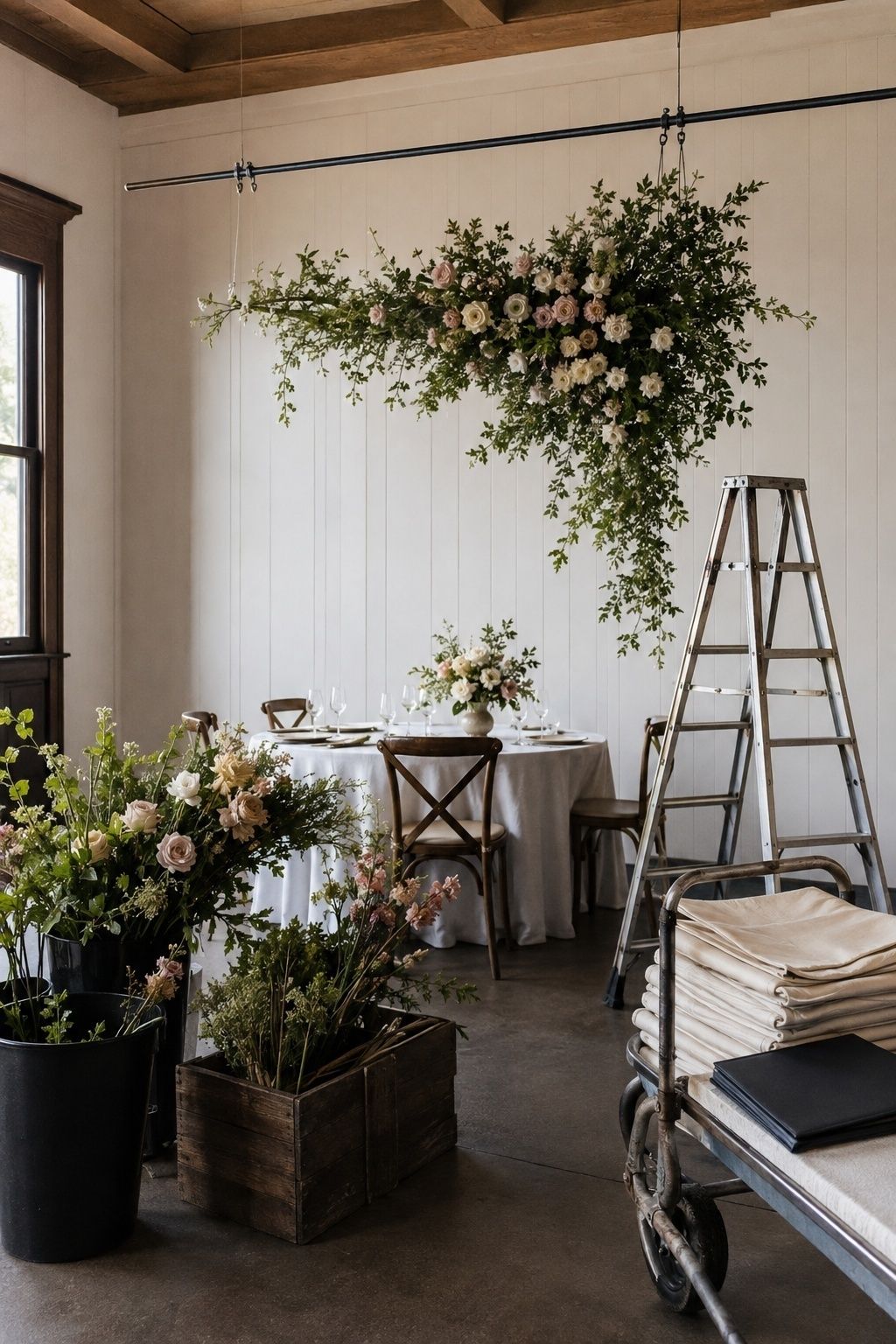
The photo shows a hanging floral piece, but the invoice also covers the ladder, the rigging, the buckets, the crates, the van, the two people who install it in the morning and the two people who take it down at midnight. Trends almost never cost only the thing you first noticed.
Ask every vendor for the all-in number: product, labor, delivery, setup, strike, service fees and tax. Custom signage adds design, printing, stands and someone to place them. A late-night food station adds staff hours and rentals.
Then compare that full number with something your guests would feel directly, like better chairs, a longer dinner, another hour of photography or a coordinator. If the trend still wins, keep it with a clear conscience. If it only made sense while you were pretending the extras didn’t exist, you have your answer.
3. Ask Who the Trend Is Actually Serving
Some trends serve the couple beautifully. A private last dance gives you a quiet minute at the end of the night, and a champagne tower feels festive if you love the ritual and the room can fit it. A dress change is a joy for someone who’s always wanted two looks. The useful question is who the detail is for while the wedding is happening. If the honest answer is “mostly for the photos,” slow down. Photos matter, but the day still has to feel good in real time. A detail that makes guests wait, crowds a small room, interrupts dinner or steals money from a priority is serving the feed more than the people in the chairs, and that’s usually the moment to let it go without guilt.
4. Choose a Smaller Version When the Idea Has Meaning
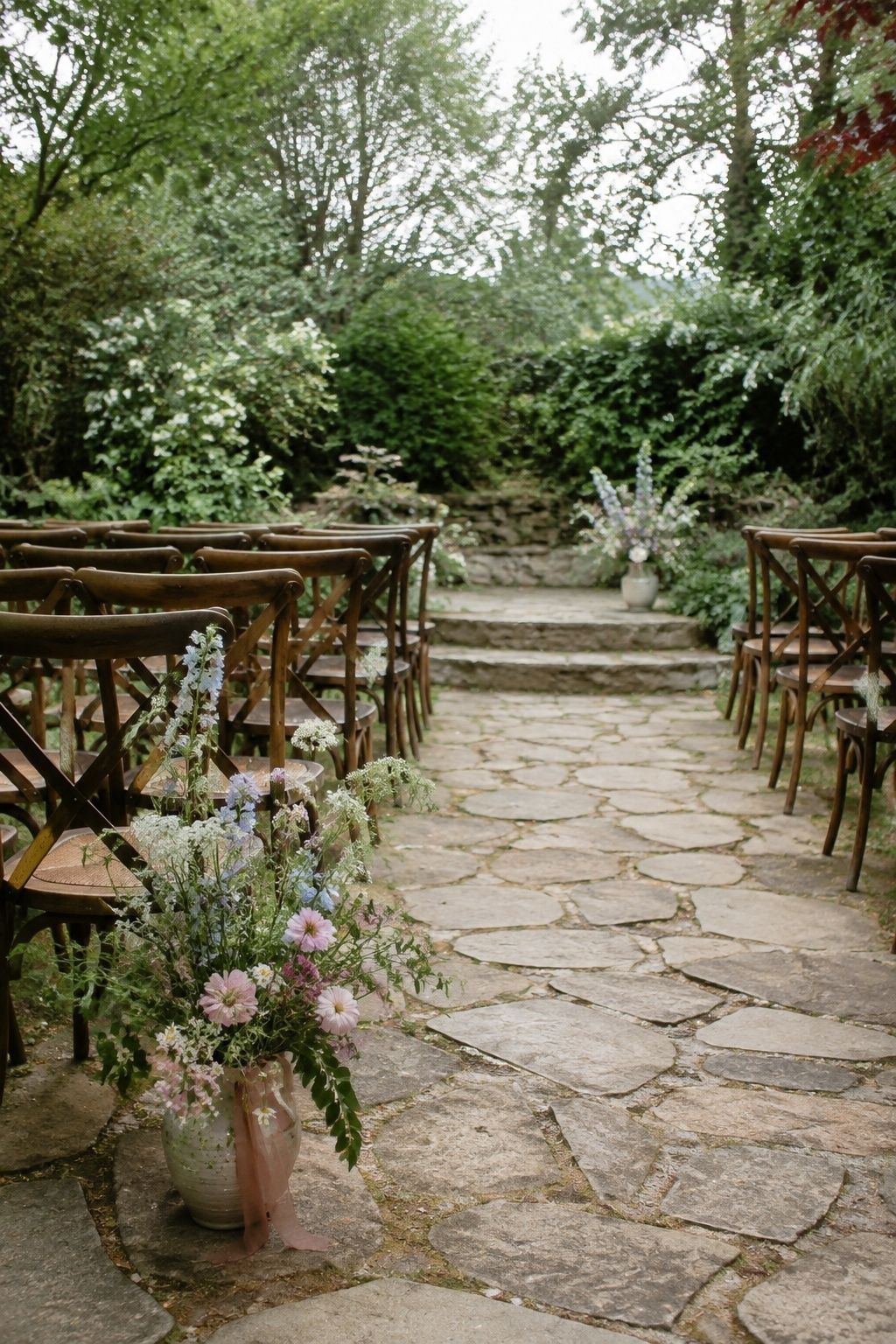
Saying no doesn’t always mean deleting the idea. Sometimes the smart move is a smaller version that keeps the feeling. One generous wildflower arrangement at the start of a stone aisle does more than thirty small ones tied to every chair, and guests walk right past it on their way in.
The same logic works almost anywhere:
- love personal touches? Write a line on each place card instead of ordering custom favors
- love fashion? Change one accessory, like shoes or earrings, instead of a whole second outfit
- love a big floral moment? Put it where everyone gathers, like the ceremony or the dinner table, and nowhere else
At a small wedding, guests are close enough to notice the thoughtful version, and the money you save goes to something on your priority list.
5. Skip the Trend When It Only Fixes Comparison Anxiety
You were happy with the plan on Monday. On Tuesday you saw a reel, and suddenly the dinner needed more candles, the ceremony needed a backdrop and the bar needed a neon sign. Nothing about your guests, budget or venue changed, only the comparison.
My rule for this is a 48-hour wait before spending anything on an idea that showed up after a scroll. Go back to your three priorities and ask whether the trend solves a real problem or calms a moment of insecurity. Most of the time, the urge fades by Thursday, and you’ll be glad the money is still in the account. Plenty of expensive trends are perfectly nice ideas that simply arrived at the wrong emotional moment.
6. Put Guest Comfort Ahead of Viral Moments
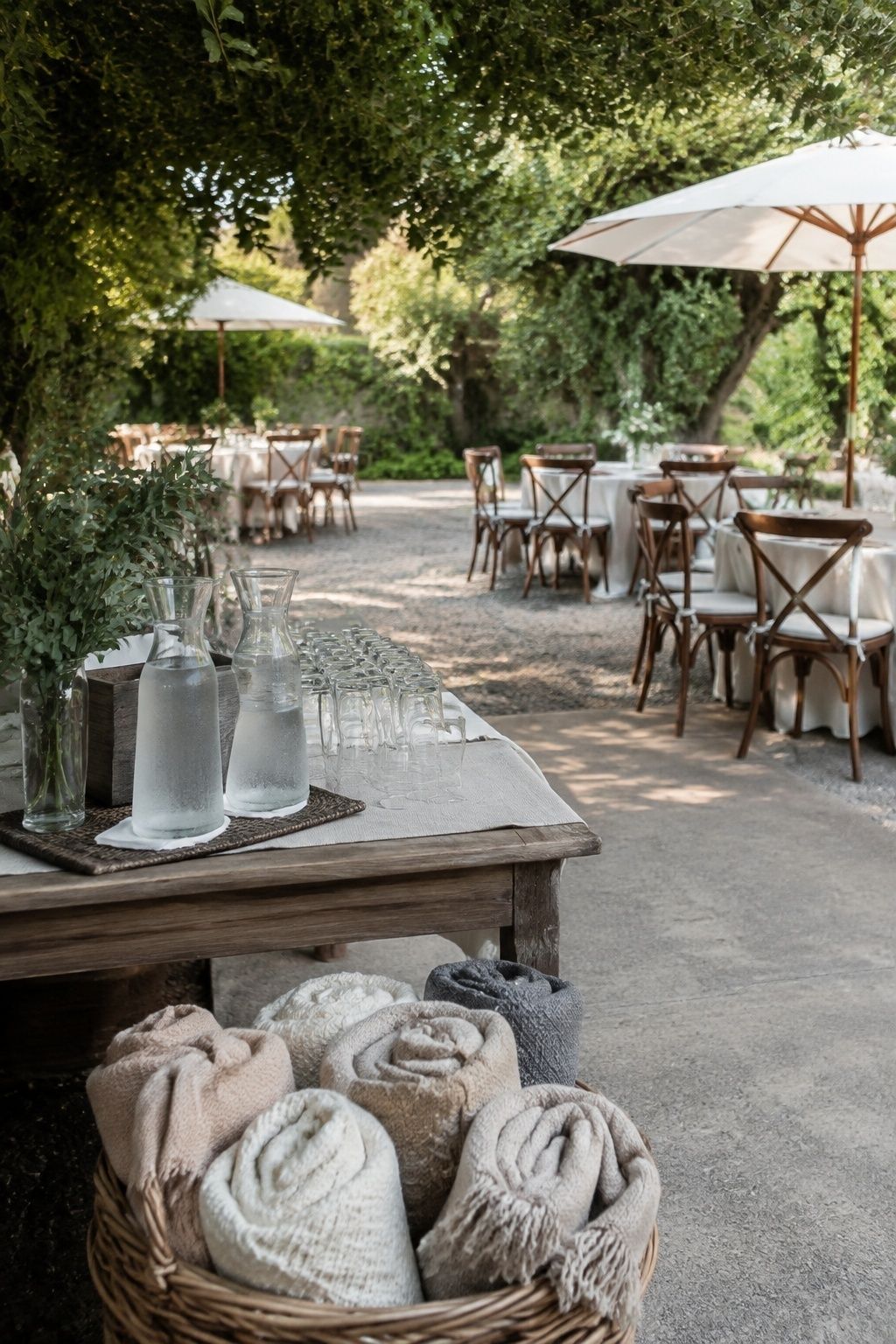
Guest comfort rarely goes viral, and it’s what people remember. Shade over the tables, water within reach, a basket of blankets for when the evening cools down, enough chairs and a clear path to the restrooms make a small wedding feel generous in a way no backdrop can.
This is where small weddings have a real advantage, because you know exactly who’s coming.
If your crowd loves long dinners, spend on the table. If half of them are flying in, simplify the schedule. If grandparents are coming, protect seating and sound before you buy any decor. Spending on comfort first is the quiet foundation of a day people describe as lovely, and it costs far less than most of the trends competing for the same money.
How Do You Say No to Social Media, Family and Vendors?
Each source of pressure needs a slightly different no: limits for your feed, warmth for family and three questions for vendors. The answer stays the same either way.
7. Say No to Trend Pressure From Social Media
Social media shows the finished moment and never the invoice, the labor or the couples who later wished they’d spent differently. It also repeats the same details until they start to look required, and after enough scrolling a trend begins to feel like the entry fee for a nice wedding.
According to Zola’s 2026 First Look Report, 48% of couples raised their budget or moved money around to get something they saw online, and 60% called managing their budget against online inspiration their number one planning stress. You’re in good company, in other words.
Give your saved folder a job. Keep images that show a color, a texture or a mood you love, and delete the ones that only make you feel behind. Then translate what’s left into choices your own venue can actually hold.
8. Say No When Family Calls a Trend a Tradition
Sometimes a trend shows up dressed as tradition. A relative expects a big bridal party, printed programs, favors, a three-tier cake, a bouquet toss or a morning-after brunch, and says “everyone does it.” Some traditions truly matter to a family, and others continue mostly because nobody wanted to be the first to question them.
Answer with warmth and a closed door: “We know that’s familiar, and we’ve chosen a simpler version that fits the size of our wedding.” If family money is involved, agree in writing early what it covers, so a generous check doesn’t arrive with a list of extras attached. Say the same sentence each time the topic returns, and change the subject to something you’re excited about, like the menu. Repetition is boring, and boring is exactly what ends a debate.
9. Say No When a Vendor Upsell Doesn’t Match the Day
Vendor suggestions are often helpful, but many packages are built for 150 guests and a ballroom. A bigger floral package, an extended bar, extra stationery pieces, upgraded linens or more coverage can make sense for some couples and be completely unnecessary for 30 people in a restaurant room.
When an upsell appears, ask three questions: what problem does this solve, what happens if we don’t add it, and is there a smaller version that fits our wedding? A vendor who works with intimate events will answer clearly and without pressure.
If every answer is about making the day look more impressive, you’re allowed to say “thanks, we’ll stay with the original package” and move on. I’ve been on the vendor side of banquet sales conversations, and a clear no is easier for everyone than a maybe that drags on for weeks.
What Can You Do Instead of the Expensive Version?
Choose one or two current details you love and replace the rest with simpler versions that keep the feeling. One good choice beats ten half-funded ones.
10. Keep One or Two Current Details and Let the Rest Go
A wedding can feel current without carrying every trend. Pick one or two modern touches you love, maybe a sculptural cake, a color-drenched table, an unusual guest book or a signature cocktail named after the dog, and give them room to stand out.
When every category gets an upgrade, none of them feels special. When two details get real care and money, they become the things guests mention afterward. Restraint reads as confidence, especially at a small wedding where everyone sees everything up close. Ask yourselves which two details you’d still be talking about on your first anniversary, fund those properly and let the rest go without a second look.
11. Replace Expensive Florals With One Intentional Focal Point
Flowers get expensive fast because beauty usually depends on volume, labor and season. If flowers matter to you, concentrate them where people gather: the ceremony backdrop, the bouquet, the dinner table or the entrance. One generous arrangement looks more luxurious than lots of small ones spread thin, and it photographs better too. If the full floral trend doesn’t fit the budget, mix in candles, fruit, branches, potted herbs or a few dramatic stems in borrowed vessels. As a former chef, I’ll also put in a word for a beautiful bowl of seasonal fruit on a long table, which costs little, looks abundant and gets eaten at the end of the night. A small room doesn’t need an installation to feel romantic, only one clear spot where the eye lands.
12. Replace Elaborate Signage With Clear, Useful Signs
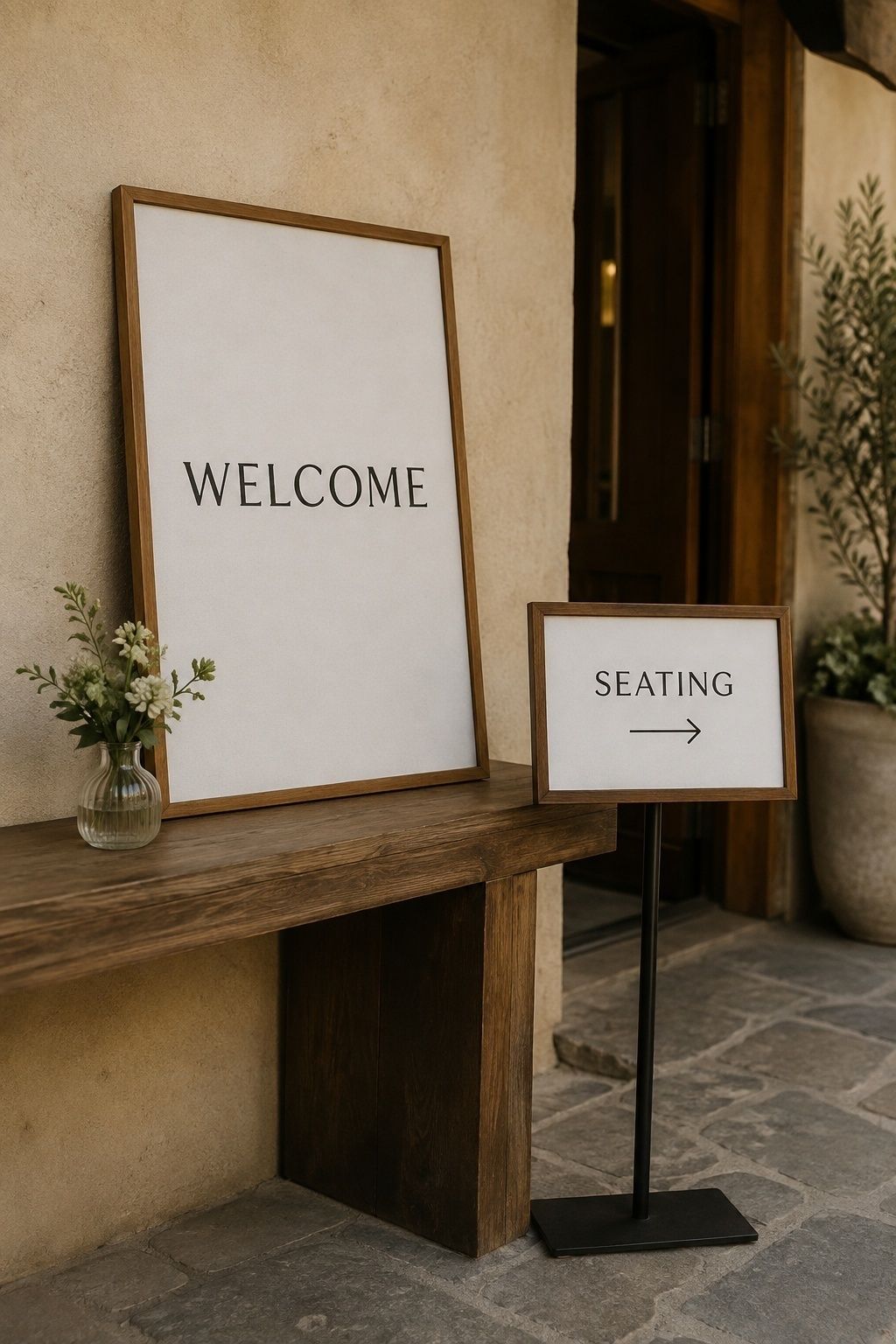
Signage is a category where the trend outruns the need by a mile. Guests need to know where to go, where to sit and maybe what’s being poured. They don’t need a sign for every joke, hashtag, cocktail ingredient and dessert name.
A framed welcome sign on a bench and one arrow pointing to seating already covers most of what a small wedding needs, and they look calm instead of busy.
Keep the materials consistent and the lettering readable from a few steps away. If there’s design money left, put it into one framed piece you’ll hang at home afterward, not into a dozen small signs that end up in a box in the garage.
13. Replace Multi-Event Pressure With One Well-Hosted Gathering
Wedding weekends have a way of turning one celebration into four invoices: welcome drinks, a rehearsal dinner, an after-party and a farewell brunch. They’re lovely when the location and budget suit them, and they also wear out guests and stretch the couple thin when they’re added because everyone else seems to do it.
For a small wedding, one well-hosted gathering usually feels more complete than a weekend of underfunded events. Put your energy into the ceremony and the meal, send clear travel information, and if you want more time together, choose one low-key extra like a casual coffee meet-up or a family-hosted dinner at home. Hospitality doesn’t have to be a schedule, and your guests will thank you for a free Sunday morning.
14. Replace Favors With Food, Comfort or Personal Thanks
Favors are easy to buy because they feel like gratitude in a box. Most guests would rather have enough food, an easy ride home, a comfortable chair or a drink they actually like. A handwritten line on each place card often feels more generous than a branded item that gets left on the table. Other swaps that work well: late-night coffee, shawls for a cool garden evening, umbrellas by the door, a boxed slice of cake to take home or a family recipe printed at each setting. Pick something connected to the people in the room, because cheaper for the sake of cheaper isn’t the goal here.
15. Replace Photo-Only Decor With Atmosphere Guests Feel
Photo-only decor is built for one camera angle. Atmosphere works from every chair. If a detail looks wonderful in a square photo but crowds the room, blocks conversation or stops mattering once the shot is taken, rethink it.
Spend instead on the things guests experience for hours:
- warm, flattering light and plenty of candles
- music at a volume that lets people talk
- soft linens and comfortable chairs
- a drinks setup that doesn’t create a queue
- a ceremony layout where everyone can hear
None of it screams trend, and all of it makes a wedding feel put together, in person and in the photos.
How Do You Make the No Stick?
Decide once, write down why, say the same calm sentence to anyone who asks and stop shopping for that category. Decisions that stay closed cost nothing extra.
16. Use Calm Wording When People Ask Why You Skipped Something
You don’t need a speech for every skipped trend. Prepare a few calm lines and repeat them as needed: “We’re keeping the day simple.” “That’s lovely, it’s just not where we’re spending.” “We picked the version that fits our guest count.” “We’d rather make dinner generous than add another display.” Tone does most of the work here. If you sound unsure, people treat the decision as still open and start offering ideas. If you sound relaxed, most of them nod and move on to asking about the food, which is where you wanted the conversation to go anyway.
17. Stop Revisiting Decisions After They’re Made
Reopening decisions is one of the most expensive habits in wedding planning. Every revisit invites new comparisons, new quotes, new accessories and sometimes rush fees, and none of that was in the budget.
Once you’ve made a thoughtful choice, write one line about why, and stop browsing that category. Chose a simple cake? Unfollow the dramatic cake accounts for a few months. Skipped the floral ceiling? Stop searching floral ceilings at midnight (yes, I know).
Your attention is part of the budget too, and it’s better spent on the decisions that are still open.
18. Track Every Trend Against the Budget
A trend shouldn’t sneak in as a vague maybe. Give it its own line in the budget with a real estimate that includes tax, service, delivery and labor, then write next to it what would have to give if it stays. Fewer flowers somewhere else? A shorter photography package? Dipping into savings or putting it on a card?
Seeing the trade written down makes the decision much less emotional. The trend stops being a pretty picture and becomes a simple swap: this for that. If you’re happy with the swap, keep it and enjoy it. If it quietly hurts something more important, the answer is no, and now you can explain exactly why.
19. Let a Small Wedding Look Selective Instead of Incomplete
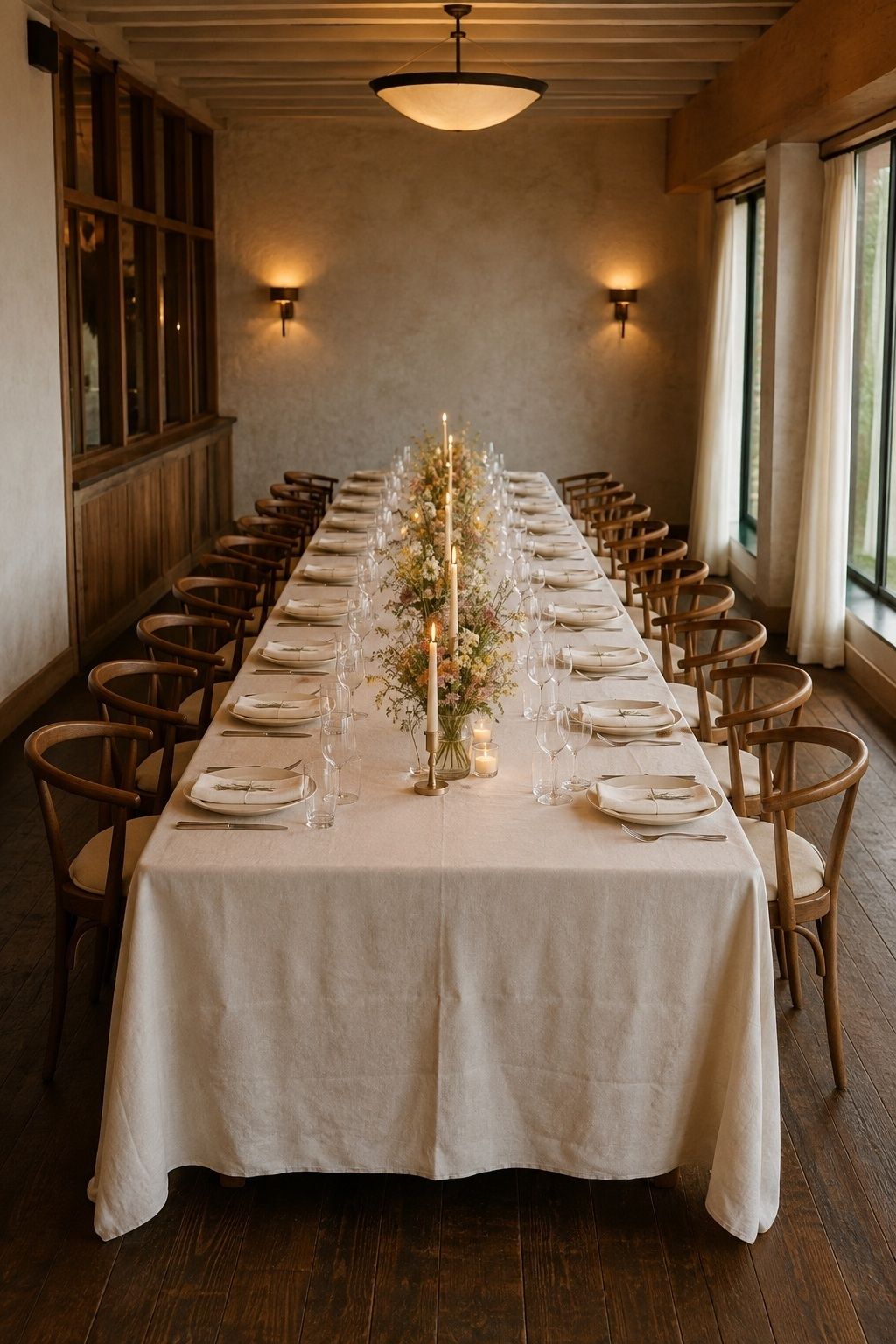
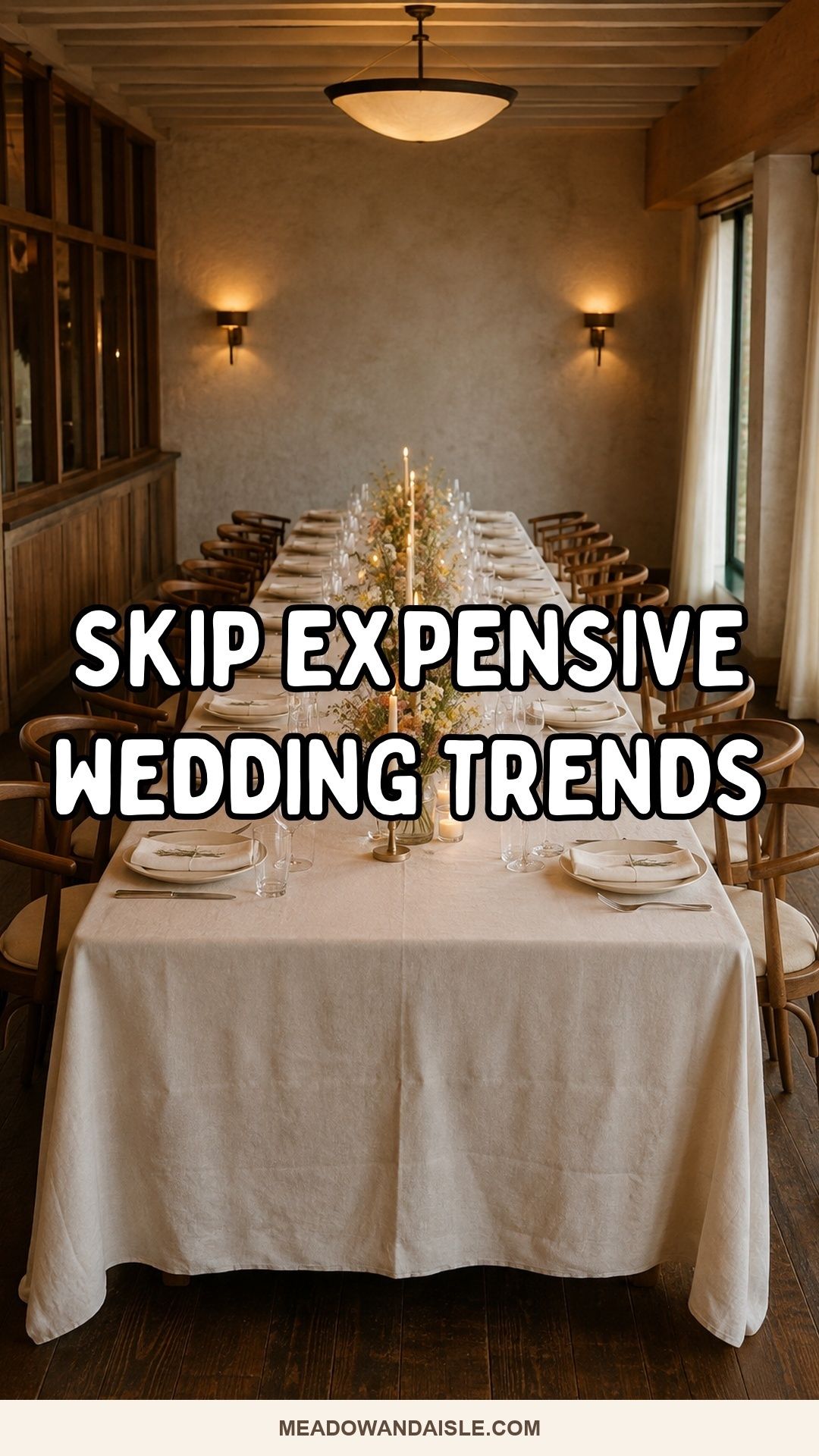
A small wedding doesn’t have to be a scaled-down copy of a big one. One long candlelit table with ivory linens and low wildflowers in a warm restaurant room is already a finished picture, even without a single trend on it.
Fewer tables, fewer speeches, fewer signs and fewer events still add up to a complete day when what’s there was chosen with care. Swap the question “will people notice what we skipped?” for “will guests feel welcome in what we chose?”
Selective is different from empty. An empty wedding feels like something’s missing. A selective one feels like every single thing in the room is there on purpose, and guests sense that the moment they sit down.
How Do You Decide Which Expensive Wedding Trends to Skip?
Run every trend over a cost you’d notice through five questions, in this order:
- Does it support one of our three priorities?
- Will guests experience it in person, or is it mostly for one photo?
- Does the price include labor, delivery, setup, tax and service?
- Would we still want it if nobody posted it?
- What leaves the budget if it stays?
If a trend passes all five, it has earned its place. If it fails two or more, decline it while the decision is still easy. Then swap the no for a positive choice, so the plan keeps moving: no champagne tower becomes a great first toast at dinner, and no welcome bags becomes clear travel details and snacks at the hotel desk. For a smaller guest list overall, there’s more on how to plan a small wedding.
What Do You Say When You Decline a Wedding Trend?
Keep it short, kind and final, because long explanations sound like an opening for negotiation. Here’s wording you can borrow, by person:
- To a vendor: “Thank you for pricing that. We’re going to stay with the simpler version because it fits our guest count and budget better.”
- To family: “We know that matters at some weddings, and we’ve decided to keep ours focused on the ceremony and dinner.”
- To an excited friend: “That’s gorgeous and I see why you love it. We’re not adding more pieces right now.”
- To parents who are contributing: “We’re so grateful for your help, and we want to be clear before anything’s booked that we’re not adding extra events or a bigger guest list.”
- To yourself, later: “We skipped the bar display so dinner and photos got the money.”
If someone pushes, repeat your line once with the same calm voice and change the subject. A boundary doesn’t need fifteen reasons, only one clear sentence. For a closer look at where money tends to leak, see wedding budget mistakes, or browse the full Budget Weddings collection.
What if Your Partner Wants the Trend and You Don’t?
Talk about what each of you is protecting before you talk about the trend itself. One person is usually guarding the money, and the other is guarding something just as real, like a family expectation, a once-in-a-lifetime feeling or the photos they’ll keep forever.
Once you’ve named the need, a smaller version usually shows up on its own: one floral moment instead of a full ceiling, one outfit detail instead of a second dress, one hosted dinner instead of a whole weekend. Give each of you one “this matters to me” pick that the other agrees to fund without debate, and you’ll find most of the fighting stops.
Frequently Asked Questions
How do you say no to expensive wedding trends?
Tie the no to a priority instead of a lack of money: “We’re putting the budget toward dinner and guest comfort.” Say it once, kindly, and stop explaining.
Which wedding trends are not worth the money?
Trends that serve one photo more than the people in the room, carry hidden labor costs or replace something on your priority list. Common examples are oversized floral installs, lots of decorative signs, branded favors and extra weekend events added out of pressure.
How do you avoid wedding trend pressure from social media?
Limit browsing once your main decisions are made, and wait 48 hours before spending on anything you saw in a post. Keep only the saved images that show a color or mood you love.
How do you tell family you’re skipping a wedding tradition?
Use one warm, final sentence, such as “we’ve chosen a simpler version that fits the size of our wedding.” If family money is involved, agree in writing what it covers before anything is booked.
Can a wedding feel stylish without trendy details?
Yes. Good lighting, comfortable seating, a beautiful table, clear stationery and a generous meal look polished in any year, and style comes from choices that fit together.
What should you do when a trend doesn’t fit your budget?
Scale it down or recreate the feeling it was meant to give. Use one focal arrangement instead of a full install, a handwritten note instead of favors or candles instead of heavy decor. If the small version still feels forced, skip it entirely.
Key Takeaways
- Price every trend all in, with labor, delivery, setup, tax and service.
- Measure it against three written priorities and one thing guests would feel instead.
- Wait 48 hours before spending on any idea that came from a scroll.
- Decline with one calm sentence, repeat it and stop reopening the decision.
Get Your No List Written Before Engagement Season Gets Loud
December is a busy month for engagements, and January is when the wedding ads, trend reports and “what’s in this year” posts all show up at once. If you’re planning now, sit down this week, write your three priorities and the five-question filter on one page, and stick it somewhere you’ll see it before every vendor meeting. It’s much easier to say no to a trend you’ve already ruled out.
Last update on 2026-11-29 / Affiliate links / Images from Amazon Product Advertising API