

Wedding budget mistakes usually happen when couples trust the first price they see instead of the all-in number they will actually pay. The safest move is to check every quote for minimums, taxes, service charges, staffing, rentals, delivery, overtime, payment timing, and tradeoffs before you sign or send a deposit.
A small wedding can still feel surprisingly expensive. Not because you did something wrong, and not because intimate weddings are secretly impossible to afford. The trouble usually starts when a quote looks complete but is really only the first layer of the cost.
You might see a venue fee before the food and beverage minimum. You might price dinner before service charges, taxes, gratuity, rentals, and vendor meals appear. You might choose a smaller guest list and then discover that photography, beauty, music, transportation, permits, and insurance do not shrink just because the room is smaller.
That is why wedding budget mistakes are rarely about one dramatic splurge. More often, they are quote gaps: the missing pieces between the number that felt manageable and the number that lands on the final invoice. The sections below will help you find those gaps early, ask better questions, and keep your budget as a decision tool instead of a source of dread.
Recommended Wedding Products


You Might Also Like These Blog Posts
- Wedding Contract Mistakes That Cost More Than The Deposit
- Micro Wedding Budget: Spend Small Without Feeling Sparse
- Small Wedding Budget Breakdown Without The Guesswork
- Why Are Weddings So Expensive And What Can You Actually Control
- Hidden Wedding Costs Couples Forget Until The Budget Starts Leaking
- How To Make A Cheap Wedding Feel Expensive Without Pretending
Wedding Budget Mistakes That Hide In The Gap Between The Quote And The Real Total
The budget does not need to predict every penny from the beginning. It does need to show the real shape of the wedding you are planning. For an intimate wedding, that means checking both the costs that rise with each guest and the fixed costs that stay mostly the same whether you invite 24 people or 74.
Use each section below as a question to ask before paying. If the answer changes the total, the line belongs in your budget now, not in a panicked final-month spreadsheet.
Building The Budget From Inspiration Instead Of Real Quotes
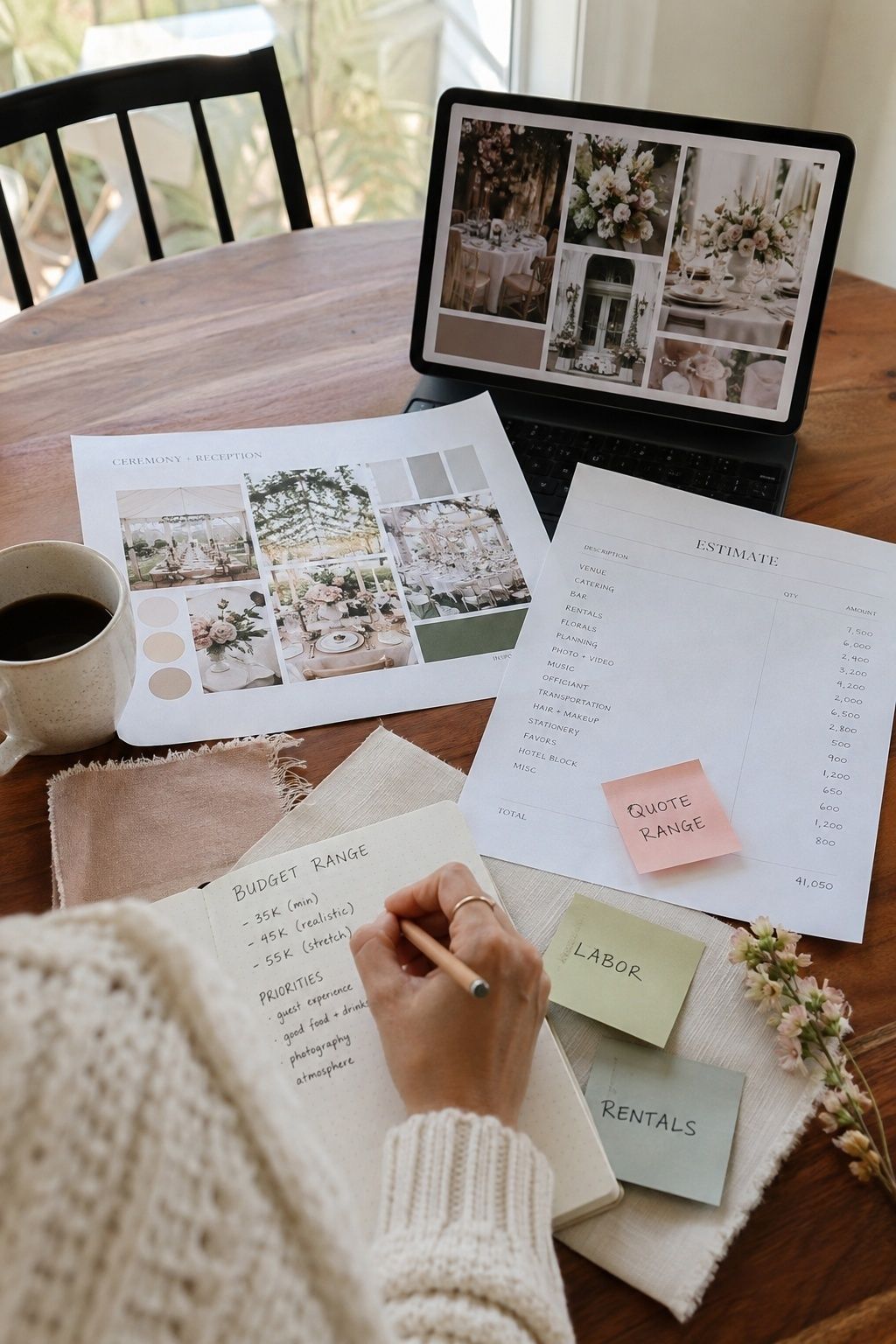
Inspiration is useful for taste, but it is a shaky way to build numbers. A candlelit courtyard dinner, garden ceremony, private restaurant reception, or flower-filled table can look simple online while depending on labor, rentals, delivery, permits, lighting, and weather plans you cannot see in the photo.
This is one of the costly wedding planning mistakes that feels harmless because it starts with imagination. You save what you love, assign rough numbers based on hope, and then every real quote feels like a shock. The problem was not the dream. The problem was letting the dream become a budget before vendors explained what it required.
Do this instead: create a first draft budget with ranges, not fixed wishes. Ask venues and vendors for written estimates that separate base price, required additions, optional upgrades, tax, service charges, staffing, delivery, setup, teardown, and overtime. Then decide what is worth keeping.
Forgetting That Guest Count Changes Almost Every Category

Guest count is not just a catering number. It changes food, drinks, rentals, invitations, postage, favors, shuttle needs, restroom needs, ceremony seating, table count, linen count, service staff, cake size, bar timing, and sometimes the venue itself. A guest list that grows quietly can pull the whole budget with it.
Small weddings make this feel especially personal. Adding “just six people” may sound modest, but six guests can mean another table, another centerpiece, more rentals, extra meals, more drinks, more printed pieces, and a different room layout. It may also change the feeling of the wedding from intimate dinner to small event. Avoid these wedding rental mistakes when that extra table enters the plan.
Before you invite, price the headcount. Keep a working guest ceiling and ask what each additional guest changes. If a new invitation matters deeply, make room for it honestly. If it is only being added to avoid discomfort, remember that the budget will still count it.
Trusting A Venue Or Catering Quote Before It Is All-In
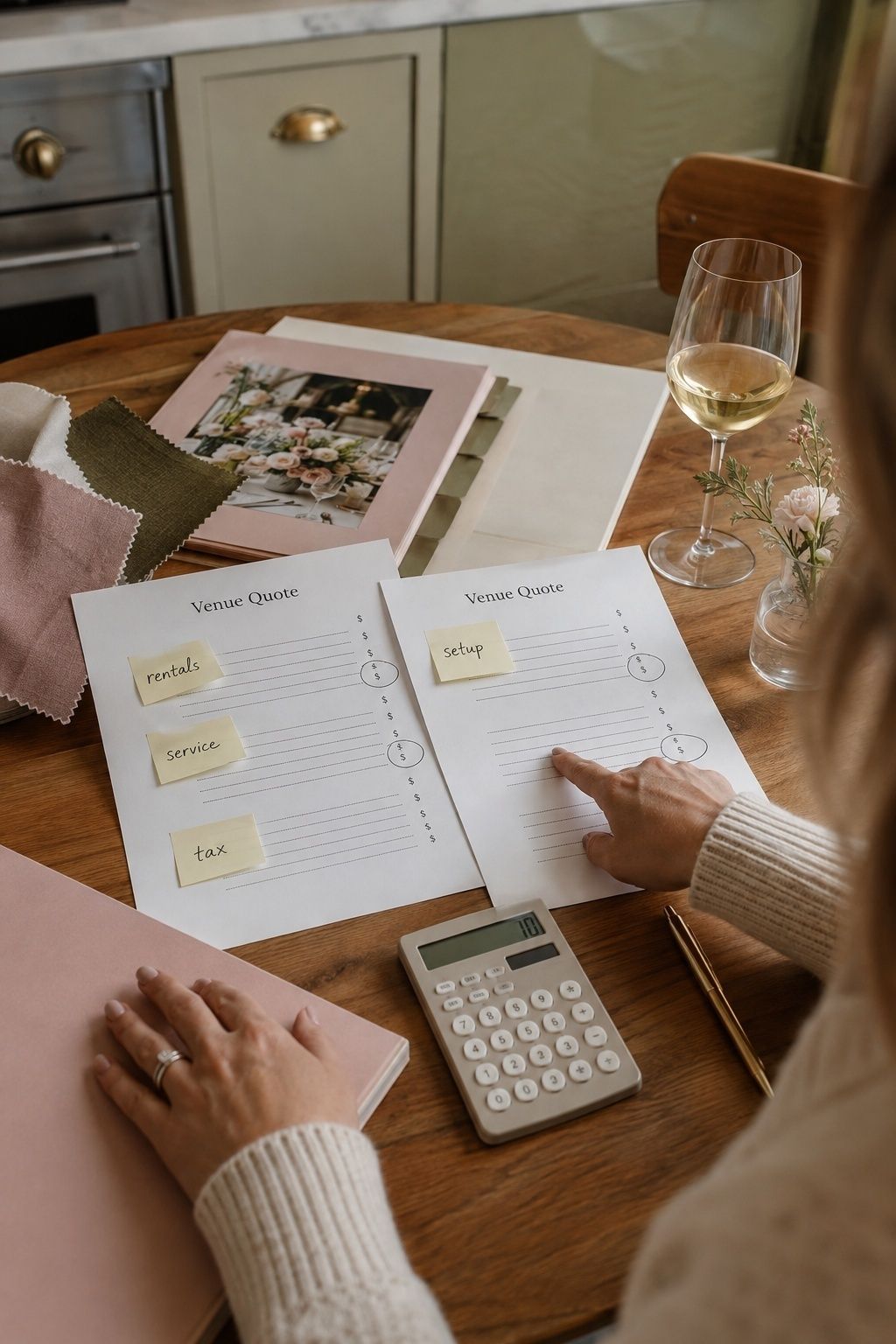
A venue quote can look clean and still be incomplete. The headline number may not include food and beverage minimums, service charges, taxes, required staffing, security, coat check, bar packages, cake cutting, ceremony setup, chairs, linens, place settings, cleanup, vendor access, or overtime.
This is where wedding service charge mistakes and hidden wedding costs often show up together. Couples compare one venue’s base fee to another venue’s package price, or one caterer’s per-person dinner cost to another caterer’s all-in event estimate. Those numbers are not comparable until the same categories are visible.
Do this instead: ask each venue or caterer for an all-in estimate for your actual guest range and event style. Use the same question every time: “What would we realistically pay for this wedding from arrival through cleanup, including required fees and taxes?” A beautiful quote should be complete enough to plan from.
Missing Service Charges, Taxes, Gratuities, And Vendor Meals

The most frustrating budget surprises are often the least romantic line items. Service charges, taxes, gratuities, and vendor meals can add real money without changing the visible wedding at all. That is why couples sometimes feel confused: the celebration has not grown, but the total has.
Do not guess these numbers. Ask which charges are required, which are optional, which are taxable, and whether gratuity is already included or expected separately. Ask which vendors need meals, when those meals are served, and whether the caterer charges a different rate for vendor meals than guest meals.
For intimate weddings, this protects both money and hospitality. If your photographer, planner, musicians, or hair and makeup team are working through a meal period, feeding them is part of caring for the people carrying the day. It simply needs to be in the budget before the final invoice arrives.
Underestimating Rentals, Delivery, Setup, Teardown, And Cleanup
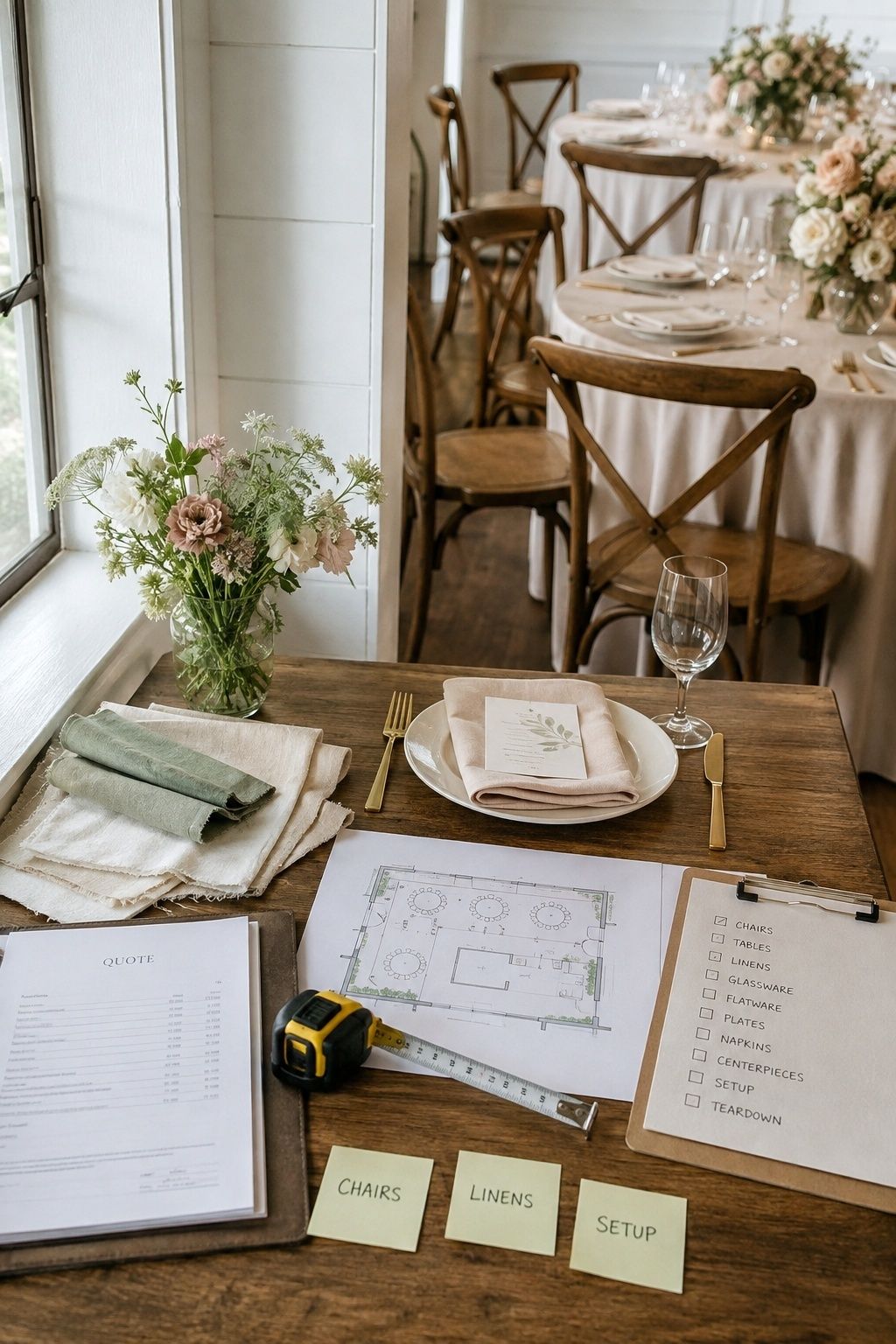
Rentals are sneaky because each individual item may look manageable. Chairs, tables, linens, glassware, plates, flatware, heaters, umbrellas, lighting, speakers, rugs, bars, lounge pieces, and trash removal all feel small until they become a delivery order with labor, timing, minimums, and pickup fees attached.
Setup and teardown matter just as much. A backyard dinner, restaurant buyout, tiny chapel reception, or private estate wedding may need people to receive rentals, place items, move furniture, flip a ceremony space, pack decor, gather gifts, handle trash, and check that nothing rented disappears at the end of the night.
Ask what is included in the venue, what must be rented, who sets it up, who breaks it down, when delivery can happen, when pickup must happen, and whether after-hours service costs more. If no one owns cleanup, the couple may pay later in stress, damage fees, or exhausted family labor.
Treating Overtime, Weather, Transportation, And Late Changes As Unlikely
A budget without a contingency assumes that every part of the wedding will behave perfectly. The ceremony starts on time. Hair runs on time. Guests find the venue easily. The weather cooperates. Dinner service moves cleanly. The couple never needs an extra hour of photography, music, transportation, staffing, or venue access.
That is a lovely thought, but it is not a plan. Overtime, weather, transportation, and late changes are not signs that the wedding is badly planned. They are normal pressure points. The budget mistake is treating them as impossible until they become urgent and expensive.
Build a reserve for realistic adjustments. Ask vendors for overtime rates before signing. Confirm rain-plan costs, shuttle timing, parking needs, setup access, and what happens if the guest count changes after a deadline. Even if you never use the reserve, it gives your nervous system somewhere to land.
Spending On Low-Impact Details Before Comfort And Memories Are Funded
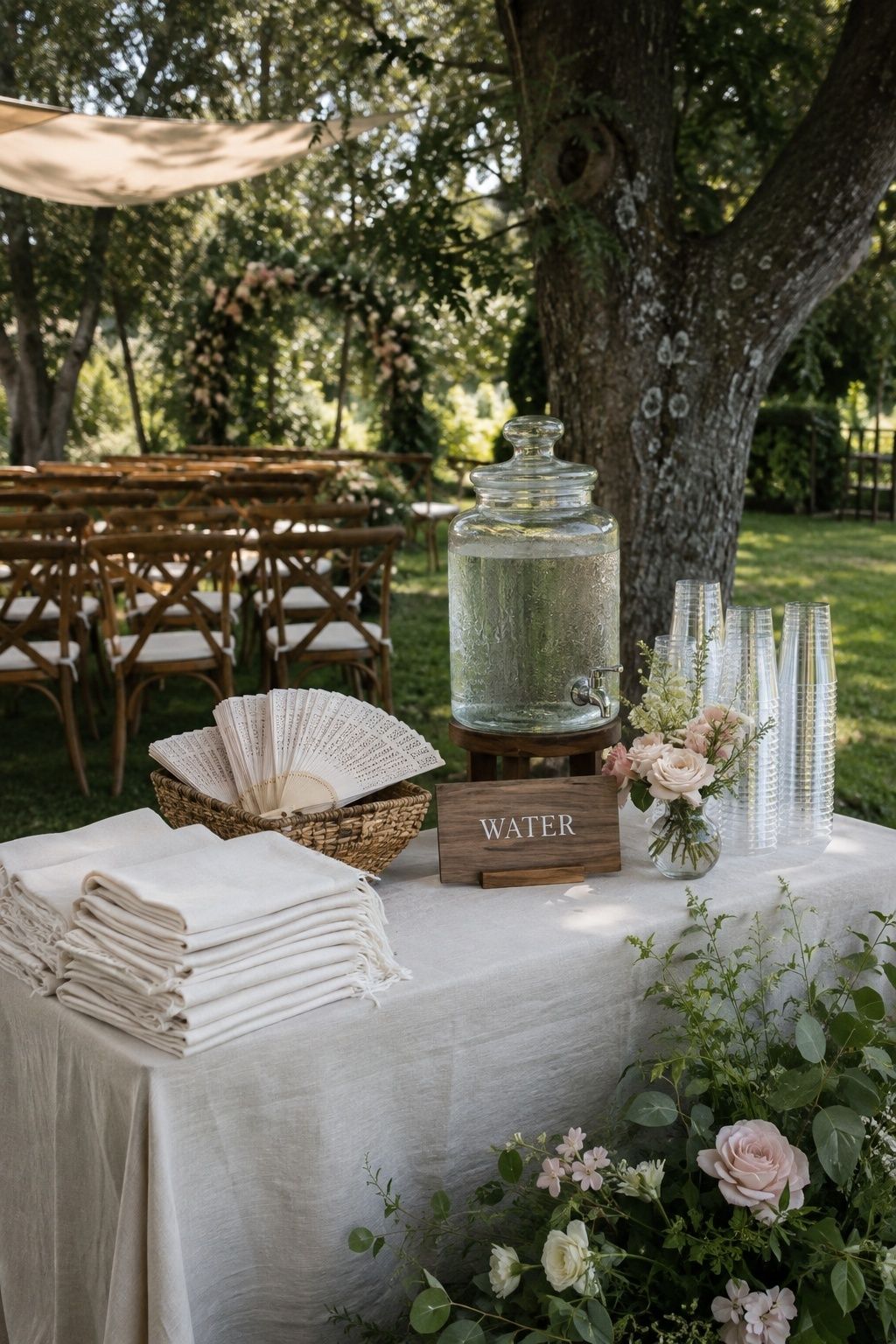
Low-impact details are not bad. Pretty menus, favors, signage, custom napkins, extra candles, welcome bags, and specialty glassware can be lovely when the core wedding is already funded. They become wedding overspending mistakes when they absorb money before food, seating, photos, sound, shade, transportation, and guest clarity are steady.
For a small wedding, guests notice care quickly. They notice whether they can hear the ceremony, sit comfortably, find the bathroom, understand where to go, eat enough, and talk without confusion. They may not remember whether every printed piece matched perfectly.
Use a simple filter before buying extras: will this improve comfort, memory, meaning, or flow? If yes, it may be worth funding. If it only makes the wedding look more finished in a photo, wait until the essentials are paid for. Your budget should protect the experience before it decorates the edges.
Assuming A Small Wedding Automatically Solves The Budget
One of the most common small wedding budget mistakes is assuming that fewer guests automatically means a low total. Fewer guests can absolutely reduce food, drink, rentals, and stationery. But some costs are fixed or only lightly affected by guest count: photography, attire, beauty, officiant, ceremony music, planning help, venue minimums, permits, insurance, transportation, and certain decor installations.
There can also be smaller economies of scale. A private room may have a minimum spend. A rental company may have a delivery minimum. A florist may have a design minimum. A photographer may not price the wedding in direct proportion to guest count because the preparation, travel, editing, and coverage still take time.
Do this instead: separate your budget into per-person costs, fixed costs, minimums, and optional upgrades. That makes the real savings easier to see. It also keeps you from feeling disappointed when a meaningful small wedding still requires grown-up numbers.
Forgetting Postage, Alterations, Permits, Insurance, And Beauty Trials
Not every budget line is glamorous enough to make the first spreadsheet. Postage, invitation samples, extra envelopes, dress or suit alterations, garment steaming, beauty trials, hair accessories, marriage license fees, permits, insurance, parking, thank-you cards, and delivery tips can all be easy to miss.
These items may not break the budget one by one, but they create wedding budget regrets when they arrive after every dollar has already been emotionally assigned. The couple then has to pull from savings, cancel something they wanted, or pretend the total still feels fine.
Add a quiet “small costs that add up” category from the beginning. It does not need to be perfect. It just needs to acknowledge that weddings require boring logistics as well as beautiful moments. That category can save you from treating every ordinary fee like an emergency.
Making Upgrades Without Choosing What Comes Out
Upgrades are seductive because each one can be defended. Better chairs. A longer bar. Extra floral pieces. Premium linens. More coverage time. A welcome drink. A late-night snack. A nicer invitation suite. None of these choices is foolish by itself.
The problem is saying yes without naming the tradeoff. If every upgrade simply gets added, the budget stops being a boundary and becomes a collection of good reasons to overspend. The wedding may become more polished while the couple feels less peaceful.
Use the tradeoff rule: every upgrade needs a source. The money comes from the reserve, a lower-priority category, fewer guests, a simpler version of another detail, or a conscious decision to increase the budget. If you cannot name where the money comes from, the upgrade is not ready yet.
A Budget Check To Run Before You Sign Anything
Before you sign a contract or send a deposit, pause long enough to run the all-in check. Ask what is included, what is required, what is optional, what could change, and when the next payment is due. Ask what happens if your guest count moves, the weather changes, the timeline runs late, or you need to cancel or reschedule.
Then put the answer in one budget document. Include the base cost, required fees, taxes, service charges, gratuity expectations, meals, rentals, delivery, setup, teardown, overtime, insurance, permits, payment dates, final count deadlines, and change rules. If a vendor cannot give a clear answer yet, mark it as an estimate rather than pretending it is fixed.
This is how to avoid wedding budget blowouts without becoming rigid. You are not saying no to joy. You are giving joy a number that can hold it.
FAQ
What Wedding Budget Mistakes Cost The Most?
The wedding budget mistakes that cost the most are usually all-in quote mistakes: missing service charges, taxes, food and beverage minimums, rentals, staffing, overtime, delivery, teardown, and final-count changes. Guest-list growth also gets expensive because it touches food, drinks, seating, stationery, rentals, and the room itself.
What Hidden Wedding Costs Do Couples Forget?
Couples often forget service charges, taxes, gratuities, vendor meals, delivery, setup, cleanup, postage, alterations, beauty trials, permits, insurance, parking, overtime, and rental minimums. These hidden wedding costs are easier to handle when they appear in the first budget draft instead of arriving after deposits are already paid.
How Do Wedding Budgets Get Out Of Control?
Wedding budgets get out of control when couples keep adding without trading anything out. A few more guests, one better rental, extra floral pieces, longer coverage, and late transportation changes can all feel reasonable alone. Together, they create a new wedding total that nobody clearly chose.
How Do You Avoid Overspending On A Wedding?
To avoid overspending, decide your priorities, set a guest ceiling, compare all-in quotes, keep a reserve, and require every upgrade to name its tradeoff. Do not spend on low-impact details before comfort, food, seating, photos, sound, and guest clarity are funded. A budget works best when it helps you choose.
What Wedding Costs Should Be Checked Before Signing Contracts?
Before signing, check base price, required fees, taxes, service charges, gratuity, staffing, vendor meals, rentals, delivery, setup, teardown, overtime, payment schedule, cancellation terms, guest-count rules, weather backup, access time, and cleanup responsibility. If the quote is not all-in, label the missing pieces before comparing it to another vendor.
What Budget Mistakes Happen At Small Weddings?
Small weddings often overspend when couples assume fewer guests will shrink every category. Some costs are fixed, some venues have minimums, and some vendors still need the same preparation time. The safest approach is to separate per-person costs, fixed costs, minimums, and optional upgrades before deciding what feels affordable.
Final Thoughts
The most painful wedding budget mistakes are not signs that you wanted too much. They are usually signs that the real total was hidden behind a prettier first number. When you ask for the all-in cost, protect a reserve, and require tradeoffs for upgrades, the budget becomes less like a warning siren and more like a calm conversation.
You are allowed to care about beauty, food, flowers, music, photos, and the feeling of the room. The goal is simply to fund those choices with clear eyes. As you make the final pass through your quotes, build common hidden wedding cost categories into the same review as required additions, variable charges, and payment timing before anything else becomes final.
Last update on 2026-10-04 / Affiliate links / Images from Amazon Product Advertising API