
How to choose between wedding photographer and videographer starts with the memories you would be most heartbroken to lose. Choose photography first if you want portraits, family groupings, details, albums, and printable images. Choose video if vows, voices, movement, music, and speeches matter more than still images, then price shorter coverage, bundles, or ceremony-only video before assuming both vendors are out of reach.
The photo-versus-video decision feels heavier than most wedding choices because it is tied to future regret. Flowers fade, dinner ends, and the room gets cleared. The visual record is what remains when you want to remember your partner’s face, the way your parent sounded during a toast, the tiny ceremony details, or the feeling of walking into dinner with everyone you love gathered in one place.
For a small wedding, the decision is not automatically easier. A shorter guest list often means fewer locations, fewer formal events, and a simpler timeline, which helps contain coverage hours. At the same time, intimate weddings often carry personal vows, emotional speeches, private ceremonies, absent family, or dinner-table moments that video preserves beautifully.
The goal is not to prove that every couple needs both. The goal is to decide which record of the day protects the memories you are most likely to miss later, and then build a package that fits the wedding you are actually hosting.
Recommended Wedding Products


You Might Also Like These Blog Posts
- How To Choose Wedding Priorities As A Couple Before Everyone Else Gets A Vote
- Wedding Content Creator Ideas for Memories You Get Tomorrow
- Video Guestbook Wedding Ideas for Voices You Can Keep
- How To Choose A Wedding Vibe That Feels Like You Before Pinterest Takes Over
- Documentary Wedding Photos Ideas for the Day as It Happened
- Flower Animation Wedding Video Ideas for a Soft Moving Memory
How To Choose Between Wedding Photographer And Videographer
How to choose between wedding photographer and videographer is not only a budget question. It is a keepsake question. A photographer gives you still images for albums, frames, thank-you cards, family sharing, anniversary posts, and the quiet pleasure of seeing a single expression held forever. A videographer gives you sound, motion, timing, and atmosphere: vows spoken aloud, laughter during a toast, the music under your first dance, and the way the room moved around you.
Start by naming the memory type you reach for most naturally. Some couples imagine a framed portrait in the hallway, printed family photos, and an album that gets pulled out every anniversary. Others imagine hearing their ceremony again, watching a grandparent laugh, replaying speeches, or sending a film to loved ones who were not present.
Once the memory type is clear, compare real packages rather than abstract vendor labels. A strong four-hour photographer often serves a restaurant micro wedding better than a thin photo-video bundle that stretches two artists across too much work. A ceremony-only film matters more than reception video when your vows are the emotional center of the day.
It also helps to separate emotional value from usage value. Photography tends to be used more often in ordinary life: framed prints, family texts, holiday cards, albums, phone backgrounds, thank-you cards, and anniversary posts. Video tends to be used less often but with more emotional force when you do revisit it. You probably will not watch the film every week, but hearing the vows again after five years matters in a way no still frame does.
Decide What Kind Of Memories You Most Want To Keep
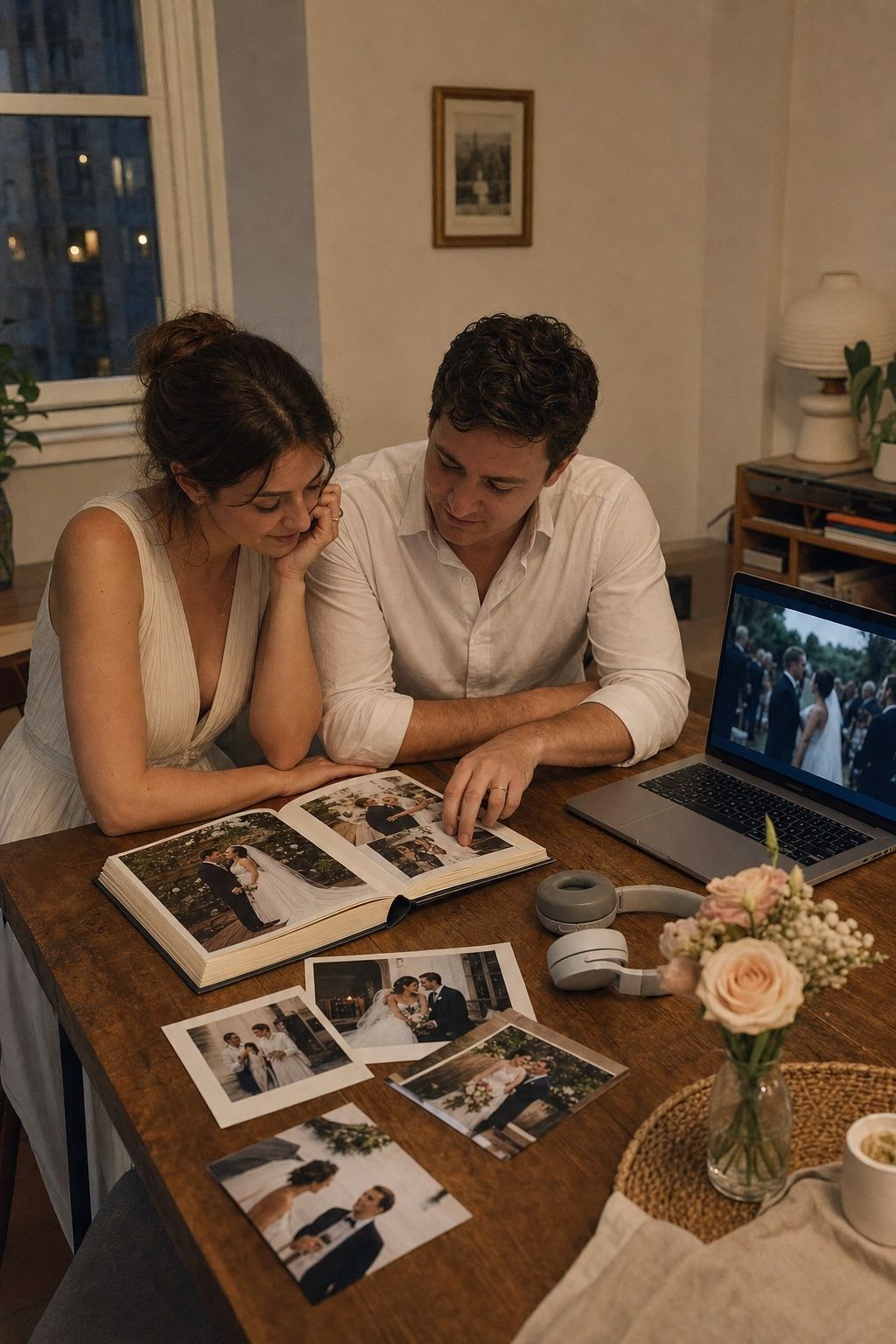
Ask yourselves what you will look for one year after the wedding. If you want to see faces, styling details, family portraits, table settings, rings, flowers, and a complete visual story of the day, photography deserves the first serious budget line. Photos are easy to revisit, easy to share, and easy to bring into your everyday home.
If your mind goes straight to sound and movement, video deserves a deeper look. Personal vows, a trembling voice, an off-script laugh, dinner toasts, live music, and the rhythm of a walk down the aisle are not truly held by still images. A photo shows the tear. Video lets you hear why it happened.
Small weddings make this question especially personal. With fewer people, the day often has less performance and more intimacy. If the most meaningful parts are spoken, sung, danced, or shared in motion, video has a stronger emotional role. If the most meaningful parts are faces, textures, portraits, and family combinations, photography will likely work harder for you over time.
Make the choice together rather than letting one partner quietly defer. One person could care deeply about photos because family albums shaped their childhood. The other could care about video because they know they forget sound quickly. Put both instincts on the table and ask which memories deserve professional protection, which ones a loved one should record informally, and which ones you are comfortable letting remain private.
Choose Photography First When Printed, Shareable Still Images Matter Most
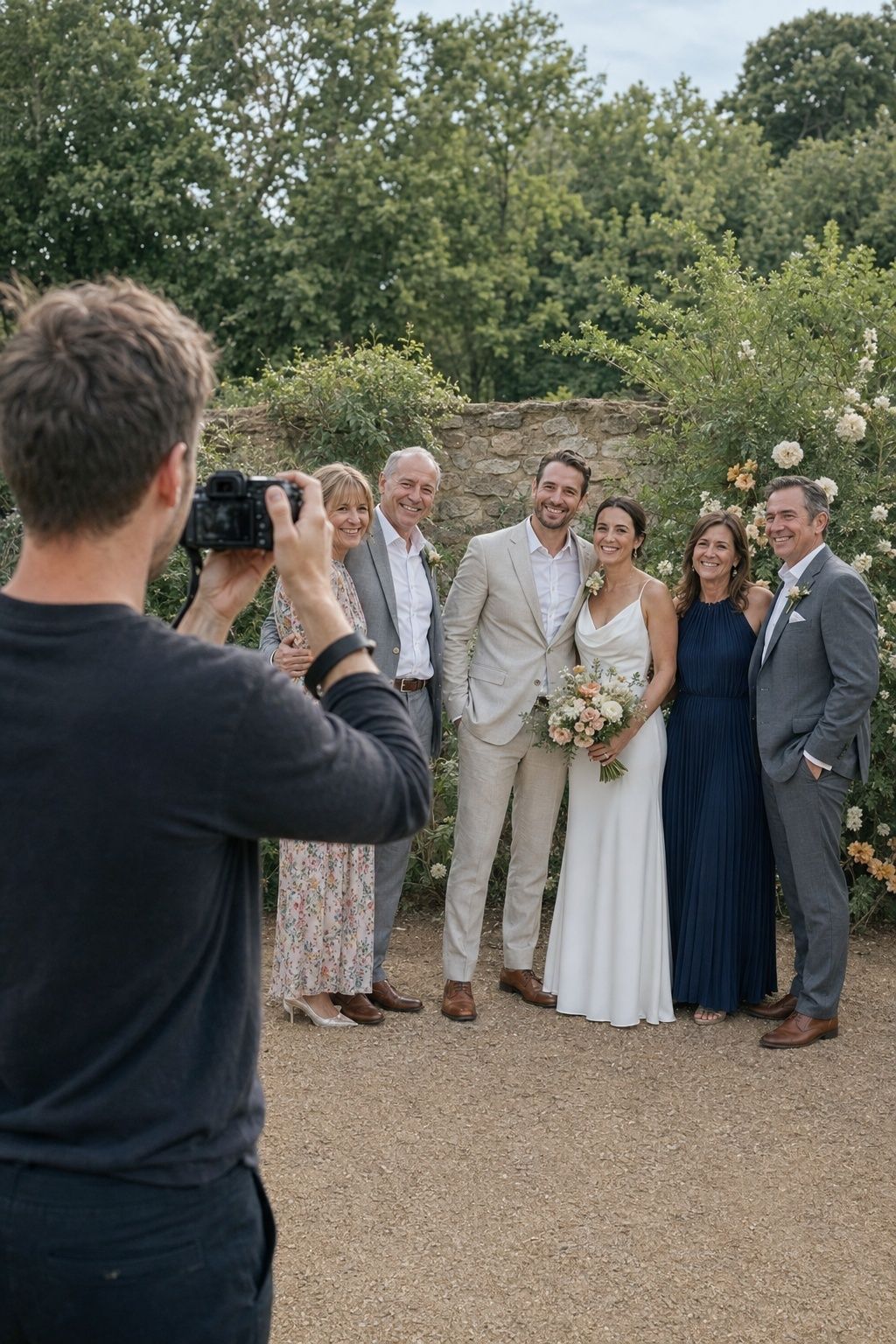
Photography is usually the safer baseline when the budget only supports one full professional. It creates the images couples use most often: portraits, family groupings, ceremony moments, detail photos, candid guest shots, and the images that become albums, wall frames, holiday cards, and family archives.
This matters even more when your small wedding includes older relatives, blended families, or people who rarely gather together. A calm portrait list and a photographer who handles groupings gracefully gives you heirloom images that no phone gallery will replace. Still photos also let guests and family enjoy the day without being asked to document every key moment themselves.
Choose the photographer whose full galleries show consistent light, emotion, editing, skin tones, and reception coverage. Portfolio highlights are useful, but full galleries reveal how the artist handles a complete wedding day: awkward rooms, dim dinners, family portraits, rainy entrances, candlelight, and quiet moments between planned events.
For small weddings, also look for galleries that show real closeness. You want someone who notices hands held under the dinner table, a parent straightening a jacket, guests leaning into conversation, and the texture of a room before everyone sits down. Large dramatic portraits are lovely, but an intimate wedding needs a photographer who treats quiet moments as the story, not as filler between formal shots.
Choose Video When Voices, Vows, Motion, And Speeches Matter Most
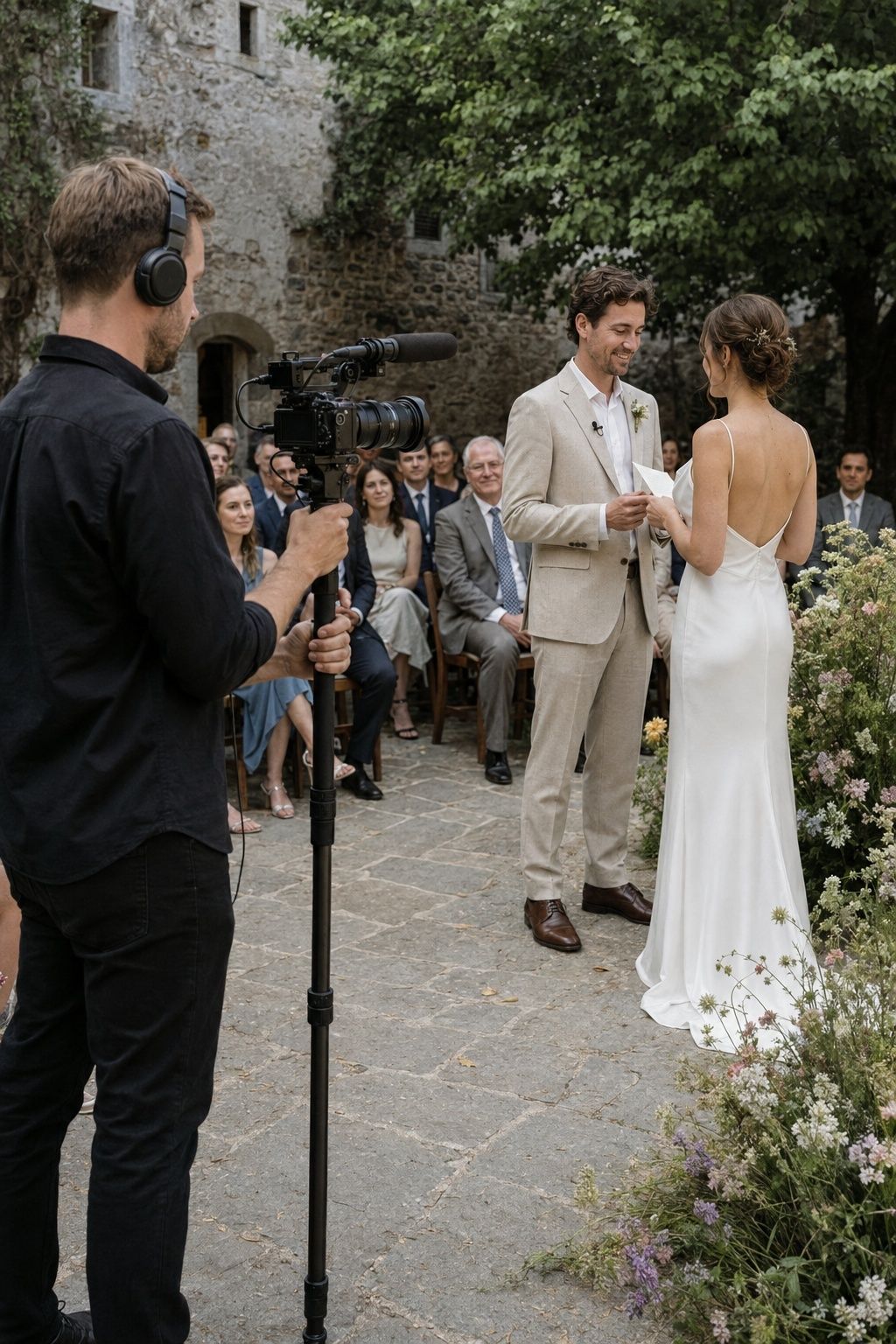
Video becomes the stronger choice when the ceremony or reception depends on sound. If you are writing personal vows, including ceremony passages from loved ones, inviting emotional speeches, hiring live music, or planning a private ceremony that others will hear about later, a film protects something photography does not fully hold.
Think about whose voice you would miss. A parent blessing, a grandparent’s laugh, a sibling’s toast, your partner’s vows, or the cheering after the ceremony often feels ordinary on the day and priceless later. If those sounds matter to you, ask videographers detailed questions about lavalier microphones, backup audio, ceremony edits, and speeches.
Video also helps when loved ones are absent. A small ceremony could be intentionally private, but a polished ceremony edit or heartfelt highlight film lets you share the day without turning the wedding into a livestream or asking a guest to record from a shaky aisle seat.
If video matters, ask yourself which version you would actually watch. Some couples want a cinematic highlight film with music and emotional pacing. Others care only about the full ceremony and speeches. Others want raw footage as a backup memory. Naming the desired deliverable keeps you from paying for a package built around edits you do not value.
Understand That Photo And Video Are Not Substitutes
A photographer and videographer often stand in the same room, but they are making different keepsakes. One searches for a frame. The other follows time. That difference should shape your decision more than vendor pressure, trend pressure, or a fear that one person with a camera covers everything.
A beautiful gallery will not replay your vows. A highlight film will not give you one hundred frame-ready portraits. A content creator’s clips will not replace documentary audio and long-form editing. A guest’s phone video will not replace stable ceremony coverage with clean sound. Each option has a role, and the right role depends on what you expect to use later.
When money is limited, avoid paying for the weakest version of both just to say both are covered. It is usually better to fund one excellent vendor and one narrow supplemental option than to split the budget so thinly that neither deliverable feels dependable.
Compare Coverage Hours Before Comparing Full Packages
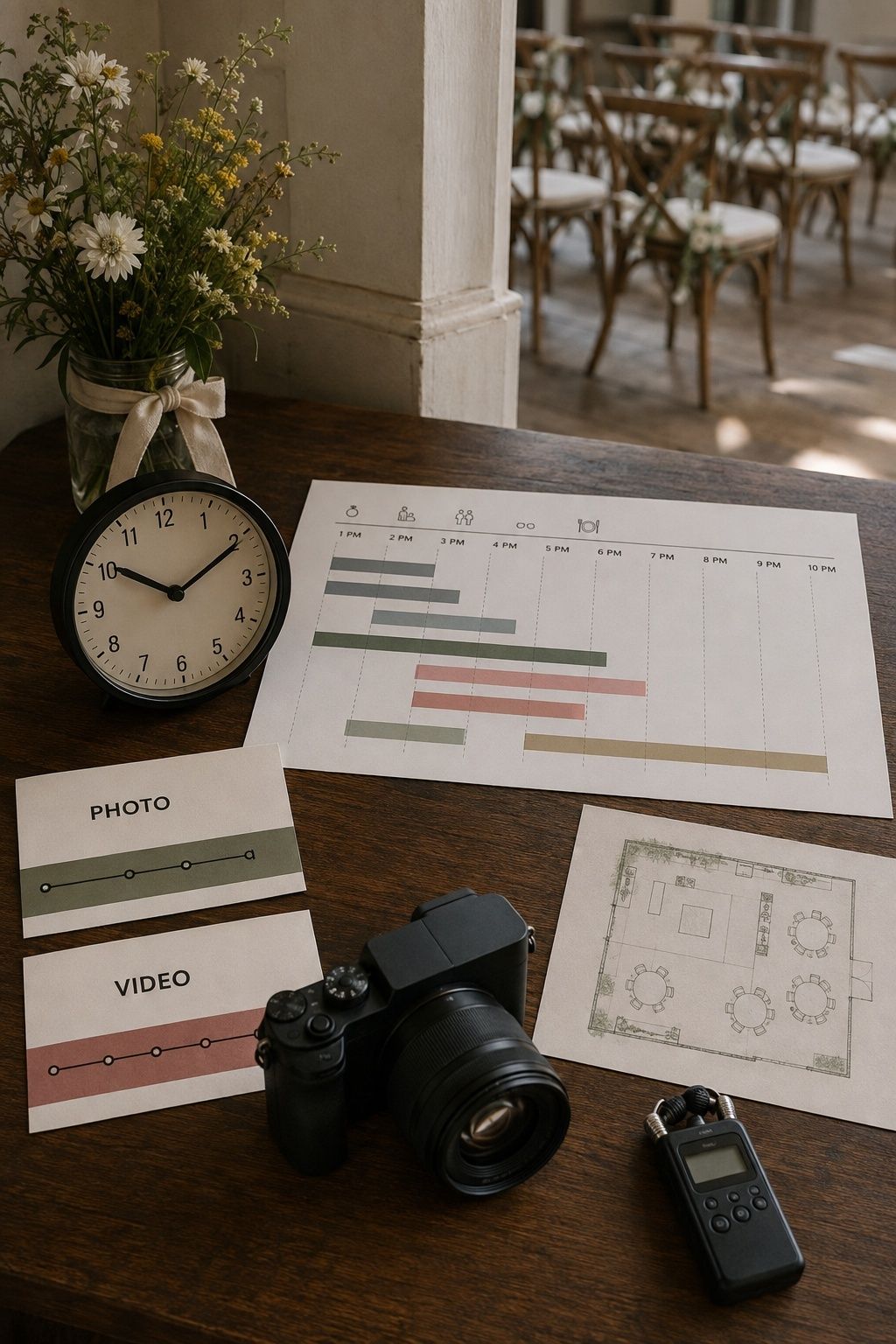
Many photo and video quotes look impossible because couples compare full-day packages before they understand what the wedding actually needs. A twelve-hour package suits a large wedding with separate getting-ready sites, a long ceremony, cocktail hour, formal reception, private dances, and a sendoff. A small wedding in one place usually needs much less.
Build a must-capture timeline first. Include getting ready only if those images or clips matter. Include first look only if you are having one. Include family portraits, ceremony, couple portraits, dinner details, speeches, first dance, cake, and the first part of dancing only if those moments are part of the plan.
Then ask vendors what coverage window fits that timeline. Four to six hours often covers a ceremony, portraits, dinner room, speeches, and early reception for a one-location micro wedding. Six to eight hours fits a fuller day with getting-ready moments and dancing. The right answer comes from the timeline, not from fear.
Build the timeline around arrival, light, and emotional peaks. If portraits happen before the ceremony, photography coverage ends earlier after dinner begins. If speeches happen late, video coverage needs to stay through that moment. If your ceremony and dinner are in the same room, both vendors spend less time moving gear and more time capturing the people.
Use cost ranges as orientation, not permission to overspend. Current wedding photo and video pricing varies widely by market, experience, editing depth, and hours. A national average helps you see whether a quote is broadly plausible, but your actual decision should come from local quotes, similar wedding samples, contract details, and the amount of the full wedding budget you are comfortable placing into permanent memories.
If two quotes seem close, compare what happens after the wedding. How many edited images arrive? Is a print release included? Does the video include ceremony audio, speeches, raw footage, or only a short highlight? How long is turnaround? Are revisions included? The cheapest quote is not automatically the best value if the deliverables do not match the memories you wanted to protect.
Ask What A Smaller Wedding Actually Needs Covered
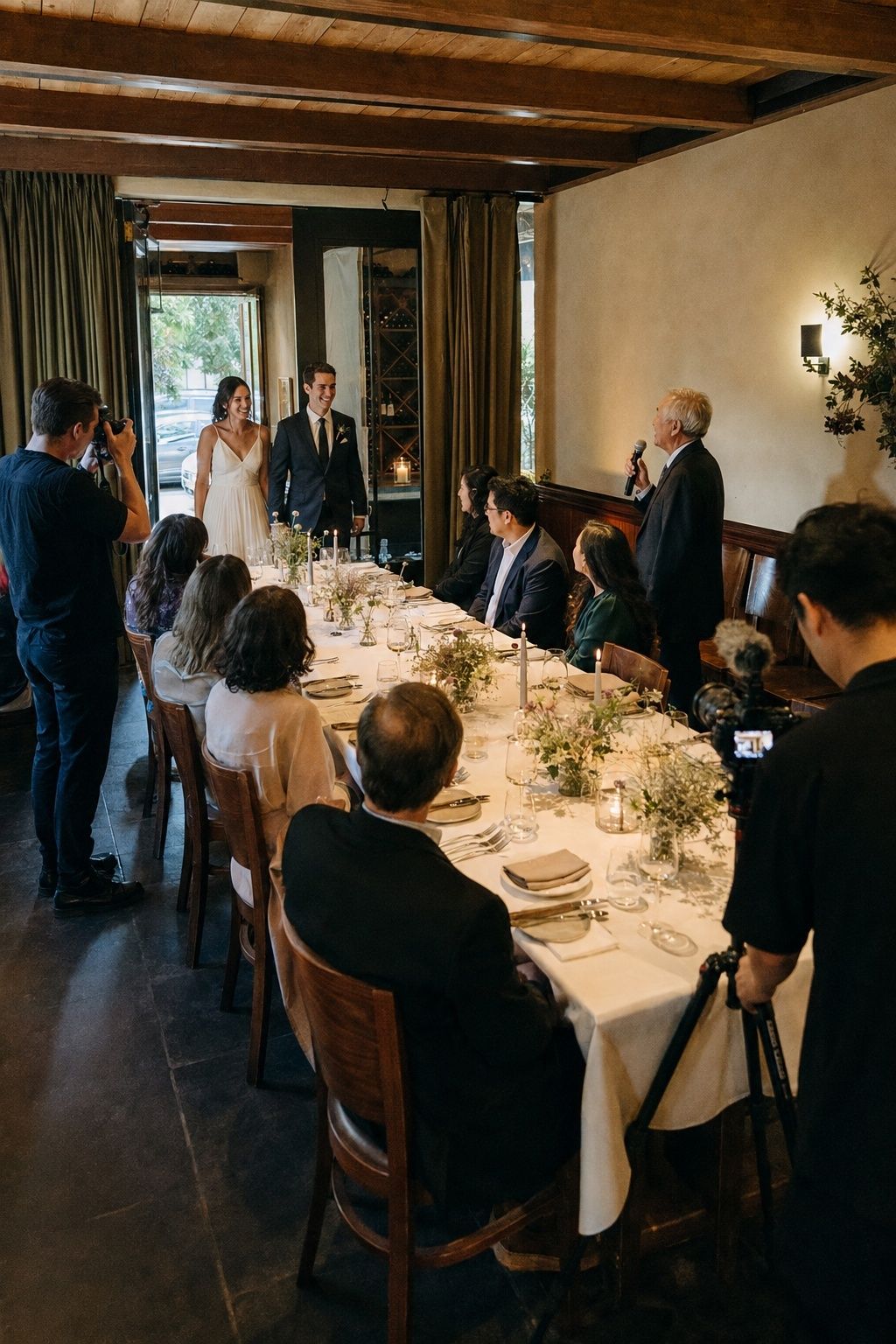
A smaller wedding often has fewer repeated events. There is often no wedding party prep in separate rooms, no long transportation gap, no enormous receiving line, no large dance floor, and no late-night exit. That simplicity lets you spend on the moments with the most emotional weight instead of stretching coverage across empty time.
For a courthouse ceremony with dinner, photography usually needs arrivals, ceremony, portraits, family photos, table details, toasts, and the beginning of dinner. Video only needs the ceremony and a short dinner toast in many versions. For a backyard wedding, photography needs guest warmth and detail coverage, while video needs vows, music, and speeches.
Do not let a package designed for a large ballroom decide the shape of your intimate wedding. Ask for the coverage that fits the actual event: fewer people, fewer formalities, more emotional closeness, and a shorter list of things that truly need professional documentation.
Price Shorter Coverage, Bundles, Or Ceremony-Only Video
If you want both photo and video, try three versions before cutting one completely. First, ask whether your preferred photographer works with a trusted videographer or studio team. A coordinated bundle sometimes reduces cost, simplifies communication, and helps the two artists share the day smoothly.
Second, price shorter video coverage. Ceremony-only video, vows plus speeches, or a highlight film without full-day footage protects the memories you care about without requiring a cinematic package. Third, price a stronger photography package with a smaller video add-on only if the add-on still includes clean audio and dependable delivery.
Be careful with false savings. A tiny video package that skips microphones, contract clarity, backup gear, or editing details often disappoints more than skipping video honestly. Savings should come from narrowing scope, not from removing the pieces that make the keepsake usable.
Ask vendors to price the meaningful middle. That could mean one photographer for six hours, a second shooter removed, album postponed, and a short ceremony film added. It could mean full photography, no videography, and a friend assigned only to capture a still tripod recording of the ceremony. It could mean both professionals for fewer hours because the wedding has one location and no late-night dance floor.
Move optional upgrades to a second round. Albums, drone footage, teaser films, rehearsal dinner coverage, engagement sessions, extra hours, rush edits, raw footage, and second shooters all have legitimate uses, but they should not blur the first decision. First decide whether the core record is photo, video, or both. Then decide which add-ons earn their place.
Also ask whether anything should wait until after the wedding. A printed album is beautiful, but a digital gallery with print rights could be enough for now. Raw video footage matters less if you receive a clean ceremony edit. Delaying a keepsake purchase is different from lowering the quality of the original coverage.
Know What A Content Creator Does Not Replace

A wedding content creator is useful when you want short vertical clips, fast delivery, behind-the-scenes moments, and phone-native footage for social sharing. That is a different job from wedding videography. A videographer plans for sound, story, stability, color, pacing, file delivery, and an edited film that is meant to last beyond the week of the wedding.
If your main desire is same-day clips for friends, a content creator could be enough. If your main desire is to hear vows clearly, watch speeches years later, or share the ceremony with family who missed it, hire a videographer or choose a narrow video package with professional audio.
For small weddings, the distinction matters because the emotional moments are often quiet. A phone clip of vows from the back row looks charming at first, but poor audio turns a meaningful keepsake into a frustrating file. Decide whether you need quick clips or a lasting film before comparing price tags.
Protect The Budget From Regret Spending
Regret spending happens when couples add a vendor out of panic rather than priority. They hear that everyone regrets skipping video, or that photos are the only thing that lasts, and they book beyond their comfort zone. That pressure is understandable, but it should not push you into debt or steal money from food, guest comfort, transportation, or basic wedding calm.
Set a visual-memory budget before the consultations. Decide the maximum amount that fits the whole wedding, then divide it by importance. For some couples, that means excellent photography and no video. For others, it means solid photography plus ceremony video. For couples with spoken vows and absent family, simpler decor helps both photo and video fit.
The healthiest question is not, “Will we regret skipping this?” It is, “Which memory would we pay to revisit?” That wording turns fear into preference. It also helps you decline upgrades that sound impressive but do not protect the part of the day you care about most.
Ask These Questions Before Signing A Photo Or Video Contract
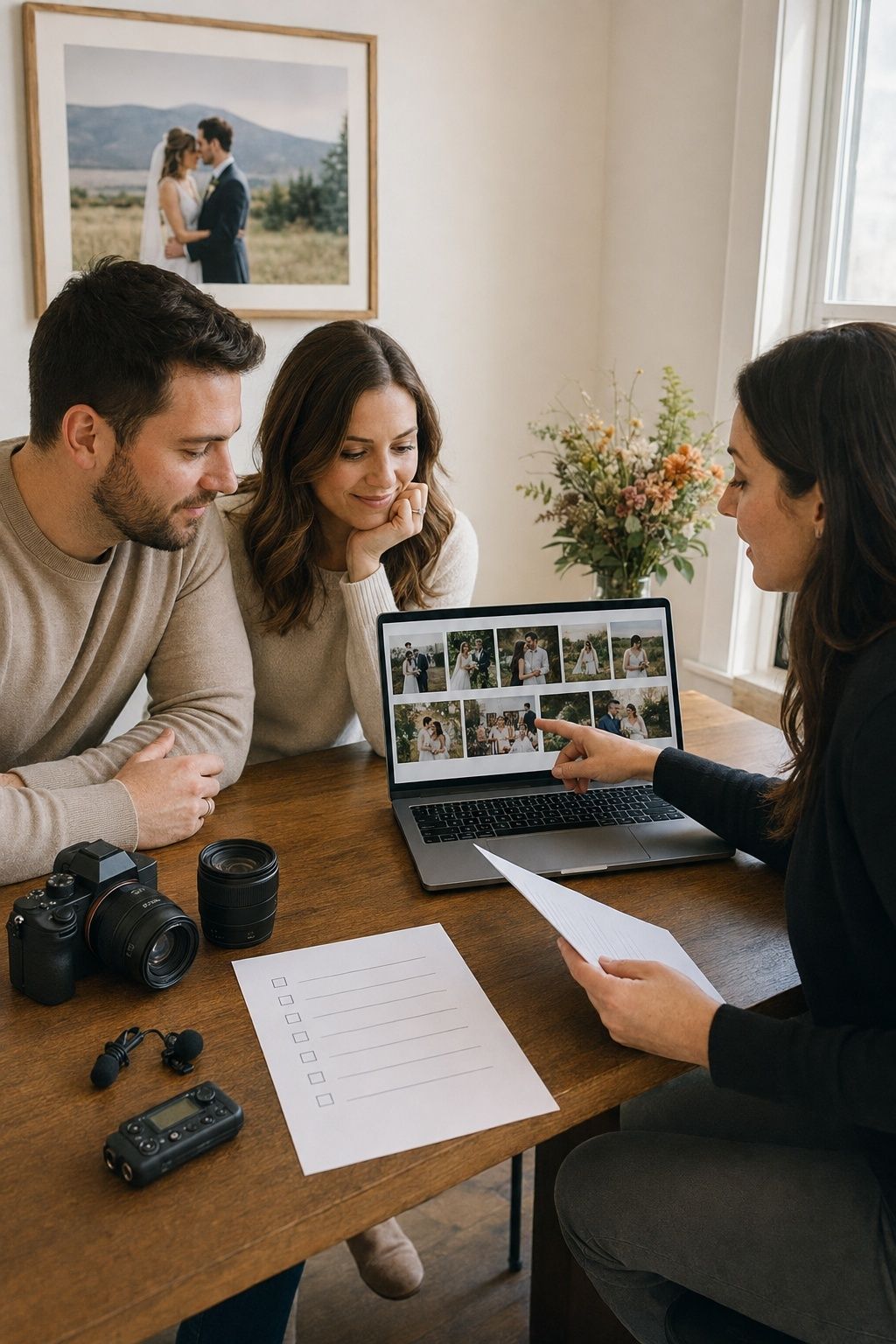
Before signing with a photographer, ask to see full galleries from weddings similar to yours in size, light, and venue type. Confirm coverage hours, delivery timeline, image count, editing style, print rights, backup equipment, second-shooter options, overtime fees, meal requirements, travel costs, cancellation terms, and how family portraits are organized.
Before signing with a videographer, watch more than the highlight reel. Ask to see ceremony edits or speech edits if those deliverables matter. Confirm audio equipment, backup audio, number of cameras, raw footage options, film length, music licensing, delivery format, turnaround time, revisions, drone rules, travel, overtime, and how they coordinate with the photo team on the day.
For either vendor, ask what they recommend for your exact timeline. A good professional will explain what is essential, what is optional, and where a small wedding has room to simplify. The conversation should make the decision feel clearer, not more pressured.
Listen for how they talk about each other, too. A photographer who resents video or a videographer who crowds portraits makes the day feel tense. The best teams understand that both jobs protect the same wedding from different angles. They discuss ceremony placement, microphone visibility, portrait timing, and guest movement before the day begins.
Small-Wedding Photo And Video Scenarios
A private-vow ceremony is one of the strongest cases for video. If only the couple hears the vows in person, a clean audio recording or short ceremony film becomes part of the marriage archive. Photography still matters for portraits and family sharing, but video protects the words that no one else witnessed.
For this kind of wedding, consider giving the videographer a very narrow brief: ceremony audio, vows, a short walk afterward, and a few quiet establishing clips. The goal is not a huge production. It is a faithful record of the words and the feeling. Pair that with photography for portraits and the final gallery feels complete without making the ceremony performative.
A family dinner wedding often leans toward photography first. The room is close, the details are tactile, and the guest list is small enough for beautiful candids and portraits. Add video if speeches, live music, or a family blessing are central to the evening. Otherwise, a photographer who handles low light gracefully is usually the best use of the budget.
Ask the photographer how they handle dinner without making guests feel watched. Small wedding photography coverage should feel observant and gentle: room details before guests enter, a few wide shots after everyone sits, candid conversation, quick portraits during natural pauses, and enough images of food, candles, flowers, and place settings to remember the atmosphere.
An elopement followed by a party often benefits from selective video. A ceremony film helps later guests feel included, while party photography captures hugs, dinner, dancing, and the joy of telling the story afterward. This is a place where ceremony-only video plus strong party photography feels balanced.
If you plan to show the ceremony at a later celebration, tell the videographer that delivery matters. A simple ceremony edit delivered before the party is more useful than a long cinematic film delivered months later. The best package is the one that supports how you will actually share the memory.
A one-location micro wedding gives you the most room to optimize. With no travel gap and fewer formalities, both vendors fit into shorter windows more easily. Ask whether the photographer should cover portraits through dinner details while the videographer covers ceremony, speeches, and the first dance. The day stays documented without paying for hours that do not serve the final keepsakes.
This is also the scenario where a photo video bundle wedding quote often makes sense. One creative team already knows the room, timeline, shot priorities, and delivery expectations. Still, compare samples carefully. A convenient bundle only works if the photography and film are both strong enough to stand alone.
A small wedding with very few formal events also justifies choosing one strong vendor and one personal backup. For example, you could hire an excellent photographer, place a small tripod for the ceremony with permission, and ask one trusted guest to check that it starts recording. That is not the same as professional video, but it preserves the vows when a full film is not the right fit.
The opposite choice is right for some couples, too. If you are eloping with no guests and no formal family portraits, a beautiful film plus a shorter portrait session could feel more honest than a full photography package. The point is to let the wedding’s actual shape decide the spend, not the assumptions attached to a traditional full-day event.
FAQ
How Do You Choose Between A Wedding Photographer And Videographer?
Choose between them by ranking the memories you want most after the wedding. Pick photography if portraits, details, family photos, albums, and prints matter most. Pick video if vows, voices, music, movement, and speeches matter most. Then ask for packages that match your timeline instead of comparing only full-day pricing.
Should You Prioritize Photography Or Videography For A Wedding?
Most couples should prioritize photography when only one full professional fits the budget because photos are used often and cover portraits, family groupings, details, and the visual story. Videography becomes the priority when spoken moments matter more: personal vows, emotional speeches, live music, or absent loved ones who would value a film.
Is A Wedding Videographer Worth It For A Small Wedding?
A wedding videographer is worth it for a small wedding when the ceremony, vows, speeches, or family voices carry the emotional weight of the day. It is less essential for a casual dinner with few spoken moments. Ask about ceremony-only or shorter coverage before deciding that video is too expensive.
What Does Video Capture That Photos Cannot?
Video captures sound, movement, timing, and atmosphere that photos do not preserve in the same way. It records vows, ceremony words, music, laughter, toasts, entrances, dancing, and the emotional pace of the day. Photos freeze the most beautiful frames. Video lets you return to how a moment unfolded.
How Can You Afford Both Wedding Photo And Video?
To afford both, narrow scope before lowering quality. Ask about shorter coverage, one-location timelines, photo-video bundles, ceremony-only video, fewer add-ons, delayed albums, or weekday/off-season rates. Keep the parts that protect the memories you value and remove extras that mostly make the package look larger.
Can A Content Creator Replace A Wedding Videographer?
A content creator replaces a videographer only when you mainly want short social clips and fast delivery. They are not a true replacement for clean ceremony audio, speeches, long-form editing, stable cameras, or a polished film. For vows and family voices, choose a videographer or a focused video package.
Final Thoughts
How to choose between wedding photographer and videographer comes down to the future version of you. Will you reach for printed portraits, family photos, and a gallery of still images? Or will you ache to hear the vows, speeches, laughter, and music again? That answer deserves more weight than trends, pressure, or package size.
Choose the vendor that protects the memories you are most likely to miss, then shape the coverage around your real ceremony, guest count, timeline, and budget. A small wedding gives you permission to buy fewer hours, skip hollow extras, and keep the record of the day tender, useful, and true.
Last update on 2026-10-04 / Affiliate links / Images from Amazon Product Advertising API