

How to plan a wedding after getting engaged begins with a pause, not a guest list. Celebrate privately first, tell your closest people before posting, protect the first few days from everyone else’s expectations, then choose a wedding type, rough budget, guest range, season window, and simple shared planning system before booking anything.
Engagement often makes the room feel brighter and louder at the same time. One minute you are looking at the ring, laughing over the proposal story, and trying to memorize the exact feeling of being newly promised to each other. The next minute, people are asking for a date, a venue, a guest count, a color palette, a dress appointment, and whether their cousin’s band is still available.
This is a gentle roadmap for the couple who wants to enjoy the beginning without losing control of the wedding. It gives you enough structure to move forward, enough boundaries to stay tender, and enough permission to decide what kind of celebration is actually yours before the whole thing becomes public property.

Recommended Wedding Products


You Might Also Like These Blog Posts
- How To Plan A Wedding From Scratch When You Have No Idea Where To Start
- How To Plan A Wedding Without Pleasing Everyone And Still Feel Kind
- How To Plan A Wedding In One Year Without Turning It Into A Full-Time Job
- How To Plan A Wedding Without A Planner And Still Feel Organized
- How To Plan A Wedding In 18 Months Without Overthinking Every Detail
- How To Plan A Wedding When You Work Full Time And Still Have A Life
How To Plan A Wedding After Getting Engaged Without Handing It To Everyone Else
The first stage of wedding planning is not about speed. It is about deciding what deserves your attention now and what deserves later attention, once your nervous system catches up with the news. A proposal changes the emotional weather around you. Even happy attention starts to feel like pressure when every person you love suddenly has a question.
So begin with one private agreement: you and your partner are allowed to be engaged before you become event managers. Answer slowly. Say, “We are enjoying this week first.” Thank people for their excitement without accepting every idea they bring. The wedding will need decisions, but it does not need to consume the first breath of the engagement.
Protect The First 48 Hours

The first 48 hours after getting engaged are for absorbing the moment. Look at the ring. Take the blurry photos. Tell the proposal story to each other again. Have dinner somewhere that lets you sit close and grin at nothing. If the proposal happened in public or on a trip, give yourselves a little pocket of quiet before the calls begin.
This does not mean ignoring everyone forever. It means choosing the first circle intentionally. Call or visit parents, siblings, best friends, grandparents, or anyone who would feel hurt finding out from a public post. If family dynamics are tender, make a short list together and decide the order before either of you starts texting from pure adrenaline.
Try not to announce a wedding date in this early glow. It is very easy to say “next summer” because it sounds romantic, then realize later that the budget, venue availability, work schedules, travel needs, or family obligations point somewhere else. A beautiful answer is simple: “We are so happy, and we have not chosen the date yet.”
Tell Close People Before You Post
Let posting wait until the people closest to you have heard the news directly. A social announcement is joyful, but it is also a starting bell. Once the photo is public, questions multiply. People will ask where it happened, whether they are invited, what month you are thinking about, and whether the venue is already booked.
Before posting, decide together what you are comfortable sharing. You might share the proposal photo and keep the date private. You might mention that you are taking a few weeks to enjoy being engaged. You might post nothing at all for a while. Privacy is not secrecy; it keeps the moment yours before it becomes content for everyone else.
If certain relatives tend to treat excitement like assignment authority, prepare one line in advance. “We are thrilled and still deciding what kind of wedding feels right for us” is warm enough to include them and firm enough to slow the interrogation.
Handle Ring Basics Without Letting Them Take Over
Ring logistics are not the heart of the engagement, but they are one of the few practical details worth handling early. If the ring needs sizing, contact the jeweler before wearing it loosely through busy days. If it is already comfortable, still take clear photos, keep receipts or appraisals in one place, and ask about insurance if the ring has meaningful financial value.
You do not need to turn the first week into a paperwork marathon. A small folder, digital scan, or simple organizer is enough. The goal is peace of mind: if something happens, you know where the information lives. Once that is handled, let the ring return to what it really is, a daily little flash of the decision you made together.
Have The Wedding Type Conversation Before The Wedding Plan
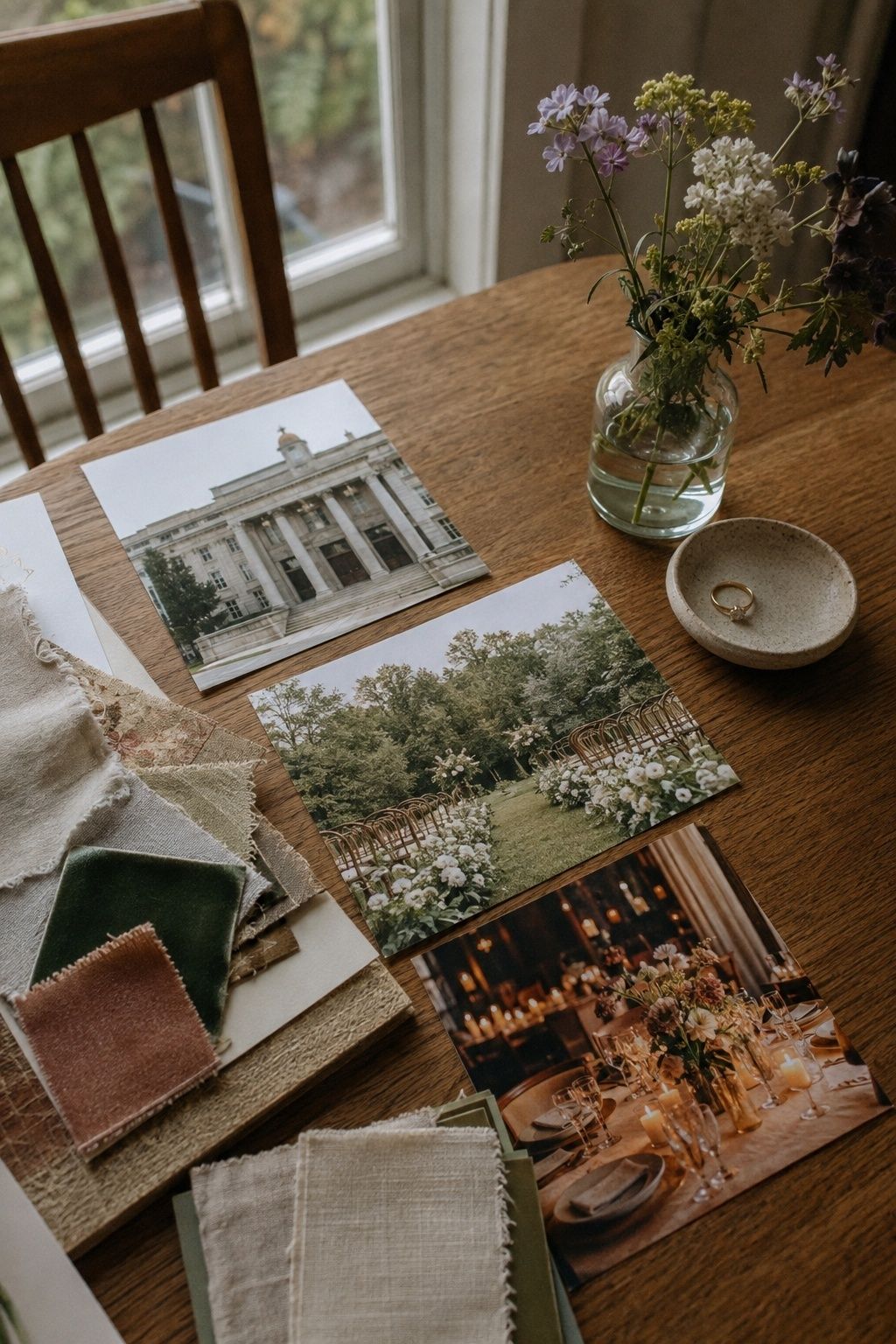
Before you price venues or count chairs, talk about the kind of wedding you both imagine when no one else is in the room. Do you picture a small dinner, a courthouse ceremony with a celebration after, a garden ceremony, a full weekend with family, a private elopement, a restaurant wedding, or a classic reception with dancing until late?
This conversation should be emotional before it becomes logistical. Ask what each of you wants to feel. Calm? Surrounded? Elegant? Unrushed? Sacred? Playful? Private? Once the feeling is named, the practical decisions become less slippery. A wedding designed to feel intimate does not need 150 guests. A wedding designed to feel communal often needs a larger room and a longer timeline.
If your answers differ, do not panic. Most couples are not perfectly matched at the first pass. One person might imagine the people; the other might imagine the atmosphere. One person might crave family closeness; the other might fear being watched all day. Treat the mismatch as useful information, not a verdict.
Decide Whether Small Or Intimate Is A Real Goal
Many couples say they want a small wedding because it sounds peaceful, affordable, and romantic. Then the guest list opens and “small” becomes a negotiation with every branch of the family tree. If an intimate wedding is a real goal, define it early and define it together.
Small might mean 12 people at a private dinner, 35 people in a garden, 50 people at a restaurant, or only immediate family for the ceremony and a casual party later. It is not the number alone that matters. It is whether the room lets you recognize every face, speak to every guest, and move through the day without performing for a crowd you barely know.
The earlier you agree on the guest range, the easier it is to hold boundaries kindly. If someone says, “You have to invite all the cousins,” respond from a shared decision instead of improvising under pressure. “We are keeping it very small so we are able to host everyone well” is clearer than a long explanation that invites debate.
Talk About Budget Before Contributions Become Complicated

Budget is not the most romantic first-month topic, but it is one of the kindest. A rough budget protects you from falling in love with plans that quietly ask too much from your future selves. Sit down together and name a comfortable range before outside contributions enter the conversation.
Start with what you are comfortable spending, what you are willing to save, and what you do not want the wedding to cost you emotionally. Then, if families want to contribute, ask what amount they are comfortable giving and whether any expectations are attached. A gift that arrives with a guest-list demand, venue demand, or religious expectation is not neutral information; it needs a calm conversation before it becomes part of the plan.
You do not need a final line-item budget in week one. You do need a working boundary. Choose broad buckets: venue and food, photography, attire, florals or decor, ceremony, music, stationery, transportation, beauty, rings, lodging, and a cushion. The cushion matters because early wedding planning has a way of making small extras look harmless until they stand together in a very expensive little row.
Choose A Guest Range, Not A Final Guest List

After getting engaged, many couples jump straight to names because names feel concrete. A range is usually better at the beginning. Decide whether you are thinking 20 to 30, 40 to 60, 75 to 100, or something larger. That range will shape venue searches, catering conversations, budget math, and whether the wedding stays intimate in practice.
Then create three circles. The first circle is the people you would hate to miss on the wedding day. The second is people you would love to include if space and budget allow. The third is people who feel socially expected but sit outside the emotional center of the day. This is not cruel; it is honest. Weddings become painful when every social obligation receives the same weight as your closest relationships.
Do not promise invitations casually. A cheerful “of course you will be there” turns into a real planning problem later. Until the guest count is firm, use softer language: “We are still figuring out what size wedding we are able to host, but we are so grateful you are excited for us.”
Pick A Season Window Instead Of A Date

A season window gives you momentum without trapping you. Instead of announcing September 14, talk about early fall, late spring, winter, or sometime next year. A flexible window lets you compare venues honestly, avoid impossible dates, and notice whether your budget fits the season you love.
Think about weather, travel, work deadlines, school calendars, family health, religious dates, local tourism, and the emotional texture of the month. A summer garden wedding might sound dreamy until you price peak Saturdays and realize half your guests would need holiday-weekend flights. A winter dinner might sound understated and become exactly right: candlelight, coats, velvet, a smaller room, and fewer competing events.
Once your season window is clear, venue research becomes much more useful. Ask about availability within a range instead of pinning all hope to one date. That flexibility is one of the easiest ways to lower stress early.
Look At Venues Only After The Core Shape Is Clear
Venue searching before the core shape is clear makes everything feel possible and nothing feel grounded. A ballroom, restaurant, greenhouse, hotel, private home, chapel, museum, and city hall are all beautiful in different contexts, but they answer different weddings. Before you inquire, know your guest range, budget range, season window, ceremony style, and meal style.
Then ask venues for complete pricing, not just the rental fee. Food and beverage minimums, service charges, staffing, rentals, ceremony fees, cleanup, insurance, and overtime change the real cost dramatically. For intimate weddings, also ask what guest count makes the room feel full. A space that looks romantic online might feel strangely empty with 28 guests or painfully tight with 48.
Do not book from panic. If a venue says a date is going quickly, breathe before sending the deposit. Pressure is not the same as alignment. A good early venue decision should fit your size, budget, atmosphere, accessibility needs, food expectations, and family realities. Pretty is only one part of the contract.
Decide What Kind Of Support You Need
Support includes full planners, month-of coordinators, venue coordinators, trusted friends for limited tasks, and shared planning systems that keep the two of you from losing details. Newly engaged couples often underestimate the mental load because nothing looks urgent yet. The load grows quietly as emails, proposals, family questions, and decisions begin to stack.
If you are planning a small wedding, support still matters. Smaller does not automatically mean effortless. A 35-person dinner holds just as many emotional decisions as a 120-person reception, especially if the guest list is sensitive or the venue is nontraditional. The right support protects the mood of the wedding as much as the timeline.
Talk honestly about who enjoys planning, who avoids spreadsheets, who communicates with family more calmly, and who has the busier season ahead. A fair division is not always a perfectly equal division. It is one where neither partner becomes the invisible project manager for a wedding meant for both of you.
Create One Shared Planning System

Once the first conversations are underway, choose one place for decisions. A binder, spreadsheet, folder, notebook, wedding website dashboard, or shared drive all work. The format matters less than the habit. If details live in texts, screenshots, napkins, email threads, and one partner’s memory, the planning will start to feel more chaotic than it really is.
Your early system should hold the proposal story and ring paperwork, budget range, possible dates, rough guest circles, venue inquiries, vendor details, family contribution details, passwords, inspiration images, and a short decision log. A decision log sounds formal, but it stays very simple: date, decision, why we chose it. Later, when someone questions your guest count or ceremony style, you remember the reasoning without relitigating the whole beginning.
Keep the system shared from the start. Even if one person loves planning more, both partners should know where the wedding lives. This keeps the engagement from becoming a one-person performance of competence with occasional approvals from the other person.
Save The Smaller Details For Later
Not every wedding decision deserves first-month energy. You do not need favors, signature cocktails, bridesmaid proposal boxes, seating charts, linen colors, invitation wording, first dance choreography, welcome bags, or a complete registry in the first few weeks. Those details are lovely later. Early on, they mostly create noise.
Let dress shopping wait a little unless your timeline is short or you know you want a custom gown. Detailed decor makes more sense after the venue exists. Vendor interviews work better after the date and place are realistic. Wedding party decisions are easier after you know the size and tone of the celebration. Even the website works better once you have something useful to tell guests.
The first month should narrow the big doors, not decorate rooms you might never enter. If a detail feels fun and pressure-free, enjoy it. If it makes the wedding feel like a runaway cart, put it in a later list and return to the few choices that actually shape everything else.
Use Boundary Language Before The Guest List Hardens
Early boundary language is easier than late boundary repair. When people ask if they are invited, whether children are included, whether guests are included, or whether the whole extended family will be there, answer with warmth and a little distance from the final decision.
Try phrases like, “We are still working out what size wedding makes sense for us,” or “We are leaning intimate, so we are being careful before making promises.” If you already know the wedding will be very small, say, “We are keeping the ceremony tiny and will share details when we know how we are celebrating.” The tone should be gracious, but the content should not sound like an opening negotiation.
If family contributions are involved, boundaries need even more care. Thank people for generosity, then separate the gift from the guest list conversation. “That means a lot to us. We are still making guest decisions together, and we want to be thoughtful before confirming anything.” A boundary said gently early prevents a harsher conversation later.
Build Your First-Month Priority List
By the end of the first month, aim for a practical but not suffocating foundation. You should know whether the wedding is likely small, medium, or large; what budget range feels responsible; what guest range is realistic; what season window you prefer; whether family contributions change anything; and what venue styles are worth exploring.
You might also choose a few early appointments: ring sizing, venue inquiries, a planning consult, or a short celebration with close family and friends. Keep celebration in the picture. Engagement is not only a prelude to tasks. Host a dinner, pour a toast at home, take engagement photos if they feel joyful, or spend one weekend with no planning talk at all.
The first month should end with direction, not exhaustion. A couple who knows their budget, guest range, wedding type, season window, and support needs is already planning well, even if there is no color palette, no seating chart, and no one has chosen napkin folds.
Let The Engagement Stay Alive Inside The Planning
Wedding planning turns strangely efficient when every conversation becomes a task. Resist that a little. Keep asking what you want the marriage beginning to feel like. Keep a record of funny proposal details. Go on ordinary dates. Celebrate decisions after you make them. Notice when one of you is getting quiet because the wedding has started to feel like a committee meeting.
The most beautiful early planning rhythm is steady but not frantic. Protect joy first, choose the shape second, and let the details arrive in order. You do not have to have the whole wedding figured out to be engaged well. You only have to keep returning to each other while the questions get louder.
FAQ
How Do You Plan A Wedding After Getting Engaged?
Plan a wedding after getting engaged by starting with celebration, private conversations, and a few grounding decisions. Tell close people before posting, avoid promising a date too early, talk about wedding type, set a rough budget, choose a guest range, pick a season window, and create one shared place for details before booking venues or vendors.
What Should You Do First After Getting Engaged?
First, pause and enjoy the engagement together. Then tell your closest people directly, take care of basic ring details such as sizing or insurance paperwork, and agree on what you are comfortable sharing publicly. The first practical planning conversation should be about the kind of wedding you both want, not the table decor.
How Long Should You Wait Before Wedding Planning?
Wait a few days or a few weeks before serious wedding planning, depending on your desired timeline. If you want a popular date, destination, or large wedding, begin the big-picture decisions within the first month. If you want a flexible or intimate wedding, keep the pace calm, as long as budget, guest range, and season are discussed early.
What Decisions Matter In The First Month?
The first month should focus on wedding type, approximate budget, possible family contributions, guest range, season or date window, general location, venue style, and planning support. These choices shape every later decision. Details such as favors, stationery wording, linen colors, and seating charts wait until the foundation is clearer.
Should You Announce The Engagement Before Planning?
Announce the engagement before planning if that feels right, but tell your closest people privately first and avoid sharing a wedding date before you have checked the bigger pieces. A public announcement is lovely when it shares joy without accidentally creating expectations you are not ready to manage.
How Do You Start Planning A Small Wedding After Getting Engaged?
Start planning a small wedding by defining what small means to both of you. Choose a guest range, name the closest circle, talk about budget and venue style, and prepare kind language for people who expect an invitation. Small weddings work best when the boundary is intentional early, not defended at the last minute.
Final Thoughts
How to plan a wedding after getting engaged is really how to protect the beginning while giving the future a shape. Celebrate before you explain. Tell the people who matter before the internet hears. Keep the date loose until the budget, guest range, season, and venue reality make sense. The wedding will ask for decisions soon enough; your first job is to make sure those decisions still sound like the two of you.
When you are ready to turn the first glow into a calmer first list, choose one quiet evening, name your priorities together, and let everyone else’s urgency wait there.
Last update on 2026-10-04 / Affiliate links / Images from Amazon Product Advertising API