

Wedding planning mistakes usually happen when couples make decisions out of order, commit money before the real guest count is clear, or leave ownership spread across too many people. The calmer path is to plan by dependency: priorities, guest count, budget, venue and date, vendor scope, guest communication, final confirmations, and a week-of point person.
The hardest part of planning a wedding is not that couples do not care enough. It is that every decision feels connected to another decision you have not made yet. You save venue photos before you know the guest ceiling. You talk to vendors before the date is fixed. You build a budget before anyone has admitted what the guest list actually costs.
That is why common wedding planning mistakes often feel harmless in the moment. One early deposit, one vague family conversation, one missing payment reminder, one “we will confirm that later” can quietly create rework. For a small or intimate wedding, those planning choices are even more visible because there is less room to hide confusion behind a large production.
This guide is not a giant checklist or a lecture. It is a practical way to avoid first time wedding planning mistakes by putting decisions in an order that protects your money, your time, your guests, and your ability to enjoy the day you are hosting.

Recommended Wedding Products


You Might Also Like These Blog Posts
- Small Wedding Planning Mistakes That Make Intimate Days Harder
- Wedding Planning Order Of Tasks That Keeps You From Backtracking
- Wedding Vendor Mistakes That Make Planning Feel Like Chasing People
- Wedding Family Boundary Mistakes That Quietly Take Over The Day
- Wedding Day Stress Mistakes That Keep You From Feeling Present
- Wedding Music Mistakes That Quietly Empty The Room
Wedding Planning Mistakes That Quietly Create Rework
The most useful way to think about wedding planning mistakes is as a sequence problem. A wedding is a chain of choices. If an early link is soft, every later decision has to bend around it. That is where wedding planning errors become expensive: not because one detail was imperfect, but because the next ten details were built on a guess.
For an intimate wedding, the goal is not to make the plan bigger or more formal. The goal is to make the plan honest enough that your small guest list, venue, budget, vendors, and family expectations all describe the same event.
Starting With Inspiration Before Constraints
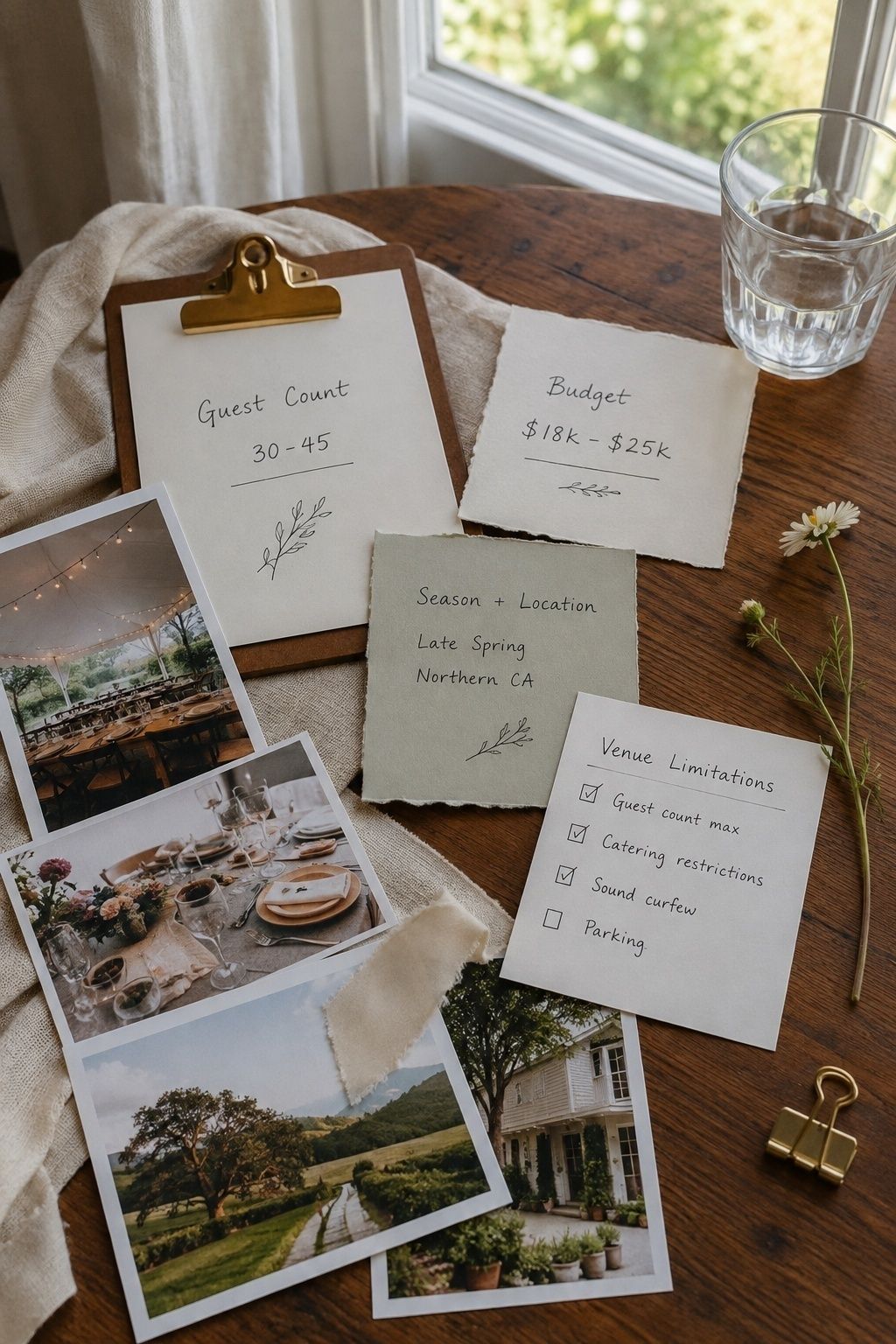
Inspiration is lovely, but it becomes a trap when it starts making promises before the real constraints are known. A saved tablescape may assume a wide banquet table. A ceremony arch may need a venue that allows installation time. A dress code may look beautiful online but feel wrong for a backyard dinner or city hall lunch.
The calmer order is constraints first, inspiration second. Before you commit emotionally to a look, name your approximate guest count, budget comfort zone, season, location, venue limits, family boundaries, and the feeling you want guests to have. Then the inspiration folder becomes useful instead of bossy.
For a small wedding, this protects the intimacy. Instead of asking, “How do we recreate this photo?” ask, “Does this idea fit the room, the people, the money, and the kind of hosting we want?” If the answer is yes, keep it. If the answer is no, let it stay a pretty image.
Setting A Budget Without A Guest Count And Reserve

Wedding budget planning mistakes often start with a total number that sounds responsible but is not tied to headcount. Food, drinks, rentals, stationery, favors, transportation, cake, service staff, and even restroom needs can change with the number of people in the room. A budget without a guest count is not really a budget yet. It is a wish with a currency symbol.
Small weddings can make this feel confusing because couples assume fewer guests automatically means simple math. Sometimes it does. But intimate venues may have minimum spends, private dining rooms may charge room fees, and a very small guest list can still include higher per-person costs if you want a generous meal, excellent photography, or full weekend hosting.
Do this instead: choose a working guest range, price the most important per-person costs, and keep a reserve for taxes, service fees, tips, alterations, delivery, overtime, postage, and last-minute fixes. A smaller wedding budget feels calmer when it includes breathing room from the beginning.
Falling For A Venue Before Asking About Minimums, Access, And Full Cost
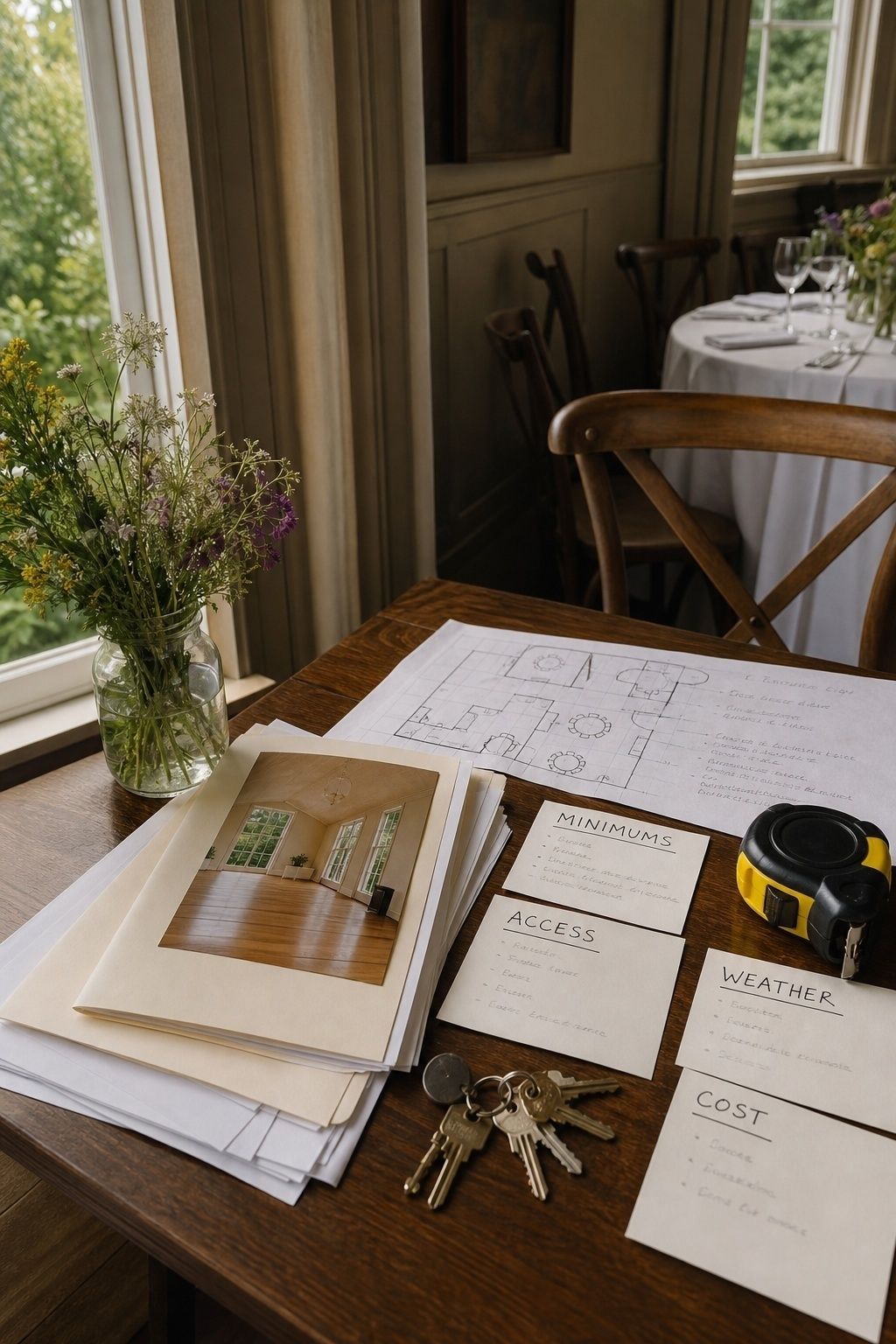
A venue can feel like the decision that solves everything, but it can also create some of the most stressful mistakes to avoid when planning a wedding. The room may be beautiful and still come with a food and beverage minimum, limited setup time, required vendors, parking issues, noise limits, rental gaps, or a cleanup deadline that changes the whole reception.
For an intimate wedding, ask whether the space feels right at your actual guest count. A room that photographs beautifully for 100 may feel hollow for 28. A tiny restaurant may feel perfect until you learn there is no private restroom access, no ceremony backup, or no place for a photographer to move during dinner.
Do this instead: before you fall too hard, ask for the full cost, what is included, what is required, when you can access the space, when vendors can load in and out, what happens in bad weather, whether there are minimums, and who is on site during the event. The right venue should answer practical questions as well as emotional ones.
Booking Vendors Before The Date, Scope, Deliverables, And Contract Are Clear
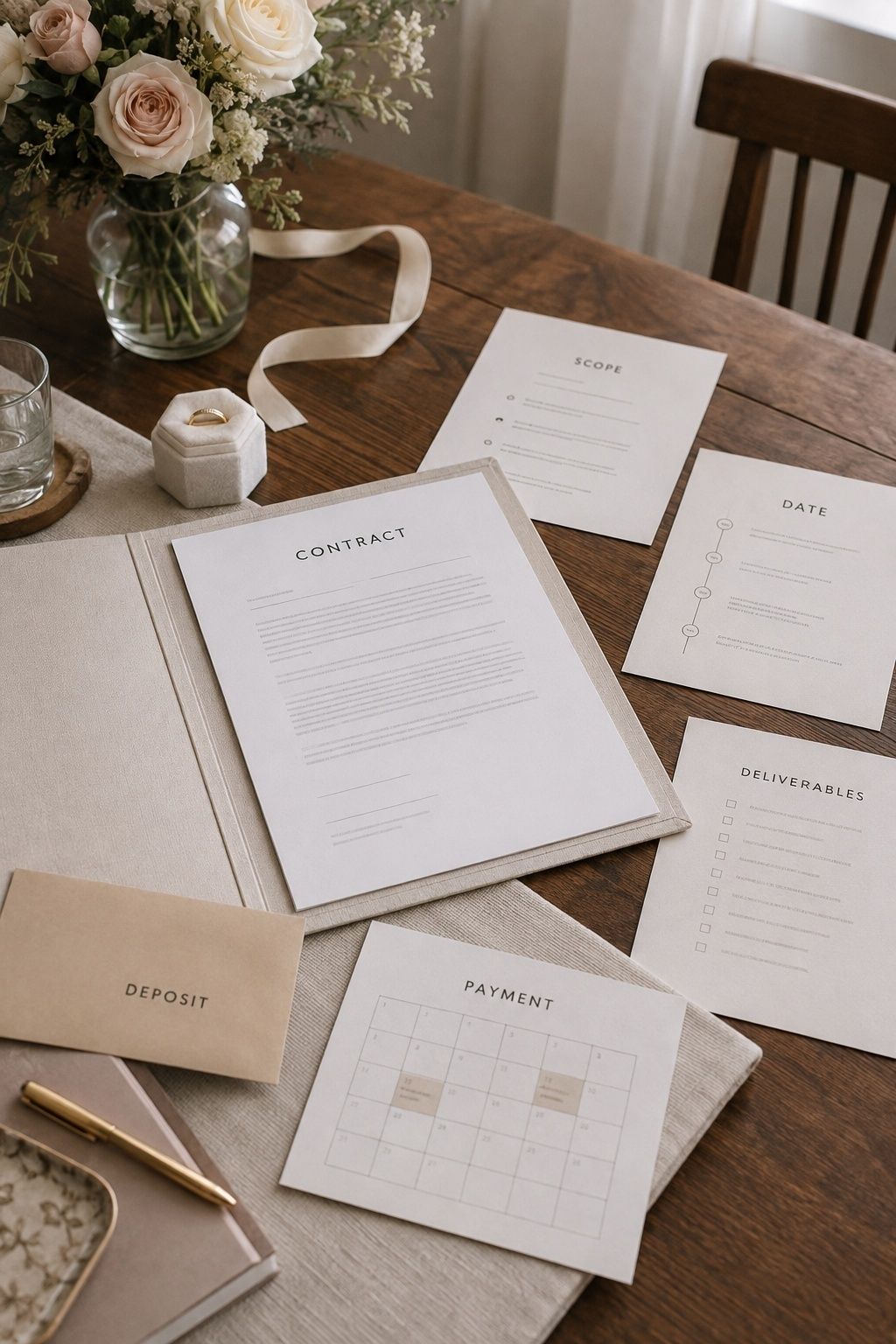
Wedding vendor booking mistakes usually come from excitement and scarcity. You find a photographer whose work feels like you, a florist with the right touch, or a caterer who understands dinner-party energy. You want to secure them before someone else does. That instinct makes sense, but speed without clarity can cost you later.
Before a deposit, confirm the date, location, service window, deliverables, travel fees, assistant or staffing needs, overtime rate, cancellation policy, payment schedule, backup plan, and what happens if the guest count changes. If a vendor says something helpful in conversation, ask for it in writing. Memory is not a contract.
This matters just as much for small weddings. A two-hour elopement photographer, a private dining buyout, and a simple ceremony musician may all be modest in scale, but the agreement still needs to say what is happening, when, where, and who owns which piece.
Keeping Decisions In Too Many Places

One of the most ordinary wedding planning mistakes is letting the plan live everywhere. A catering note sits in a text thread. A vendor invoice is in one partner’s email. A floral photo is saved in a social app. A parent remembers a guest address. The venue contract is downloaded on a laptop nobody brings to the final meeting.
Scattered information creates wedding planning overwhelm because the couple is never sure whether they have the latest answer. It also makes delegation harder. A coordinator, sibling, parent, or vendor cannot help confidently when the plan has to be reconstructed from screenshots.
Do this instead: choose one shared planning hub. It can be a spreadsheet, binder, cloud folder, or project board, but it should hold the guest list, budget, vendor contacts, contracts, payment dates, decisions, inspiration, ceremony details, and final timeline. The tool matters less than the rule: if it affects the wedding, it goes there.
Letting Family Input Change The Plan Without A Tradeoff
Family input can be generous, meaningful, and genuinely useful. It becomes difficult when every suggestion is treated as an addition instead of a tradeoff. One more guest affects seating. One more tradition affects the timeline. One more speech affects dinner flow. One more opinion about the ceremony affects the emotional center of the day.
Small weddings need especially clear boundaries because the size is part of the experience. If the guest list keeps expanding by exception, the room may stop feeling intimate. If every family request is quietly accepted, the couple may find themselves hosting a wedding that technically works but no longer feels honest.
Do this instead: pair every new request with its cost, space, timing, and feeling impact. “We can add that toast, but it means shortening open conversation after dinner.” “We can invite those relatives, but we would need a different room.” Tradeoffs make decisions less personal and more truthful.
Forgetting Payment Dates, RSVP Deadlines, And Final Count Triggers
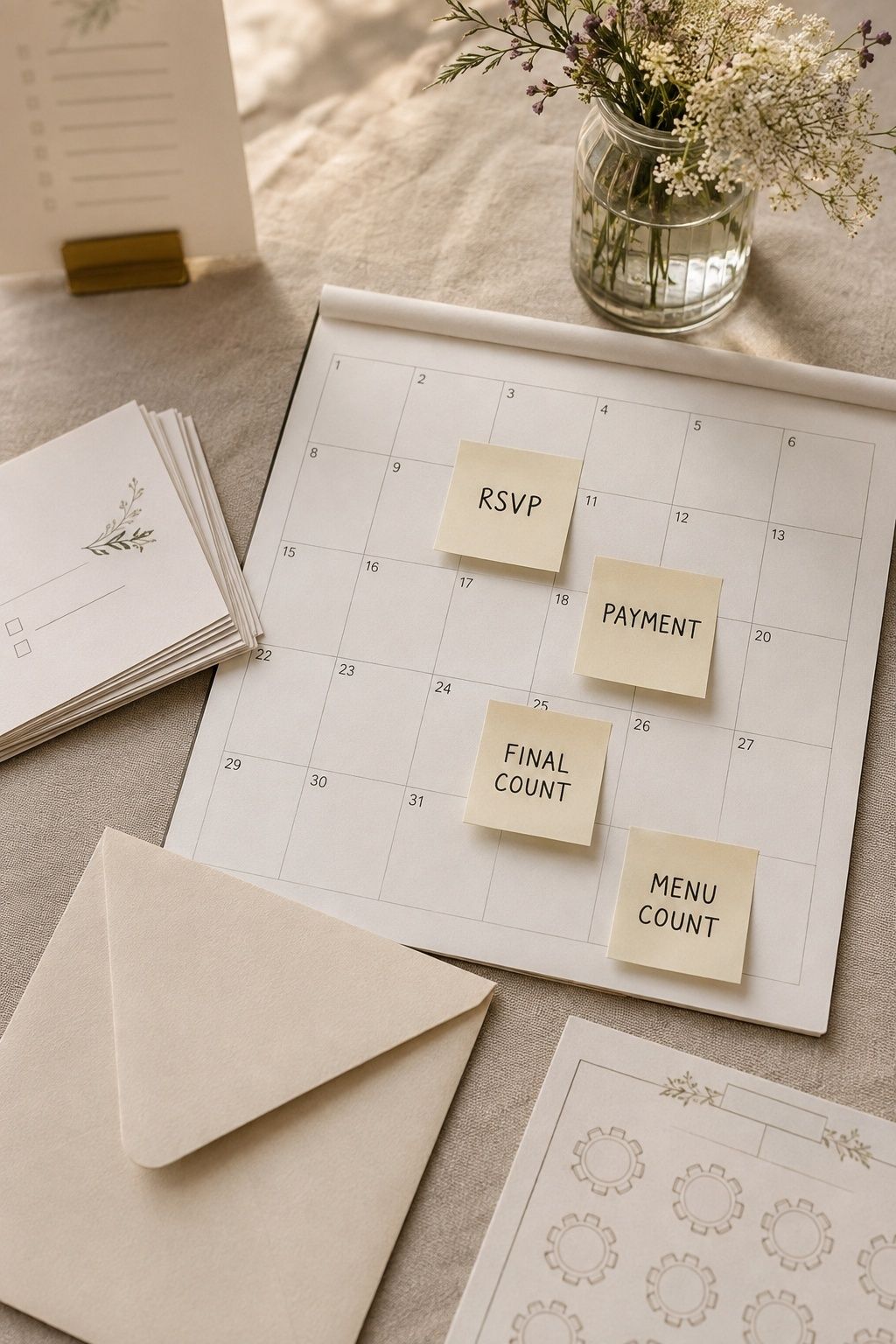
Some deadlines are soft. Others quietly control the whole plan. Payment dates, RSVP deadlines, menu counts, rental changes, seating finalization, print deadlines, hair and makeup counts, hotel block releases, and ceremony paperwork can all create problems if they are remembered late.
The final count is especially important. Caterers, venues, rental companies, stationers, and planners may all need numbers at different times. If the RSVP deadline is too close to those vendor deadlines, the couple ends up chasing replies while also trying to confirm seating, meals, and payment balances.
Do this instead: the week you sign each contract, copy every payment, count, cancellation, and change deadline into your calendar. Add reminders two weeks before each one. Then set your RSVP deadline early enough to follow up with missing guests before vendors need final numbers.
Saving Confirmations For The Final Month
The final month should not be the first time anyone asks whether the florist has load-in instructions, the photographer has the family list, the venue has the floor plan, or the caterer knows where dessert will go. Those questions are normal. They are just easier when they are not all arriving at once.
Small weddings often feel too simple to need formal confirmations, but that is one of the sneakiest planning order mistakes. Fewer guests does not remove the need for arrival times, vendor contacts, setup notes, ceremony cues, rain plans, meal counts, and cleanup responsibility. The same goes for florals, and these wedding flower mistakes show where details slip.
Do this instead: confirm the important pieces six to eight weeks out, then use the final month for updates rather than discoveries. Check vendor arrival times, delivery addresses, setup ownership, family photo lists, ceremony timing, meal counts, layout, final payments, and what each person should do if something changes.
Skipping A Point Person For The Week Of The Wedding
A small wedding still needs someone who is not the couple to hold the moving parts. Without a point person, every question can find its way back to the people getting married: where the candles go, whether the shuttle is late, who has the rings, which table gets the high chair, or when the musician should start.
This person does not always have to be a full-service planner. Depending on the wedding, it might be a day-of coordinator, venue manager with clear duties, trusted friend, sibling, or hired assistant. What matters is that the person has the timeline, vendor contacts, authority to make small decisions, and enough distance from the emotion of the day to act calmly.
Do this instead: create a week-of handoff with the timeline, vendor phone numbers, setup notes, emergency items, photo groupings, payment notes, transportation details, cleanup owner, and decision rules. Then tell vendors and close family who to contact. Your wedding day should not require you to be the help desk.
A Calm Planning Order To Use Instead
If you are worried about wedding planning mistakes, use a simple decision-control order instead of trying to do every task at once. Start with the feeling you want, your guest ceiling, and the priorities that matter most. Then shape the budget around the real guest range. After that, choose the venue and date, book vendors whose work depends on that date, and move into guest communication. Once the plan is set, these wedding day stress mistakes are worth avoiding on the day itself.
Once those pieces are steady, plan the details that make the day personal: ceremony words, dinner flow, music, flowers, attire, stationery, seating, and small keepsakes. Later, move into confirmations: payments, final count, layouts, transportation, vendor arrival times, weather plan, and the week-of handoff.
This order keeps the wedding from growing in secret. It also helps you see when a new idea is beautiful but badly timed. You can still be creative. You are simply letting the foundational decisions carry the decorative ones, which is how a small wedding stays calm, personal, and possible.
FAQ
What Are Common Wedding Planning Mistakes?
Common wedding planning mistakes include booking before the guest count is clear, setting a budget without a reserve, falling for a venue before checking full costs, keeping decisions in scattered places, and leaving confirmations until the final month. Most are order problems, not character flaws, and they can be fixed with one shared plan.
What Should Couples Decide Before Booking Vendors?
Before booking vendors, couples should decide their rough guest count, budget comfort zone, date or date range, venue status, priorities, and scope. A vendor cannot price accurately without knowing what kind of wedding they are supporting. For small weddings, also ask about minimums, staffing, setup time, and whether the service fits your guest count.
What Order Should You Plan A Wedding In?
Plan a wedding in the order that reduces backtracking: priorities, guest count, budget, venue and date, core vendors, guest communication, personal details, final confirmations, and week-of handoff. Some tasks can move around, but the early decisions should tell the later decisions what is realistic.
Should You Set A Budget Before Choosing A Venue?
Yes, set a comfort range before touring venues, but refine the budget after you know the guest count and venue costs. A venue can change catering minimums, rentals, service fees, taxes, transportation, and staffing. The best budget is both emotional and practical: what you can spend, plus what the wedding actually requires.
How Do You Avoid Wedding Planning Overwhelm?
To avoid wedding planning overwhelm, stop treating every task as equally urgent. Keep one shared planning hub, choose three priorities, schedule one planning check-in each week, and sort tasks into now, next, later, and optional. A small wedding becomes calmer when decisions have an owner and a place to live.
What Planning Tasks Should Not Wait Until The Final Month?
Do not wait until the final month to confirm vendor arrival times, payment deadlines, final count dates, ceremony paperwork, transportation, rental changes, family photo lists, weather backup, and setup ownership. The final month should be for small updates and emotional steadiness, not discovering that nobody owns the timeline.
Final Thoughts
The wedding planning mistakes that cause the most stress are rarely dramatic at first. They are small choices made before the couple has enough structure: a venue tour before a guest range, a vendor deposit before scope, a family yes before a tradeoff, a final deadline that never made it into the calendar.
Good planning is not about making your wedding more complicated. It is about reducing rework so the wedding can stay honest, personal, and hosted with care. When your priorities and guest count are set, fold a step-by-step planning sequence into the same conversation as timing, vendor availability, stationery deadlines, and final counts before the last month gets crowded.
Last update on 2026-10-04 / Affiliate links / Images from Amazon Product Advertising API