

A simple wedding planning checklist should start with the guest list, legal ceremony, budget, place, food, timeline, and final-week handoff. Everything else should earn its place by making the day calmer, more comfortable, or more personal.
If you are drawn to a smaller wedding, you may already know you do not want the classic oversized checklist. You need a plan that keeps the wedding legal, hosted, beautiful enough, and emotionally steady without making the celebration feel like a second job.
Think of this as a simple intimate wedding plan you can adjust to your timeline, guest count, and setting. A courthouse ceremony with dinner, a 30-person backyard wedding, a private restaurant room, and a tiny chapel celebration will not need the same details. But they do need the same core decisions made in the right order.
Recommended Wedding Products


You Might Also Like These Blog Posts
- Small Wedding Planning Checklist For A Calm, Personal Day
- 3-Month Small Wedding Planning Checklist For A Short, Sane Timeline
- Micro Wedding Planning Checklist For A Calm, Close Celebration
- Simple Wedding Planning Timeline For A Day That Feels Easy
- 6-Month Small Wedding Planning Checklist For A Calm, Beautiful Countdown
- How To Simplify Wedding Planning Without Making The Day Feel Smaller
A simple wedding planning checklist for a calm, complete day
The point of a simple wedding checklist is not to make the wedding feel plain. It is to remove decisions that do not serve the day, so you have more energy for the ones that do. Start by naming the essentials you will protect no matter how small the celebration becomes: the commitment, the guests, the meal or refreshment plan, the photographs or memories you care about, and the comfort of everyone present.
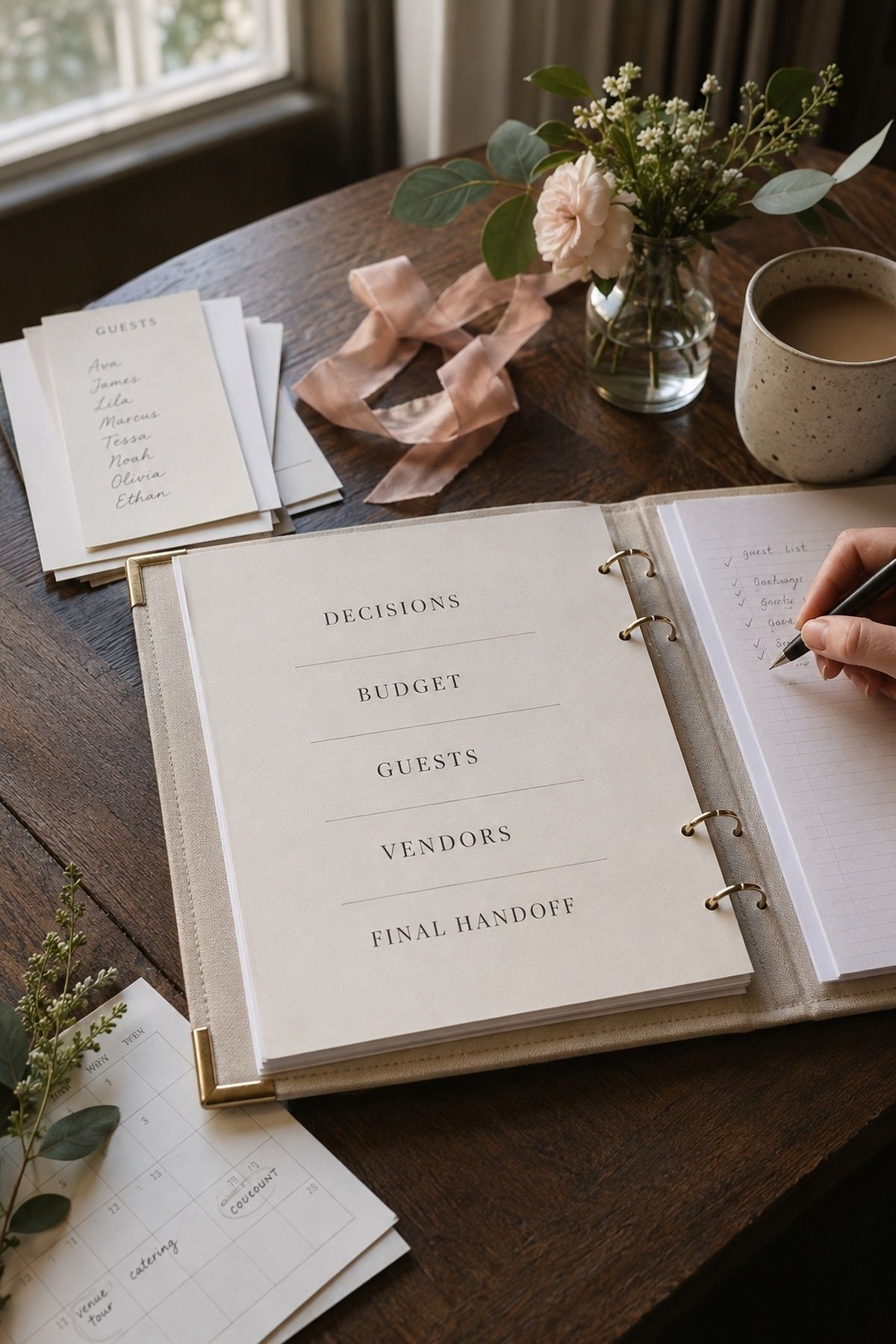
Keep one shared planning file with five sections: decisions, budget, guests, vendors, and final handoff. If a task does not fit into one of those sections, ask whether it is truly necessary. Simple planning works best when every item has a clear owner, a deadline, and a reason.
Define Simple Before You Book Anything
Simple means different things to different couples. For one pair, it means no wedding party and a family dinner. For another, it means a quiet ceremony, thoughtful flowers, and a photographer for three hours. Before anyone books a venue or buys outfits, decide what simple means in your relationship.
Set A Guest Count That Matches The Wedding You Want
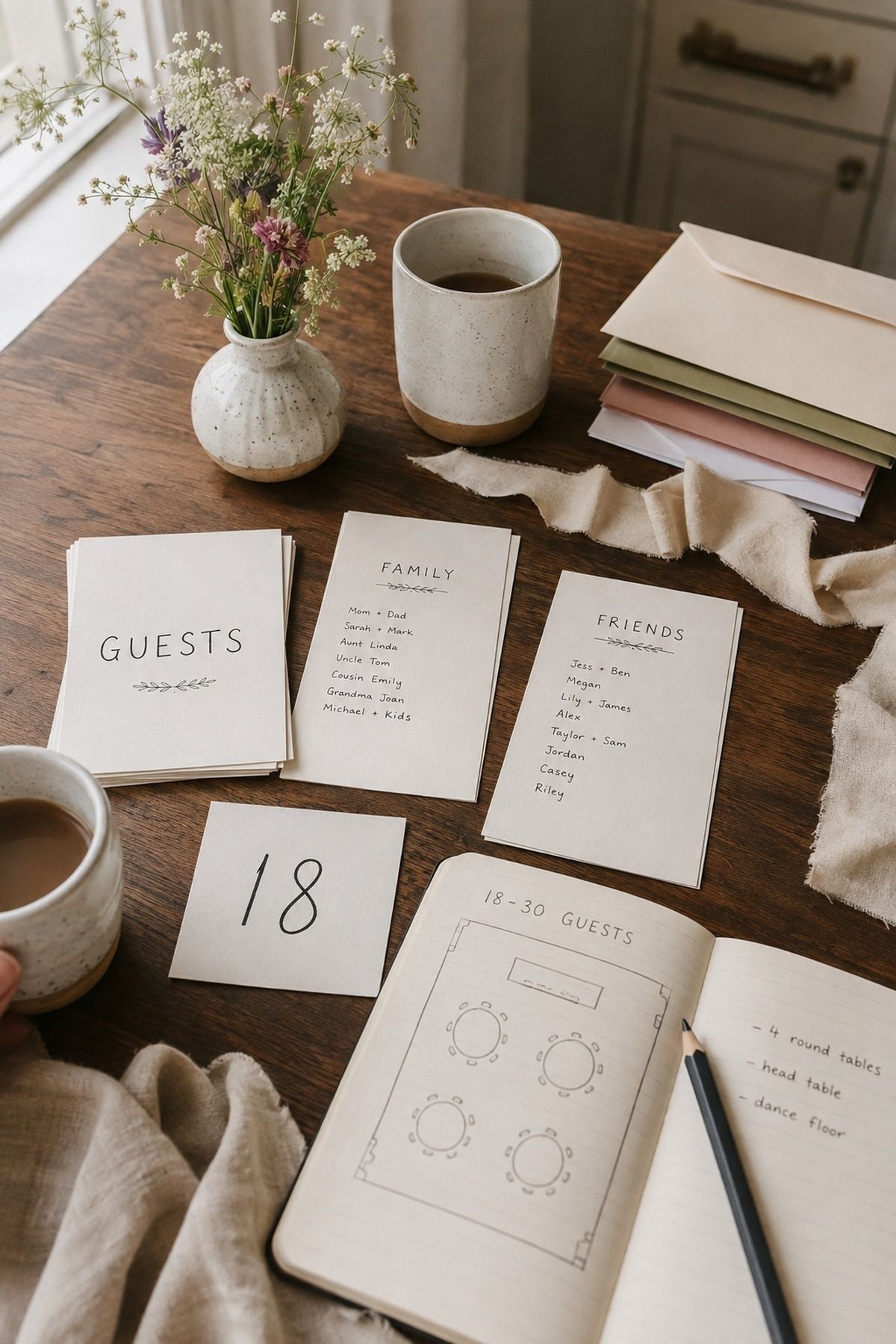
The guest count is the first real planning decision because it affects almost everything else. A small simple wedding checklist for 18 guests can be much lighter than one for 60 guests. Choose a firm number, then make a list of the people whose presence would make the day feel right.
If the list starts growing because of guilt, pause before adjusting the plan. More guests can mean a bigger room, more food, more chairs, more transportation details, and more emotional management. A smaller guest list is not rude when it is honest, kind, and communicated clearly.
Choose The Format Before The Details

Pick the wedding shape early: courthouse plus dinner, backyard ceremony, private dining room, family home, tiny chapel, garden ceremony, or rented cottage weekend. The format tells you what you actually need. A restaurant wedding may include tables, chairs, food, staff, restrooms, and cleanup. A private home may need rentals, parking plans, trash removal, and weather backup.
This is where choosing your wedding priorities as a couple matters. If your top priorities are vows, dinner, and photography, you can let go of extras that compete for the same money and attention.
Name Three Non-Negotiables
Choose three things you want to feel confident about by the end of the wedding. They might be a relaxed meal, beautiful portraits, a ceremony that sounds like you, enough time with each guest, or staying within a specific budget. These become your filter when every new idea appears.
A low-stress wedding planning checklist is not low-stress because nothing matters. It is low-stress because only the right things matter.
Book The Essentials First
Once the guest count and format are clear, protect the date-dependent pieces. These are the items that can derail a wedding if they are left too late: ceremony location, legal requirements, officiant, food, photography if desired, and one person who can manage logistics on the day.
Confirm The Ceremony Place And Legal Plan

Decide where the legal ceremony will happen and what the location requires. Check the marriage license rules for the city, county, state, province, or country where you will marry. Look for waiting periods, expiration windows, appointment requirements, identification rules, witnesses, officiant requirements, and who returns the license afterward.
Do this early even if you cannot apply yet. Add the correct application window to your calendar, then confirm the marriage license steps before the legal side starts sitting in the back of your mind.
Choose Food That Fits The Room
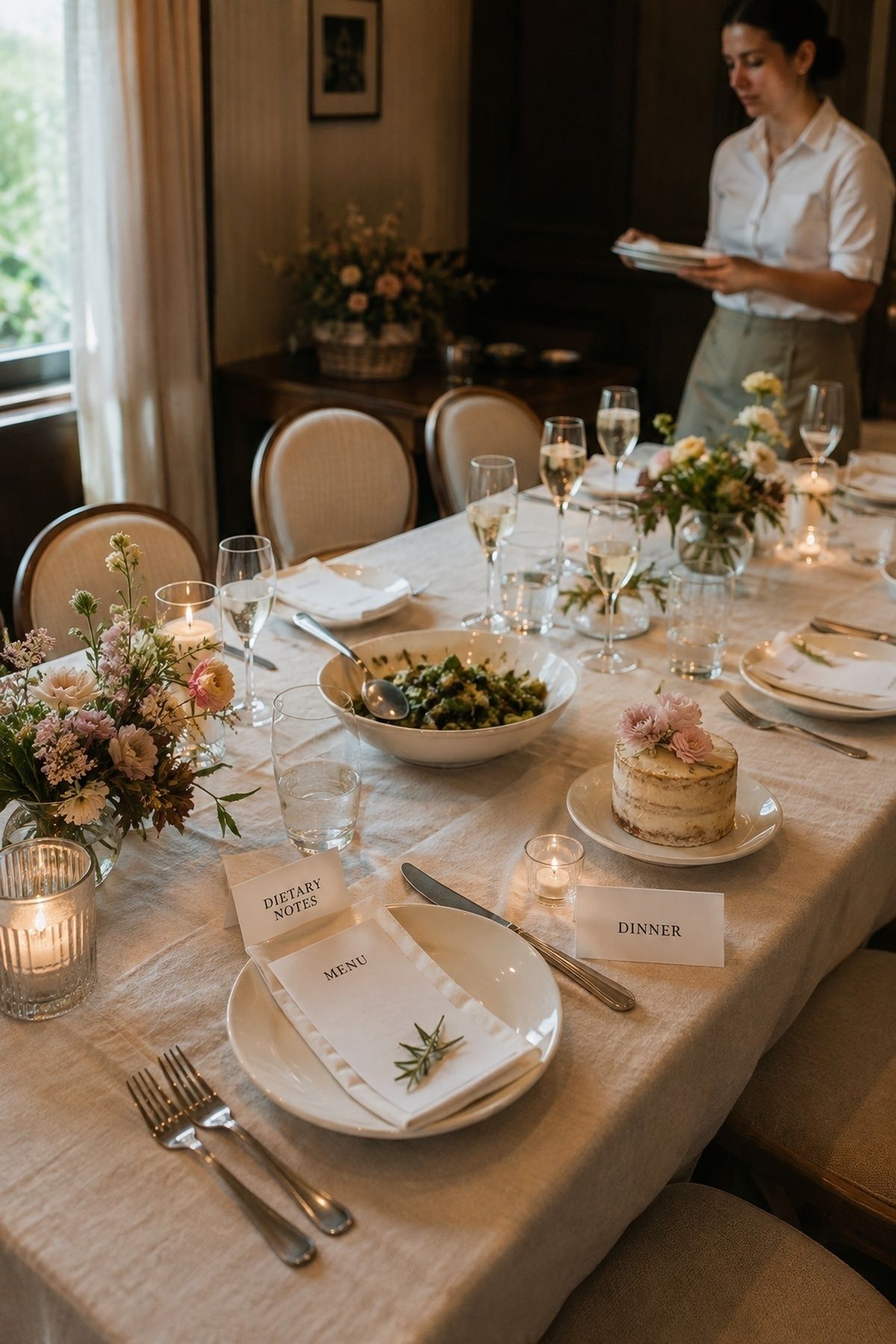
Food is part of guest care, not just a reception detail. Your wedding essentials checklist should answer what guests will eat, when they will eat, where they will sit or stand, how dietary needs will be handled, and who is responsible for cleanup.
For a simple wedding, food might be a private dining menu, brunch reservation, family-style catering, picnic boxes, cake and champagne, or a catered meal at home. The best choice is the one that lets guests feel hosted without turning the day into a staffing puzzle.
Right-Size Your Vendors
You do not need every traditional vendor, but you do need the responsibilities covered. The most common simple-wedding vendor list includes an officiant, food provider, photographer, florist or simple decor source, hair and makeup if wanted, rentals if the space is empty, and coordination help.
Coordination is easy to underestimate at a small wedding. Someone still needs to answer vendor questions, cue the ceremony, know where rings and vows are, guide family photos, manage the timeline, and pack personal items at the end. If you do not hire a coordinator, choose a capable helper who is not one of the people you most want emotionally present with you.
Keep Guest Details Clear And Kind
Guests do not need elaborate fanfare, but they do need clarity. A minimal wedding planning checklist should make it easy for people to know whether they are invited, where to go, when to arrive, what to wear, what will be served, and who to ask if they have a practical question.
Send Invitations With The Whole Guest Experience In Mind

Send invitations once the date, time, place, meal plan, dress code, RSVP deadline, and names invited are firm. For a smaller wedding, wording matters because there may be no plus-ones, no children, or no extended family beyond the core circle. Keep the tone warm and direct.
Include practical notes in one place: parking, accessibility, weather, arrival timing, reception address if different, and whether the ceremony is private. Wedding RSVP cards can work well for paper invitations, while a simple digital form may be easier if you need fast answers.
Plan The Flow From Arrival To Goodbye
Walk through the day as if you are a guest. Where do you park? Who greets you? Is there a restroom nearby? Is there somewhere to put a coat? Can older relatives sit comfortably? Will there be drinks before dinner? How will people know where to go after the ceremony?
This is the difference between simple and underplanned. A wedding can be small and still feel cared for when the transitions are obvious. For a softer planning path overall, choose low-key ideas that fit the way you want to host and make guests feel considered.
Simplify Vendors, Decor, And Extras
The easiest place for a simple wedding to get complicated is in the extras. A favor becomes a craft night. A ceremony arch becomes a transport problem. A casual playlist becomes a sound-system scramble. Before adding anything, ask who will bring it, set it up, fix it if it fails, and take it home.
Use One Strong Visual Moment
You do not need to decorate every surface. Choose one place that will appear in photos and memories: the ceremony backdrop, dinner table, cake table, fireplace, entry table, or bouquet. Candles, seasonal flowers, linen, good lighting, and a few personal pieces can do more than scattered decorations everywhere.
Skip Details That Create Hidden Labor
What do you really need for a wedding? You need a legal path, two people getting married, someone authorized to marry you, any required witnesses, a place, a time, a way to host guests, and enough communication that people can show up comfortably. You may want flowers, photos, music, attire, vows, a meal, and a few rituals. You probably do not need anything that mainly creates errands.
Skip favors if they feel forced, multiple outfit changes if they complicate timing, custom signage if the venue is easy to navigate, elaborate pre-wedding events if they stretch everyone thin, and decor projects that need too much setup. Look closely at what to skip when a small wedding needs breathing room, then keep the details that genuinely support the day.
Use A Simple Timeline Checklist
A simple wedding timeline checklist can be built backward from the wedding date. You do not need a perfect month-by-month plan if your wedding is smaller or closer than average. You need a sequence that keeps late decisions from stacking up.
- First: guest count, budget range, ceremony location, legal requirements, wedding format, and top priorities.
- Next: venue or location, officiant, food, photography, attire direction, invitations, and any rentals the space truly needs.
- Middle: RSVPs, ceremony plan, meal details, seating if needed, music, flowers or decor, transportation, and family photo list.
- Final Month: final headcount, payments, vendor confirmations, beauty appointments, vows, rings, license timing, weather backup, and day-of timeline.
- Final Week: emergency kit, packed personal items, printed timeline, vendor contacts, helper briefing, gratuities if planned, and a clear cleanup plan.
A fuller planning picture belongs in a calmer small-wedding checklist. Save final-week details that need a real owner for the last stretch, when the real question is who carries what, confirms what, and closes the day well.
Final Month Essentials
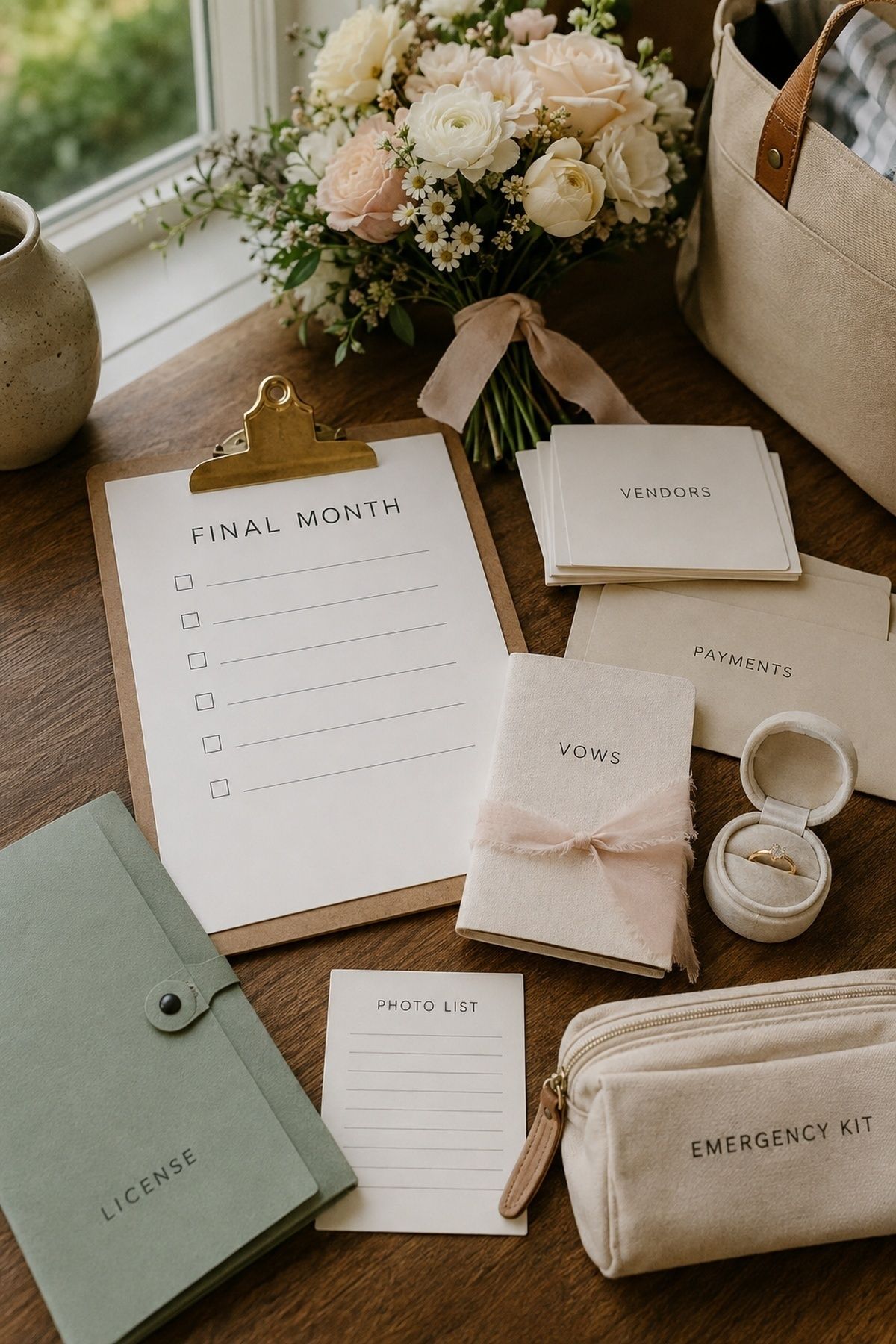
The final month is where a simple wedding either starts to feel peaceful or starts to feel loose. Close the guest count, confirm vendor arrival times, finish payments, write vows, finalize the ceremony order, choose family photo groupings, and decide who carries rings, license paperwork, tips, and personal items.
Send guests one clear reminder if they need practical information. Confirm addresses, parking, weather notes, attire guidance, and timing. Small weddings often include guests who are emotionally close, which can make communication feel informal, but clarity is still kindness.
FAQ
What Is The Simplest Way To Plan A Wedding?
The simplest way is to decide the guest count, budget, ceremony location, legal requirements, food plan, and core support before choosing decor or extras. Once those essentials are clear, every other task should either improve guest comfort, protect the timeline, or make the ceremony more personal.
What Do You Actually Need For A Simple Wedding?
You need a legal marriage process, a ceremony place, an authorized officiant if required, any required witnesses, a confirmed time, invited guests, food or refreshments if you are hosting people afterward, and a clear day-of plan. Everything else is optional, though photography, vows, flowers, music, and a meal often make the day feel more complete.
How Do You Plan A Simple Wedding Without Missing Important Details?
Use five buckets: legal, guests, budget, vendors, and timeline. Check each bucket weekly until the final month, then assign every wedding-day responsibility to a named person. A simple plan works when nothing important is floating around without an owner.
What Can You Skip For A Simple Small Wedding?
You can usually skip save-the-dates for a short timeline, large wedding parties, favors, multiple pre-wedding events, elaborate signage, custom stationery suites, complex rentals, and decor that requires a lot of setup. Skip anything that does not support the ceremony, guest comfort, food, memories, or the feeling you want in the room.
How Long Does It Take To Plan A Simple Wedding?
A simple wedding can be planned in a few months if the guest list is small, the venue or format is flexible, and the couple makes decisions quickly. Six to nine months gives more breathing room for attire, photography, and guest travel. A year can be helpful for popular dates or destination plans, but it is not required for every intimate wedding.
What Vendors Do You Need For A Simple Wedding?
Most simple weddings need an officiant, food provider, photographer if photos matter, and either a coordinator or trusted point person. Depending on the venue, you may also need rentals, flowers, beauty services, music support, transportation, or a baker. The goal is to cover responsibilities, not to hire every traditional vendor category.
How Do You Keep A Simple Wedding From Feeling Underplanned?
Plan the guest experience carefully. Make arrival, seating, ceremony flow, food, restrooms, photos, weather backup, and cleanup feel considered. A simple wedding feels underplanned only when people are unsure where to go, what is happening next, or who is responsible for practical details.
Final Thoughts
Before you add another task, ask four questions: does this make the wedding legal, does it make guests more comfortable, does it make the day more meaningful, or does it prevent a realistic problem? If the answer is no, you can probably let it go. A simple wedding planning checklist should leave you with a day that feels complete, not crowded.
When your list starts to swell, keep a free wedding planning checklist nearby for common planning categories, then choose only the pieces that serve the smaller, calmer wedding you are actually creating.
Last update on 2026-10-04 / Affiliate links / Images from Amazon Product Advertising API