

How to simplify wedding planning starts with reducing the number of decisions, people, vendors, opinions, and details competing for your attention. Keep the ceremony, guest comfort, food, timing, photos, and the feeling of the day; then cut, combine, or postpone anything that does not serve those essentials.
A wedding often begins as something soft and exciting, then quietly becomes a maze of tabs, opinions, price lists, family expectations, and details that seem to reproduce overnight. One minute you are choosing a venue. The next, you are comparing napkin textures, wondering whether a welcome sign needs flowers, and trying to remember which file holds the guest addresses.
If you want the day to feel beautiful without carrying a production that drains the joy out of getting there, simplification is not a compromise. It is an editorial choice. You are not shrinking the meaning of the wedding. You are removing the clutter around it.
For the couple who wants a celebration that feels warm, hosted, and complete without building a second occupation around it, the answer is not more tabs. Start with practical tools, then move into the shape of the wedding, the decisions, the details, the elements worth protecting, and the small choices that make simplicity feel intentional.
Recommended Wedding Products


You Might Also Like These Blog Posts
- Simple Wedding Planning Checklist For Couples Who Want Less Noise
- Small Wedding Planning Checklist For A Calm, Personal Day
- Simple Wedding Planning Timeline For A Day That Feels Easy
- What To Do When Wedding Planning Feels Overwhelming And Your Brain Wants To Elope
- 3-Month Small Wedding Planning Checklist For A Short, Sane Timeline
- Small Wedding Planning On A Budget That Still Feels Generous
How To Simplify Wedding Planning
How to simplify wedding planning begins with one honest shift: stop trying to manage every possible wedding idea and start shaping a celebration with fewer decisions, fewer hand-offs, and clearer priorities. Simple wedding planning is not careless planning. It is choosing the kind of day that lets the ceremony, the meal, the people, and the feeling of being married stay at the center.
Most couples do not feel overwhelmed because they are missing one perfect trick. They feel overwhelmed because the wedding has become too wide. There is the guest list, the budget, the venue, the weather backup, the family commentary, the food, the music, the clothes, the stationery, the photos, the online inspiration, and the tiny voice asking whether a wedding still counts if every corner is not styled.
The better answer is to simplify the wedding itself before trying to organize a plan that is too large. A crowded plan stays crowded even in a beautiful notebook. A leaner plan gives every choice more breathing room.
Think of the wedding in three layers. First are the essentials: legal requirements, ceremony, guest count, food, seating, timing, basic communication, and people who know what happens on the day. Second are the anchors: the venue, the main meal, the photographer, music, flowers, and the practical details that keep guests comfortable. Third are the extras: favors, matching robes, elaborate signage, welcome bags, second outfits, late-night snacks, and decor in places guests barely notice.
A simple wedding checklist works best when those layers stay separate. Essentials get decided first. Anchors get enough care to make the day feel warm and hosted. Extras earn their place only if they add real joy, ease, or meaning.
This is where intimate weddings have a natural advantage. A smaller room holds more intention. A shorter guest list makes a meal feel more generous. One beautiful table matters more than five decorated zones. Simple does not have to feel thin. It feels edited, personal, and deeply considered.
The roadmap below starts with the shape of the wedding because that is where the largest simplification happens. Then it moves into decisions, details, what to protect, and how to keep the final day from feeling plain. The goal is a wedding that asks less from you while giving more attention to what actually matters.
You do not have to cut everything at once. In fact, the calmest version usually comes from a few strong choices repeated consistently: fewer guests, fewer locations, fewer decision-makers, fewer decorative zones, fewer separate files, and fewer unfinished ideas waiting for attention. Each reduction makes the next one easier because the wedding begins to show its real shape.
Keep the scale honest. A twenty-person dinner has different needs than an eighty-person reception, and both deserve care. The simpler path is matching the celebration to the room, the budget, the guest list, and the energy you actually have, instead of dressing a small wedding in oversized expectations. That honesty turns simplification from a loss into a design choice.
Simplify The Shape Of The Wedding First
Before you compare invitation suites or floral recipes, simplify the shape of the wedding. The shape is the guest count, venue, location flow, and hosting style. These choices determine almost every other item. If the shape is complicated, the details multiply. If the shape is clear, the rest of the plan has somewhere steady to land.
This is also the part couples often avoid because it brings real tradeoffs. A smaller guest list means saying no. A simpler venue could mean releasing a dream property that needs too much rental backup. A single-location celebration could mean giving up the drama of a separate ceremony spot. Still, these are the choices that remove the heaviest planning weight.
Choose A Smaller Guest List
Guest count is the master switch of the wedding. Fewer guests reduce invitations, catering counts, chairs, rentals, favors, transportation needs, hotel questions, seating stress, and the number of opinions circling the day. A smaller guest list also makes the budget easier to understand because each person touches so many cost lines.
Start with the people who truly matter inside the moment: immediate family, chosen family, closest friends, and anyone whose presence would change the emotional meaning of the ceremony. Then stop before the list becomes a social archive of every person you have known, worked with, or felt guilty about excluding.
A simple guest list needs a clear rule. For example: only people both partners know well, only people you have seen in the last year, only family and closest friends, or only guests you would host for dinner in your home. The exact rule is less important than having one. Without a rule, every name becomes a negotiation.
If you are trying to simplify wedding planning to protect money and energy, the guest list deserves early courage. Every guest you add is not just one more plate. It is one more invitation, chair, conversation, dietary response, seat assignment, and small emotional calculation.
Pick A Venue That Solves More Than One Problem
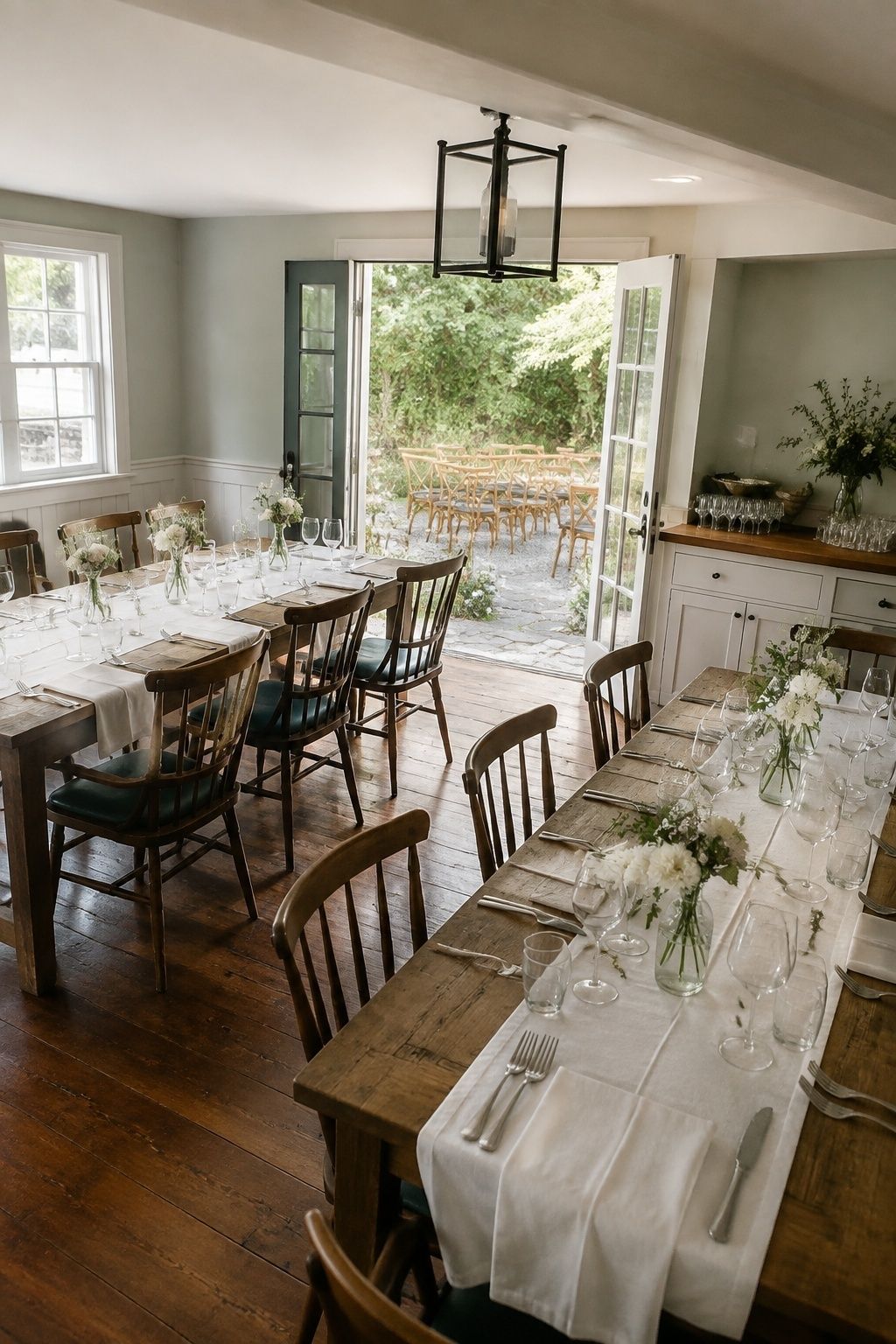
The easiest venue is rarely just the prettiest one. It is the place that solves several problems at once. Look for a venue that includes tables, chairs, linens, staff, catering, bar service, sound basics, ceremony space, parking, restrooms, a weather backup, or a coordinator who already knows the room.
A blank-slate space looks gorgeous, but it asks for more decisions. You could need rentals, lighting, restrooms, heating, trash removal, setup crews, catering prep space, permits, parking plans, and a person to manage every delivery. That is still worth it for the right couple. It is simply not the simplest path.
Restaurants, reserved dining rooms, boutique hotels, garden venues with in-house coordination, inns, small estates, and ceremony spaces attached to reception rooms all reduce the number of separate vendors. The best fit is not the venue that includes everything for everyone. It is the venue that includes enough of what you personally do not want to manage.
Ask practical questions before you fall in love with the view. What is included? Who sets up? Who cleans up? What happens if it rains? How early do vendors arrive? Where do guests park? Does the ceremony and meal fit comfortably in the same place? The answers tell you whether the venue is simplifying the wedding or only moving hidden work onto your lap.
If two venues feel equally beautiful, choose the one with clearer operations. A slightly simpler room with reliable staff, easy parking, built-in furniture, and a strong rain plan creates a calmer wedding than a dramatic space that requires you to coordinate every practical layer yourself.
Combine Ceremony And Reception Locations
One location removes an entire layer of wedding complexity. Guests arrive once. Vendors set up in one general area. The timeline has fewer gaps. Transportation becomes simpler. Family members are less likely to get lost between addresses. The day feels more relaxed because no one is shepherding people across town in formal clothes.
This does not mean the ceremony and reception have to look identical. A garden ceremony flows into dinner on a terrace. A courthouse ceremony flows into an intimate restaurant room. A living-room ceremony turns into a backyard supper. The point is to reduce movement, not flatten the feeling of the day.
If two locations are emotionally important, keep the transfer extremely clear. Choose locations close together, allow more time than seems necessary, and decide who answers guest questions. The simpler option is one place. The next simplest option is two places with a very short, obvious handoff.
Choose One Main Hosting Style
A wedding becomes harder when it tries to be a ceremony, cocktail party, formal dinner, dance party, after-party, brunch, welcome event, and family reunion all at once. Choose one main hosting style and let the other details serve it.
A dinner-party wedding centers a beautiful meal and conversation. A brunch wedding feels bright, easy, and often shorter. A cocktail reception works best with abundant food, enough seating, and clear timing. A restaurant buyout removes many rental decisions. A backyard meal feels intimate when the weather, restrooms, food service, and cleanup are handled properly.
The hosting style should match your guest count and your energy. If you do not want a dance floor, build the night around dinner, music, toasts, and a relaxed dessert moment. If you love dancing, keep the meal simpler and protect the music. If your guest list is tiny, do not force a large reception rhythm onto a room that wants conversation.
Simplify How Decisions Get Made
Once the wedding shape is calmer, simplify how decisions get made. This is where a lot of stress free wedding planning lives. The same couple who chooses a venue in one weekend could spend three months reopening small choices because there is no shared system, no stopping point, and too many people giving input.
The aim is not to become severe or joyless. It is to make the next choice visible. A good decision system protects your attention so you are not constantly re-deciding the same wedding from scratch.
Use One Checklist
Choose one checklist and commit to it. Not five timelines, not twelve saved planning guides, not a mix of app reminders, magazine lists, and half-finished documents. A single checklist keeps the wedding from becoming a tug-of-war between competing advice.
A micro wedding planning checklist or small-wedding timeline is especially worthwhile if your celebration has fewer guests but still needs real structure. Intimate weddings still need dates, deposits, a food plan, a guest communication plan, attire, ceremony details, and final counts. They simply do not need every item attached to a large ballroom wedding.
Customize the checklist once. Remove items you are truly skipping. Add any local, cultural, religious, or family-specific steps you need. Then treat it as the master list. When a new idea appears, it has to earn a place there instead of living in a separate tab or text thread.
Keep One Planning Hub
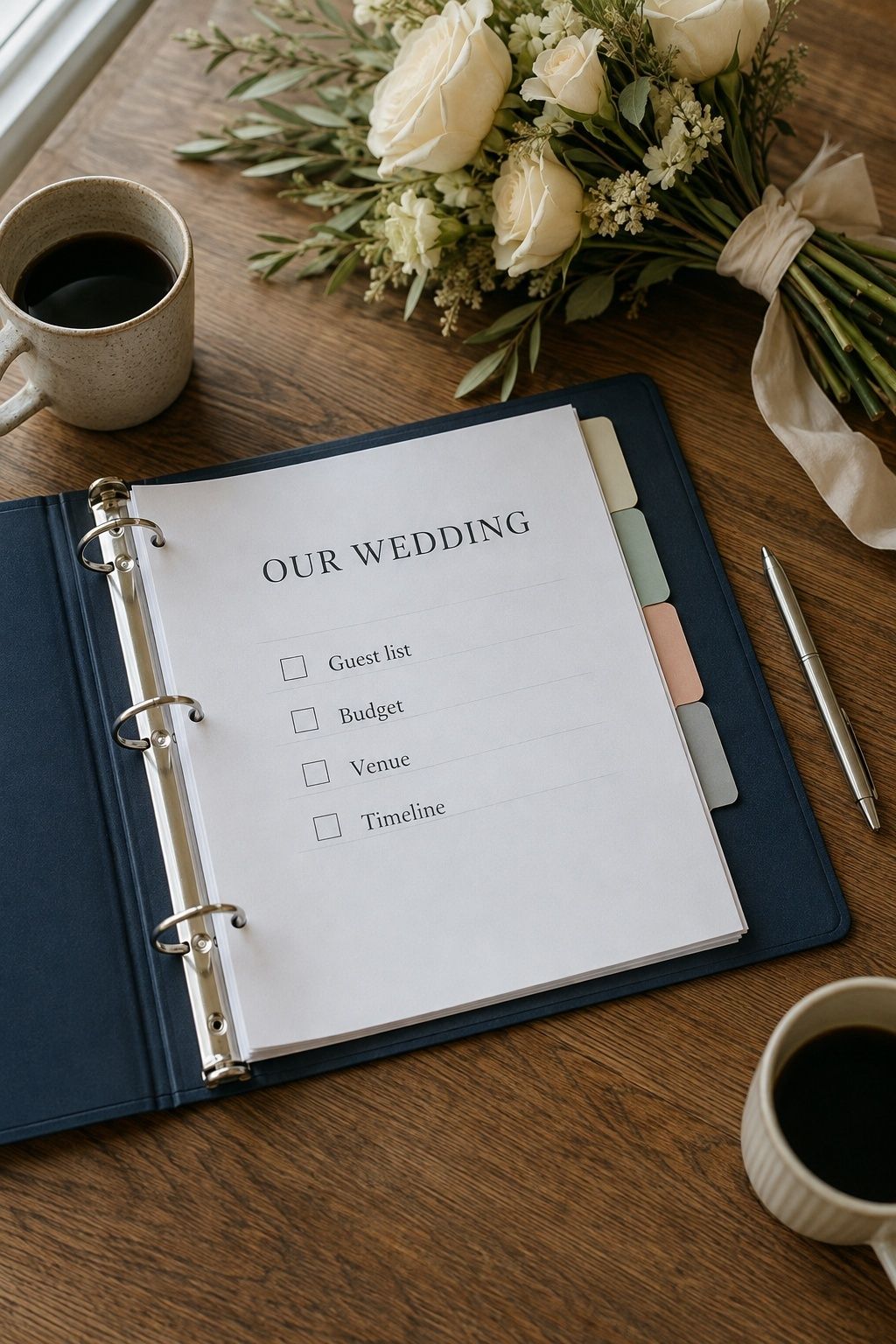
Your budget, guest list, vendor contacts, payment dates, contracts, ceremony details, timeline, and final decisions should live in one shared place. Try a spreadsheet, binder, planner notebook, or digital folder. What matters is that both partners know where to look.
Scattered information makes a wedding feel bigger than it is. One vendor quote in email, one contract in downloads, one seating chart in a text thread, one budget in a personal spreadsheet, and one timeline in a planner app creates constant friction. You spend energy finding information before you even make a choice.
Set up simple sections: guest list, money, venue, vendors, ceremony, attire, food, timeline, decor, and final week. Keep each section plain. The purpose is clarity, not decoration. If a decision is final, mark it final. If a payment is due, add the date. If a vendor has a phone number, put it where your partner finds it without asking you.
Decide In The Right Order
Wedding decisions become stressful when they happen out of order. Do not choose a seating chart before RSVPs. Do not finalize rentals before you know the venue inclusions. Do not choose a full floral plan before the ceremony and dining spaces are settled. Do not decide whether favors matter before you know the meal and guest flow.
Use this order as a calm spine: guest list range, budget, venue, date, ceremony plan, food and drink, photographer, guest communication, timeline, attire, music, flowers, stationery, seating, and final details. Some decisions will overlap, but the order keeps you from spending energy on details that depend on unfinished choices.
If you feel stuck, ask which bigger decision this smaller choice depends on. If the answer is unclear, step back. That is often how to plan a simple wedding without missing anything: decide the foundation first, then let each layer tell you what is actually needed.
Limit The Number Of Opinions
Every opinion adds a little weight. Sometimes that weight is loving and worthwhile. Sometimes it makes a clear decision cloudy. Before you ask for input, decide whose opinion truly matters for this specific choice.
Keep your partner in the center. Anyone paying for a meaningful portion of the wedding could need a defined voice around money and hospitality. A planner or trusted vendor gives practical guidance. Beyond that, be careful. Asking six people about invitations often creates six new versions of the wedding.
Use gentle boundaries: We are keeping this decision between us for now. We will share once it is final. We are trying to keep planning calm, so we are not gathering extra opinions on decor. These lines do not need a long defense. They simply protect the wedding from becoming a group project.
Stop Collecting Inspiration After A Decision Is Made
Inspiration is lovely until it starts reopening finished choices. Once you choose a dress, stop browsing dresses. Once you choose a color palette, stop saving new palettes. Once you choose a tablescape direction, stop comparing it to every styled shoot online.
Online inspiration is best at the beginning, especially when you are naming the mood of the day. After a decision is made, constant scrolling turns confidence into doubt. The internet is very good at making another option look more perfect than the one you chose yesterday.
Create a final board or folder with only the decisions you are actually using. Share that with vendors if needed. Archive the rest. A simple wedding needs fewer open doors. Closed doors are not failure; they are how the wedding becomes real.
Simplify The Wedding Details
After the shape and decision system are calmer, look at the details. This is where many couples accidentally rebuild a large wedding through small additions. One extra sign, one extra display, one extra printed element, one extra ritual, and one extra vendor each seem harmless alone. Together they create another layer of labor.
Minimalist wedding planning is not about bare tables or cold rooms. It is about choosing details with a role. A detail guides guests, creates beauty, honors someone, makes the meal easier, or deepens the ceremony. If it does none of those things, it is a candidate for cutting.
Choose Fewer Decor Zones
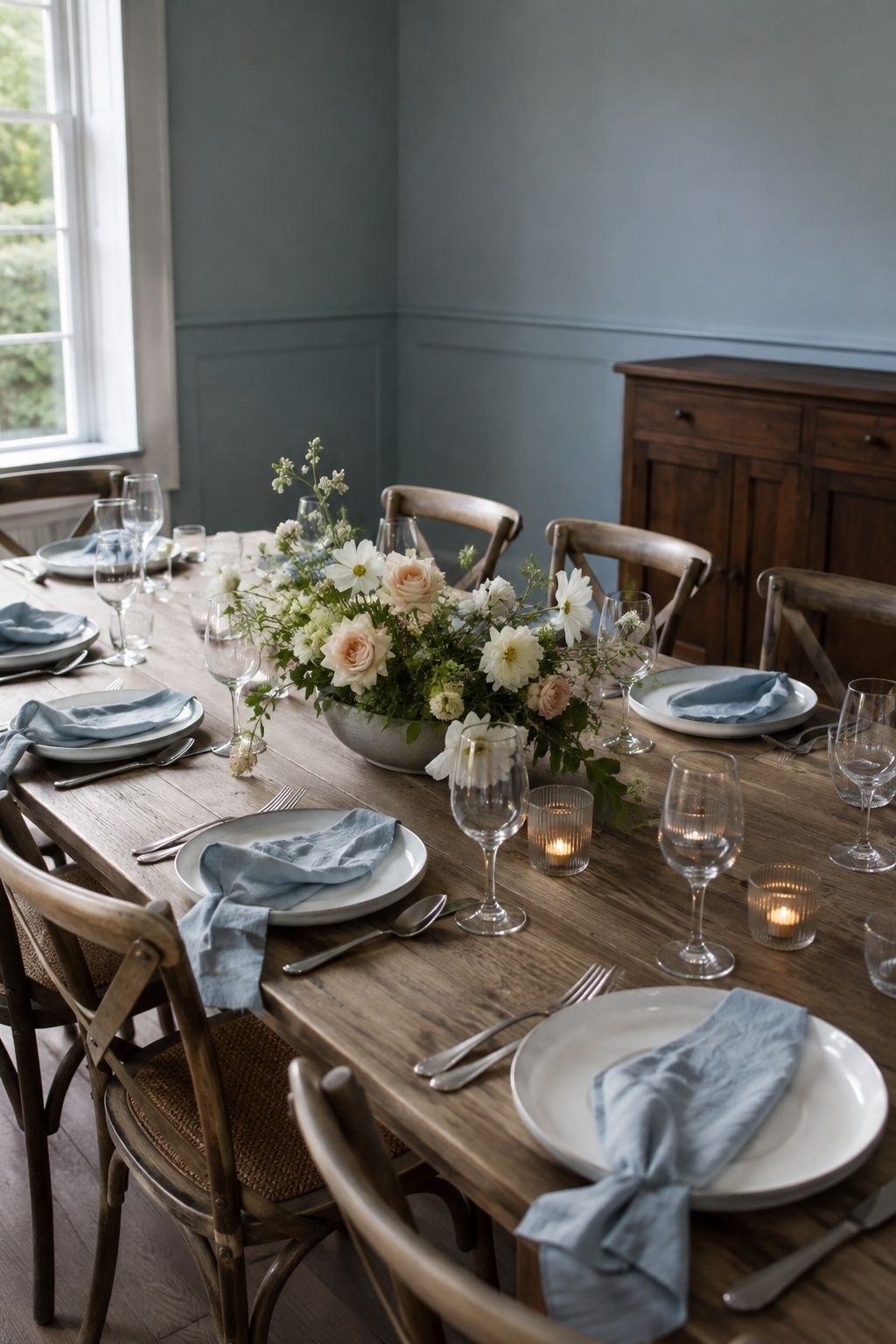
Instead of decorating every corner, choose two or three zones guests will truly experience. Most simple weddings need the ceremony area, dining tables, and one arrival or photo moment. That is enough to make the day feel designed without turning the venue into a full installation project.
Ceremony flowers matter because they frame the vows. Dining tables matter because guests sit with them for a long time. An arrival moment sets the tone. Beyond that, be selective. Bathroom baskets, favor tables, escort displays, lounge corners, cake backdrops, welcome signs, and bar florals look beautiful, but they are not all required.
A smaller number of stronger details usually feels more refined than a large number of thin ones. One lush arrangement on a family-style table feels more generous than small decorations scattered everywhere.
Keep Stationery Lean
Stationery expands quickly because every element feels charming in isolation. To keep it lean, decide what guests actually need to know and what they need to hold in their hands. Invitations, a details card or wedding website, and place cards if seating is assigned cover most simple weddings.
Day-of signage should solve real guest questions: where to go, where to sit, what to eat, and when something begins. If the venue is intuitive and the guest count is small, skip multiple signs. A clear website or details card replaces a stack of printed inserts.
Menus are optional depending on service style. Programs are optional unless the ceremony includes traditions guests need explained. Save-the-dates are optional for local, short-lead weddings with a small circle, but worthwhile for travel-heavy guest lists. Lean does not mean skipping communication. It means communicating in the clearest possible way.
Cut Duplicate Traditions
Many wedding traditions repeat the same emotional purpose. A welcome party, rehearsal dinner, cocktail hour, reception dinner, after-party, and next-day brunch all gather people. Parent dances, toasts, personal letters, first looks, and ceremony passages all express love and gratitude. You do not need every version.
Choose the traditions that feel alive for you and release the ones that feel like borrowed homework. If you want an intimate ceremony and a relaxed dinner, skip a bouquet toss, garter toss, grand entrance, formal cake cutting, or large wedding party lineup. If you love speeches, keep them short and intentional instead of adding more reception rituals around them.
The easiest filter is purpose. What does this tradition do? If another part of the day already does that role better, cut the duplicate. The wedding will still feel complete because the emotional meaning remains.
Choose A Simple Menu Structure
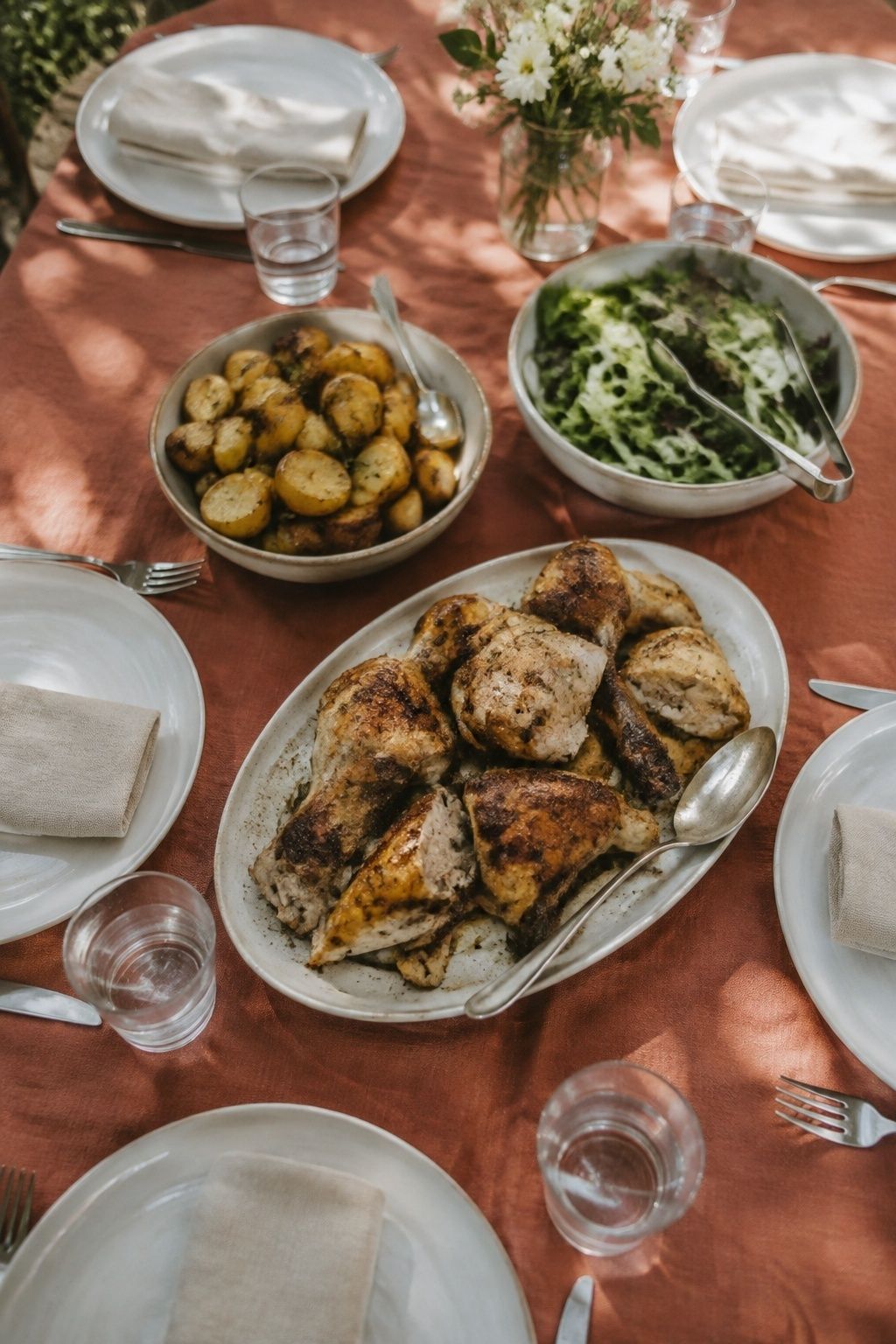
Food has to be generous, clear, and well timed. It does not have to be complicated. A simple menu structure could be a plated dinner with two entree choices, a family-style meal, a curated restaurant menu, a brunch spread, a beautiful buffet, or a cocktail reception with enough substantial bites to feel like real hosting.
The right structure depends on guest count, venue, budget, and formality. For a tiny wedding, an intimate dining menu removes rentals and staffing decisions. For a backyard wedding, drop-off catering sounds easy but still needs serving, refills, cleanup, trash, ice, and someone watching the timing. For a cocktail reception, seating and food quantity matter more than many couples expect.
Avoid a menu that requires too many stations, too many vendors, or too much guest explanation. Guests remember whether they were fed well and comfortably. They rarely remember whether the salad had three garnish choices.
Reduce Vendor Hand-Offs
Every hand-off between vendors creates a place where information falls through. The rental company needs the venue rules. The caterer needs the rental count. The florist needs the table sizes. The DJ needs the timeline. The photographer needs the family list. None of this is unmanageable, but too many separate vendors make a simple wedding feel administratively heavy.
When quality allows, choose vendors who handle adjacent needs. A restaurant covers food, tables, service, bar, and cleanup. A florist provides candles and vessels. A venue coordinator handles room flip timing. A planner or day-of coordinator keeps the final hand-offs from living inside your head.
Do not combine vendors just to make the list shorter if it weakens the day. The goal is fewer loose ends, not fewer professionals at any cost. Choose consolidation where it improves clarity, responsibility, and the guest experience.
What Not To Cut

Simple wedding planning works only when you cut extras, not foundations. Protect the elements that keep the day legal, comfortable, fed, clear, and emotionally held. Those are not glamorous categories, but they are what make a simple wedding feel cared for instead of underplanned.
Do not cut legal requirements. Know your marriage license rules, officiant requirements, waiting periods, witness needs, and any local filing steps. Do not leave this to memory or a last-week scramble.
Do not cut guest comfort. Seating, shade, heat, rain cover, restrooms, water, food timing, parking clarity, and accessibility matter at any size. A small wedding still feels chaotic if guests are hungry, confused, too hot, or unsure where to go.
Do not cut the main meal or clear food plan. Simplify the menu, but guests need to understand when and how they will eat. If the celebration overlaps a meal time, feed people accordingly. If it is a cake-and-champagne reception, time it so expectations match the offering.
Do not cut photography priorities without thinking carefully. You do not need an enormous shot list, but you probably want the ceremony, couple portraits, close family, the room, and the people who came to celebrate with you. Decide what matters before the day, not while everyone is waiting.
Do not cut a responsible day-of point person. Even the simplest wedding needs someone who is not getting married to answer vendor questions, cue music, find missing relatives, watch timing, and handle small surprises. That person could be a coordinator, venue manager, trusted friend, or family member with a clear role.
How To Keep A Simple Wedding From Feeling Plain
A simple wedding feels plain only when everything is reduced without intention. The answer is not adding more. It is making the remaining choices warmer, clearer, and more personal.
Start with the ceremony. Personal vows, a meaningful ceremony passage, a loved one as officiant, a quiet ring exchange, or a song from your story makes the whole day feel anchored. When the ceremony has emotional weight, the wedding does not need constant decoration to prove it matters.
Then focus on the meal. A beautiful table, candlelight, seasonal flowers, a menu that feels like something you would genuinely serve people you love, and thoughtful seating make a small reception feel abundant. Guests do not need endless activities when the hosting feels warm.
Music carries atmosphere without adding clutter. Choose ceremony music with care, then build a dinner or reception playlist that sounds like you. A jazz trio, acoustic musician, DJ, or carefully built playlist all work depending on the size and style of the wedding.
Use flowers where they have the most emotional visibility: bouquet, ceremony frame, dining table, or a single special arrangement. Skip flowers in side spaces and still have a romantic room. The eye follows focus, not quantity.
Add one personal layer guests feel. Try handwritten place cards, a toast from someone who knows you deeply, a family recipe on the menu, framed photos by the guest book, a shared dessert, or a quiet last dance after guests leave. One real detail often outshines ten decorative extras.
Most of all, pace the day gently. Give people time to arrive, witness the ceremony, greet you, eat, talk, listen, and celebrate without being rushed through too many transitions. Warm pacing is one of the quietest ways to make a simple wedding feel luxurious.
Mistakes To Avoid
The first mistake is confusing simple with last-minute. A simple wedding still needs deadlines. In fact, simplicity often depends on early decisions because early clarity prevents late clutter. Book the venue, food, photographer, and core rentals before you spend energy on optional details.
The second mistake is cutting logistics while keeping aesthetics. If you cut transportation, seating, shade, setup labor, or a day-of point person so you have more decor room, the wedding looks pretty and feels stressful. Guests experience comfort first.
The third mistake is letting the guest list stay flexible for too long. A changing guest count affects food, chairs, tables, stationery, budget, and emotional boundaries. Choose a rule, set the count, and treat late additions as serious choices rather than casual tweaks.
The fourth mistake is asking everyone for reassurance after you already know what you want. Extra opinions make minimalist wedding planning feel impossible. Decide who gets a voice, then stop reopening the door.
The fifth mistake is replacing a planner with yourself without reducing the wedding enough. Planning without a planner works beautifully, especially for small weddings, but the plan has to match your available time. If you both work full time, travel often, care for family, or feel stretched thin, build a simpler wedding than your calendar technically survives.
The sixth mistake is adding details because the internet says a wedding needs them. You do not need a champagne tower, custom dance floor, welcome bag, photo booth, neon sign, outfit change, full floral ceiling, or five printed signs unless one of those things genuinely fits the day you want.
The seventh mistake is apologizing for simplicity. A small, clear, warmly hosted wedding is not a lesser version of a larger one. It is a complete celebration with a stronger edit.
The final mistake is cutting alone when the wedding is shared by both of you. Simplification should be a shared choice, not one partner quietly deleting elements while the other assumes the original plan still stands. Sit down together, name the elements each of you would miss, and make the cuts around the edges first. The day will feel more grounded when both of you understand what stayed and why.
FAQ
How Do You Simplify Wedding Planning?
You simplify wedding planning by reducing the number of guests, locations, vendors, opinions, and optional details before you try to organize every item. Start with guest list, budget, venue, ceremony, food, photos, and timeline. Then add only the extras that fit the mood or guest comfort you truly want.
What Is The Easiest Way To Plan A Wedding?
The easiest way to plan a wedding is to choose one clear hosting style, one venue that includes several essentials, and one shared checklist. A restaurant dinner, reserved dining room, all-in-one venue, brunch wedding, or single-location ceremony and reception removes many moving parts while still feeling thoughtful.
How Do You Plan A Simple Wedding Without Missing Anything?
Plan a simple wedding by separating essentials from extras. Essentials include legal steps, guest list, budget, venue, date, ceremony, food, seating, timing, photography priorities, weather backup, and guest communication. Once those are covered, add optional details selectively. A lean checklist keeps the wedding simple without leaving gaps.
How Can You Make Wedding Planning Less Stressful?
Make wedding planning less stressful by keeping one planning hub, limiting outside opinions, deciding in the right order, and closing inspiration searches after each decision. Schedule short planning blocks instead of constant checking. If the plan still feels too heavy, cut optional events, decor zones, or vendors before your energy is gone.
What Should You Cut From A Simple Wedding?
Cut duplicate traditions, extra signage, too many decor zones, favors you do not care about, oversized wedding parties, complicated stationery, and events that repeat the same purpose. Do not cut legal requirements, food timing, guest comfort, weather plans, key photos, or a responsible day-of contact.
Is A Small Wedding Easier To Plan?
A small wedding is easier to plan when the couple also simplifies the structure. Fewer guests reduce cost, seating, invitations, food counts, and family logistics. Still, a small wedding needs clear timing, food, communication, and coordination. Small becomes easier when it is intentionally designed, not when planning is ignored.
Final Thoughts
How to simplify wedding planning is not a question of doing less because the wedding matters less. It is a question of protecting the parts that matter most from being buried under noise. A simpler plan gives the ceremony more room. It gives guests a clearer experience. It gives your budget stronger boundaries. It gives you fewer chances to second-guess a day that should still feel like yours.
Start with the shape: guest count, venue, location, and hosting style. Then simplify the decisions: one checklist, one shared place for information, one order of priorities, fewer opinions, and a clean stopping point for inspiration. Finally, simplify the details by choosing fewer decor zones, leaner stationery, fewer duplicate traditions, a clearer menu, and fewer vendor hand-offs.
The result does not have to feel plain, sparse, or unfinished. It feels intimate, generous, and beautifully edited. When the wedding has fewer distractions, the people become easier to see. The vows become easier to hear. The meal feels more intentional. The whole day has space to breathe.
A calm plan holds plenty of beauty.
Last update on 2026-10-03 / Affiliate links / Images from Amazon Product Advertising API