

Wedding hotel block mistakes usually cost someone money: either guests pay more than they should, or the couple pays for rooms nobody booked. Most of it traces back to signing a contracted block for too many rooms, missing the cutoff date, comparing only the nightly rate, or sending guests a link with no booking details.
What happens if you don’t fill your wedding room block? That’s the question people type into Google about two months before the wedding, usually with a slightly sweaty feeling, and the honest answer is that it depends on one word in your hotel contract. With a courtesy block, unbooked rooms simply go back to the hotel. With a contracted block, you may owe the hotel for the gap, and that bill lands right when you’re also paying the caterer.
This guide walks through the wedding hotel block mistakes that cause those bills, plus the quieter ones that leave guests overpaying, booking the wrong dates or stuck at the curb after the reception. I spent about 15 years in kitchens, a good chunk of it on the banquet side of hotels, so I’ll also tell you how the hotel sees your block (short version: it’s a row in a spreadsheet, and so is your attrition bill). This is one part of wedding mistakes to avoid, which covers the rest.
Recommended Wedding Hotel Block Essentials
A tracker and a few printed cards save more stress here than anything fancy, so these are the basics I’d keep next to the hotel contract.


Recommended blogs to read:
- Wedding Transportation Mistakes That Leave Guests Waiting
- Wedding Contract Mistakes That Cost More Than The Deposit
- Wedding Budget Mistakes That Make Small Weddings Feel Expensive
- Wedding Vendor Mistakes That Make Planning Feel Like Chasing People
- Wedding Planning Mistakes That Quietly Make Everything Harder
- Day Of Coordinator Mistakes That Leave the Couple Running the Wedding
Which Hotel Block Mistakes Happen Before You Sign?
Most of the expensive ones. The block type, the room count and the attrition clause are all decided at signing, and once the paper is signed your only tools are reminders and hope, so slow down here.
1. Treating A Room Block Like A One-Time Booking

A room block is closer to a small contract that runs for months than a single reservation. It has a cutoff date, a rate that only applies to certain nights, a group name the front desk has to recognize and a pickup count that changes every week, and if nobody is watching it, the block quietly drifts until someone discovers the discount expired.
So give it a home. One page in your planning binder (or one tab in a spreadsheet, I’m not your mom) with the hotel contact, room types, rate, taxes, parking, the booking code, the exact group name, the cutoff date and the cancellation terms. Then put two reminders in your calendar before the cutoff and ask the hotel to email you a pickup report every couple of weeks. That’s it. Ten minutes of setup, and you stop finding out about problems from your aunt.
2. Choosing A Contracted Block When A Courtesy Block Would Be Safer
Here’s the difference in one breath: a courtesy block holds rooms at a group rate and releases the unbooked ones at the cutoff date with no charge to you, while a contracted block usually gets you a better rate or more rooms in exchange for a promise that guests will actually book them. If they don’t, you pay the shortfall.
For a small wedding with maybe eight or ten out-of-town households, that promise is a big risk for a small reward. Most hotels offer courtesy blocks up to around 10 to 20 rooms, which covers a lot of intimate weddings comfortably.
Ask every hotel the same three questions: is this courtesy or contracted, is there a deposit, and what happens to rooms nobody books? Get the answer in writing, because “oh, don’t worry about it” from a friendly sales manager is not a contract term.
3. Blocking Too Many Rooms For The Actual Guest List

Overblocking almost always starts with generous math. You count every invited traveler, then forget that couples share a room, families share a room, your cousin stays with her in-laws, your college friends will cram four people into an Airbnb and at least one uncle will use his hotel points somewhere else entirely.
Eight key sleeves for three actual households is how it ends up looking on paper. A safer way to count:
- Start with the guests who will almost certainly book: immediate family, the wedding party, anyone flying in.
- Divide that number of people by two for a rough room count.
- Leave out locals, people staying with relatives and anyone who has already told you they’re bringing an RV (there’s always one).
- Ask the hotel whether you can add rooms later if pickup is strong.
It’s much easier to grow a block than to explain why twelve empty rooms turned into an invoice.
4. Signing Without Understanding Attrition
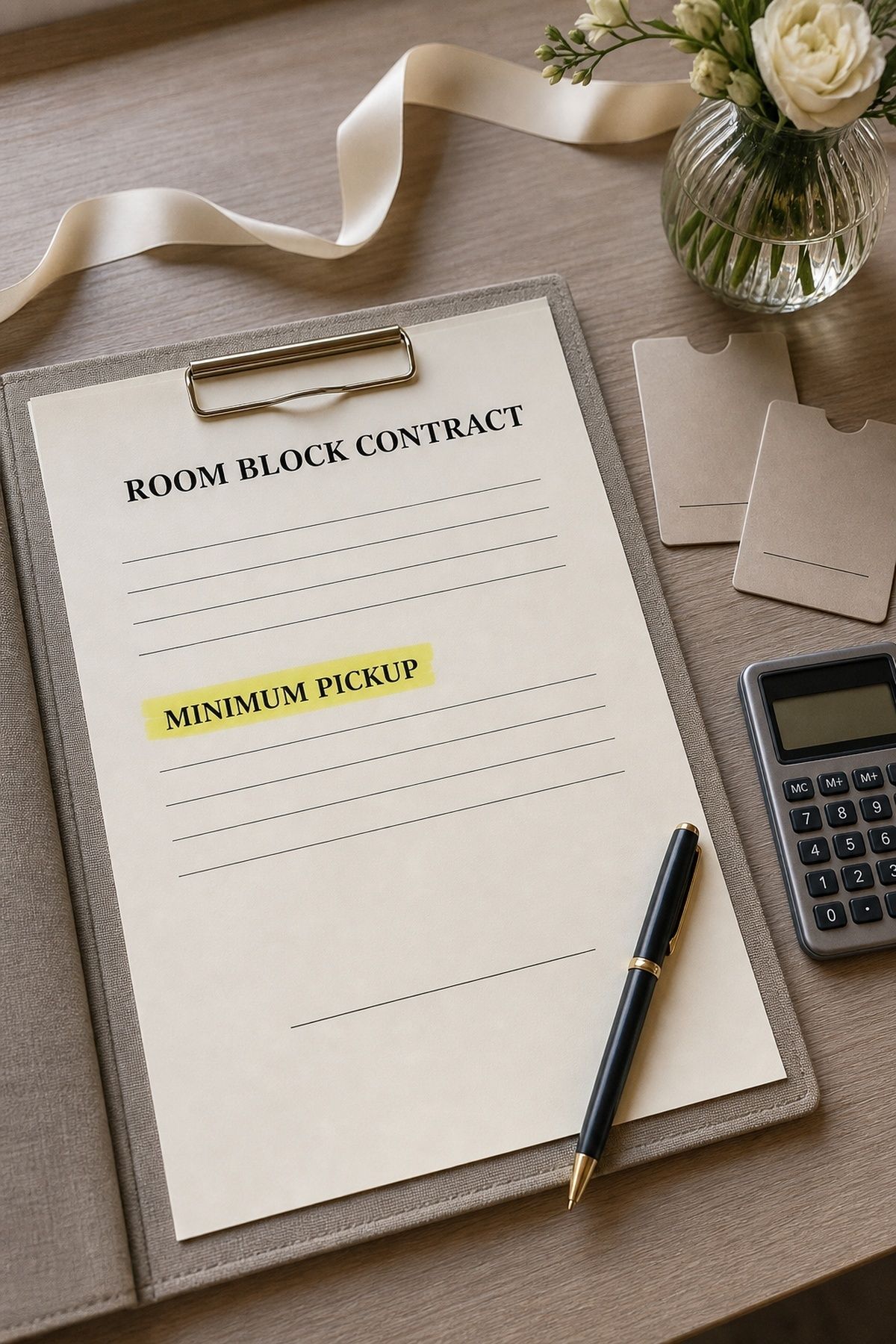
Attrition is the part of a contracted block that says how many rooms your guests must book, usually counted as room nights, and what you owe if they fall short. A lot of hotels ask for something like 80 percent pickup, and the money owed is often the room rate times the missing nights. That highlighted “minimum pickup” line on the contract is the most expensive sentence in the whole packet.
From my banquet years, this is the same logic as a catering guarantee. The kitchen orders and staffs for the number you sign, and you pay for that number whether fifty people show up or forty. Hotels think about rooms exactly the same way.
Before you sign, ask whether rooms booked outside your link count toward pickup, whether cancellations reduce your number, and whether the hotel will resell unused rooms and credit you. Ask for a lower threshold, too. You can always try for 70 percent, and the worst they can say is no.
Which Mistakes Make Guests Pay More?
The guest-side mistakes are quieter. Nobody sends you a bill, but people end up paying regular rates, parking fees and taxis they didn’t plan for, and they remember it.
5. Missing The Cutoff Date
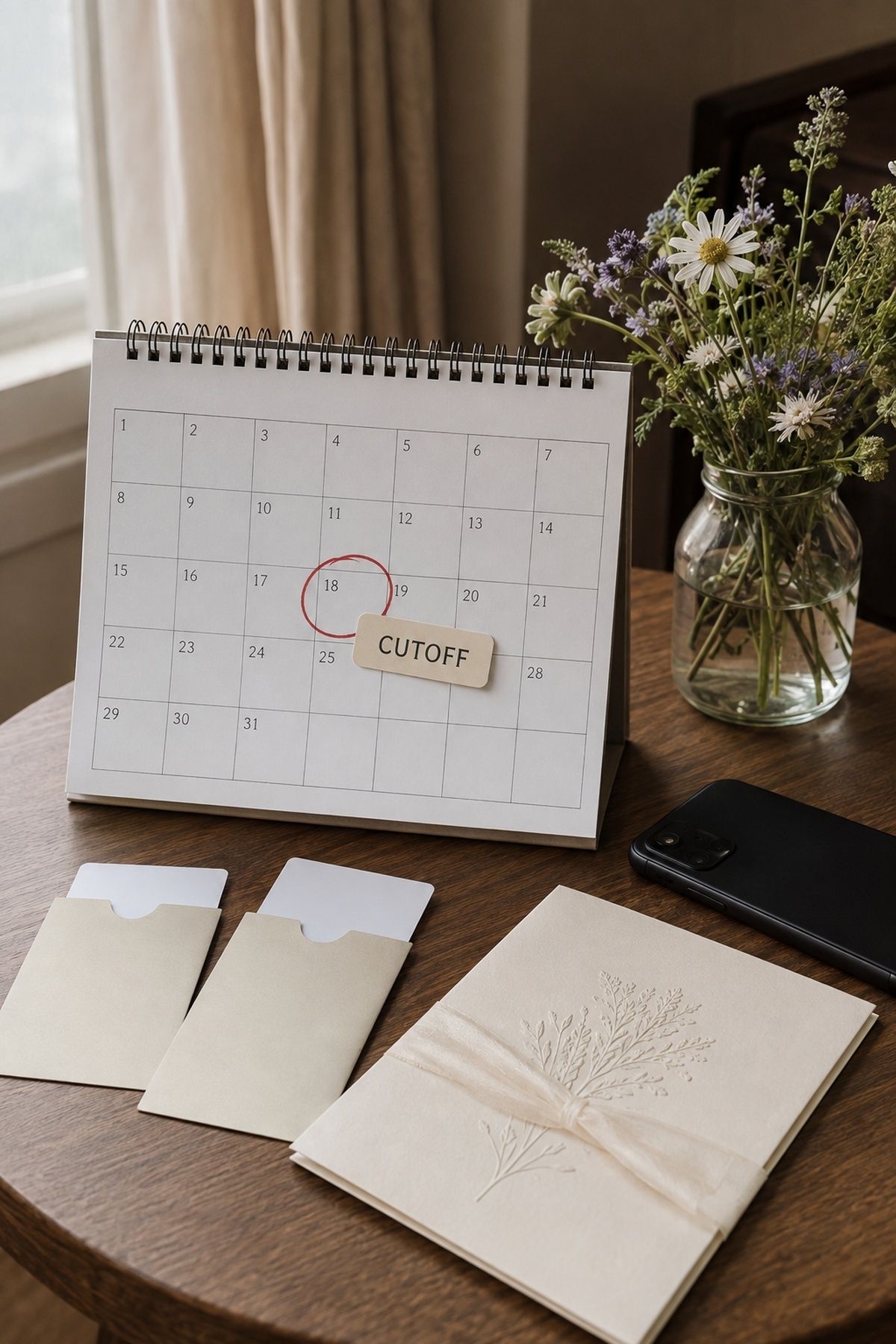
The cutoff date is the last day guests can book at your group rate, and it’s usually around a month before the wedding. After that, unbooked rooms go back into the hotel’s normal inventory at whatever the hotel feels like charging that weekend, which during wedding season can be a LOT more.
The trouble is that guests don’t think about hotels a month out, they think about them the week before, after they’ve finally found shoes, so one red circle in your own calendar won’t save them. Put the cutoff date in three places: the travel page of your wedding website, the details card or invitation insert, and one friendly reminder message about two weeks before the deadline. For grandparents and anyone who doesn’t do websites, a phone call works better than all three combined. And if pickup looks slow, ask the hotel before the cutoff whether they’ll extend it a week, because after the date there’s nothing left to extend.
6. Comparing Only The Nightly Rate
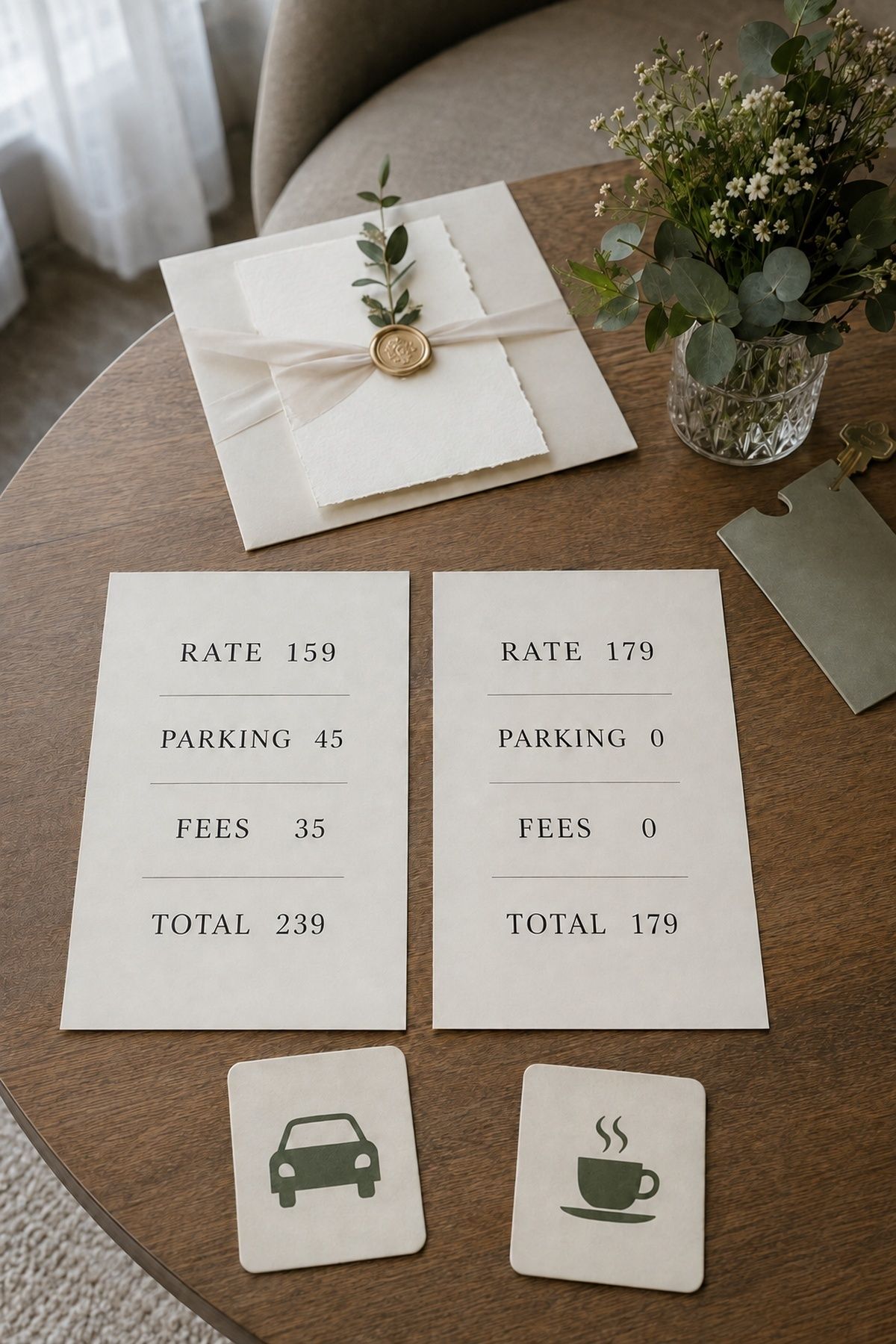
The cheapest rate on the hotel’s email is very often not the cheapest stay. A 159 dollar room with 45 dollars of parking and a 35 dollar resort fee costs a guest 239 dollars a night, and the 179 dollar room down the road with free parking and breakfast suddenly looks like the bargain.
So before you announce anything, ask each hotel for the all-in cost of one night for one couple with a car: rate, taxes, resort or destination fee, parking and breakfast. Then add how guests get to the venue and back. If one option needs a 40 dollar rideshare each way after the reception, that’s part of the price too, whether it shows up on the hotel bill or not, and your guests are already spending plenty to celebrate you.
7. Booking Too Late For A Popular Wedding Weekend
Waiting is how small weddings end up with the hotel nobody wanted. Peak wedding months, graduation weekends, college football Saturdays, festivals, conferences and holiday weekends all fill hotels faster than couples expect, and a town that looks quiet on a Tuesday in February can be completely sold out on your Saturday in June.
A good rule of thumb is to start asking for hotel options about nine to twelve months out for peak season or a busy city, and six to nine months for off-peak dates. You don’t need RSVPs yet. You only need a firm venue, a date and a rough idea of how many people are traveling.
Contact three or four hotels at once and compare their offers side by side. When a sales manager knows you’re shopping, the rate and the terms tend to get friendlier (funny how that works).
8. Giving Guests A Link But Not Enough Booking Details
A booking link alone breaks easily. It expires, it opens to the wrong dates, it doesn’t work on an older phone, or the guest prefers to call, gets someone at the front desk who has never heard of the Johnson-Reyes wedding and hangs up thinking the block is gone.
Write your travel section as if the link will fail:
- Hotel name, address and direct phone number
- The exact group name the hotel uses, plus the booking code
- Which nights the rate covers and the price including taxes
- The cutoff date and the cancellation policy
- Parking cost and how to get to the venue
Then open the page on your own phone and try booking a room as if you were your least techy guest. If you get confused for even a second, they will too.
What Goes Wrong After the Block Goes Live?
This is the stretch where couples relax a little too early. The contract is signed and the website is up, but the block still needs a backup option, a headcount and a plan for getting everyone home.
9. Not Offering A Budget-Friendly Backup Option
One hotel never suits every guest. Some people want the official hotel because the shuttle stops there and they don’t want to think. Others need a lower price, a kitchenette for the kids, a pet-friendly room or a chain where they can use points, and if the official option feels expensive, they’ll either delay booking or scatter across town.
A second, cheaper option solves most of that. Pick one that still makes sense for the venue or the shuttle route, rather than the lowest price on a booking site twenty miles away. If it isn’t a formal block, say so clearly on the website and don’t promise a rate you haven’t confirmed. Two options are plenty. Five turns your travel page into a hotel directory and guests stop reading.
10. Forgetting To Track Who Has Actually Booked
Pickup tracking is the boring middle step that tells you everything. Without it you can’t judge your attrition risk, you don’t know who to remind before the cutoff, and you can’t tell the shuttle company or the welcome bag helper how many guests are actually staying at the hotel.
You don’t need to chase anyone hard. Ask the hotel for a list of bookings under your group name every two weeks, compare it with your RSVP list and send the few out-of-town guests who haven’t booked a short note with the link and the deadline.
11. Ignoring Transportation Between Hotel And Venue

A great rate turns into a bad night if guests can’t get back after the reception. Rural venues, small towns with two rideshare drivers, steep parking, long walks in heels and an open bar all change what “close to the venue” actually means at 11 pm.
Do the drive yourself at the times guests will travel, ideally on the same weekday evening. Check where a shuttle can pull up, how long the loop takes and whether rideshares even exist out there after dark. A shuttle sign by the hotel entrance and a printed pickup time in every welcome bag save a surprising amount of standing around in a parking lot.
If you’re booking a van, give the company your hotel passenger estimate from the pickup report, not your full guest count. For the next step, see day of coordinator mistakes.
12. A Hotel Block Check Before You Share It With Guests
Before the block goes public, do one last pass. Confirm the block type, the room count, any attrition terms, the cutoff date, the full price per night, the booking code, the group name and the transportation plan, and make sure the website and the invitation insert say the same thing. Browse Wedding Mistakes to Avoid for the other posts in this group.
Then hand your phone to someone who hasn’t been part of the planning, like a coworker or a neighbor, and ask them to find out where to stay and how to book. If they can do it in under a minute, you’re done. If they ask you even one question, that question is the gap, and every guest will ask it too, by text, the week of the wedding. For a smaller guest list, browse small wedding planning mistakes.
What Happens If You Don’t Fill Your Wedding Room Block?
With a courtesy block, nothing happens to you: the unbooked rooms go back to the hotel at the cutoff date and guests who book late simply pay the regular rate. With a contracted block, the hotel compares the room nights your guests booked against the minimum in your contract and bills you for the difference, sometimes at the full group rate.
There’s often room to soften that. Many hotels will credit you for rooms they manage to resell, and some count guests who booked outside the link if you can show their names. Ask about both before the bill arrives, not after.
How Many Hotel Rooms Should You Block for a Small Wedding?
Block rooms for roughly half the number of people traveling in, then check that against who will use the official hotel. For a small wedding, that often lands somewhere between five and fifteen rooms, which is courtesy-block territory at most hotels. If you’re unsure, start low and ask to add rooms later. Hotels say yes to more business far more easily than they say yes to forgiving an attrition fee.
FAQ
These answers cover the wedding hotel block mistakes couples most often run into once guests start making travel plans. If you like this, browse wedding transportation mistakes next.
What is the difference between a courtesy block and a contracted block?
A courtesy block holds rooms at a group rate and releases the unbooked ones at the cutoff date without charging you. A contracted block usually offers a better rate or more rooms, but you agree to a minimum pickup and pay if guests book less.
When should you set up a hotel block for a wedding?
Start about nine to twelve months out for peak season, busy cities or holiday weekends, and six to nine months out for quieter dates.
When is the cutoff date for a wedding hotel block?
Most hotels set it around 30 days before the wedding. After that, unbooked rooms return to regular inventory and the group rate usually disappears, so remind guests about two weeks before.
Do rooms booked outside the block count?
Sometimes. Some hotels will count guests who booked on their own if you send names and dates, but many won’t unless your contract says so. Ask for that wording before you sign a contracted block.
Should you pay for guests’ hotel rooms?
No, guests normally pay for their own rooms. Couples often cover rooms for parents, grandparents or the wedding party if the budget allows, but the block itself is a discount, not a gift.
Key Takeaways
- A courtesy block is the safer choice for most small weddings.
- Count rooms by household, then start low and add later.
- Compare the full nightly price with parking and fees included.
- Put the cutoff date on the website, the insert and one reminder message.
If You Only Do One Thing, Ask Whether It’s Courtesy or Contracted
If you only do one thing after reading this, email every hotel on your list and ask in writing whether the block is courtesy or contracted and what you owe for unbooked rooms. That single answer decides whether the rest of this post is about saving guests a few dollars or saving yourself a four-figure bill, and it takes about two minutes to send.
Last update on 2026-11-29 / Affiliate links / Images from Amazon Product Advertising API