

Wedding ceremony mistakes distract from the shared moment when sound, cues, guest comfort, personal meaning, or legal details are left unclear. The safest ceremony plan is a simple, practiced one where everyone knows where to stand, when to move, how guests will hear, and who is carrying the vows, rings, license, and final cues.
The ceremony is the part of the wedding that everything else gathers around. It may last twenty minutes, but it holds the promises, the glances, the music, the hands, the witnesses, and the first deep breath after so much planning. When it feels steady, the rest of the day starts softer.
Most ceremony stress does not come from wanting too little or too much. It comes from assuming a meaningful moment will naturally organize itself. A small wedding makes that assumption even riskier because every pause, muffled vow, sun-struck seat, missed music cue, and uncertain reader feels close to the couple and the guests.
Recommended Wedding Products


You Might Also Like These Blog Posts
- Unplugged Ceremony Mistakes That Make The Phone Request Feel Awkward
- Micro Wedding Ceremony Ideas With Real Heart
- Outdoor Winter Wedding Ceremony Ideas for Beautiful Vows Without Frozen Guests
- Wedding Rehearsal Mistakes That Make The Ceremony Feel Unsteady
- Small Wedding Ceremony Venues For Vows That Feel Close
- Summer Wedding Ceremony Decor for Vows in the Shade
Wedding Ceremony Mistakes That Pull Attention Away From the Promise
A ceremony does not need to be elaborate to feel complete. It needs a clear emotional center and enough structure for people to relax. The couple should not be wondering whether the music will start, whether the reader knows the cue, whether Grandma has a shaded seat, or whether the officiant has the license after the kiss.
That is why wedding ceremony planning mistakes deserve attention early. The most beautiful ceremony details are the ones that disappear into the moment because the practical pieces have already been handled. Sound, seating, timing, legal paperwork, and cue practice are not unromantic. They are how the room becomes calm enough for everyone to notice what is actually happening.
Think of the ceremony plan as emotional protection, not performance management. The goal is not to script every breath. It is to decide who carries responsibility for the pieces that interrupt presence when they are forgotten: the first cue, the microphone, the reserved row, the vow book, the reader copy, the license, and the signal that moves everyone into celebration.
Skipping A Ceremony Rehearsal Or Walkthrough
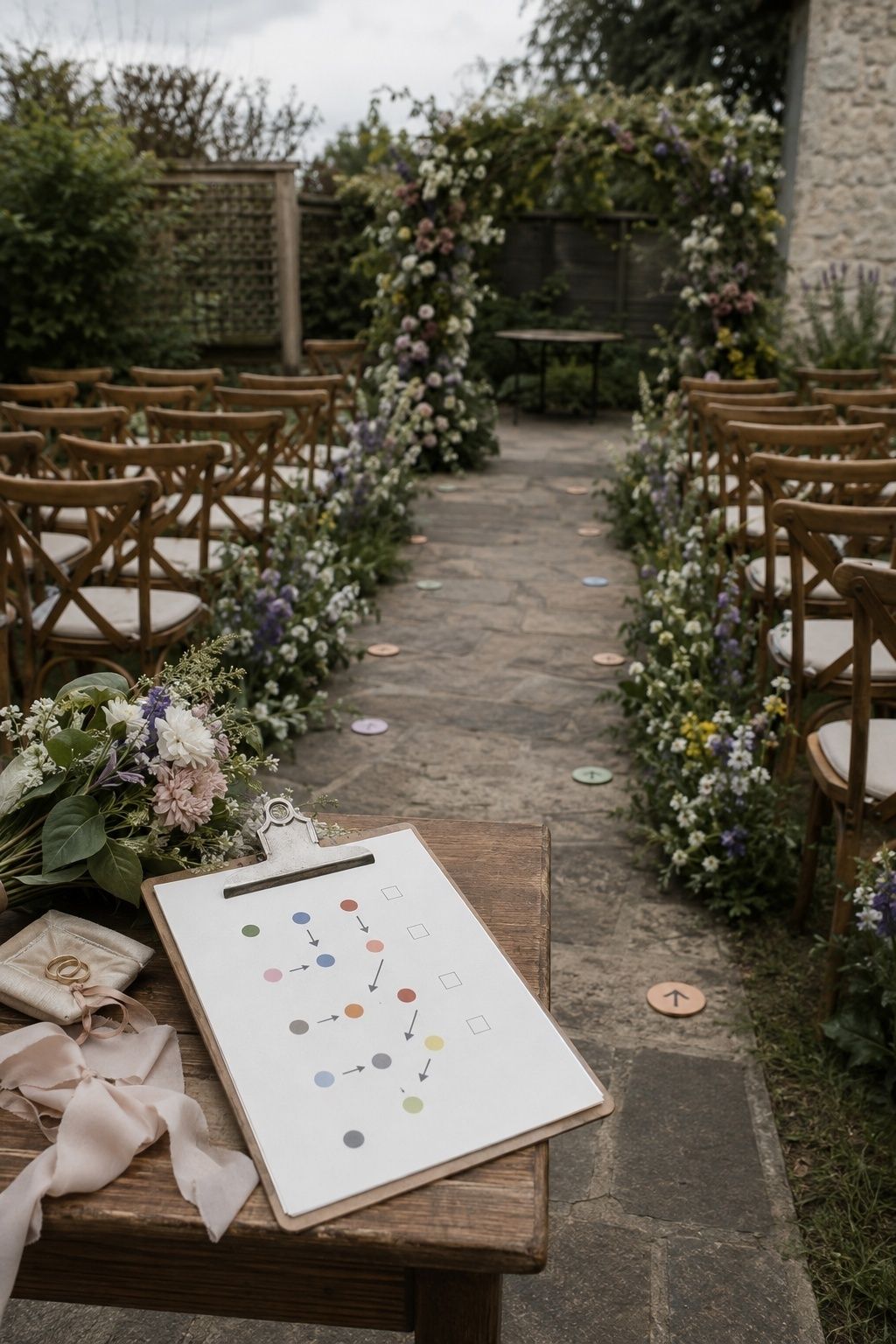
A rehearsal does not have to feel formal. Even ten quiet minutes in the ceremony space settles the most important movements: who enters first, where each person pauses, how rings travel, when music changes, where readers stand, and how the couple exits.
Without that walkthrough, people improvise while everyone is watching. Small ceremonies make the improvisation feel bigger because there is less crowd noise to hide uncertainty. Practice the transitions once, speak the cues aloud, and assign one calm person to answer last-minute questions before guests arrive.
Keep the walkthrough focused on the handful of moments that need shared timing. Rehearse the entrance, the handoff of any bouquet or rings, the movement of readers, the recessional, and the paperwork handoff after the ceremony. A short, confident wedding ceremony rehearsal prevents people from carrying private uncertainty down the aisle.
Letting Guests Stand Around Without Clear Instructions
Guests want to do the right thing, but they need simple signals. If nobody knows where to sit, when to stop chatting, whether a row is reserved, or where to place strollers and coats, the ceremony begins with tiny pockets of confusion.
Give guests the essentials before the processional. A welcome sign, program detail, usher, or brief announcement clarifies seating, phone expectations, and timing. The point is not to choreograph the guests. It is to remove the awkward guessing so they arrive fully and warmly.
Reserved seating deserves the same clarity. Mark family rows before guests arrive, tell ushers which guests should be seated there, and leave enough open seats so late arrivals do not hover at the aisle. Wedding ceremony seating mistakes often begin as tiny etiquette gaps and end as visible discomfort right before the music starts.
Forgetting Microphones, Speaker Placement, Wind, And Sound Checks
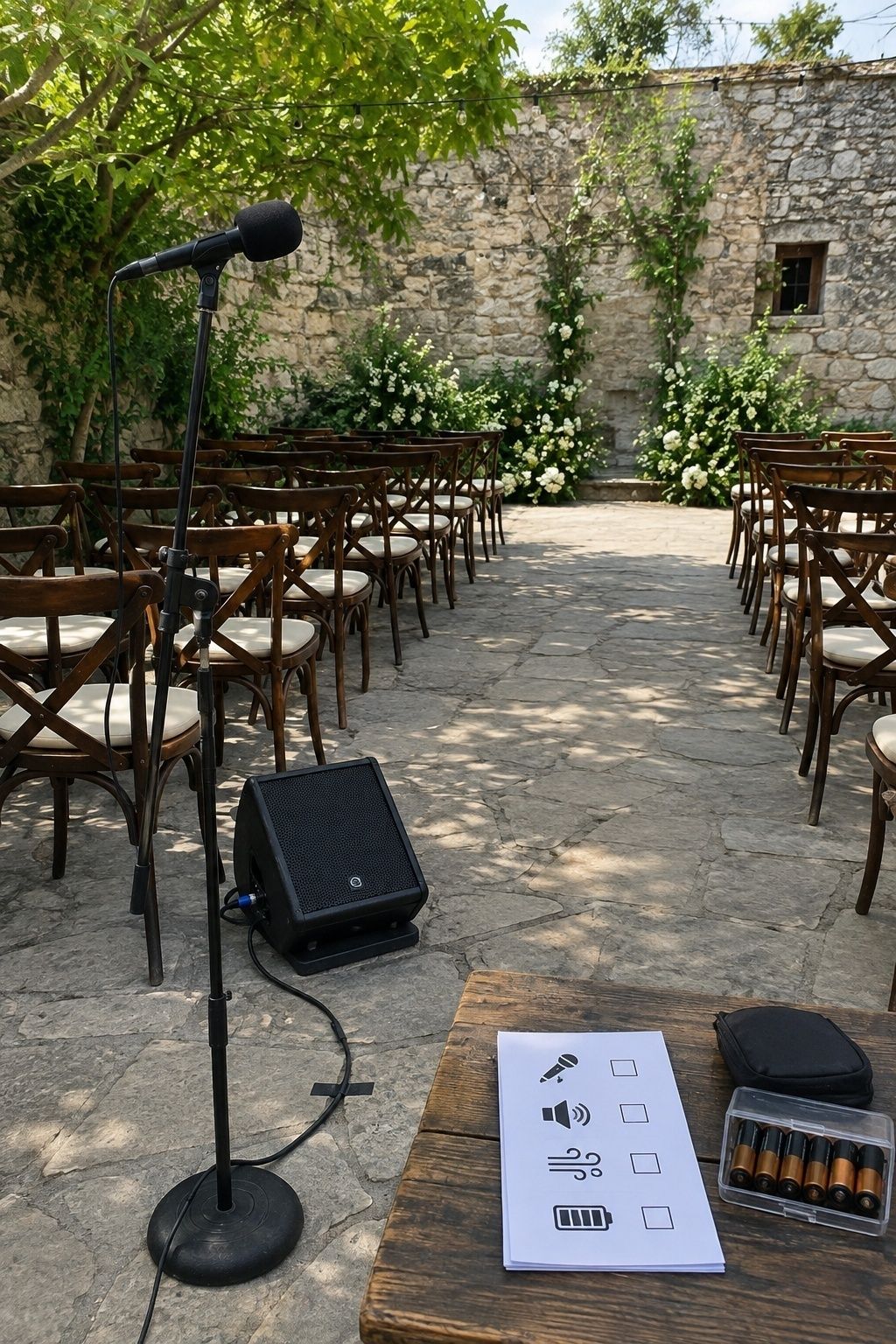
Wedding ceremony audio mistakes are heartbreaking because guests may be present and still miss the vows. Outdoor settings, fountains, traffic, wind, waves, thick gardens, and high ceilings swallow voices faster than couples expect.
Test the microphone where the ceremony will happen, not in a hallway or empty prep room. Have someone stand in the back row and listen to vows, readings, music, and the officiant’s welcome. If the wedding is outdoors, check batteries, wind covers, speaker direction, and backup options before chairs are filled.
For intimate weddings, do not assume a smaller guest count means sound matters less. A quiet garden, private dining room, or courthouse courtyard may still have traffic, clinking glassware, air conditioning, or wind. The couple should be able to speak naturally while the farthest guest hears the words without leaning forward.
Choosing A Ceremony Spot With Poor Sightlines, Sun, Or Seating
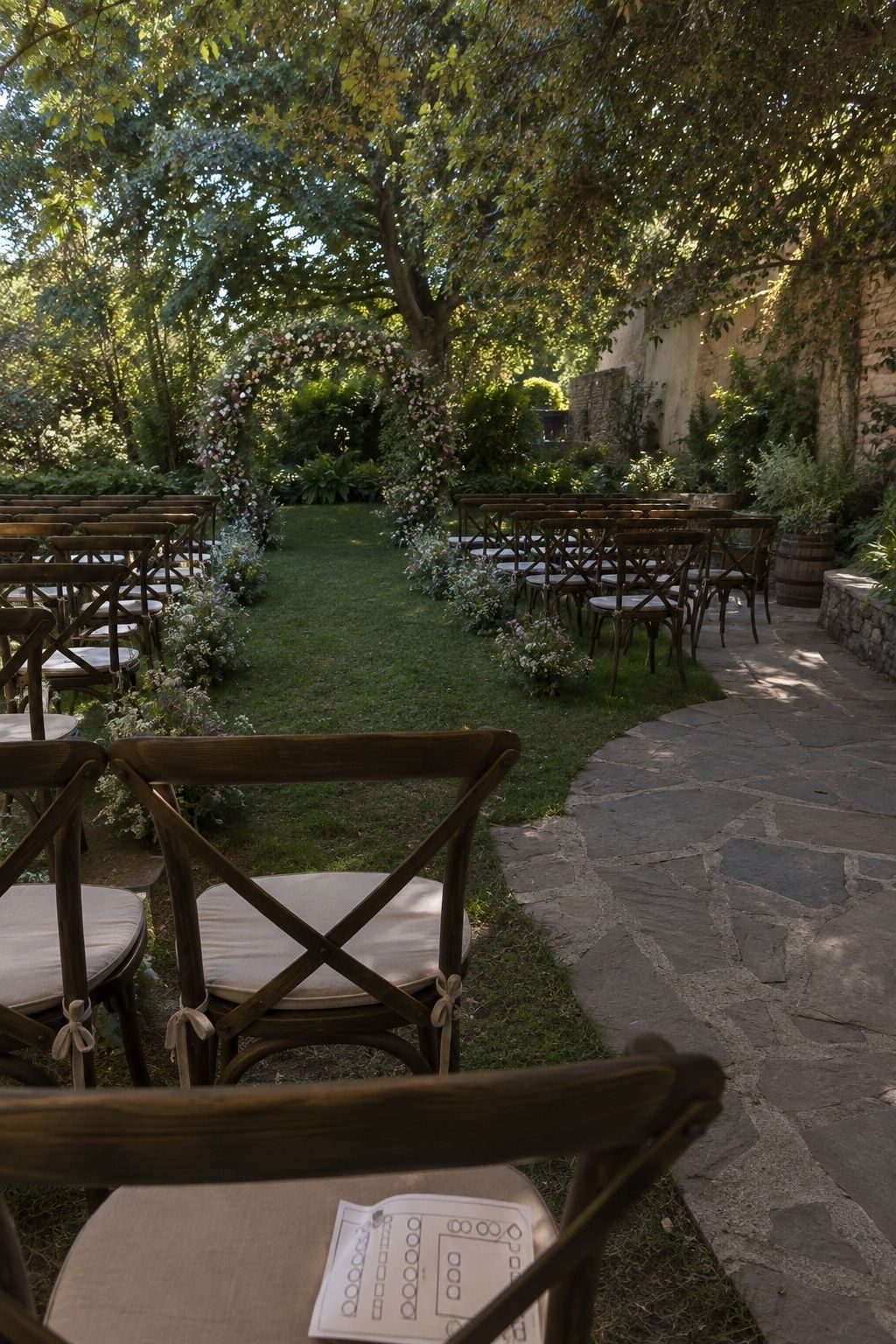
A beautiful ceremony backdrop still has to work for real people. If faces disappear from view, if the couple is squinting into direct sun, if older relatives must stand too long, or if the aisle is too narrow for movement, the space starts competing with the promise.
Visit the ceremony spot at the same time of day as the wedding if possible. Sit in the back row, check the light on the couple’s faces, notice shade, assess pathways, and confirm accessible seating. A slightly simpler location often feels more intimate when everyone sees and hears comfortably.
Leaving Processional Order And Music Cues Too Vague
Wedding processional mistakes rarely come from dramatic errors. They usually come from soft assumptions: someone starts walking before the music changes, two people enter together who expected separate cues, or the officiant begins before the last family member is seated.
Write a plain cue list for the people involved, the music lead, and the point person. Name the moment each song starts, fades, or changes. Keep the processional simple enough for everyone to remember when nerves are high and the room has gone quiet.
Asking Readers Or Officiants To Speak Without Practice
Wedding officiant mistakes and reader nerves often show up through pace, volume, name pronunciation, or uncertain page handling. A friend or relative may be deeply honored and still need preparation that makes the moment feel confident.
Ask every speaker to practice aloud before the wedding week. Confirm pronunciations, paragraph breaks, microphone distance, printed copy size, and where they stand. This protects the speaker as much as the couple, because nobody wants a meaningful reading to become a public scramble.
Forgetting Name Pronunciations, Legal Wording, Rings, Vows, Or The License
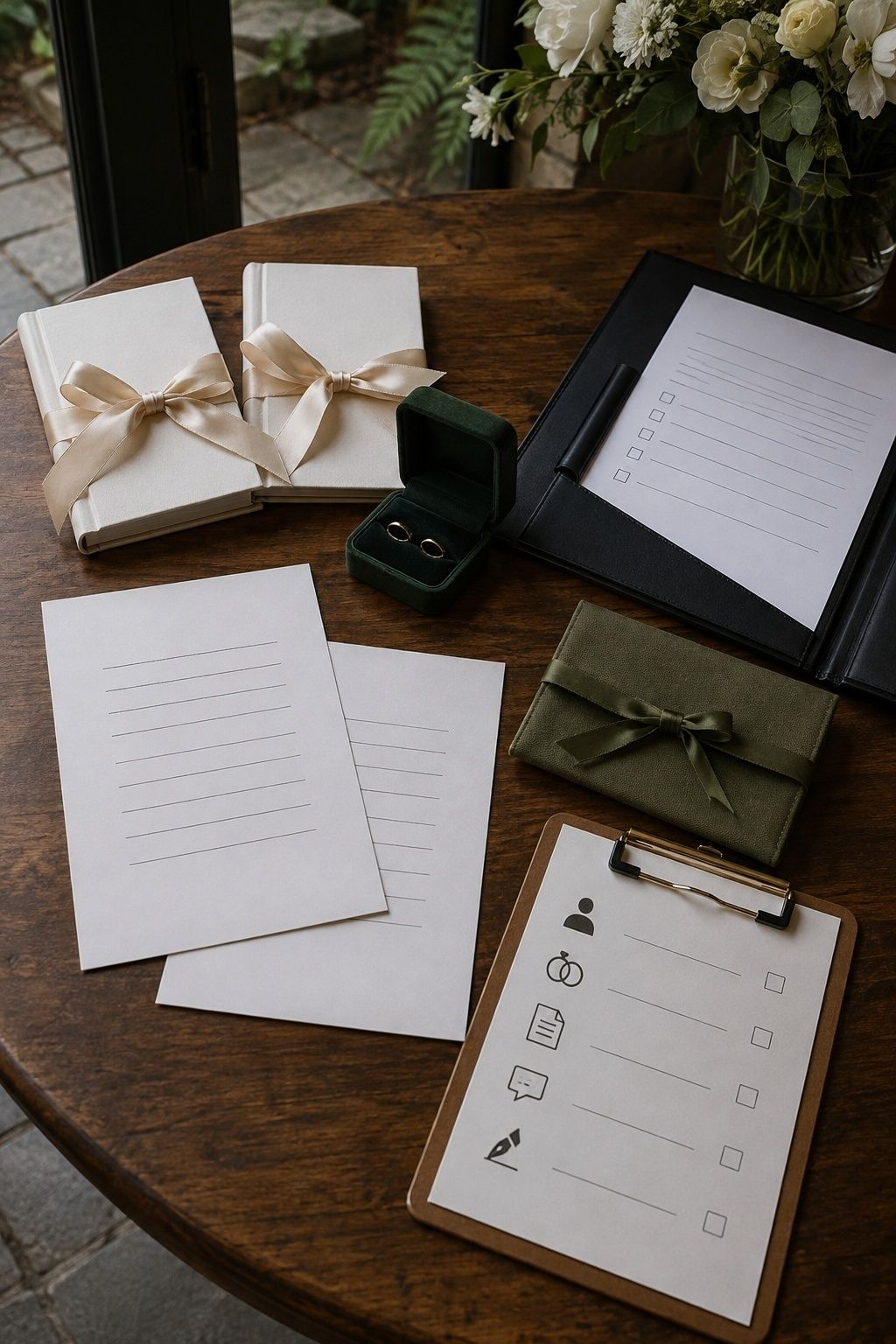
Some details are small until they are missing. Rings, vow books, printed readings, license instructions, witness needs, pronouncement language, and name pronunciations should not be floating around in separate texts and memories on the wedding morning.
Make one ceremony essentials check before the final week begins. Put rings, vows, readings, and license materials on a handoff list. Confirm who carries each item, where it waits before the ceremony, and who handles paperwork afterward so a wedding marriage license mistake does not trail the celebration home.
Wedding vows mistakes are often less about the words themselves and more about access to them. Print backup copies, place vow books somewhere reachable, and tell the officiant where the vows will be before the ceremony begins. The most personal words of the day should not depend on a phone battery or a memory under pressure.
Letting Phones Block The Aisle Or First Kiss
Unplugged ceremony mistakes happen on both sides. Some couples say nothing and then feel disappointed when phones fill the aisle. Others ask for no phones but hide the request where guests miss it until the processional has already started.
Decide what matters most: no phones at all, phones away during key moments, or a gentle request to stay seated and present. Then repeat the instruction through a sign, program, or officiant welcome. The request should feel gracious, not scolding, and clear enough that guests are not guessing during the first kiss.
Making The Ceremony Generic Instead Of Personal
A ceremony becomes generic when it says marriage words without sounding like the couple. Personal does not have to mean long, revealing, funny, or unusual. It might be a line about what the couple values, a reading drawn from their life, a private vow tone, or a welcome that names the people gathered with care.
Choose one or two places for real specificity. Ask what the ceremony should feel like: tender, joyful, reverent, grounded, playful, quiet, or family-centered. Then remove anything that sounds borrowed simply because it has appeared in other weddings.
Making The Ceremony Too Long For Weather, Guests, Or Attention
A long ceremony is not automatically more meaningful. In heat, cold, wind, direct sun, tight seating, or a room full of standing guests, attention fades because bodies are uncomfortable. Meaning needs space, but it also needs mercy.
Time the spoken portions aloud and think about the conditions. If guests will be outside, standing, holding children, or waiting before dinner, trim anything that repeats the same emotional point. A ceremony with fewer, stronger words often lands more deeply than one that tries to include every possible sentiment.
Forgetting Accessibility, Reserved Seats, Water, Shade, Or Warmth
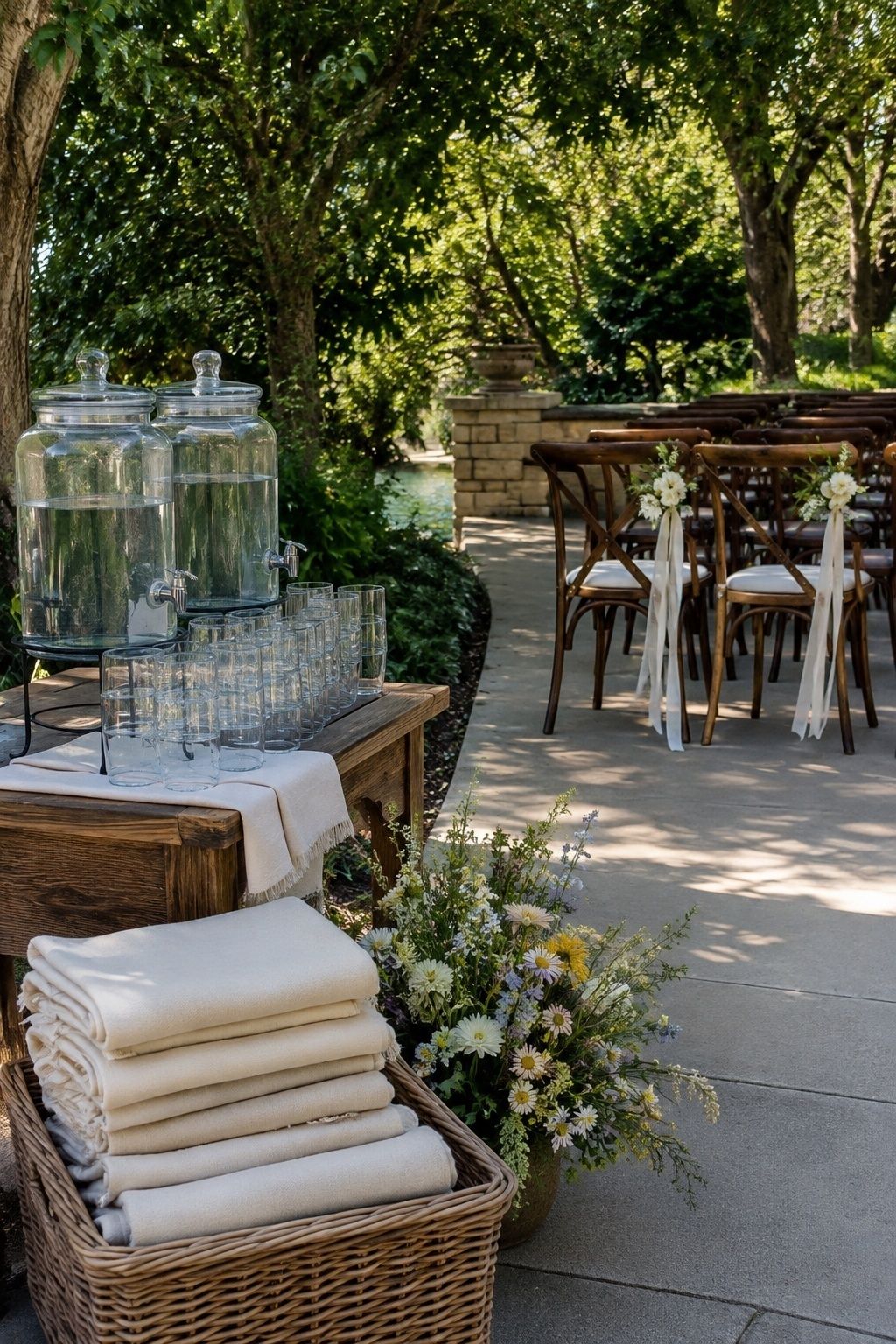
Ceremony comfort is part of hospitality. Reserved seats for close family, space for mobility aids, water before a summer ceremony, wraps during a cold evening, and shade for older guests change how cared for the room feels.
Walk through the ceremony from the guest point of view. Where do they arrive, wait, sit, hear, see, and exit? The answer will reveal simple fixes: an extra chair row, a shaded side, a shorter standing portion, a clearer path, or a point person who helps VIP guests settle before music begins.
A Final Ceremony Check Before Guests Arrive
The last check should be physical, not theoretical. Stand where the couple will stand. Look at the chairs. Test the microphone. Point to the rings. Touch the vow books. Confirm the license location. Ask the music lead to name the first cue. Make sure the officiant knows where to move after the kiss.
This final pass is not about perfection. It is about removing preventable distractions so the couple stops managing the ceremony and starts living it. Once the essentials are confirmed, the day has room to feel intimate, human, and beautifully present.
FAQ
What are common wedding ceremony mistakes?
Common wedding ceremony mistakes include skipping a walkthrough, leaving music cues vague, forgetting sound checks, choosing uncomfortable seating, giving guests unclear phone guidance, asking speakers to read without practice, and failing to confirm rings, vows, paperwork, name pronunciations, and post-ceremony license responsibility.
How do you avoid an awkward wedding ceremony?
Avoid awkwardness by practicing the main transitions, keeping the ceremony length appropriate for the setting, giving guests clear arrival and phone instructions, confirming every speaker’s cue, and making the ceremony personal in a few specific places rather than filling it with generic language.
Should you have an unplugged ceremony?
An unplugged ceremony is a good choice when you want guests fully present or want clear professional photos of the aisle, vows, and first kiss. Make the request before the ceremony begins through a sign, program, or officiant announcement so guests are not surprised mid-moment.
What ceremony details do couples forget?
Couples often forget microphone testing, reserved seating labels, printed readings, vow books, ring handoff, license location, witness needs, name pronunciations, music fade points, guest phone instructions, water or shade, and a clear plan for who collects ceremony items after everyone exits.
How do you make sure guests can see and hear the ceremony?
Check sightlines from the back row, avoid direct sun on the couple or guests, test microphones in the ceremony location, listen from several seats, angle speakers toward guests, and give readers or officiants a place to stand where faces and voices carry clearly.
What should you ask your officiant before the wedding?
Ask your officiant how they will personalize the ceremony, how long the spoken portion will be, whether they need pronunciation details, how they handle the license, where they will stand, when they will step away for photos, and what they need from the couple before the rehearsal.
How long should a wedding ceremony be?
Many ceremonies feel comfortable around fifteen to twenty-five minutes, but the right length depends on weather, seating, traditions, readings, vows, and guest comfort. If people are standing, outdoors, hot, cold, or waiting for dinner, a shorter ceremony often feels more generous.
Final Thoughts
The ceremony is not just one more item in the timeline. It is the reason everyone has gathered, and it deserves planning that protects attention instead of pulling it apart. When sound, movement, comfort, words, and essentials are cared for, wedding ceremony mistakes become much easier to avoid.
Before the aisle fills, walk the space, test the sound, time the spoken parts, confirm the rings and paperwork, and settle each responsibility before guests arrive. The ceremony feels calmer when every cue is owned and the officiant arrives prepared before the promise begins.
Last update on 2026-10-03 / Affiliate links / Images from Amazon Product Advertising API