

For a micro wedding ceremony, choose a close seating layout, clear vows, simple music cues, and one meaningful guest moment. The best micro wedding ceremony ideas make everyone feel included without overfilling the ceremony.
A small ceremony has a different kind of pressure. With 18 guests in a garden, everyone notices the pause before the vows, the way the chairs are angled, and whether the officiant feels personal. That visibility can feel intimidating, but it is also the reason micro weddings can be so moving.
Instead of asking how to make a tiny ceremony look bigger, ask how to make it feel more honest. The strongest intimate wedding ceremony ideas use the setting, the people, and the words with care so the ceremony feels warm, grounded, and unmistakably yours.

Recommended Wedding Products


You Might Also Like These Blog Posts
- Micro Wedding Reception Ideas Guests Will Actually Feel
- Micro Wedding Ideas That Feel Anything But Small
- Micro Wedding Vs Elopement: Choose The Intimate Wedding That Fits Your Heart
- Micro Wedding Guest Count: How Small Should It Feel?
- Micro Wedding Venues That Make A Small Guest List Shine
- Wedding Ceremony Mistakes That Distract From the Moment You Came For
Micro Wedding Ceremony Ideas That Make A Small Room Feel Full
Micro wedding ceremony ideas should begin with experience before aesthetics. A smaller guest list changes sound, sightlines, pacing, and emotion. You may not need a dramatic aisle, a long wedding party, or a full printed program, but you do need a ceremony that tells guests where to focus and gives the couple room to feel the moment.
Begin With The Feeling You Want In The Room
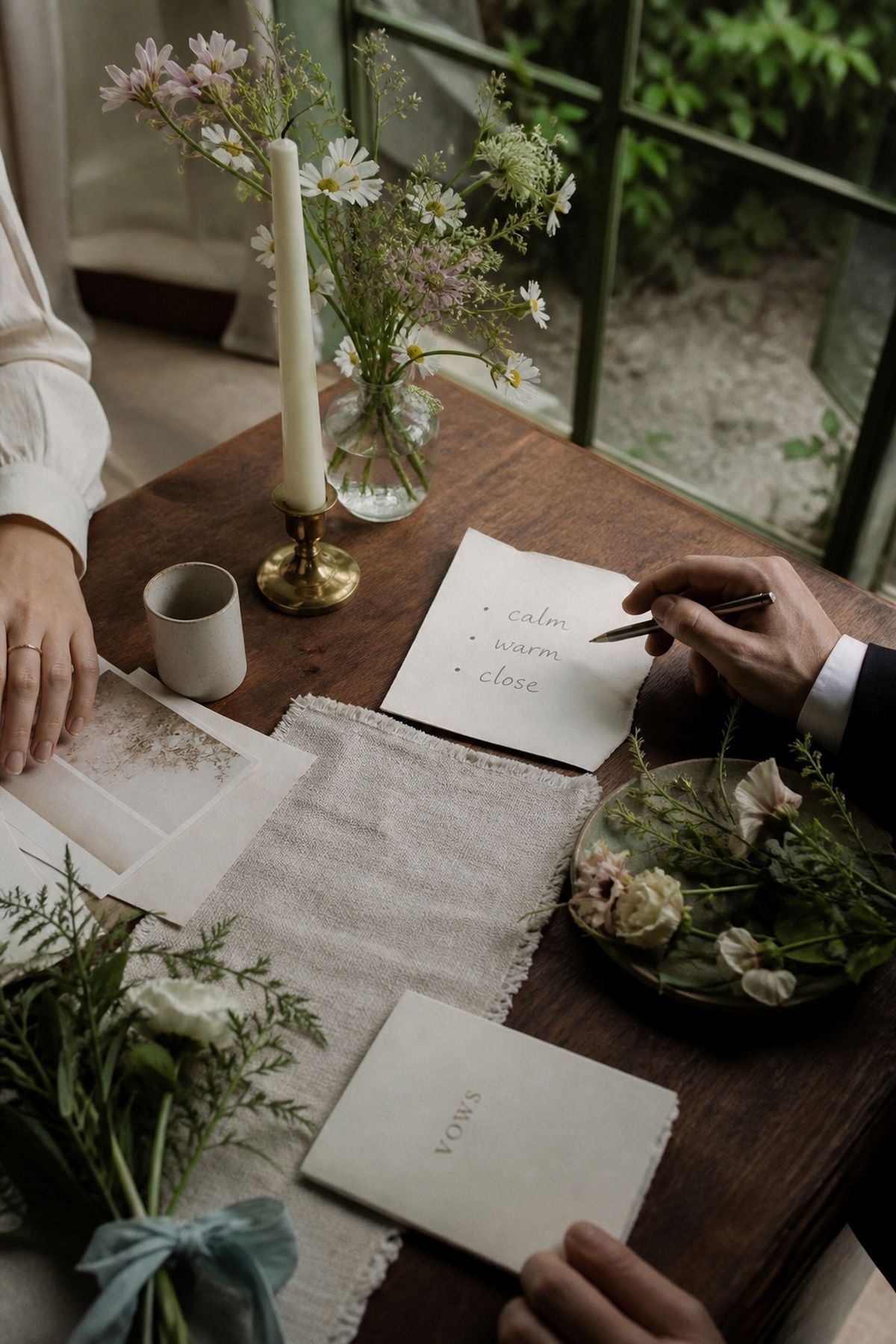
Before choosing chairs or readings, name the emotional center of the ceremony. Do you want it to feel reverent and quiet, joyful and family-centered, relaxed and garden-party warm, or formal in a soft, old-soul way? That answer will guide almost every decision that follows.
For a 20-guest ceremony, the room can turn intimate very quickly. A sentimental reading may feel tender in one setting and too exposed in a different setting. A friend officiant may feel charming if the ceremony is conversational, but less fitting if you want a sacred, polished tone. Start with feeling, then choose the pieces that protect it.
This is also where you can set boundaries. If you want a ceremony that feels calm, you do not need five speakers, a unity ritual, a full wedding party, and a long recessional. If you want it to feel celebratory, you can use brighter music, a champagne toast right after the kiss, or a group cheer before portraits. The ceremony should have a clear emotional weather.
Choose A Seating Layout That Makes Guests Feel Included
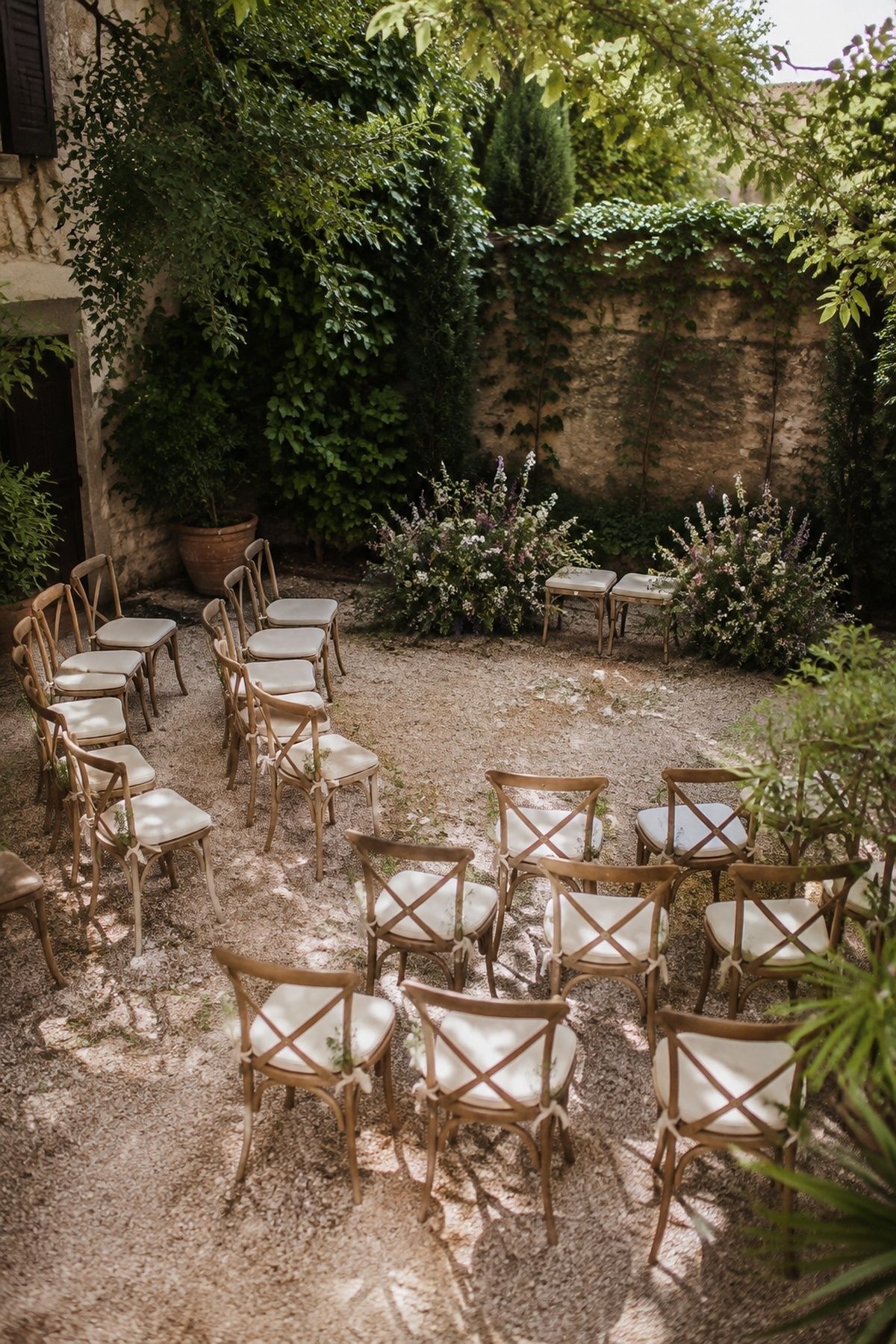
Small wedding ceremony seating ideas matter because every chair changes the way the ceremony feels. Straight rows can work beautifully, especially in a chapel, restaurant courtyard, or formal garden. Just keep the rows short so no one feels stranded behind a mostly empty aisle.
For 10 to 20 guests, consider a gentle semicircle, two curved rows, or a living-room-style layout with chairs angled toward the couple. This makes guests feel gathered around the vows rather than lined up to watch a performance. If grandparents or older guests are attending, reserve the easiest-access seats first and build the shape around comfort rather than symmetry.
For a 30- to 50-guest ceremony, keep a more recognizable aisle but tighten the footprint. Two or three shorter sections can feel more connected than one long block of chairs. If the ceremony leads into dinner, place chairs so guests can move naturally toward cocktails or the reception without creating a bottleneck. Pair the ceremony plan with a thoughtful micro wedding reception plan so the guest flow feels seamless after the vows.
Keep The Processional, But Scale It Thoughtfully
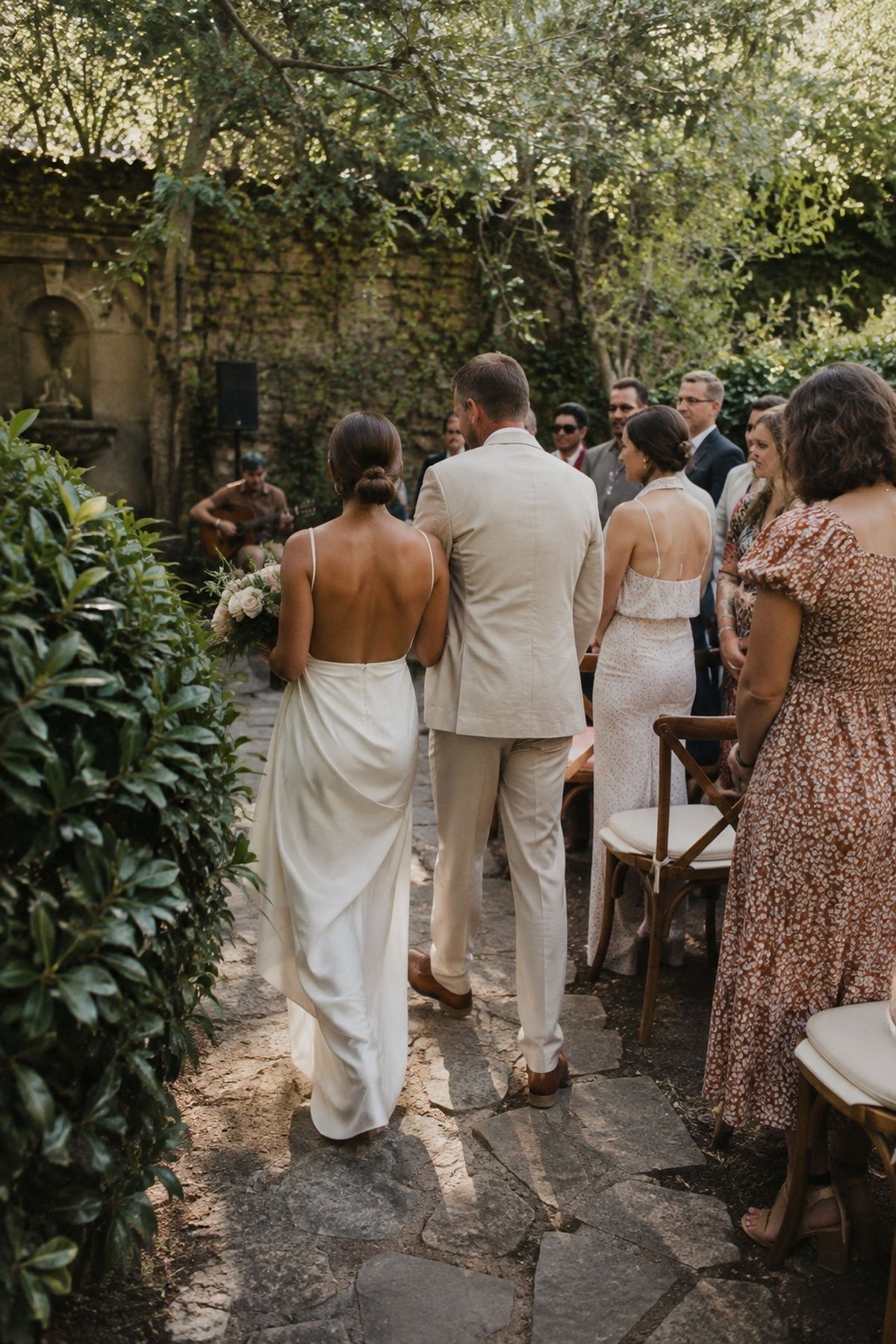
You do not need a large wedding party to have a processional. In fact, one of the simplest micro wedding ceremony layout choices is to keep the entrance but shorten the cast. The couple can enter separately, enter together, walk in with parents, or begin at the ceremony spot and let the music mark the start.
If the aisle is short, choose music with an easy opening rather than a song that needs a full minute to build. Ask the officiant to pause before beginning so the entrance can settle. For a courtyard, beach, or private dining room, a processional can be as simple as everyone standing, the couple entering from a side path, and the ceremony beginning once they take each other’s hands.
The key is confidence. A scaled processional should feel chosen, not apologetic. If you love tradition, keep it. If walking down an aisle feels strangely theatrical for your guest count, reshape it until it feels like the two of you arriving into the room together.
Make The Vows Easy To Hear And Feel

Micro wedding vows ideas should be written for closeness. Guests are near enough to hear tone, emotion, and pauses, so the vows do not need to be long to feel meaningful. A few specific promises often land better than a speech that tries to tell the whole relationship story.
If you are nervous, write vows in small vow books and practice them aloud at the pace you will actually speak. Ask your officiant to step slightly aside during private vows so the photos feel clean and the focus stays on the couple. If wind, waves, or city sound might compete with your voices, use a discreet microphone or a portable ceremony speaker. A quiet ceremony is romantic only when people can hear it.
Couples who want structure might sketch a few vow examples before drafting their own promises. The goal is not to sound like someone else’s ceremony. It is to find a shape that lets your own words feel steady when every person you love is listening.
Invite Guests Into The Ceremony Without Overloading Them
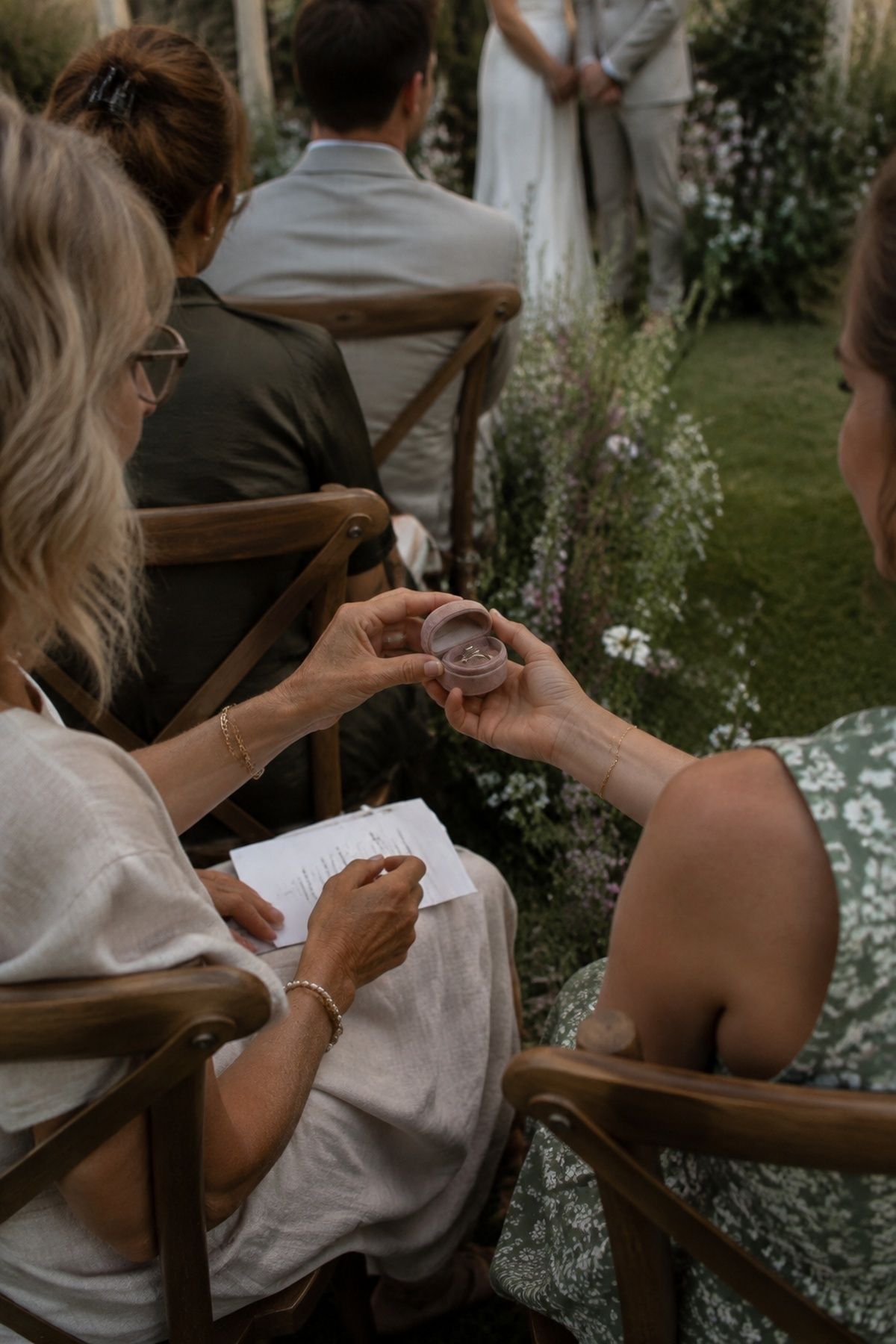
Guest involvement is one of the loveliest micro wedding ceremony ideas, but it needs restraint. When every guest is asked to do something, the ceremony can start to feel like an assignment. Choose one or two moments that invite participation without putting people on the spot.
You might ask both families to offer a brief blessing, invite guests to stand for a communal vow of support, pass the rings through a quiet ring-warming moment before the ceremony begins, or have one trusted friend read a short passage. Micro wedding ceremony readings work best when they are brief, personal, and easy to understand in the setting.
Be careful with open-mic style sharing during the ceremony itself. It can be beautiful at dinner, but during vows it may create rambling, inside jokes, or uneven emotion. If guests want to speak, give that energy a place later in the day through toasts, letters, or a guest book table.
Ceremony Ideas For 10 To 20 Guests
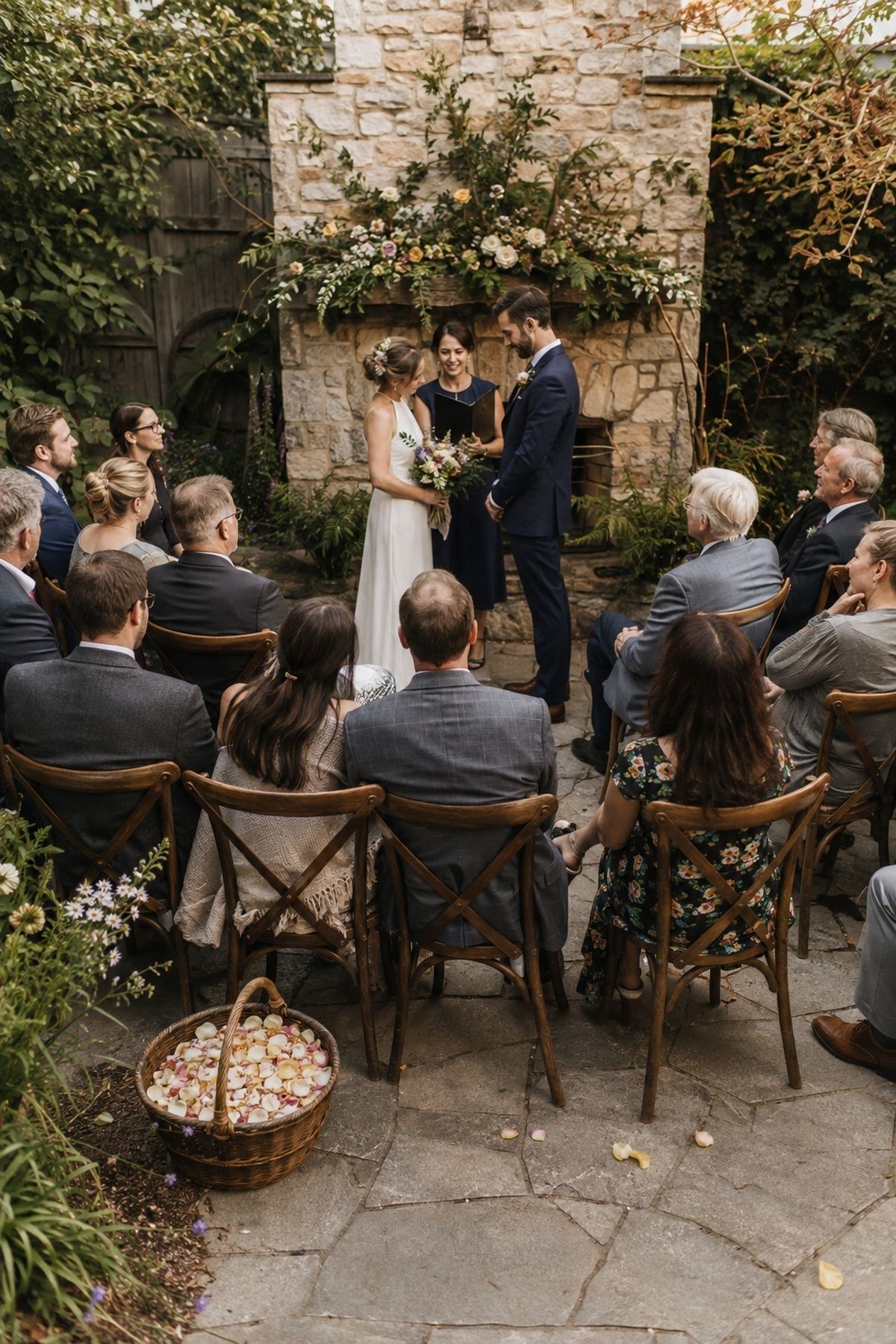
With 10 to 20 guests, the ceremony can feel almost like a family circle. Lean into that closeness. Seat everyone in one curved row, place the couple near a fireplace or garden arch, or stand on a patio with guests gathered around three sides. Avoid large empty aisles, oversized arches, and music cues that belong to a ballroom unless those details genuinely fit the setting.
A 20-guest ceremony can include a short welcome, a personal officiant story, vows, a ring exchange, a reading, and a kiss without feeling thin. You can also create a sweet transition afterward: guests toss petals, gather for one full-group photo, or follow the couple straight into a toast. For a city-hall-adjacent plan, a courthouse micro wedding can still feel considered before or after the official appointment.
Ceremony Ideas For 30 To 50 Guests
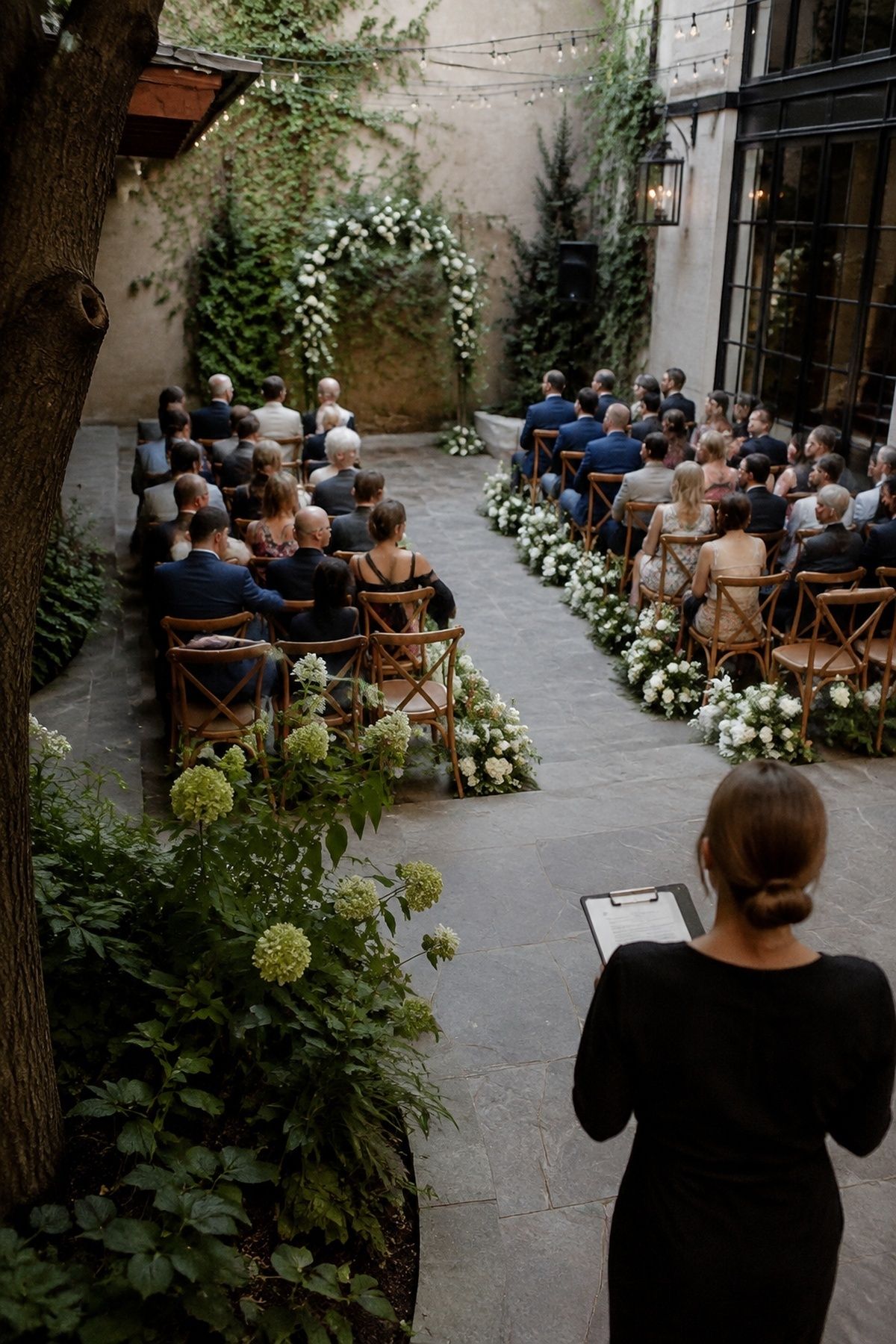
For 30 to 50 guests, you can use more traditional ceremony structure without losing intimacy. A short aisle, two reserved family rows, a small wedding party, and a floral focal point can all feel right. The trick is to keep the ceremony grounded in the people who are actually present, not in traditions borrowed from a 200-person event.
An under-50-guest ceremony also benefits from clear pacing. Use a processional order, give readers exact cues, and decide who holds the rings before the ceremony begins. If the ceremony is outdoors, assign someone to check chairs, programs, sound, and shade. These details are small, but they keep the emotion from being interrupted by avoidable confusion.
For the rest of the day, pair the ceremony with a clean micro wedding timeline. Guests should feel the movement from arrival to vows to cocktails to dinner, especially when the whole event is taking place in one compact venue.
Use The Setting As Part Of The Ceremony
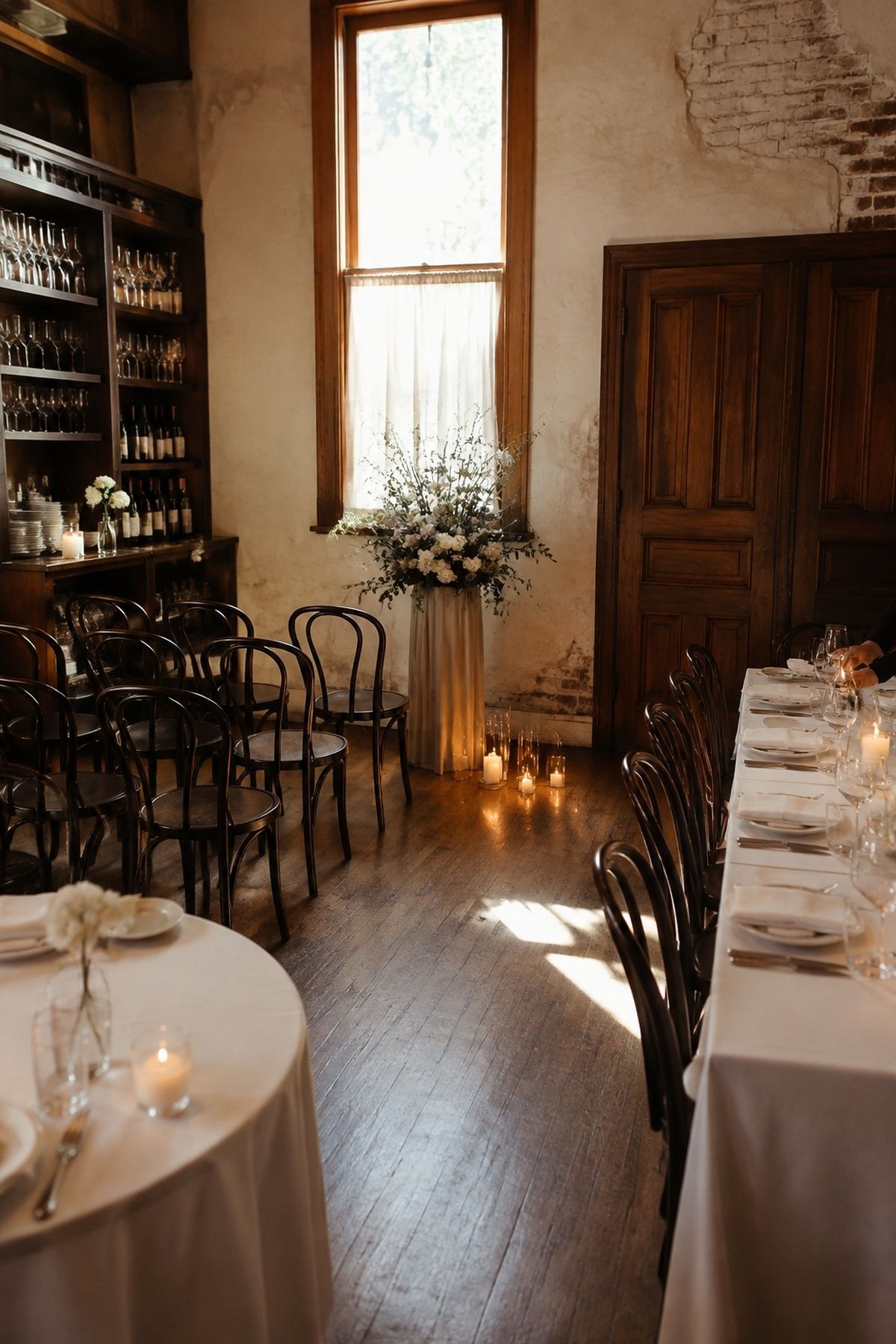
At a micro wedding, the setting carries more emotional weight because guests are not distracted by scale. A garden ceremony can use the sound of gravel, birds, and soft chairs beneath a tree. A beach ceremony can make the horizon the backdrop instead of adding too much decor. A restaurant ceremony can feel elegant with candlelight, one floral arrangement, and a quiet room reset before dinner.
Let the place inform the ceremony instead of fighting it. In a garden, read vows near the flowers or a favorite tree, then continue into a relaxed garden-party reception. On the coast, keep readings short, use a sturdy vow book, and plan the sound carefully before wind or waves steal the vows. In a home or restaurant, use lighting and seating to make the room feel ceremonial before it becomes a dinner space.
Decide Which Traditions Belong

Small ceremonies reveal whether a tradition is meaningful or just familiar. A veil lift, unity candle, parent blessing, flower petal toss, formal pronouncement, or first kiss can all belong beautifully. So can skipping them. The question is whether each element deepens the moment for the couple and the people in the room.
Micro wedding ceremony program ideas give guests context for the traditions you keep. A simple program might include the ceremony order, the names of readers, a note of remembrance, and a short explanation of a cultural or family ritual. If the ceremony is very brief, skip printed programs and place one small sign at the entrance instead.
For guests who cannot attend, decide whether technology belongs in the ceremony space. A thoughtful livestream can be a gift to faraway family, but it should be set up quietly before guests arrive so the couple is not staring at a laptop during the vows.
Mistakes To Avoid With Micro Wedding Ceremonies
The biggest mistake is treating the ceremony like a casual prelude because the guest list is small. If guests have dressed up, traveled, and gathered to witness your marriage, the ceremony deserves a clear start, a thoughtful middle, and a graceful ending.
Another mistake is overcompensating. Too many readings, too much decor, too many speeches, or too many symbolic rituals can make a small ceremony feel crowded. Watch for awkward gaps too: no music while guests arrive, no cue for when to stand, no sound plan, no reserved seats for close family, or no direction after the kiss. These are not dramatic problems, but they can pull attention away from the vows.
Finally, avoid making guests feel like spectators at a private moment they were not meant to hear. If your vows are deeply private, exchange personal vows earlier and use shorter public vows during the ceremony. Intimacy should feel welcoming, not uncomfortably exposed.
What To Skip At This Scale
Skip anything that exists only to fill space. You may not need a large wedding party entrance, aisle runners, ceremony programs for every guest, elaborate reserved-seat signage, a long unity ritual, a receiving line, or multiple ceremony musicians. You may also be able to skip a formal recessional if everyone is walking together to cocktails right afterward.
What you should not skip is orientation. Tell guests where to sit, when the ceremony begins, whether phones are welcome, what happens after the kiss, and where they go next. A small ceremony can be relaxed, but it should never feel accidental.
As you edit the ceremony, keep the rest of the celebration in view. If your vows are simple and quiet, dinner can carry more of the storytelling through toasts and conversation. If your ceremony includes family blessings, the reception can be lighter. The ceremony and celebration should feel like two parts of the same sentence, not two unrelated events.
FAQ
How Do You Make A Micro Wedding Ceremony Feel Special?
Make a micro wedding ceremony feel special by choosing a clear emotional tone, arranging guests close enough to feel included, and giving the vows real attention. Add one meaningful detail, such as a family blessing, a favorite reading, a petal toss, or a private toast after the recessional, rather than trying to stack many small gestures together.
What Should You Include In A Small Wedding Ceremony?
A small wedding ceremony should include a clear welcome, an officiant who understands the couple, vows, a ring exchange if you are using rings, any required legal wording, a pronouncement, and a graceful transition afterward. You can add music, readings, family blessings, or cultural rituals if they support the feeling of the ceremony.
What Ceremony Layout Works Best For 20 Guests?
For 20 guests, a semicircle, two curved rows, or a short aisle with angled chairs usually works best. The layout should let guests see the couple’s faces and hear the vows without feeling like they are scattered in a room built for a larger wedding.
How Do You Involve Guests In A Micro Wedding Ceremony?
Involve guests in a micro wedding ceremony with one thoughtful moment, such as a communal vow of support, a short reading from a loved one, a ring-warming ritual before the ceremony, or a family blessing. Keep participation simple and optional-feeling so guests feel honored rather than put on display.
Do You Need A Processional At A Micro Wedding?
You do not need a processional at a micro wedding, but you do need a clear beginning. You can walk down a short aisle, enter together, begin already standing with the officiant, or let music signal the start. Choose the option that feels natural for your venue and guest count.
What Mistakes Make A Small Wedding Ceremony Feel Awkward?
A small wedding ceremony can feel awkward when guests are seated too far away, no one can hear the vows, the processional is oversized for the space, readers have no cues, or the ceremony ends without direction. It can also feel uncomfortable when too many guests are asked to speak during a moment that should stay focused on the couple.
Final Thoughts
The most memorable micro wedding ceremony ideas are usually not the most elaborate. They are the choices that make the room feel close, the vows feel audible, the guests feel included, and the couple feel steady. When the ceremony has that kind of care, a small guest list does not feel like less wedding. It feels like more attention on the part that matters most.
Let the last edit be gentle: keep the pieces that make your guests lean in, soften anything that pulls focus, and let your micro wedding ceremony ideas return to the vows, the people, and the feeling you want held in the room.
Last update on 2026-10-03 / Affiliate links / Images from Amazon Product Advertising API