

The best small wedding ceremony venues make vows easy to hear, easy to witness, and emotionally close, whether you choose a chapel, garden, private dining room, courthouse room, historic home, inn, terrace, library, or quiet waterfront space.
A small ceremony gives the venue more responsibility, not less. When 18 or 35 people gather for vows, every chair angle, doorway, sound issue, lighting pocket, and awkward wait becomes easier to notice. That can feel like pressure, but it is also the beauty of a small wedding: the room can hold the moment instead of competing with it.
Use this as a vow-first venue filter before you fall for a pretty photo gallery. The right space should make the ceremony feel natural at your actual guest count, protect the privacy of the vows, and give guests a clear sense of where to arrive, sit, celebrate, and go next.
Recommended Wedding Products


You Might Also Like These Blog Posts
- Small Wedding Reception Venues Built For One Great Dinner
- Small Indoor Wedding Venues That Make The Room Feel Full
- Winter Wedding Ceremony Decor That Makes the Room Go Quiet
- Small Outdoor Wedding Venues That Work Beyond The Photos
- Small Wedding Venues For 10 Guests That Don’t Feel Empty
- Private Dining Room Wedding Plans That Feel Like A Secret Supper
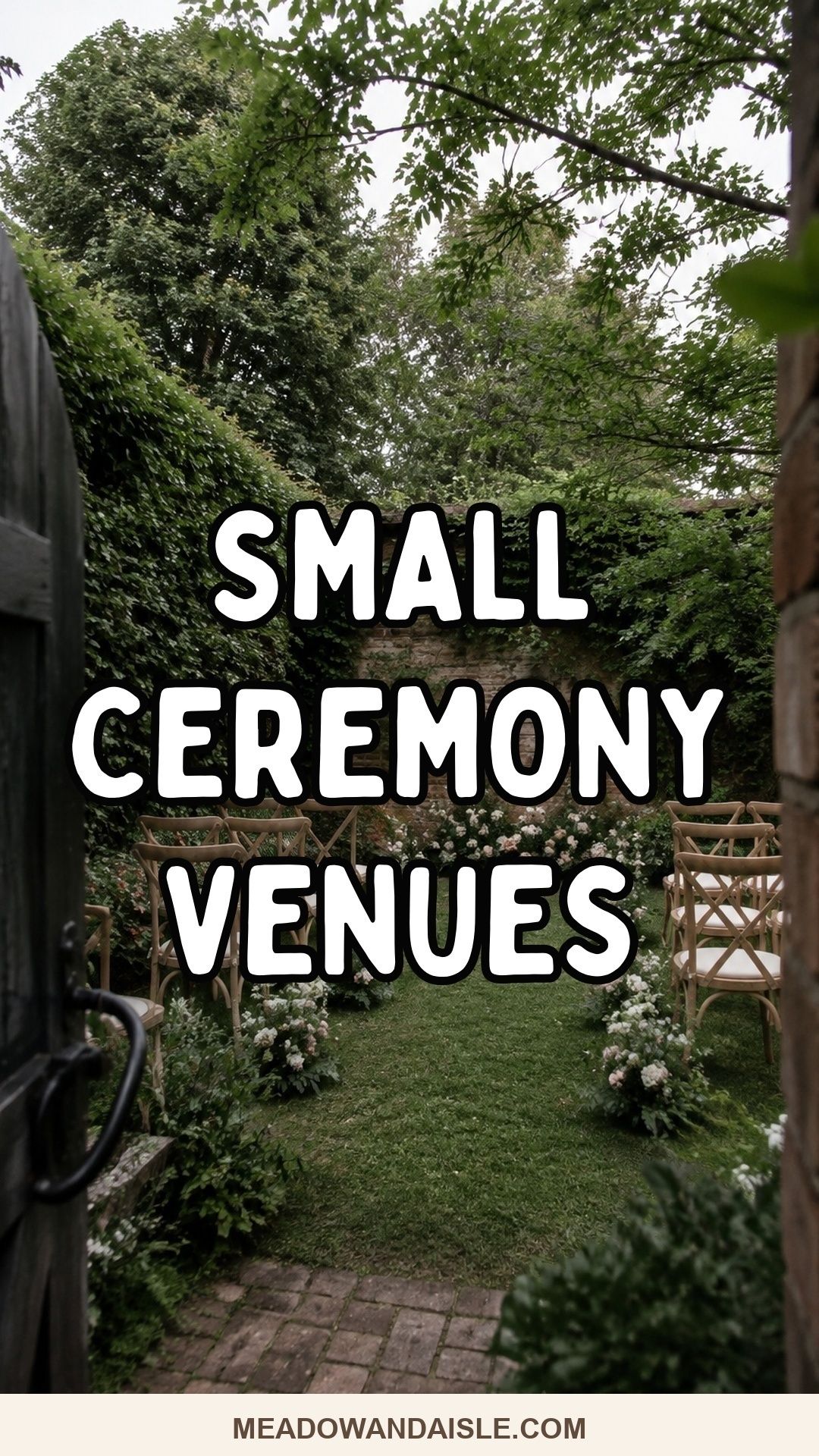
Small Wedding Ceremony Venues That Keep The Vows Close
Small wedding ceremony venues should be judged by how they hold the vows, not only by how they look in portraits. Ask where you will stand, where guests will sit, how voices carry, whether strangers can watch, what the light does at ceremony time, and whether the room feels full with your exact guest count. A beautiful venue can still be wrong if the couple feels exposed, the guests feel far away, or the officiant has to shout over traffic, music, or wind.
Start with the ceremony you want to remember. Do you picture a quiet chapel, a garden circle, a fireplace room, a city hall moment followed by dinner, a waterfront terrace, or a private room where the chairs are gathered close? Once the vow feeling is clear, the venue search becomes less about finding the most impressive space and more about finding the one that lets the promise land.
Decide Between Ceremony-Only And Ceremony Plus Reception
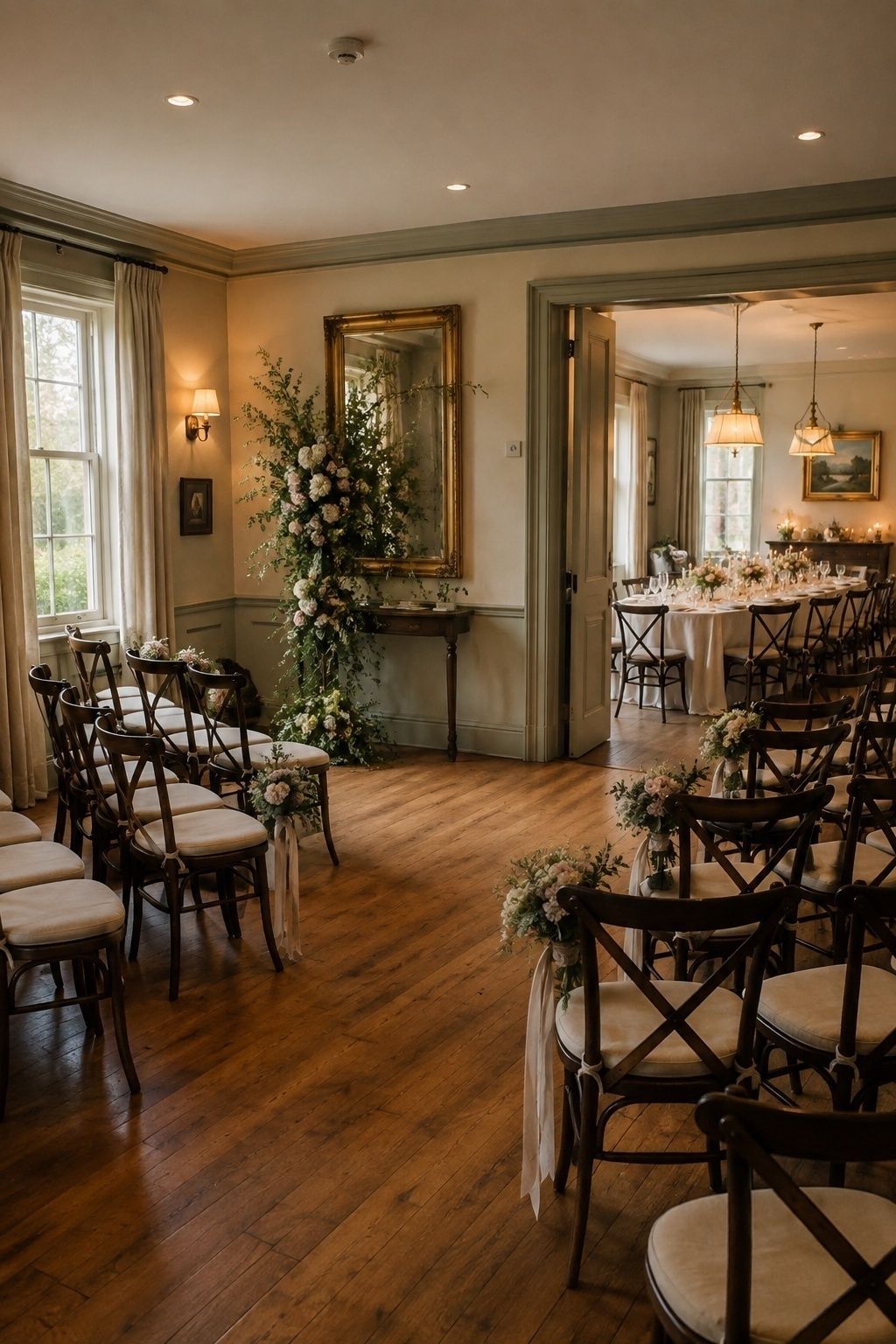
Ceremony-only venues work well when the vow moment deserves its own setting and the celebration afterward is already simple. A courthouse, chapel, garden, historic room, or waterfront overlook can be beautiful for a 20-minute ceremony if you have a clear next step: portraits, champagne, a restaurant dinner, a private dining room, or a reception at another venue. If the celebration needs its own space, these small wedding reception venues are built around dinner.
The risk is the transition. Guests need to know where to park, when to arrive, where to wait, where to go after the kiss, and how much time sits between the ceremony and the meal. If the second location is more than a short walk or easy drive away, shape your micro wedding reception ideas around a hosted handoff from vows to dinner.
Ceremony-plus-reception venues are usually calmer for guests. A small inn, restaurant, boutique hotel, garden venue, or private estate can hold the full flow: arrival, ceremony, portraits, drinks, dinner, cake, and exit. The tradeoff is that the ceremony may need to share space with dinner, which means you should ask who moves chairs, how long the room flip takes, and where guests go during the change.
Protect Privacy Before You Book
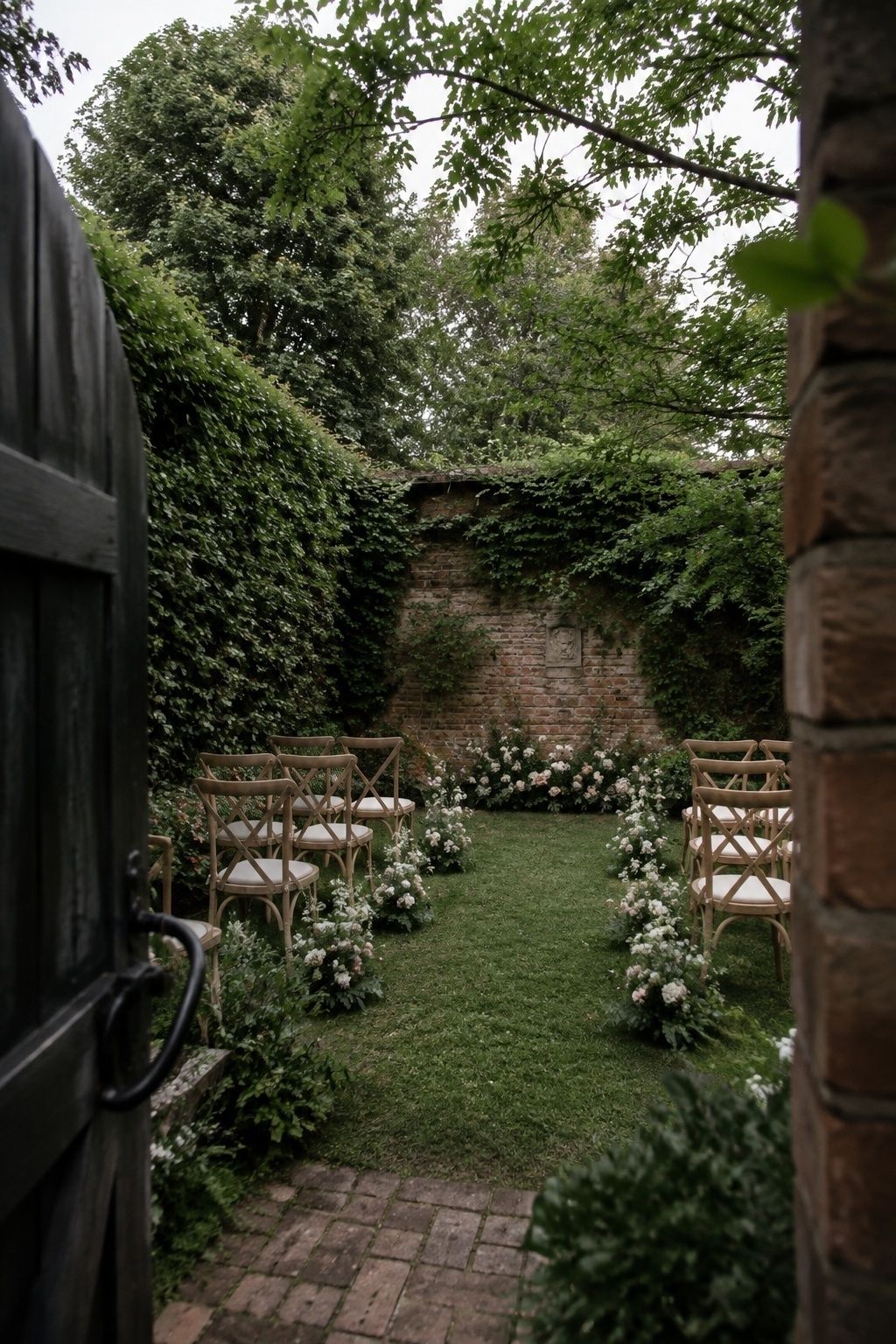
Privacy matters more in a small ceremony because the vows are usually the center of the day. Ask whether tourists, hotel guests, restaurant diners, beach visitors, or another event can see or hear the ceremony. A semi-public setting is not automatically wrong, but you should know what kind of attention might enter the moment.
Look for doors that close, garden areas with natural screening, private terraces, reserved rooms, chapel time blocks, or staff who can redirect passersby. If you love a public setting, build a little buffer into the layout. Even a short aisle, a sign, a floral marker, or a row of chairs can tell strangers that something personal is happening here.
Test Sightlines From Every Guest Seat
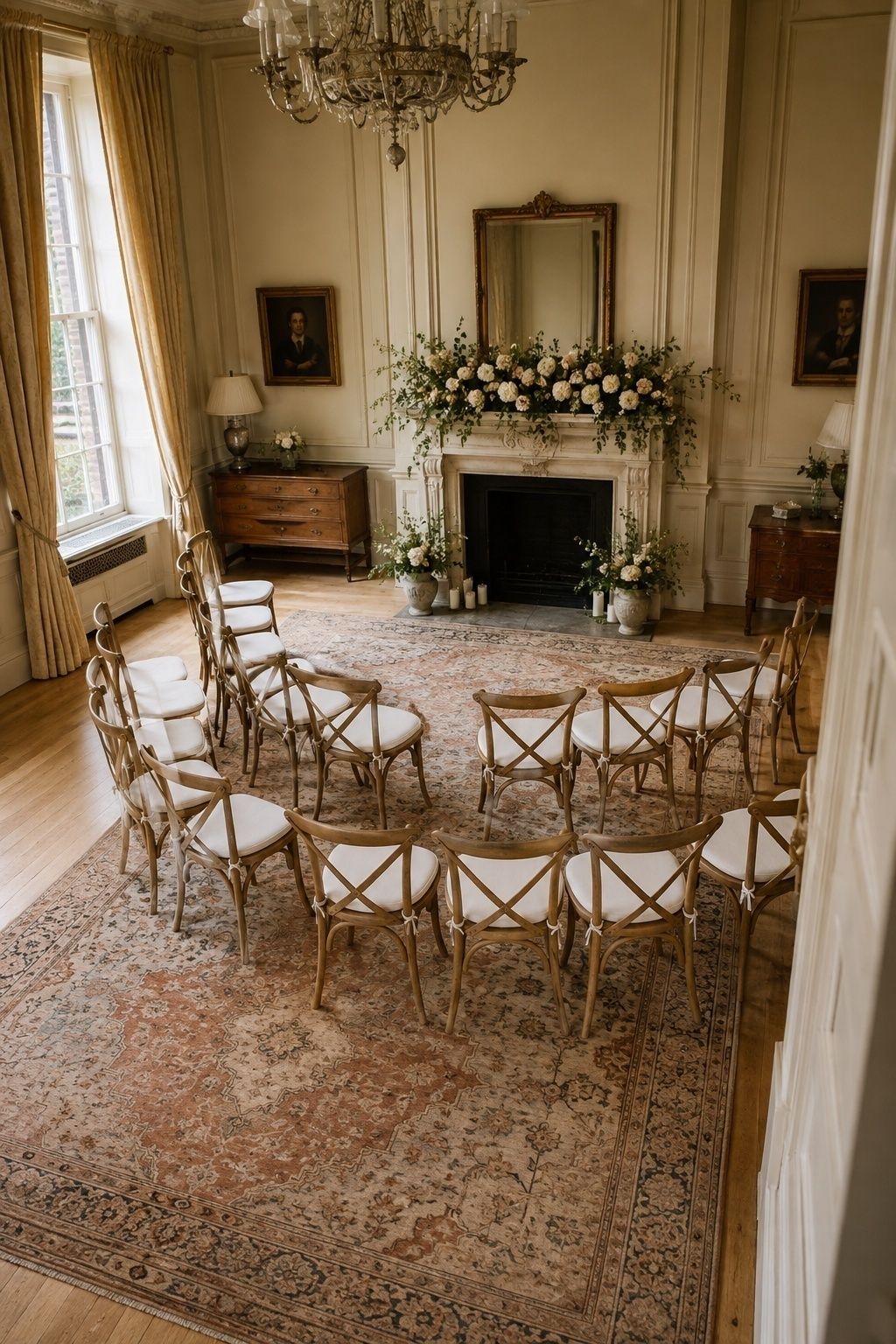
In a small wedding, no guest should feel like they are watching from the edge of the room. Stand where the ceremony would happen and ask someone to sit in the back row, the side seats, and any chairs near columns, planters, fireplaces, doors, or steps. Guests should see both faces, the officiant, and the exchange of rings without twisting around.
For 10 to 20 guests, a semicircle, two curved rows, or chairs gathered around a fireplace or garden focal point can feel warmer than a long aisle. For 30 to 50 guests, keep the aisle recognizable but shorten the rows so guests feel included. Let your micro wedding ceremony ideas shape the layout so the ritual choices and room design work together.
Make Sound A Non-Negotiable
A small guest count does not guarantee that everyone can hear. Wind, fountains, street noise, restaurant music, waves, air conditioning, high ceilings, and nervous voices can all swallow vows. During a tour, stand where guests will sit and speak at ceremony volume. If you have to project to be understood, plan a microphone or choose a quieter spot.
Ask what sound is allowed, what equipment is included, whether amplified vows are permitted outdoors, and who controls the music cue. A portable ceremony speaker can be enough for a tiny ceremony, but someone still needs to test it before guests arrive. If your vows are personal, write vows you can practice out loud in the rhythm you will actually use.
Choose Light That Flatters The Moment
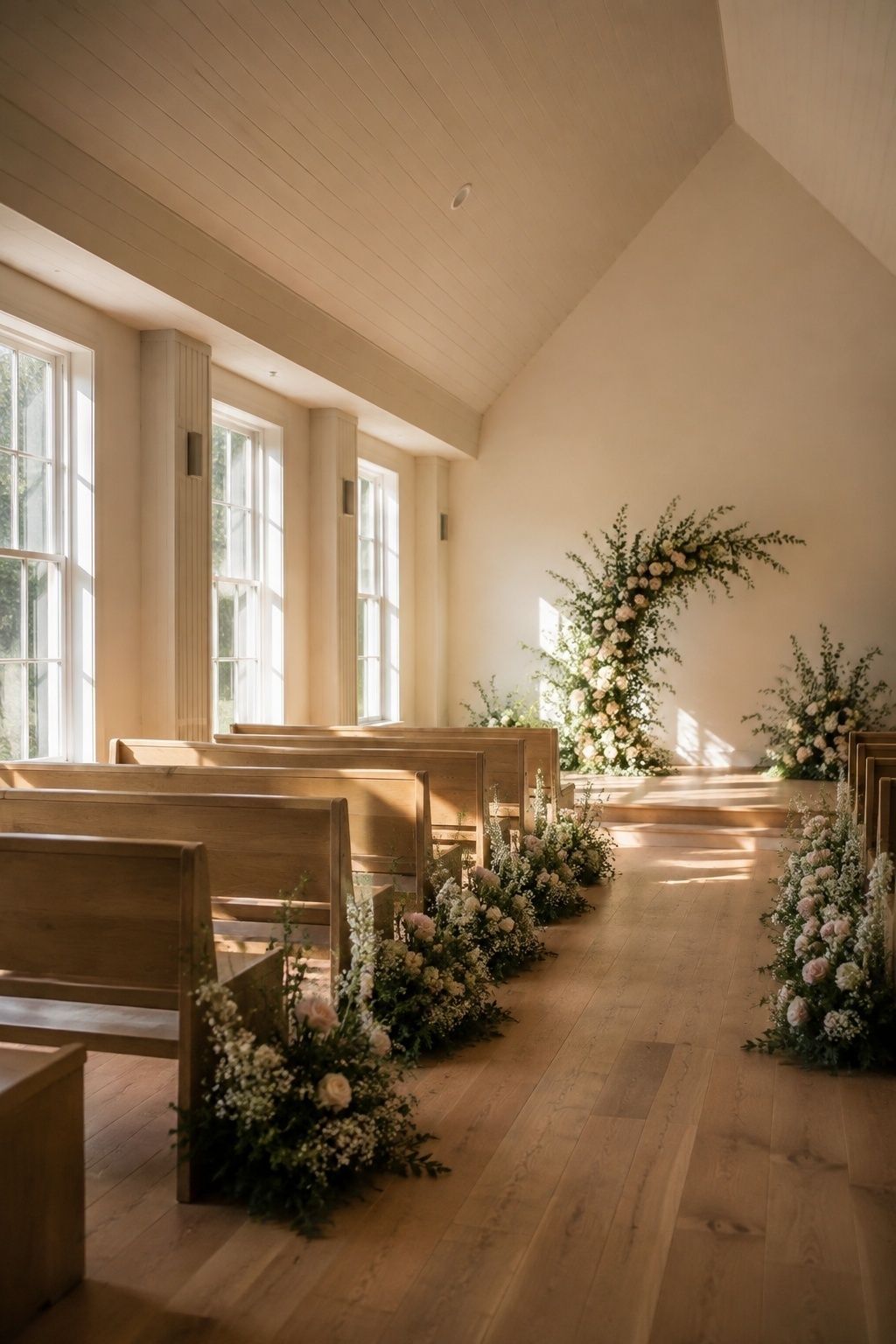
Light affects emotion, comfort, and photos. A sunny garden may look lovely at noon but leave the couple squinting through vows. A chapel may feel romantic until the officiant stands in a shadow and the couple is backlit. A restaurant room may need candles, lamps, or a shifted ceremony time to feel ceremonial instead of dim.
Tour the space near your planned ceremony time if you can. Ask where the sun hits, whether shade moves across the seating, whether candles are allowed, and whether the venue can adjust overhead lighting. For outdoor small wedding ceremony venues, look for soft shade, stable flooring, and a backup location with enough light to feel intentional rather than last-minute.
Venue Types That Work Especially Well For Small Vows
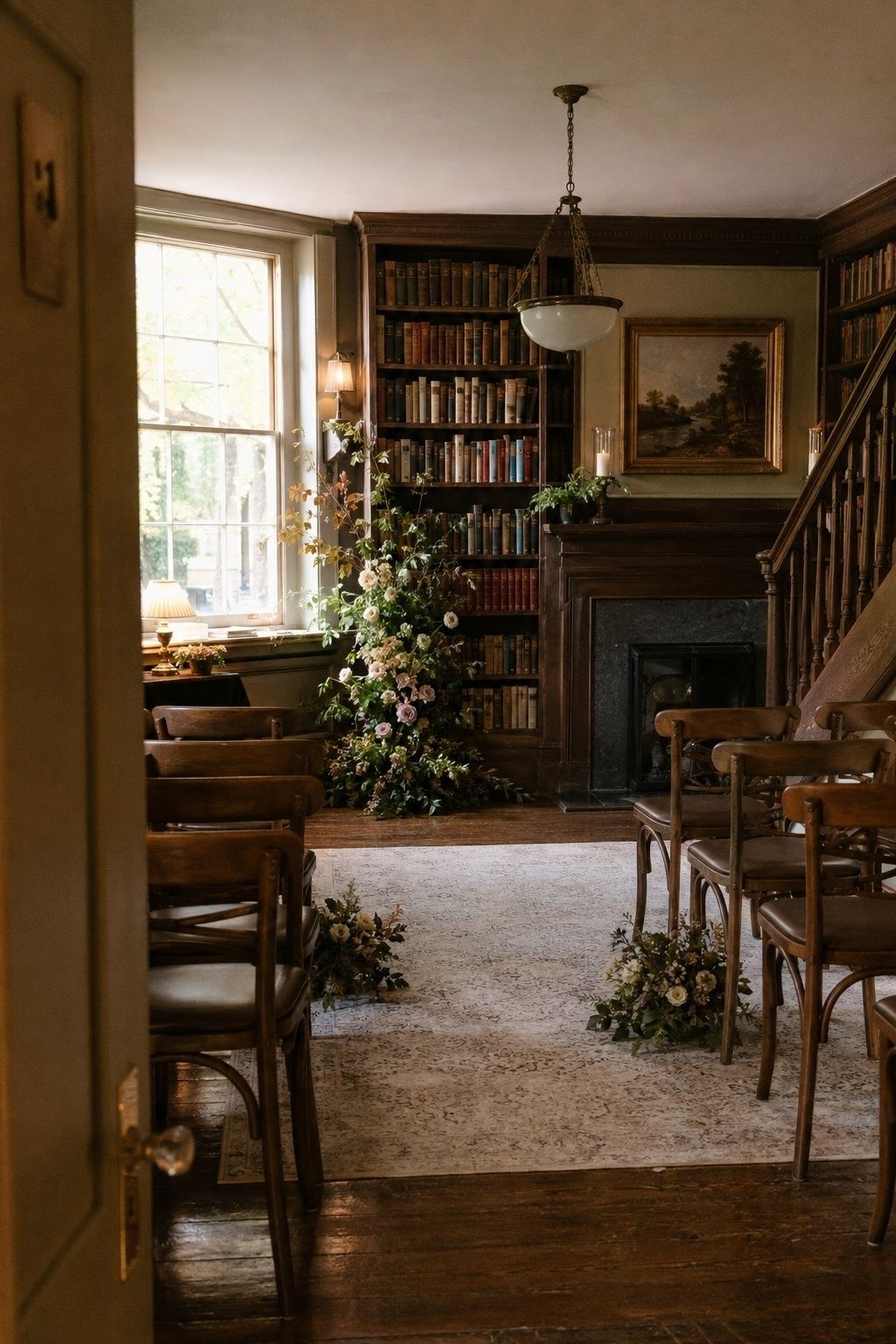
Small chapels are a natural fit when you want the ceremony to feel set apart without building a full wedding venue from scratch. Historic homes and libraries can add intimacy through architecture, fireplaces, stairs, bookshelves, or gardens. Private dining rooms work beautifully when the same space can move from vows to dinner with a short reset.
Courthouses and city halls can be meaningful when you treat the legal moment with care instead of rushing through it. A courthouse micro wedding can still include vow books, portraits, flowers, a dress code, and a dinner plan that makes the day feel complete.
Gardens, conservatories, terraces, rooftops, wineries, small museums, boutique hotels, inns, and family properties can also work well. The best choice is the one that already has a natural focal point and does not need oversized decor to tell guests where the ceremony is happening. Ground your micro wedding ceremony ideas in shade, seating, weather, and natural ceremony backdrops before you commit.
Plan Guest Arrival Like Part Of The Ceremony
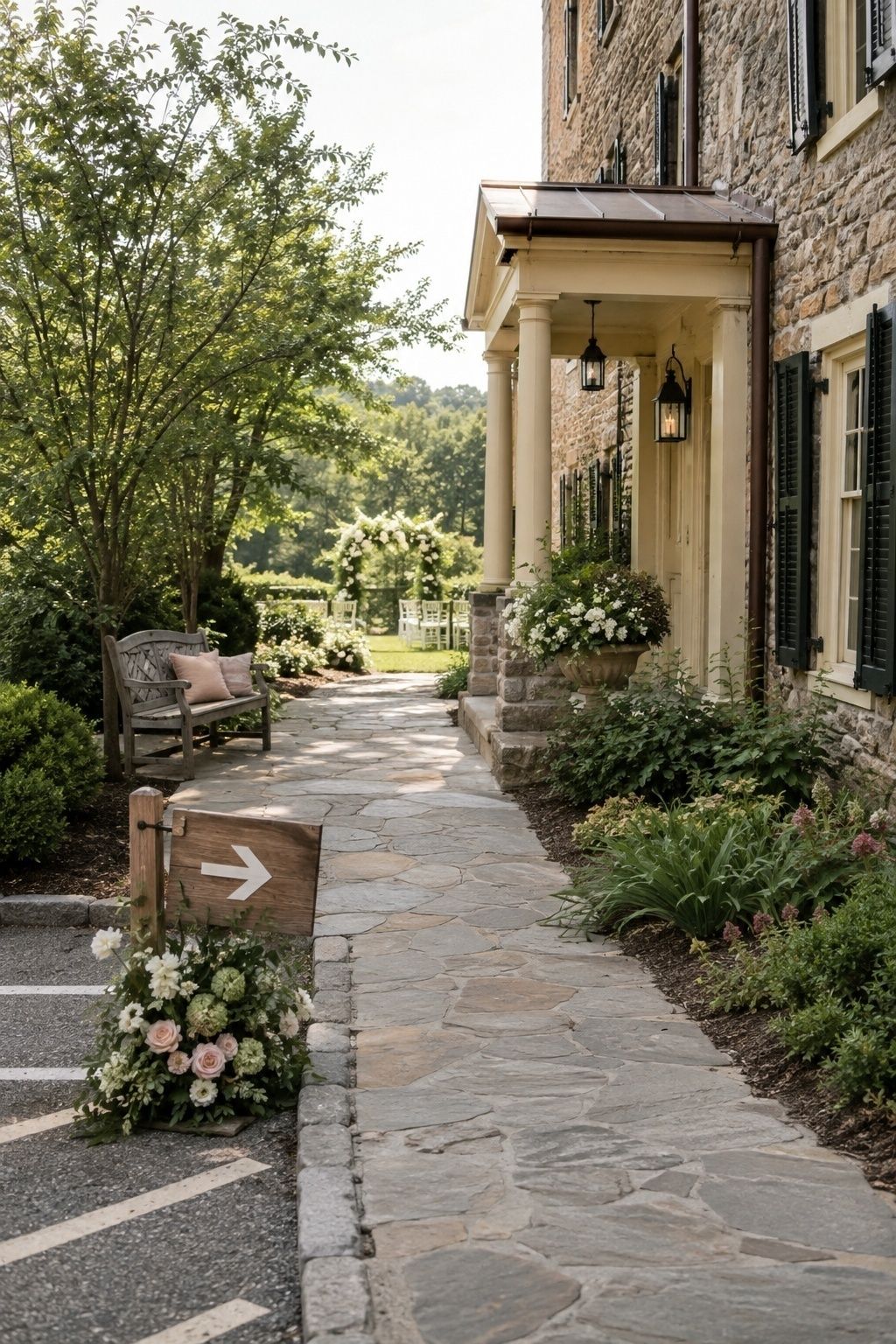
Guests should feel oriented before the ceremony begins. Tell them exactly where to park, which entrance to use, when seating starts, whether the ceremony is unplugged, where to place coats or gifts, and whether they should expect cocktails, portraits, or travel after the vows. In a small group, uncertainty becomes visible quickly because there is no crowd to follow.
Walk the arrival path slowly. Is the entrance obvious? Is there a place for early guests to wait without seeing the couple too soon? Can older guests reach the ceremony site comfortably? Are restrooms nearby? Is there shade, heat, water, or a quiet place for children if needed? A wedding ceremony sign can be helpful, but it should support a flow that already makes sense.
Let A Natural Small Ceremony Stay Small
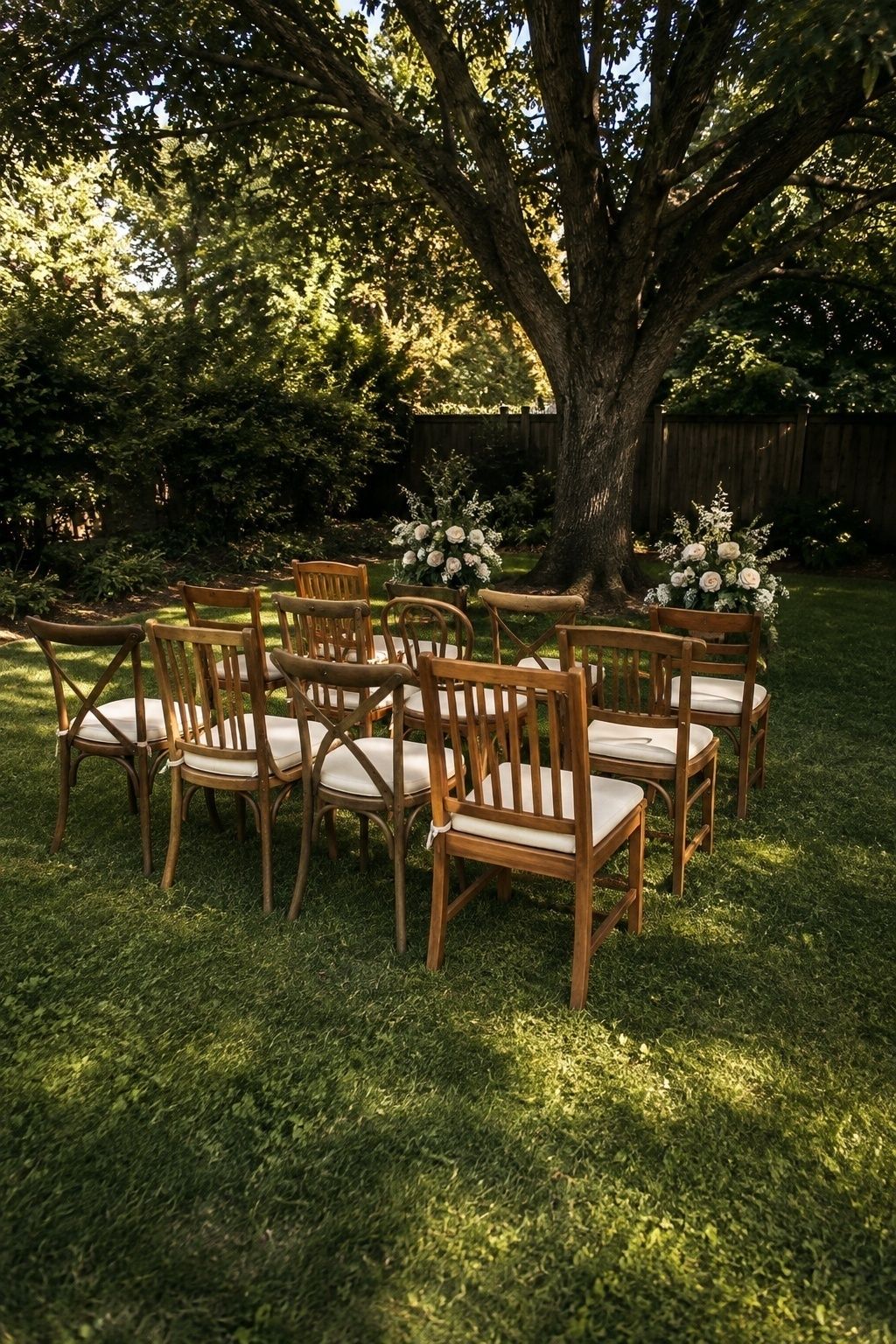
A natural small ceremony does not need to imitate a ballroom ceremony in miniature. You may not need a dramatic aisle, a large arch, a long processional, a full wedding party, or a printed program for every guest. The smaller the group, the more powerful simple choices can become: chairs close together, a clear focal point, fresh flowers, warm music, and vows spoken without rushing.
Think about what belongs because it deepens the vow moment. A parent blessing may feel beautiful. A unity ritual may feel right if it is brief and personal. A ring warming may work with 12 guests but feel slow with 50. A guest book can sit at the entrance or dinner location, but it does not need to crowd the ceremony space itself.
Confirm Legal And Officiant Details Early
Every ceremony venue should be checked against the legal basics for the location where you are marrying. Confirm marriage license timing, witness requirements, officiant authority, ceremony wording rules if any apply, and where documents are signed after the ceremony. If the venue offers a ceremony package, ask whether an officiant is included or whether you must hire one separately.
Also ask where the officiant stands, whether there is a signing table, whether private vows can happen before the public ceremony, and whether the venue needs a copy of insurance or vendor credentials. Legal details are not the romantic part, but they keep the vows from being interrupted by practical confusion.
Think Through Photos, Exit, And The First Ten Minutes After
The ceremony does not end emotionally at the kiss. It ends when guests know what to do next. Decide whether there will be a recessional, a petal toss, a champagne pour, a full-group photo, family portraits, a private signing moment, or an immediate move to dinner. The first ten minutes after the vows are often where small weddings either feel graceful or suddenly scattered.
Ask the photographer where the best light will be after the ceremony and whether family portraits can happen without blocking the exit path. If the same space becomes dinner, decide where guests go during the reset. If you are leaving for a restaurant, time your restaurant micro wedding so the post-ceremony meal feels like the natural next chapter, not just a reservation.
Red Flags To Notice Before Signing
Be careful with venues that cannot explain where guests arrive, sit, wait, use the restroom, sign the guest book, take photos, and move afterward. If the coordinator keeps saying “we will figure it out later,” ask for a sample floor plan. A small ceremony still needs a real plan.
Other red flags include no weather backup, weak sound rules, no privacy from the public, harsh light at ceremony time, unclear ceremony fees, no chair setup support, tight turnover between events, difficult parking, inaccessible paths, or a room that only feels beautiful when photographed without guests. If the venue cannot make the vows feel comfortable, keep looking.
FAQ
What Are The Best Small Wedding Ceremony Venues?
The best small wedding ceremony venues are chapels, gardens, private dining rooms, courthouses, historic homes, inns, terraces, libraries, boutique hotels, and quiet waterfront spaces that feel full and focused with your actual guest count. The strongest choice is the venue where guests can see, hear, and emotionally follow the vows without distraction.
Can You Book A Venue For A Ceremony Only?
Yes, many couples book ceremony-only venues, especially chapels, courthouses, gardens, and private rooms with short rental windows. A ceremony-only venue works best when you have a clear plan for portraits, transportation, dinner, and guest flow after the ceremony.
Is A Ceremony Plus Reception Venue Better For A Small Wedding?
A ceremony plus reception venue is often easier for a small wedding because guests arrive once and move naturally from vows to photos, drinks, and dinner. It is not always better, though. A separate ceremony venue can feel more meaningful if the transition afterward is simple and well communicated.
How Many Guests Fit A Small Wedding Ceremony Venue?
Many small wedding ceremony venues work best for 10 to 50 guests, but the right number depends on layout, aisle width, chair spacing, accessibility, weather backup, and whether the same space also needs to hold dinner. Ask for floor plans at your actual count rather than relying on maximum capacity.
What Should You Ask A Small Ceremony Venue Before Booking?
Ask about privacy, sound, light, guest arrival, chair setup, officiant rules, marriage license logistics, weather backup, restrooms, parking, accessibility, photo locations, timing, cleanup, and what happens immediately after the ceremony. Also ask whether another event or public visitors will be nearby.
How Do You Make A Small Ceremony Venue Feel Special?
Make a small ceremony venue feel special by choosing close seating, clear sound, flattering light, a simple focal point, meaningful vows, and a graceful transition after the kiss. You do not need to fill the space with decor if the venue already supports the emotion of the ceremony.
Final Thoughts
Small wedding ceremony venues are at their best when they protect the promise at the center of the day. Choose the place where your voices carry, your guests feel gathered rather than scattered, and the next step after the kiss is obvious. If you want the ceremony to feel quiet, held, and warmly complete without asking guests to navigate a sprawling venue, a small ceremony chapel setting can keep the vows, photos, and first celebration moments close together.
Last update on 2026-10-04 / Affiliate links / Images from Amazon Product Advertising API