

Common unplugged ceremony mistakes happen when the phone request arrives after guests are already filming, when the reminder is hard to notice from the actual arrival path, when front-row behavior is not modeled, when guests wait too long with nothing in their hands, and when the ceremony ends without a clear release cue.
Unplugged ceremony mistakes usually begin inside the room, not online. You want guests present, the aisle clear, and the professional photos free of glowing screens. The awkwardness arrives when people have already pulled out phones, settled into habits, or started filling a quiet wait with something to do.
For a small wedding, every raised phone feels bigger. Guests are close enough for the couple to see their faces, the photographer has fewer angles to hide behind, and one well-meaning relative in the aisle becomes part of the ceremony memory fast. A warm phone plan is really a ceremony-flow plan: what guests see, when they hear the cue, where their hands go, and how the room knows the phone-free moment is over.

Recommended Wedding Products


You Might Also Like These Blog Posts
- Wedding Ceremony Mistakes That Distract From the Moment You Came For
- Wedding Seating Chart Mistakes That Make Dinner Feel Awkward
- Wedding Social Media Mistakes That Make The Day Feel Less Yours
- Wedding Rehearsal Mistakes That Make The Ceremony Feel Unsteady
- Wedding Website Mistakes That Make Guests Text You Anyway
- Wedding Registry Mistakes That Make Gift-Giving Awkward
Unplugged Ceremony Mistakes That Break The Room’s Focus
A phone-free ceremony succeeds or fails in the few minutes before the processional. Guests are standing, greeting, sitting, looking around, and deciding what to do with their hands. If the room gives no clear cue until after screens are already up, the request starts to feel like an interruption instead of part of the welcome.
Build the wedding ceremony no phones plan around the physical experience: arrival path, seating, sound, aisle width, front-row behavior, ceremony length, and the exact moment guests return to ordinary celebration mode. That keeps the request narrow, kind, and easy to follow without turning it into broad social rules.
Announcing The Request After Phones Are Already Out
The awkward version happens when guests have already started taking atmosphere shots, texting arrivals, or framing the aisle flowers. Once a phone is in someone’s hand, the reminder feels personal, even when the couple never meant it that way.
Put the first cue before the waiting begins. Ask ushers, a coordinator, or a calm host to set the tone as guests enter the ceremony area: silence devices, tuck them away, and settle in before the processional. The officiant phone announcement still matters, but it should confirm the room’s rhythm rather than surprise it.
Designing A Beautiful Reminder Guests Do Not Physically Register
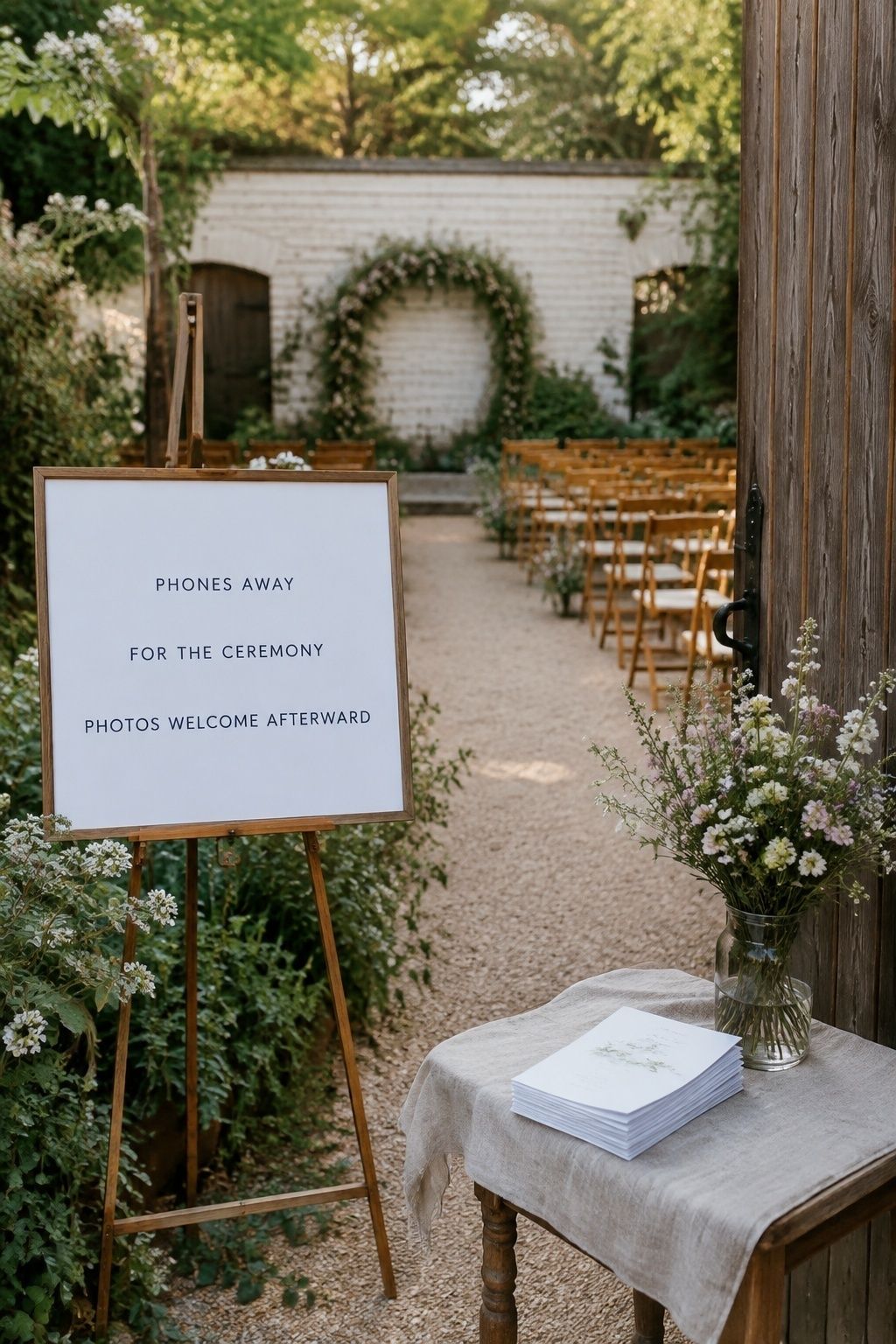
Unplugged ceremony sign mistakes are often practical, not aesthetic. A tiny line in pale ink, a low sign hidden by flowers, or a reminder placed after guests have already chosen seats turns into decor instead of information.
Walk the actual arrival route. Notice where guests slow down, where they look for direction, and where their hands are full. A useful reminder sits at eye level, uses plain language, and appears at a decision point: before the aisle, before the programs, or before the final turn into the ceremony space.
Ignoring The Front Row Where Phones Are Most Visible
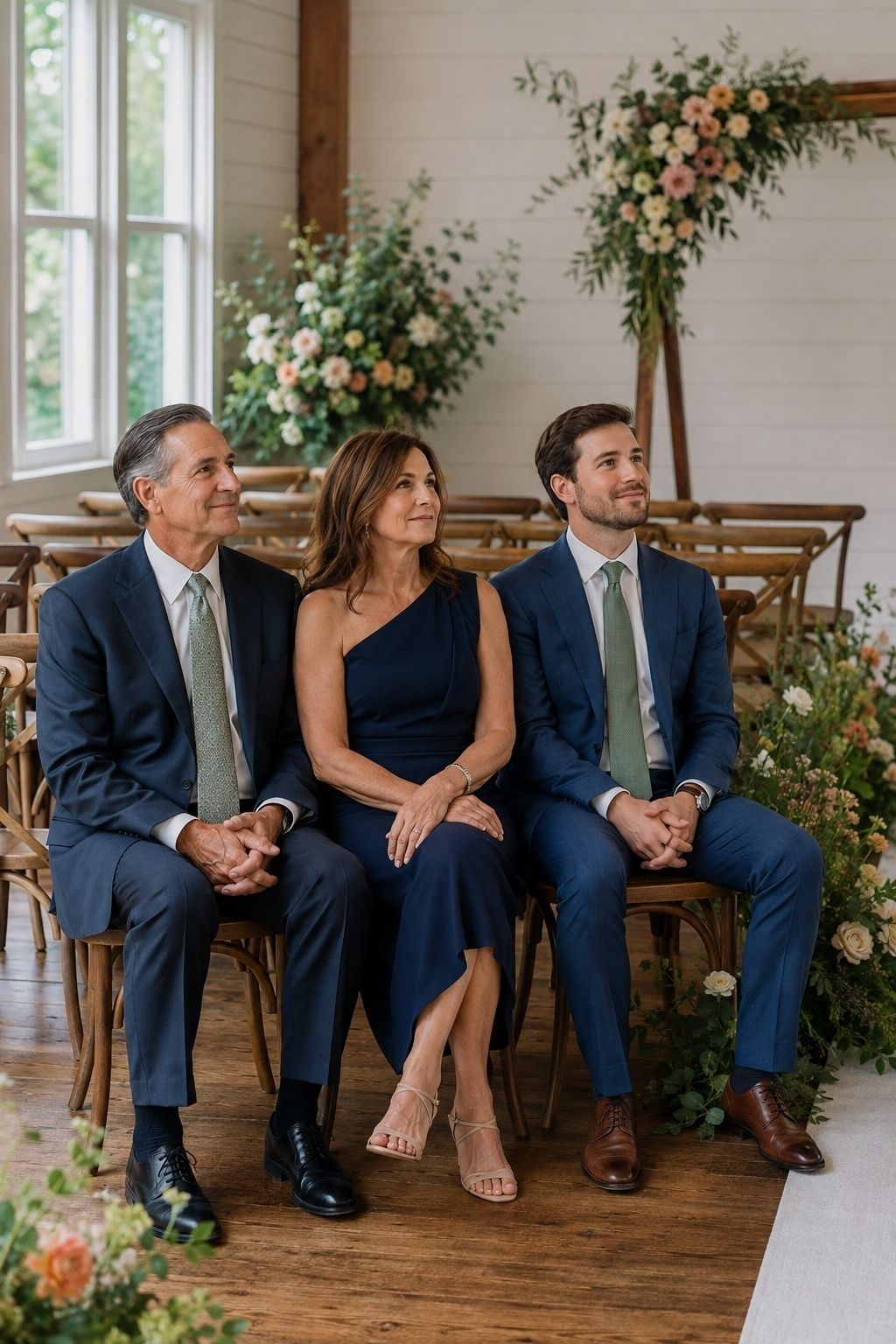
At a small ceremony, front-row phones change the whole room. Parents, grandparents, siblings, and honor attendants sit inside the couple’s line of sight, so even one screen becomes part of the emotional foreground.
Brief the front row as a ceremony role, not as a scolding moment. Tell them before seating begins that they set the example for everyone behind them. Hands relaxed in laps, phones away, faces up. That quiet modeling does more than another decorative reminder.
Forgetting To Rehearse The Reminder Cue

A reminder that is vaguely assigned often disappears. The officiant assumes the coordinator has it. The coordinator assumes the musician will pause. The usher thinks the sign covered it. By the time everyone realizes the gap, the processional is about to start.
Rehearse the cue like any other ceremony movement. Name the person, the exact moment, the microphone location, and the sentence length. If music begins at 4:00, place the phone cue before that. If guests stand for the processional, give the reminder while they are still seated and able to settle.
Making Guests Wait Too Long With Empty Hands
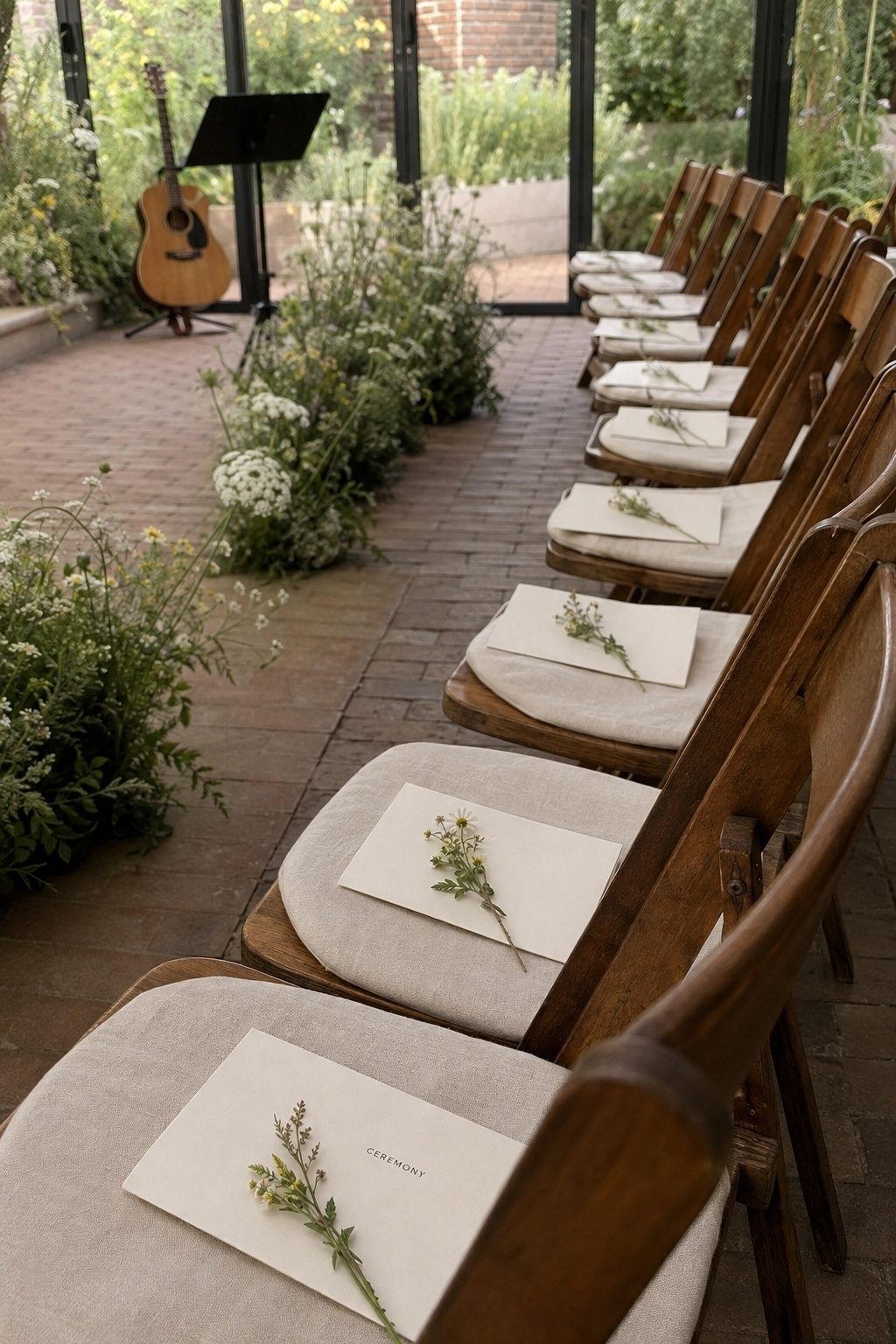
Ceremony phone mistakes multiply during a long pre-ceremony wait. Guests put phones away, then sit through ten silent minutes, a delayed entrance, no program to hold, no music shift, and no clear sense of when the ceremony begins. Eventually, they reach for the familiar object again.
Shorten the idle stretch where possible. Start seating close to the real ceremony time, offer printed programs for guests who enjoy following along, keep music intentional, and have someone explain delays quietly if timing slips. Presence is easier when the room feels cared for.
Also give guests something gentle to anchor their attention. A printed order of ceremony, a short welcome from a host, live music they recognize as the prelude, or a clear shift in lighting all tells the room that the ceremony has begun emotionally before the first person walks. Phones often come out when the room feels unfinished.
Creating A Phone-Free Ceremony Without Guest Comfort

A phone request feels heavier when guests are uncomfortable. Hot sun, hard chairs, no shade, no water, poor sound, and unclear seating turn a simple ask into one more thing people are managing.
Protect comfort first. Check shade, chair spacing, sound levels, restroom timing, and whether older guests need a printed order of ceremony. The more grounded guests feel, the less the phone request feels like control.
This matters most in small spaces because discomfort has nowhere to hide. If guests are squinting into sun, balancing coats, wondering where to sit, or straining to hear the welcome, the phone rule becomes another friction point. A few practical choices make the request feel generous: water before an outdoor ceremony, enough aisle width for movement, and sound that reaches the last row. Comfort makes attention feel natural. It also keeps the ask humane.
Leaving The Aisle And Recessional Lane Unprotected
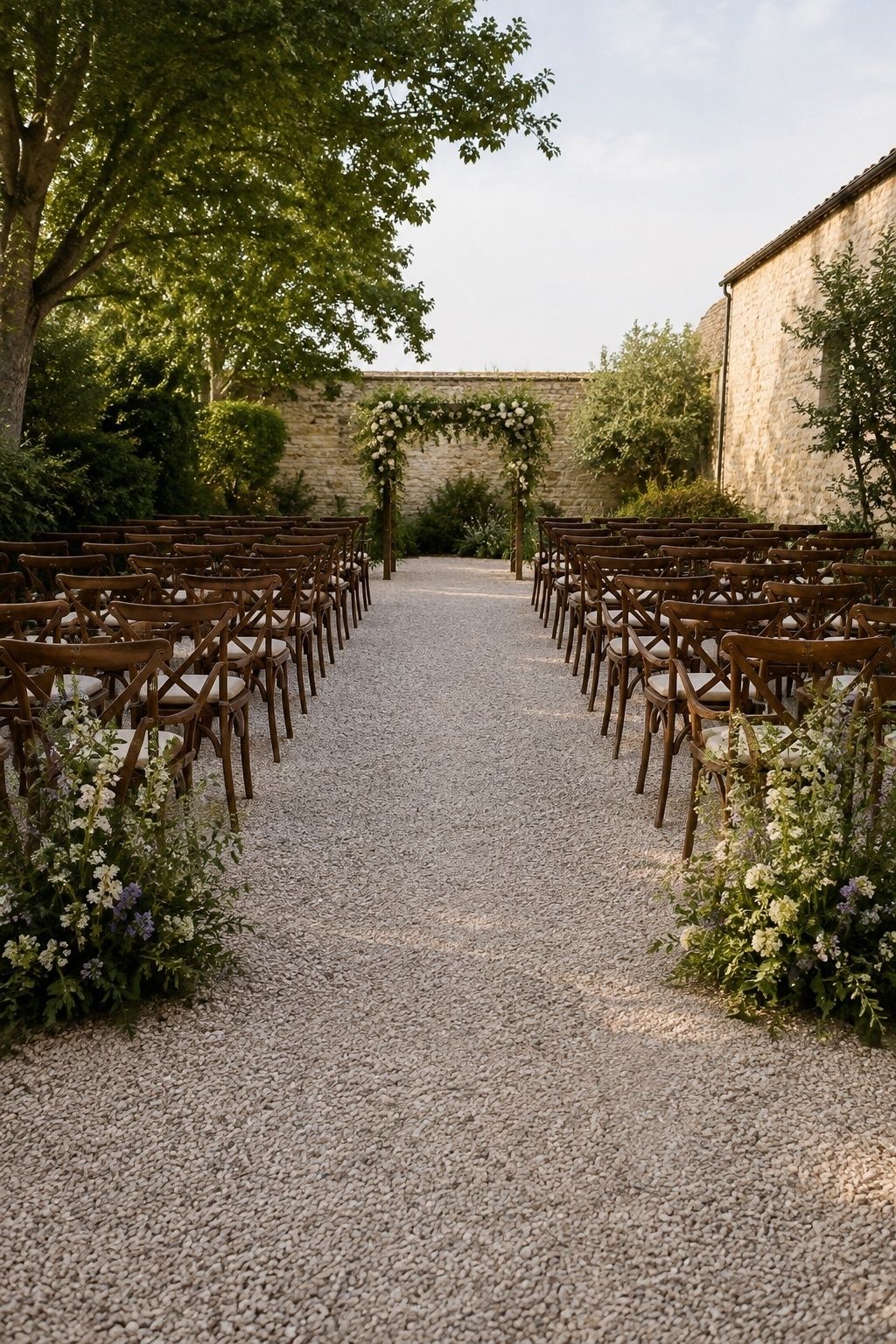
Guests taking photos during ceremony movement causes the biggest visual problems. A person leaning into the aisle during the processional, vows, first kiss, or recessional blocks more than a detail shot. They interrupt the path the couple, attendants, and photographer all need.
Give the photographer one clean aisle and one clear recessional lane. Seat enthusiastic photo-takers away from the aisle if needed, keep chairs from squeezing the path, and ask ushers to discourage standing in the lane before the ceremony begins. This is ceremony logistics, not guest shaming.
Letting One Exception Look Like A Contradiction
Accessibility tools, captions, translation, medical alerts, and a private livestream all deserve space inside an unplugged ceremony. The mistake is leaving those exceptions unnamed, so one visible phone looks like someone ignoring the request.
Assign exception roles quietly before guests arrive. The livestream person should have a tripod, seat, battery plan, and clear reason to be using a device. Guests who need phone-based support should feel welcome to use it without becoming the public example everyone else questions.
Using Cute Language That Takes Too Long To Understand
Unplugged ceremony wording loses strength when the cleverness arrives before the meaning. Rhymes, puns, tiny script, and vague phrases about being “in the moment” sound sweet, but guests need to understand the action quickly while they are moving through a space.
Keep public wording plain and warm: phones away for the ceremony, faces present for the vows, photos welcome afterward. Save personality for the tone, not the clarity. A request should land in one breath.
Turning A Small Wedding Reminder Into A Personal Confrontation
Small weddings make enforcement feel personal because everyone knows everyone. If the couple, a parent, or a sibling has to correct a guest in the front row, the room feels the tension immediately.
Let structure do the work. A host at arrival, a brief microphone cue, an usher watching the aisle, and front-row family modeling the request keep the couple out of the policing role. The point is a peaceful room, not perfect obedience.
Forgetting Multilingual Or Hearing Needs In The Room
An unplugged request fails quietly when people do not hear it or process it quickly. Mixed-generation ceremonies, multilingual families, outdoor sound, and guests with hearing differences all affect how the phone cue lands.
Make the cue accessible. Use the microphone, speak slowly, add a translated line if needed, print the ceremony order for guests who follow better on paper, and give one family point person the job of helping relatives settle before music begins.
Ending Without A Natural Release Line
The phone-free window needs an ending. Without a release line, guests stay unsure through the recessional, family hugs, and the first few minutes after the ceremony. Some keep phones hidden longer than needed; others guess too early.
Give the room a graceful reset. After the couple exits, the officiant, musician, or coordinator should invite guests to celebrate, take photos, greet family, or move toward the next location. That one sentence turns the ceremony back into the party without undoing the quiet you protected.
Before the ceremony day, test that ending aloud. It should sound warm, brief, and obvious to guests who are already standing, smiling, and turning toward each other. A clear ending keeps the phone-free request from lingering past its purpose.
FAQ
These FAQ answers cover the unplugged ceremony mistakes couples worry about most, from signs and officiant wording to what happens when guests still take photos.
Are unplugged ceremonies rude?
Unplugged ceremonies are not rude when the request is clear, warm, and limited to the ceremony. Guests usually understand when you explain that you want them present for the vows and that professional photos or shared images will come later.
Is an unplugged ceremony sign enough?
A sign works best as a reminder rather than the whole plan. Pair the sign with program wording, a wedding website detail, and a short officiant announcement right before the processional.
What should the officiant say about phones?
The officiant should briefly invite guests to silence and put away phones for the ceremony, explain that the couple wants everyone present, and mention that photos are welcome afterward or will be shared later. The tone should feel like hospitality, not discipline.
How do you word an unplugged ceremony request?
Use your own voice and keep the request specific. A good structure is: thank guests for being there, ask them to put phones away from the processional through the recessional, explain that the ceremony is being professionally photographed, and invite photos again afterward.
What if guests still take photos during the ceremony?
If a guest still takes photos, let the coordinator, usher, or officiant handle any quiet reminder before the ceremony begins. During the vows, stay focused on each other. A few imperfect guest choices should not steal attention from the moment you planned so carefully.
Final Thoughts
The best unplugged ceremony fixes make the request feel like an invitation to be present, not a command to obey. Keep the language kind, the timing specific, the family looped in, the photographer protected, and the photo-sharing plan easy to understand.
As you settle the ceremony details, ask for phones away during the vows, name when photos are welcome again, give one trusted person the livestream, and let guests know they will still have images to enjoy after the recessional.
Last update on 2026-10-04 / Affiliate links / Images from Amazon Product Advertising API