

Small wedding reception venues should be chosen by dinner flow, privacy, comfort, and service, not just capacity. Start with the meal you want, then choose a room, restaurant, inn, garden, or terrace that makes the celebration feel private, generous, and easy.
The best small wedding reception venues are spaces that make one excellent dinner feel intentional, comfortable, and fully hosted. With 18, 32, or 48 guests, people notice the room, the table spacing, the noise level, the timing of dinner, and whether the couple seems able to enjoy the evening.
Compare reception spaces by what actually happens during the evening: arrival, seating, food, conversation, toasts, music, photos, bathrooms, weather, privacy, and the final bill. A small wedding can be beautifully simple, but it still needs a room that knows how to host.
Recommended Wedding Products


You Might Also Like These Blog Posts
- Small Wedding Ceremony Venues For Vows That Feel Close
- Small Indoor Wedding Venues That Make The Room Feel Full
- Small Outdoor Wedding Venues That Work Beyond The Photos
- Small Wedding Venues For 10 Guests That Don’t Feel Empty
- Small Beach Wedding Venues Where Guests Stay Comfortable
- Small Wedding At A Restaurant, Done Like You Mean It
How To Choose Small Wedding Reception Venues For One Great Dinner
The phrase small wedding reception venues can cover a lot of different spaces, but the best options usually share one thing: they make the meal feel like the point. You are not trying to fill a ballroom with fewer people. You are choosing a room, terrace, garden, restaurant, inn, or hotel space where dinner, conversation, and a few meaningful wedding moments can unfold without strain. If the vows need their own setting, these small wedding ceremony venues are worth a look first.
Start by imagining the reception minute by minute. Where do guests walk in? Where do coats and gifts go? Can everyone find their seat without confusion? Can servers reach each guest? Can parents hear the toast? Is there a comfortable path to the restroom, bar, dessert table, and photo spot? If you are still shaping the full venue plan before narrowing the reception, your venue should make the ceremony and dinner feel connected.
Choose The Reception Format Before The Venue Type
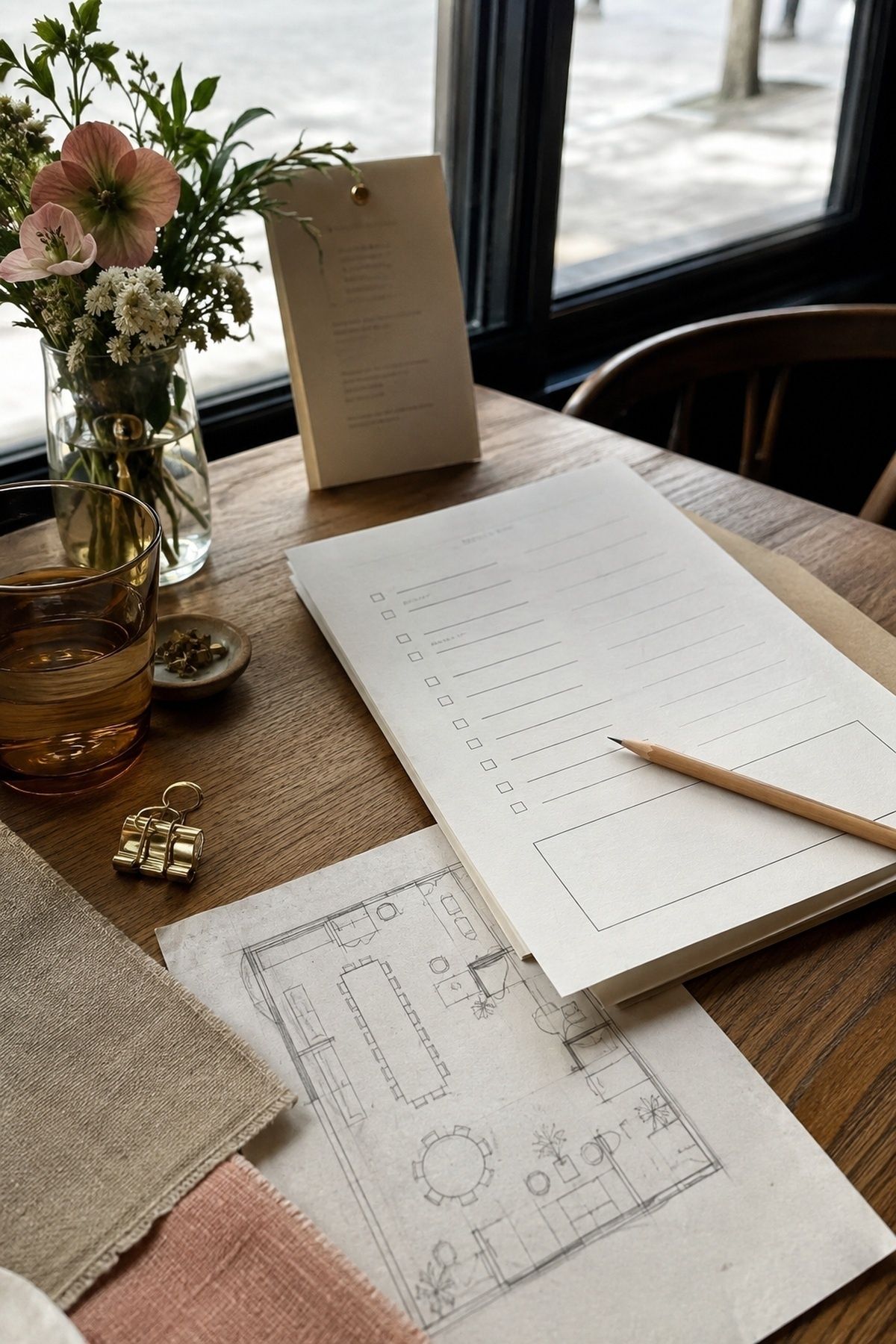
Before you tour spaces, decide what kind of reception you actually want. A private dinner after a courthouse ceremony needs a different room than a ceremony-plus-cocktail-hour-plus-dinner evening. A 20-person tasting menu needs different timing than a 45-guest family-style meal. A reception with dancing needs a different sound plan than a dinner with two toasts and a playlist.
Write down the format in plain language: ceremony elsewhere and dinner only, ceremony on site and seated dinner, cocktail hour and plated meal, brunch reception, restaurant buyout, garden dinner, or hotel private room. That one sentence keeps the search grounded. It also helps you avoid booking a pretty venue that is technically available but wrong for the actual flow of the night.
If the meal is the main event, build the evening around wedding dinner party ideas such as one long table, several smaller tables, family-style service, custom menus, or shared desserts that make the room feel alive.
Prioritize Conversation And Privacy
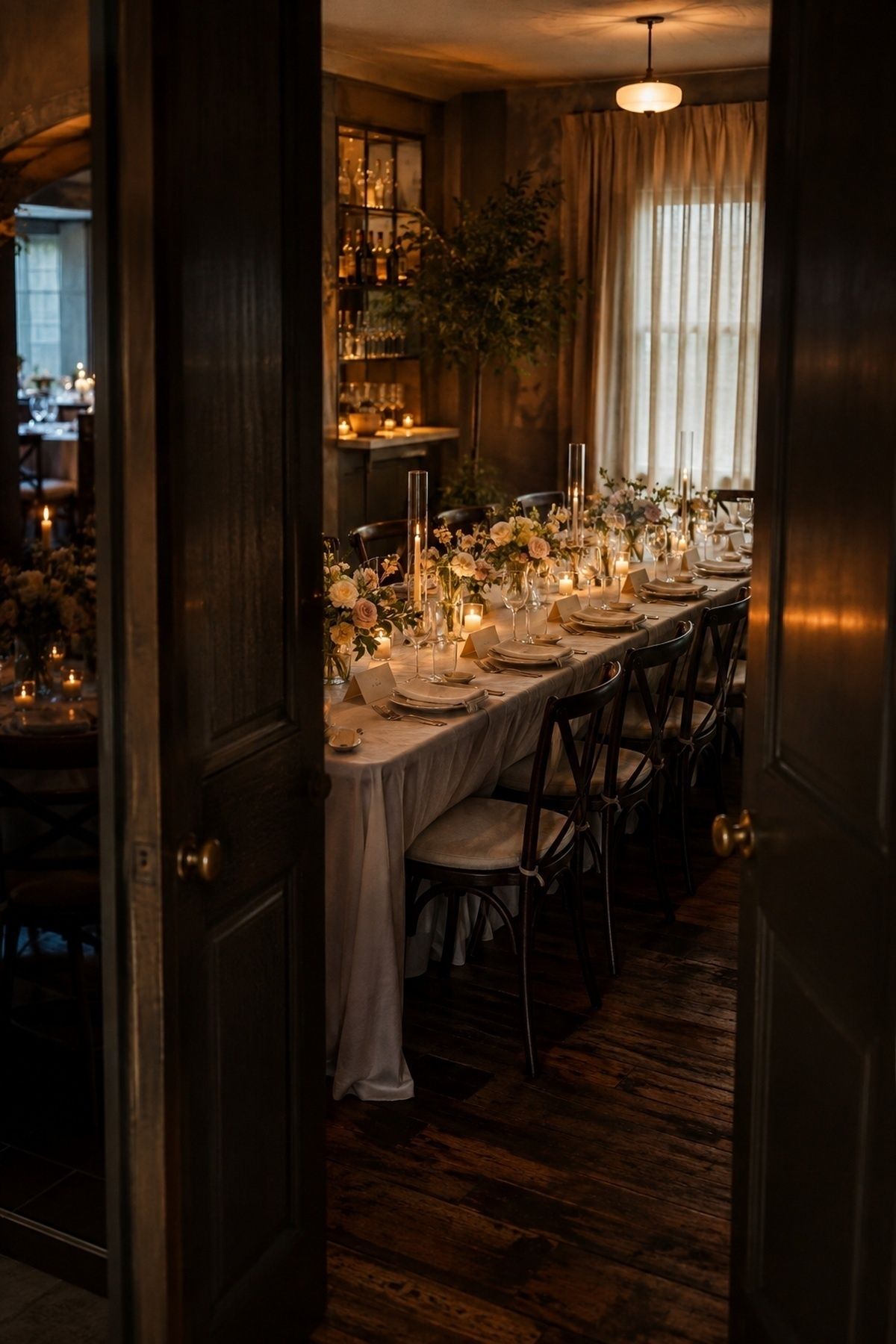
Small receptions depend on conversation more than spectacle. Guests should be able to hear the people beside them, understand speeches, and feel like the room belongs to your group. When you tour, pause and listen. Is there kitchen noise, traffic, bar noise, music from another room, or regular diners close enough to change the mood?
Privacy does not always require a full buyout, but it does require clarity. Ask whether the room has doors, curtains, a separate entrance, dedicated restrooms, a private bar, or a defined section away from the main dining room. Semi-private spaces can work for casual receptions, but they are harder if you want vows, emotional toasts, a first dance, or family moments that should not feel public.
For restaurant-centered receptions, compare a true private dining room wedding with a semi-private reservation before you sign. The price difference may be worth it if privacy protects the entire tone of the evening.
Look At Private Dining Rooms And Restaurant Buyouts
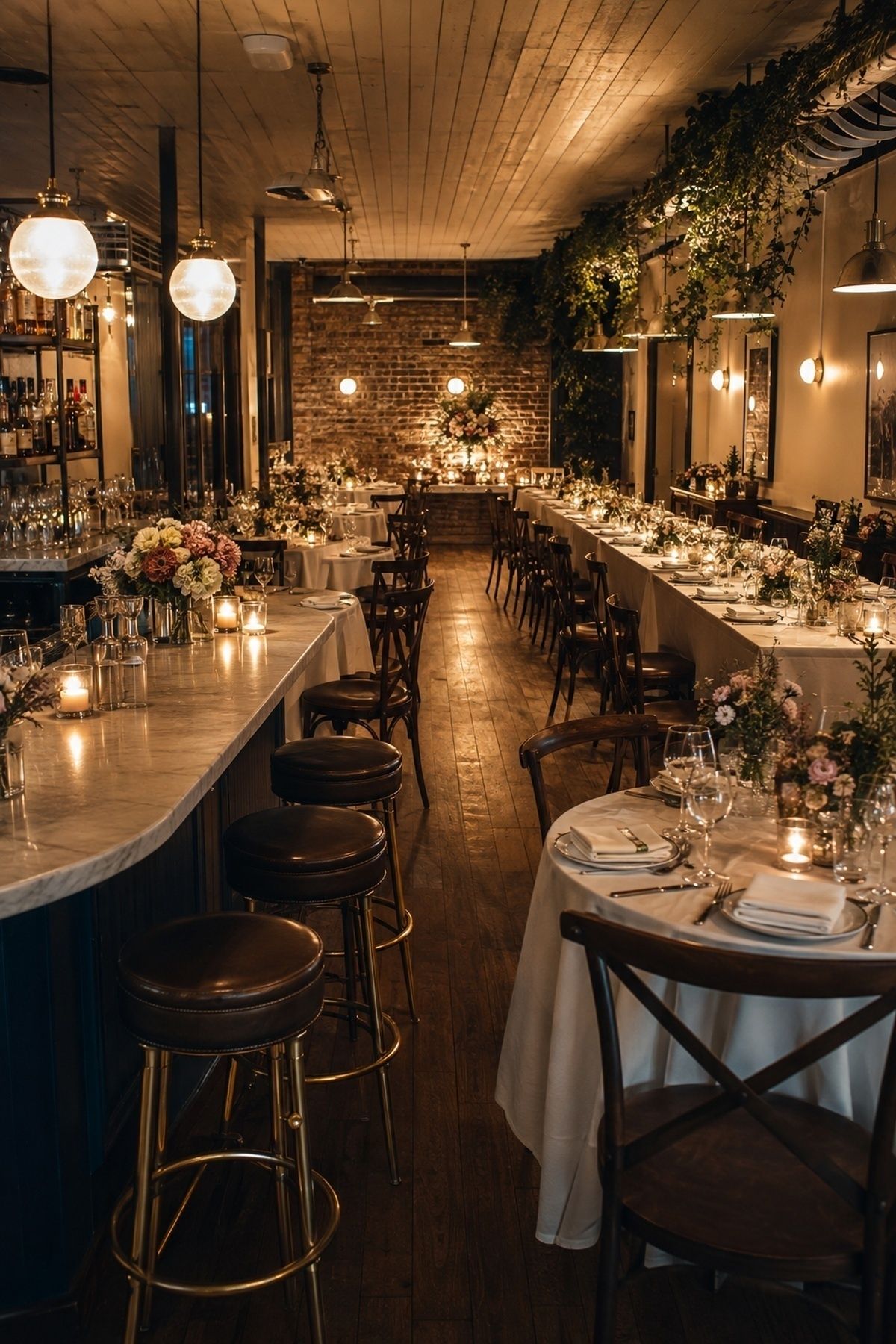
Private dining rooms are often the strongest small reception venues because they already solve food, staffing, tables, chairs, glassware, lighting, restrooms, and cleanup. They work especially well when the reception is built around one great dinner instead of a long program of formal events.
A restaurant buyout can make sense when you want the whole space, a ceremony on site, a louder music plan, a bar moment, or more freedom for photos and movement. The tradeoff is usually a higher food-and-beverage minimum. Ask what counts toward the minimum, whether tax and gratuity are separate, and how the number changes by day, season, and time.
If this is your likely path, your restaurant reception plans should account for menu style, cake rules, bar service, table decor, and the details that make dinner feel like a reception rather than a reservation.
Consider Hotels, Inns, And Boutique Event Rooms
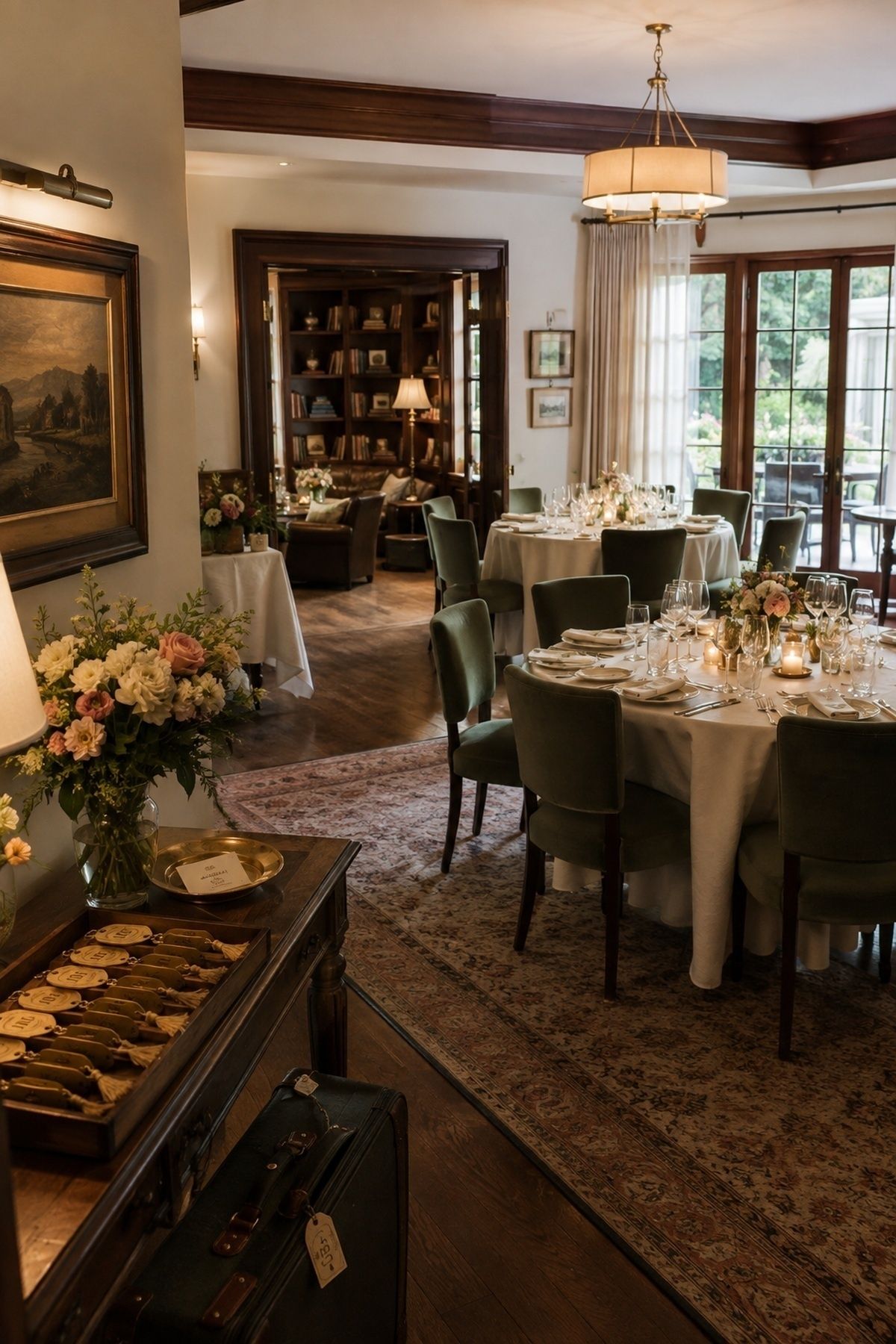
Hotels and inns can be quietly excellent for small wedding receptions when guests are traveling or when you want ceremony, dinner, rooms, parking, and breakfast in one orbit. A boutique inn may have a dining room, terrace, library, or garden that feels warmer than a large event hall. A small hotel may offer private rooms with reliable staffing and fewer rental surprises.
Ask whether the venue has hosted receptions at your size before, and ask to see photos of those exact layouts. A small ballroom can feel polished with 50 guests but empty with 24. A restaurant inside a hotel may feel intimate, but only if the room is separated enough from regular hotel traffic.
Guest comfort matters here. If older relatives, out-of-town friends, or children are attending, easy parking, elevators, restrooms, room blocks, and a short walk from dinner to overnight rooms can be more valuable than a dramatic location that requires constant shuttling.
Check Outdoor And Semi-Outdoor Reception Spaces Carefully
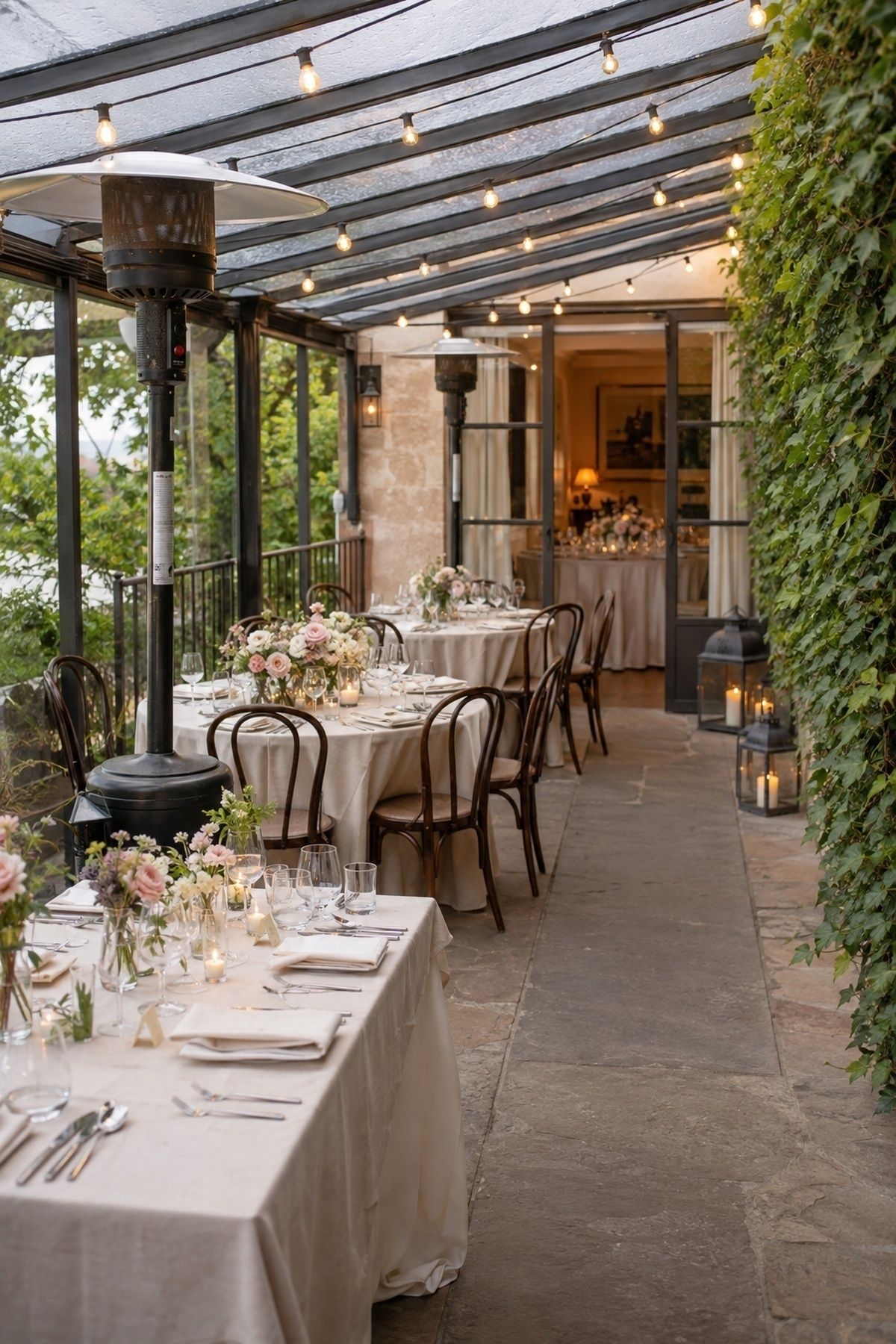
Gardens, courtyards, patios, rooftops, conservatories, and covered terraces can make a small reception feel beautiful without heavy decor. They also need more logistical honesty. A pretty patio is not enough if dinner service is slow, wind lifts place cards, speeches disappear into street noise, or the rain plan is a hallway with banquet chairs.
Ask about shade, heaters, fans, lighting, insects, restrooms, kitchen distance, sound limits, curfew, flooring, and whether servers can move safely with trays. If the space is semi-outdoor, ask what happens in rain, heat, cold, and wind. You want the backup plan to feel like a real reception, not a defeated version of the original idea.
Before you assume open air automatically means easy, make sure any small outdoor wedding venue on your list has a comfort plan that is stronger than the photo plan.
Judge Layout By Service Paths, Not Just Table Count
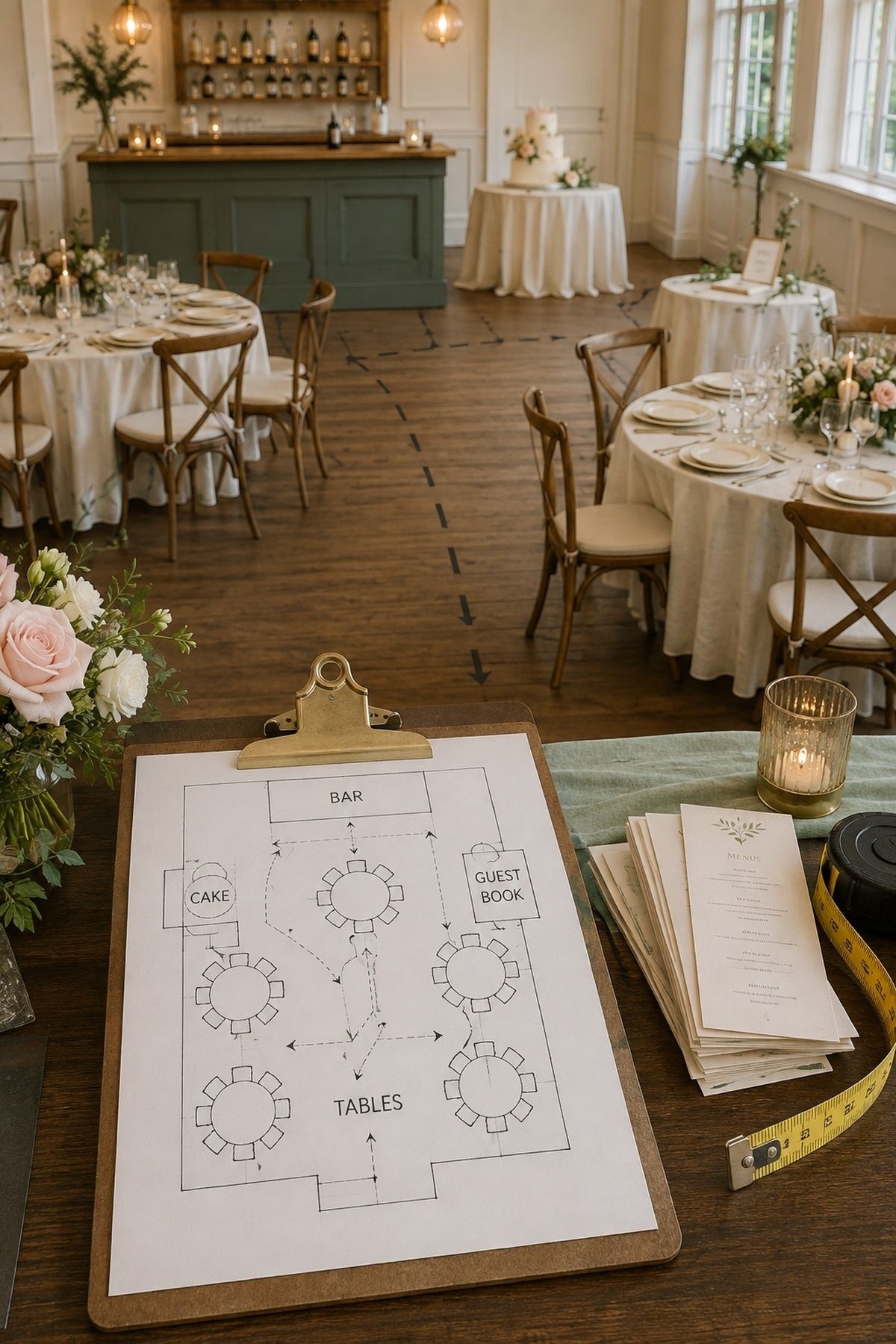
A reception layout has to work for guests and staff at the same time. Capacity tells you how many chairs fit. It does not tell you whether a server can reach the far seat, whether a photographer can move during a toast, whether guests can visit the bar without squeezing behind chairs, or whether a wheelchair user can navigate the room comfortably.
Ask for a floor plan with your exact guest count. Include the dining tables, sweetheart table or couple’s seats, bar, cake, guest book, gifts, coat area, musicians or speaker, ceremony chairs if needed, and any photo or lounge area. If everything only fits on paper, the room may feel tense in real life.
For a very intimate reception, one long table can create a beautiful dinner-party feeling. For 30 to 50 guests, several smaller tables may protect conversation and service. Your reception layout should leave enough room for long tables, U-shapes, clusters, or a ceremony-to-dinner room flip without making guests squeeze past one another.
Plan Toasts, Music, And Movement Early
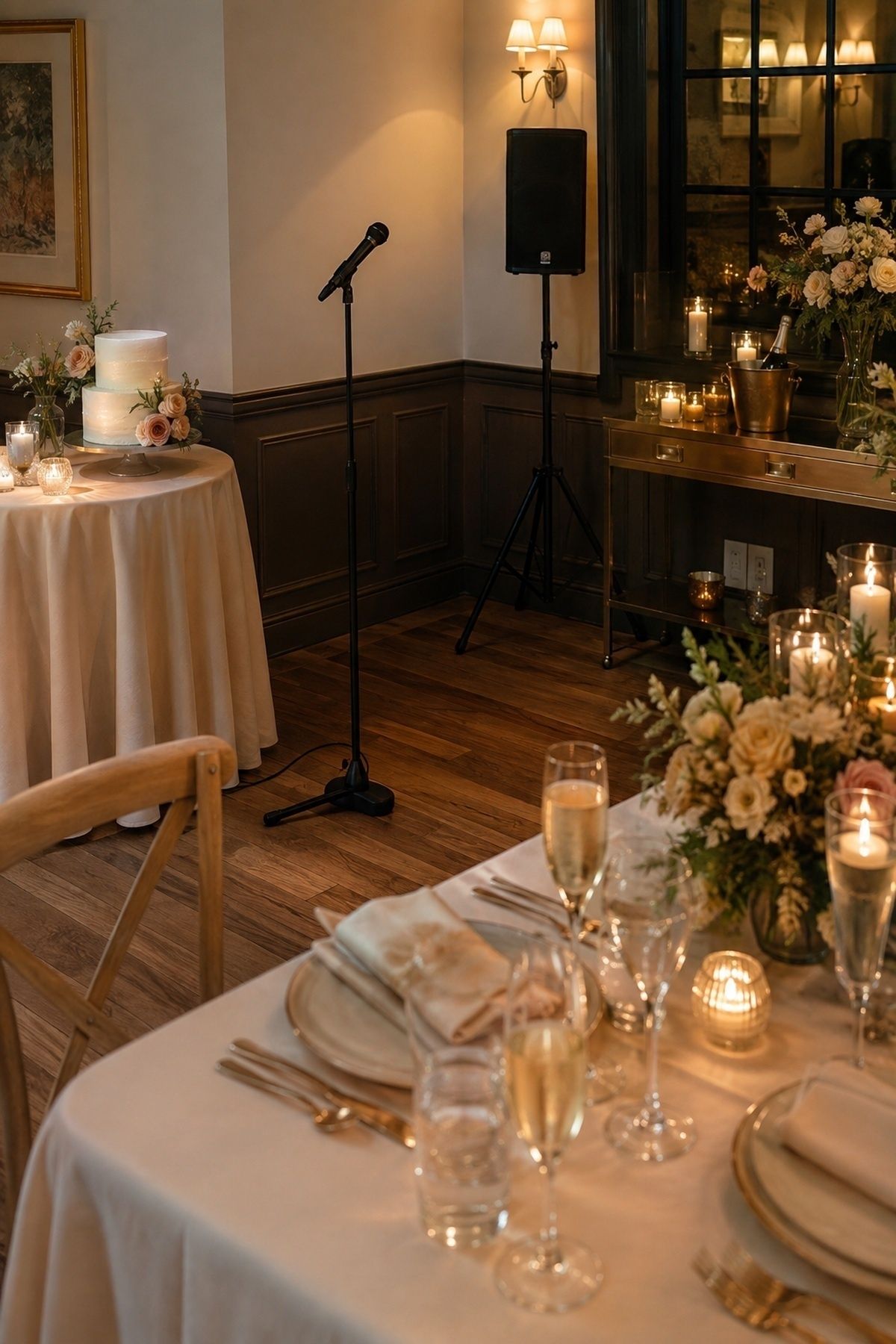
Small wedding receptions do not need a full entertainment plan, but they do need a sound plan. Ask whether microphones are allowed, whether the venue has speakers, whether you can bring a portable speaker, and whether there are restrictions on amplified sound. A parent toast that no one can hear can make a beautiful dinner feel awkward for reasons that were completely preventable.
Decide whether you want background music, a first dance, a short playlist after dessert, or no dancing at all. Then choose a venue that supports that choice. Some private rooms are perfect for speeches and dinner but wrong for dancing. Some patios allow background music but no microphone. Some restaurant buyouts can handle a small dance moment if the floor plan is built around it.
If you are intentionally planning a small reception without dancing, choose other shared moments before you book: a champagne toast, cake service, table visits, a guest book prompt, or a short after-dinner walk for photos.
Ask The Booking Questions That Reveal The Real Fit
Before you book, ask direct questions that reveal how the venue handles small receptions. What guest count feels best in this room? Can we see photos of similar events? What is included? What is the full estimate with tax, service charge, gratuity, room fee, staffing, rentals, parking, cake, corkage, and overtime? Who is the day-of contact?
Then ask flow questions. Where do guests arrive? Where does cocktail hour happen? How long is dinner service? When do toasts fit? Can we bring a photographer, florist, baker, musician, or planner? What time can vendors arrive? Who places menus, place cards, candles, and guest book items? Who packs everything at the end?
For small receptions, the best venue teams answer these questions without making you feel difficult. They understand that a smaller wedding still deserves a real plan, and they can explain exactly how your dinner will work.
Watch For Reception Venue Red Flags
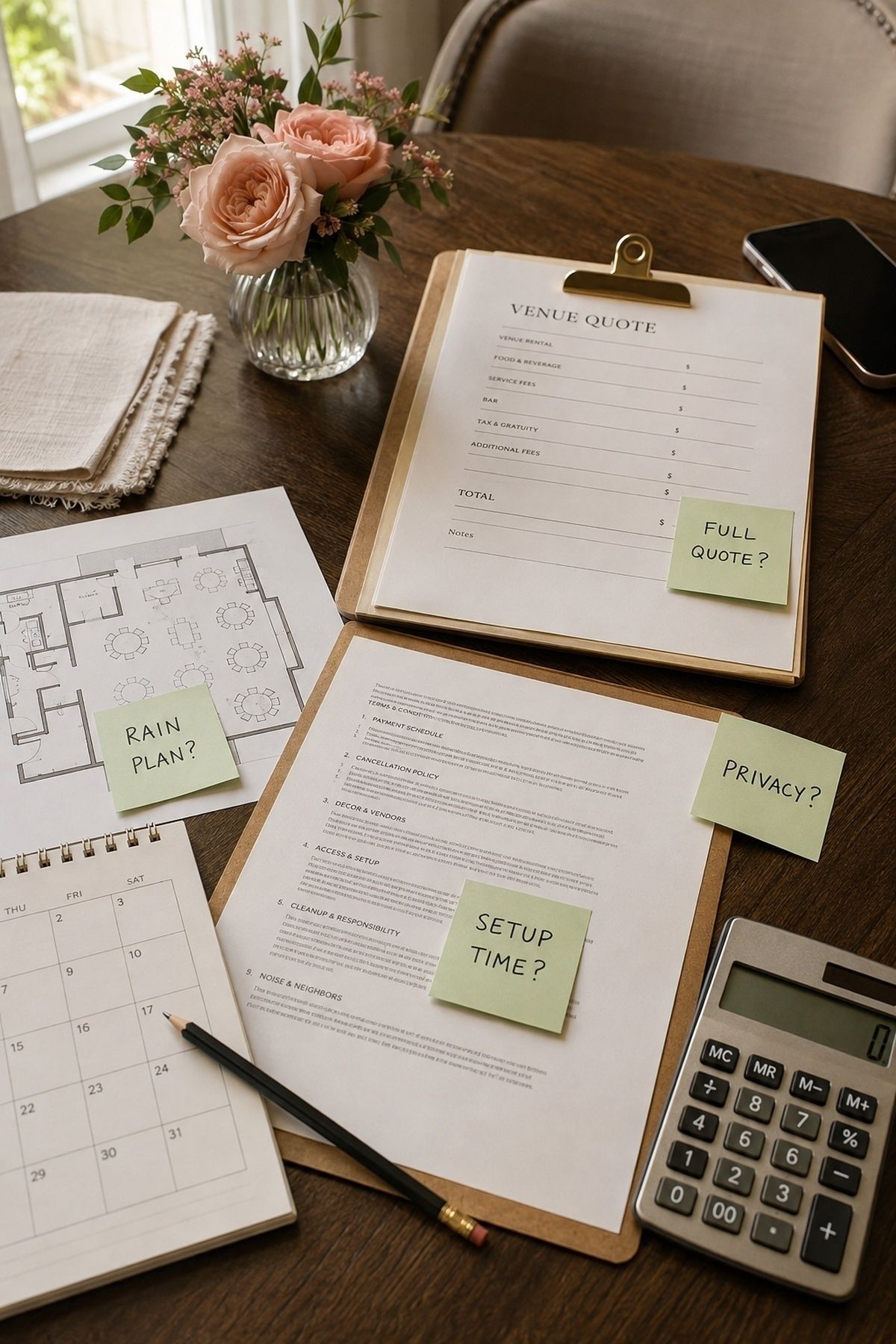
Be careful with venues that can only show large weddings, cannot explain pricing for your guest count, avoid questions about privacy, or promise that the staff will “figure it out” on the day. Small receptions need less production, but they do not need less clarity.
Other red flags include vague minimum-spend terms, no written rain plan, narrow service paths, inaccessible restrooms, loud adjacent rooms, strict decor rules revealed late, no setup window, unclear cleanup responsibility, and a coordinator who treats your reception like a normal dinner reservation. If a venue cannot describe the flow, you may end up designing the entire guest experience yourself.
Budget red flags matter too. A low room fee can become expensive if you need rentals, staffing, shuttles, audio, lighting, weather backup, and cleanup labor. Your small wedding budget breakdown should include the full venue quote so the most charming room does not quietly become the most complicated one.
FAQ
What Are The Best Small Wedding Reception Venues?
The best small wedding reception venues are private dining rooms, restaurant buyouts, boutique hotel rooms, inns, garden patios, courtyards, rooftops, wine rooms, historic homes, and small event spaces that fit the guest count comfortably. The strongest option is usually the venue that supports dinner flow, conversation, privacy, restrooms, service paths, and the full timeline without extra workarounds.
How Do I Know If A Reception Venue Is Too Big?
A reception venue is probably too big if your guest list looks scattered in the floor plan, speeches feel far away, tables need extra decor just to fill the room, or the venue’s best photos all show much larger weddings. Ask what guest count the room feels best with, not just the maximum capacity.
Are Restaurants Good Small Wedding Reception Venues?
Restaurants can be excellent small wedding reception venues because food, service, furniture, glassware, lighting, restrooms, and cleanup are already built in. They work best when you have a private room or buyout, a clear minimum-spend agreement, enough privacy for toasts, and a menu format that can serve the whole group smoothly.
What Should I Ask Before Booking A Small Reception Venue?
Ask about the best guest count for the room, full pricing, food-and-beverage minimums, tax, gratuity, service charges, included rentals, privacy, sound rules, music limits, ceremony options, setup time, cleanup, parking, accessibility, restrooms, weather backup, vendor rules, and who will manage the reception on the day.
Can A Small Wedding Reception Venue Still Have Music And Toasts?
Yes, a small reception venue can still have music and toasts if the room allows sound, has the right acoustics, and gives guests enough space to focus. Confirm microphone rules, speaker access, music volume, curfew, and whether there is room for a first dance or after-dinner playlist before you book.
How Do You Make A Small Reception Venue Feel Special?
Make a small reception venue feel special by choosing a room that already has warmth, then adding details guests notice up close: assigned seats, thoughtful menus, place cards, candles if allowed, flowers scaled to the table, a guest book, a short toast plan, and food that feels generous for the size of the group.
Final Thoughts
A small wedding reception venue should make the dinner feel like the center of the celebration, not the smaller version of something else. When the room fits, guests lean into conversation, toasts feel close, food arrives with ease, and the whole evening feels cared for.
Choose the place that helps your guest list feel complete. That may be a private dining room, a restaurant buyout, a boutique hotel, an inn, a garden patio, or a covered terrace. The style matters, but the real test is whether people can arrive, sit, eat, speak, listen, laugh, and leave feeling like the night was built around them.
For under 50 guests, prioritize intimate reception spaces under 50 guests that protect privacy, keep dinner service close, and let every toast carry across the room.
Last update on 2026-10-03 / Affiliate links / Images from Amazon Product Advertising API