

Only book an Airbnb wedding venue after the host approves the event in writing, with your total guest count, vendors, hours, music and parking spelled out. Overnight capacity is not the same as an event limit, so confirm both, check local rules, and price the whole weekend before you pay a deposit.
Here’s a small fact that saves a lot of heartache: in June 2022, Airbnb made its ban on disruptive parties and events permanent, so a wedding at a rental house only works when the host has said yes to that exact event. The listing photos of a sunset dinner on the deck don’t count as a yes, and neither does a friendly “should be fine!” message.
Before you fall for a farmhouse with a porch and a lawn that looks made for chairs, this guide walks you through what to get in writing, how to count people properly, what a house needs to host 25 guests instead of 8 sleepers, and when to walk away and pick a venue that’s built for events. An Airbnb wedding venue can be lovely, it just needs paperwork first.
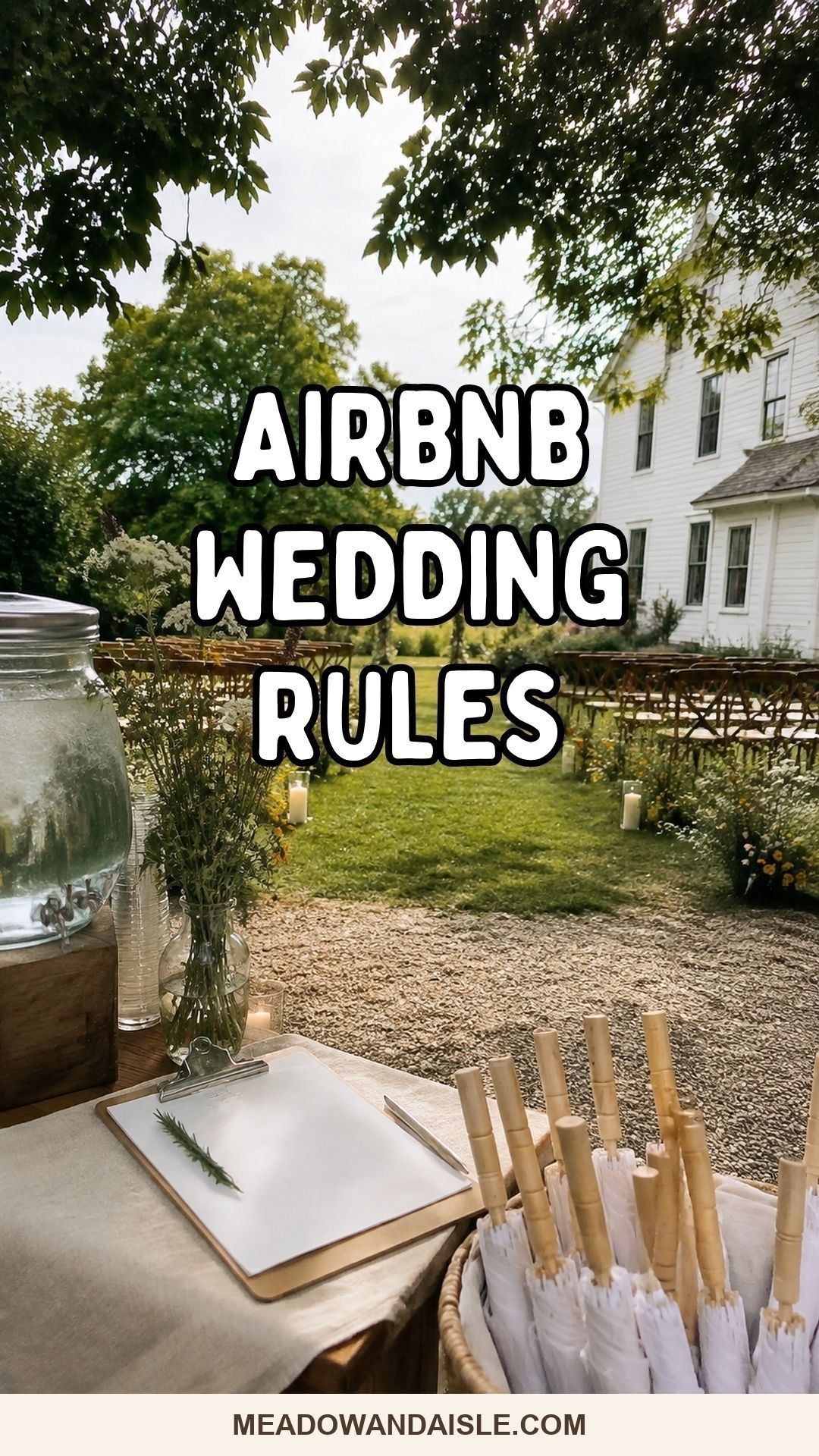
Recommended Airbnb Wedding Venue Essentials
A rental house comes with beds and a kitchen, not wedding gear, so these are the small things that make it feel hosted.


Recommended blogs to read:
- Small Wedding Venue Checklist For The Tour Before The Yes
- Wedding Venue Mistakes That Look Fine On The Tour
- Bali Wedding Venue Ideas for an Intimate Island Celebration
- Costa Rica Wedding Venue Ideas for a Wildly Intimate Celebration
- How Far In Advance Should You Book A Wedding Venue For A Small Celebration
- Micro Wedding Cost: The Honest Price Picture
Airbnb Wedding Venue Rules To Check Before You Book
Permission comes first, then numbers, then the local rules. If any of those three is fuzzy, keep scrolling listings.
1. Get Written Approval Before You Treat It Like A Venue
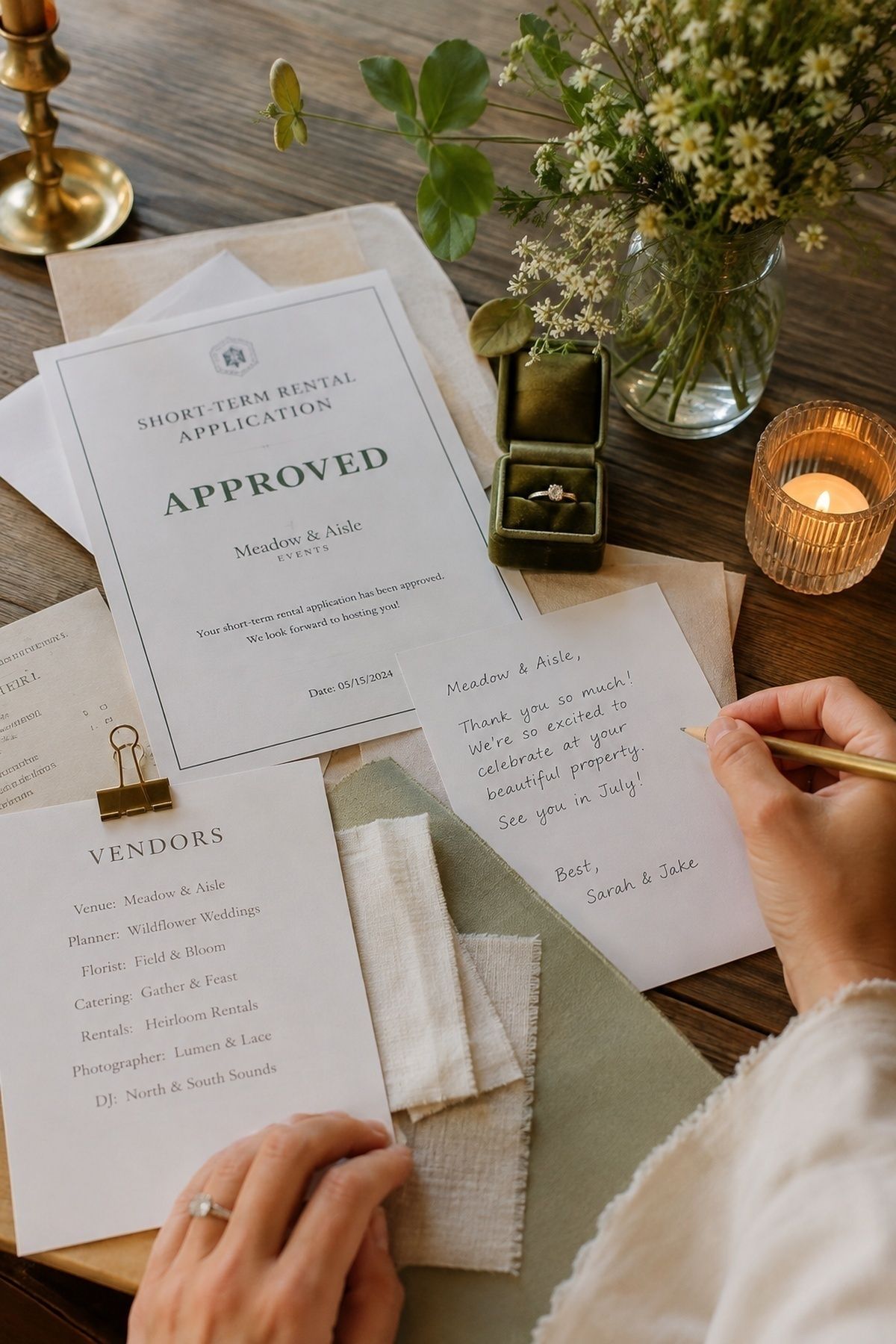
A wedding brings people, vendors, music and cars to a property that was priced and insured as a place to sleep, which is exactly why hosts get nervous and why you need their approval in writing before any money moves. That approval letter in the photo, stamped and sitting next to a vendor list, is the mood you’re going for. Send the host one message that spells out:
- the date, the start and end time, and setup and cleanup hours
- how many people sleep there and how many come for the day
- which vendors arrive (caterer, photographer, florist, officiant)
- music, alcohol, candles and any rentals like chairs or a tent
- where everyone parks
Keep the reply inside the booking platform, or in a signed contract if you book direct. A phone call is lovely, but you can’t screenshot a phone call when a neighbor complains.
2. Separate Overnight Guests From Wedding Guests
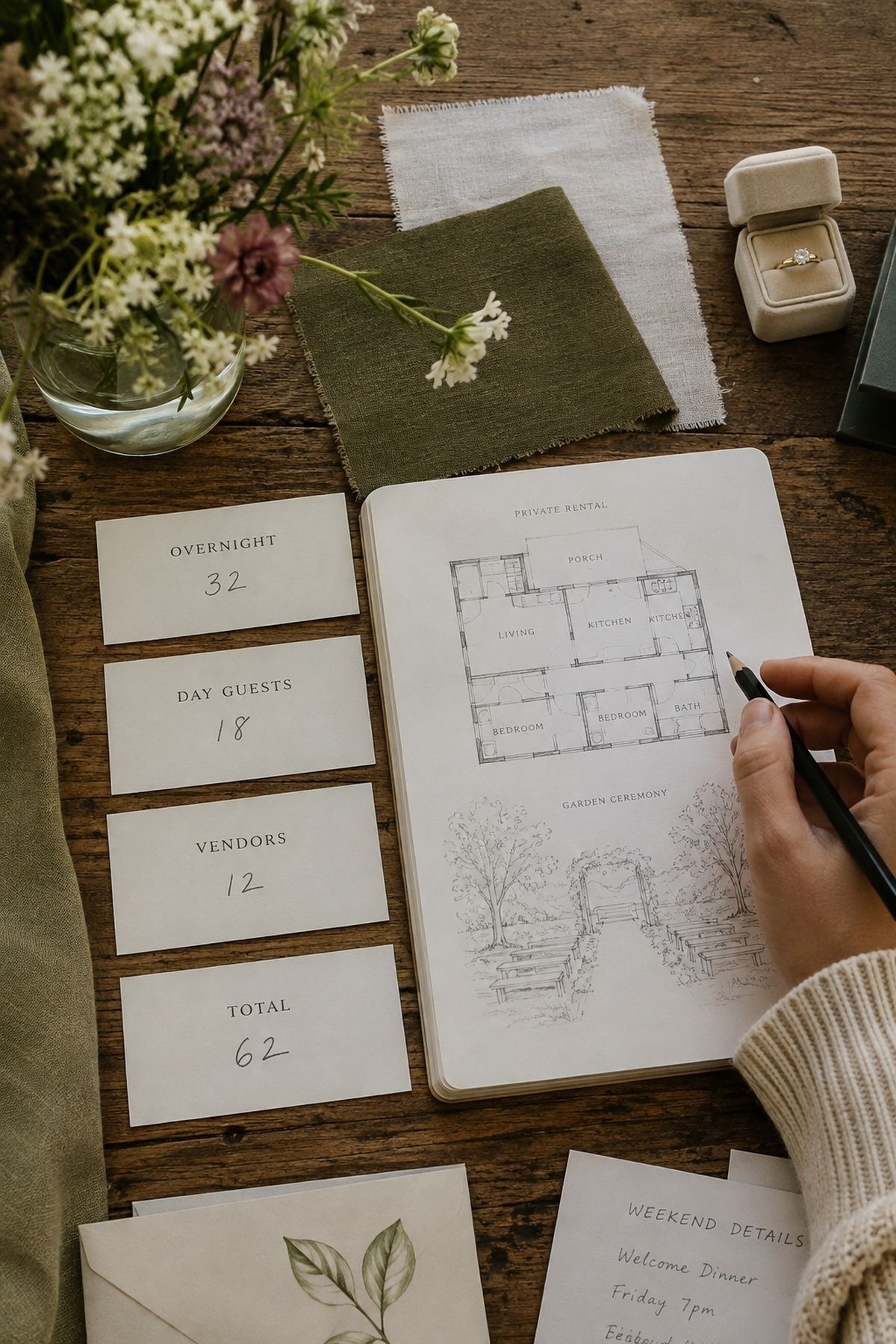
A house that sleeps 12 does not automatically allow 30 people on the lawn for vows and dinner. Sleeping capacity is about beds and bathrooms, while an event limit is about everyone who walks onto the property that day, and the second number is the one that gets people in trouble.
Do the math the way that notebook sketch suggests, room by room and then outside. Count your guests, then add the officiant, the photographer, the caterer and servers, hair and makeup, anyone delivering rentals and the friend who’s “just helping set up.” A 20-guest wedding very easily becomes 32 people on site by the time the cake arrives.
Then ask the host for both numbers in writing, the overnight limit and the total event limit including vendors. If they only give you one, ask again.
3. Read Platform, House, And Local Rules Together
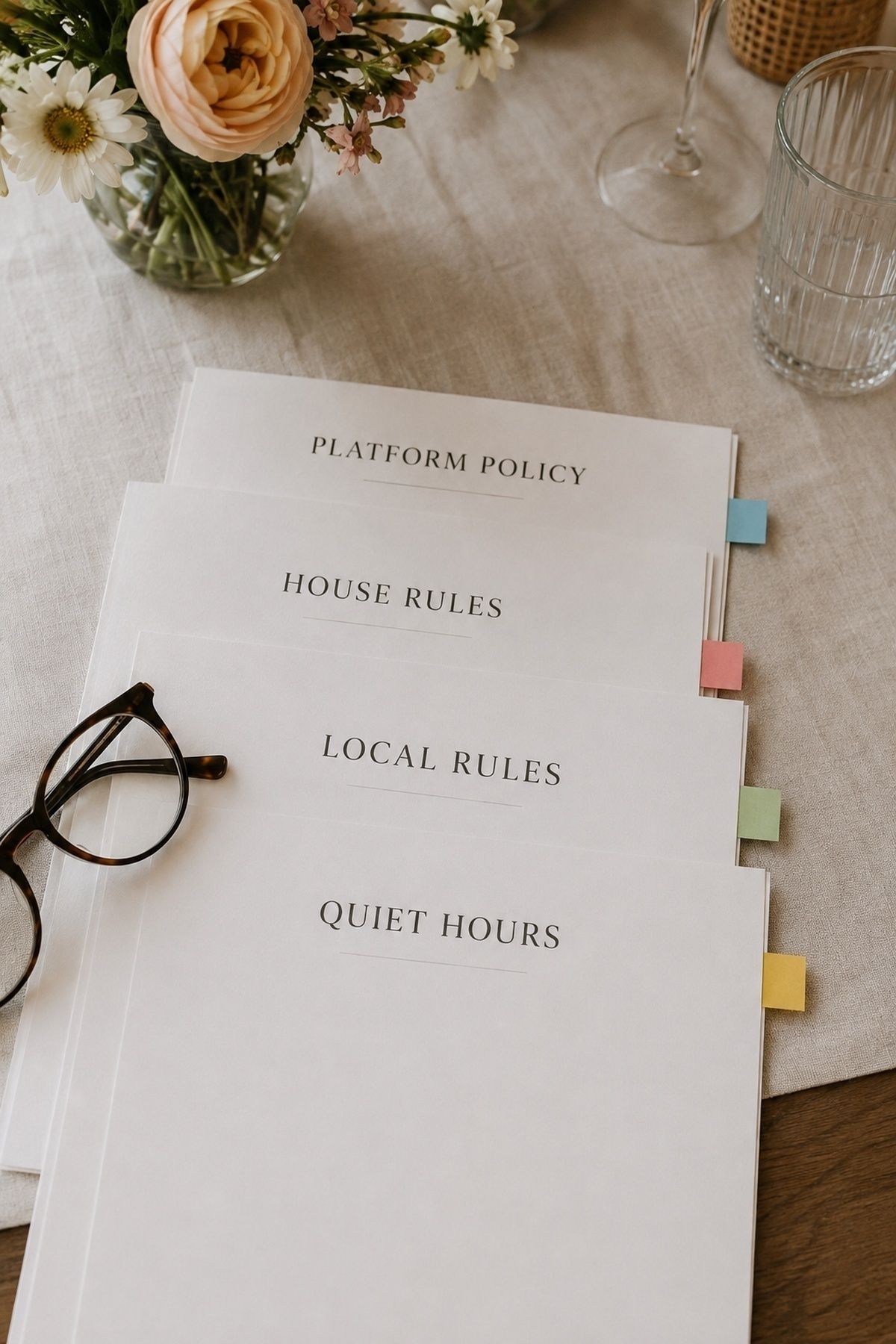
Three layers of rules apply at once, and they all have to agree: the platform’s policy, the house rules on the listing and whatever your city, county or HOA says about events, noise and parking. Those tabbed folders in the photo are the right instinct, because one friendly host can’t override a town noise ordinance or a homeowners’ association that bans gatherings on Saturday nights. Read the listing for words like party, event, quiet hours, maximum occupancy, candles, confetti and parking, and if anything conflicts with what you’re planning, ask before you book, not after. A rental feels casual, but the rules behind it aren’t, and the safest bookings are the ones where every layer points the same way.
What Does a Rental House Need Before It Can Host a Wedding?
It needs the boring stuff venues already have: parking, enough bathrooms, power, a rain plan and a working space for food. Walk the property like you’re the one responsible for 25 people, because you are.
4. Check The Property Logistics Like A Planner

That clipboard on the gravel path, with a restroom sign on one side and a parking arrow on the other, is how you should tour a rental. Walk the guest route first, then the working route:
- where cars go, and whether the driveway fits a rental truck
- how many bathrooms day guests can use, and whether a septic system can handle 30 people
- where the ceremony moves if it rains
- outlets and power for music, lights, coffee and hair tools (that extension cord reel is not a decoration)
- a hidden spot for trash, dirty dishes, flower buckets and vendor meals
Paths matter too. Gravel, wet grass and porch steps are charming at 4 pm and a twisted ankle waiting to happen at 10 pm, so plan lighting along anything people walk on after dark.
5. Compare The Full Wedding Cost, Not Just The Nightly Rate

The nightly rate is the smallest number on that cost sheet. Once you add cleaning and service fees, taxes, extra nights for setup and cleanup, a damage deposit, event fees, insurance, rentals, catering, staff, bathrooms, lighting and trash removal, a cheap-looking house can cost more than a small venue.
From the banquet side, here’s how venues price this, which helps you compare fairly. Many event spaces charge a room fee plus a food and drink minimum, and that minimum quietly includes tables, chairs, linens, plates, glasses, a kitchen that can actually cook for a crowd and staff who clear and wash it all. At a rental house, every one of those lines becomes your own rental order or your own Sunday morning. A home kitchen is built for pancakes for eight, not plated dinners for 30 (ask any caterer who’s tried).
So put both options side by side on paper, and if you’re drawn to the house mainly because the wedding is small, compare it with micro wedding venues that already host groups your size.
6. Think Through The Guest Experience
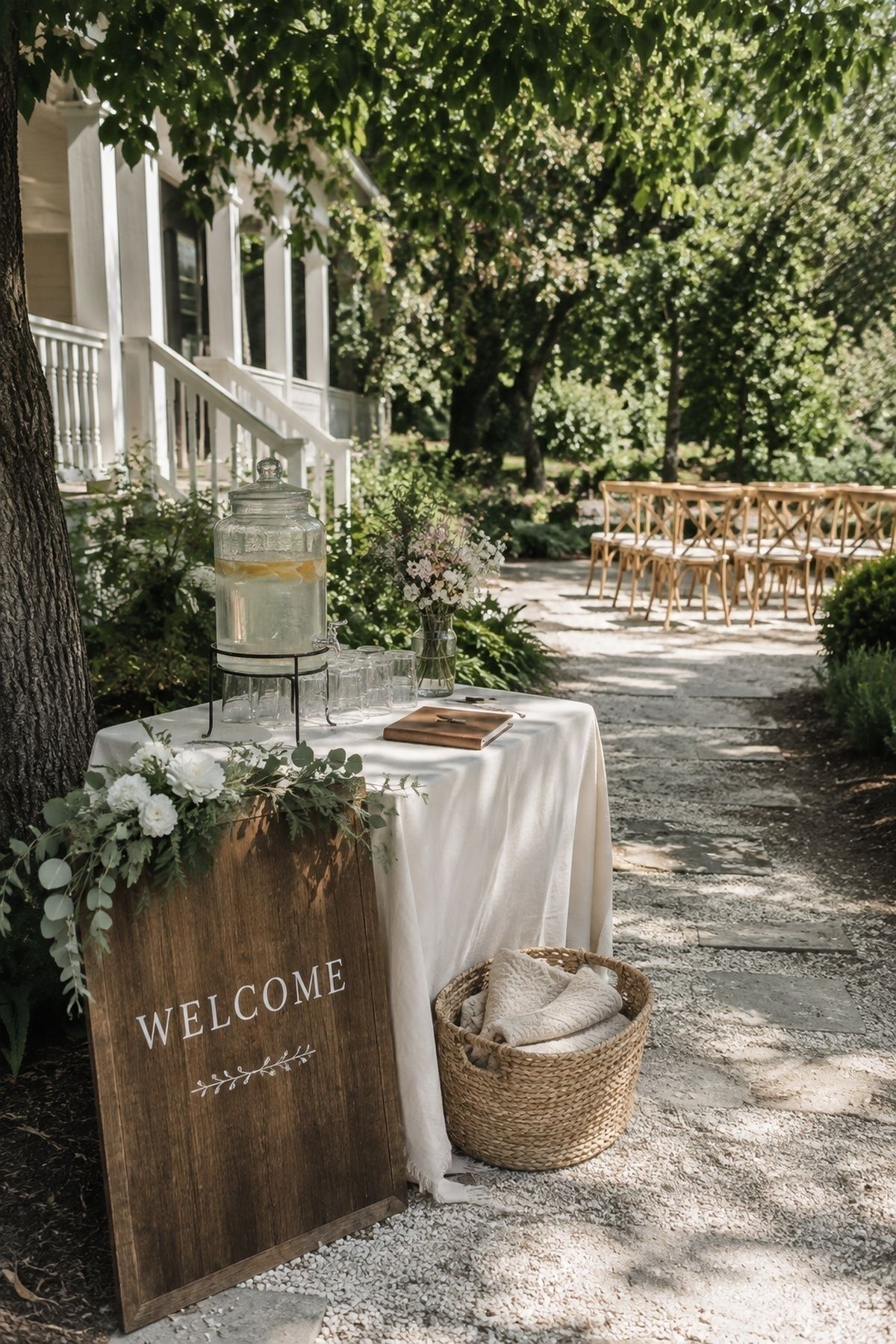
Guests should arrive feeling welcomed, not like they’re sneaking into someone’s vacation. That wooden welcome sign at the path and the drink dispenser on a linen table do a lot of quiet work, because they tell people they’re in the right place and that someone thought about them before they got thirsty.
Picture your actual list walking in. Grandparents on gravel, toddlers near a pool, a friend who doesn’t drive and needs a rideshare to a remote cabin, someone who needs a step-free route to the bathroom. If everyone is also staying the weekend, think about who gets the quiet bedroom, when showers happen before the ceremony and what breakfast looks like the morning after, because a shared house with 12 people and two bathrooms gets loud fast.
What Should You Ask the Host, and What If the Answer Is Vague?
Ask everything in one message and keep the replies. A vague answer is your sign to look at places that host events for a living.
7. Ask The Host These Questions Before Booking

Questions feel awkward until you see a printed list like the one on that desk, sorted by guests, vendors, music, parking and insurance. Copy something close to this into your message:
- Do you allow a wedding ceremony and reception here, and for how many people in total?
- Can vendors arrive early, and is there a time everyone must be gone?
- What are the quiet hours, and is amplified music allowed?
- How many cars fit, and is street parking legal?
- Do you require event insurance or an extra deposit?
- Have you hosted a wedding this size before, and were the neighbors told?
A good host won’t be offended. Hosts who have done this before usually answer fast and in detail, and the ones who go quiet or change the subject have just told you what you needed to know.
8. Consider Safer Alternatives If Permission Feels Unclear
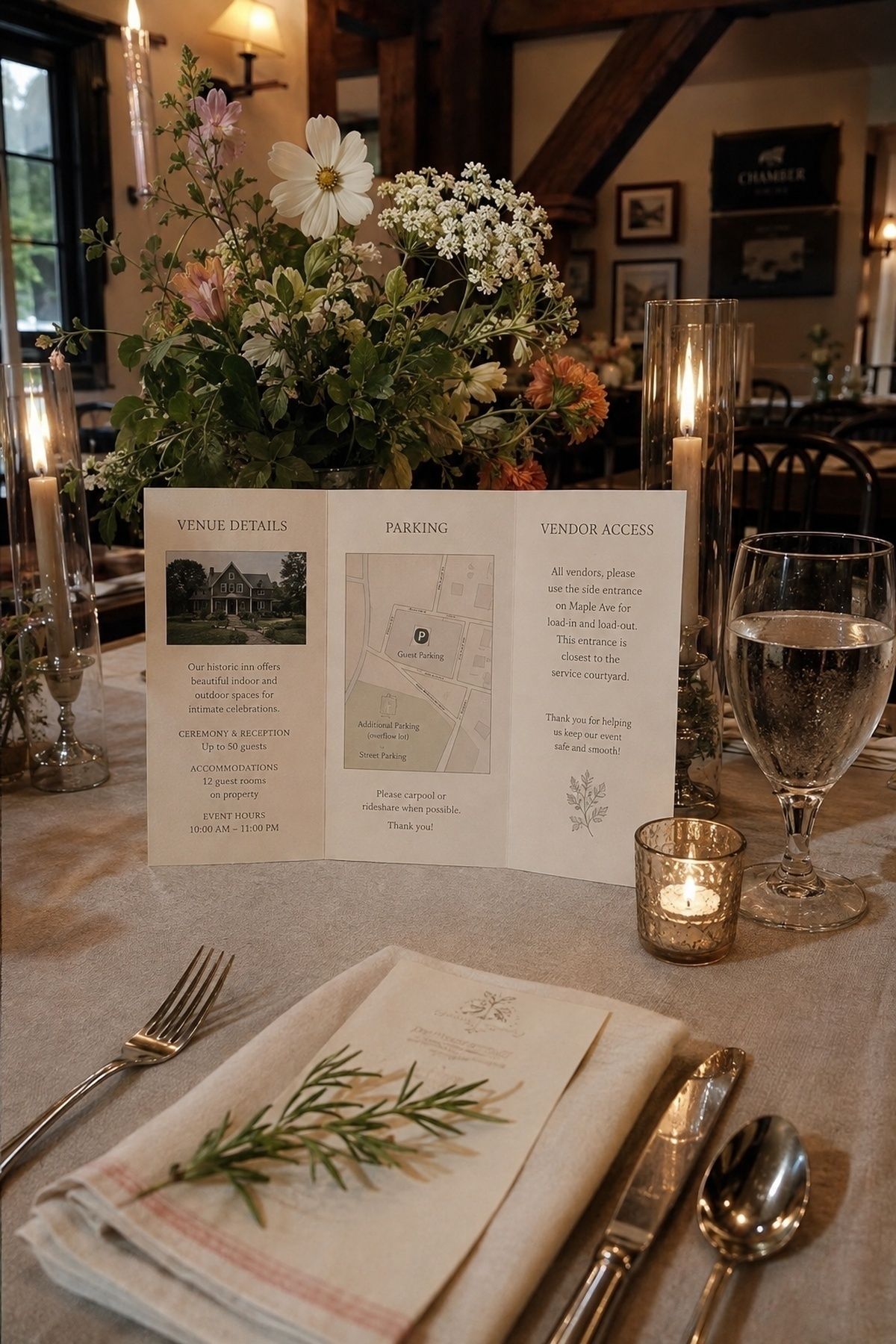
If the house is beautiful but the rules feel foggy, keep the feeling and change the format. Inns, bed-and-breakfasts, small estates and boutique hotels often host private events and overnight guests in one place, with event policies, staff and parking already sorted, and the candlelit table in that photo could just as easily be a private dining room. Bring this small wedding venue checklist to every tour so you compare them the same way.
You can also split the weekend. Book the house for sleeping and relaxing, then hold dinner in a private room for a restaurant micro wedding, or keep the legal part simple with a courthouse micro wedding followed by a long meal and portraits. Nobody at that dinner will miss the lawn.
9. Avoid These Private Rental Wedding Mistakes
The biggest mistake is booking first and asking second. The next ones come right behind it: counting invited guests but forgetting vendors, and assuming a small wedding doesn’t need bathrooms, parking, sound, staff, a rain plan or cleanup. A smaller guest count takes some pressure off, but you’re still hosting people, and the house won’t do any of that for you. There’s a longer list in wedding venue mistakes.
The other one is decorating someone else’s home like it’s a ballroom. Tape on walls, nails, glitter, real wax candles near curtains, confetti in the lawn and wet flower buckets on wood floors are how deposits disappear.
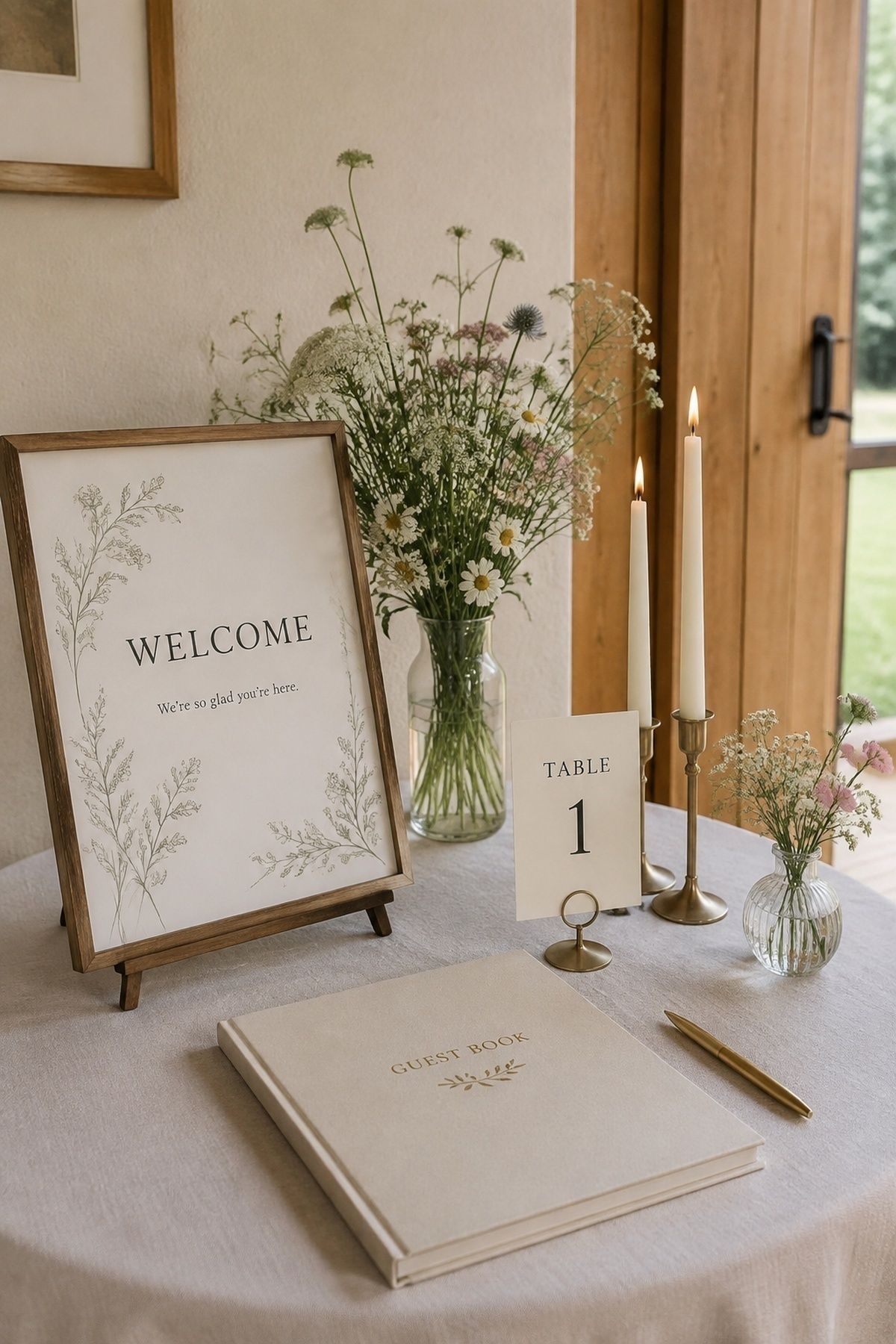
Keep everything freestanding and removable, like that table with an easel welcome sign, a numbered card, a guest book and flowers in heavy vases. If it can be packed into a box at midnight without a single tool, it’s rental-friendly. You’ll find more in Wedding Venues & Destinations.
What Size Wedding Works at an Airbnb?
Small ones work best, roughly 10 to 30 people including vendors, and only at listings where the host has approved that number in writing. The real limit is usually the indoor backup plan, because if it rains, everyone needs to fit inside around tables, with bathrooms that can keep up. If your guest list can’t sit down together in the living and dining rooms, the house is too small for the wedding, however big the lawn looks.
Frequently Asked Questions
Can You Have A Wedding At An Airbnb?
Yes, but only when the host approves that specific event in writing and local rules allow it. Airbnb bans disruptive or unauthorized parties, so get the guest count, vendors, timing and parking confirmed before booking. If how far in advance should you book a wedding venue is next on your list, we cover it in full.
Is it legal to get married at an Airbnb?
The marriage itself is legal anywhere your officiant and license are valid. What can be a problem is the event, since local short-term rental rules, noise ordinances and HOA rules may limit gatherings, so check those along with the host’s permission.
Do Overnight Guest Limits Include Wedding Guests?
Usually not. The overnight limit counts people sleeping there, while your wedding count includes every guest and vendor on site, so ask for both numbers.
Is Vrbo better than Airbnb for a wedding?
Neither platform is built for weddings, and the host’s written approval matters more than the website you book through. Some couples find hosts who rent directly, with their own event contract, easier to work with.
Do you need event insurance for an Airbnb wedding?
Often, yes. Many hosts ask for one-day event liability insurance once vendors and alcohol are involved, and even when they don’t, it’s worth pricing because a regular booking isn’t written for a party.
What happens if you hold a wedding at an Airbnb without permission?
The host or platform can end the stay, keep your deposit or charge for damage, and neighbors can call in noise complaints. It’s not worth risking the day on.
Key Takeaways
- Get the host’s approval for the exact event in writing, inside the booking platform or a contract.
- Ask for two limits: people sleeping there and total people on site, vendors included.
- Price the whole weekend, including rentals, staff, insurance and cleanup, before comparing with a venue.
- Keep decor freestanding and removable so your deposit comes back.
- If the answers stay vague, book the house for sleeping and hold the wedding somewhere built for events.
So, Is It a Wedding Venue or a Lovely Place to Sleep?
Plenty of gorgeous rentals are wonderful places to stay and terrible places to host 30 people, and that’s fine, they just have a different job. If your host says yes to everything in writing and the numbers still work, enjoy it, because a wedding at a house where everyone wakes up together the next morning is a special thing. If they hesitate, let the house be your weekend base and hold the dinner somewhere with a real kitchen. Before you sign anything, read Airbnb’s current party and event rules once more, then ask yourself one question: would you be calm if the host showed up halfway through dinner?
Last update on 2026-11-29 / Affiliate links / Images from Amazon Product Advertising API