

Small indoor wedding venues are rooms that hold roughly 10 to 60 guests comfortably, like restaurant private rooms, wine bars, boutique hotel salons, libraries, galleries, historic homes, lofts, conservatories and small chapels. Pick the type by how it charges (room fee, food-and-beverage minimum or full rental) and by whether vows and dinner can happen without a long move.
A big room with a small guest list feels empty, and a small room with too many chairs feels cramped. What you want is a space that already has some warmth in it (wood, books, plants, candlelight, good windows) and fits your real headcount, not the optimistic one.
This guide walks through eleven types of small indoor wedding venues, what each one looks like on the day, how each usually charges, and the questions that save you from booking a pretty room that doesn’t work. It ends with a search checklist for finding one in your own area.
Recommended Small Indoor Wedding Essentials
These small pieces help any indoor room feel set for a wedding, whether it is a restaurant, a library or your own dining room.


Recommended blogs to read:
- Small Outdoor Wedding Venues That Work Beyond The Photos
- Small Wedding Venues For 10 Guests That Don’t Feel Empty
- Small Wedding Venues For 30 Guests That Feel Naturally Full
- Small Wedding Venues For 50 Guests With The Right Fit
- Affordable Small Wedding Venues That Still Feel Special
- Garden Wedding Venues For A Soft, Guest-Friendly Day
How To Choose Small Indoor Wedding Venues That Feel Warm And Full
The best small indoor wedding venue is the one where your guest count fills about two-thirds of the room once tables are in, the vows and dinner can happen close together, and you know exactly what the bill includes. Start by choosing a venue type, then compare actual rooms.
Here is how the most common indoor types compare at a glance. Guest ranges are a comfortable seated fit, not the fire-code maximum.
| Venue type | Comfortable seated fit | How it usually charges | What’s often included | Best for |
|---|---|---|---|---|
| Restaurant private room | 12 to 50 | Food-and-beverage minimum | Tables, linens, staff, kitchen | Dinner-first weddings |
| Wine bar or tasting room | 15 to 45 | Buyout or minimum, often with a wine package | Bar staff, glassware | Cocktail-style or tasting menus |
| Boutique hotel salon | 20 to 60 | Room fee plus catering minimum | Catering, staff, rooms upstairs | Out-of-town guests |
| Library or bookstore | 20 to 40 | Hourly or evening rental | Usually just the room | Book lovers, quiet ceremonies |
| Gallery or small museum | 25 to 60 | Rental fee, approved caterer list | Room, sometimes security | Modern, art-filled settings |
| Historic home | 20 to 60 | Rental fee by block of hours | Furniture, grounds | Ceremony and dinner in one place |
| Loft or studio | 20 to 60 | Hourly rental | The empty room | Couples who want full control |
| Conservatory or greenhouse | 20 to 50 | Rental fee | Plants and glass, little else | Garden look with a roof |
| Chapel plus nearby dinner room | 10 to 60 | Ceremony fee plus separate reception | Pews, officiant options | Traditional vows |
| Private club or community room | 25 to 60 | Low room fee, member sponsor at clubs | Tables, chairs, parking | Budget-friendly and practical |
| Home dining or living room | 10 to 25 | No fee, but rentals and catering | Atmosphere you already love | The most personal option |
1. Restaurant Private Rooms
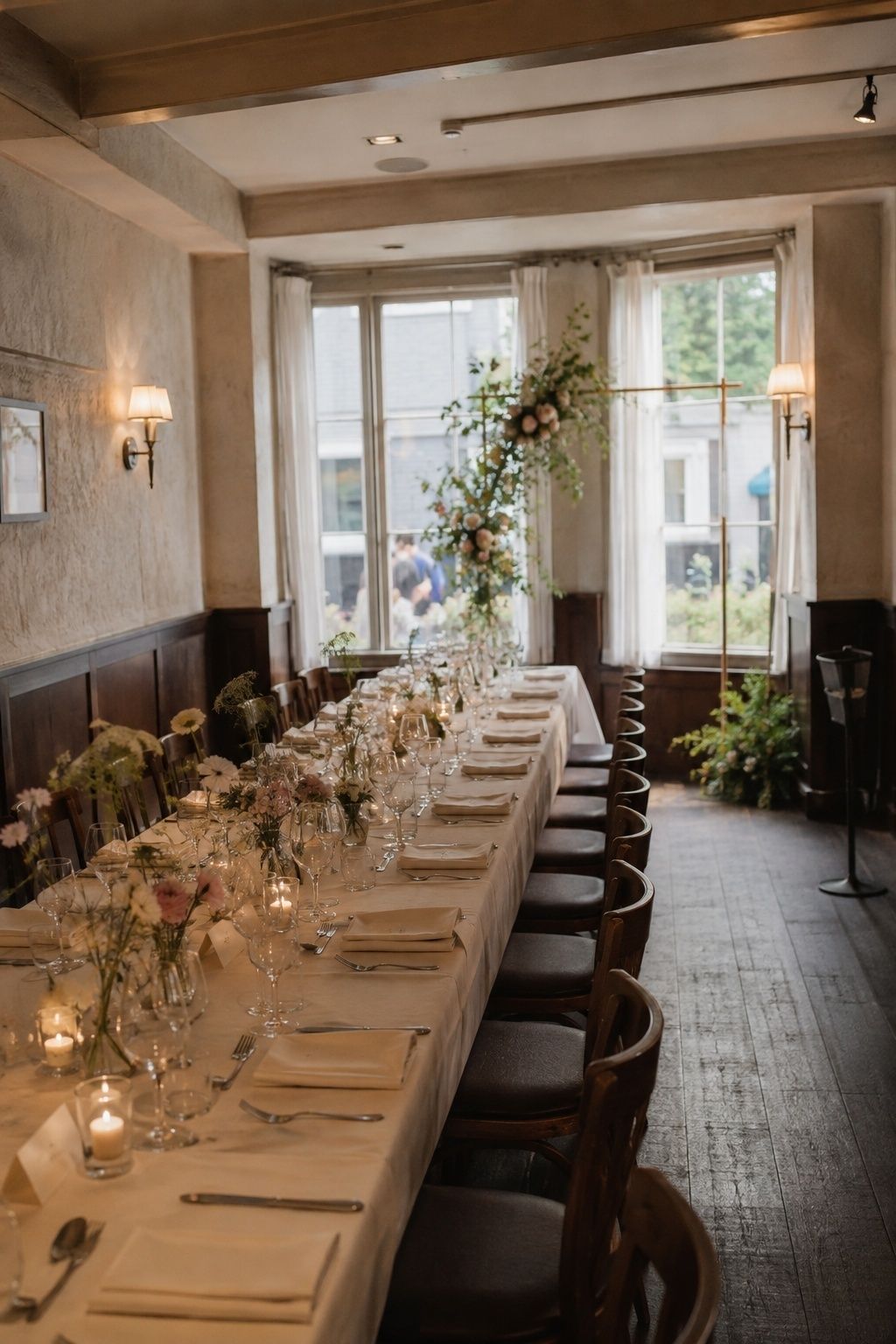
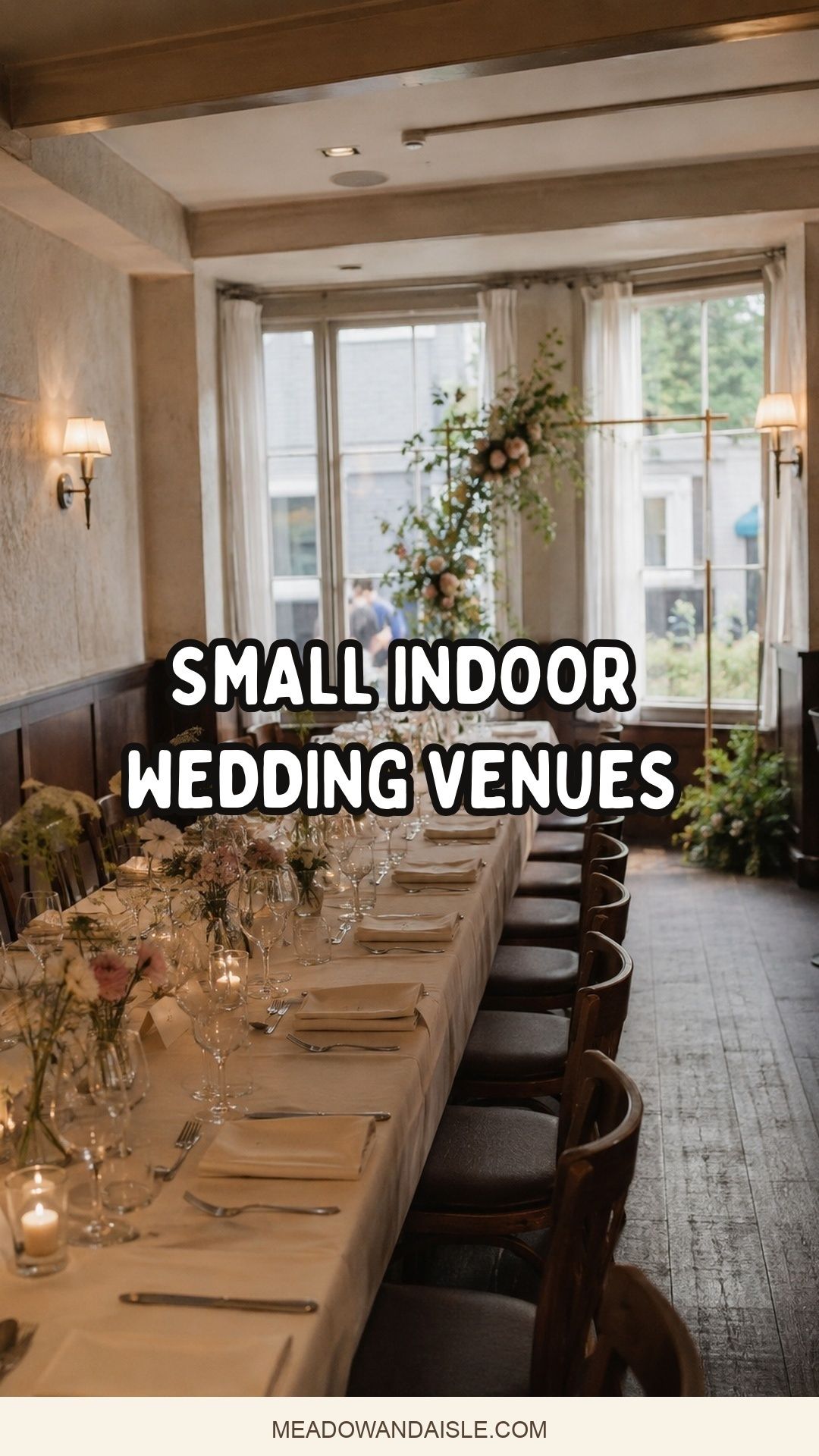
This format is easy, and the photo shows why: one long table in white linen, bud vases and low candles down the middle, dark wood paneling, wall sconces and two tall windows at the end. The kitchen, staff, glassware and cleanup already exist, so the room only needs flowers and place cards.
Most restaurants price a private room with a food-and-beverage minimum, which is the amount you agree to spend on food and drinks before tax and service charge. From the kitchen side, a fixed menu of three or four courses is much easier to time than ordering off the full menu, so ask for one. Ask if vows can happen in the room before dinner, if regular diners share the hallway and restrooms, and if the kitchen will pace courses around the toasts. If you love this idea, the private dining room wedding guide goes deeper on menus and timing.
2. Wine Bars And Tasting Rooms
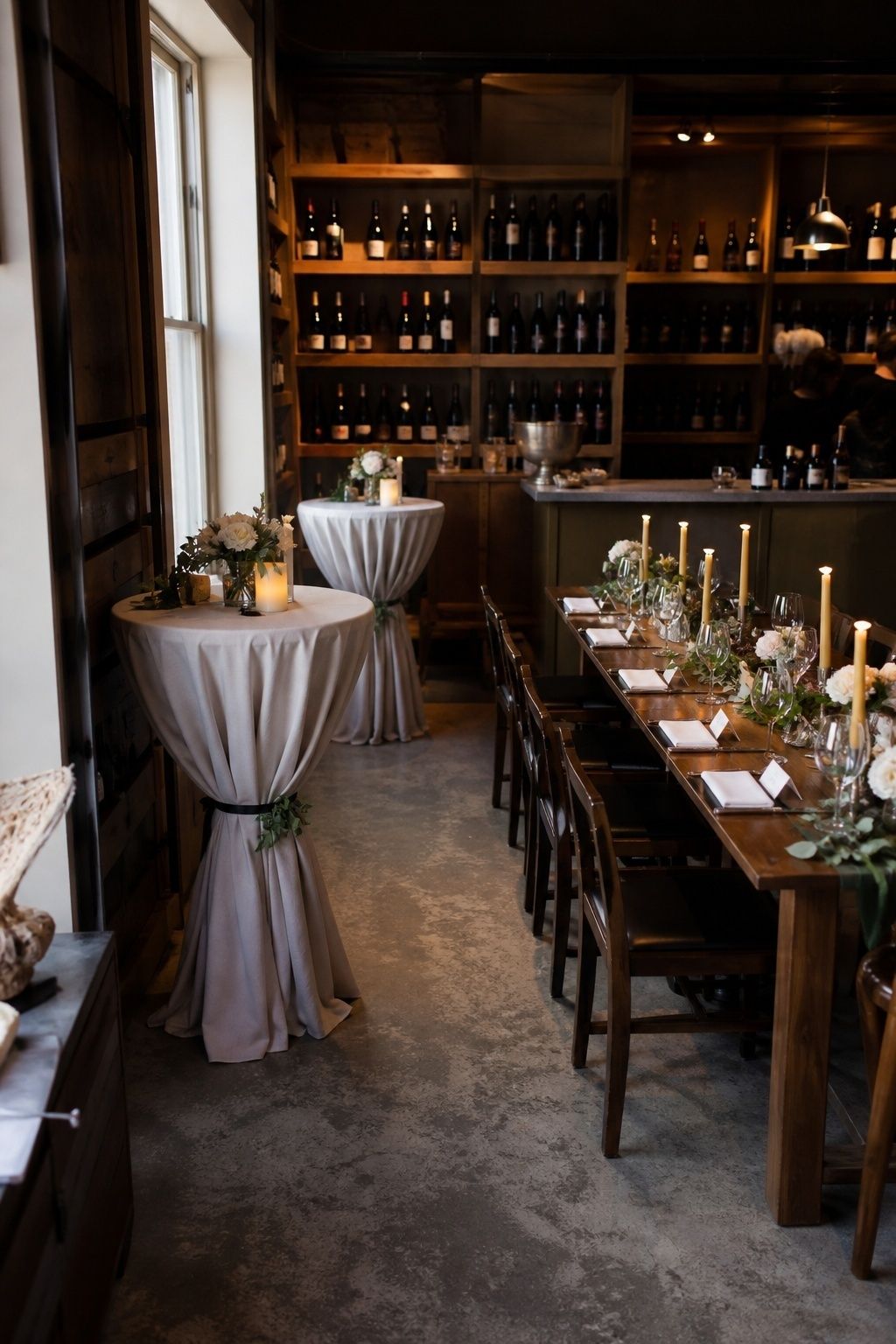
In this tasting room the wine wall does the decorating. A long bare-wood table with brass taper candles and a loose greenery runner sits beside floor-to-ceiling bottle shelving, and two high-top tables in draped linen make a standing cocktail spot by the window.
Tasting rooms often require their own wine package or a minimum on drinks, and some have no full kitchen, so check catering rules early. Barrels and retail shelves can’t always move, so ask for a seated floor plan with your exact number before you sign.
3. Boutique Hotel Event Rooms
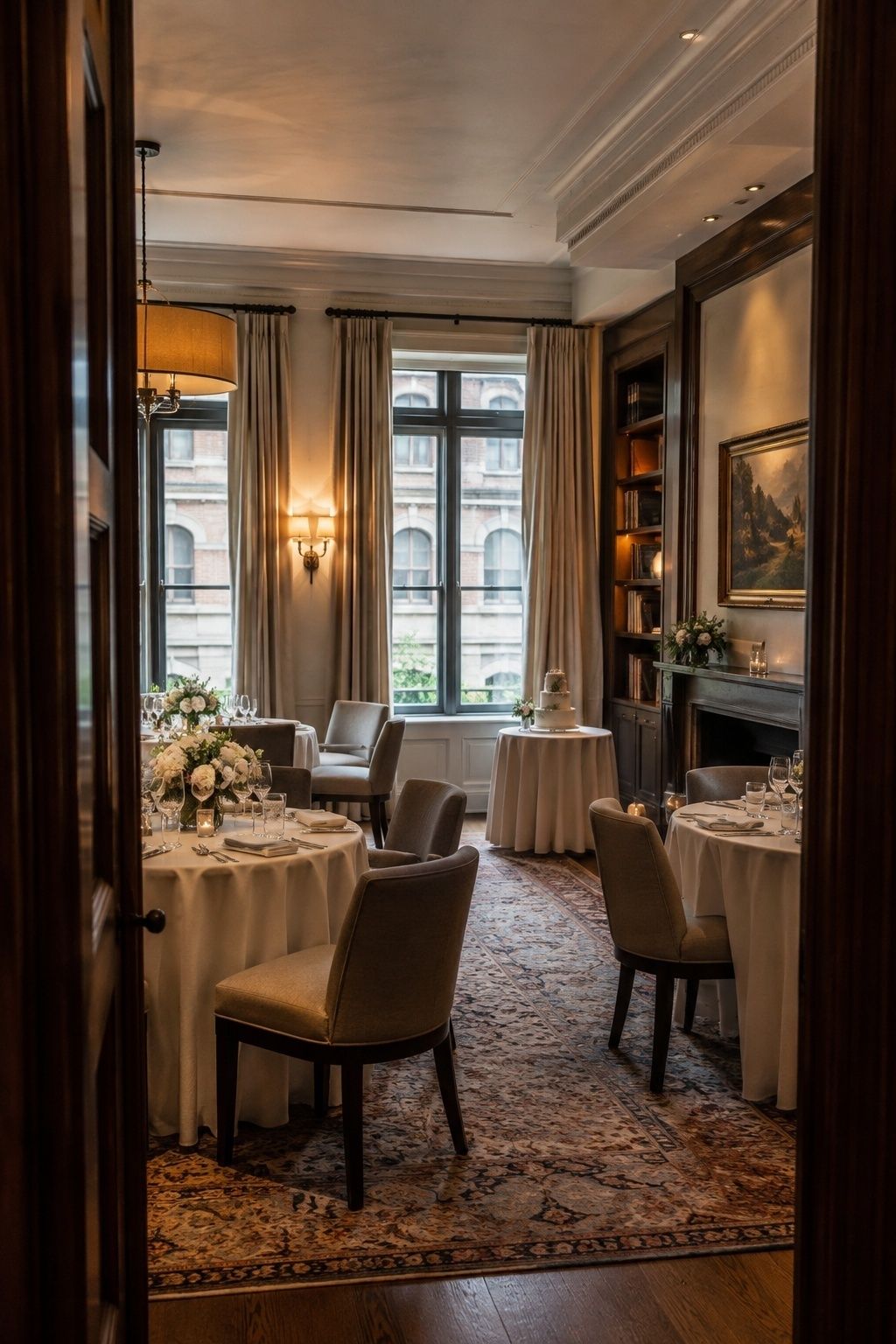
This room has round tables in white cloths, gray upholstered chairs, a patterned rug, a marble fireplace and tall windows with heavy drapes. That’s the kind of hotel space you want for a small wedding: a salon, library or private dining room, not half a ballroom with the partitions closed.
Hotels are handy when relatives travel, since guests can sleep upstairs and there are elevators, restrooms and a lobby to rest in. In banquet service, hotels usually ask for a catering minimum plus a room fee, then add a service charge and tax on top, so ask for the all-in number for your date and day of the week.
Read more: Small Wedding Venues For 50 Guests With The Right Fit
4. Libraries And Bookstores
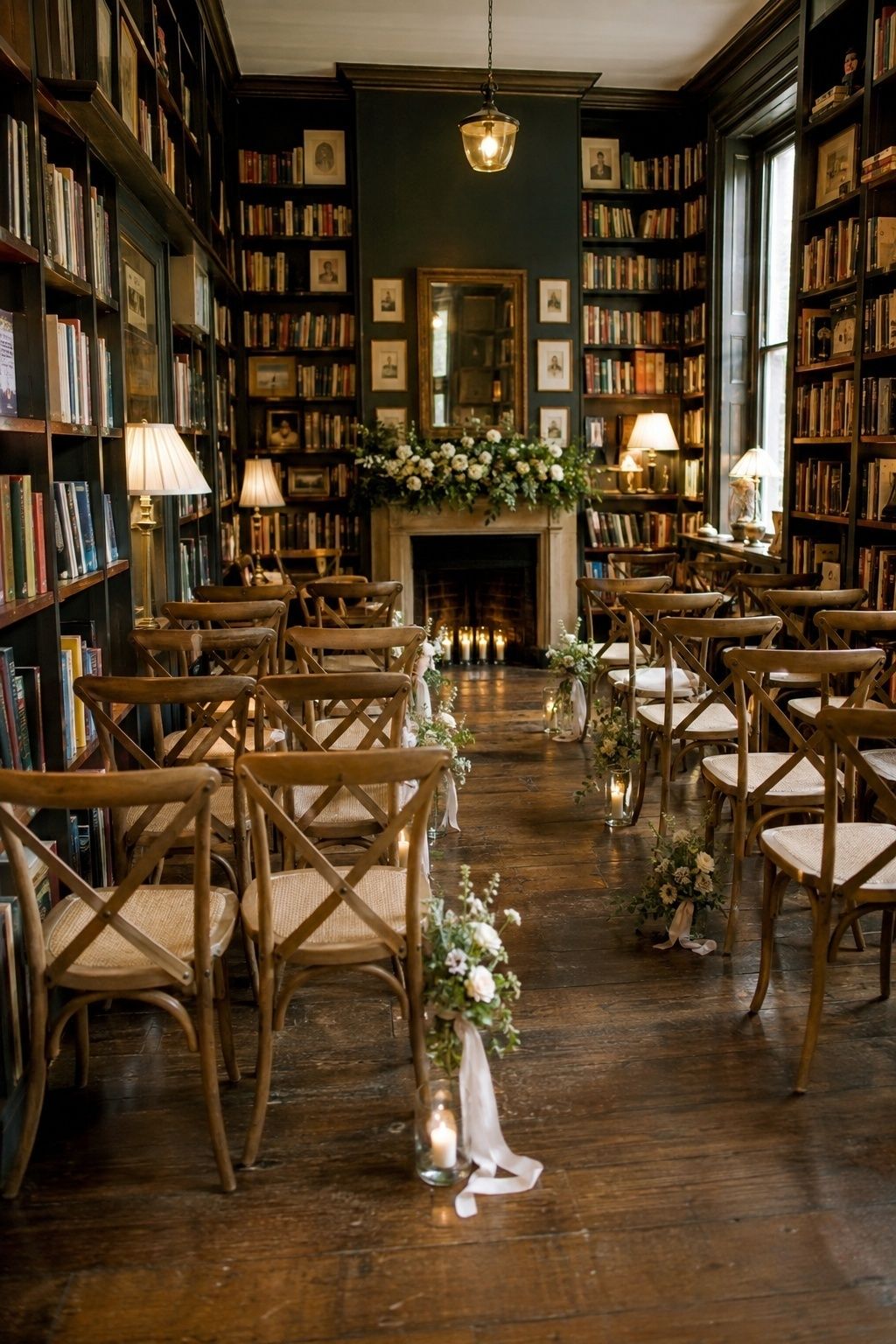
This library has floor-to-ceiling shelves, a fireplace draped in white flowers and greenery, reading lamps and rows of wooden cross-back chairs with small floral clusters on the aisle. A room like this barely needs styling, so it works well for 20 to 40 guests.
The catch is that libraries are not built for events. You may need to bring in catering, rentals, sound and a staff member, and many ban open flames and drinks near the collection. Find out if the public will be in the building, and who resets the chairs between vows and dinner.
5. Art Galleries And Small Museums
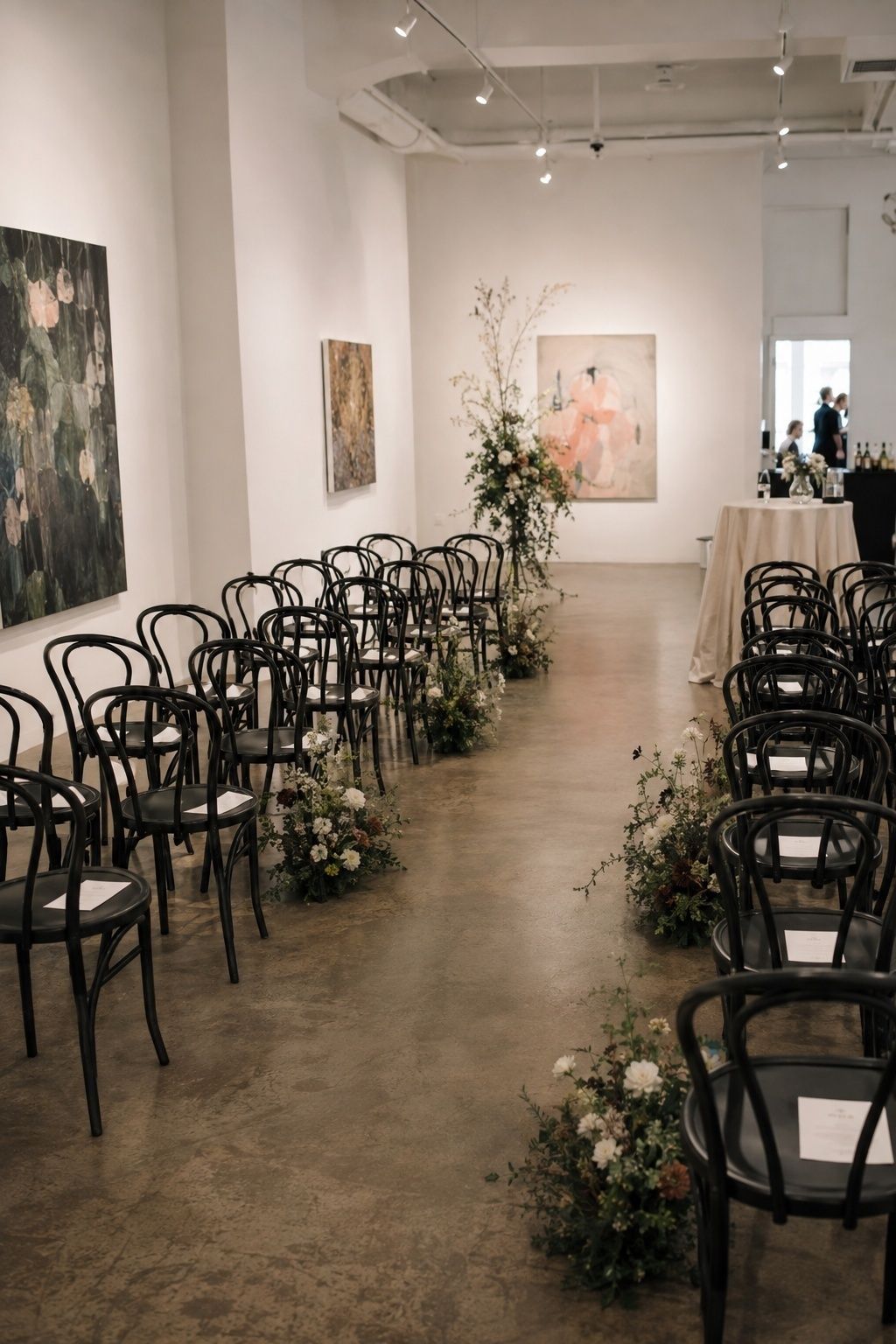
The gallery in the photo has white walls, large painted canvases, polished concrete floors and two rows of black bentwood chairs with low white flowers along the aisle. The art is the decor, so a gallery suits couples who like clean, modern rooms.
Galleries often require approved caterers, extra insurance or security, and art may limit where you put bars and candles. Check the exhibit calendar too, since the art on the walls may change before your date.
6. Historic Homes And Mansions
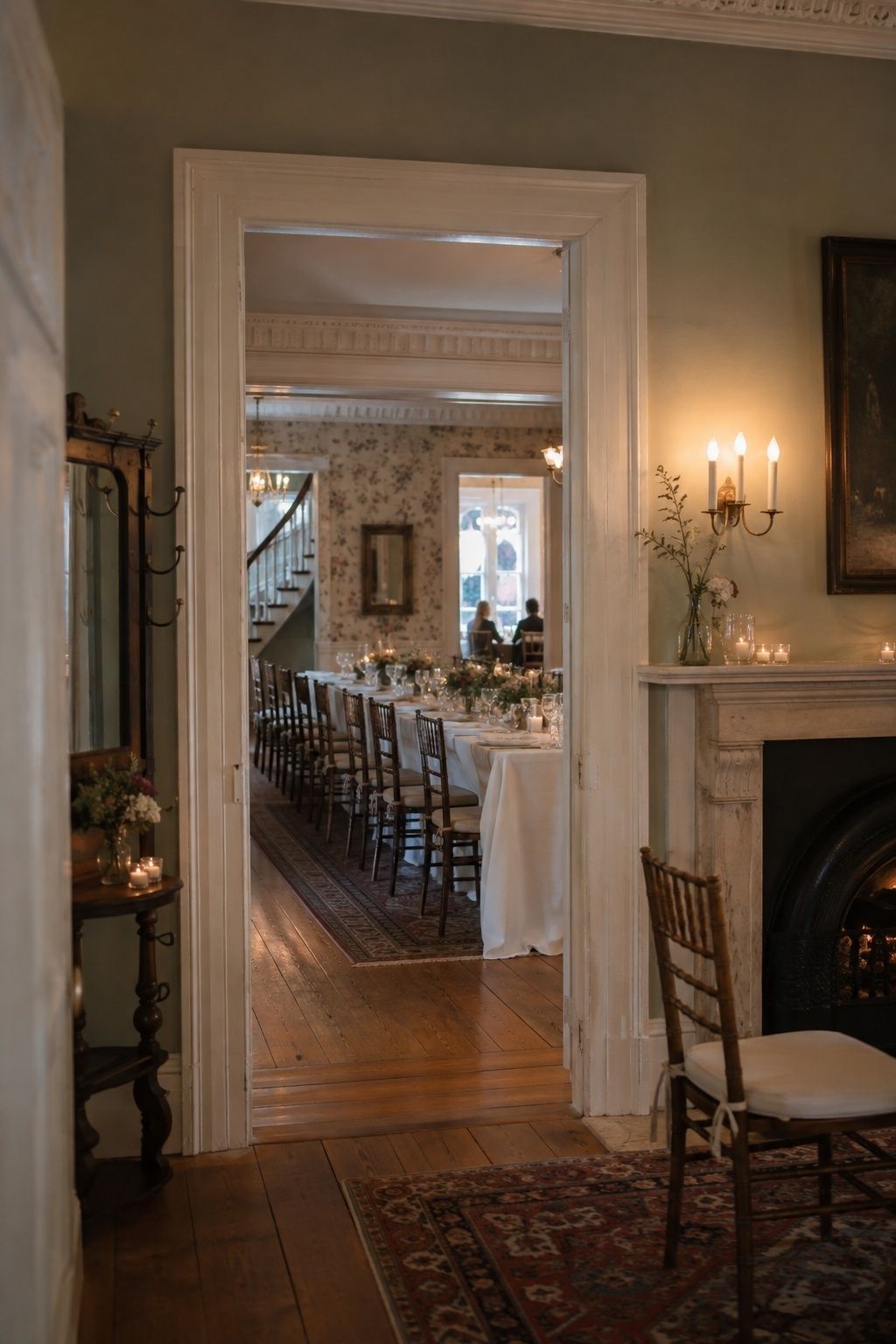
The view runs from a parlor with a fireplace, candelabra and patterned rug through a wide doorway into a long dining room with a set table, and a staircase in the background. That two-room flow is the big draw: vows in one room, dinner in the next, no driving.
Older houses come with narrow halls, small restrooms, candle rules and short rental windows. Ask where the caterer preps, who flips the ceremony room and whether every guest can move between rooms easily, including anyone who can’t do stairs.
Read more: Affordable Small Wedding Venues That Still Feel Special
7. Small Lofts And Studios
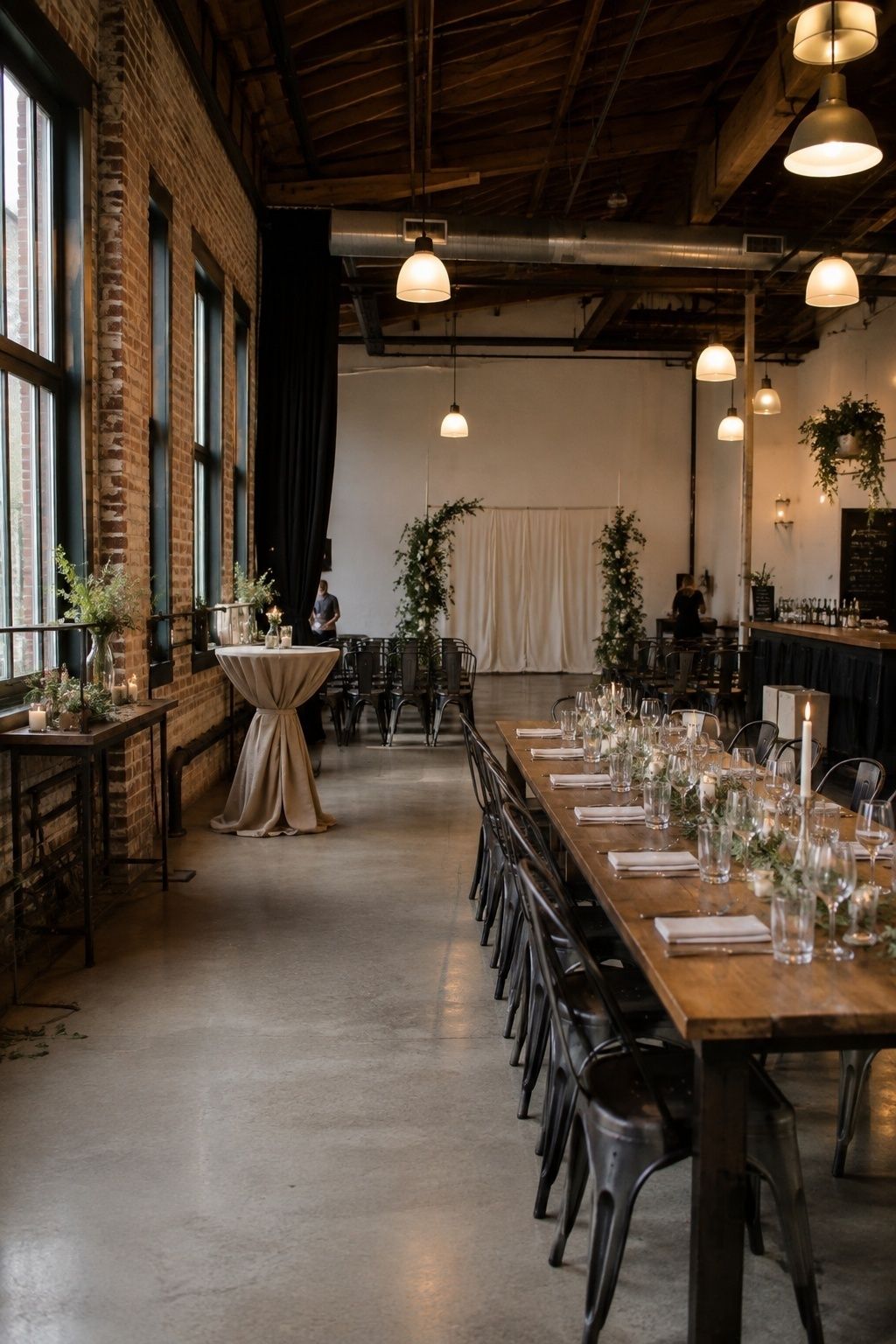
The loft in the photo has exposed brick, tall factory windows, pendant lights hanging from a beamed ceiling and one long wooden table with black metal chairs, plus a draped cocktail table near the window. Lofts are mostly empty shells, so you control every detail.
That also means you bring almost everything: tables, chairs, linens, bar, catering equipment, restrooms if needed, trash removal and cleanup. Price the rentals before you call a loft a bargain (chairs alone add up faster than anyone expects). Then use the table, lighting and a ceremony backdrop to break one big box into zones.
8. Conservatories And Greenhouses
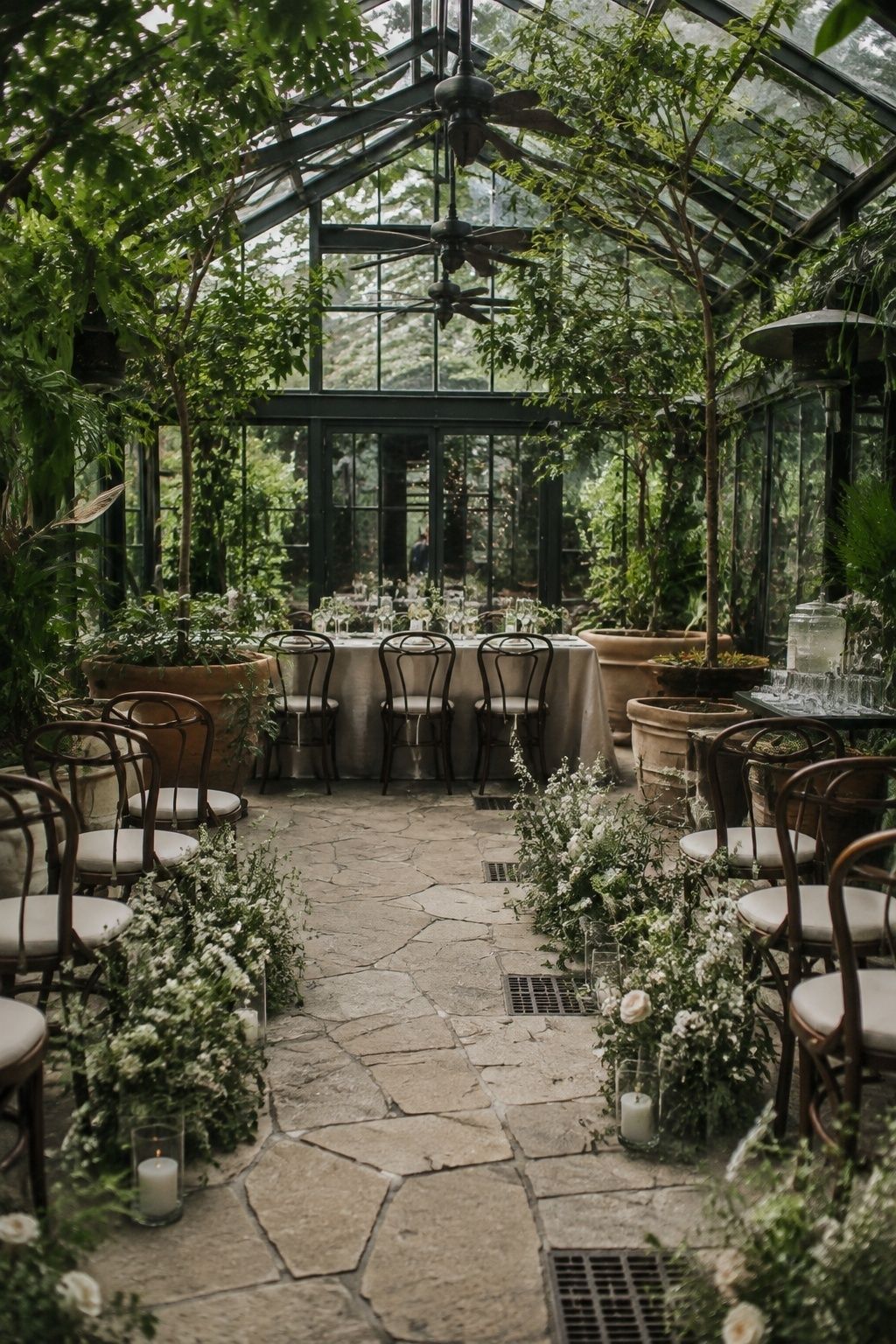
A glass-and-iron greenhouse with a flagstone path for the aisle, white flowers spilling along both edges, bentwood chairs on each side and a dinner table waiting at the far end among potted plants. You get the garden look with a roof over your head.
Glass rooms get hot in the sun and cold after dark. Ask about fans, heaters and ventilation for your month, and never assume a greenhouse in July is pleasant at 3 p.m. Keep styling light because the plants already fill the frame. For more on this setting, see these glass greenhouse wedding ideas.
9. Small Chapels With Reception Nearby
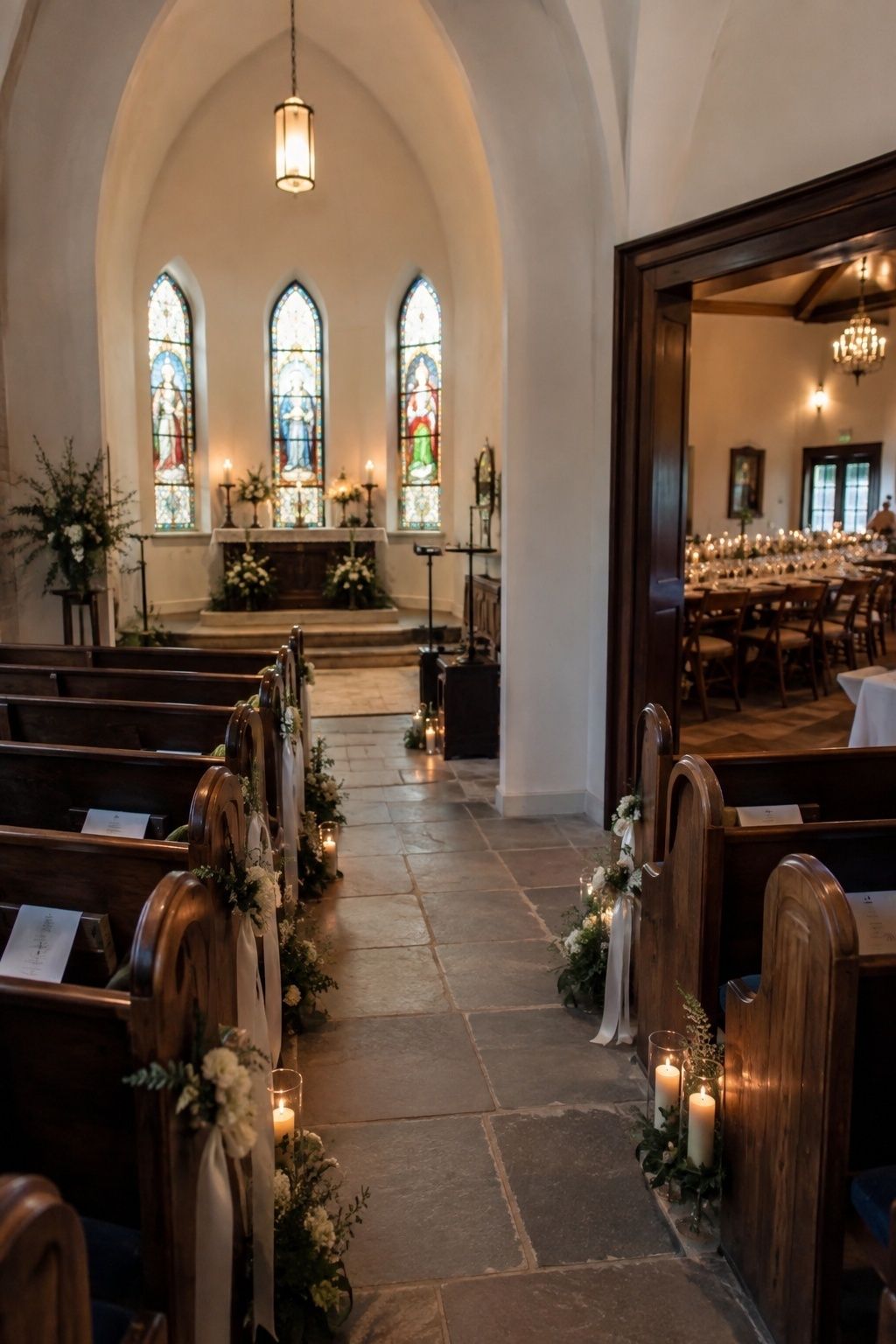
This whitewashed chapel has three arched stained glass windows, wooden pews with flowers and candles on the aisle, and an open doorway on the right showing a reception room already set for dinner. Vows and dinner a few steps apart is exactly what you want from this pairing.
A chapel gives the ceremony a clear center, but the dinner room matters just as much. If it is in another building, walk the route as a guest in good shoes would. Ask about photography rules, music, petals and confetti, since some chapels have firm limits. The mini chapel wedding ideas post has more on styling a tiny ceremony.
Read more: Small Wedding Ceremony Venues For Vows That Feel Close
10. Private Clubs And Community Rooms
A club dining room, members’ lounge, civic hall or neighborhood room can be practical and surprisingly pretty if the scale is right. Many already have tables, chairs, parking, restrooms and a kitchen, and the room fee is often low.
Look for good floors, warm light and a pleasant entrance. If the room needs full draping and all-new furniture to feel like a wedding, the low fee disappears fast. Private clubs may also need a member to sponsor your booking, so ask before you fall for the room.
11. Home Dining Rooms And Living Rooms
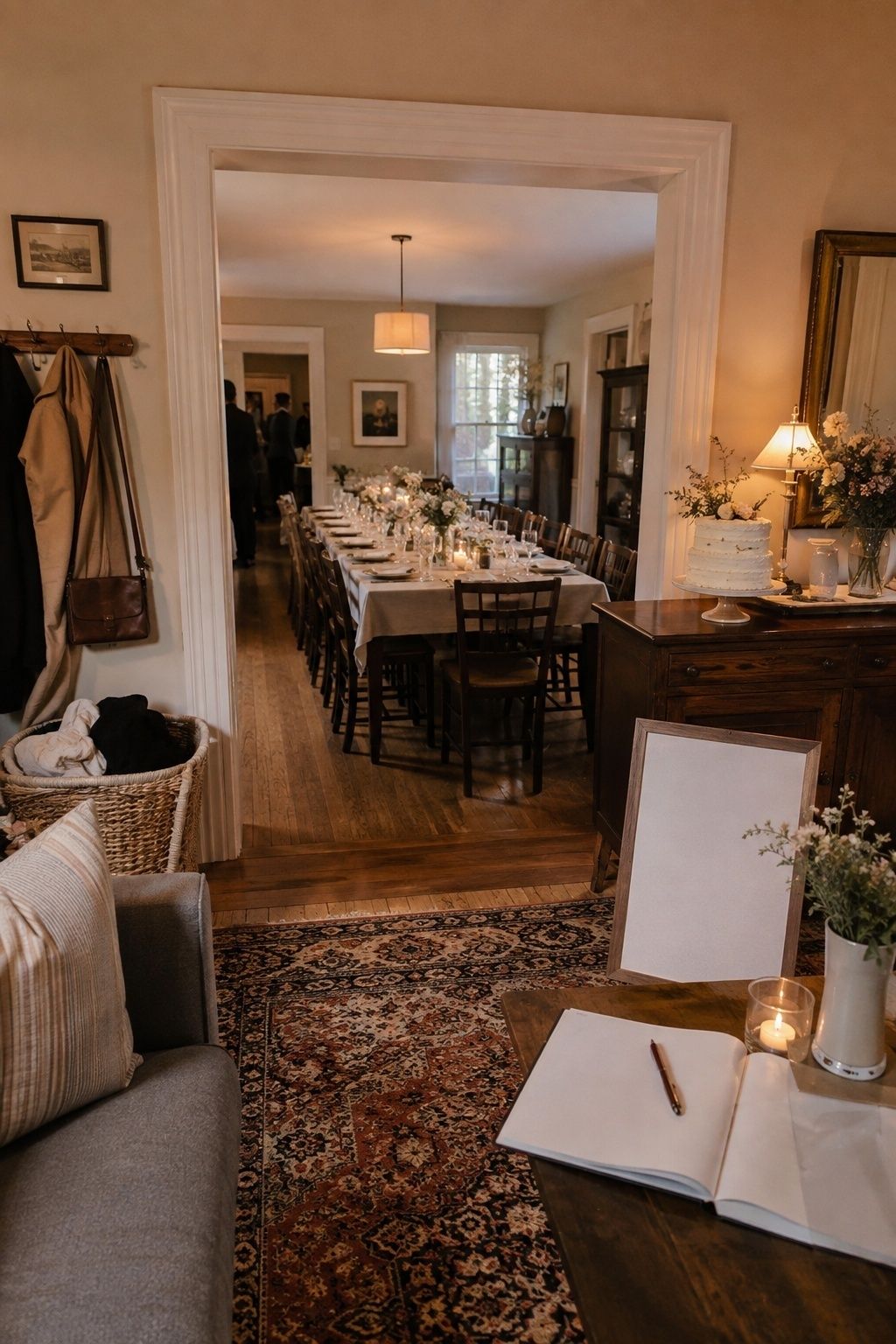
In this house, a living room with a patterned rug, a sofa and a small guest book table (pen and a jar of white flowers included) opens into a dining room where a long table is set under a pendant light. Home is the most personal small indoor wedding venue, and it costs nothing to book.
Be honest about capacity once chairs, a photographer and serving pieces are inside. A home wedding still needs restrooms, coat space, parking or rideshare notes, a prep area for the caterer and a sound plan your neighbors can live with.
Questions To Settle Before You Book An Indoor Room
Once you have two or three rooms on your list, these questions separate the ones that look good from the ones that work on the day.
One-Room Vs Two-Room Indoor Weddings
A one-room wedding keeps everyone together from vows to dessert, but the room has to flip from ceremony rows to dinner tables. Ask who moves the chairs, how long it takes and where guests wait (ideally with a drink in hand, because hungry guests in a hallway get grumpy fast). A two-room wedding gives each part its own space, so walk the route between rooms and check for stairs, narrow halls and missing signs.
Long-Table Warmth And Layout
One long table makes 12 to 30 guests feel like one conversation, and it looks great in photos. Past about 30, two or three long tables, or a U-shape, keep people close without making the far end feel like the kids’ table.
Choose A Room That Fits The Guest List In Real Life
Ask for a floor plan drawn at your exact number with your table shape. Capacity charts list the maximum, and a room at its maximum feels tight. Leave space for the photographer, a gift table and servers carrying plates.
Look For Built-In Warmth Instead Of Blank Space
Wood, books, plants, art, fireplaces, rugs and good windows all do decorating work for free. A room with these needs flowers and candles. A blank room needs draping, lighting and furniture before it feels like anything.
Compare Indoor Venue Types By Flow
Write the day as a list: arrival, vows, photos, drinks, dinner, toasts, cake, goodbye. Then picture each step in each room you’re considering.
Usually the winner is the venue where nobody waits in a hallway or gets back in a car.
Watch The Minimum Spend
A food-and-beverage minimum is easy to underestimate because tax, service charge and sometimes the cake fee sit on top of it. For a small group, a high minimum can mean ordering more food than anyone can eat. Ask whether the minimum drops on a Friday, Sunday or weekday, and whether the room fee is waived when you meet it.
Plan The Ceremony-To-Dinner Transition
Give guests something to do while the room changes, like a welcome drink in a side room, lawn games in a courtyard or a short photo session. Tell the venue the exact minute dinner starts so the kitchen and your photographer are on the same clock.
Test Light, Sound, And Privacy
Visit at the hour of your wedding. Check whether the room goes dark at sunset, whether music from the main dining room leaks in and whether other guests can wander through. If toasts matter, ask about a microphone even for 30 people.
Check Accessibility, Parking, And Guest Ease
Look for step-free entry, an accessible restroom, a place to sit near the ceremony and parking or drop-off close to the door. These details matter more in older buildings, which charm everyone until someone’s grandmother needs an elevator.
Ask What Is Included Before Decorating
Get a written list: tables, chairs, linens, plates, glassware, setup, cleanup, staff, sound and lighting. Then price what’s missing. Two rooms with the same fee can end up thousands of dollars apart once rentals are added, which is the moment a lot of “cheap” venues stop being cheap.
Keep The Layout Close But Comfortable
Guests should be able to reach the bar and restrooms without squeezing behind chairs. Keep at least a comfortable walking path behind each row of seats, and put the couple’s seat where everyone can see the toasts.
Mistakes To Avoid With Small Indoor Venues
The common ones: booking a ballroom section that still feels huge, ignoring the minimum spend, skipping a site visit at the right hour, forgetting where guests wait during the room flip and assuming the venue includes rentals it doesn’t.
How To Find A Small Indoor Venue Near You
Search by room type plus your city (“private dining room”, “tasting room event space”, “historic house rental”, “gallery event rental”) rather than just “wedding venue”, which pulls up big ballrooms first. Then narrow the list with these steps:
- Filter wedding directories by guest count (under 50) and indoor space.
- Search “elopement package” or “micro wedding package” plus your city, since many larger venues have small-wedding rates.
- Check hourly rental sites for lofts, studios and galleries.
- Call restaurants you already love and ask about private rooms and minimums by day of the week.
- Ask each venue the same five questions: maximum seated count at one long table, how pricing works, what’s included, where the ceremony happens and the latest end time.
Frequently Asked Questions
What are the best indoor venues for a small wedding?
The best indoor venues for a small wedding are restaurant private rooms, boutique hotel salons, wine bars, historic homes, libraries, galleries, lofts, conservatories and small chapels. Restaurants and hotels include the most service, while lofts and galleries give the most freedom but need more rentals.
How do you choose a small indoor wedding venue?
Choose a small indoor wedding venue by confirming it seats your real guest count comfortably, explaining its pricing in writing, and letting the ceremony and dinner happen close together. Visit at the time of day you will marry so you can judge light, noise and privacy.
How many guests fit in an intimate indoor wedding venue?
Most intimate indoor wedding venues seat about 10 to 60 guests comfortably. One long table works well for up to about 30 guests, and two or three tables suit 30 to 60. Always ask for a floor plan at your exact number, not the room’s maximum.
Are small indoor wedding venues cheaper?
Small indoor wedding venues often cost less in total because you feed fewer people, but the price per guest can be higher. Restaurants and hotels may set food-and-beverage minimums, and empty rooms like lofts need rentals, so compare the all-in total, not the room fee.
What is a realistic budget for a small wedding?
A realistic small wedding budget starts with your guest count times a per-guest cost. For reference, couples in The Knot 2026 Real Weddings Study spent an average of $34,200 for about 117 guests, roughly $292 per guest, so a 30-guest wedding can cost far less.
What questions should you ask a small indoor wedding venue?
Ask what the seated capacity is at your table shape, how pricing works (room fee or minimum), what’s included, where the ceremony happens, how long the room flip takes, the latest end time, candle and decor rules and whether other guests share the space.
How do you make a small indoor wedding feel cozy?
Make a small indoor wedding cozy by choosing a room just slightly bigger than you need, seating guests at one or two long tables and using warm light from candles, lamps and sconces. Rooms with wood, books, plants or a fireplace do most of the work for you.
What indoor venues work for both ceremony and reception?
Historic homes, boutique hotels, restaurants with a private room, conservatories and lofts can all host the ceremony and reception in one place. Chapels work too when the dinner room is next door, which keeps guests from driving between locations.
How do you avoid booking an indoor venue that feels too big?
Ask to see photos of past events at your guest count, and request a floor plan with your tables drawn in. If the room is large, use dividers, lighting and tight table placement, or pick a smaller room within the same venue.
Key Takeaways
- Pick the venue type first, then compare rooms within that type.
- Your seated guest count should fill about two-thirds of the room.
- Ask how each room charges: room fee, food-and-beverage minimum, buyout or hourly rental.
- Rooms with built-in warmth (wood, books, plants, windows) need far less decor.
- Visit at the hour of your wedding to check light, sound and privacy.
Final Thoughts
A small indoor wedding venue should feel like the room was waiting for your exact group. Start with the type that matches the day you want, ask how it charges, and book the room where your guests can sit close and stay put.
Last update on 2026-10-04 / Affiliate links / Images from Amazon Product Advertising API