

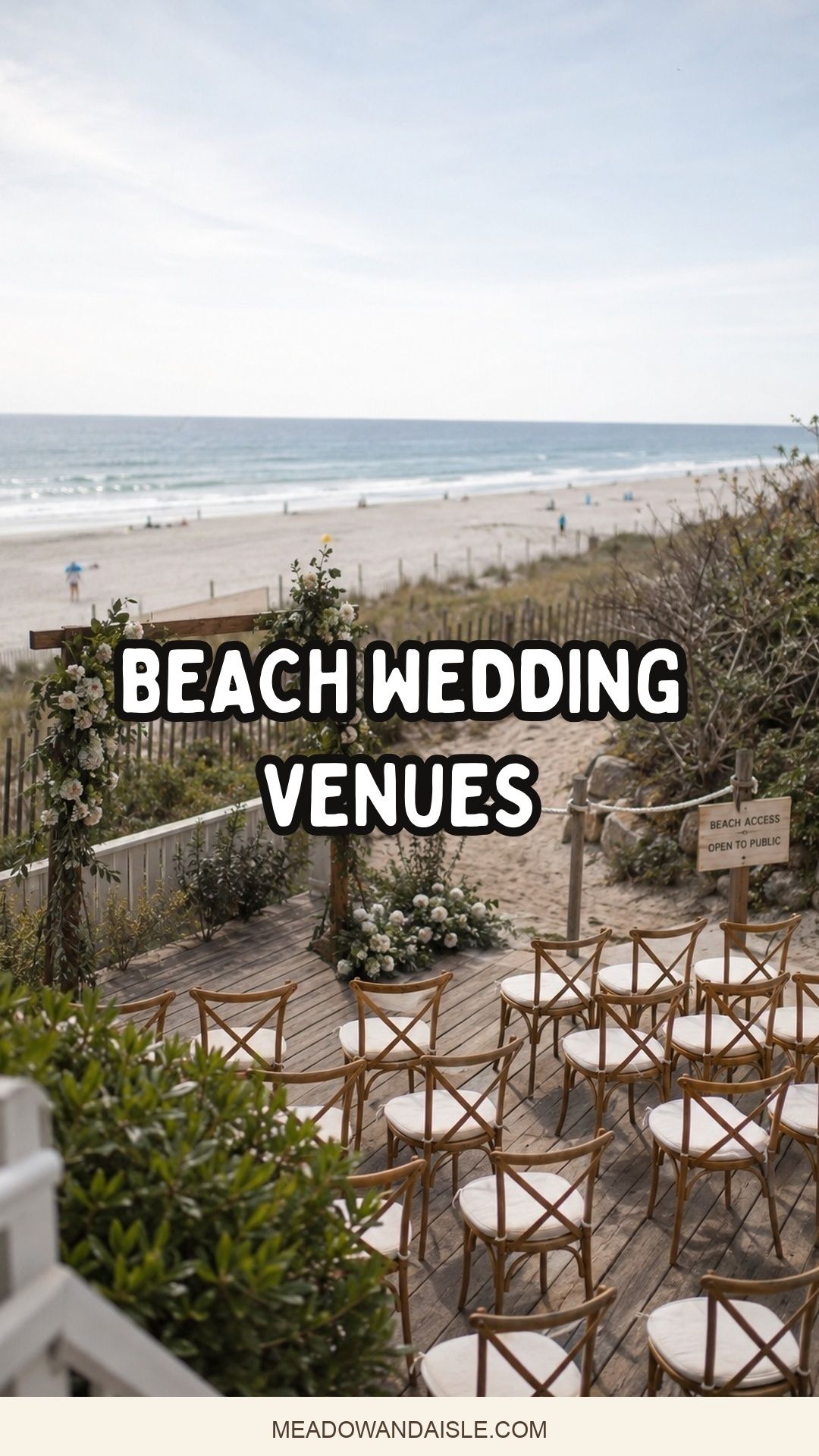
Small beach wedding venues work best when the setting is beautiful and practical, with legal ceremony access, comfortable guest arrival, clear setup rules, nearby restrooms, a real weather plan, and an easy move from vows to photos, drinks, or dinner.
A beach wedding sounds simple until the practical questions arrive. Can you set up chairs? Is the beach public, private, or semi-public? Where will older guests sit before the ceremony? Will the wind swallow your vows? Can guests use a nearby restroom? What happens if the beach allows a ceremony but not a reception?
For an intimate wedding, those details matter more than scale. A 20-guest beach ceremony can feel effortless when the walk is short, the timing is soft, and dinner is nearby. The same ceremony can feel stressful when guests are carrying shoes, programs, purses, water bottles, and uncertainty across hot sand. Choose the venue by the guest experience, not just the view.
Recommended Wedding Products


You Might Also Like These Blog Posts
- Small Outdoor Wedding Venues That Work Beyond The Photos
- Small Indoor Wedding Venues That Make The Room Feel Full
- Beach Wedding Guest Comfort Ideas That Keep The Sea Breeze From Becoming The Main Character
- Garden Wedding Venues For A Soft, Guest-Friendly Day
- Small Wedding Reception Venues Built For One Great Dinner
- Small Wedding Venues For 50 Guests With The Right Fit
How To Choose Small Beach Wedding Venues That Keep Guests Comfortable
Start by deciding what kind of beach wedding you are really planning. Some couples want a simple public beach ceremony with a few guests and dinner afterward. Others want a private beachfront venue, resort lawn, beach house, restaurant patio, or all-inclusive small wedding venue that handles more of the day. Both can be beautiful, but they solve different problems.
A public beach ceremony spot can work for a very small guest list when you need only a short vow exchange, simple photos, and a nearby meal. It is usually the least controlled option. If guests are traveling in, a small beach destination plan can shape the trip around lodging, timing, and an easy dinner plan.
A private beach wedding venue is usually better when you want chairs, coordination, a clear arrival point, restrooms, vendor access, sound support, or a reception on the same property. That same sense of privacy is why many couples compare beach settings with other small outdoor wedding venues before choosing the shoreline.
A beach house, restaurant, inn, or event room near the sand can be the easiest middle ground. You get the ceremony view and photo setting, then move guests quickly to shade, seating, drinks, dinner, and bathrooms. Couples who want water views without sand under every chair may find that small coastal venues create a calmer guest experience.
Put Permits Before Pretty Photos
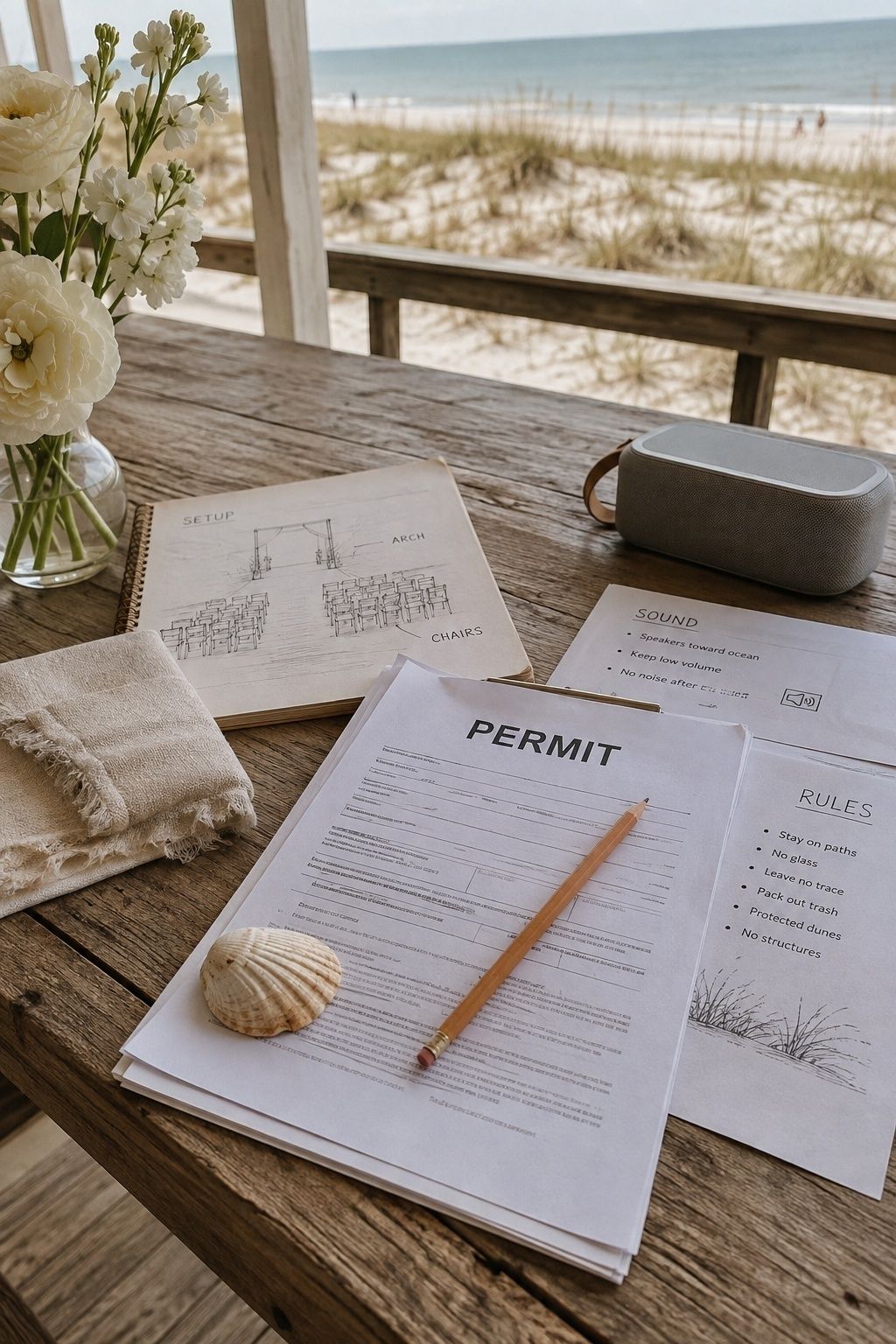
Beach rules vary widely by city, county, park, resort, and private property. Some locations allow a simple ceremony with no equipment. Others require a permit if you bring chairs, arches, tents, amplified sound, aisle decor, reserved space, or a larger group. A small wedding can still trigger rules if the setup changes the public use of the beach.
Ask the venue or local office exactly what is allowed on the sand. Confirm chairs, arches, runners, signage, speakers, candles, glass, confetti, vehicles, vendor carts, cleanup, and setup time. If you want a ceremony-only beach moment followed by dinner elsewhere, that may be simple. If you want exclusivity, equipment, food, alcohol, or a reception, the rules may be much tighter.
Also ask who handles the paperwork. Some beachfront resorts and planners manage beach approvals as part of a micro-wedding package. Some public beaches expect the couple to apply directly. When travel logistics matter as much as the ceremony view, small destination venues can simplify lodging, timing, and vendor coordination.
Know Whether The Beach Is Public, Private, Or Semi-Public

Oceanfront does not always mean private. A venue may have a beach view, a beach access path, or a ceremony deck near public sand. That can still be lovely, but it changes expectations. Guests may see people walking past, children playing nearby, or umbrellas in the background. If you are comfortable with that, a semi-public beach can feel relaxed and real. If you want quiet and control, choose differently.
Ask what parts of the property are truly reserved for your wedding. Can the venue block off a ceremony area? Can strangers walk behind the altar? Are photos taken on public sand? Is the beach shared with hotel guests? Where do guests wait before the ceremony? Small weddings feel intimate when the group has a clear place to gather, even if the shoreline itself remains open.
Match The Venue To Your Guest Count

For 2 to 10 guests, focus on legal access, simple timing, a short ceremony, photos, and a nearby meal. You may not need chairs for everyone if the ceremony is brief, but you still need a plan for grandparents, parents, children, or anyone who cannot stand comfortably on sand.
For 10 to 30 guests, the beach wedding venue needs more structure. Add seating, shade, water, a sound plan, arrival instructions, and a clear path to the reception. This is where many couples outgrow a casual public beach plan and start benefiting from a coordinator, resort package, restaurant partnership, or private event space near the water.
For 30 to 50 guests, treat the beach as an event environment, not just a backdrop. You need parking, restrooms, setup support, a rain plan, vendor timing, chair placement, guest movement, and a firm reception plan. Beach wedding venues for 50 guests can still feel intimate, but only when the logistics are designed for a group rather than a photo stop.
Plan Around Tide, Wind, Sand, And Sun
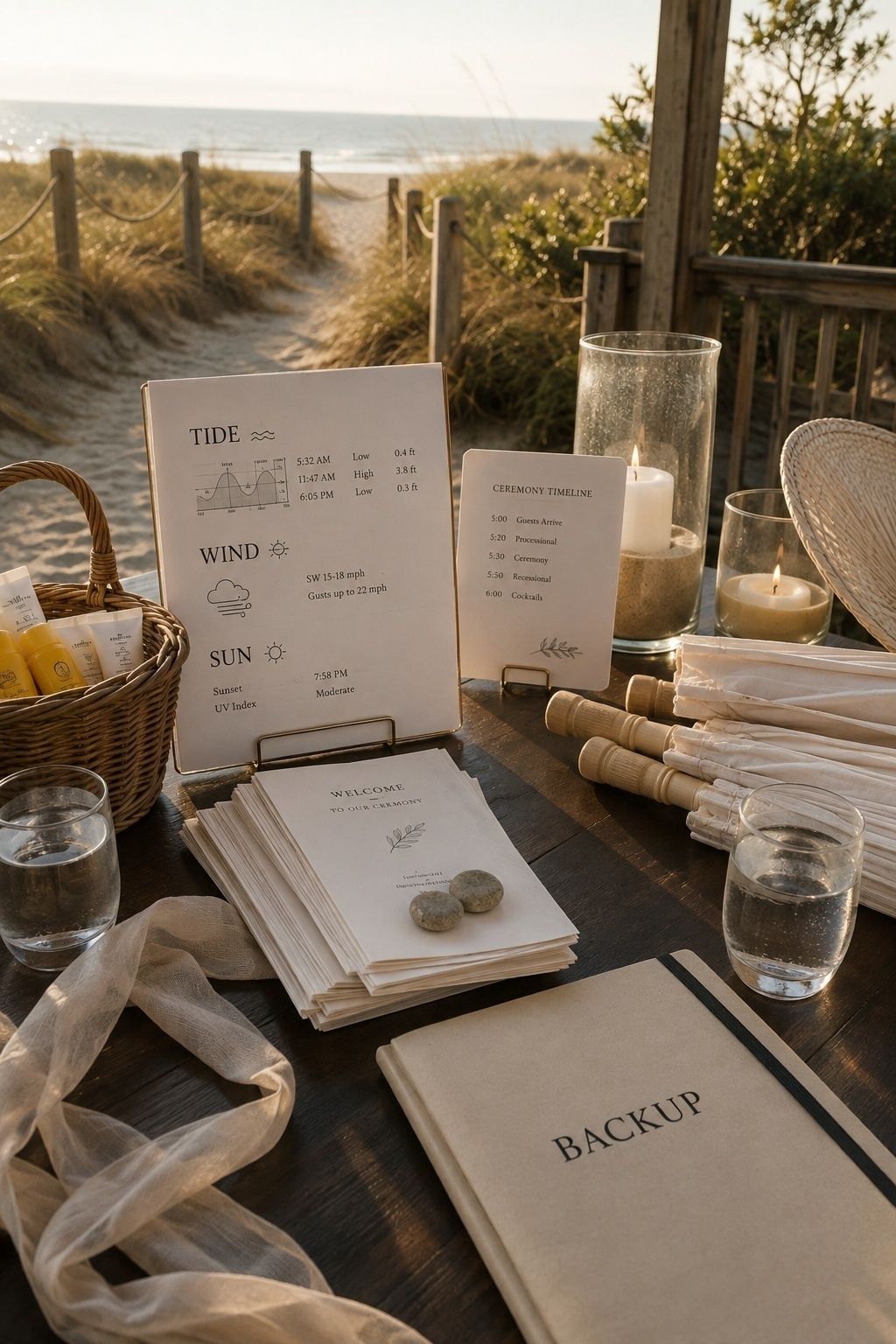
Beach conditions shape the wedding day more than decor does. Tide affects where you can stand, where chairs can go, how close guests feel to the water, and whether a planned path stays usable. Wind affects microphones, veils, hair, programs, signage, flowers, candles, and lightweight arches. Sand affects shoes, mobility, chair stability, aisle length, and how quickly guests can move.
Sun and heat deserve their own plan. Late afternoon or golden-hour ceremonies are often more comfortable than midday vows, especially for older guests and children. Ask where the sun will be during the ceremony, whether guests face glare, and how long they will be outside before dinner. Parasols, fans, water, and a short ceremony can help, but timing is the real comfort tool.
Rain backup should be part of the booking decision, not an extra hope. A beachfront venue with a covered deck, indoor dining room, tented patio, resort ballroom, or restaurant backup can protect the day without changing the entire mood. If a public beach ceremony has no backup, decide in advance whether you will move to a courthouse, restaurant, rental house, or covered park space.
Check The Guest Arrival Experience
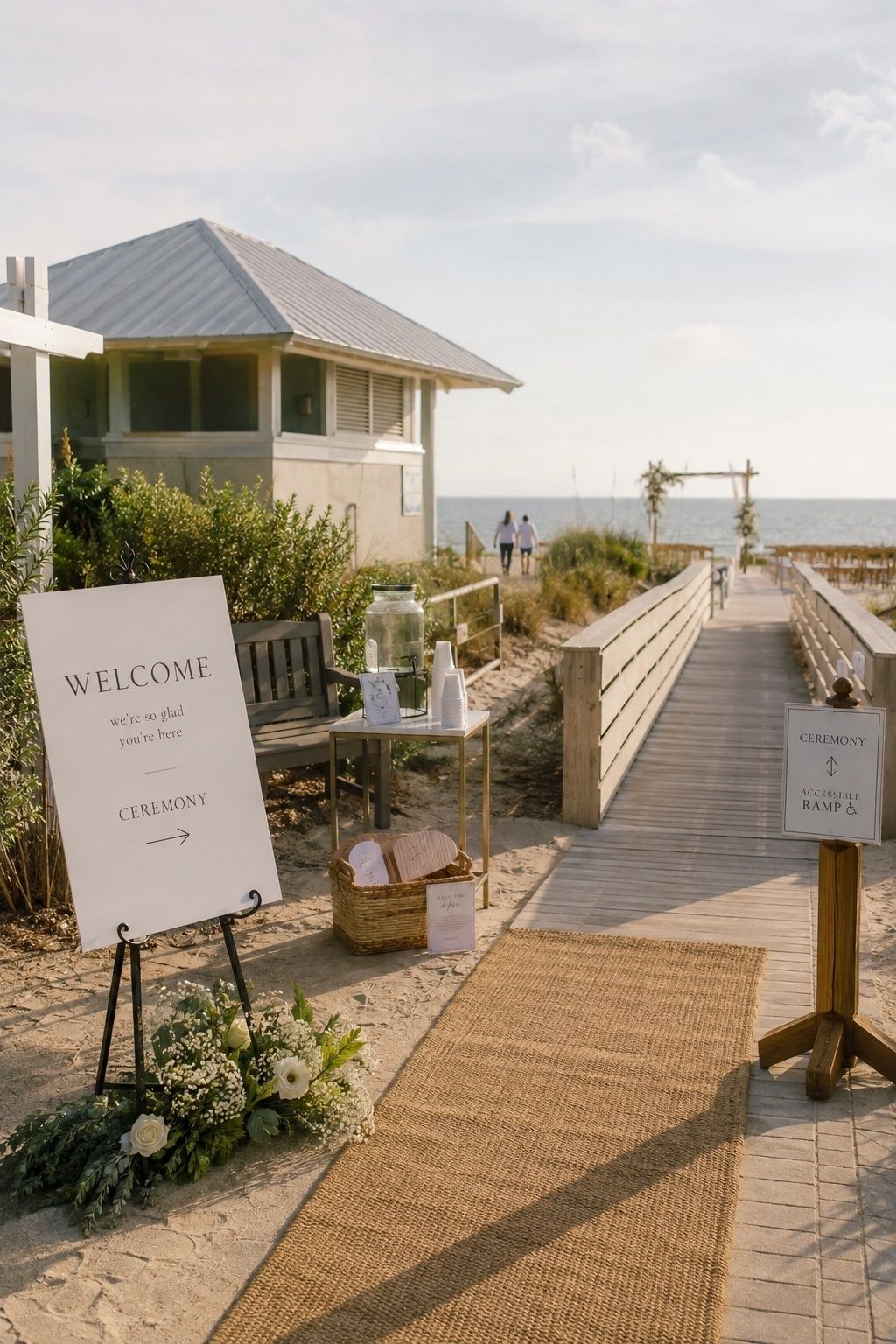
Small weddings can feel casual, but guests still need clear hosting. Tell them where to park, where to enter, whether they will walk on sand, what shoes make sense, how far the ceremony is from the drop-off point, and whether seating is available before vows begin. A beautiful beach can feel frustrating when guests arrive overdressed, overheated, or unsure where to go.
Look closely at boardwalks, stairs, ramps, dune crossings, beach mats, restroom distance, changing space, and shade. If anyone has mobility needs, a stroller, a cane, dress shoes, or a baby carrier, the prettiest ceremony location may not be the kindest one. The best intimate beach wedding venue lets people arrive calmly and stay present once they get there.
For destination guests, nearby lodging matters too. A small beach destination wedding is easier when guests can walk from rooms to the ceremony, take a short shuttle, or gather at one restaurant afterward. If everyone is driving separately through beach traffic, build extra time into the schedule and give very specific directions.
Choose A Reception Plan Before You Book The Ceremony
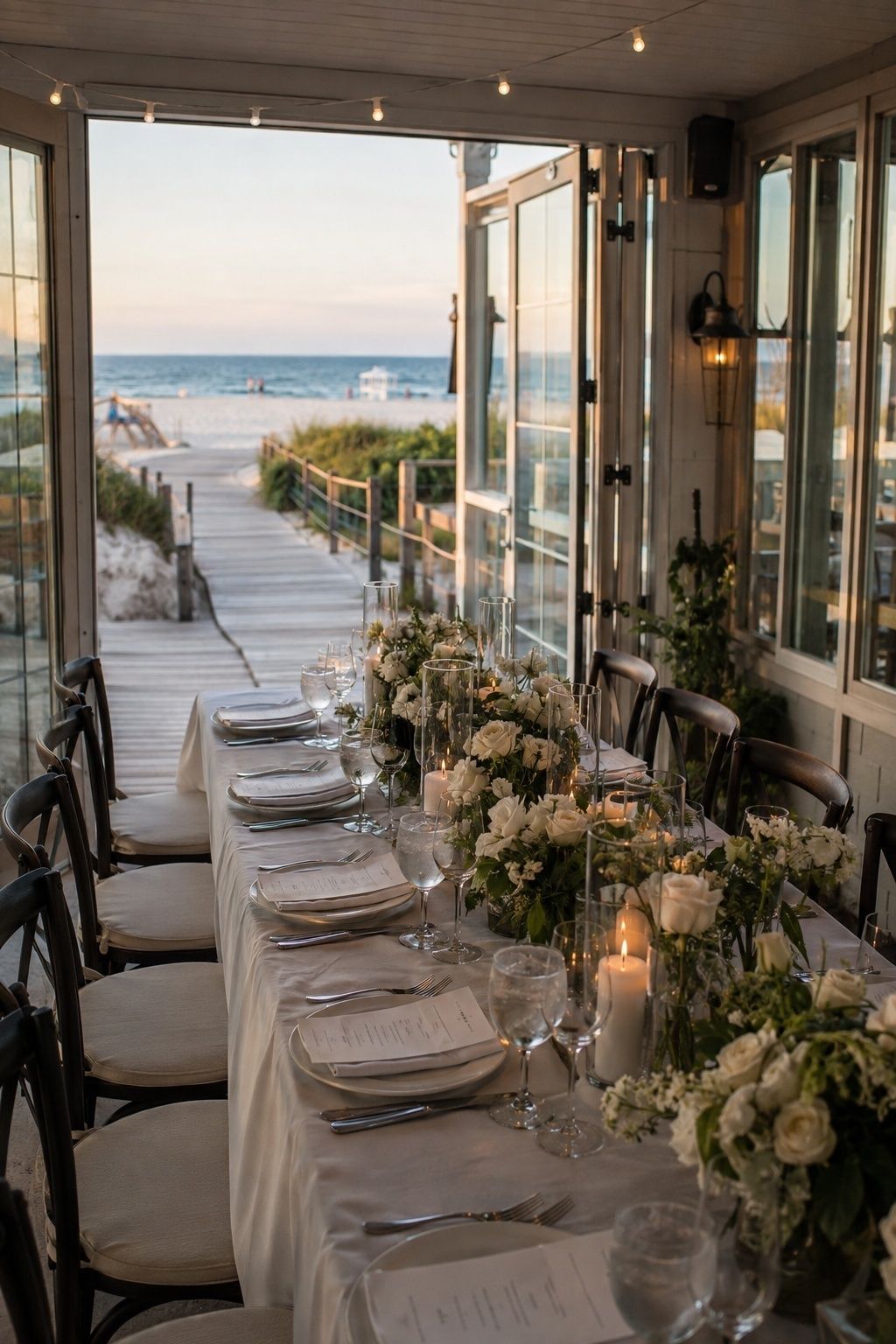
Many beach ceremony locations are not reception venues. Food, alcohol, glass, amplified music, tables, and private gatherings may be restricted on public property. That does not make the beach a bad choice. It simply means the reception needs a separate plan from the beginning.
A restaurant dinner after a public beach ceremony can be elegant and easy for 10 to 30 guests. Reserve a private dining room, patio, or quiet table block nearby so guests do not have to wait around in formal clothes. A cocktail-style reception at a beachfront venue can work well when there is shade, service staff, restrooms, and an indoor backup. A beach house or resort gathering can feel personal, but confirm rental rules, parking, noise limits, cleanup, and vendor access.
If you are still shaping the flow, a nearby small wedding reception venue can turn a beach ceremony into dinner, cocktails, or dessert without forcing a traditional ballroom. Couples who want ceremony, dinner, coordination, and guest support bundled together may prefer all-inclusive venues with a shoreline ceremony option.
Small Beach Venue Questions To Ask Before Signing

Once a venue looks promising, ask questions that reveal how the day will actually feel. Pretty photos tell you almost nothing about wind, setup time, guest movement, or whether the reception is truly practical.
- What guest count has worked well here before?
- Is the ceremony area public, private, or semi-public?
- Do we need a beach wedding ceremony permit?
- Who handles permits, setup permissions, and local approvals?
- Are chairs, arches, signs, speakers, runners, tents, candles, or flowers allowed on the sand?
- Where do guests park, gather, sit, use the restroom, and go immediately after the ceremony?
- What is the rain, wind, heat, or high-tide backup plan?
- Can we host food, drinks, or a reception on site?
- What is included in setup, breakdown, cleanup, and coordination?
Those answers will quickly separate a pretty beach from a workable wedding venue. They also help you compare a public ceremony spot, a beachfront micro-wedding package, a private beach wedding venue, and a coastal restaurant without being distracted by scenery alone.
Small Beach Wedding Venue Mistakes To Avoid
Choosing Scenery Before Access
A secluded stretch of sand can look romantic and still be wrong for guests. If the walk is long, parking is confusing, restrooms are far away, or the path crosses dunes and stairs, the setting may feel more difficult than dreamy. Start with access, then choose the prettiest option within the practical boundaries.
Assuming A Public Beach Will Feel Private
Public beaches can be wonderful for low-key ceremonies, but they rarely behave like private venues. Build the ceremony around that reality. Keep it short, choose a quieter time, avoid fragile decor, use a clear focal point, and plan a more private dinner afterward if you want the emotional center of the day to feel protected.
Forgetting Wind, Sound, And Sun
A small ceremony still needs guests to hear the vows and stay comfortable. If amplified sound is allowed, a portable ceremony speaker can help. If sound is restricted, tighten the circle, choose a calmer spot, keep readings short, and avoid placing guests where waves, traffic, or wind will compete with every word.
Booking A Ceremony Package Without A Reception Plan
A ceremony-only package can be perfect if you already have dinner arranged. It can feel awkward if guests finish the vows and no one knows where to go. Before booking, map the next 90 minutes: photos, drinks, restrooms, travel, dinner seating, and who guides guests from one part of the day to the next.
FAQ
How Do You Find Small Beach Wedding Venues?
Search by venue type, not only by scenery. Compare public beach ceremony spots, private beachfront venues, resorts, beach houses, inns, restaurants, and event rooms near the sand. Then filter by guest count, permit rules, seating, restrooms, parking, weather backup, and reception options.
Do You Need A Permit For A Small Beach Wedding?
You may need a permit, even for a small ceremony, depending on the location and setup. Guest count, chairs, arches, tents, speakers, reserved space, decor, timing, and food can all affect the rules. Confirm local requirements before booking vendors or inviting guests.
Is A Public Beach Or Private Beach Venue Better For An Intimate Wedding?
A public beach can work for a simple, short ceremony with a tiny guest list and dinner elsewhere. A private beach venue is usually better when you want chairs, privacy, coordination, restrooms, sound support, backup space, or a reception on the same property.
How Many Guests Can You Have At A Small Beach Wedding Venue?
It depends on the beach rules and the venue setup. A 2-to-10-guest ceremony may need very little infrastructure. A 10-to-30-guest wedding usually needs seating, shade, sound, and a clearer reception plan. A 30-to-50-guest beach wedding should have venue support and a backup space.
What Should A Beach Wedding Venue Include For Guests?
At minimum, guests need clear arrival instructions, safe access, nearby restrooms, shade or sun planning, water, seating for anyone who needs it, and a quick transition after the ceremony. For larger small weddings, look for parking, coordination, setup help, and indoor or covered backup space.
What Is The Best Time Of Day For A Small Beach Wedding?
Late afternoon or early evening is often most comfortable because the light is softer and the heat is less intense. Still, check the tide, sunset, wind pattern, beach crowd level, local noise rules, and dinner timing before choosing a ceremony time.
Can You Have A Reception At A Beach Wedding Venue?
Sometimes, but not always. Public beach permits may allow the ceremony but restrict food, alcohol, tables, glass, or private receptions. Resorts, beach clubs, restaurants, inns, and private venues are usually better if you want a full reception after the beach ceremony.
Final Thoughts
The right small beach wedding venue should make the day feel lighter, not more complicated. Choose a place where the ceremony is legal, the guest path is kind, the weather plan is real, and the reception flow is obvious. The ocean can carry the atmosphere. Your job is to make sure everyone can actually enjoy it.
Before you commit to any public stretch of shoreline, confirm the local rules for permits, equipment, exclusive use, amplified sound, ceremony timing, food, and alcohol at the beach where you plan to gather.
Last update on 2026-10-03 / Affiliate links / Images from Amazon Product Advertising API