

Reception after private ceremony wording should tell guests exactly what they are being invited to celebrate, without apologizing for the ceremony being private. Use clear reception-only language, name the couple, give the reception date and location, and add a warm line such as, “Please join us to celebrate our marriage at a reception with dinner and dancing.”
Some couples want a tiny ceremony and a bigger party. Others marry privately for family, budget, timing, health, travel, religious, courthouse, or emotional reasons, then gather their wider circle afterward. The celebration still feels generous and joyful when the invitation wording does a little more work than a standard wedding invitation.
Tell guests plainly that they are invited to the reception, not the ceremony. They should not wonder whether they missed a ceremony card, whether there is a ceremony earlier in the day, or whether they should arrive in time for vows. Kind clarity protects everyone.
Good private ceremony reception wording is honest, simple, and warm. It does not need a long explanation. It does not need to justify the choice. It only needs to say what happened or what will happen privately, then invite people into the part of the celebration where their presence is wanted.
Recommended Wedding Products


You Might Also Like These Blog Posts
- How To Tell Guests The Ceremony Is Private Without Making Anyone Feel Secondary
- Small Wedding Invitation Wording Ideas That Feel Clear And Personal
- Intimate Wedding Invitation Wording For Every Small Celebration
- Small Wedding Guest List Wording That Keeps Boundaries Kind
- Post Elopement Party Invitation Wording For Every Kind Of Celebration
- Elopement Announcement Wording That Shares The News With Grace
Reception After Private Ceremony Wording
Reception after private ceremony wording works best when it begins with the invitation type, not the explanation. Lead with the celebration guests are invited to attend: a wedding reception, marriage celebration, dinner reception, cocktail reception, post-ceremony celebration, or reception to celebrate marriage. Then add one clear phrase that explains the ceremony has already taken place or will be held privately.
The simplest formula is: private ceremony phrase, invitation phrase, reception details, RSVP instructions. For example: “After a private ceremony, we invite you to celebrate our marriage at a reception.” That one sentence does most of the heavy lifting. It tells guests why there is no ceremony time, what role they have, and what kind of event they should expect.
Many couples feel tempted to soften the wording so no one feels excluded. The trouble is that vague wording creates more confusion than comfort. If the invitation simply says “join us for our wedding celebration,” guests often assume there is a ceremony attached. If it says “reception to follow,” guests wonder what it follows. If it says “celebrate with us after we say I do,” guests look for the ceremony location.
Clear reception invitation wording after private ceremony plans should gently close that gap. You are not being cold by saying the ceremony is private. You are being considerate by giving guests the information they need before they make travel plans, choose attire, arrange childcare, or ask family members what is happening.
The tone still deserves affection. A private ceremony is not a rejection of the people invited to the reception. It is a choice about how the vow moment happens. Good wording honors both truths: the ceremony was intimate, and the wider celebration matters.
Start With The Event Guests Are Actually Attending
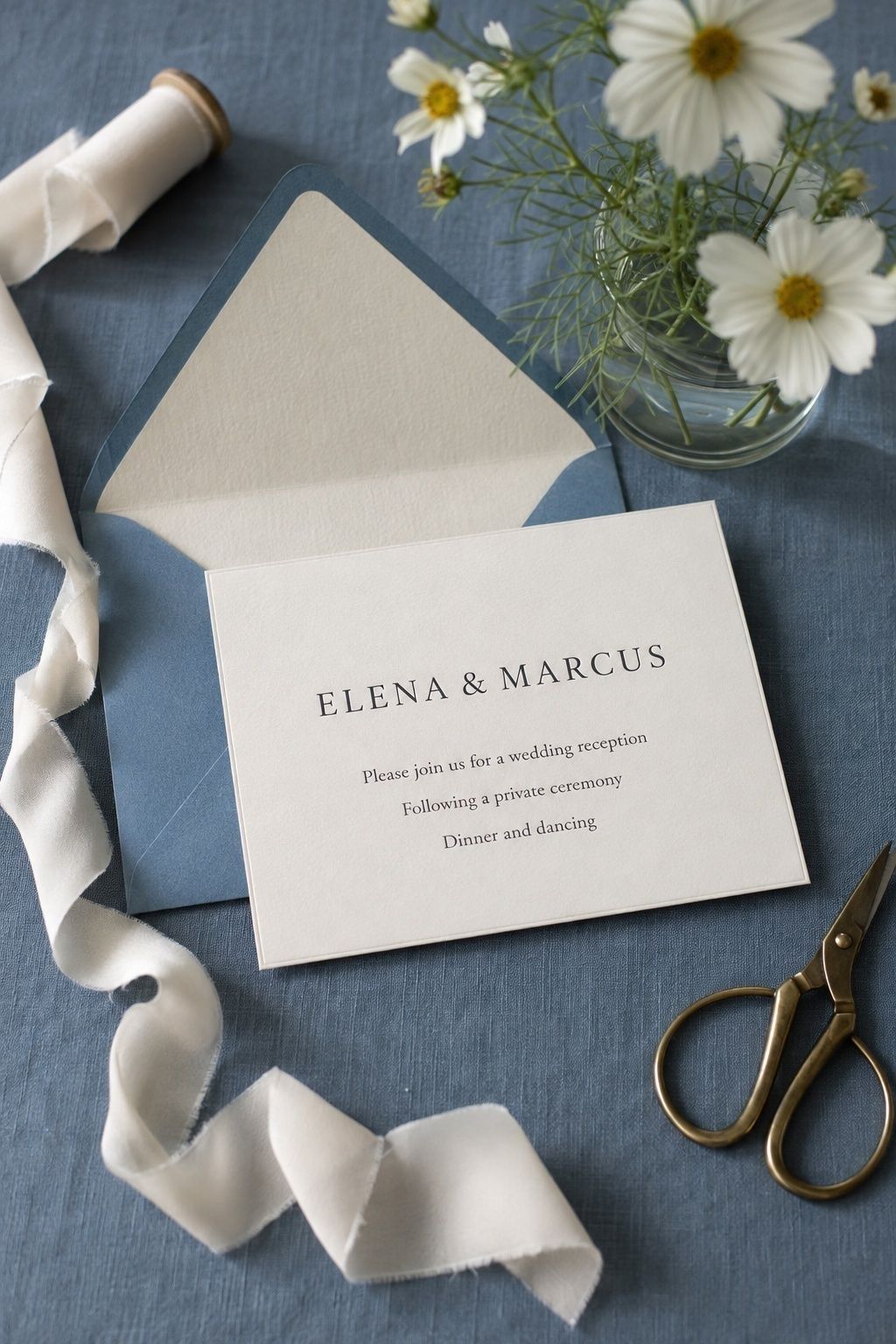
The first visible invitation language should name the reception. “Please join us for a wedding reception” is clearer than “please join us for our wedding” when the ceremony is not open to the guest list. The word reception gives guests the right mental picture immediately.
Make the line formal, casual, religious, modern, or family-centered, but do not bury the reception-only detail. If the ceremony is private, say so in the invitation text or on a detail card. If the couple is already married, say that too. Guests should not have to decode the stationery suite.
For formal wording, try: “Together with their families, Elena Brooks and Marcus Hale request the pleasure of your company at a reception celebrating their marriage following a private ceremony.” This keeps the tone traditional while still making the invitation scope clear.
For warmer modern wording, try: “We exchanged vows in a private ceremony and would love to celebrate with you at our wedding reception.” This version is direct without sounding stiff. It names the private ceremony and quickly turns toward the guest experience.
Use One Honest Private Ceremony Phrase
Private ceremony reception wording does not need a long explanation. One honest phrase is enough. Choose the phrase that matches the situation: “following a private ceremony,” “after an intimate ceremony,” “after exchanging vows privately,” “after a small family ceremony,” “following a private wedding ceremony,” or “after a private marriage ceremony.”
The phrase should be specific enough to answer the obvious question, but gentle enough to feel like part of the invitation. “Private” is usually the clearest word. “Intimate” sounds softer, though it is less precise when guests are unsure whether they are included in that intimate portion. If clarity matters most, use private.
For a courthouse wedding, try: “After a private courthouse ceremony, we invite you to celebrate with us at dinner and dancing.” For a family-only ceremony, try: “Following an intimate ceremony with immediate family, please join us for a reception in honor of our marriage.”
For a ceremony held on another date, private wedding ceremony announcement wording is even simpler: “We were married in a private ceremony on June 14. Please join us for a reception to celebrate our marriage.” This style works especially well when the reception is weeks or months later.
Avoid Making The Guest Feel Like An Afterthought
The most common fear with reception only invitation wording is that guests will feel invited to the lesser part of the wedding. That is why the invitation should not sound like a logistical notice. It should sound like a real invitation to a real celebration.
Instead of writing, “Ceremony is private, reception only,” choose a sentence with more warmth: “After a private ceremony, we would be honored to celebrate with you at our reception.” The facts are the same. The feeling is completely different.
Give the reception its own identity. Add dinner, cocktails, dessert, dancing, garden party, brunch, or open house if those details are true. A reception that sounds complete on its own feels less like an add-on.
For example: “Please join us for cocktails, dinner, and dancing as we celebrate our marriage after a private ceremony.” This tells guests the reception is the celebration, not a leftover appointment after something more important happened elsewhere.
Match The Wording To The Timing
Private ceremony followed by reception wording changes slightly depending on timing. If the ceremony happens earlier the same day, guests need to know they should arrive at the reception time only. If the ceremony already happened, guests need to know the marriage is not upcoming. If the reception is after an elopement, the wording should celebrate the marriage without pretending guests are attending the vows.
Same-day wording: “Following a private ceremony, please join us for a reception at six o’clock in the evening.” Already married reception wording: “We were married in a private ceremony and invite you to celebrate with us.” Reception after elopement wording: “We eloped! Now we are ready to celebrate with our favorite people.”
If the reception date is separate from the ceremony date, include the marriage date only when it clarifies the timeline. Some couples love sharing that detail. Others keep the invitation focused on the party date and save the ceremony date for the wedding website or announcement card.
Either choice works when the timeline is obvious. The important thing is avoiding ambiguity. A guest should understand from one glance whether the vows are past, private, or separate from the event they are attending.
Reception Invitation Wording After Private Ceremony Examples
The right wording depends on formality, timing, family dynamics, and how much ceremony detail you want to share. Adjust these examples for printed invitations, digital invitations, wedding websites, RSVP cards, and details cards.
Formal Reception Wording
“Together with their families, Amelia Rose Carter and Julian Thomas Reed request the pleasure of your company at a reception celebrating their marriage following a private ceremony.”
This works well for a seated dinner, ballroom reception, private club, hotel, estate, or any event where the invitation style is traditional. It uses classic host language while still making the ceremony boundary clear.
A slightly softer formal option is: “Following an intimate private ceremony, the families of Amelia and Julian invite you to a reception in celebration of their marriage.” This puts family warmth at the center and suits a parent-hosted reception.
Modern Reception Wording
“We are tying the knot in a private ceremony and would love to celebrate with you at our reception.”
This is one of the cleanest forms of wedding reception after private ceremony wording because it gives the key detail in a single friendly sentence. It works for restaurant receptions, cocktail parties, backyard celebrations, gallery events, and casual dinner parties.
Another modern option is: “After a private ceremony, join us for drinks, dinner, and dancing as we celebrate the start of married life.” This avoids heavy explanation and keeps the energy on the party.
Already Married Reception Wording
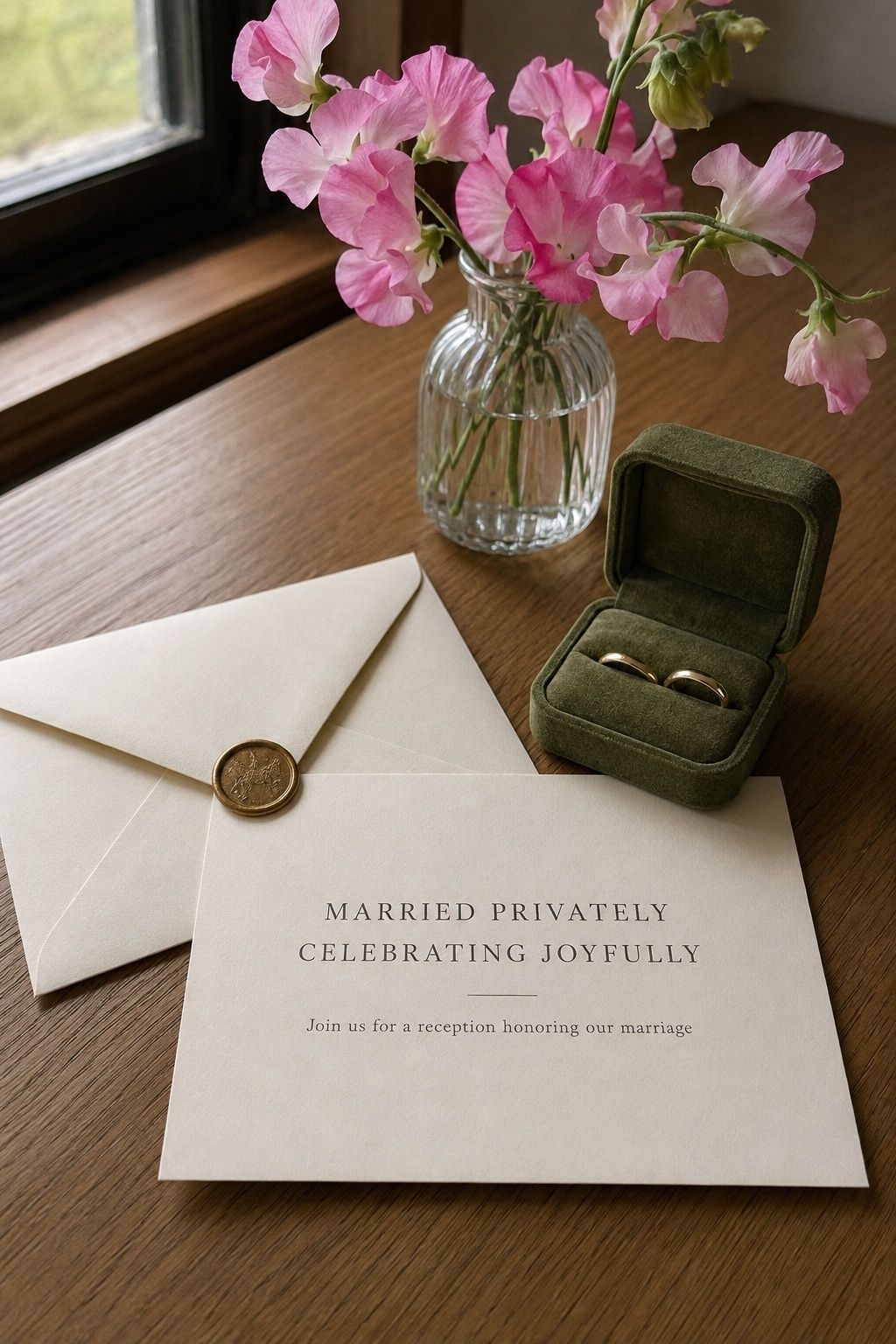
“We were married in a private ceremony and are excited to celebrate with you. Please join us for a reception in honor of our marriage.”
Use this when the legal or ceremonial wedding has already happened before invitations go out. It prevents guests from assuming they are being invited to a future wedding ceremony.
If you want something short, try: “Married privately, celebrating joyfully. Join us for a reception honoring our marriage.” This fits a modern invitation, digital invitation, or small insert card where space is limited.
Small Private Ceremony Reception Invitation
“After a small private ceremony with immediate family, we invite you to celebrate with us at our wedding reception.”
This is a strong option when the ceremony includes a narrow group, such as parents, siblings, grandparents, or children. It explains the boundary without listing who is included. Guests get the information they need without being pulled into a comparison.
For a gentler version, use: “We will exchange vows privately with our closest family, then gather with friends and loved ones for a reception.” This makes the reception feel intentionally planned rather than secondary.
Reception After Elopement Wording
“We eloped in a private ceremony and are ready to celebrate. Please join us for a reception with cocktails, dinner, and dancing.”
Elopement wording gets more playful when that fits the couple. Try: “We said yes, signed the papers, and saved the party for you. Join us as we celebrate our marriage.” This works for casual gatherings where the tone is personal and relaxed.
If some guests expected a traditional wedding, keep the elopement announcement simple and warm. You do not need to defend the decision. A confident invitation presents the celebration as settled, joyful, and ready to share.
Religious Or Family-Centered Wording
“After a private ceremony and blessing with immediate family, we invite you to join us for a reception celebrating our marriage.”
This wording suits couples who have a small religious ceremony, family blessing, cultural ceremony, or legal ceremony before the reception. Keep the wording accurate to the tradition without overexplaining private details.
If parents are hosting, try: “The families of Maya and Daniel invite you to a reception celebrating their marriage after a private family ceremony.” This gives parents a gracious host role while preserving the ceremony boundary.
What The Invitation Should Include
Post ceremony reception wording should cover the same practical details as any reception invitation, plus one extra boundary: what guests are not attending. The trick is to say that boundary once, then make the rest of the invitation feel complete and welcoming.
Names And Hosting Line
Start with the couple’s names and, if relevant, the hosts. Host language ranges from “Together with their families” to “Mr. and Mrs. Carter invite you.” If the couple is hosting their own celebration, “Please join us” is enough.
The private ceremony detail fits after the names or after the host line. For example: “Together with their families, Nora and James invite you to celebrate their marriage following a private ceremony.” This keeps the sentence smooth and avoids a blunt separate disclaimer.
Reception Date, Time, And Place
Give the reception date, start time, venue name, city, and full address. If the ceremony is earlier the same day, the reception time should be the only arrival time printed for reception guests. Do not include a ceremony time anywhere on the invitation if those guests are not invited to it.
If guests need to know the ceremony date because the couple is already married, include it in the wording, not as a separate event schedule. For example: “Married privately on June 4, we invite you to celebrate with us on July 12.” This keeps the invitation from looking like two events.
Reception Style
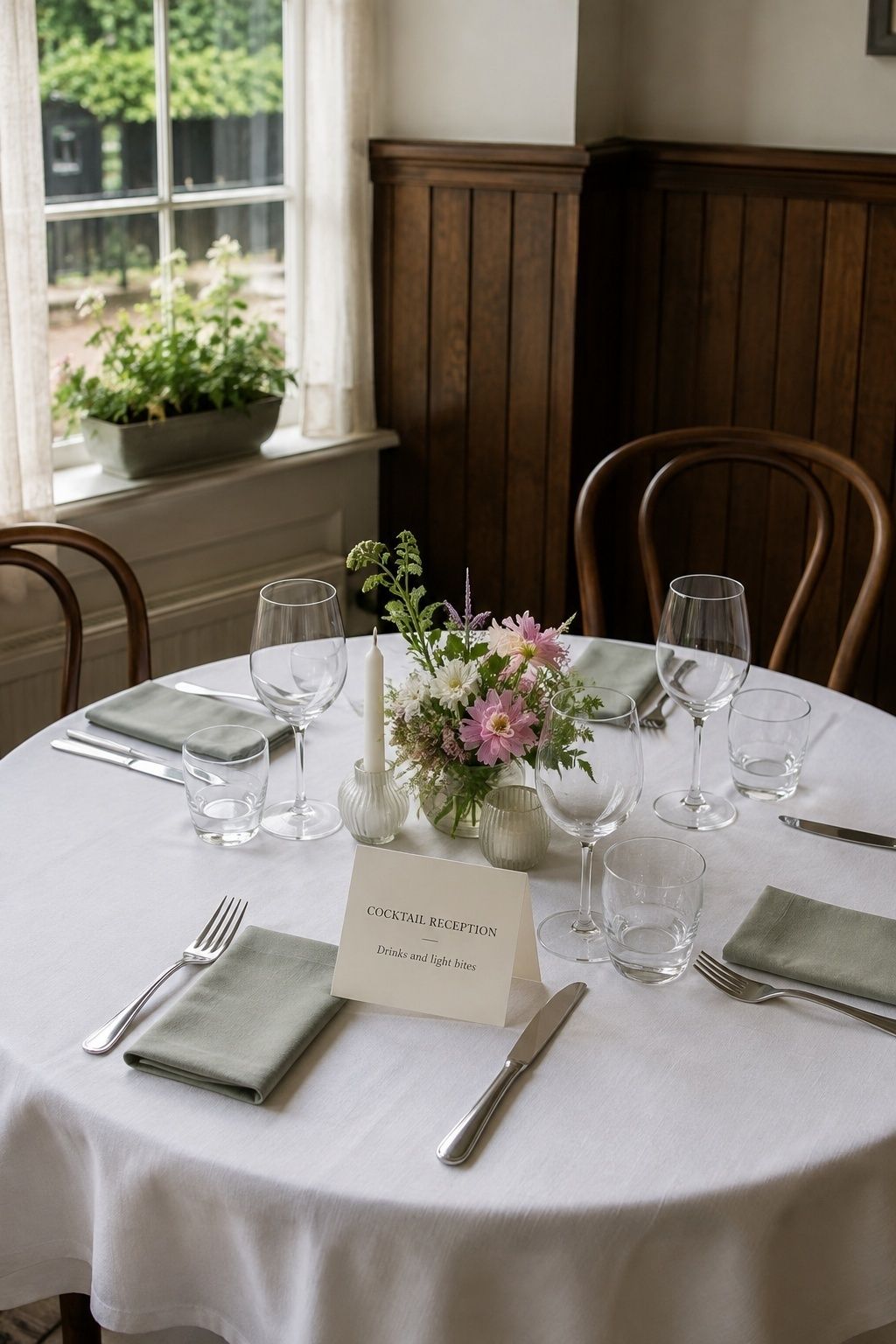
Tell guests what kind of celebration they are attending. A cocktail reception, brunch, open house, dinner, dessert party, backyard gathering, and dancing reception all lead to different expectations. Guests appreciate knowing whether they should plan for a full meal, a standing event, a casual drop-in, or a formal evening.
This detail also makes the reception feel intentional. “Join us for a cocktail reception” feels clearer than “join us after the ceremony,” especially when the ceremony is not part of the guest experience.
RSVP Details
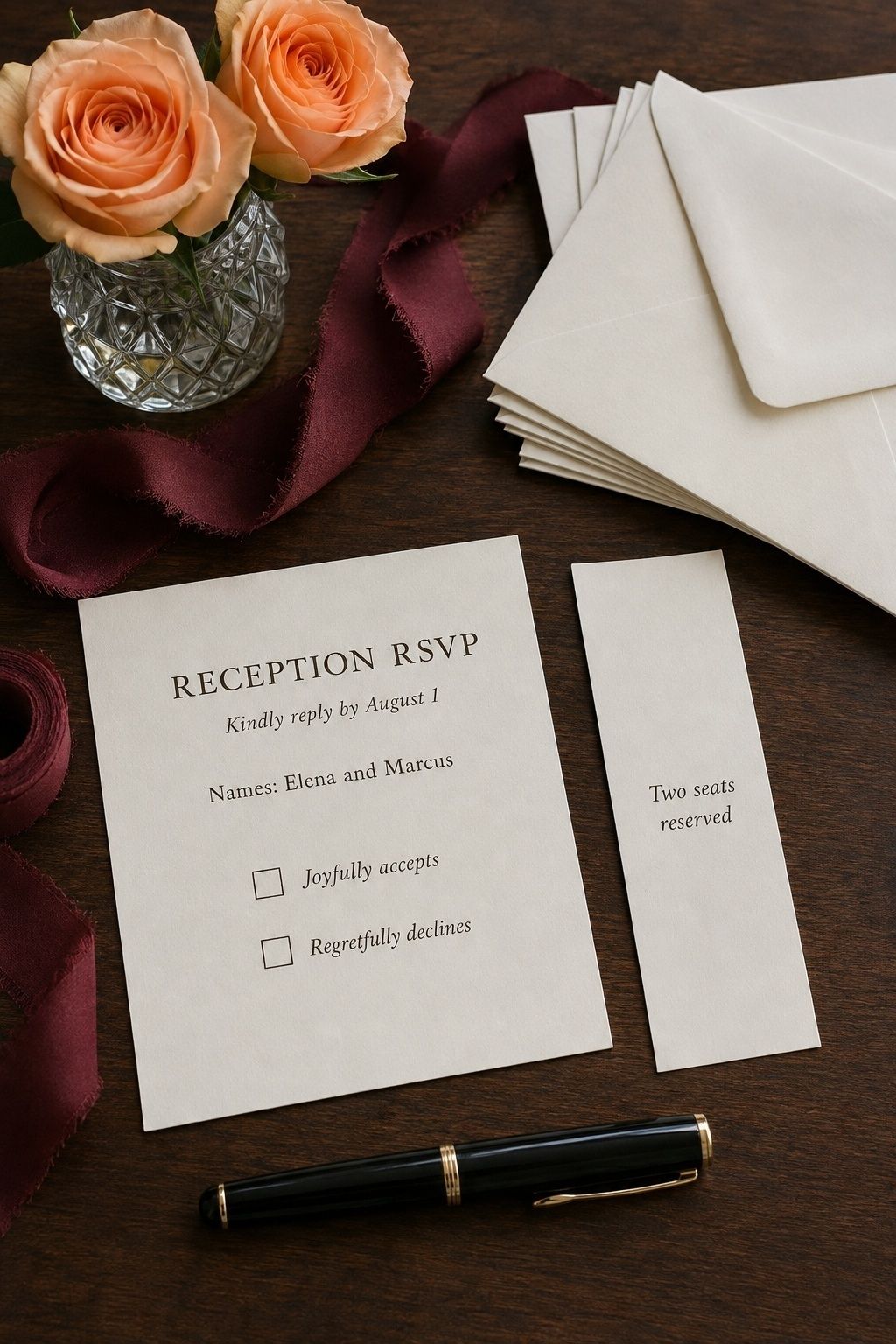
Reception-only invitations still need clear RSVP instructions. Include the deadline, reply method, meal choices if needed, and the names of invited guests. If plus-ones, children, or extra family members are not included, the RSVP card or website should make that obvious through named invitations and controlled guest counts.
A good RSVP line: “Kindly reply by August 1 through our wedding website.” If the event is small, add: “We have reserved seats in your honor” or use named RSVP fields so guests understand the invitation is not open-ended.
Wedding Website Details
A wedding website gives extra room when the situation needs more detail than the invitation should carry. Keep the invitation graceful, then use the website for travel, parking, attire, registry, schedule, and a short ceremony explanation if needed.
The website line: “We exchanged vows privately and are looking forward to celebrating with our wider circle at the reception.” Then move on to the practical information guests came to find. Long defensive explanations make the decision feel more awkward, not less.
How To Keep Expectations Clear
Reception after private ceremony wording is really about preventing mismatched assumptions. Most hurt feelings come from surprise: guests thought they were attending a full wedding day, then realized later that the ceremony was separate. Clear wording gives them the truth from the beginning.
Do Not Use Reception To Follow Unless Guests Attend The Ceremony
“Reception to follow” is standard wedding language, but it only makes sense when the same guests are attending the ceremony first. On a reception-only invitation, it implies there is a ceremony happening elsewhere and that the guest is expected to understand how the day connects.
Use “reception celebrating our marriage” instead. It stands on its own. It also avoids the uncomfortable feeling that guests are being asked to show up after a private event they were not allowed to witness.
Do Not Hide The Private Ceremony On A Tiny Insert
A details card reinforces the wording, but it should not carry the only mention of the private ceremony if the main invitation reads like a full wedding invitation. Guests often skim the main card first and build their expectation from that first impression alone.
If the main card says “wedding reception” or “reception celebrating our marriage,” the details card adds practical information. If the main card only says “wedding celebration,” the details card has to correct an assumption the invitation already created.
Use The Same Language Across Every Guest Touchpoint
The printed invitation, digital invitation, wedding website, RSVP page, reminder email, hotel block page, and family scripts should all use the same basic wording. Consistency keeps relatives from explaining it differently and keeps guests from comparing mixed messages.
Choose one anchor sentence and repeat it: “We will exchange vows privately and look forward to celebrating with everyone at the reception.” The same sentence works on the invitation, website, and RSVP page without sounding heavy.
Prepare A Short Answer For Questions
Even with clear wording, someone could ask why the ceremony is private. Decide your answer before invitations go out. The best answer is brief, united, and calm: “We are keeping the ceremony very small, and we are excited to celebrate with everyone at the reception.”
Do not offer a different explanation to every person. Too many versions invite debate. A simple sentence protects the privacy of the ceremony and keeps the focus on the celebration guests are invited to share.
Be Careful With Social Media Timing
If the private ceremony happens before the reception, think about when photos or announcements will appear. Guests who receive a reception invitation after seeing ceremony photos often still feel happy for you, but the order affects how included they feel.
A private wedding ceremony announcement bridges that gap. Send the reception invitation or announcement before broad public posting when possible. The message does not need to be elaborate. It simply lets guests hear the news directly from you.
Wording Choices For Sensitive Situations
Some private ceremony plans are straightforward. Others carry family pressure, faith traditions, divorced parents, grief, travel limits, or complicated relationships. The wording stays gracious without giving the whole story away.
When Immediate Family Is Invited To The Ceremony
If the ceremony includes only immediate family, avoid naming the exact guest group unless the detail prevents confusion. “Following a private family ceremony” is usually enough. Listing “parents and siblings only” risks making other relatives feel measured against the boundary.
Use: “After a private family ceremony, we invite you to celebrate our marriage at a reception.” This gives the basic truth and keeps the reception invitation warm.
When The Couple Eloped
Elopement wording should be joyful and direct. If the elopement is already known, lean into celebration. If it will be news to guests, keep the first line clear before adding playful language.
Use: “We eloped in a private ceremony and are thrilled to celebrate with you at our reception.” This balances the announcement and invitation in one sentence.
When The Reception Is Months Later
A later reception needs date clarity. Otherwise, guests often wonder whether they are being invited to a delayed wedding, an anniversary party, or a casual gathering. Name the marriage first, then the celebration.
Use: “We were married privately this spring and invite you to celebrate with us this fall.” If you want to include the exact ceremony date, add it in the first sentence or on the website.
When The Ceremony Is Private For Budget Or Venue Reasons
You do not have to print the reason on the invitation. Guests need the boundary, not the budget math. “Private ceremony” is sufficient. If someone asks directly, a kind answer is: “We are keeping the ceremony very small and are so glad to celebrate with everyone afterward.”
Explaining too much sometimes invites negotiation. A guest who hears the venue is small could suggest standing room. A relative who hears the budget is tight could offer to pay for extra ceremony seats. Keep the invitation clean and the boundary settled.
When Some Guests Know About The Ceremony And Others Do Not
Use the same public wording for everyone, even if some guests already know more. Private details should stay private, but the invitation language should not create different versions of the event. That consistency protects the couple and reduces social comparison among guests.
If close relatives ask what to say, give them the same sentence: “They are having a private ceremony and a reception to celebrate with everyone afterward.” This keeps the message simple and kind. For more on how to tell guests the ceremony is private, see the complete, updated guide.
Where To Put Extra Details
A private ceremony plan often needs more than one message, but the main invitation should still stay graceful. Think of the printed or digital invitation as the formal welcome. It names the reception, gives the private ceremony phrase, and tells guests when and where to arrive. Put extra detail in the places guests use for practical planning.
This layered approach keeps the invitation from becoming crowded. It also gives couples room to answer predictable questions without placing a long explanation before the party details. The first card stays beautiful and clear. Extra wording does the quieter organizing work.
Before ordering stationery, place every guest-facing sentence in one document and compare the wording side by side. The invitation, RSVP page, website schedule, hotel block email, and family script should all give guests the same reception time and the same private ceremony boundary. Small differences create avoidable questions, especially when relatives forward screenshots or guests discuss travel plans together. A single shared sentence keeps the celebration easy to understand, and it gives the reception a calm, intentional tone clearly from the first invitation.
On The Main Invitation
The main invitation should carry the most important sentence. Do not rely on a website alone to explain that the ceremony is private. A guest who receives a card that looks like a full wedding invitation could form the wrong expectation before visiting the site.
A polished main-card line: “Following a private ceremony, please join us for a reception celebrating our marriage.” Add the date, time, venue, address, and RSVP instruction around that sentence. The invitation will still feel like an invitation, not a correction.
On A Details Card
A details card is the right place for reception style, attire, parking, transportation, hotel blocks, and website information. It also repeats the private ceremony phrase in a softer way: “Our ceremony will be held privately. We look forward to celebrating with you at the reception.”
Use the details card to remove practical confusion, not to over-explain the couple’s personal choice. If guests need to know that dinner is served, that the event is adults only, that the venue has valet parking, or that the party is cocktail attire, put those details here. Keep the ceremony line brief and consistent with the main invitation.
On The Wedding Website
The website holds the fuller version of the message if the couple wants one. A warm website line: “We are exchanging vows privately with immediate family and are so excited to celebrate with our wider circle at the reception.” That gives guests a little emotional detail without asking for approval.
Place this line with the schedule or FAQ section. Then make the reception details easy to scan: date, start time, venue, address, dress code, parking, food, RSVP deadline, and registry details if you are sharing one. Guests should leave the website knowing exactly how to attend and celebrate well.
On The RSVP Page
The RSVP page should reinforce that guests are replying for the reception. Use a title such as “Reception RSVP” or “Marriage Celebration RSVP.” If the guest count is limited, list invited names clearly and avoid open fields that let guests add extra people without a conversation.
A reception-only RSVP page: “We are excited to celebrate with you at our reception. Please reply for the guests named on your invitation by September 10.” That wording is firm without sounding chilly, and it reduces follow-up questions about plus-ones or children.
In Family Conversations
Family members often become unofficial messengers. Give them language before they improvise. The sentence is short: “They are keeping the ceremony private and are hosting a reception to celebrate with everyone afterward.” This keeps the explanation neutral and prevents relatives from making the choice sound secretive or apologetic.
If a close guest feels disappointed, acknowledge the feeling without reopening the plan. “We understand, and we are keeping the ceremony very private. We would love to celebrate with you at the reception.” That answer is compassionate and settled at the same time.
FAQ
How do you word a reception after a private ceremony?
Word it by naming the reception first and adding one clear private ceremony phrase. A strong template is: “Following a private ceremony, please join us for a reception celebrating our marriage.” Then include the date, time, venue, RSVP deadline, and reception style.
What should a reception after private ceremony invitation say?
It should say who is hosting, who is being celebrated, that the ceremony is private or already took place, and that guests are invited to the reception. Reception after private ceremony wording should also make the arrival time and location unmistakable so guests do not expect a ceremony.
Do you mention the private ceremony date on the reception invitation?
Mention the private ceremony date if the couple is already married or if the reception happens much later. It is not required for a same-day private ceremony. When in doubt, include the reception date prominently and put any extra ceremony detail on the wedding website.
How do you make reception-only wording clear?
Use the word reception, avoid “reception to follow,” and do not print a ceremony time for reception guests. Phrases such as “after a private ceremony,” “following an intimate ceremony,” and “we were married privately” make reception-only invitation wording clear without sounding harsh.
Is it rude to invite guests only to the reception after a private ceremony?
It is not rude when the invitation is honest, timely, and welcoming. A private ceremony is a thoughtful choice for many reasons. Guests are more likely to feel respected when the invitation clearly says they are invited to celebrate at the reception rather than implying a full wedding day.
What wording should you avoid for a private ceremony reception?
Avoid wording that hides the private ceremony, suggests guests are attending the ceremony, or sounds like a warning. Skip phrases such as “ceremony private, reception only” in favor of warmer wording. Also avoid “reception to follow” unless the same guests attend the ceremony first.
Final Thoughts
The best private ceremony reception wording gives guests clarity without turning the invitation into an apology. Say what is private, invite them warmly to the celebration, and let the reception feel like the meaningful gathering it is.
This wording stays brief, gracious, and completely clear when the couple leads with the reception, repeats the same language across every detail, and treats the celebration as its own beautiful event.
Last update on 2026-11-29 / Affiliate links / Images from Amazon Product Advertising API