

Family only wedding wording should be clear for the people invited and gently private for everyone else. Name the invited guests, keep the invitation warm, use RSVP details to prevent assumptions, and save any explanation for a short website note, a private conversation, or a post-wedding announcement.
A family-only wedding can feel beautifully simple until you have to explain it. You may be inviting parents, siblings, grandparents, children, or a very small circle of relatives, while close friends, coworkers, cousins, or neighbors naturally wonder where they fit. The words matter because the goal is not to announce who missed the list. The goal is to make the actual invitation feel gracious and unmistakable.
The cleanest approach is usually layered. The invitation speaks to the family members who are invited. The envelope, RSVP card, or online form confirms the exact names. A wedding website can answer practical questions for invited guests. For everyone outside the guest list, a private note or a warm announcement after the ceremony is often kinder than a broad pre-wedding explanation.

Recommended Wedding Products


You Might Also Like These Blog Posts
- No Kids Wedding Wording Lines That Sound Kind
- Adults Only Wedding Wording That Sounds Warm And Clear
- How To Invite Some Family But Not All To Wedding And Keep It Fair
- Small Wedding No Plus One Wording Lines That Stay Warm
- Small Wedding Adults Only Website Wording Lines Parents Won’t Miss
- Small Wedding Guest List Wording That Keeps Boundaries Kind
Family Only Wedding Wording That Keeps The Celebration Gracious
The best family only wedding wording does two things at once: it welcomes the people who are invited and avoids turning the guest list into a public ranking. Your family should know they are warmly included. Friends and extended relatives who are not invited should not receive language that feels like a formal rejection letter.
Start by separating three audiences. Invited family members need ordinary wedding details. Close people who might feel hurt may need a brief personal conversation. The wider circle usually needs nothing before the wedding unless you are announcing a livestream, a larger later celebration, or a post-wedding gathering. Once you know who each message is for, the wording becomes calmer.
Define The Family Circle Before Writing

Before drafting immediate-family-only wedding wording, decide what family-only actually means in your case. Does it include parents and siblings only? Grandparents? Children? Siblings’ partners? Aunts and uncles? First cousins? A few family-like loved ones? The words will feel uneven if the rule is still changing while you write.
A helpful private sentence might be: “We are inviting parents, siblings, grandparents, and our siblings’ partners.” Another might be: “We are having a ceremony with immediate family only, then sending an announcement afterward.” That planning sentence is not public copy. It gives you a steady standard so the invitation, RSVP, and private replies all match.
This step also protects you from accidental exceptions. If one cousin is invited because you grew up together, decide whether the invitation is family-only or close-family-plus-one-loved-one. Either can be fine. What matters is that you understand the reason before someone asks.
Write The Invitation For The People Actually Invited
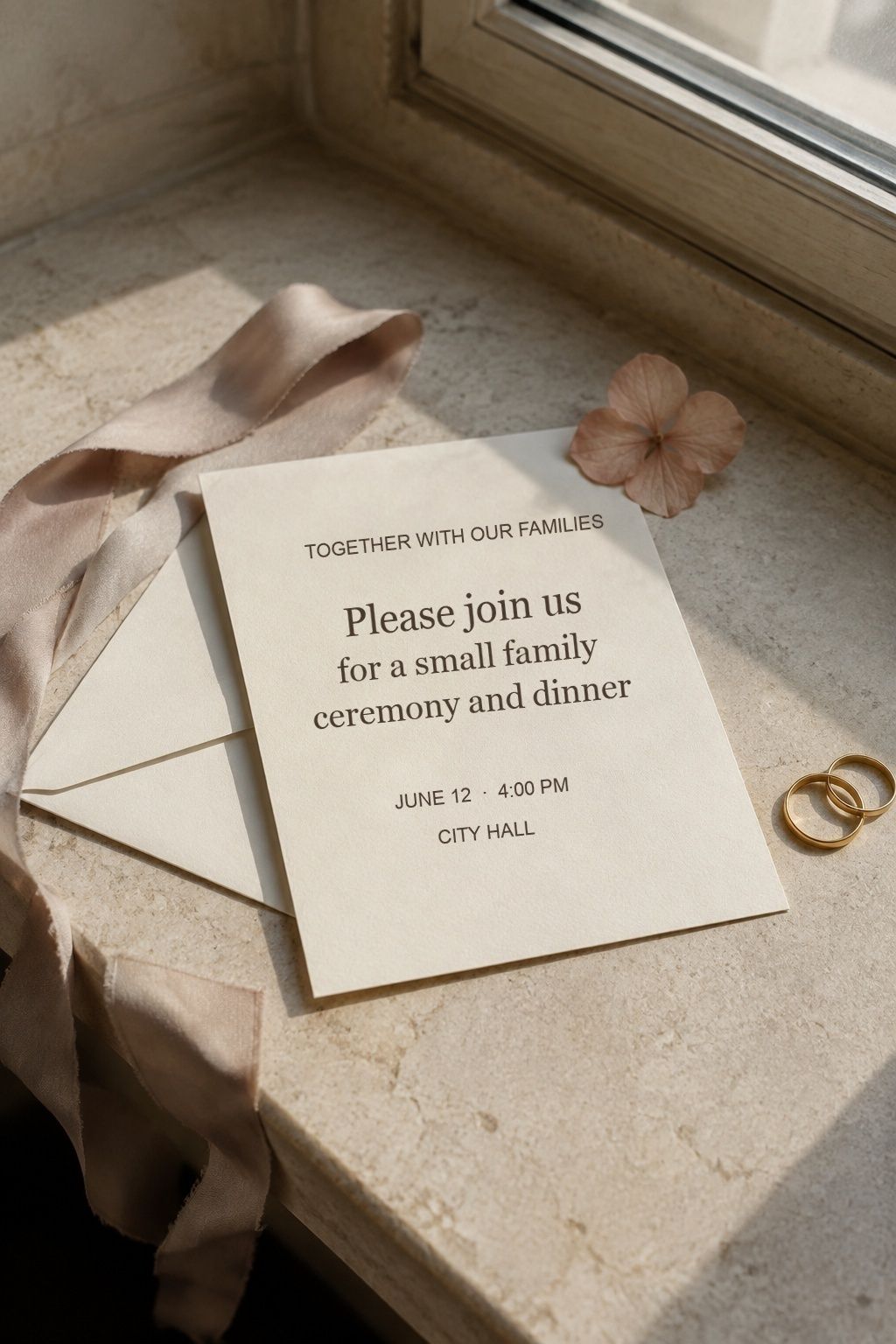
Family only wedding invitation wording should feel like an invitation, not a disclaimer. The main card can simply name the couple, the ceremony, the date, the place, and the celebration that follows. If only family members are receiving it, you do not need to explain the full guest-list philosophy on the card itself.
Original invitation-style wording can stay short: “Together with our families, we invite you to join us for a small family ceremony and dinner.” For a very private ceremony, try: “Please join us as we exchange vows in an intimate family ceremony.” If your card needs a softer line, small wedding invitation wording should still sound like a welcome before it sounds like a boundary.
Keep the invitation focused on what is happening, not on who is missing. Avoid lines that say “friends are not invited,” “family only, no exceptions,” or “please do not ask to bring anyone else.” Those may feel efficient, but they shift the tone from welcome to defense.
Use Addressing And RSVP Details To Avoid Assumptions
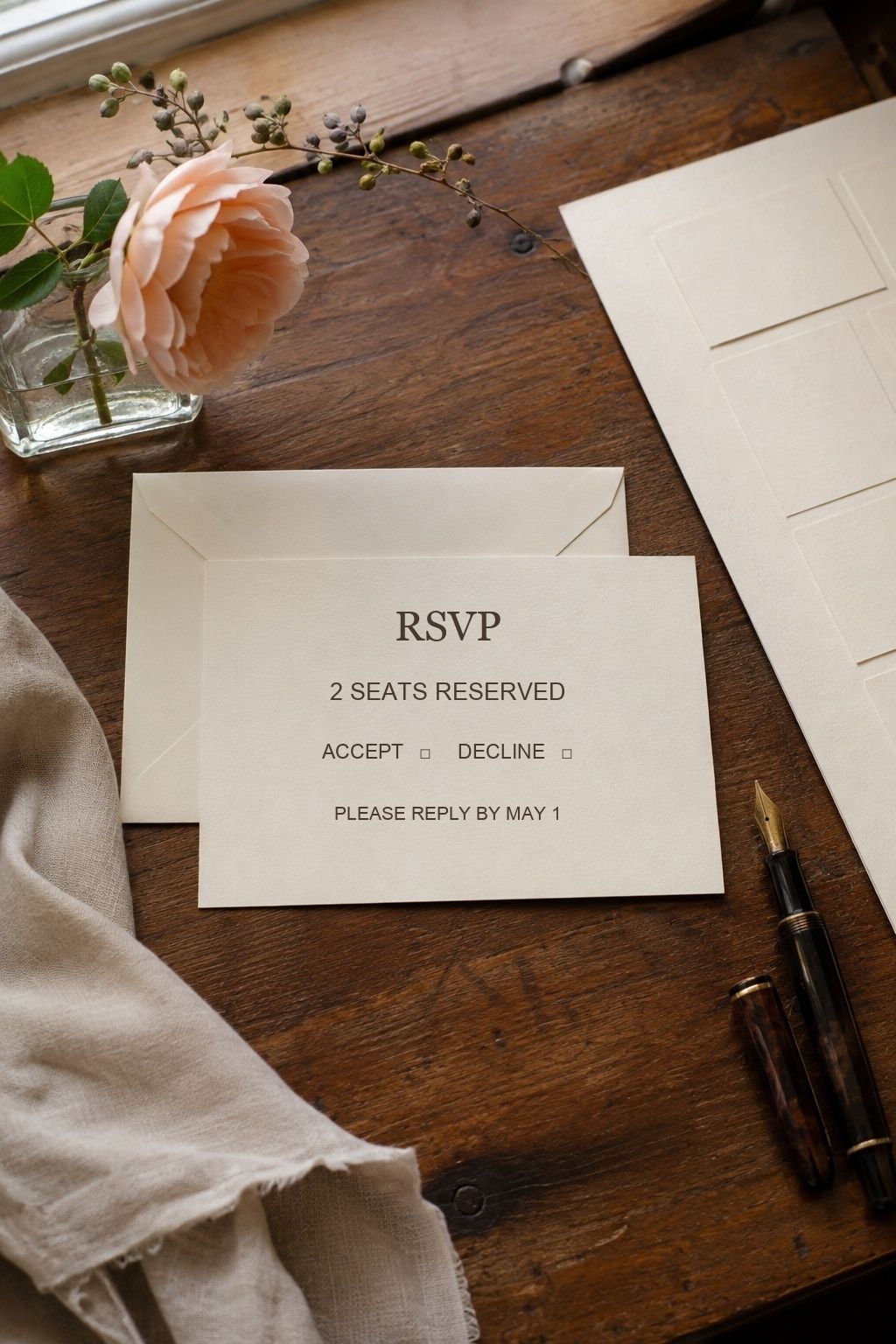
For a small family wedding wording system, the envelope and RSVP card carry a lot of quiet clarity. Address the invitation to the exact people invited. If children are included, name them or use a family address that clearly includes the household. If children, partners, or cousins are not included, avoid household wording that could imply an open invitation.
The RSVP should match the invitation names. A line such as “We have reserved 2 seats for you” or “Please reply for the guests named above” can prevent confusion without sounding cold. Online RSVP settings should also limit responses to named guests when possible, especially if your guest count is firm.
This is where boundaries for a small guest list become practical. If the invitation says one thing and the RSVP form lets someone add four names, the form is doing the opposite of the wording. Couples handling family invitations and partner limits need small wedding no-plus-one wording that keeps the answer clear without making the guest feel scolded.
Make every piece agree before anything goes out. Clear names, matched RSVP limits, and calm small wedding guest-list etiquette do more to prevent awkward follow-up conversations than a long explanation ever will.
Add Website Wording Only If Invited Guests Need Details
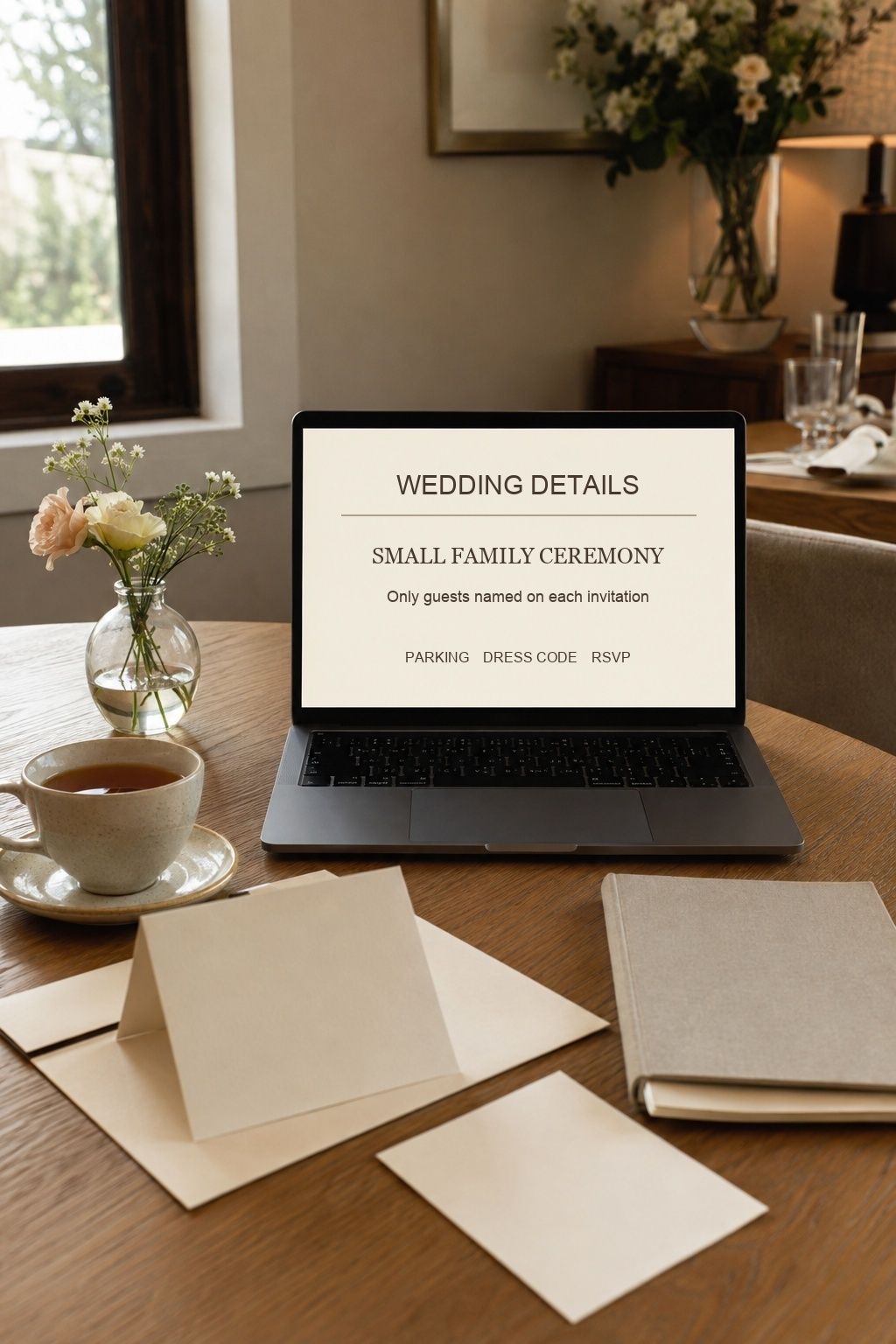
Private family wedding wording on a website should answer real questions, not overexplain the decision. Use the website when invited guests need travel details, parking, dress code, RSVP instructions, lodging, or a note that the ceremony is intimate. You do not need a wedding website solely to justify the guest list.
A warm website note might say: “We are celebrating with a small family ceremony and dinner, so our guest list is limited to the loved ones named on each invitation. Thank you for helping us keep the day intimate.” Another option is: “Because our ceremony is very small, we are able to host only immediate family for the wedding day.”
Notice the balance. The wording is clear, but it does not mention who argued, who was cut, how much the venue costs, or which side of the family received more seats. A wedding website is useful when it makes the day easier to attend. It becomes uncomfortable when it asks guests to study your guest-list math.
Tell Close Friends Privately Only When Silence Would Feel Hurtful
One of the hardest parts of family only ceremony wording is deciding whether to tell friends before the wedding. In many cases, you do not need to send a broad message announcing that people are not invited. A pre-wedding note can accidentally create the hurt you were trying to prevent.
Still, a private conversation can be kind when the relationship is close and silence would feel strange. Think best friends you talk to weekly, people who assumed they would help celebrate, or loved ones who may hear about the wedding through family before you have a chance to explain. When you are deciding how to tell people you’re having a small wedding, the tone should be personal, not press-release formal.
Original private wording could be: “I wanted to tell you personally that we are having a very small family ceremony. I care about you so much, and I did not want you to hear it in a way that felt distant.” Then stop. You do not have to add a long apology, defend every seat, or invite debate about the decision.
Choose Post-Wedding Announcement Wording For The Wider Circle

Family only wedding announcement wording is often the cleanest choice for coworkers, distant relatives, neighbors, and friends who are not part of the ceremony guest list. Instead of telling people ahead of time that they are not invited, you can share the marriage afterward with warmth and simplicity.
Try announcement-style wording such as: “We were married in a small family ceremony and are so happy to share the news with you.” Another option is: “With full hearts, we celebrated our marriage privately with family and look forward to sharing this new season with the people we love.” Keep it joyful and present-tense. The announcement is about the marriage, not the limitations.
If you are hosting a later party, say that plainly: “We exchanged vows in an intimate family ceremony and would love to celebrate with you at a casual gathering this fall.” If there is no later event, do not hint at one just to soften the message. Warm announcement wording is kinder than a promise you do not intend to keep.
Keep The Explanation Short And Free Of Family Politics
When people feel guilty, they often explain too much. That is where family-only wording can start to sound defensive. Budget, venue size, parent opinions, strained relationships, and guest-list fairness may all be real behind the scenes, but most of those details do not belong in public copy.
A short factual line is usually enough: “We are keeping the ceremony to immediate family.” If someone close asks privately, you can add: “It was the only way for us to keep the day calm and personal.” That gives a human reason without inviting someone to solve the logistics for you.
Be especially careful with blame. “Our parents made us keep it family-only” may feel easier in the moment, but it can create more tension later. The couple’s wording should own the decision gently: “We decided on a very small family ceremony.” That sounds steadier and kinder.
Avoid Wording That Makes The Wedding Sound Like A Ranking
The wrong phrasing can make a private-ceremony decision sound like a relationship scoreboard. Avoid language that compares people, such as “only our most important loved ones,” “just the people who matter most,” or “we had to choose who we are closest to.” Even if the feeling is innocent, the words can sting.
Also skip secrecy language. “Please do not tell anyone” can make the wedding feel suspicious, and “we hope no one is offended” asks guests to manage your anxiety. Try neutral language instead: “We are celebrating privately with family” or “We are keeping the ceremony very small.”
Before sending any line, read it as someone who loves you but is not invited. Does it make them feel ranked, blamed, or publicly excluded? If so, simplify. The most gracious wording usually says less, names the plan clearly, and lets the relationship continue outside the wedding guest list.
FAQ
How Do You Word A Family-Only Wedding Invitation?
Word it as a warm invitation to the people included: “Please join us for an intimate family ceremony and dinner.” Then use the envelope and RSVP to name the exact guests. Avoid putting a blunt exclusion line on the main invitation unless a details card truly needs a short note.
How Do You Tell Friends You Are Having A Family-Only Wedding?
Tell only the friends who would reasonably expect to hear it from you personally. Keep it brief and kind: “We are having a very small family ceremony, and I wanted you to hear that from me.” You do not need to send a broad pre-wedding notice to everyone outside the guest list.
Should You Announce A Family-Only Wedding Before Or After The Ceremony?
For most wider-circle friends, coworkers, and distant relatives, a post-wedding announcement is gentler. It shares the happy news without making the message feel like a disinvitation. Before the ceremony, reserve personal explanations for close relationships where silence would feel noticeably hurtful.
What Should A Wedding Website Say For A Family-Only Ceremony?
Use the website for practical details and one clear guest-list note: “We are celebrating with a small family ceremony, so our guest list is limited to the loved ones named on each invitation.” Keep it factual, warm, and closed-ended. Do not use the website to explain family politics.
How Do You Explain Immediate-Family-Only Without Sounding Rude?
Use calm, simple wording that owns the decision: “We decided on a very small ceremony with immediate family only.” Avoid over-apologizing, ranking relationships, or blaming the venue, budget, or parents. A short explanation sounds more respectful than a long defense.
What Wording Should You Avoid For A Family-Only Wedding?
Avoid wording that says or implies “you did not make the cut.” Skip phrases about only inviting the most important people, strict no-exception rules, secrecy, or repeated apologies. Also avoid broad messages that tell uninvited people about the wedding only to explain why they are not included.
Final Thoughts
A family-only wedding does not need harsh wording to be understood. It needs invited names, clear RSVP details, and a tone that stays focused on the ceremony rather than the people outside the room. When the decision is private and the communication is consistent, the day can feel intimate without making loved ones feel publicly excluded.
Use the smallest explanation that tells the truth. Invite family warmly, talk to close friends personally when kindness calls for it, and share the marriage afterward with joy. Couples thinking through limited guest-list conversations deserve calm, steady, and generous small wedding guest-list wording.
Last update on 2026-10-05 / Affiliate links / Images from Amazon Product Advertising API