

How to handle wedding opinions from family starts with deciding what you and your partner own before you invite anyone else into the conversation. Listen for love, sort practical ideas from pressure, give relatives clear lanes when you want involvement, and answer repeated demands with calm, finished language instead of more debate.
Family opinions arrive dressed as excitement, tradition, worry, generosity, or a passing comment that somehow follows you for weeks. One person wants the church ceremony. Another wants the full cousin list. Someone else thinks your venue is too casual, your budget is too high, your timeline is too slow, or your guest count is too small.
The goal is not to make every relative silent. Weddings stir up memory, pride, culture, money, and expectations, so some opinions are inevitable. The healthier goal is to protect your partnership, respond without spiraling, and treat how to handle wedding opinions from family as part of building a real commitment instead of a family committee project.
Recommended Wedding Products


You Might Also Like These Blog Posts
- How To Handle Family Pressure During Wedding Planning Without Losing Your Vision
- How To Plan A Wedding Without Pleasing Everyone And Still Feel Kind
- Wedding Guest List Family Pressure: How To Set Boundaries Kindly
- How To Deal With Wedding Guilt When Everyone Has Feelings About Your Day
- Wedding Family Boundary Mistakes That Quietly Take Over The Day
- How To Handle Late Wedding RSVPs Without Chasing Everyone Forever
How To Handle Wedding Opinions From Family
The best way to handle wedding opinions from family is to separate the opinion from the authority someone is trying to attach to it. A parent loves you deeply and still does not get final say over what your wedding needs. A grandparent cares about tradition and still pushes harder than is fair. A sibling means well and still turns a preference into pressure.
Once you make that separation, your answers become steadier. You do not have to treat every comment as an attack, and you do not have to treat every comment as a vote. Hear the feeling behind it, decide whether the idea fits, and move on without handing over the steering wheel.
Most wedding planning family conflict gets worse when couples answer too quickly, explain too much, or keep reopening choices that are already settled. A relative asks, “Are you sure you do not want a bigger reception?” and suddenly you are defending your budget, your personalities, your friendships, your venue, and your entire definition of a meaningful wedding. That is exhausting, and it rarely changes anyone’s mind.
A calmer approach is to decide in advance which conversations are open, which are closed, and which need a practical boundary. Open conversations include family recipes, songs, ceremony words, travel logistics, photos, or accessibility needs. Closed conversations include your guest-count ceiling, ceremony style, faith choices, attire level, or whether you are having a wedding party. Boundary conversations are the ones where someone keeps pushing after you have already answered.
Handling family wedding advice well also means giving yourself a pause. Say, “We will think about it,” even when you suspect the answer is no. Say, “We are not deciding that tonight,” when a dinner table becomes a planning tribunal. Say, “That part is already settled,” without offering a courtroom speech.
Remember that a wedding compresses several family systems into one event. Your side has its habits, your partner’s side has theirs, and each household has a different idea of what counts as respect. One family shows care by asking detailed questions. Another shows care by giving strong instructions. Another avoids direct conflict but complains through relatives. You and your partner are building a new center between those patterns, which means the wedding becomes practice for married life.
That is why the tone matters. If every response becomes a fight, the engagement starts to feel like a test of loyalty. If every response becomes surrender, the wedding stops feeling like yours. The middle path is respectful firmness: hear the person, keep the decision, and refuse the invitation to make one comment bigger than the whole relationship.
The more you practice short, kind answers, the less your wedding becomes available for open debate. That does not make you cold. It makes you clear.
Start With Your Partner First
Before you manage anyone else’s feelings, get aligned with the person you are marrying. This is the quiet center of how to handle wedding opinions from family, because relatives often press hardest where a couple sounds unsure. If one partner says, “We are thinking small,” and the other says, “Well, we could add people,” family will naturally push into that opening.
Alignment does not mean you and your partner agree instantly on every detail. It means you do the harder couple work before public conversations begin. The two of you decide what matters, what has room to flex, and what language you will use when someone challenges the plan.
Decide Your Non-Negotiables

Non-negotiables are the choices that protect the emotional shape of the day. They are not every preference. They are the few decisions that would make the wedding feel wrong if someone else changed them.
For one couple, the non-negotiable is a 40-person guest list. For another, it is a secular ceremony, a specific cultural ritual, no wedding party, a sober reception, a restaurant dinner, personal vows, or a budget cap that protects life after the wedding. Write these down in plain language. “We want a small wedding” is softer than “We are inviting 45 guests, and we are not expanding beyond that number.” The second sentence gives you something to stand on.
Try to keep the list short. If everything is non-negotiable, you will spend the whole engagement guarding tiny details. Choose the decisions that truly affect your values, comfort, finances, and commitment. Let the rest breathe.
Decide Your Flexible Areas
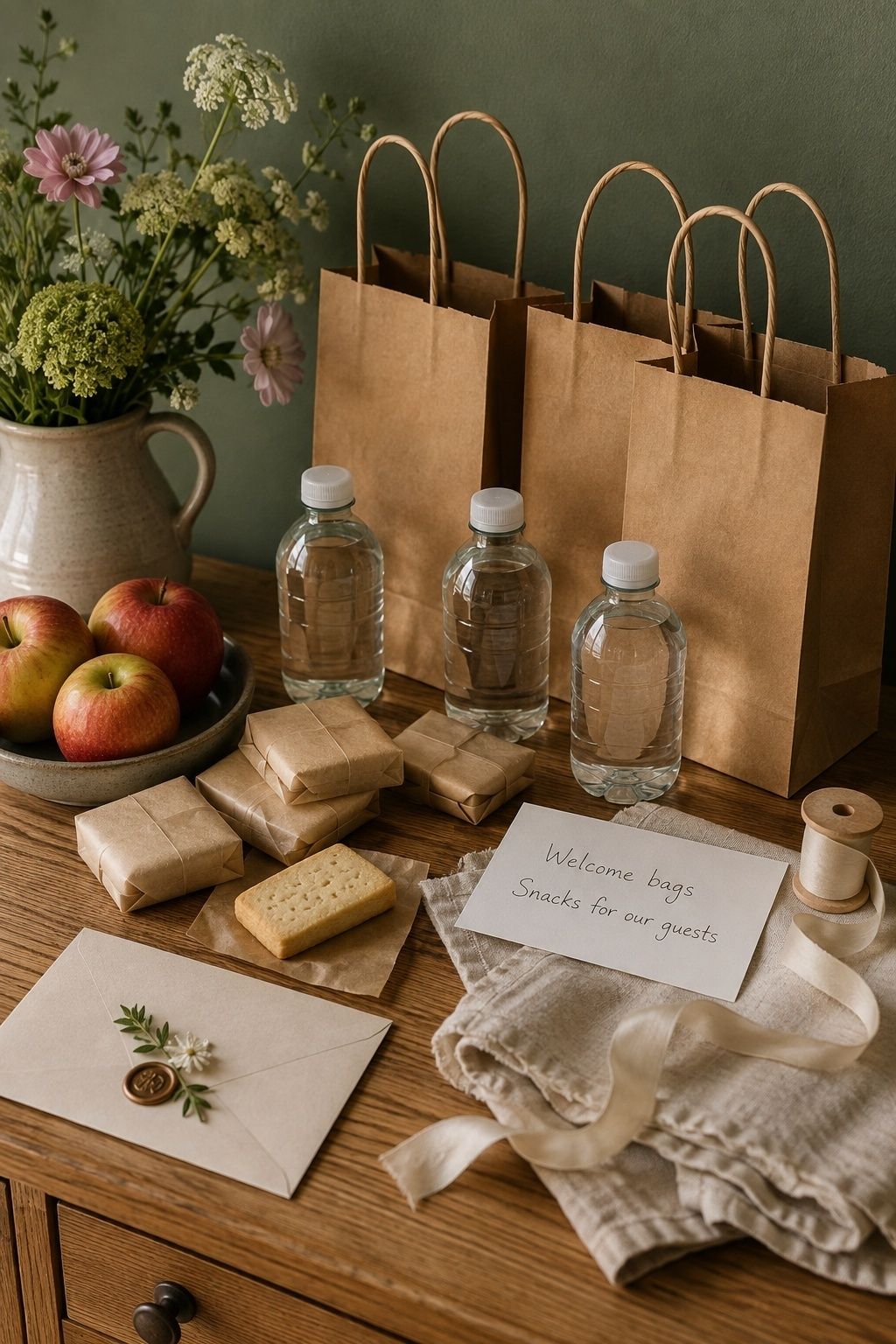
Flexible areas are where family involvement feels warm instead of intrusive. They give relatives a place to contribute without controlling the whole wedding. A parent who desperately wants a role often feels delighted to choose welcome-bag snacks, gather family addresses, suggest meaningful photos, host a casual brunch, or bring a family dessert.
The trick is to offer a defined lane. “What do you think of the wedding?” invites commentary on everything. “Would you choose two family photos for the memory table?” gives someone a role with edges. People often behave better when their lane is clear.
This also protects you from false guilt. When you have already offered genuine ways to be included, a relative’s disappointment about not controlling a larger choice becomes easier to hold. You are not shutting them out. You are inviting them into the places that fit.
Agree On Who Responds To Whom
As a general rule, each partner should handle their own family when pressure becomes personal. Your parent is more likely to forgive directness from you than from your partner. Your sibling is more likely to understand your tone, your shorthand, and your history. This keeps the future in-law relationship from absorbing conflict it does not need to carry.
That does not mean abandoning each other. It means standing together. If your mother is pushing for ten extra guests, answer, “We have decided our guest count together, and I am the one telling you because I do not want you blaming my partner.” If your partner’s uncle keeps challenging the ceremony, your partner says, “This is our shared decision, and I need you to respect it.”
Use “we” for decisions and “I” for responsibility. “We chose this” shows unity. “I am asking you to stop bringing it up” shows ownership.
Stop Asking For Open-Ended Opinions
Many couples accidentally create the exact pressure they dread by asking questions that are too broad. “What do you think of this venue?” sounds like an invitation to approve or reject it. “Do you like this dress code?” turns into a debate about everyone else’s comfort. “Should we invite the extended family?” becomes a referendum.
Ask narrower questions when you truly want input. Try, “Do you think Grandma will need closer parking at this venue?” or “Which two relatives should we ask about food allergies?” or “Would you spell these family names for us?” Practical questions keep family involved in ways that improve the guest experience without putting your core choices back on the table.
If you are still exploring a decision between the two of you, keep it quiet until you and your partner are ready. A half-formed idea feels harmless to share, but some relatives hear it as a chance to campaign.
Present Finished Decisions As Finished
There is a big difference between “We are thinking about a restaurant wedding” and “We booked a dining room, and we are excited about it.” One invites persuasion. The other invites celebration.
Finished language is not rude. It is merciful. It tells family where the conversation is. “We chose a Sunday brunch because it fits our budget and the kind of day we want.” “We are keeping the ceremony quiet and celebrating with dinner afterward.” “We have finalized the guest list.” These sentences are warm, but they do not ask for permission.
If someone pushes anyway, repeat the finished decision instead of adding fresh reasons. Fresh reasons give them fresh handles. Calm repetition teaches them the decision is real.
This matters online and in group texts. A single planning update turns into a dozen replies, and the couple ends up managing reactions instead of planning. Share fewer drafts and more decisions. “We booked the garden room and are so excited to celebrate there” sets a different tone than “What does everyone think about this garden room?” Save true collaboration for the few people you have intentionally brought into a specific choice.
Sort Opinions Into Categories
Not every opinion deserves the same response. Some deserve appreciation. Some deserve a practical money conversation. Some deserve a boundary. Sorting the comment before answering keeps you from reacting to every sentence with the same level of intensity.
Opinions Rooted In Love
These are the comments that come from concern, memory, or tenderness. A parent worries you will regret skipping portraits with certain relatives. A grandparent hopes you will include a ceremony passage because it would mean something to them. A sibling wants you to eat before the ceremony because they remember how stressed you get.
Love-rooted opinions are worth hearing, even when you do not take them. Answer, “I appreciate why that matters to you,” or “That is sweet of you to think about,” or “We will see if there is a way to honor that without changing the whole plan.” Appreciation lowers defensiveness without promising agreement.
Sometimes these opinions reveal something practical. A relative knows about mobility needs, family tension, a meaningful heirloom, or a photo someone would treasure. Collect that wisdom while still making the final call.
Opinions Rooted In Tradition
Tradition opinions often sound like facts: “You have to invite them.” “The bride’s family does this.” “A real reception includes dancing.” “You are supposed to include that.” Underneath, there is usually a fear that the wedding will not be recognized, respected, or remembered in the right way.
Respond by naming the value without accepting the rule. “I know that tradition means a lot in our family. We are choosing the parts that feel honest for us.” Or, “We understand that is how it was done before. Our wedding is going to be smaller and simpler.” This keeps you from arguing over whether tradition is good or bad. You are simply choosing what fits this wedding.
If a tradition matters to someone you love, look for a smaller expression. A blessing before dinner, a family song during cocktail hour, a borrowed accessory, a small dessert, or a toast carries meaning without letting one custom redesign the day.
Opinions Rooted In Money
Money-linked opinions need different treatment because family funding creates real expectations. A parent contributing toward the venue expects more guests. A relative paying for flowers wants a specific style. Someone offering a check assumes it buys decision power.
Do not handle money opinions only in passing. Have a direct conversation about what the contribution covers and what it does not. A clean sentence sounds like, “We are grateful for your contribution toward the rehearsal dinner. We are still making the final decisions for the wedding day.” Another version is, “If the gift depends on expanding the guest list, we need to know that before accepting it.”
This feels awkward, but unclear money creates bigger awkwardness later. It is kinder to define expectations before deposits, contracts, and guest-list promises make everyone feel trapped.
Opinions Rooted In Social Obligation
Social-obligation opinions are the ones about who will be offended, who invited whom years ago, who expects a plus-one, which coworkers must be included, and what the neighbors will think. These comments swallow a small wedding fast because every exception creates another exception.
Answer with the principle behind your decision. “We are keeping the guest list to the people we have active relationships with.” “We are not inviting by family branch; we are inviting by closeness.” “We are keeping the room small so we are able to host it well.” A principle is easier to defend than a long list of individual yeses and nos.
Do not let relatives make promises on your behalf. If someone says, “I told your cousin she would be invited,” answer quickly: “Please let her know you spoke too soon. We have not extended that invitation.” It is uncomfortable once. It is more uncomfortable to let a false promise become your problem.
Opinions That Cross A Boundary
An opinion crosses a boundary when it becomes repeated pressure, guilt, insult, triangulation, or control. “I wish you were inviting more cousins” is an opinion. “You are embarrassing this family if you do not invite them” is pressure. “Your partner is changing you” is not wedding feedback; it is a relationship attack.
Boundary-crossing comments need less explanation, not more. Try, “I am not willing to discuss my partner that way.” “We have answered this.” “If you keep raising this tonight, we are going to change the subject.” “We want you with us, but we need the criticism to stop.” The tone stays calm while the line gets firm.
You do not need to win the argument for the boundary to be valid. A boundary is about what you will participate in, not whether the other person agrees.
What To Say In The Moment
In-the-moment language works best when it is short enough to remember under stress. You do not need a perfect speech. You need a few sentences that sound like you and keep the conversation from rolling over you.
When the advice is harmless, answer with appreciation without commitment: “Thank you, we will keep that in mind.” “That is kind of you to think about.” “I hear how much you care about this.” Then move on.
When the decision is finished, say so plainly: “We already decided on the venue.” “The guest list is final.” “We are not adding wedding-party roles.” “We chose a ceremony that fits us.” Avoid adding “unless” or “for now” if the decision is not actually open.
When someone asks why, give one reason at most. “It fits our budget.” “It matches the size of wedding we want.” “It feels right for us.” “It keeps the day manageable.” Then stop. The silence after a calm answer is allowed to exist.
When someone criticizes, name the impact: “That feels discouraging, and we are trying to stay excited.” “I know you have strong feelings, but the way this is coming across is hard for me.” “I want to share wedding updates with you, and I need them met with more kindness.”
When the same topic keeps returning, use the broken-record version: “We are not reopening that.” “I know you disagree, and the decision is still made.” “We love you, and this part is settled.” Repetition feels stiff at first, but it often ends the loop.
When you need to leave the conversation, give yourself an exit. “I am going to step away for a few minutes.” “This is becoming too much for dinner.” “Let’s talk about something else.” “We will revisit the practical details another day.” You are allowed to protect the room, the relationship, and your own nervous system.
For relatives who respond better to warmth than direct refusal, pair your boundary with affection. “I love that you are excited. We are keeping this choice between the two of us.” “I want you to enjoy the day with us, not feel responsible for fixing it.” “Your encouragement means a lot, and this part is already handled.” Affection is not a loophole in the boundary. It is the tone around it.
For relatives who respond only to directness, skip the extra cushioning. “Please stop asking.” “Do not contact the vendor.” “We are not discussing the guest list with anyone else.” A firm sentence feels sharp if you are used to softening everything, but sometimes clarity is the kindest option left.
When Family Is Paying
Parent pressure wedding planning becomes more complicated when money is involved. A contribution is sometimes a loving gift, a shared celebration, a cultural expectation, a practical relief, or a quiet contract no one has actually discussed. Before accepting money, clarify which one you are dealing with.
Ask direct questions early: “Is this a gift, or are there decisions you expect to make because of it?” “Are there specific guests tied to this contribution?” “Is there a part of the wedding you want this money to cover?” “Would you still want to contribute if we keep our original plan?” These questions are not ungrateful. They prevent resentment.
If the contribution comes with reasonable preferences, decide whether that trade feels right. For example, if parents are paying for dinner and ask to invite four close family friends, that fits many small weddings. If they want to double the guest list, change the ceremony, and choose the venue, the gift is too expensive emotionally.
Couples sometimes accept money because saying no feels impossible, then spend the rest of planning trying to wrestle control back. It is usually better to scale the wedding down than to fund a larger day with money that makes you feel owned.
If you have already accepted money and expectations are growing, reset the conversation. Say, “We are grateful for your contribution, and we realize we need to clarify decision-making. We are happy to hear your thoughts, but final choices need to stay with us.” If that no longer works, offer a choice: “If this contribution depends on controlling these decisions, we understand if you need to pull it back. We will adjust the wedding accordingly.”
That is a brave sentence. It also returns the wedding to reality. Money should be discussed with gratitude and honesty, not vague hope that everyone secretly understands the same rules.
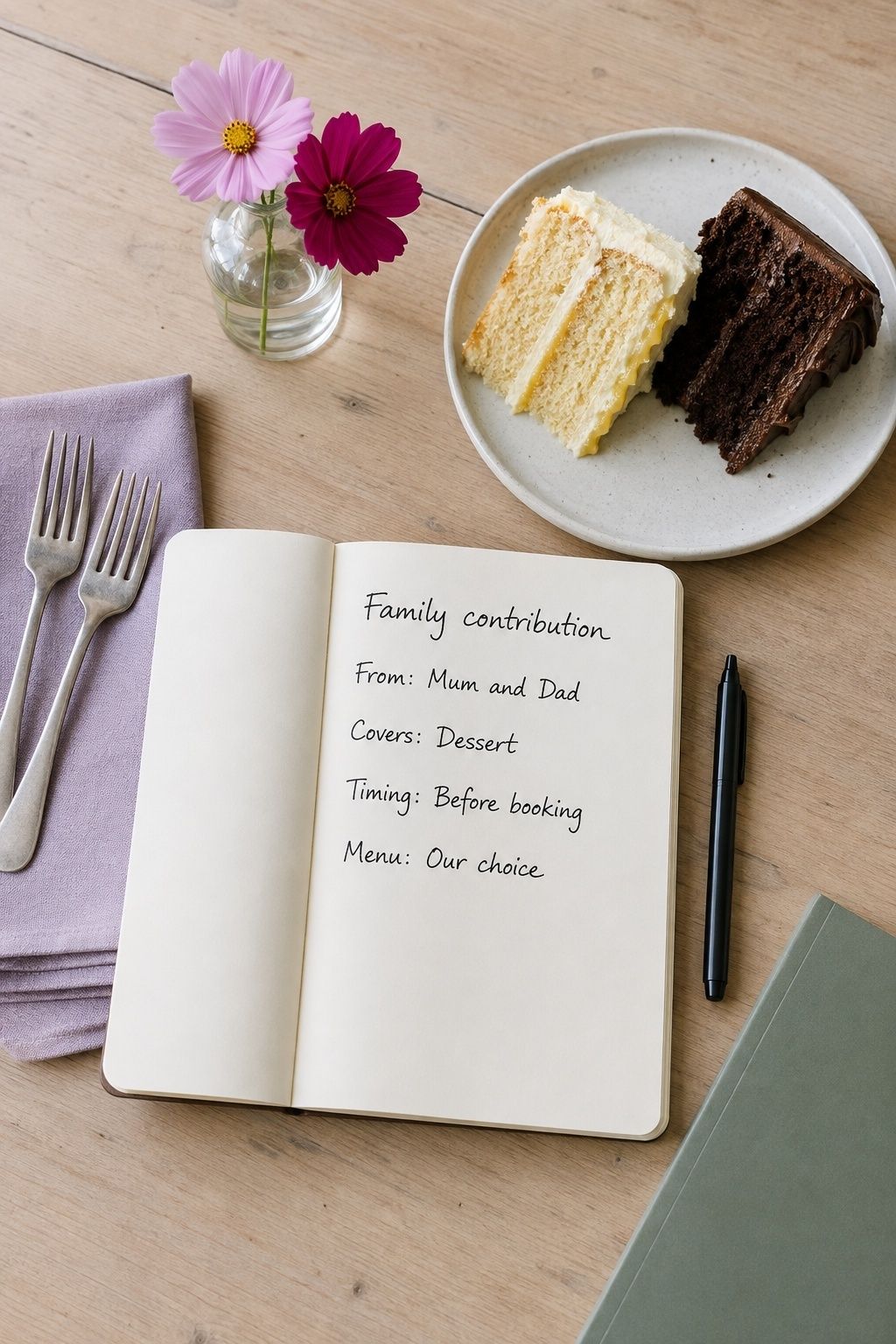
If multiple people are contributing, write down the practical arrangement for yourselves: who is paying, the amount or category, payment timing, and any agreed preferences. This does not need to be formal or dramatic. It simply keeps memory from becoming slippery. Later, if someone says, “But I thought we were choosing the menu,” return to the agreement: “We talked about your gift covering dessert, and we are grateful. We are choosing the dinner menu ourselves.”
Do not trade lifelong peace for one upgraded wedding detail. The bigger floral installation, larger venue, or fuller bar is not worth months of feeling cornered if the money behind it changes the power dynamic. A simpler wedding with clean boundaries often feels more generous than a more expensive wedding full of resentment.
Small-Wedding Pressure Points
Small weddings bring out family pressure because the limits are visible. A 200-person wedding hides a few extra invites. A 35-person wedding does not. When the room is intimate, every addition changes the feeling, the budget, and the reason you chose small in the first place.
This is where small wedding family boundaries need to be especially clear. You are not just saying no to people. You are saying yes to a specific kind of day.
Guest List Opinions
Guest list pressure usually starts with fairness language. If you invite one aunt, why not the other? If you invite this cousin, why not the cousins you saw at holidays as children? If one side has more people, does that mean the other side gets more spots?
Choose a clear guest-list rule and apply it as evenly as possible. Current close relationships. Immediate family only. Adults only. No coworkers. No extended family beyond a certain circle. No plus-ones except partners you know by name. The exact rule matters less than whether you explain it calmly and use it consistently.
A steady answer is, “We know there are more people we could include, but we are keeping the guest list to the relationships that are part of our day-to-day lives.” Another is, “We are not ranking love. We are working within a small room and a small budget.”
Tradition Opinions
Small weddings often skip or shrink traditions: no big bridal party, no bouquet toss, no formal entrances, no receiving line, no full dance floor, no multi-day guest schedule. Relatives sometimes mistake simplicity for disrespect.
Reframe the choice around meaning. “We are choosing fewer traditions so the day feels more personal.” “We are keeping the ceremony simple because we want the vows to be the center.” “We are skipping the big reception moments because dinner and conversation matter more to us.”
If a tradition is meaningful to a family member, ask what part matters most. Is it the symbol, the photo, the blessing, the public recognition, or the chance to feel included? Sometimes the core need works in a smaller way.
Venue Opinions

A small venue confuses relatives who picture a ballroom, church hall, resort, or large banquet space. They worry the wedding will feel casual, cramped, or less legitimate. Venue criticism often sounds like taste, but underneath it is anxiety about how the wedding will be perceived.
Answer with the experience you are creating. “We chose this restaurant because we want a warm dinner with everyone at one table.” “We chose the garden because it feels calm and personal.” “We chose the courthouse because the legal commitment is the part we want to keep simple.”
Do not keep touring venues just to soothe someone who dislikes your style. If the venue fits your budget, guest count, logistics, and emotional priorities, it does not need universal applause.
Budget Opinions
Budget opinions swing in both directions. Some relatives think you are spending too much. Others think you are spending too little. One person thinks flowers are wasteful. Another thinks a wedding without a full bar is embarrassing. A budget built around everyone’s comfort stops serving your real life.
Choose a budget that respects your real life. Then describe choices in terms of priorities, not deprivation. “We are spending on photography and dinner, and we are keeping decor simple.” “We are choosing a smaller guest list so we are able to host people well.” “We are not going into debt for a larger reception.”
If someone criticizes a cost but is not paying for it, you do not owe a spreadsheet defense. If someone is paying, move the conversation to the money category: what is the contribution, what expectation is attached, and does that arrangement still feel right?
For small weddings, budget boundaries also protect hospitality. Adding ten extra guests does not just add ten chairs. It changes the room, staffing, food minimums, transportation, welcome events, favors, rentals, and the amount of attention available for each person. When relatives treat extra guests as a tiny favor, remind them that every seat affects the whole day.
Timeline Opinions
Timeline pressure sounds like panic: “You are behind.” “You need to book now.” “That timeline is too fast.” “Why is the engagement so long?” Sometimes the concern is practical. Sometimes it is just someone else’s anxiety looking for a place to land.
Separate deadline facts from emotional urgency. If a relative knows a venue books out early, that information matters. If they simply dislike uncertainty, that does not mean your timeline is wrong. Say, “We have the next decisions mapped out,” or “We are handling the deadline items first,” or “We are intentionally moving slowly so we make better choices.”
For a small wedding, fewer moving parts often means you do not need the same timeline as a full-scale event. Still, be honest with yourselves. Boundaries work best when they sit on top of a real plan.
If timeline comments are constant, offer one controlled update rhythm. “We will share the next big update after contracts are signed.” “We are sending travel details in the spring.” “We will let everyone know when the website is ready.” Predictable updates calm the relatives who are truly anxious and expose the ones who simply want more control.
Mistakes To Avoid
The first mistake is over-explaining. Long explanations feel polite, but they often invite cross-examination. A relative who wants a different answer will look for the weakest part of your reasoning and pull on it. Give enough background to be kind, then stop.
The second mistake is blaming your partner. “She does not want that” or “He said no” turns your partner into the obstacle and teaches family to divide you. Even when one partner feels more strongly, present the decision as shared.
The third mistake is letting one difficult conversation happen through ten messengers. If a parent complains to your sibling, who texts you, who vents to your partner, the conflict multiplies. Go back to the person involved and answer directly.
The fourth mistake is accepting involvement without defining the role. “Pitch in wherever” becomes vendor emails, guest-list edits, decor purchases, and surprise opinions about the ceremony. “Please collect addresses from this side of the family by Friday” is much safer.
The fifth mistake is confusing kindness with constant availability. You are allowed to be loving and still end a conversation. You are allowed to be grateful and still decline a condition. You are allowed to respect family history and still choose a different wedding.
The final mistake is waiting until you are furious to set a boundary. Early, calm clarity is easier for everyone than a late explosion. If a topic is becoming tender, name the limit before resentment hardens.
FAQ
How do you handle wedding opinions from family?
Handle family opinions by deciding your priorities with your partner first, then sorting comments into practical input, harmless preferences, money-linked expectations, and boundary-crossing pressure. Thank people for caring, take the advice that genuinely improves the plan, and use clear language when a decision is finished.
How do you politely say no to family wedding advice?
Say no with appreciation and finality: “Thank you for thinking of us. We have decided to do this differently.” Another option is, “That is not the direction we are going, but we appreciate you wanting the day to be special.” A polite no does not need a long defense.
What if parents are paying and want control of the wedding?
If parents are paying and want control, have a direct conversation about whether the money is a gift or comes with decision-making expectations. Decide what trade feels acceptable. If the conditions would make the wedding feel wrong, scale down, decline part of the money, or give the contribution a specific purpose with clear limits.
How do you stop family from taking over wedding planning?
Stop family from taking over by limiting open-ended planning conversations, assigning specific roles instead of broad control, and presenting finished decisions as finished. Keep vendor communication, budget choices, and guest-list authority with you and your partner unless you intentionally assign a defined role.
How do you handle conflicting opinions from both families?
When both families disagree, return to the principles you and your partner chose together: budget, guest count, ceremony tone, faith or cultural choices, and the emotional feel of the day. Each partner should usually address their own side, while both of you repeat the same message so neither family turns the decision into a competition.
How do you keep a small wedding when family wants something bigger?
Keep a small wedding by setting a firm guest-count ceiling, choosing a consistent invitation rule, and explaining the reason in values-based language. Say, “We are keeping the wedding intimate so we stay fully present with the people there.” Avoid making one-off exceptions unless you are willing to reopen the whole list.
Final Thoughts
Handling wedding opinions from family is really about protecting a shared life while staying connected to people who matter. You are allowed to listen without obeying. You are allowed to accept generosity without surrendering authority. You are allowed to choose a wedding that fits your relationship, your budget, your personalities, and the community you actually want around you.
The most peaceful couples are not the ones with opinion-free families. They are the ones who decide what matters, communicate early, and stop turning every disappointed reaction into a planning emergency. Even with plenty of family commentary, warmth, gratitude, and clarity still fit together.
Last update on 2026-10-03 / Affiliate links / Images from Amazon Product Advertising API