

Wedding guest list family pressure is easiest to handle when you stop debating one name at a time and return to a fixed guest ceiling, a clear parent guest allocation, consistent plus-one and children rules, and one kind refusal script. Treat every added guest as a tradeoff in space, money, and atmosphere, not as a public vote on how much you love someone.
Family guest-list conflict rarely starts with someone trying to ruin the wedding. It usually starts with pride, tradition, guilt, money, or a relative who assumes the celebration belongs to the whole family. A parent may want old friends there. An aunt may mention cousins you barely know. Someone may say, “They invited us, so we have to invite them.” Each request can sound reasonable until the guest list no longer looks like the wedding you planned.
The way through is not to win every small argument. It is to make the guest-list system clear enough that every conversation has somewhere steady to land. When you and your partner agree on the number, the rules, the money, and who speaks to which family, you can be warm without reopening the list each time someone pushes.

Recommended Wedding Products


You Might Also Like These Blog Posts
- How To Handle Family Pressure During Wedding Planning Without Losing Your Vision
- How To Keep Your Wedding Guest List Small Before It Spirals
- Wedding Guest List Mistakes That Make the Room Feel Wrong
- How To Cut A Wedding Guest List To Save Money And Stay Kind
- Small Wedding Guest List Etiquette For A Guest List That Feels Fair
- How To Say No To Wedding Guest List Requests Without Starting A War
How To Handle Wedding Guest List Family Pressure Without Making Every Name A Fight
The first shift is to stop asking whether each suggested guest is nice enough, related enough, or important enough. Those questions can turn one extra seat into a character trial. Instead, bring the conversation back to the wedding you are actually hosting: the maximum number of people, the space you booked, the budget you can carry, and the circle you want around you.
If relatives keep adding names, answer the system before the emotion. “We are capped at 50 guests” is steadier than “We do not feel close to them.” “Each parent side has eight seats to use” is clearer than “Please stop sending people.” Boundaries work best when they sound like hosting decisions, not personal verdicts.
Set A Guest Ceiling Before Family Sends Names
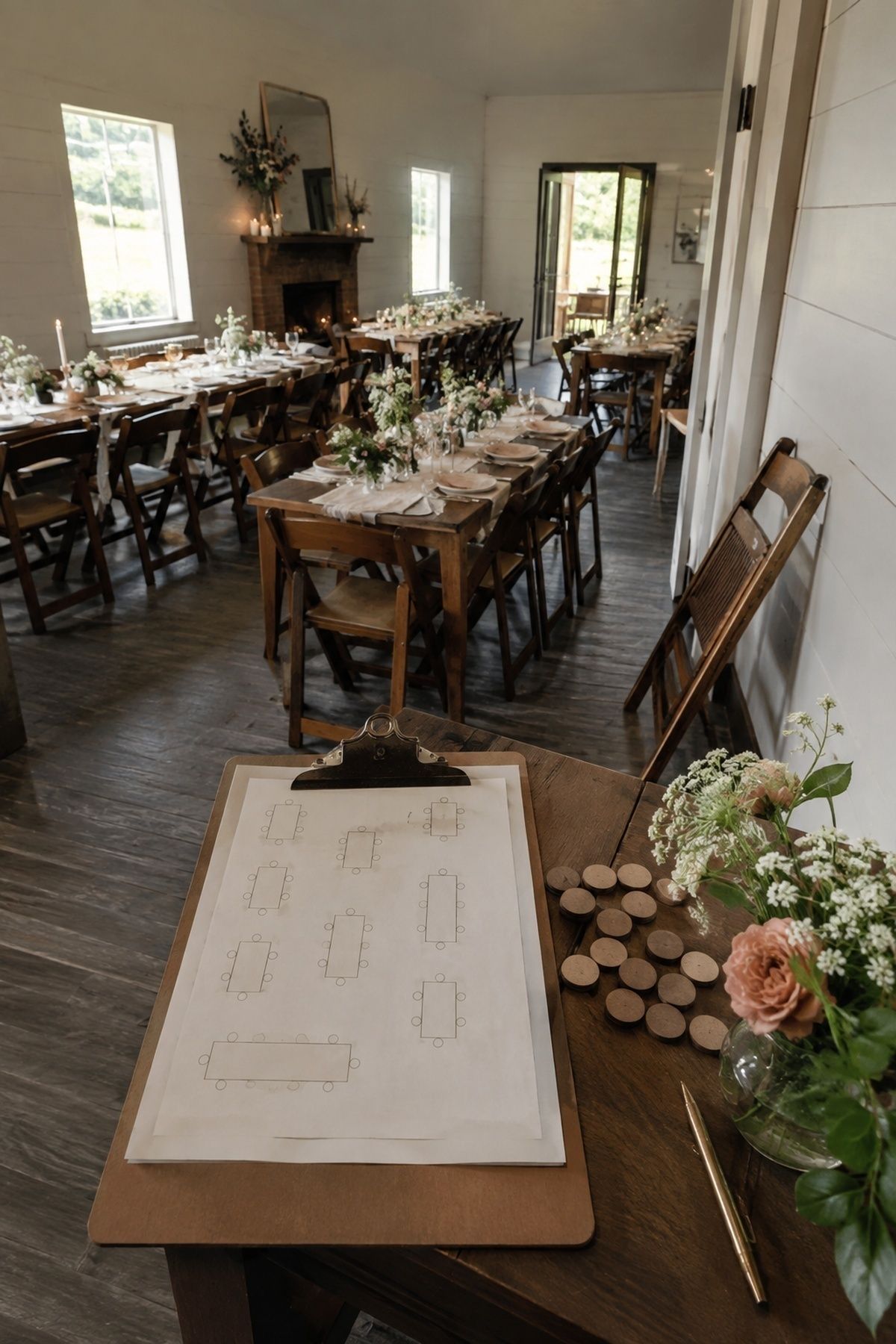
A guest ceiling is the number your wedding can hold without damaging the budget, layout, or feeling of the day. It should include the venue capacity, catering count, rental needs, ceremony seating, transportation, children, named partners, and any parent guests. If the ceiling is 70, it is not 70 plus a few people who feel hard to refuse.
Write the ceiling down with your partner and decide whether additions require swaps. This matters because family pressure during wedding planning often grows through tiny exceptions. One person from each side, a neighbor, a parent’s friend, and one distant cousin can become another table before anyone feels responsible for the total.
When someone suggests a name, do not start by defending whether that person deserves a seat. Start with the ceiling: “We are already at the number our venue and budget can hold.” If the family member has an allotted group of seats, the next question is whether they want to swap, not whether the wedding should grow.
Give Parents Input Without Giving Them A Blank Page

Parents adding wedding guests can feel especially sensitive because their requests may come from love, pride, and a real desire to share the day. They may also feel social pressure from relatives who expect an invitation. You can acknowledge that without letting the list become open-ended.
The cleanest approach is a parent guest allocation wedding plan. Decide how many seats, if any, each parent side receives inside the total count. Then ask for names within that number. This gives parents a meaningful role while keeping the final guest count from turning into a negotiation after every phone call.
If parents want to invite more wedding guests after the allocation is full, use swaps. “We can include them if you would like to replace another name from your side” keeps the decision with the person requesting the change. It also avoids ranking relatives out loud, which is where feelings often flare.
Talk About Financial Contributions Before They Become Leverage
Money can complicate the guest list quickly. If parents are paying for part of the wedding, talk about expectations before the money is spent. Ask whether their contribution comes with guest-list hopes, and decide what you can accept without losing the wedding’s shape.
A financial contribution can earn input, but it does not have to create unlimited control. You might say, “We are grateful you are helping. We can set aside ten seats for your guests within our total count, but we cannot expand the wedding beyond the venue and budget we chose.” That keeps gratitude and authority in the same room.
If the contribution truly depends on inviting a larger group, pause before accepting it. A bigger check may still cost you privacy, comfort, and decision-making peace. It is better to choose a smaller budget honestly than to accept help that turns every guest-list boundary into a debt.
Show The Real Cost Of Extra Seats

Extra-seat costs are not only the catering plate. One guest may affect tax, service charges, rentals, stationery, favors, transportation, hotel blocks, table count, bar service, welcome bags, and day-of timing. When relatives ask for “just one more,” they may not see the chain reaction.
Use numbers calmly. “Each added guest is about $185 before stationery and rentals, and we do not have room in the budget for more seats” is clearer than a vague budget complaint. If someone offers to pay for a guest, decide whether space and atmosphere can handle the addition before saying yes.
For small wedding guest list boundaries, the cost may be emotional as much as financial. Every added person changes who you can talk to, how private the ceremony feels, and whether the room still reflects your closest circle. That is a legitimate hosting concern, even when someone else offers to cover dinner.
Use Kind Refusal Wording That Does Not Invite A Debate

If you are wondering how to say no to extra wedding guests, start with a short answer to guest-list requests instead of overexplaining. Long explanations can accidentally sound negotiable. A good answer is warm, factual, and closed: “We would love to include more people, but our guest count is fixed and we are keeping the list to the names already invited.”
For a parent request, try: “I understand why you would like them there. We are at our final count, so we cannot add anyone unless another name from your allocation comes off.” For a relative asking directly, try: “We care about you, but the wedding is very small and we are not able to extend additional invitations.”
Do not say someone did not make the cut. Do not blame your partner if the choice belongs to both of you. Do not promise to “see what we can do” if the answer is already no. Gentle certainty is kinder than temporary hope that turns into another refusal later.
Let Each Partner Lead Their Own Family Conversations
Family pressure over wedding guest list decisions gets worse when one partner is left to carry both families’ reactions. As a rule, each person should lead the hard conversations with their own parents and relatives. The couple should agree privately first, then the related partner should deliver the message.
This matters with sensitive dynamics, especially when saying no to guest list requests from a future mother-in-law or one forceful parent. A partner-led conversation prevents the boundary from being framed as an outsider’s rejection. It also shows that the decision is shared, not one person controlling the wedding.
Use “we” language once the decision is made: “We have decided to keep the list at 60.” “We are not adding parent friends beyond the seats we set aside.” “We know this is disappointing, and we are keeping the decision the same.” That unity will feel awkward at first, but it prevents relatives from looking for the softer answer.
Keep The Final Guest List Private
The more people see the full list, the more missing names they will notice. Sharing drafts with siblings, cousins, or several parent figures can turn a planning document into a public comment board. Privacy is not secrecy; it is protection for the decision and for the people who are not invited.
Give people only the information they need. Parents can know their allocation. A planner can have the full operational list. Guests can know who is named on their invitation. Relatives do not need the spreadsheet, the B-list, or a running count of who declined.
If someone asks who else is invited, use a soft redirect: “We are keeping the list private while we finalize everything, but your invitation will have all the details you need.” That answer avoids comparison and keeps the final list from becoming a family debate.
Keep Plus-One And Children Rules Consistent

Plus-one and children exceptions are common places for relatives to push. Decide whether you are inviting spouses, fiancees, live-in partners, long-term partners, open plus-ones, all children, immediate-family children, or no children. Then make invitations and RSVPs match the rule.
Consistency does not mean every household looks identical, but similar situations should be treated similarly. If one cousin can bring a new date and another cannot, expect questions. If some children are invited because they are in the wedding party, name that clearly instead of leaving other parents to guess.
For a very small wedding, the etiquette around a small guest list often depends on naming invited people rather than offering open household invitations. The envelope, website, and RSVP should all reinforce the same number of reserved seats.
Repair It Quickly If A Relative Invites Someone Too Soon
Sometimes a relative mentions the wedding before the guest list is final, and suddenly someone believes they are invited. Move quickly, because silence can make the misunderstanding harder to fix. First, talk to the relative who spoke too soon. Ask exactly what was said and whether the person was clearly invited or only told about the wedding.
If the person cannot be invited, the relative who created the confusion should help repair it, but the couple may need to send the final message. Keep it humane: “I am sorry for the confusion. Our guest list is smaller than it may have sounded, and we are not able to extend an invitation. I know that is awkward, and I wanted to clarify directly.”
Then close the leak. Tell family not to share date, venue, website, or travel details with anyone who has not received an invitation. If you are still working out how to handle family pressure during wedding planning, this is the moment to make one rule: no one invites on your behalf.
Hold The Boundary Without Turning Cold
Boundaries do not need to sound like punishment. You can thank parents for caring, tell relatives you understand the disappointment, and still keep the list fixed. The emotional skill is letting someone be upset without rushing to buy peace with more invitations.
When wedding guest list pressure from relatives continues, repeat the same answer. “I know this is hard. We are not adding more guests.” “I hear that you are disappointed. The guest count is final.” Repetition can feel uncomfortable, but changing the explanation every time often creates new arguments.
If you want to include someone in another way, choose a lower-pressure option: a visit after the wedding, a family dinner, a livestream if appropriate, or sharing photos afterward. Do not offer a consolation plan as a bargaining chip. Offer it only if it feels genuinely kind.
FAQ
How Do You Handle Wedding Guest List Family Pressure?
Handle it by setting a fixed guest ceiling, agreeing with your partner before family conversations, and giving relatives a clear process instead of a blank invitation to add names. If parents have seats, make the number specific. When requests continue, require swaps rather than additions and repeat one calm answer.
What Do You Say When Parents Want To Invite More Wedding Guests?
Say, “We understand why you would like them there, but our guest count is fixed. If you want to include that person, we would need to replace someone from your allotted seats.” This keeps the conversation about the number and avoids debating whether a specific person is important enough.
How Do You Say No To Family Asking For Wedding Invites?
Keep the answer short and kind: “We care about you, but the wedding is very small and we are not able to extend additional invitations.” Avoid detailed comparisons, budget complaints, or saying someone did not make the cut. A clear answer protects the relationship better than a long explanation.
Should Parents Get A Say In The Wedding Guest List If They Pay?
Parents can have input if they are contributing, but the amount of input should be agreed on before the money shapes the wedding. A fixed number of parent seats is usually healthier than open control. If the contribution requires a guest list you do not want, consider adjusting the budget instead.
How Do You Keep A Small Wedding Guest List When Family Is Upset?
Keep the list small by holding the same rules through the discomfort. Do not add guests just because someone is upset, and do not share the full list for group review. Acknowledge feelings, repeat the fixed count, and offer another way to connect only if it feels sincere and manageable.
How Many Guests Should Each Family Get To Invite?
There is no universal number. Start with the total guest ceiling, subtract the couple’s must-have guests, then decide whether each parent side receives an equal or situation-specific allocation. The number should fit the venue, budget, family dynamics, and contribution conversations, not a rule someone heard elsewhere.
Final Thoughts
The strongest guest-list boundary is not harsh; it is settled. Choose the ceiling, agree on parent seats, count the real cost of each addition, keep family conversations partner-led, and make every invitation channel match the same answer so even difficult parent guest expectations do not quietly redesign the wedding.
Last update on 2026-10-03 / Affiliate links / Images from Amazon Product Advertising API