

If you are wondering how to ask wedding guests to RSVP, make the reply request clear, dated, and easy to complete. Put the RSVP date on the invitation details card, response card, and wedding website, say exactly where guests should reply, ask only for the details you truly need, and send one kind reminder before your final numbers are due.
Wedding RSVP wording is one of those tiny planning details that carries a surprising amount of emotional weight. You are not only asking people whether they are coming. You are trying to protect the caterer count, seating plan, meal selections, travel timeline, and your own sanity while still sounding like a gracious host.
The good news is that a clear RSVP request rarely feels pushy. Guests are used to answering invitations. What feels awkward is vague wording, scattered deadlines, or a reminder that arrives after the couple has already spiraled into headcount panic. The kinder path is to make the response simple from the start.
Recommended Wedding Products


You Might Also Like These Blog Posts
- Small Wedding RSVP Wording That Gets Clear Replies
- Wedding RSVP Mistakes That Wreck Your Final Count
- Cash Fund Wording For Small Wedding Guests That Feels Thoughtful
- Adults Only Wedding Wording That Sounds Warm And Clear
- Small Wedding Adults Only Website Wording Lines Parents Won’t Miss
- Small Wedding Website Wording For A Small Guest List
How To Ask Wedding Guests To RSVP
The simplest way to ask is to pair warmth with unmistakable instructions. Use one reply date, one primary response method, and wording that tells guests exactly what answer you need. A strong request says who is invited, whether they are accepting or declining, how many seats are reserved, whether a meal choice or dietary detail is needed, and where the reply should go.
A wedding RSVP deadline usually works best when it sits around three to four weeks before the wedding, with extra time added when the venue, caterer, rentals, transportation, or destination travel require earlier final counts. The deadline should land before your vendors need final numbers, not on the same day those numbers are due.
Think of RSVP wording as hospitality with a calendar attached. You are giving guests a tidy path to say yes or no, and you are giving yourselves enough time to chase missing replies without losing a full week to awkward texts.
The best wedding RSVP request wording is specific without sounding fussy. It does not apologize for needing an answer, and it does not make guests decode etiquette. It simply says: we are excited to celebrate with you, here is the date we need your answer, here is where to send it, and here are the details that affect dinner, seating, and hosting.
That is the heart of how to ask wedding guests to RSVP without feeling pushy. You are not chasing people because you are impatient. You are giving everyone the information needed to make the day feel cared for. Clear wording protects guests from confusion just as much as it protects the couple from late-night spreadsheet chaos.
When the request is written well, the answer feels like part of accepting the invitation, not a separate favor. That shift matters because guests respond faster when the next step is already sitting right in front of them.
RSVP Components To Include
1. The Reply-By Date
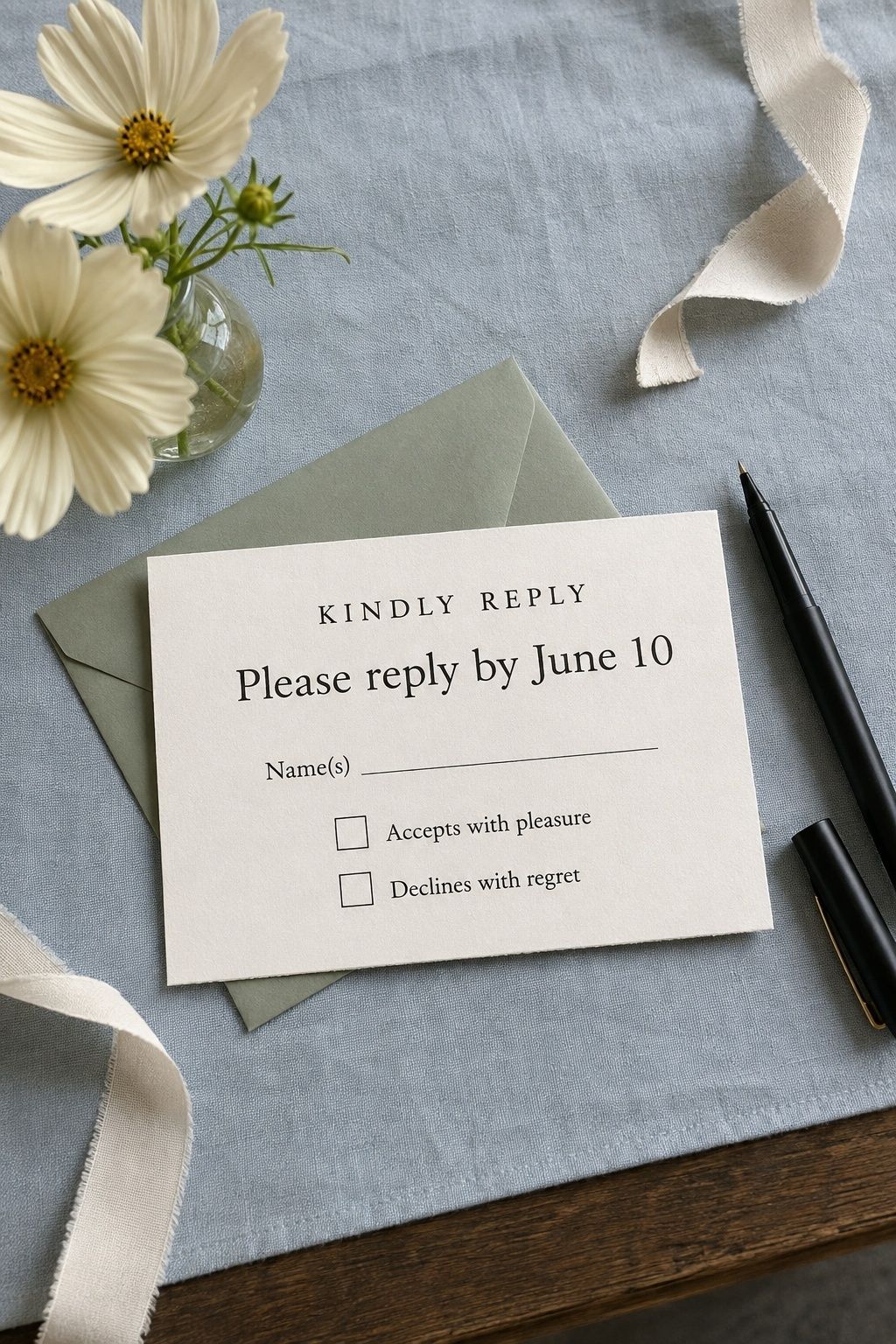
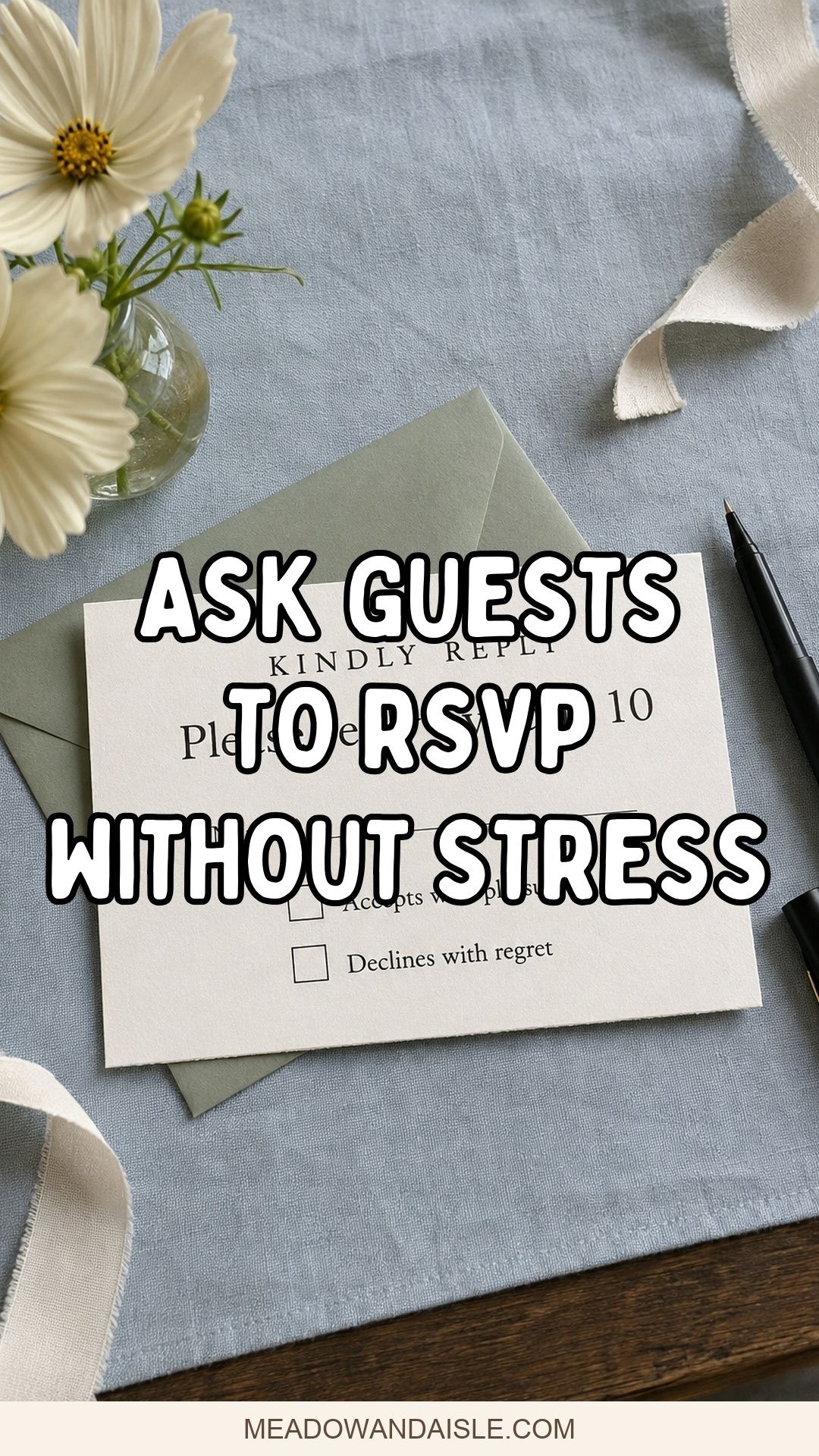
The reply-by date is the backbone of every RSVP request. Put it in plain language instead of a tiny numeric date that guests skim past. “Please reply by Friday, June 10” feels clearer than a compressed line of numbers, and it removes any question about month, day, or urgency.
Choose the date by working backward from vendor deadlines. If the caterer wants final counts two weeks before the wedding, set the guest deadline at least a week before that. If your seating chart, escort cards, shuttle list, or welcome bags depend on the count, leave even more breathing room.
For most local weddings, three to four weeks before the wedding gives enough time to gather stragglers, update meal totals, and build the seating chart. For destination celebrations, holiday weekends, multi-day events, or weddings with many traveling guests, an earlier RSVP by date wedding wording line is kinder because guests need travel decisions and the couple needs lodging and event counts.
2. The Names Line
Every RSVP needs a place for names. For mailed cards, a traditional line works, but a modern “Name(s)” line is clearer for many guests. For online RSVPs, preloaded names or a required full-name field keeps duplicate nicknames and mystery responses out of your tracker.
Names matter because the reply has to become a seating chart, meal count, and final guest list. If two households share a last name, or a guest answers only with “we are coming,” you lose time matching the reply to the invitation. Ask for names directly and keep the field visually obvious. It is one of the easiest wedding RSVP mistakes to prevent.
If you already know the exact invited party, prefilled online names are even cleaner. Guests choose their answer under their own names, and the couple receives data that matches the invitation list. For mailed RSVP card wording wedding guests return by post, a small penciled number on the back of each card is a quiet backup when handwriting gets creative.
3. The Accept Or Decline Choice
The accept-or-decline line should be impossible to miss. Formal cards often use phrasing such as accepts with pleasure or declines with regret, while modern cards often use warmer language such as celebrating with you or sending love from afar. Either tone works when guests know which box to mark.
Avoid hiding the decline option. Couples sometimes soften the card so much that the “no” answer feels invisible, but clear declines are valuable. A prompt no is better than silence because it releases a seat, a meal, and a little planning tension.
Give the decline option the same visual weight as the yes. A guest should never feel that declining requires an explanation on the card. Private reasons are private, and the couple mainly needs the count. Warm wording around the response is lovely, but the answer itself should be simple.
4. The Seat Count Line
Seat count wording protects the guest list without sounding stern. A line such as “We have reserved two seats in your honor” gives guests a clear boundary and a gracious frame at the same time. For mailed cards, fill the number in before sending. For online RSVPs, set the invitation party in the website settings before guests reply.
This line is especially valuable when some guests have a named guest, some have a plus-one, and some are invited solo. It answers the quiet question before anyone adds an extra name in the margin.
Small weddings benefit from this wording most. When the room is intimate, one unexpected guest changes the table plan, catering count, and sometimes the emotional balance of the day. A reserved-seat line feels more gracious than a later correction because the expectation was clear before anyone replied.
5. The Meal Choice Line
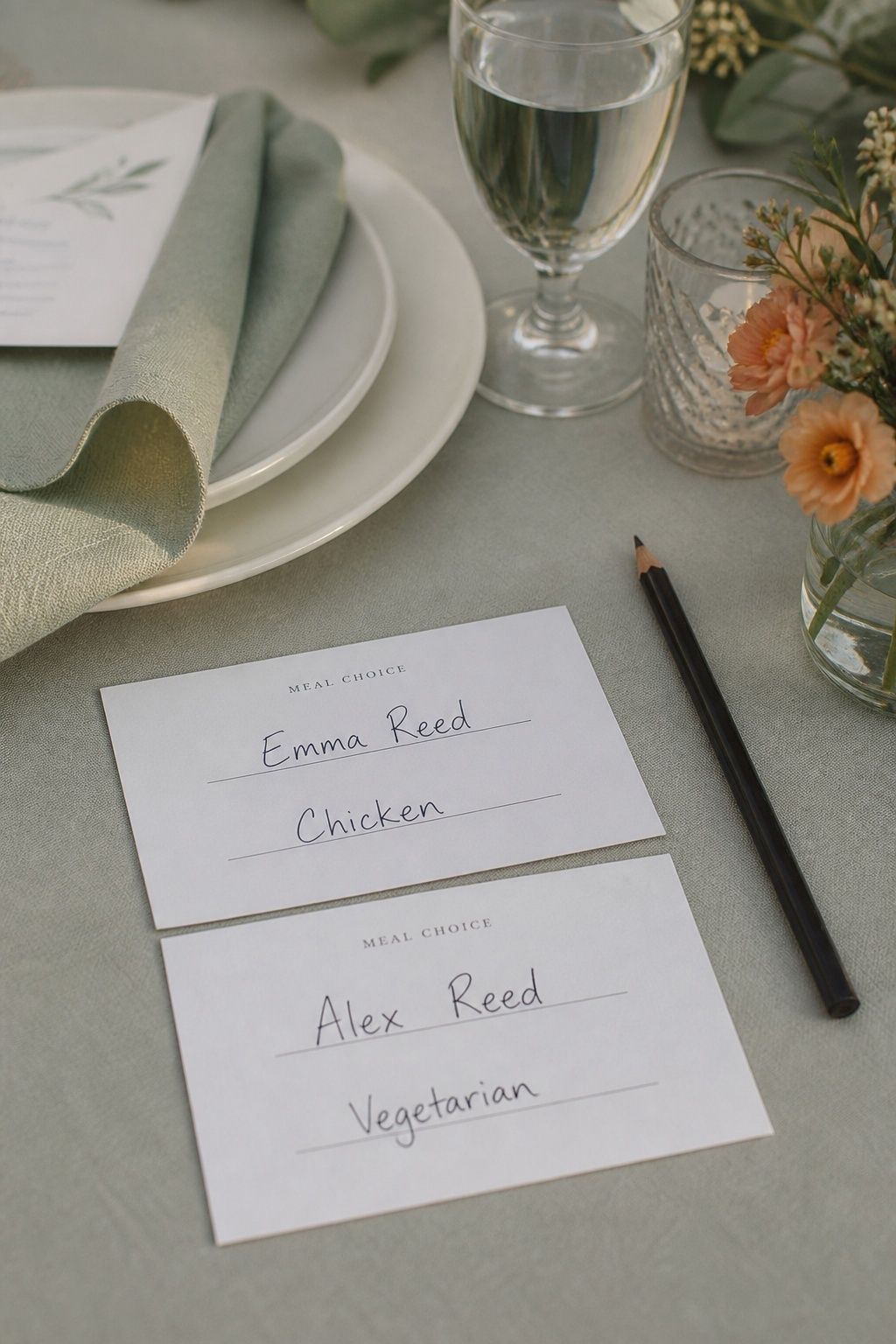
Meal wording fits on the RSVP only when the caterer or venue needs selections ahead of time. For plated dinners, ask each attending guest to choose one entree. For family-style, buffet, cocktail, or single-menu receptions, dietary details often matter more than entree choices.
For households with several guests, connect each meal to a person. Initials next to entree choices, separate guest rows, or online per-person dropdowns keep the dinner count usable. A single check mark for a family of four leaves the couple guessing later.
Do not ask for meal choices just because you have seen them on other invitations. Ask because your menu requires them. If dinner is buffet-style, family-style, or a single plated menu, the RSVP probably needs attendance and dietary details rather than entree selections. Fewer fields create cleaner replies.
6. The Dietary Details Line
Dietary details deserve their own small space. Keep the wording short and practical, such as “Please share any allergies or dietary restrictions with your reply.” This separates true kitchen needs from entree preference and gives the caterer better information.
When a guest lists a serious allergy, follow up privately for specifics. The RSVP starts the conversation, but the caterer needs accurate details before building a safe service plan.
Keep this line separate from meal preference because it serves a different purpose. “Vegetarian entree” is a selection. “Severe shellfish allergy” is a kitchen detail. When those answers sit in separate fields, your final catering list is easier to sort and less likely to blur preference with safety.
7. The Response Method
Tell guests exactly where to answer. If you want online replies, put the website address and any QR card in the same invitation suite. If you want mailed replies, include a response card with a pre-addressed envelope. If you accept both, name one as the easiest route and keep both deadlines identical.
Scattered response methods create missed answers. A text to one partner, a comment to a parent, and a card mailed late should not become the couple’s tracking system. Choose the path and repeat it in every RSVP location.
If relatives are likely to answer verbally, decide how those answers enter the official list. One partner, planner, or family member should record them in the same tracker the same day. Otherwise, a casual “we told your mom” turns into uncertainty when final numbers are due.
8. The Tiny Closing Line
A closing line softens the ask after the logistics are clear. Keep it brief: a sentence of excitement, gratitude, or anticipation is enough. The RSVP card is still a functional object, so the closing should not bury the date or distract from the answer fields.
Good closing language sounds like the couple, not a customer service script. For a formal wedding, keep it graceful. For a casual backyard dinner, make it relaxed. The deadline stays firm either way.
A strong closing line also avoids pressure. Do not frame attendance as proof of love, and do not make decline wording feel guilty. Guests have budgets, schedules, health realities, travel limits, and family obligations. The RSVP should welcome their honest answer, not corner them into silence.
Where To Put Your Wedding RSVP Request
1. On The RSVP Card
A printed RSVP card is still the clearest choice for guests who prefer mail or for couples who want a complete invitation suite. Keep the card focused: names, attendance, seat count if needed, meal details if needed, reply-by date, and return instructions.
Pre-addressed envelopes reduce friction. Postage does the same. If you are asking guests to mail a reply, make the return path feel finished before the invitation leaves your hands.
Printed cards also work well when older relatives are less comfortable with websites. The card gives them a familiar way to answer, and the couple receives a physical stack that is easy to check. If you use mailed cards, open and record them regularly instead of saving them for one big sorting session.
2. On The Details Card
The details card is a good place to repeat online wedding RSVP wording. A simple line with the website, reply date, and any QR code gives guests a second reminder without crowding the main invitation.
If your invitation includes lodging, transportation, dress code, or weekend events, keep the RSVP sentence visually distinct. Guests should not have to hunt through travel information to find the answer deadline.
Details cards work especially well for please RSVP wedding wording when the main invitation is intentionally minimal. The invitation carries the ceremony and reception information. The details card carries the practical instructions. That separation keeps the suite elegant while still making the reply request unmistakable.
3. On The Wedding Website
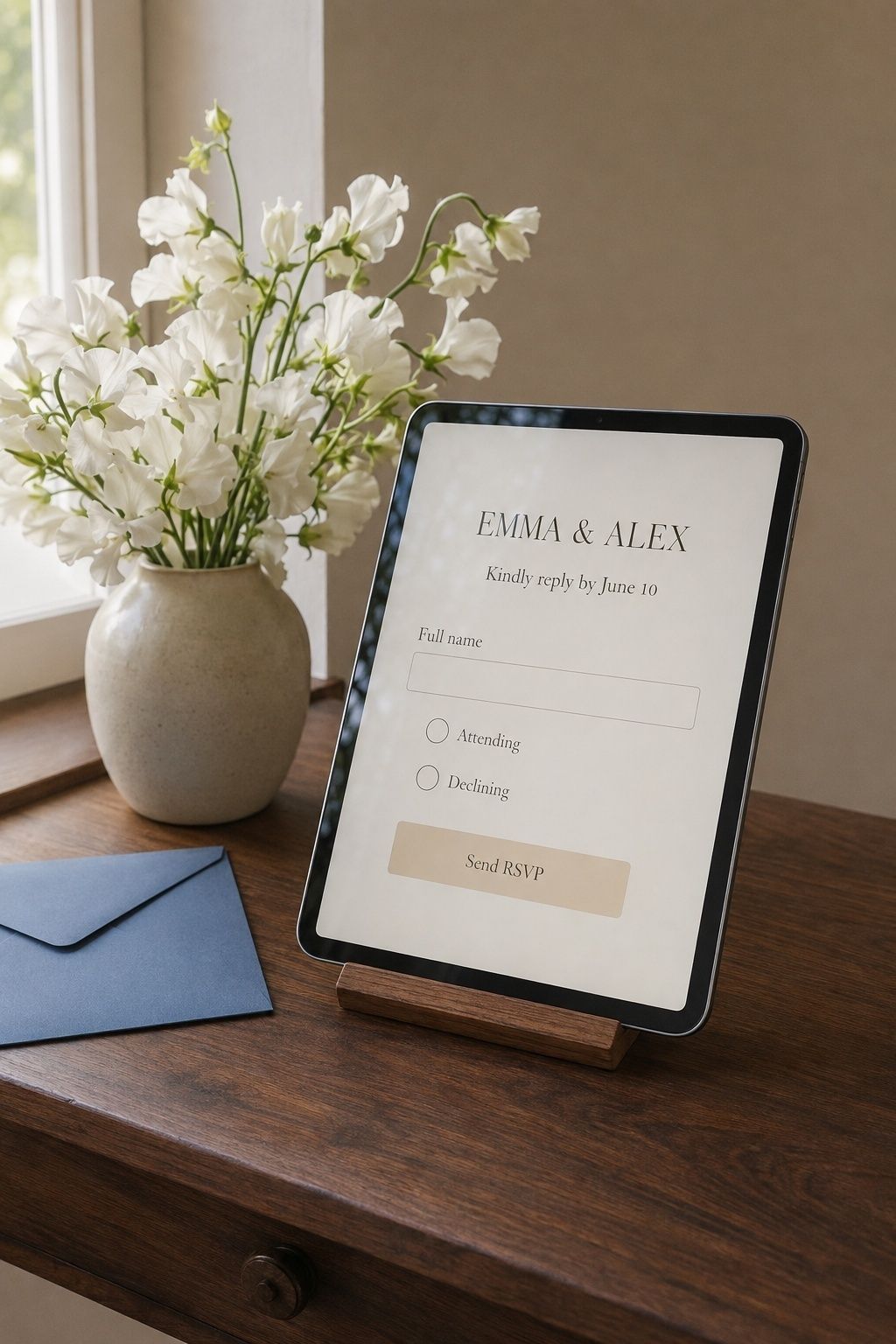
Wedding website RSVP wording should be short at the top and specific inside the form. The page heading tells guests to reply by the date. The form then gathers names, attendance, party count, meal selections, dietary details, and any extra event responses.
Online forms are especially strong when each invited guest needs an individual meal choice. They also reduce handwriting mysteries and let the couple export or sort the list before seating work begins.
Set the online form to match your real invitation list before sending it. If the website lets guests search their names, test several households, including plus-ones, families, and invited solo guests. The smoothest wedding website RSVP wording will still fall apart if the form itself lets people add extra attendees by accident.
4. In A QR Code Insert
A QR code insert works well when the invitation is formal but the reply is digital. Pair the code with a typed website address so guests who dislike scanning still have a route. Keep the wording simple and place the reply date next to the code.
Test the code before printing and again before mailing. It should lead directly to the RSVP page, not a homepage that asks guests to search for the form.
QR cards should still feel like part of the invitation suite. Match the paper, type style, and tone so the digital instruction does not look like an afterthought. A polished insert tells guests that the online reply is intentional, not a shortcut the couple added at the last second.
5. In Reminder Messages
Wedding RSVP reminder wording should feel calm, not scolding. Send a general reminder roughly one week before the deadline if many replies are missing. After the deadline, contact only the households who have not answered.
Make the reminder specific: say that you are finalizing the guest count, seating, or meal selections, and give the reply link or requested action again. A practical reason makes the reminder feel less personal and more understandable.
When the deadline passes, switch from a general reminder to a personal follow-up. Keep it brief, kind, and clear about timing. Give the guest a direct way to answer yes or no, and record the answer as soon as it arrives. That is often how to get wedding guests to RSVP when the first request was missed.
RSVP Wording By Wedding Type
1. Formal Wedding RSVP Wording
Formal wedding RSVP wording works best with polished, traditional phrasing and a clean response layout. Use a complete reply-by date, formal accept and decline options, and a return address or website line that matches the invitation suite.
Keep the language gracious rather than ornate. Too many flourishes make the card harder to complete. Elegant wording still needs the guest to understand the deadline in one glance.
Formal does not mean vague. A black-tie wedding still needs the same practical fields as a garden brunch. The paper, typography, and phrasing carry the formality; the answer boxes carry the planning information.
2. Casual Wedding RSVP Wording
Casual wording gives you more room for personality, but the structure stays the same. A backyard reception, restaurant dinner, brunch wedding, or city hall celebration still needs a reply date, attendance answer, seat count, and meal details if the menu requires them.
Let the warmth live in the headings and closing line. Keep the fields plain. Guests should smile at the tone and still finish the RSVP in under a minute.
For casual weddings, watch the line between charming and unclear. A playful yes option is fine when the no option is equally obvious. If the wording is so clever that guests pause to interpret it, simplify the field and save personality for the surrounding sentence.
3. Online Wedding RSVP Wording
Online wedding RSVP wording should reassure guests that the form is quick. Give the deadline, the website address, and a short reason the reply matters. Inside the form, use required fields only for information you truly need.
A confirmation message is worth adding. After guests submit, thank them and tell them their answer was received. That tiny confirmation prevents duplicate responses and “did it go through?” texts.
Online RSVPs also make reminders easier because the reply link is ready to paste. Still, the message should sound human. A clean link plus one sentence about final numbers is enough; a long explanation makes a simple request feel heavier than it is.
4. Small Wedding RSVP Wording
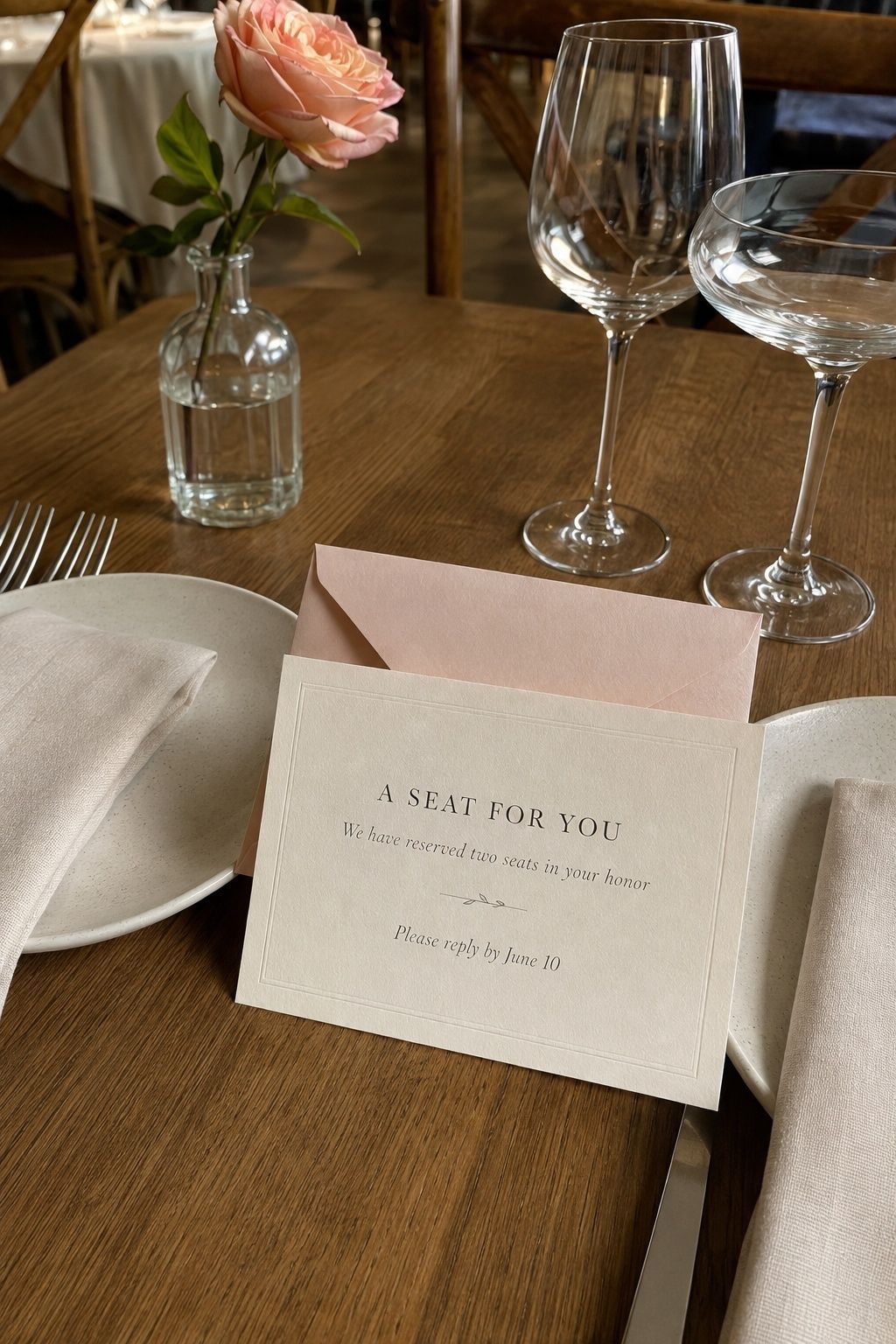
Small wedding RSVP wording should be especially clear about who is invited. Intimate guest lists often have less room for extra names, children, or casual plus-ones. A seat count line keeps the boundary kind and practical.
Because every seat matters at a small wedding, ask for the reply early enough to adjust the room, meal count, and seating plan. A guest who assumes “they know I am coming” still needs to answer through the official route.
For small wedding RSVP wording, clarity around named guests is not rude. It is part of hosting a limited gathering well. Guests are less likely to feel embarrassed later when the invitation already told them exactly which seats were reserved.
5. Destination Wedding RSVP Wording
Destination wedding RSVP wording usually needs an earlier deadline. Travel plans, hotel blocks, welcome events, shuttles, and group meals all depend on a reliable count. Give guests more time to decide, but give yourselves more time after the deadline too.
Use the RSVP page to collect arrival dates, departure dates, lodging plans, and attendance for extra events if those details affect hosting. Keep those questions separate from the main wedding attendance answer so the form does not feel muddled.
Destination couples should avoid treating the RSVP as the only travel touchpoint. The RSVP answer tells you who is attending, but travel details often change. Ask only for information needed for hosted events, then update shuttle or welcome plans closer to the wedding through a separate message.
6. Adults-Only Wedding RSVP Wording
Adults-only RSVP wording should be clear before guests reach the response form. Address the invitation to the invited adults, use a reserved-seat line, and keep the RSVP fields tied to the named guests.
Avoid turning the RSVP card into a long explanation. The card’s role is to collect the answer. Any fuller wording about the adults-only celebration should sit on the details card or website, where there is room for warmth.
If someone replies with children included, answer quickly and kindly. Point back to the named invitation and reserved seats rather than debating the policy from scratch. Clear RSVP wording makes that conversation shorter because the boundary was already present.
RSVP Wording By Tone
1. Polite And Direct
Polite and direct wording is the safest choice for most weddings. It says please reply by the date, tells guests where to answer, and avoids apologizing for needing a response. Direct language respects guests because it removes guesswork.
This tone is ideal when multiple generations are invited, when the invitation suite is classic, or when you want the RSVP to feel calm and mature. The request is clear, but it never sounds annoyed.
Polite and direct is also the strongest tone for reminder messages. A reminder is not the place for jokes that hide the deadline. State what you need, why timing matters, and where guests should answer.
2. Warm And Personal
Warm wording works beautifully for intimate weddings. It reminds guests that their answer matters because the couple is planning a thoughtful gathering, not because the couple is keeping score.
Use one sentence of affection, then return to the logistics. Too much sentiment before the fields turns a simple RSVP into a letter. Guests need both warmth and a clean path to answer.
This tone works especially well when many guests are close family or longtime friends. They already feel connected to the couple, so the wording does not need to prove intimacy. It just needs to sound like an invitation from real people.
3. Modern And Minimal
Modern RSVP wording pares the request down to the essentials: reply by date, website or card, attending or declining, and any required meal or guest details. It suits clean invitations, city weddings, restaurant receptions, and digital RSVP pages.
The risk with minimal wording is leaving out the deadline or response method. Minimal should mean uncluttered, not incomplete. Every line should earn its place.
Modern minimal wording pairs nicely with online RSVP pages because the invitation sentence stays brief and the form carries the details. Just make sure the printed card still includes the full website address for anyone who does not scan QR codes.
4. Firm Without Feeling Pushy
Firm wording becomes necessary when final counts are due soon. The trick is to state the planning reason without blaming guests. Say that you are finalizing numbers with the venue, completing seating, or confirming meal counts, then repeat the reply route.
For late replies, give a final answer date and one easy action. Do not send a paragraph of frustration. A short, kind message gets better results than a guilt-heavy one, and it leaves the relationship intact.
Firm wording should never sound like a punishment. It should sound like two people closing the final count with care. Guests who missed the first deadline usually respond faster when the next message is simple, direct, and easy to answer from their phone.
Common RSVP Mistakes To Avoid
The most common mistake is using multiple deadlines. If the website says one date, the card says another, and a parent tells relatives something else, guests follow whichever date feels most convenient. Pick one deadline and place it everywhere.
The second mistake is asking for too much. Song requests, favorite memories, travel plans, meal choices, allergies, brunch attendance, shuttle needs, and hotel details all have value in the right setting, but a crowded RSVP creates abandoned replies. Keep required questions limited and move optional questions below the essentials.
The third mistake is relying on word of mouth. A guest telling your aunt they are excited is lovely, but it is not an RSVP. Make every answer land in the same tracker, whether that is a stack of cards, a website export, or a guest list spreadsheet.
The fourth mistake is waiting too long to follow up. If the deadline passes and ten households are missing, contact them quickly. A same-week follow-up protects vendor counts and keeps the missing replies from becoming a larger planning problem.
Another mistake is treating RSVP wording as purely aesthetic. Pretty cards matter, but the response has a planning function. If the card looks lovely yet fails to collect names, attendance, meal choices, or dietary details, the couple pays for that beauty with extra follow-up later.
The last mistake is delaying the wording until invitations are already designed. Write the RSVP before the suite is final. That way the stationer, website, and guest-list tracker all use the same deadline, the same seat language, and the same response method from the beginning.
A Simple RSVP Check Before You Send

Before invitations go out, compare the printed card, details card, website, and guest-list tracker side by side. The reply date should match in every place. The response method should match in every place. The number of invited seats should match the envelopes, the website party settings, and the spreadsheet.
Then walk through a few sample households. Try one invited solo guest, one couple, one family, one invited plus-one, and one guest with a meal selection. If any path creates uncertainty, fix the wording before printing. This tiny rehearsal catches the awkward errors that usually appear only after replies start arriving.
Finally, decide who owns RSVP tracking. One person should update the list, save mailed cards, record verbal answers, and send reminders. Shared access is fine, but shared responsibility without a clear owner often leaves gaps. A single tracker owner keeps the count steady and gives the couple one place to check before vendor deadlines.
FAQ
How do you ask wedding guests to RSVP?
Ask wedding guests to RSVP by giving them a clear reply-by date, a single preferred response method, and the exact details you need from them. Put the request on the response card, details card, and wedding website so guests see the same instruction more than once.
What should wedding RSVP wording include?
Wedding RSVP wording should include the reply deadline, guest names, attendance choice, seat count or invited party, response method, and meal or dietary questions when your caterer needs them. Optional questions should sit below the required fields.
When should you ask guests to RSVP by?
Many couples set the RSVP deadline about three to four weeks before the wedding. Choose the exact date by checking when your caterer, venue, rentals, transportation, or stationery team needs final numbers, then add time for missing replies.
How do you politely remind guests to RSVP?
Send a short reminder that names the deadline, repeats the reply link or return request, and explains that you are finalizing guest count, seating, or meal selections. Keep the tone kind and practical, especially for one-on-one follow-ups after the deadline.
Should wedding RSVPs be online or by mail?
Either option works. Online RSVPs are fast, easy to sort, and practical for meal selections or extra event questions. Mailed cards feel traditional and suit formal invitation suites. If you offer both, keep one deadline and one tracker.
How do you ask for meal choices and plus-one details with RSVPs?
Ask each attending guest to choose one meal when entree counts are required, and include a separate dietary field. For plus-one details, address invitations accurately, use a reserved-seat line, and ask for the guest’s name only when a guest is included.
Final Thoughts
Knowing how to ask wedding guests to RSVP is really about making the gracious thing the easy thing. Guests need a clear date, a clear place to answer, and a form or card that asks for only the details that affect the wedding day. When the wording is calm from the beginning, reminders feel less awkward because the expectation was already kind and direct.
Before you send invitations, check the RSVP as if you were a guest opening the envelope after a long day. The date should stand out. The answer method should be obvious. The invited names and seats should be clear. The meal and dietary questions should turn into a practical list. If every answer has a home, you have done the hard part.
Once your own wording has the deadline, answer method, reserved seats, and meal details in place, keep the final pass calm and couple-facing.
Last update on 2026-10-03 / Affiliate links / Images from Amazon Product Advertising API